Inspiration
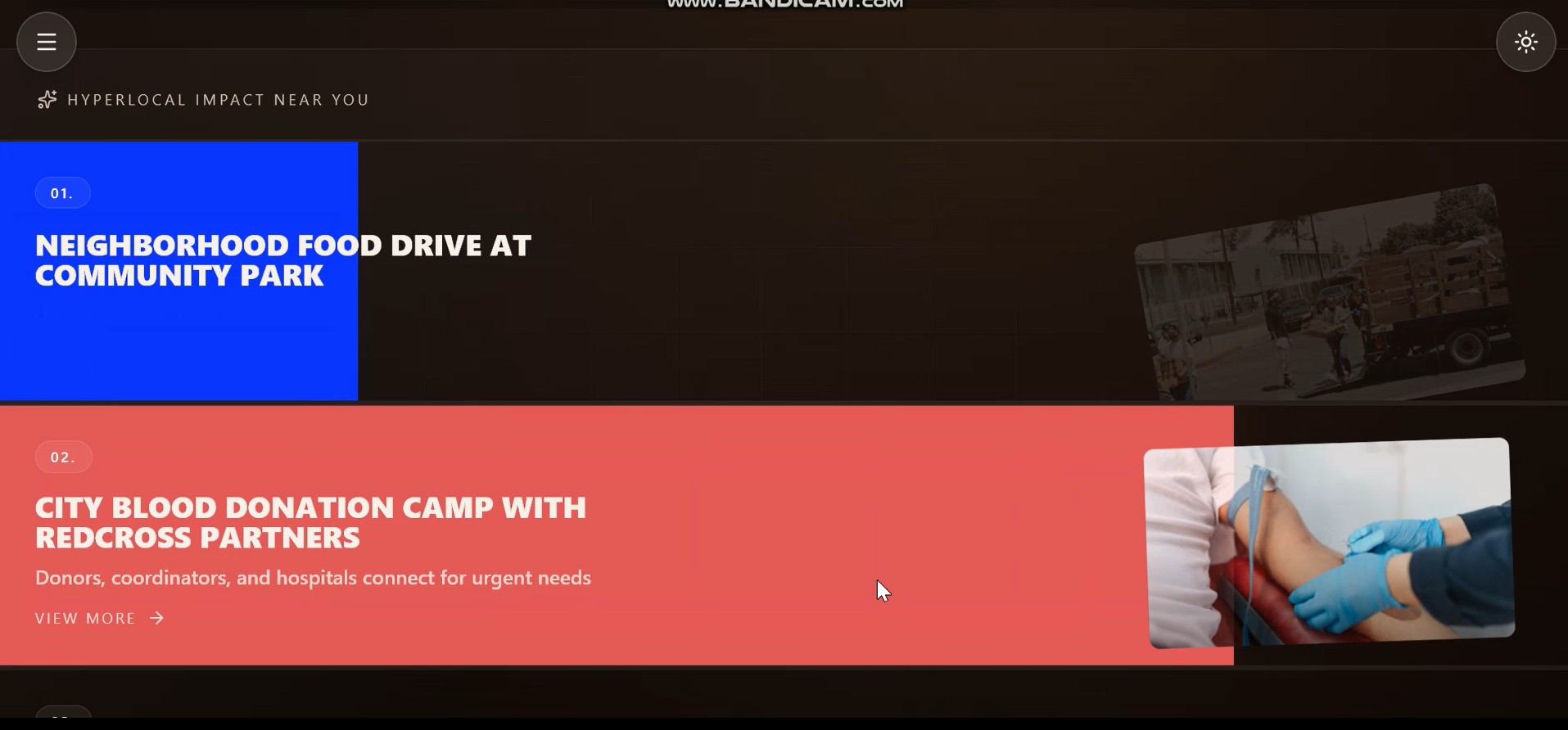
Community-driven social initiatives like blood donation drives, NGO activities, hunger relief camps, and environmental programs often struggle with visibility, coordination, and trust. These events are scattered across WhatsApp groups, posters, and word of mouth, making participation inconsistent and impact hard to track.
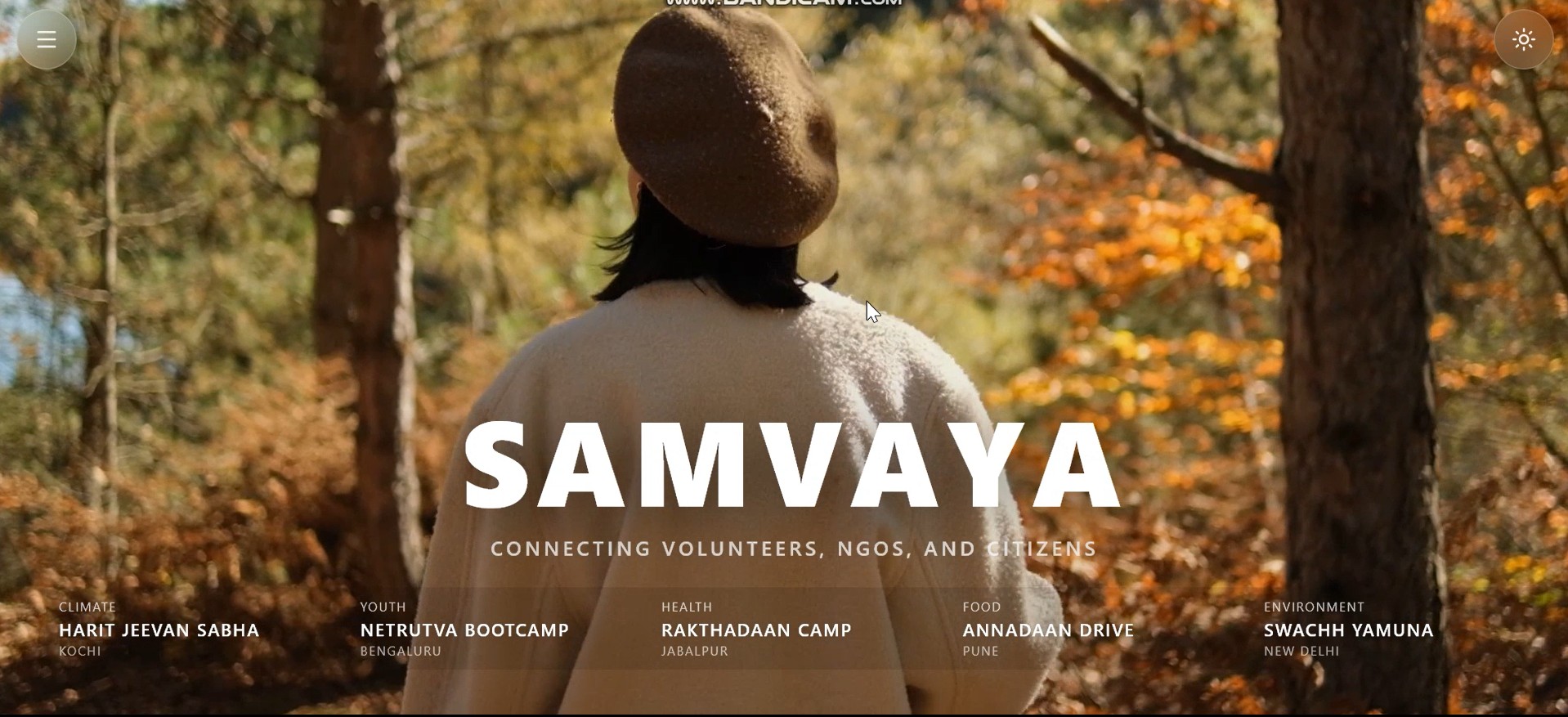
Samvaya was inspired by the need for a dedicated, transparent, and scalable platform focused exclusively on non-profit and community events, ensuring meaningful causes get the attention, volunteers, and organization they deserve.
What it does
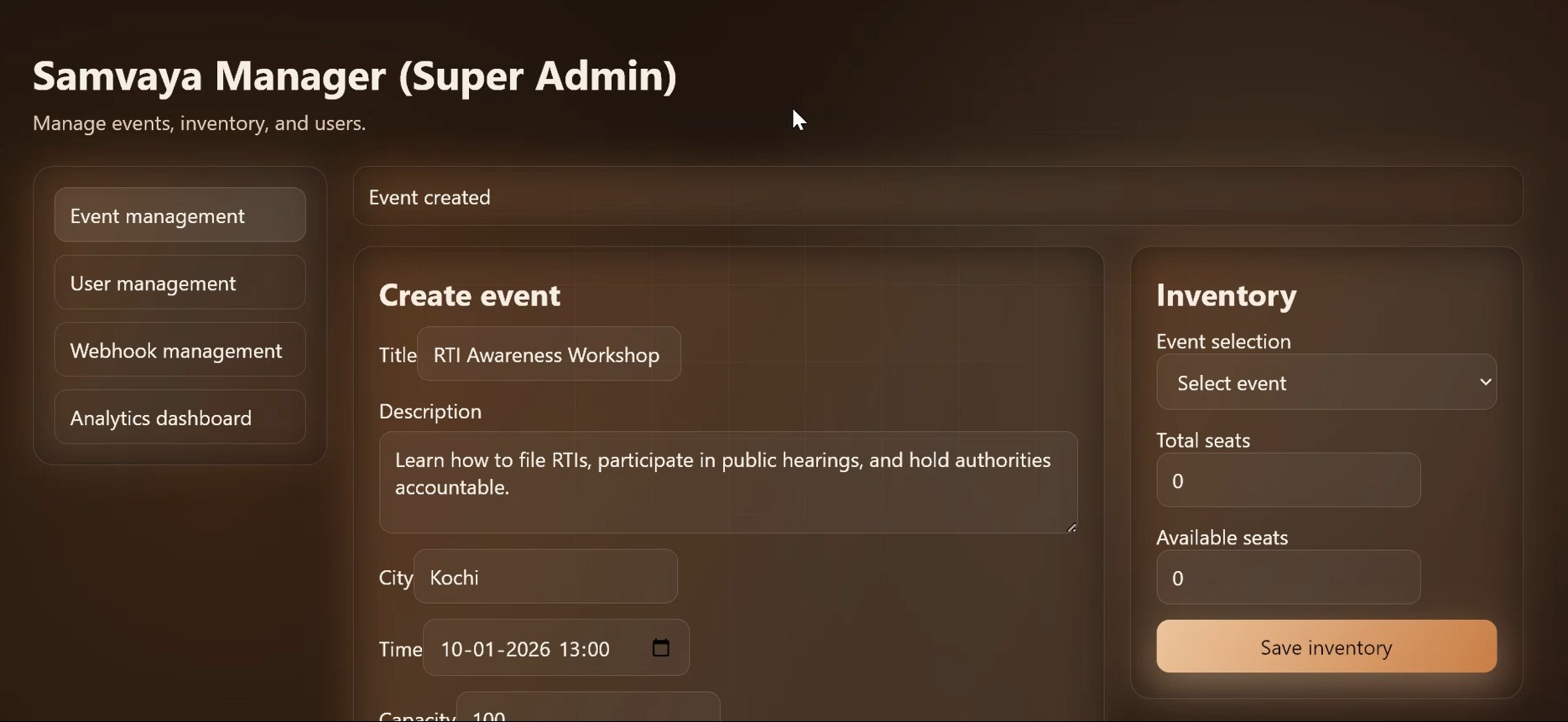
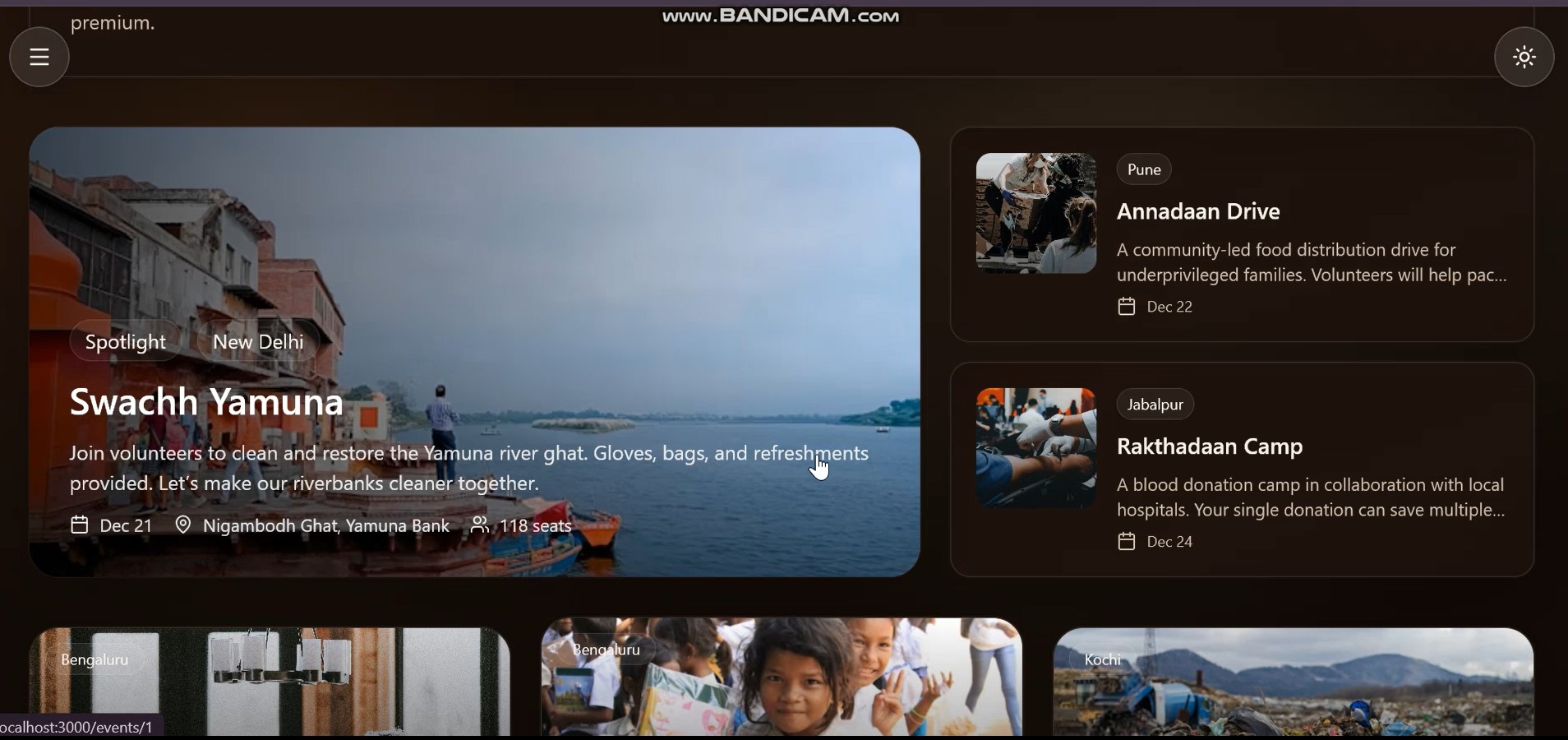
Discovery of verified community and non-profit events by cause, location, and date Event creation and management for NGOs, volunteers, and organizers Registerations with ticketing and participation tracking Real-time communication through live event chat and notifications Transparent analytics to measure reach, engagement, and impact
How we built it
Frontend: Next.js + TypeScript + Tailwind CSS Backend: Spring Boot microservices with Spring Cloud Gateway Authentication: JWT-based auth with role separation Database: PostgreSQL (ACID-compliant) Caching & Rate Limiting: Redis Search: Elasticsearch Async Processing: Apache Kafka Real-Time: WebSockets for chat and presence Infrastructure: Docker, Nginx, Docker Compose
Challenges we ran into
Designing a scalable microservices architecture within limited time Managing inter-service communication without tight coupling Implementing real-time chat and presence reliably Balancing system design depth with a usable MVP Handling caching, rate limiting, and async workflows correctly
Accomplishments that we're proud of
Built 8 working microservices with real inter-service communication Implemented Kafka-based async workflows for notifications and analytics Designed a production-grade system architecture, not just a demo app Delivered real-time chat, search, feed generation, and analytics Created a platform focused entirely on social impact, not profit
What we learned
How real-world distributed systems are designed and wired together Practical trade-offs in caching, rate limiting, and async processing Importance of fault isolation and service boundaries How system design concepts translate into actual code Why simplicity in UX matters even when the backend is complex
What's next for Samvaya
Multi-node horizontal scaling and load testing Real-time stream processing for analytics Multi-language support for accessibility Organizer verification workflows Integration with donation platforms and government/NGO APIs Public dashboards showing real-world social impact
Built With
- apache-kafka
- docker
- docker-compose
- elasticsearch
- event-driven-architecture
- java
- jwt-authentication
- microservices-architecture
- next.js
- nginx
- postgresql
- react
- redis
- rest-apis
- spring-actuator
- spring-boot
- spring-cloud-gateway
- spring-data-jpa
- spring-websocket
- tailwind-css
- typescript
- websockets


Log in or sign up for Devpost to join the conversation.