-
-

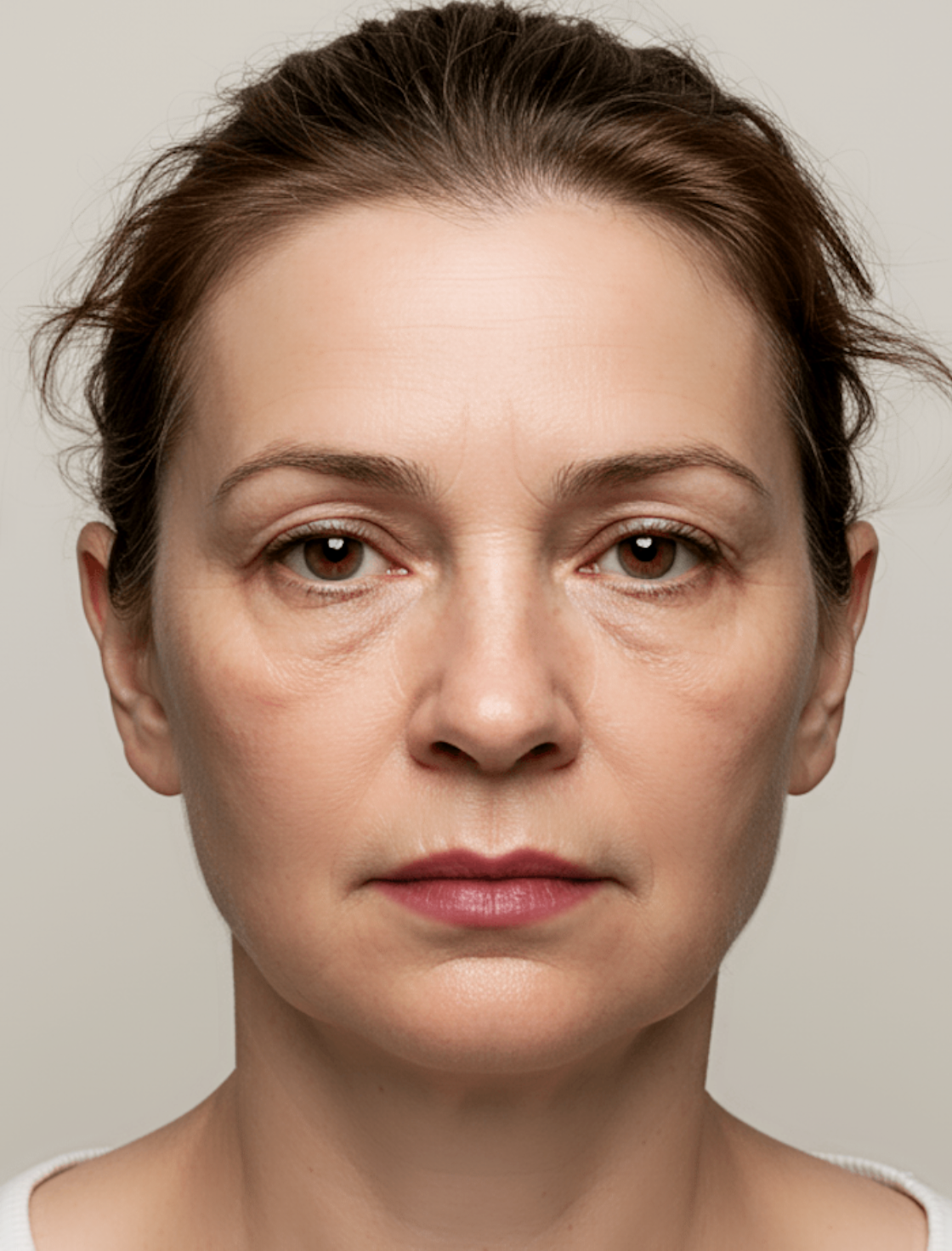
Live YouCam AI Skin Analysis HD: wrinkle detection mask returned for the scanned selfie
-
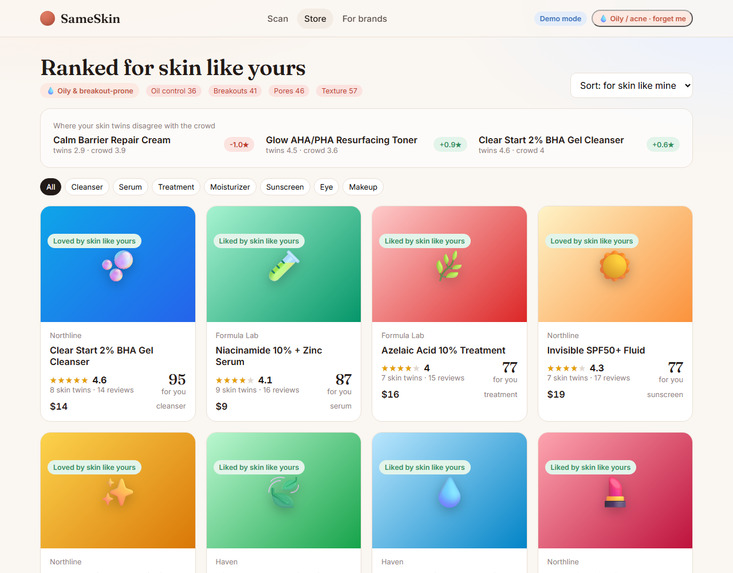
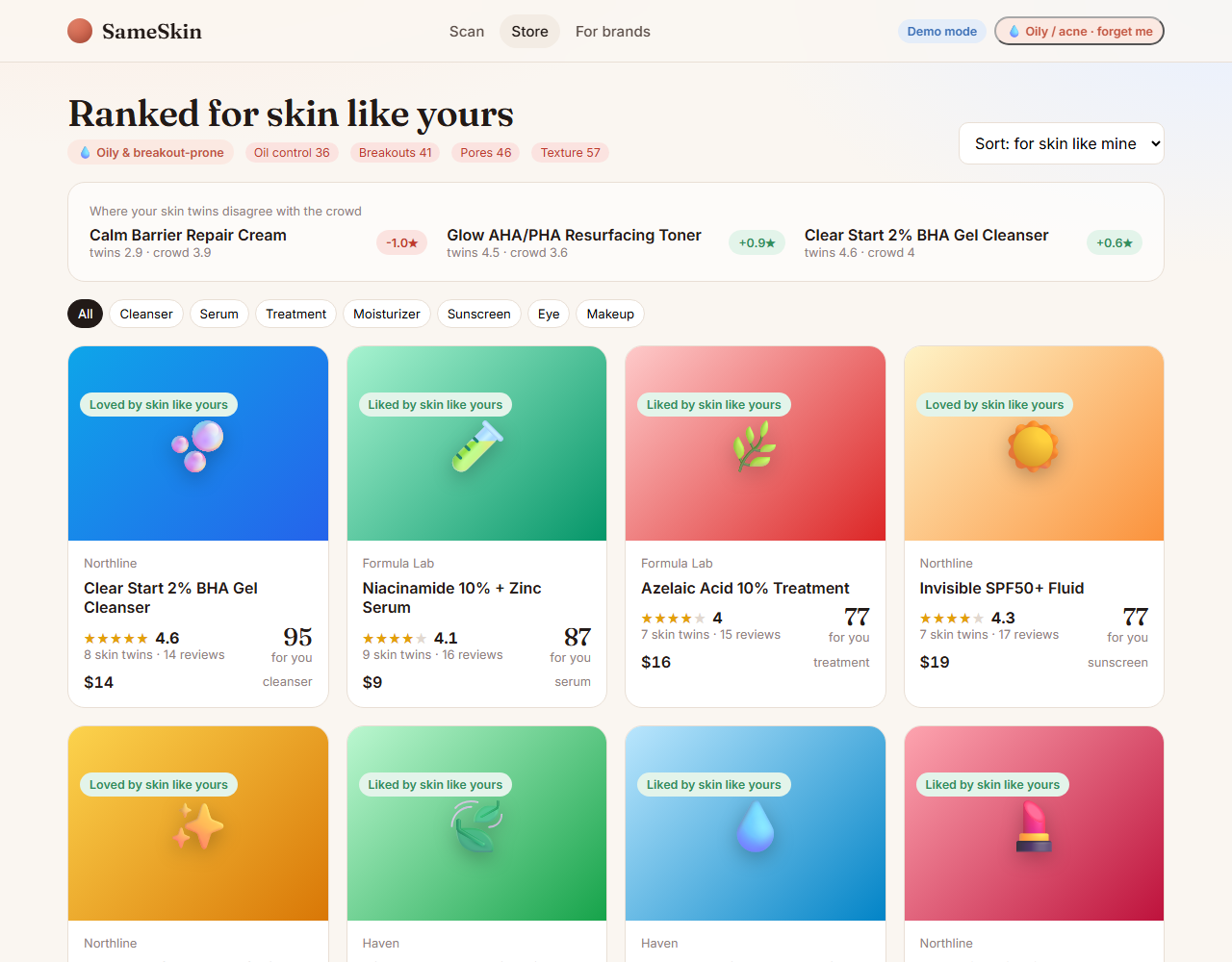
Store re-ranked for an oily, breakout-prone profile: for-you score, twin rating vs crowd rating
-
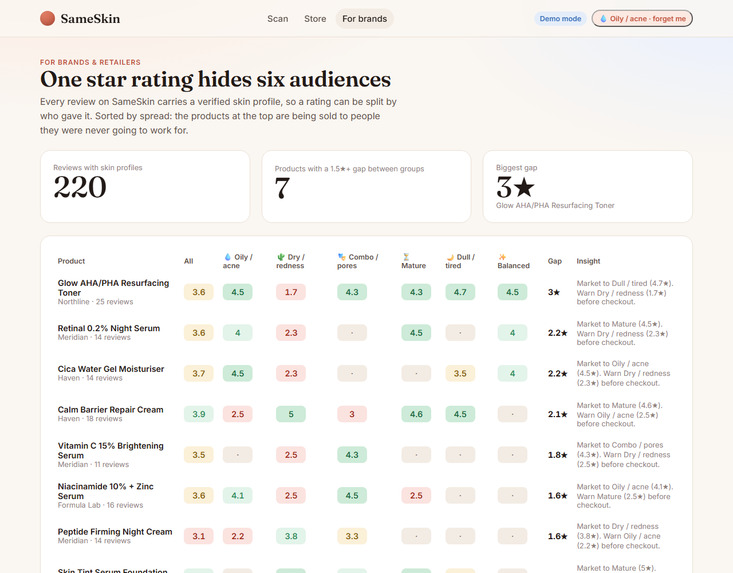
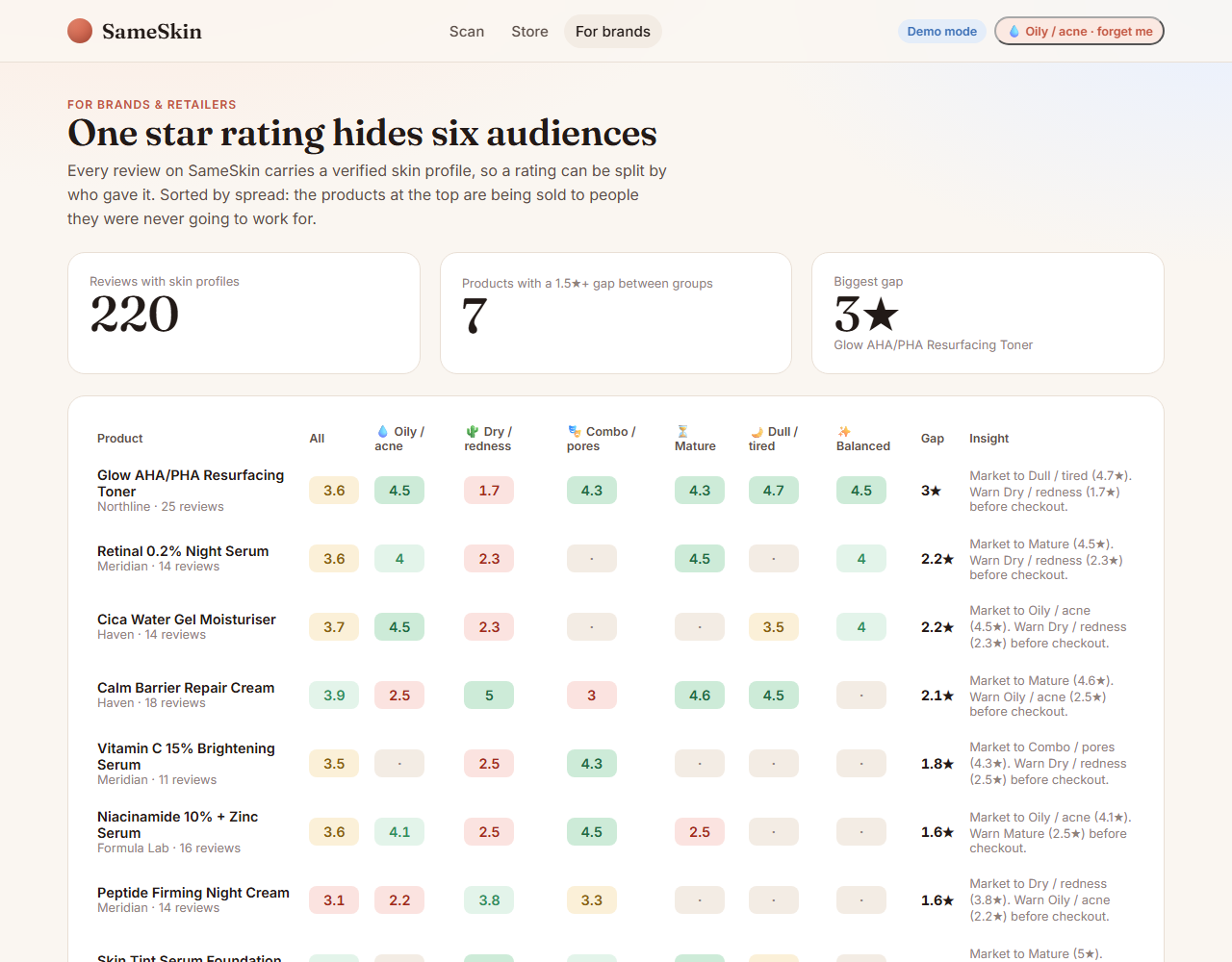
Brand dashboard: one star rating split into six skin groups, sorted by the gap
-
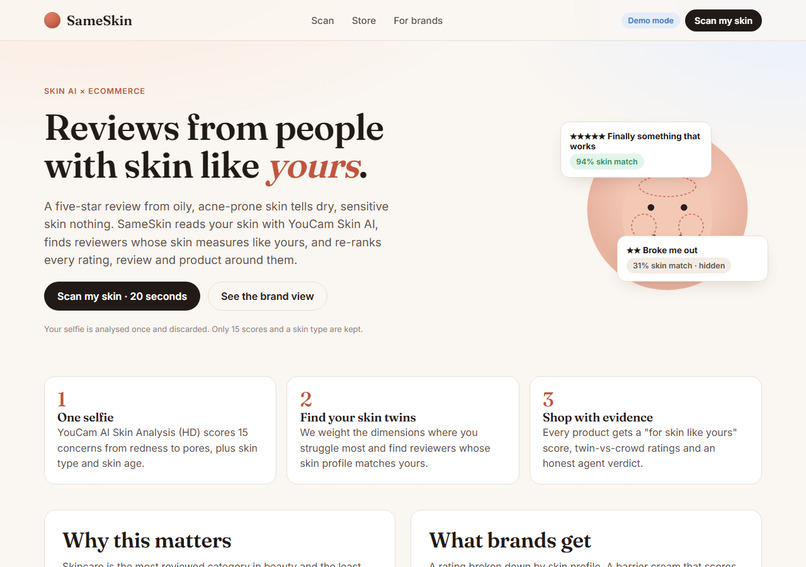
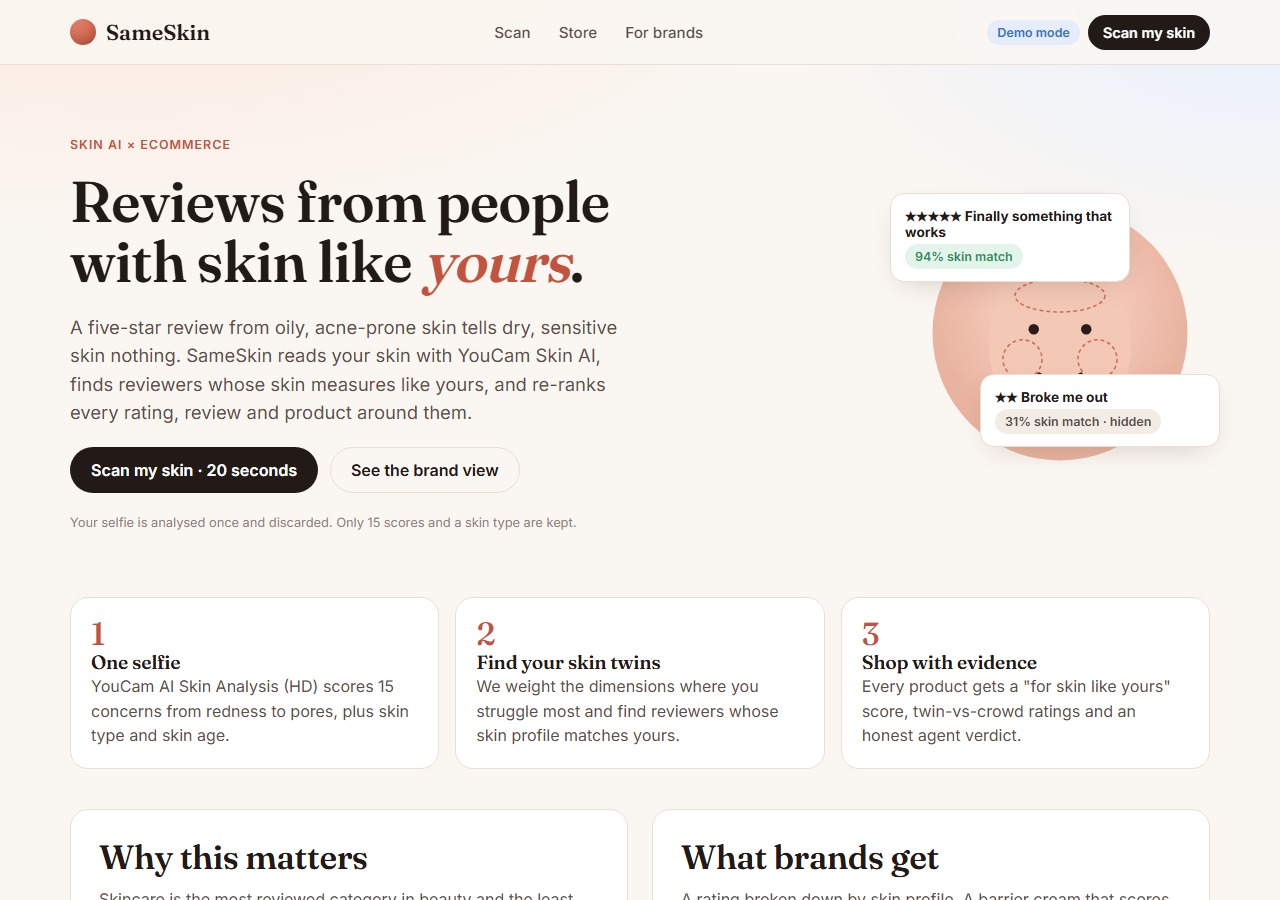
Home: one selfie, YouCam Skin AI, reviews from people with skin like yours
-
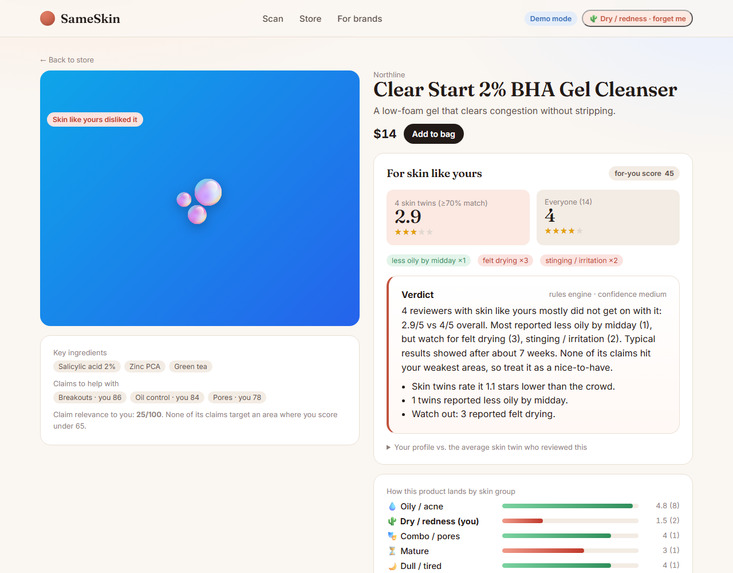
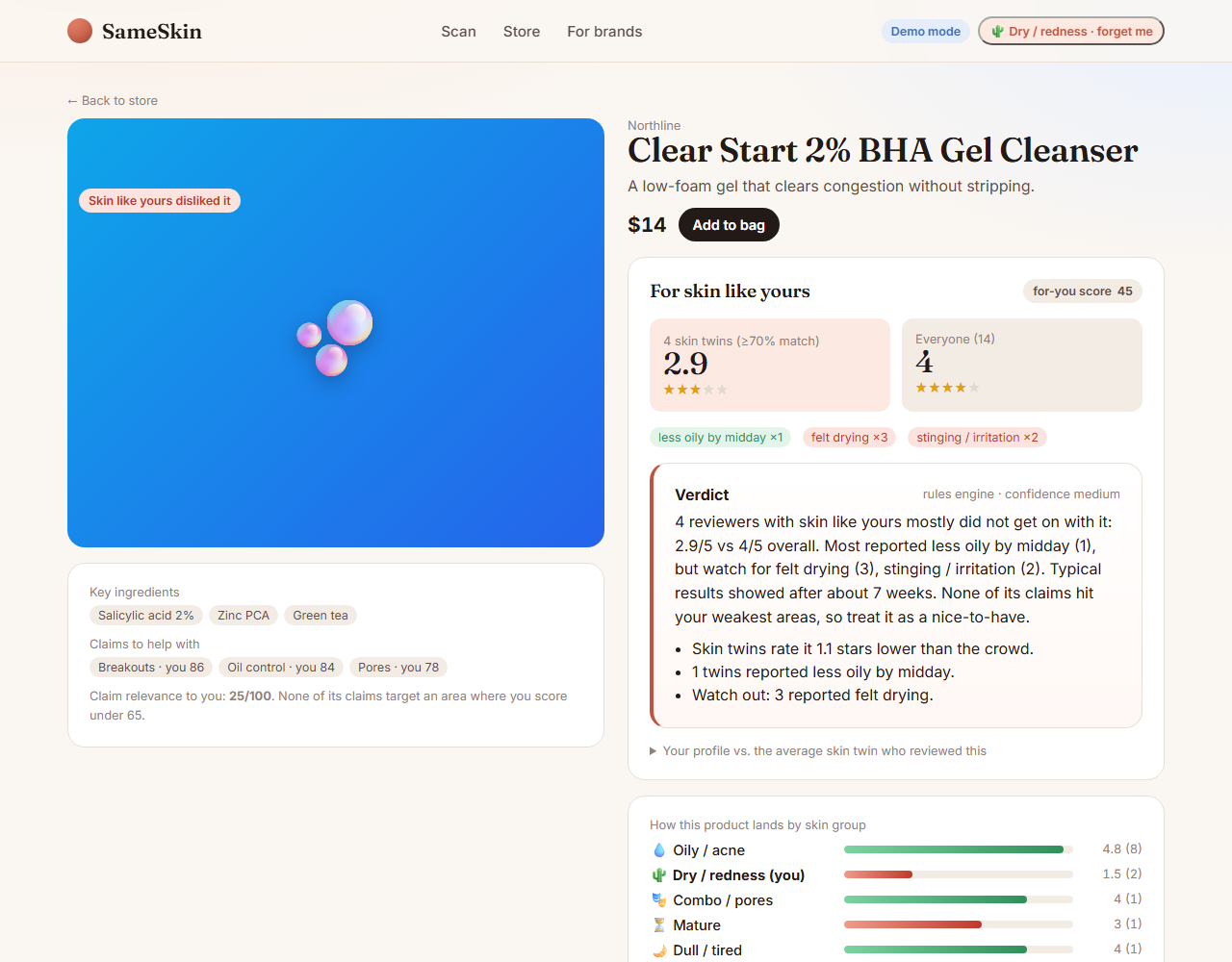
Same product, dry/sensitive skin: 2.9 from skin twins, 'felt drying', 'stinging'. Blended rating hides this.
-
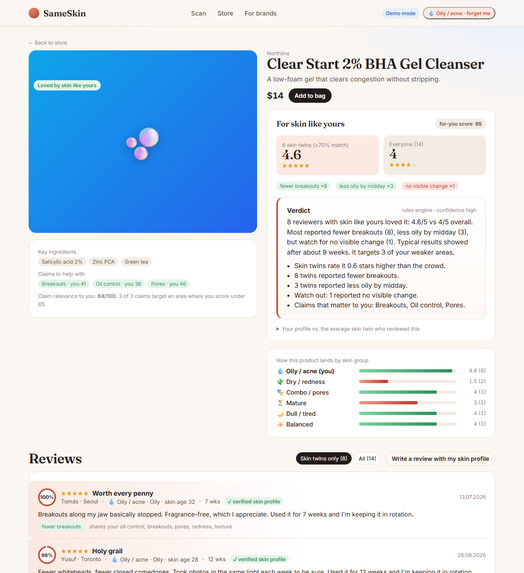
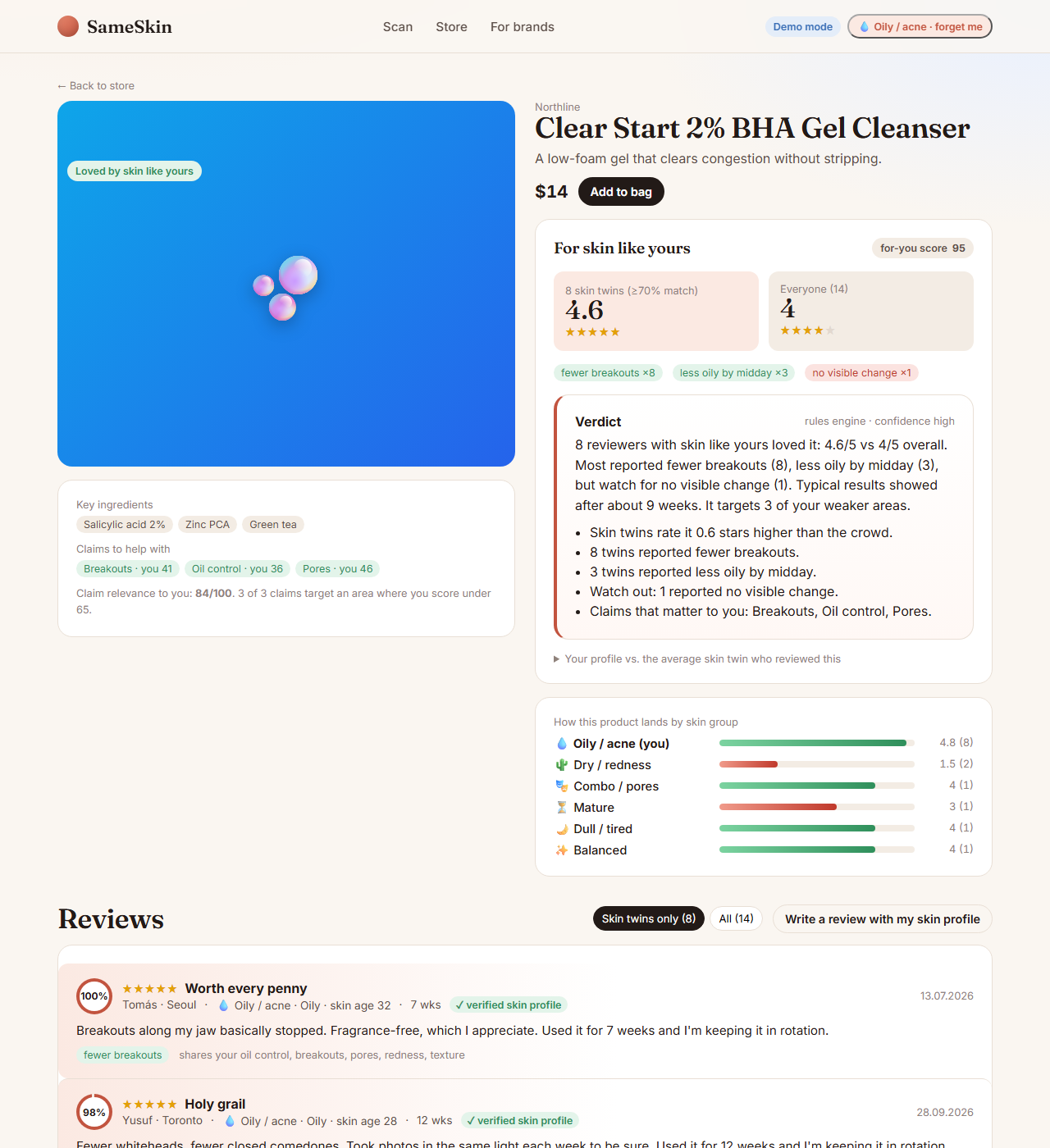
Product page, oily skin: 8 skin twins rate it 4.6 vs 4.0 overall, outcomes, agent verdict
-
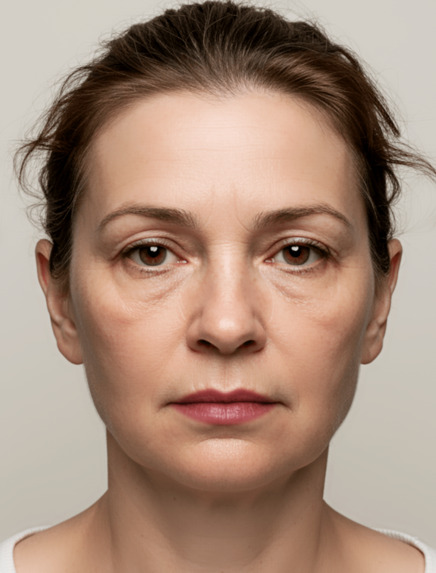
Live YouCam Makeup Virtual Try-On: lip tint rendered on the scanned selfie (1 unit)

Inspiration
Every skincare review ends with "worked for me". None of them say whose skin "me" is. We kept seeing the same pattern: a product with a 3.9-star blended rating that is actually a 4.8 for dry, reactive skin and a 2.3 for oily, acne-prone skin. Shoppers buy on the blend, get disappointed, return it, and leave the one-star review that misleads the next person. The information to fix this exists the moment someone takes a selfie. YouCam Skin AI turns that selfie into 15 numbers. We built the store that uses them.
What it does
SameSkin scans your skin once with YouCam AI Skin Analysis (HD) and then rewrites a skincare store around you:
- Skin twins. We find reviewers whose skin measures like yours, weighting the dimensions where you actually struggle (your redness at 42 matters more than your fine lines at 90).
- Twin rating vs. crowd rating. Every product shows what people with skin like yours gave it next to what everyone gave it. The same cleanser is "Loved by skin like yours" (4.6) for oily skin and "Skin like yours disliked it" (2.9) for dry skin. The blended rating is 4.0.
- Outcomes, not adjectives. Twins' reported outcomes are tallied: fewer breakouts x8, less oily by midday x3, stinging x2.
- Verdict agent. A Claude tool-use agent pulls twin reviews, outcome tallies, your weak spots and ingredient notes, and writes a two-sentence verdict with a confidence level. Without a key, a rules engine produces the same structure.
- Reviews with a verified skin profile. Post a review after a scan and your scores (never your image) travel with it, so matching gets better with every review.
- Brand dashboard. One star rating, six audiences: a heatmap of each product's rating by skin group, sorted by the gap. The products at the top are being sold to people they were never going to work for.
- Try it on. Makeup products render on your scanned selfie with YouCam Makeup Virtual Try-On.
How we built it
- YouCam AI Skin Analysis (HD): File API -> pre-signed upload ->
skin-analysistask with all 16 HD actions -> polling. We parse the 15 concern scores, HD region sub-scores (pore by forehead/nose/cheek, wrinkle by seven regions), skin type, skin age and mask URLs into a compact profile. Error codes map to actionable guidance ("too dark, face a window"). - Matching engine (pure TypeScript, unit-tested): a problem-weighted similarity, a similarity-weighted Bayesian twin rating, a claim-fit score, and a verdict threshold. It runs identically on client and server.
- Agentic verdict: Claude with four tools (
get_viewer_profile,get_twin_reviews,get_outcome_tally,get_ingredient_notes), constrained to only claim what the evidence supports and to flag thin evidence. - Privacy: the selfie lives in server memory for 30 minutes and is never written to disk. "Forget me" deletes everything.
- Demo mode: recorded YouCam-shaped responses for three personas, so judges can run the whole product without spending units. Deep links such as
/store?persona=dry_sensitiveload a persona instantly. - Verified live: real HD scan (9.9 s, 30 output entries, 22 units) and Makeup VTO (10 s, 1 unit) against the production API; the captured response is the parser's reference fixture.
Challenges we ran into
- Making "similar skin" mean something. Plain similarity across 15 scores said everyone with healthy skin was a twin. The fix was to weight each dimension by how badly the weaker person scores on it, and to nearly ignore dimensions where both people are fine.
- Keeping the verdict honest. The agent is only allowed to claim what twin reviews support, must say when evidence is thin (fewer than 3 twins), and falls back to deterministic rules so there is never a blank verdict.
- The real HD response shape differs from the documented example (one entry per region, skin age as its own entry). We captured it and built the parser against the real thing.
Accomplishments that we're proud of
The brand dashboard. Seven of fourteen demo products have a gap of 1.5 stars or more between skin groups. That is not a prototype insight; it is what every skincare catalogue looks like once reviews carry a skin profile.
What we learned
A skin score is far more valuable as a key than as a diagnosis. The scan itself is a one-time event; joining it to reviews, products and outcomes is what compounds.
What's next for SameSkin
- Shopify / Salesforce Commerce widget: "Rated 4.7 by skin like yours" on any product page.
- Retake-noise calibration: scan twice, ignore differences inside the noise band.
- Rescan-at-review-time: attach the delta in skin scores to a review, so "it worked" becomes measurable.
YouCam APIs used
- AI Skin Analysis (HD):
/s2s/v2.0/file,/s2s/v2.0/task/skin-analysis(create + poll) - AI Makeup Virtual Try-On:
/s2s/v2.0/task/makeup-vto(create + poll)
Note: the reviewer population in the demo catalogue is synthetic (sampled from six skin archetypes) so the matching engine has a realistic population to demonstrate on. In production every profile comes from a YouCam scan at review time.
Built With
- claude
- express.js
- node.js
- react
- typescript
- vite
- youcam-ai-skin-analysis
- youcam-api
- youcam-makeup-virtual-try-on

Log in or sign up for Devpost to join the conversation.