-
-
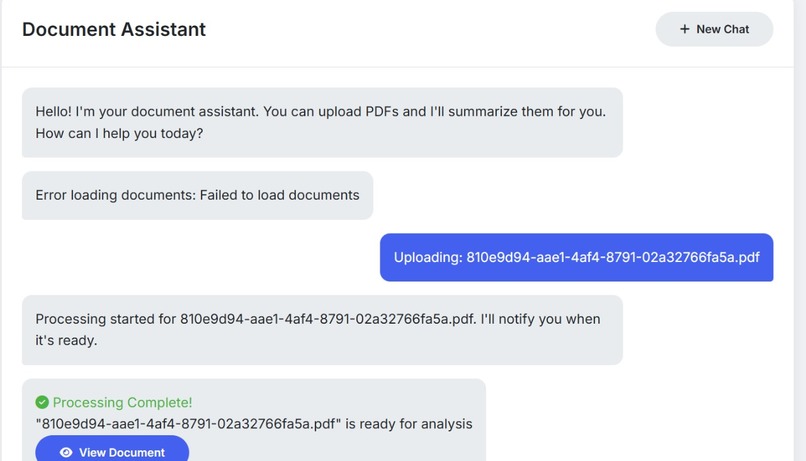
main ui
🧠 DocuMind
Smart research summaries, tailored for curious minds.
DocuMind simplifies academic exploration by turning dense research papers into digestible, accurate summaries—with a focus on physics and other technical domains.
🚀 Inspiration
I was frustrated by the barrier that complex, jargon-heavy academic papers pose—especially for students trying to explore topics beyond the classroom. While general-purpose tools like ChatGPT exist, they don’t automate the end-to-end process of finding, extracting, and summarizing real research papers.
I created DocuMind to solve that: an NLP-powered assistant that lets users enter any topic, fetches a relevant research paper from arXiv or Semantic Scholar, and delivers a domain-aware summary—automatically.
🛠️ What It Does
- Takes a user-provided topic (e.g. “quantum entanglement”)
- Fetches a relevant, high-quality research paper using APIs like Semantic Scholar
- Extracts key content (abstract, intro, methods)
- Generates a summary using a language model fine-tuned or prompted for technical understanding (e.g. GPT-4 with domain-aware prompts)
- Outputs a clear, structured summary tailored to students or researchers
- Accepts PDF uploads to summarize user-selected academic papers
- Lets users download the summary as a clean text file for later use
🧪 What I Learned
- How to query and filter research databases programmatically
- How prompt engineering changes summarization depth drastically
- Where existing LLMs fall short for technical summarization
- How to process PDF research papers efficiently for NLP
- How to deliver a functional end-to-end tool in a tight hackathon window
---## 💡 How I Built It
- Frontend: Built with basic HTML and JavaScript for lightweight interaction and simplicity
- Paper source: I used the arXiv API to search and retrieve relevant academic papers based on the user’s topic
- Topic input: Users can enter a topic, and the app fetches a recent, relevant research paper automatically
- PDF download: The fetched paper is downloadable directly from the interface for full access
- Custom upload: Users can also upload their own PDFs, which are parsed and summarized using an integrated chatbot interface
- Summary generation: Summaries are created via a language model (e.g., DeepSeek or GPT-4) using carefully engineered prompts focused on physics and technical clarity
- Summary download: Final summaries can be saved and downloaded as
.txtfiles for future reference
🧱 Challenges I Faced
- API limitations (rate limits, formatting inconsistencies)
- Summarization failures on short or ultra-technical papers
- Managing context length and chunking for full-text inputs
- Parsing PDFs without breaking formatting or losing key data
🎯 What's Next
- Fine-tune a model on arXiv physics papers for better summaries
- Add multi-paper synthesis (pull 3+ papers on one topic and summarize themes)
- Expand to other domains: biology, math, economics
- Add Chrome extension or Notion integration for inline research help
📸 Screenshots
(Include screenshots of your UI, a sample input/output, and the summary result here)
🌐 Try It
Hosted version (if applicable): [link]
GitHub repo: [link]
Demo video: [YouTube/Vimeo link]
🏁 Final Thoughts
DocuMind isn’t just a summarizer—it’s an academic co-pilot. Whether you're curious about physics or diving into research for the first time, DocuMind bridges the gap between curiosity and comprehension.


Log in or sign up for Devpost to join the conversation.