-
-
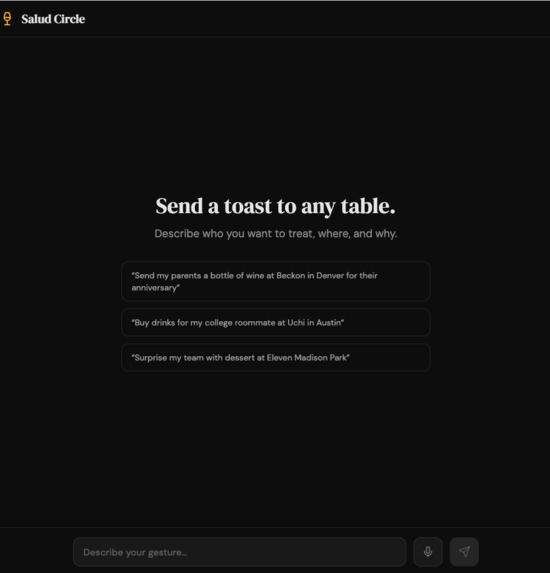
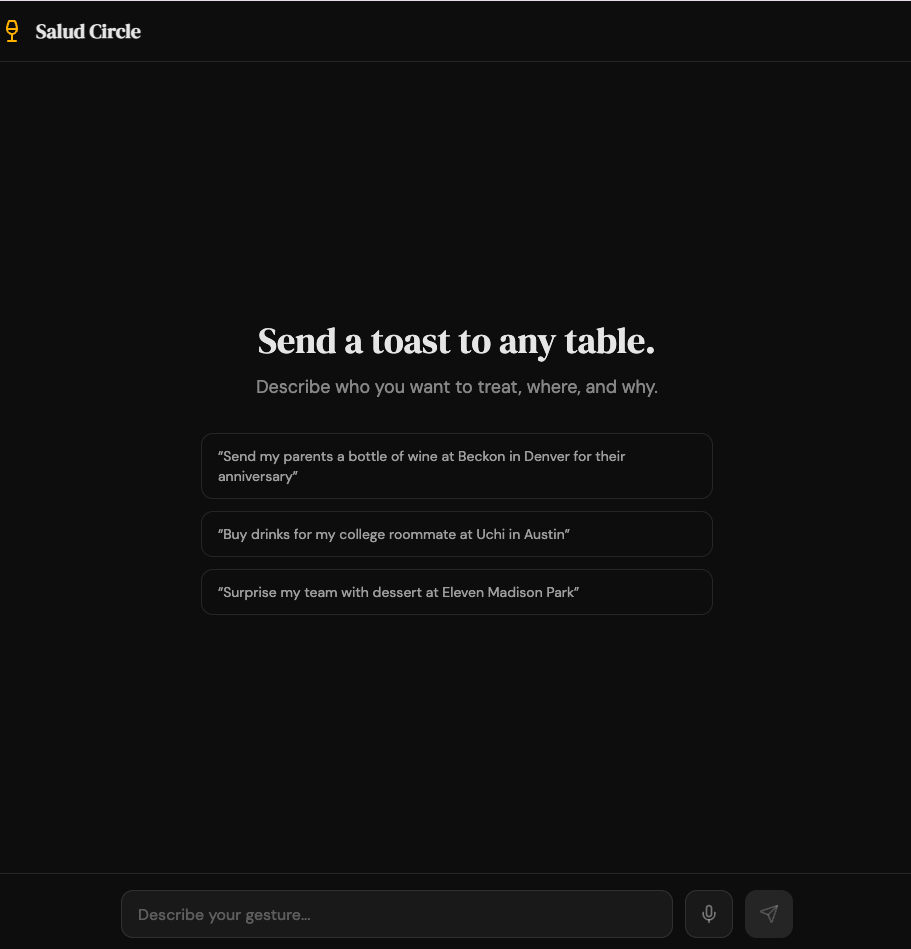
Start Screen with some examples
-
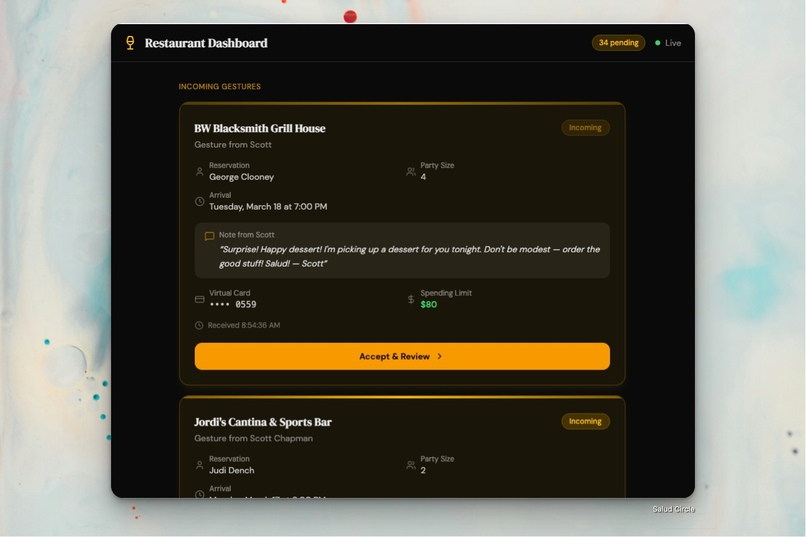
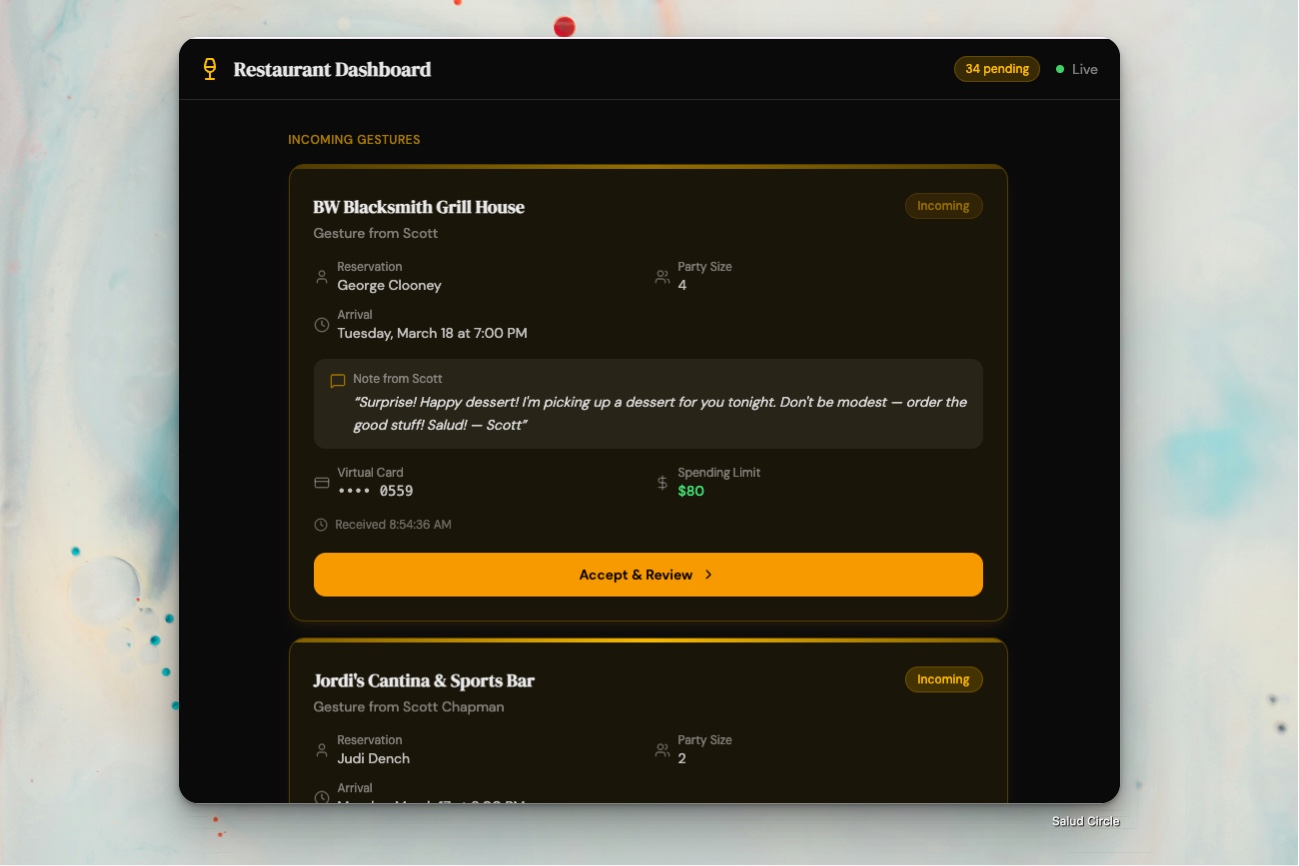
The restaurant dashboard where they are notified of and process the gestures.
-
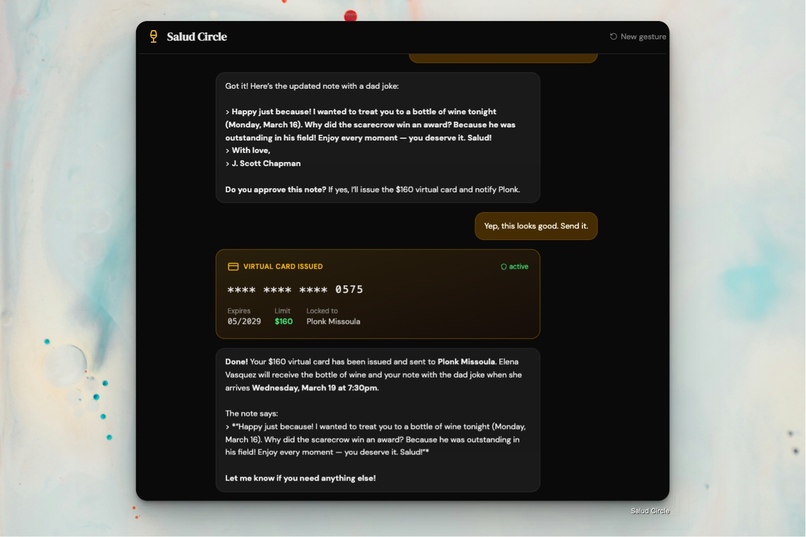
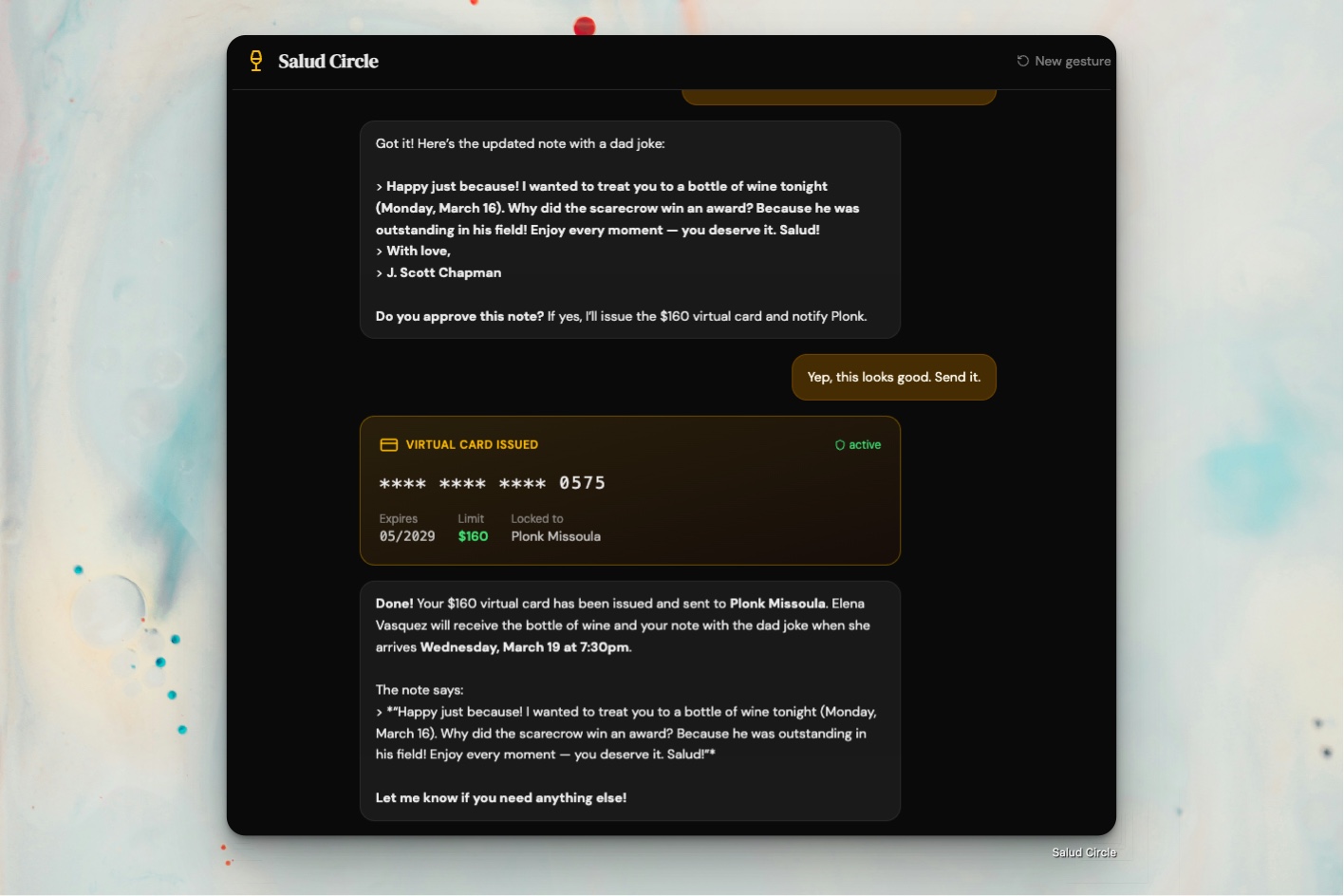
A virtual card is issued through Stripe and the gesture is confirmed.
Inspiration
Buying someone a meal when you're not there is weirdly hard. You can Venmo them cash, but that's not a gesture, that's a transaction. You can call the restaurant, but half the time they won't take a card over the phone. The impulse to treat somebody fades because the logistics get in the way.
What it does
Salud Circle is a concierge you talk to. You say: "I want to buy my mom dinner at that Italian place in Austin." It finds the restaurant, works out a budget, writes a note in your voice, creates a real Visa card locked to that restaurant, and tells the staff to expect her. One conversation.
How we built it
Amazon Nova 2 Lite through Bedrock's streaming Converse API. The agent has five tools (find a restaurant, frame a budget, write a note, issue a card, notify the staff) and Nova decides when to use each one based on the conversation. No hard-coded state machine. It confirms the budget before issuing a card, collects enough about the guest so the restaurant can identify them. That judgment lives in the model.
The card is real (Stripe Issuing, locked to restaurant merchant categories), the data lives in DynamoDB, and the restaurant side has a live dashboard that chimes when a gesture comes in. Whole thing runs on Next.js 15 deployed to Vercel. About two-tenths of a penny per gesture in model costs.
Challenges we ran into
The biggest one wasn't technical, it was conversational. Early on the agent asked for everything at once: who, where, when, budget, note tone, guest description. It was too much. People stalled out. We had to rethink the flow so the agent asks one question at a time and builds up context naturally, the way a real concierge would. That turned out to matter more than any API integration.
Accomplishments that we're proud of
The whole experience is a single conversation. No forms, no checkout flow, no page transitions. You talk, and a real card shows up at a real restaurant. That end-to-end loop working, from casual sentence to funded Visa card to a chime on the restaurant's screen, that's the thing.
What we learned
How little scaffolding the agentic approach actually needs. We expected to fight the model on sequencing and guardrails. Instead, Nova picked up the tool ordering and conversational pacing faster than we expected. Most of our iteration time went into the human side, how to present information so people weren't overwhelmed, not the model side.
What's next for Salud Circle
Production, but with a twist. The first version won't be fully automated on the restaurant side. We want a human concierge actually delivering the message, a white-glove handoff to make sure the gesture lands the way it should. That also gives us a research channel: we learn how each restaurant prefers to receive these, what works for their staff, and we record that, so future gestures to that restaurant just get better. Automation comes after we understand the last mile, not before.

Log in or sign up for Devpost to join the conversation.