Inspiration
At Penn State, it’s easy to fall into the same routine: class, food, home. There could be an event or a group of people doing something fun nearby, and you’d never know.
We built WalkPSU to give students a reason to explore campus, try something different, and meet people along the way.
What It Does
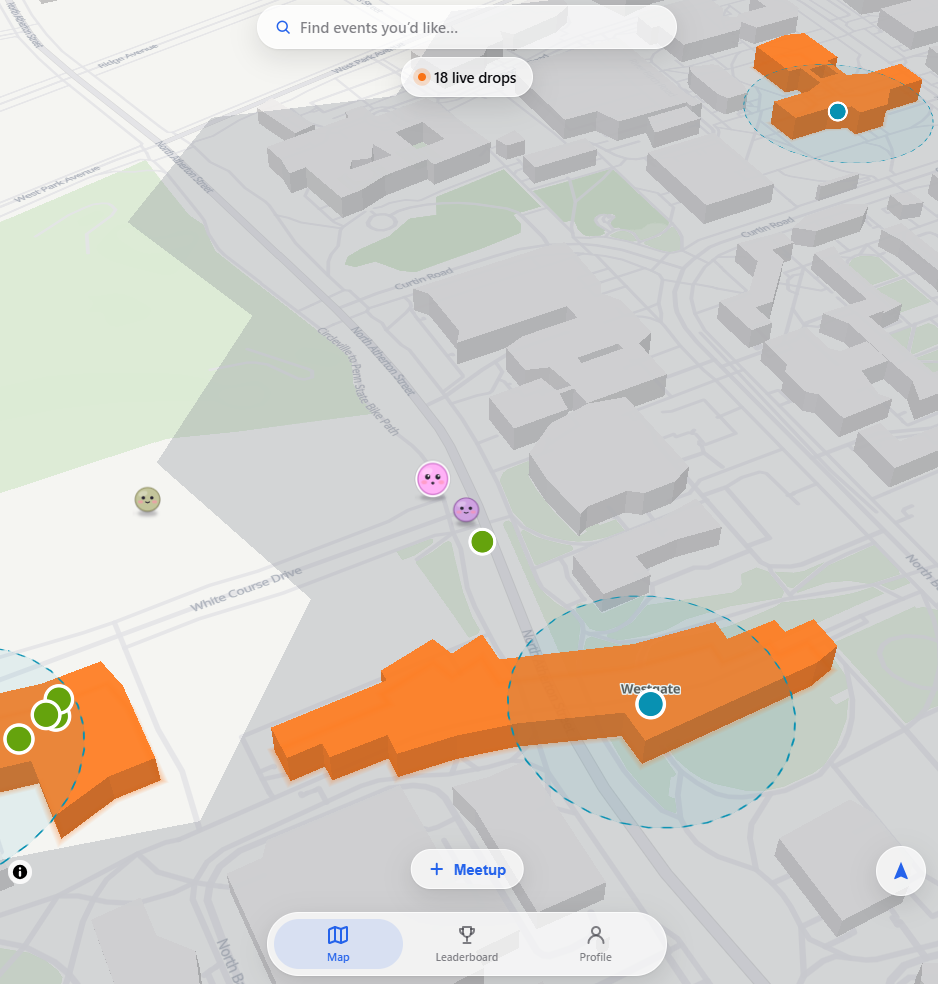
WalkPSU turns Penn State’s University Park campus into a live multiplayer game board.
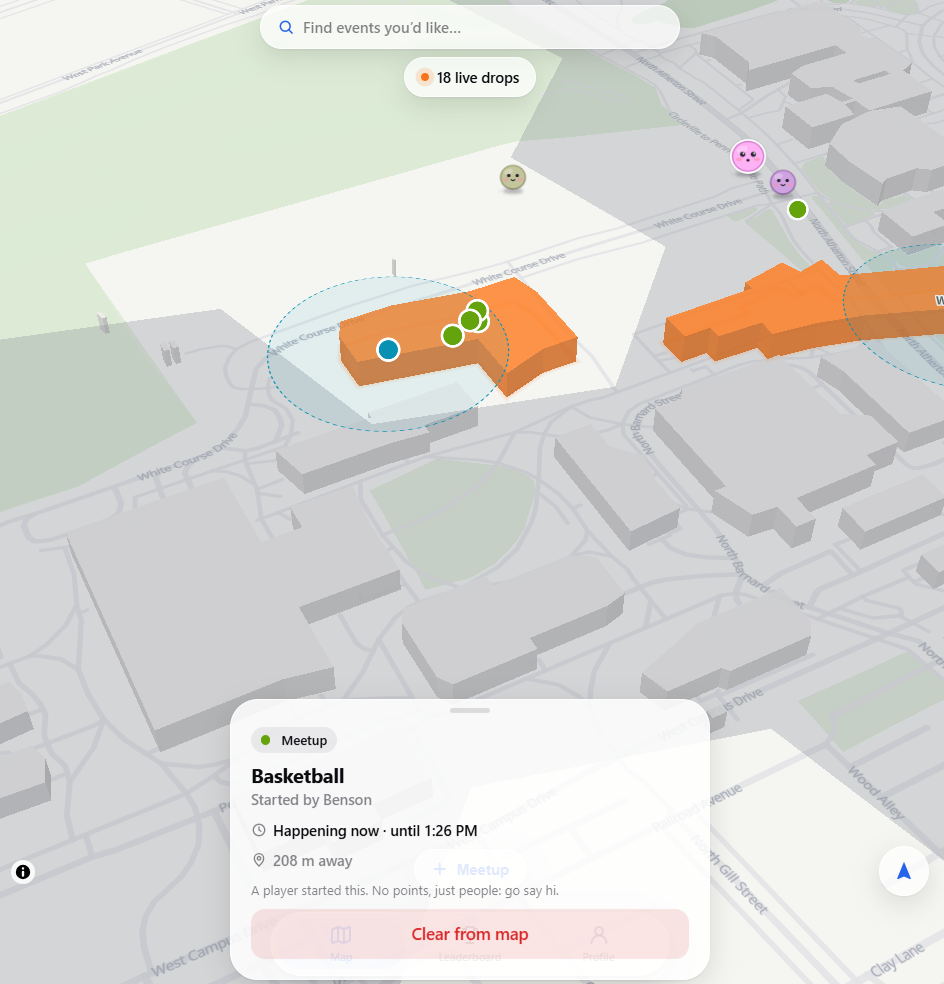
Players find drops on the map, walk within range or scan an indoor QR code, and claim points. Buildings with drops light up on the map.
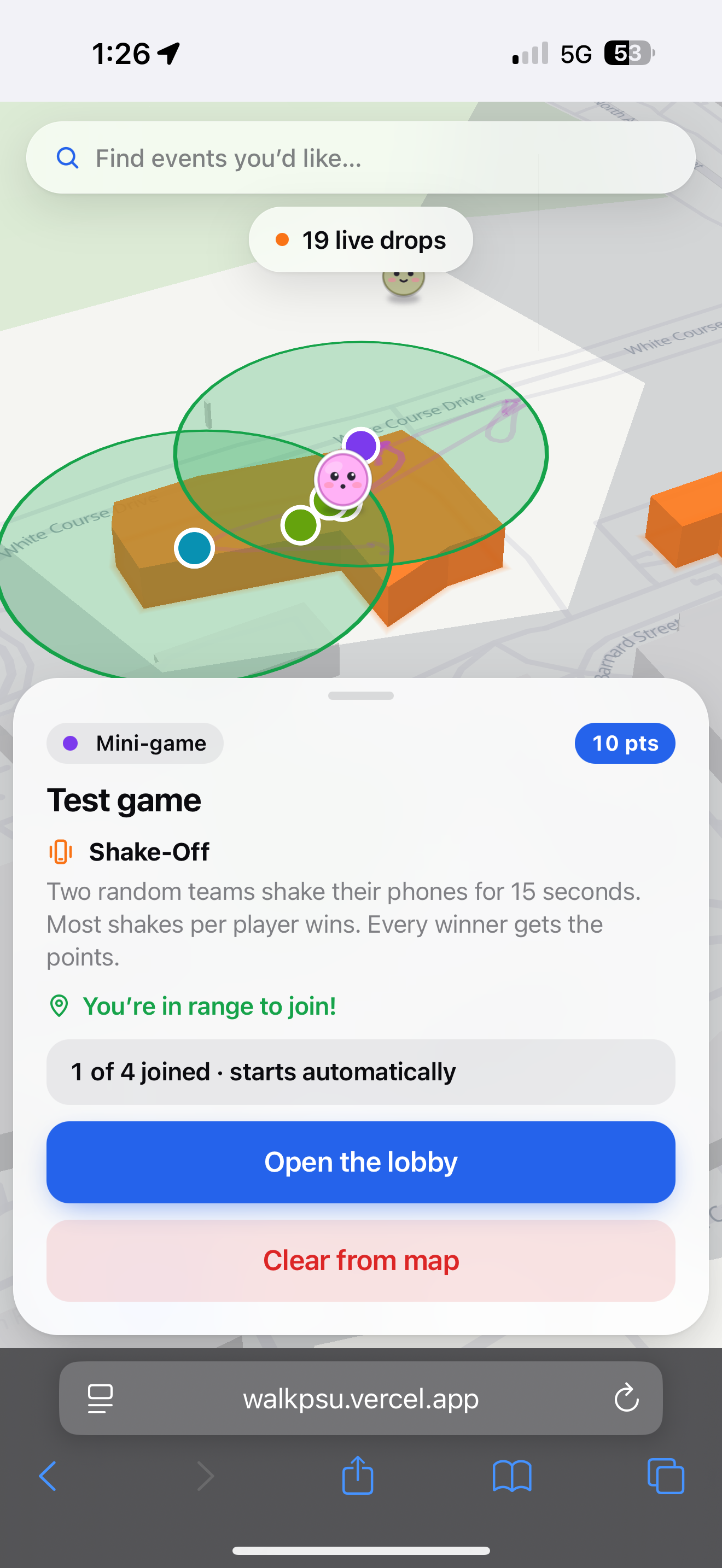
At a drop, nearby players can join four phone-controlled mini-games:
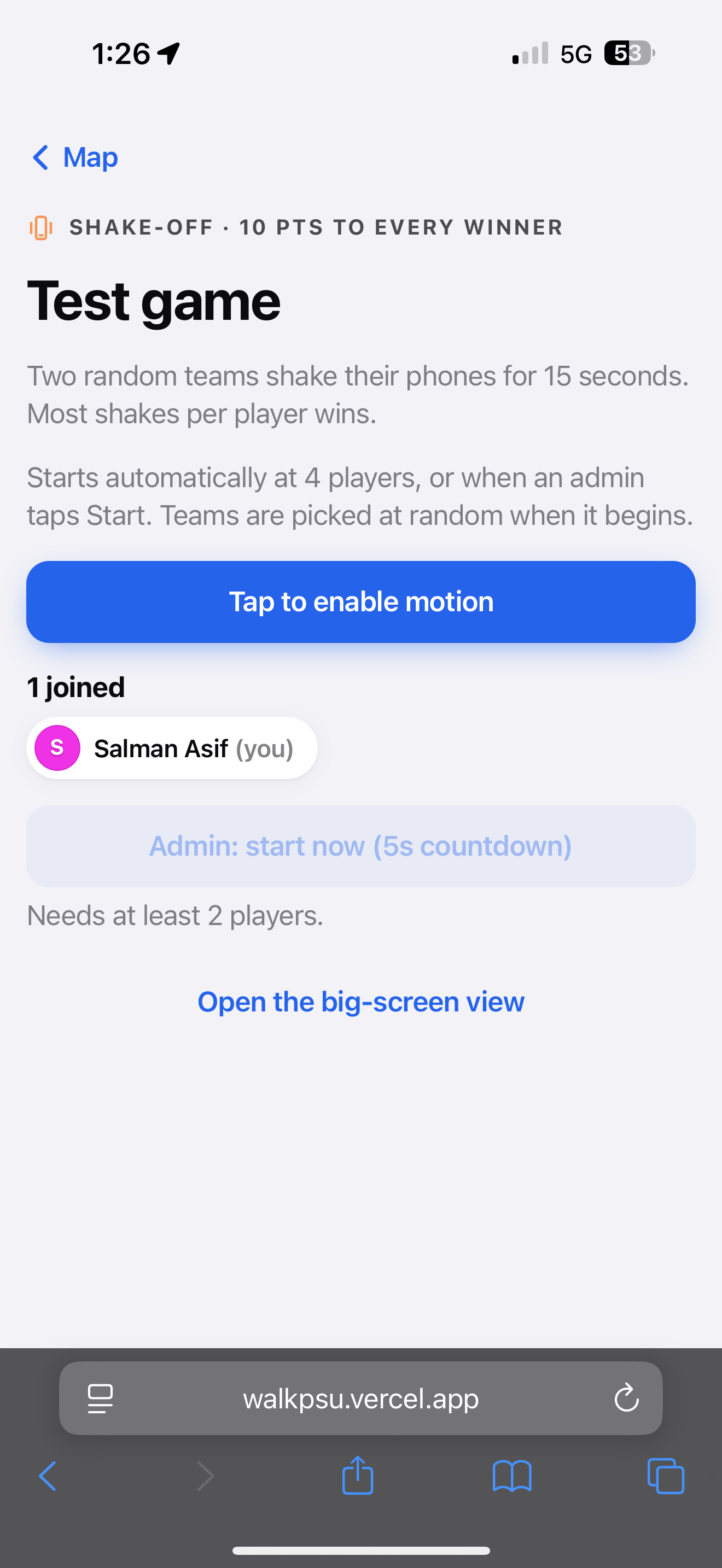
- Shake-Off: Shake your phone for 15 seconds.
- Quick Draw: React to the signal with a flick.
- Point to the Landmark: Use your compass to point toward a campus landmark you can’t see.
- Needle Rain: Tilt your phone to dodge obstacles and survive.
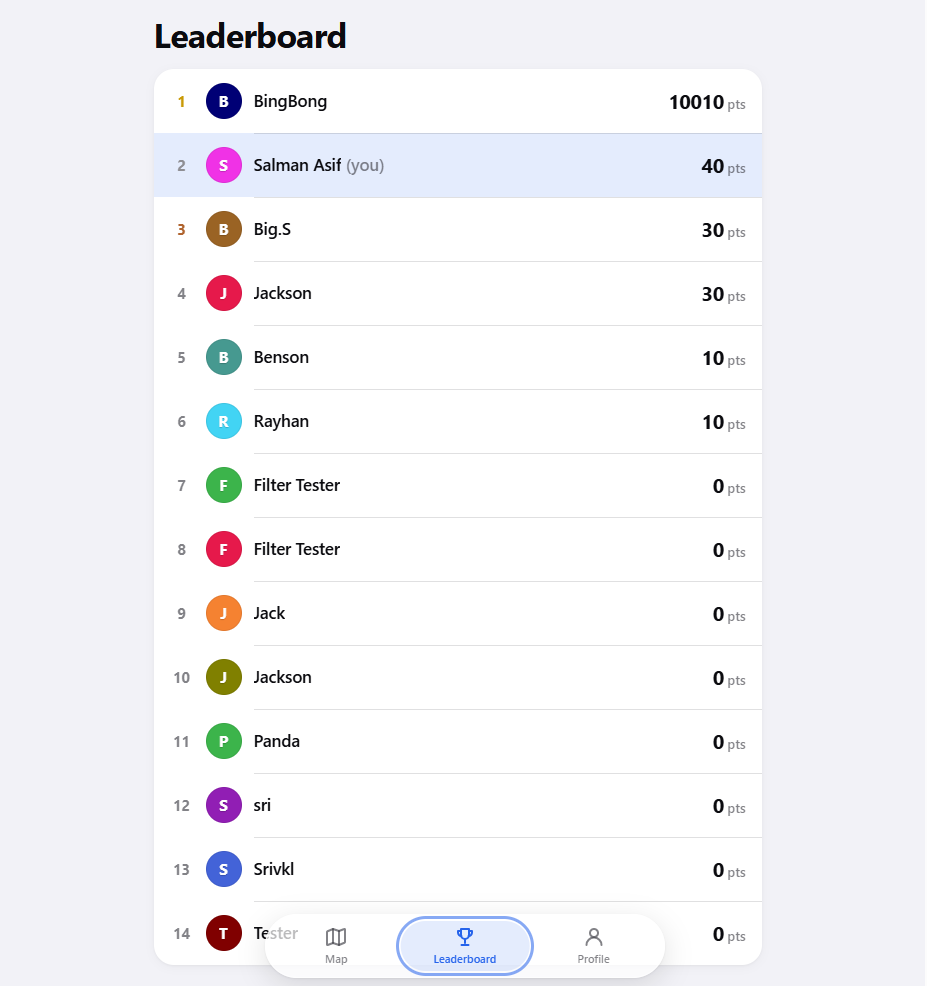
Players compete individually on a live leaderboard. Mini-games assign temporary Blue and White teams, with a projector view for watching the action.
Photo hunts challenge players to find a location from a reference image. Gemini compares their uploaded photo with the reference to check their submission. Gemini also helps students find personalized events through plain-language searches.
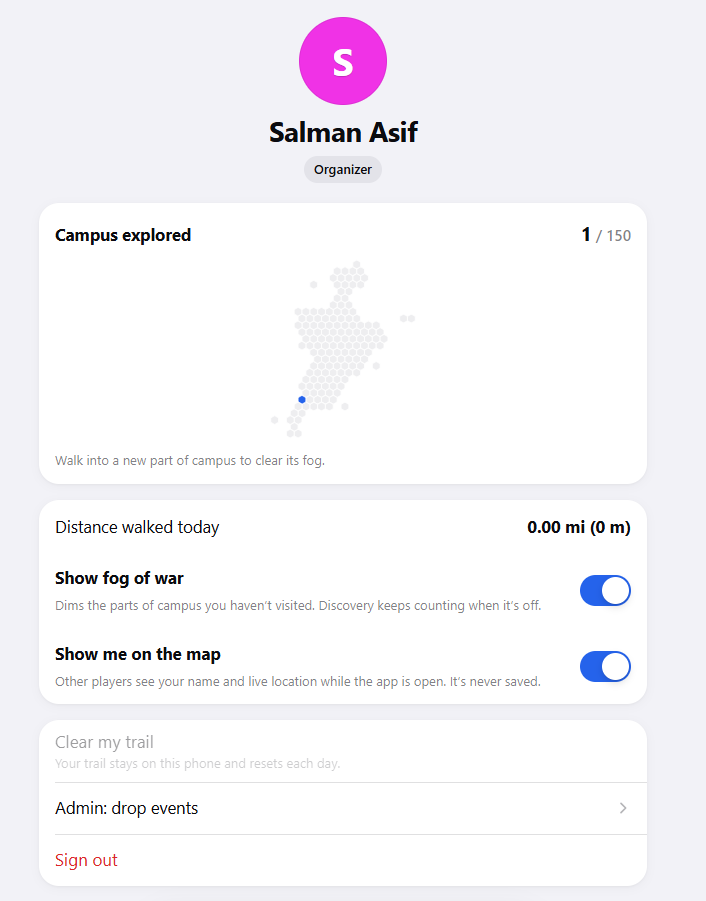
Walking clears fog over unexplored areas of campus. Students can also post temporary meetups, such as “volleyball here right now,” for others to join.
Organizers can place event drops at campus buildings, and public events from Penn State Discover can be imported as check-in drops.
How We Built It
We built the mobile-first web app with React 19, TypeScript, and Vite, and deployed it on Vercel.
MapLibre GL and OpenFreeMap power the map, using 958 campus building footprints from Penn State’s PASDA data.
Supabase provides PostgreSQL, Realtime updates, and photo storage, with row-level security controlling access. Authentication supports Auth0 and a name-only fallback.
Phone motion and compass sensors power the games. The Gemini API supports photo verification and personalized event search.
Challenges
Synchronizing multiplayer games across phones meant coordinating lobbies, timing, results, and score updates.
GPS and phone sensors introduced additional challenges, including indoor positioning, device permissions, and differences between phones. QR check-ins provide an alternative for indoor drops.
We also wanted students to control their visibility. Sharing live location is optional, and live locations are never stored.
What We’re Proud Of
We brought campus exploration, multiplayer games, photo hunts, and spontaneous meetups into one experience.
Students can choose how they participate: explore alone, compete with friends, or join people nearby.
What We Learned
Building for real places means accounting for GPS accuracy, device permissions, and network connections alongside the interface.
We learned how important it is to test complete multiplayer interactions. Our test suite covers database security, the photo-check API, and end-to-end game flows. We also built a mock backend with bots for trying the interface and game lobbies.
What’s Next
We want to test with more students, improve accessibility and device compatibility, and help clubs host activities through WalkPSU.
We also want to measure whether students discover new places, attend events, and make connections through the app.
Our goal is to give students a reason to get out of their routine and experience more of Penn State.
Built With
- auth0
- css
- gemini
- gl
- html
- javascript
- maplibre
- openfreemap
- postgresql
- react
- supabase
- typescript
- vercel
- vite


Log in or sign up for Devpost to join the conversation.