-
-
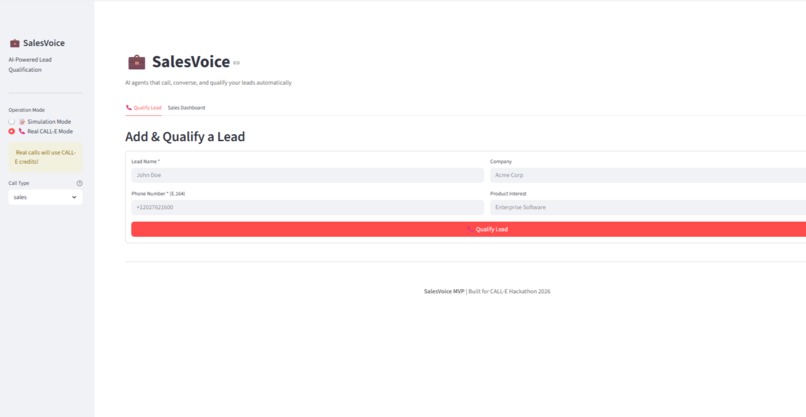
Sales-Voice Agent
-
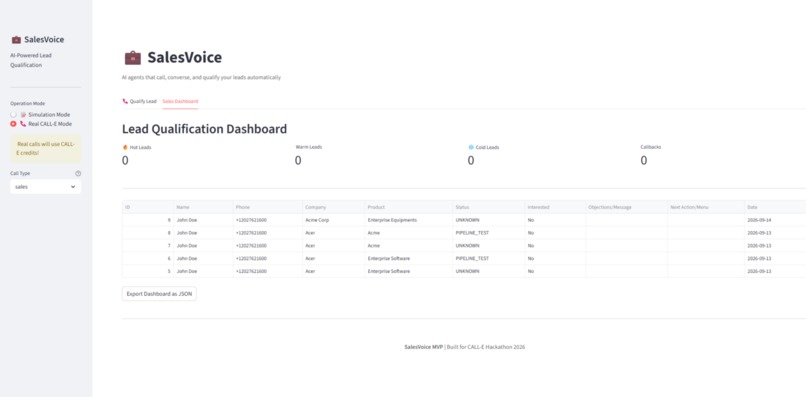
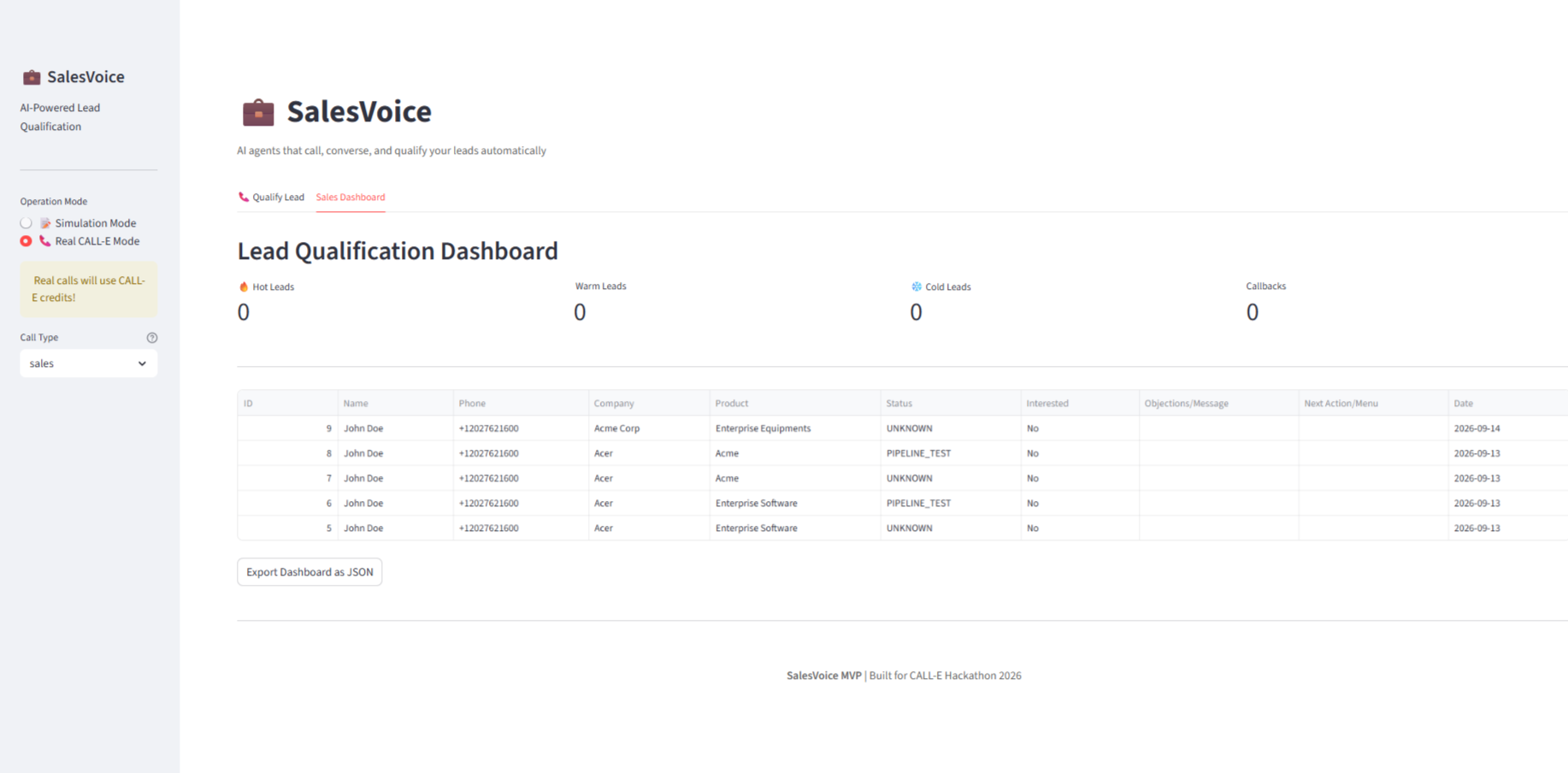
Lead Qualification Sashboard
Inspiration
Sales teams waste thousands of hours manually calling unqualified leads, only to hear "not interested" or "call me back next year." While text-based AI chatbots are everywhere, the phone remains the ultimate channel for high-stakes business communication. We were inspired to build an AI agent that doesn't just generate text, but actually picks up the phone, navigates real-world conversations, and does the heavy lifting of lead qualification so humans can focus on closing deals.
What it does
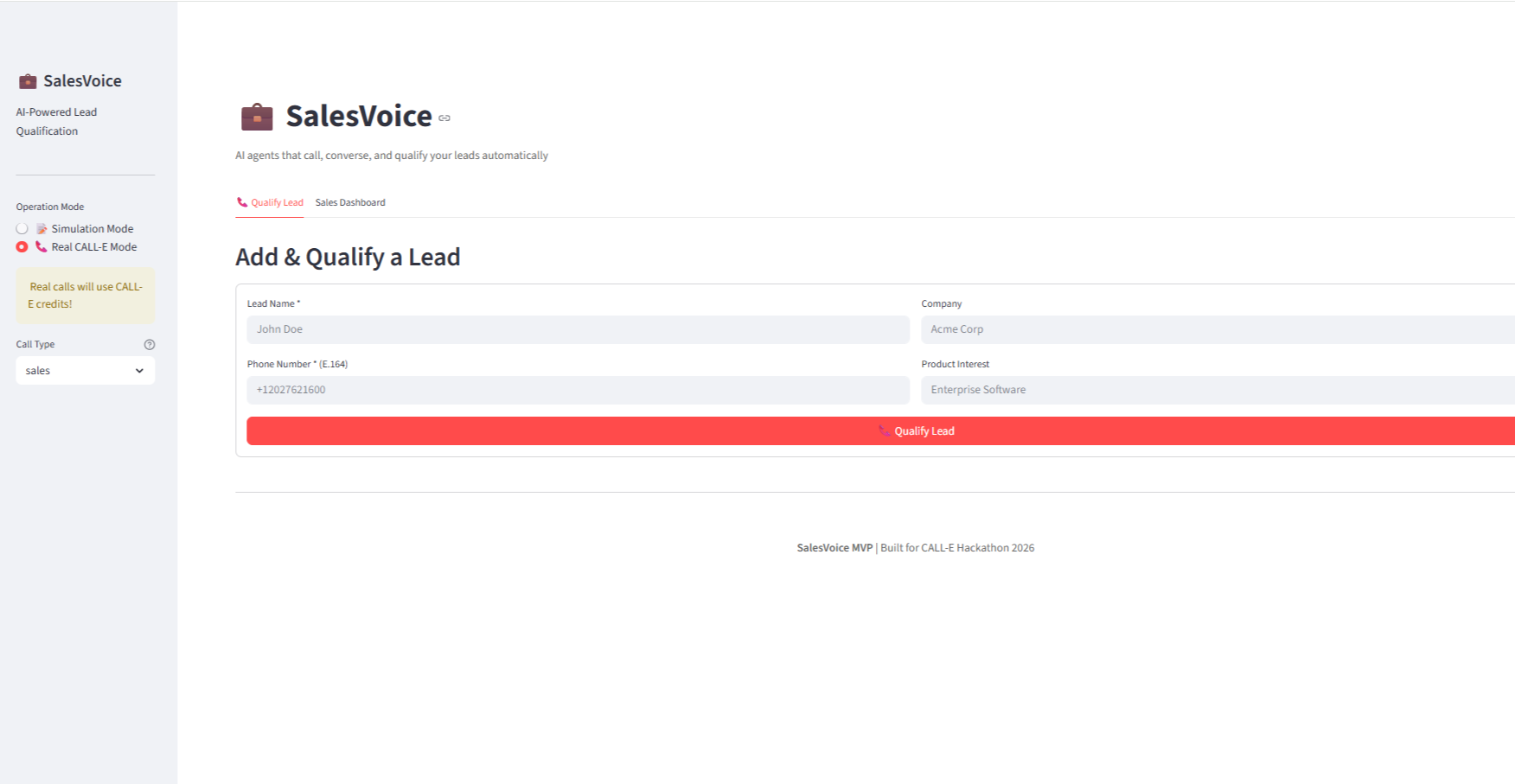
SalesVoice is an AI-powered outbound sales agent that automates the entire lead qualification process. It uses CALL-E to:
- 📞 Dial prospects and hold natural, adaptive conversations about product interest
- 🧠 Automatically categorize the outcome of the conversation
- 📊 Extract structured business intelligence (like
lead_status, specificobjections, and recommendednext_actions) - 💾 Save all qualified data directly to a CRM-style dashboard
How we built it
- Backend: Python with the official CALL-E Python SDK (
calle-ai) - Frontend: Streamlit for rapid, professional UI development
- Database: SQLite for lightweight, portable data storage
- AI Logic: CALL-E's
result_schemafeature, which defines a strict JSON schema that forces the voice AI to extract specific fields from unstructured audio - Safety: A custom Simulation Mode (dry-run path) allowing developers to test UI and database logic without consuming CALL-E credits or placing real calls
Challenges we ran into
- Testing without a physical phone: Since we didn't have a dedicated test number, we built a "Pipeline Test" mode to call public automated hotlines (like the US Naval Observatory time line) to verify the API pipeline, transcript extraction, and structured data parsing end-to-end.
- SDK Response Parsing: The CALL-E SDK sometimes returned responses as lists or Pydantic models instead of standard dictionaries. We wrote a robust parsing layer to handle all object types safely and extract hidden transcript data.
- Structuring Unstructured Voice: Forcing an AI voice agent to stick to a strict JSON schema during a fluid, unpredictable human conversation required careful prompt engineering and schema design.
Accomplishments that we're proud of
- 🏆 Building a fully functional, end-to-end pipeline that turns messy, unstructured voice audio into clean, actionable JSON business data.
- 🛡️ Adhering strictly to CALL-E's safety and contribution guidelines by implementing a mandatory "dry-run" simulation mode and explicit user confirmation checkpoints before any real call is placed.
What we learned
We learned that Voice AI is fundamentally different from text AI—latency, interruptions, and automated IVR menus require a completely different approach to prompt engineering. Most importantly, we learned the true power of CALL-E's result_schema. It transforms voice AI from a "cool demo" into a reliable, enterprise-grade data extraction tool.
What's next for SalesVoice
- 📂 Batch Processing: Uploading CSV lists of leads for automated overnight calling campaigns.
- 🔗 CRM Integrations: Pushing qualified "Hot" leads directly into Salesforce or HubSpot via webhooks.
- 📼 Voicemail Detection: Automatically leaving personalized AI voicemails and scheduling callbacks for unanswered calls.
- 🌍 Multi-Language Support: Expanding the agent to qualify leads in Spanish, French, and Arabic.

Log in or sign up for Devpost to join the conversation.