-
-
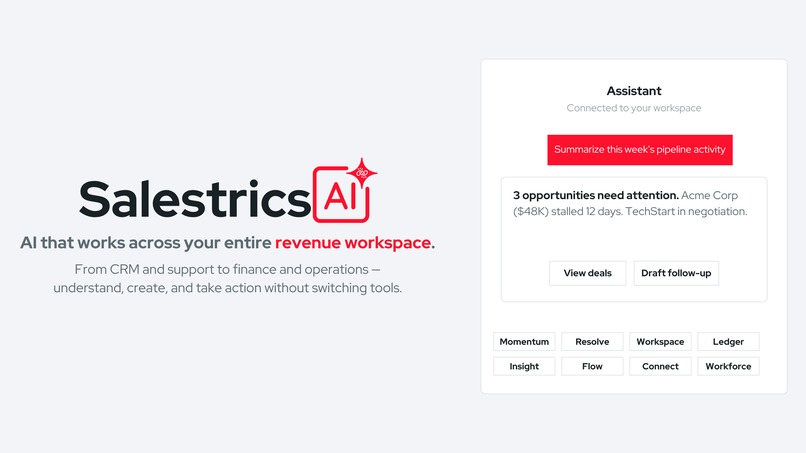
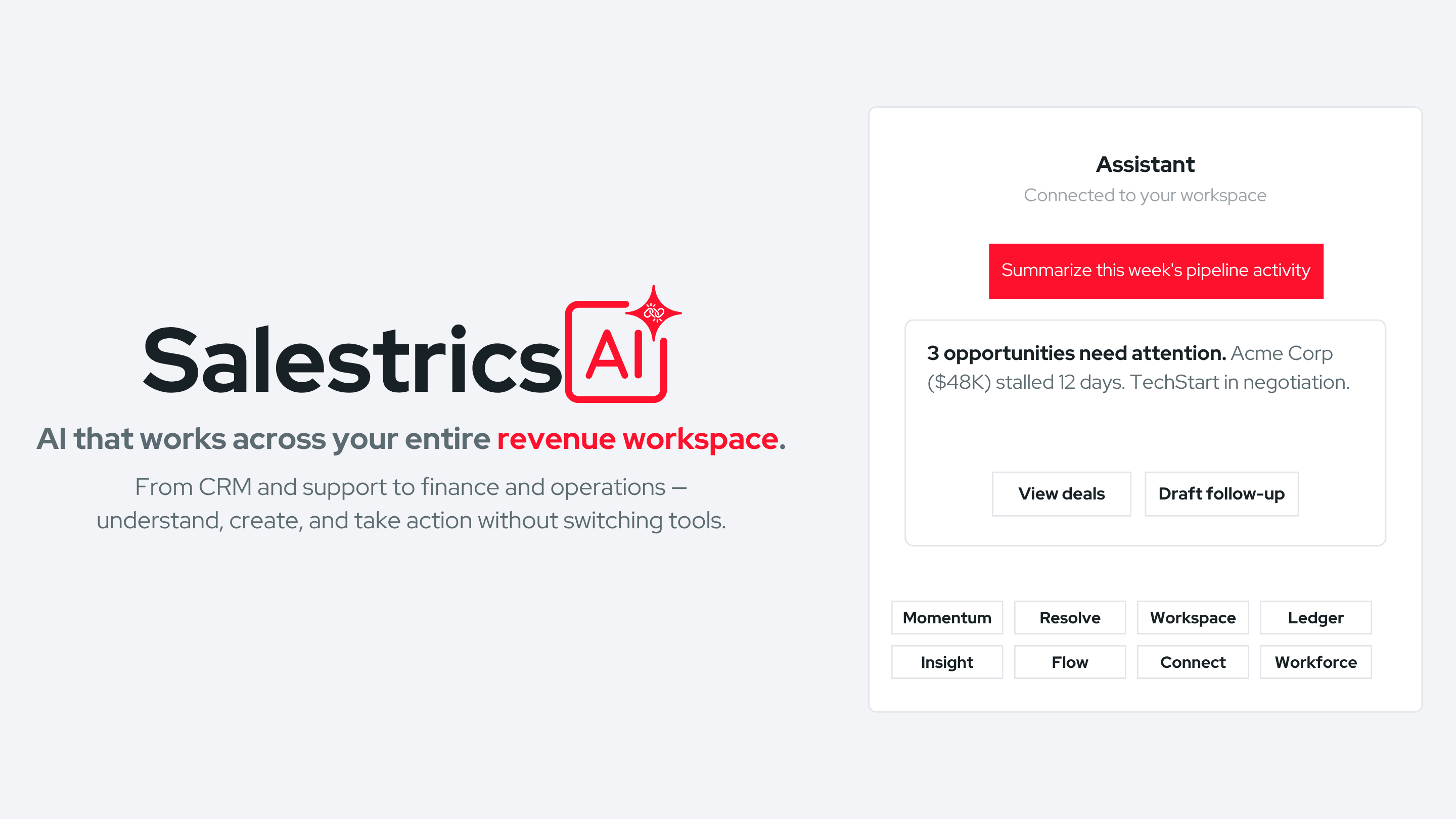
Introducing Salestrics AI V2
-
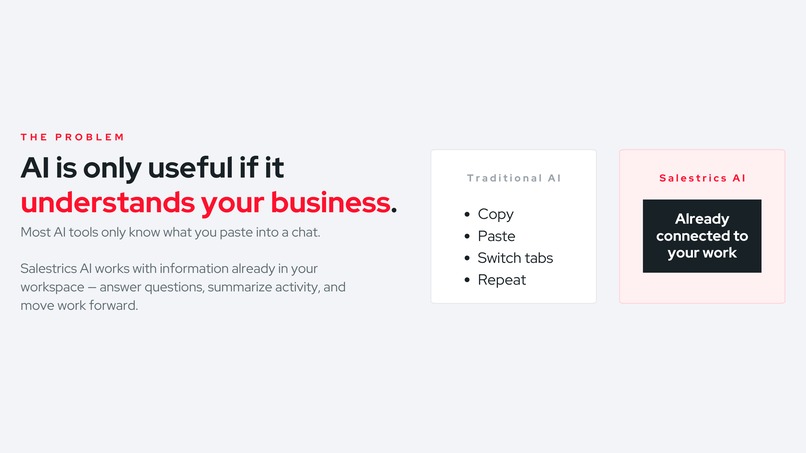
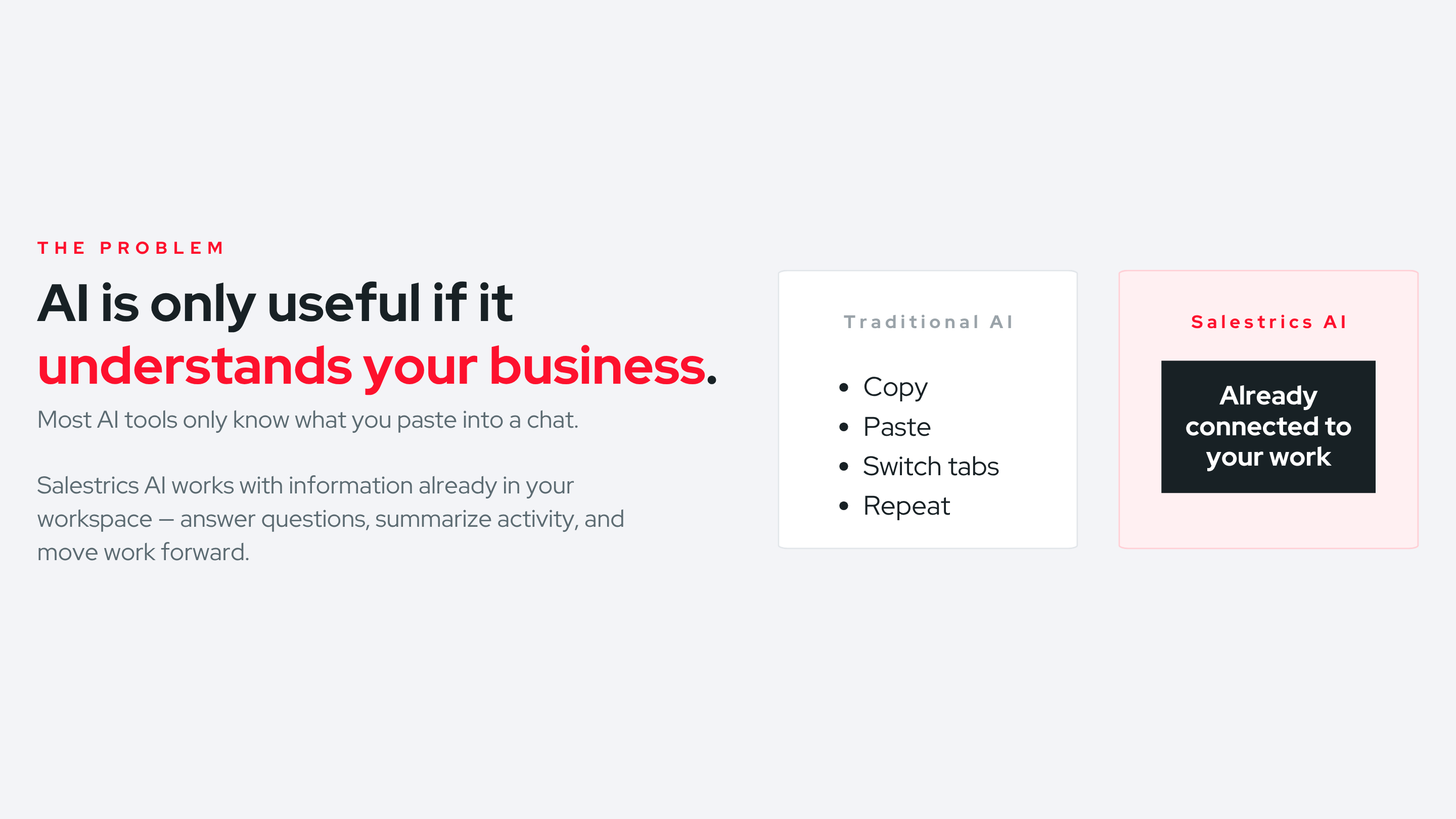
AI is only useful if it understands your business
-
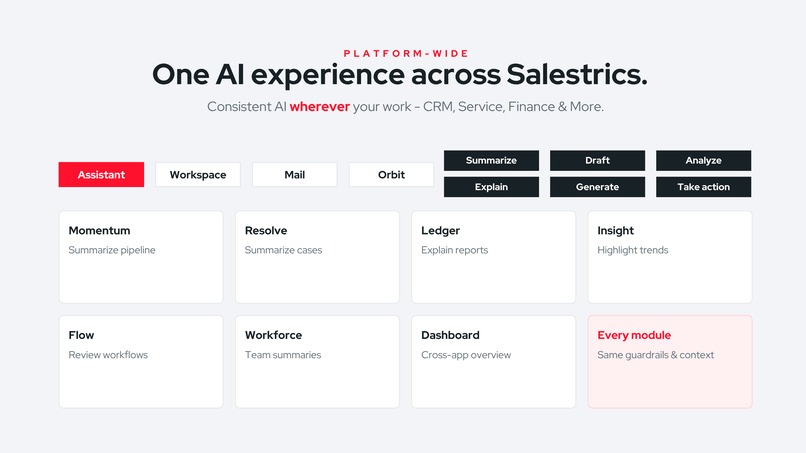
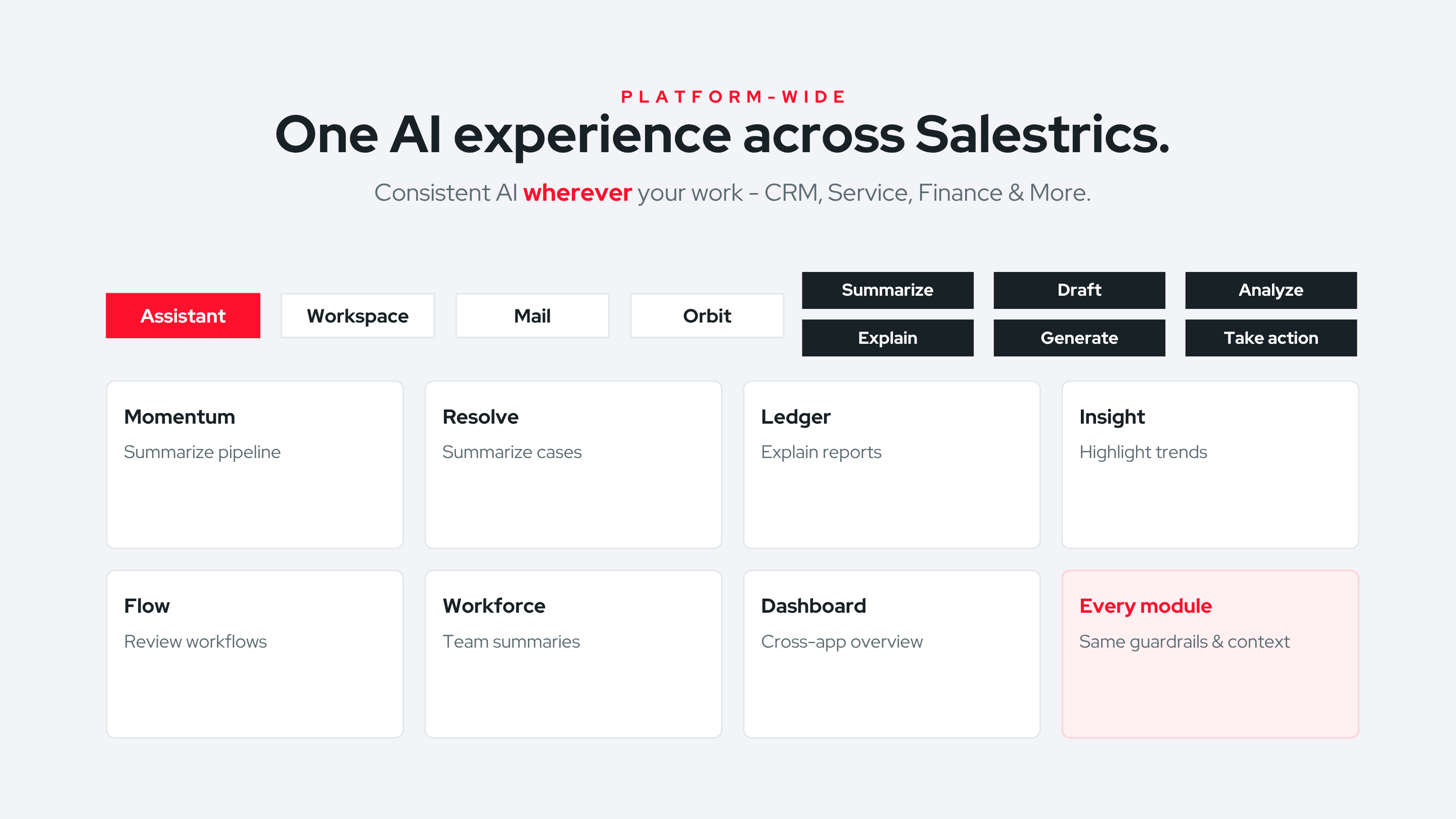
Salestrics - One AI experience platform-wide.
-
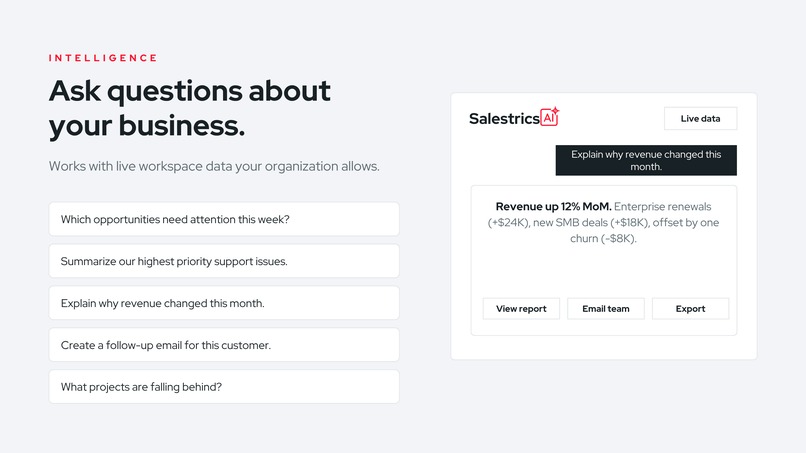
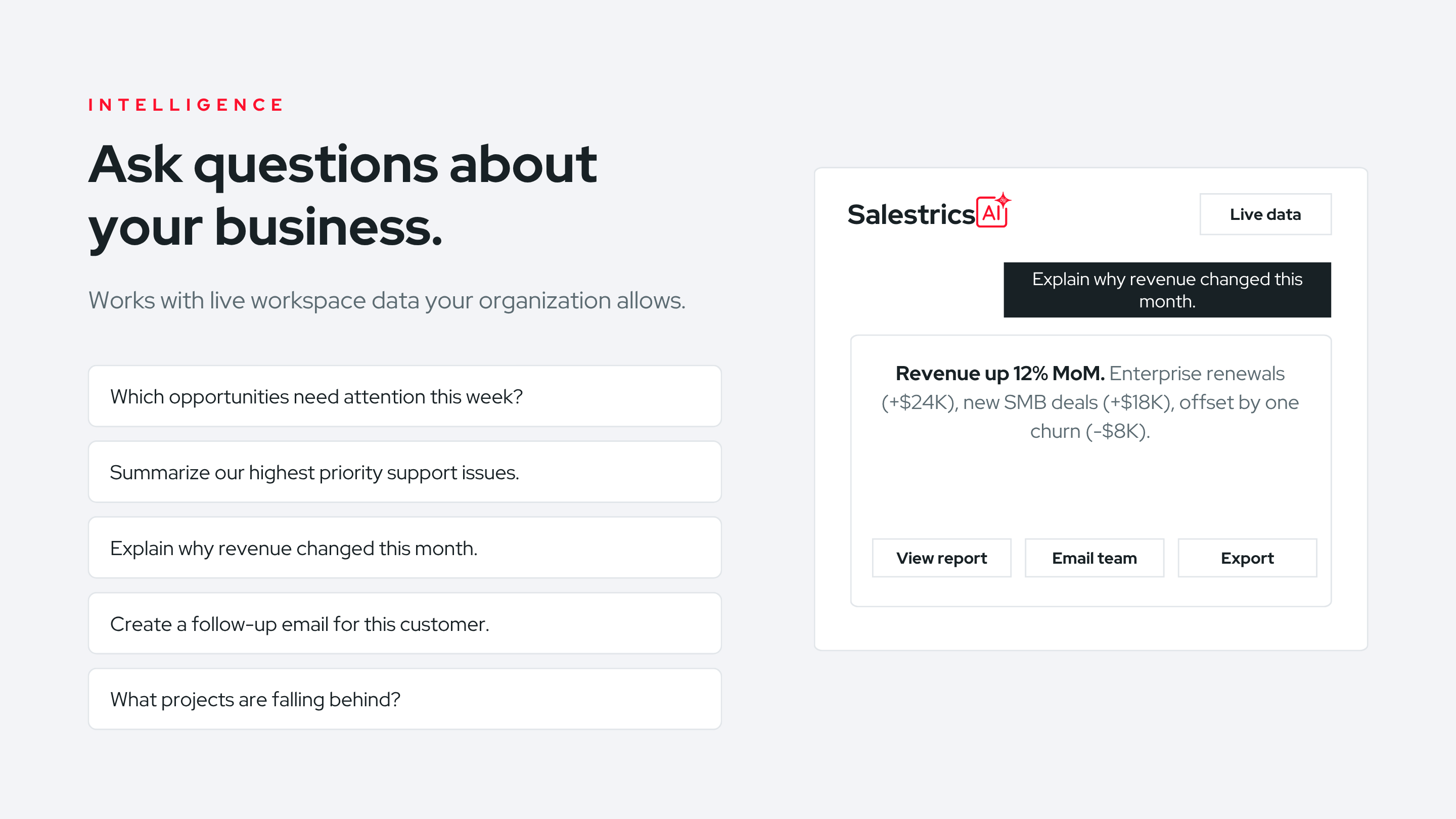
Role-aware AI grounded in live data.
-
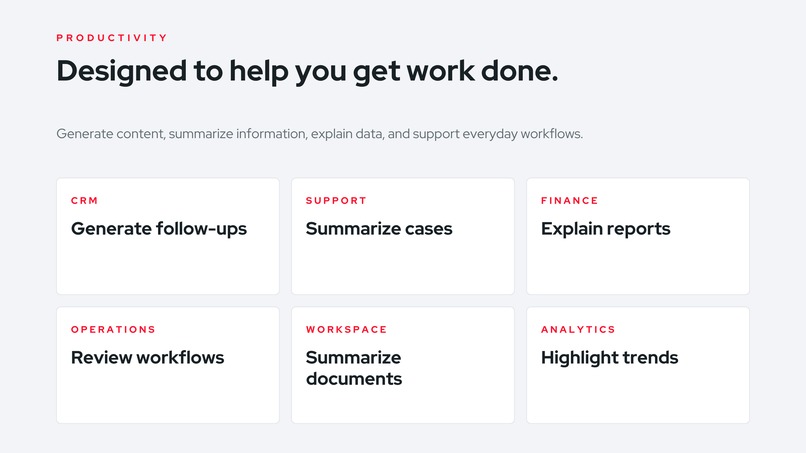
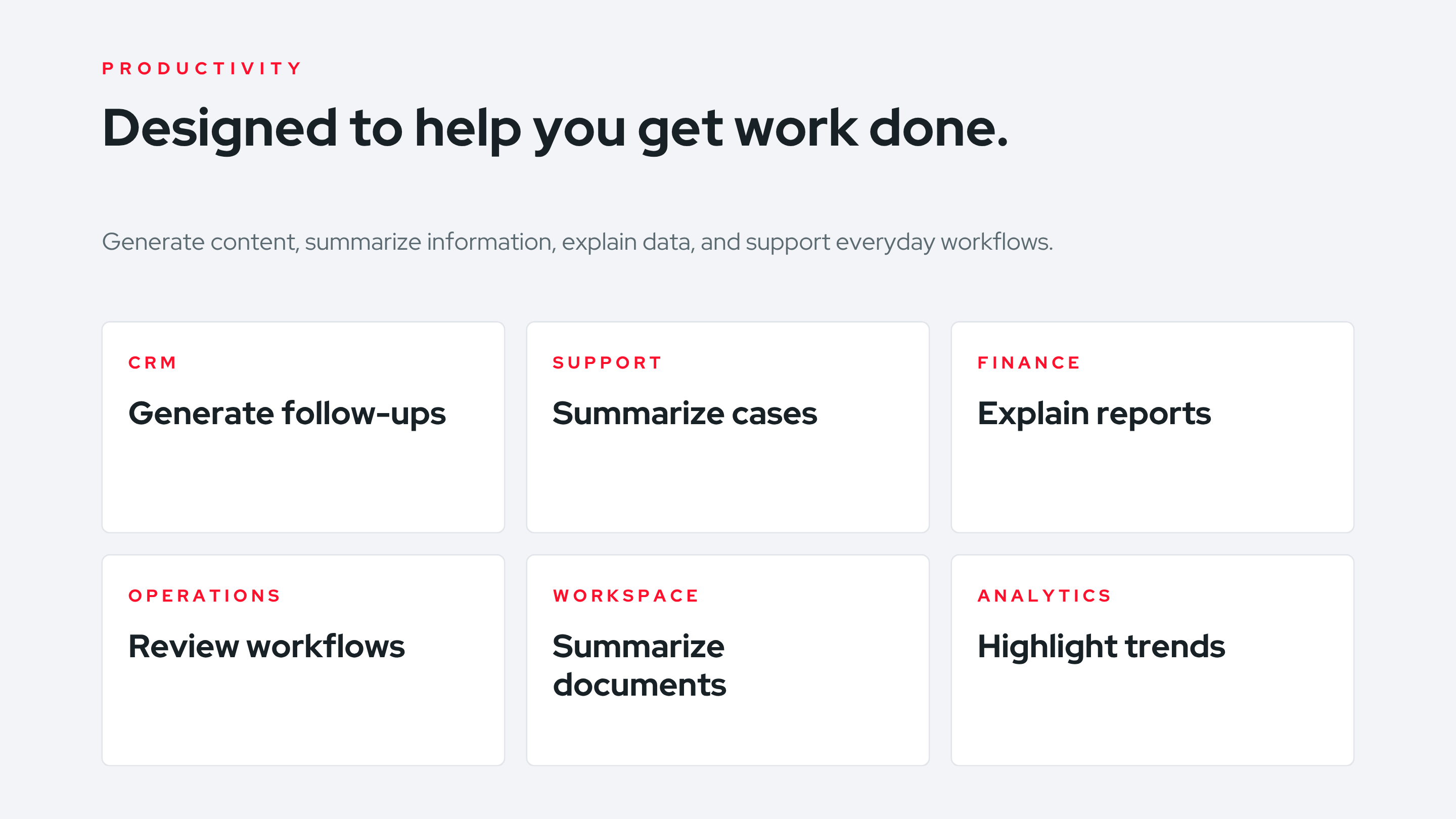
Designed to help you get work done.
-
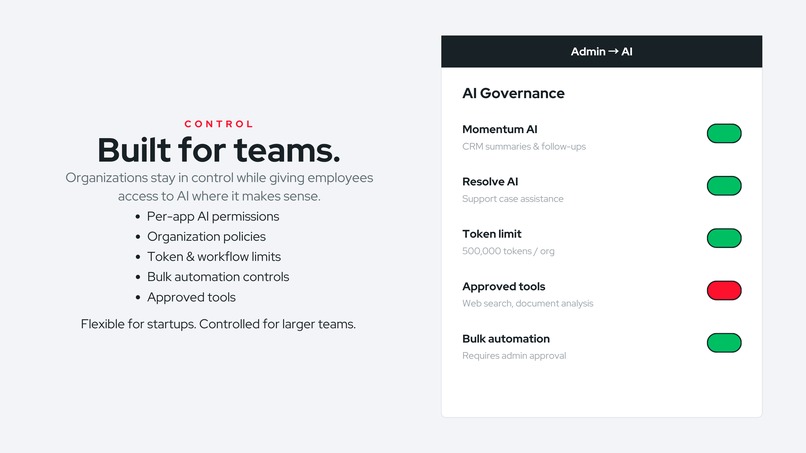
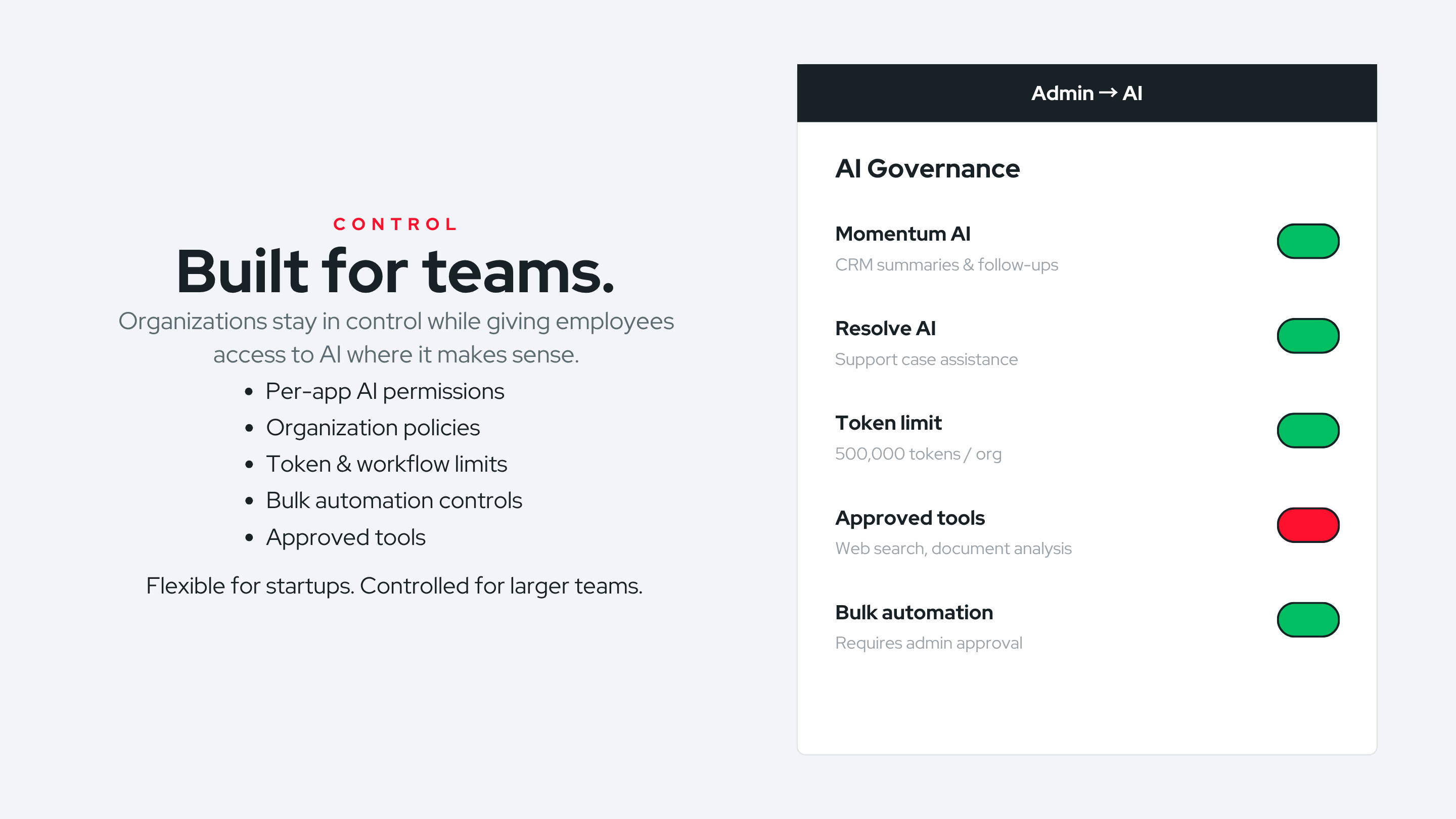
Add guardrails to the AI, giving you full control.
-
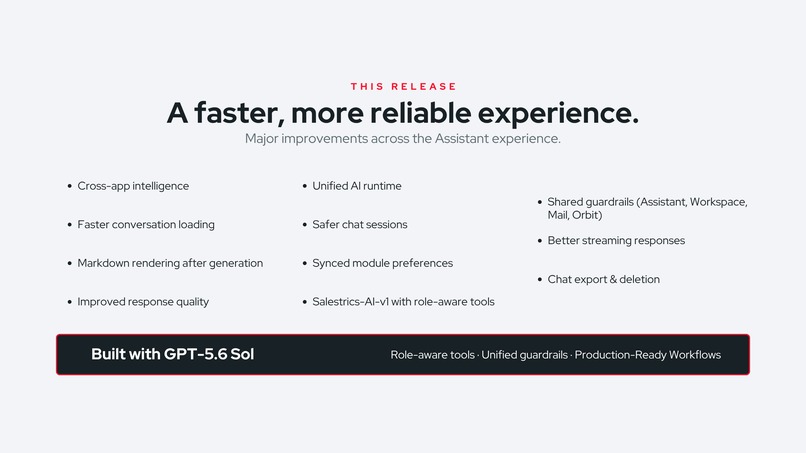
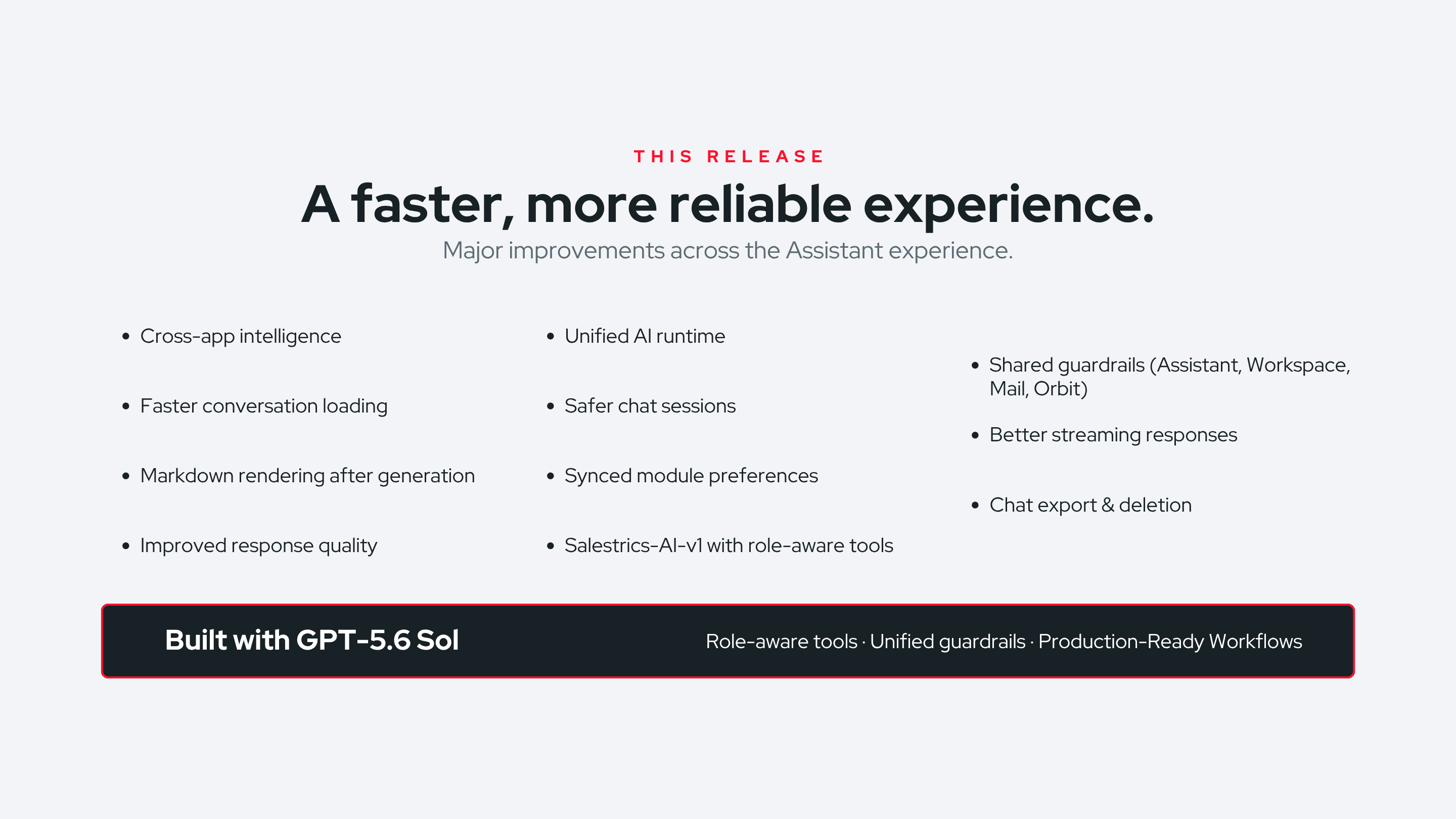
A faster, more reliable experience.
-
Your startup already has the data. Now it has AI that can work with it.
Salestrics: Building the AI-Native Revenue Workspace
Inspiration
Salestrics was born from a simple question I kept asking throughout my career:
How can we make this easier?
Before founding Salestrics, I spent more than seven years working across sales, operations, and customer support. My job wasn't just helping customers—it was improving processes, coaching teams, and removing friction from everyday work.
The biggest problem wasn't any single application.
It was the software stack itself.
Growing businesses were forced to stitch together CRMs, email platforms, chat tools, document editors, video conferencing, automation software, reporting tools, and countless integrations just to operate. Every additional product created another data silo, another subscription, and another workflow to maintain.
I wanted to build something different.
Instead of another application, I wanted to build one connected workspace where AI could understand the entire business instead of a single product.
How Salestrics Started
Ironically, Salestrics didn't begin as a CRM.
The original project was my university capstone: an AI-assisted operating system for agricultural drone operations.
While building flight software, I discovered that the hardest challenge wasn't flying the drone—it was everything surrounding it:
- Customer management
- Scheduling
- Documentation
- Maintenance
- Communication
- Reporting
The drone was only one component of a much larger operational workflow.
That insight led to AgrovuxOS, an AI-native operations platform for agriculture.
As the platform matured, I realized the underlying architecture wasn't solving an agriculture problem—it was solving a business operations problem.
That realization led to a complete pivot.
On June 5, 2026, I created the name Salestrics by combining Sales and Metrics.
One week later, Salestrics was incorporated.
Three days after that, Public Beta launched.
What We Built
Today, Salestrics is an AI-native revenue workspace that brings together:
- CRM
- Calendar
- Team chat
- Video meetings
- Documents
- Automation
- Finance
- Customer support
- AI
Instead of AI existing as a chatbot beside the product, Salestrics AI acts as the platform's intelligence layer.
Salestrics AI v2 introduces:
- Role-aware AI
- Organization-level AI Instructions
- Cross-workspace reasoning
- Morning Briefings
- Proactive Insights
- Workflow execution
- Meeting intelligence
- Organization memory
- Embedded AI throughout the platform
The goal isn't simply answering questions.
It's helping businesses understand what's happening, why it's happening, and what they should do next.
How We Built It
Salestrics is built using a modern TypeScript-first architecture.
Frontend
- Next.js 16
- React 19
- Tailwind CSS 4
- TypeScript
Backend
- PostgreSQL 18
- PostGIS
- Drizzle ORM
- SQLite
- Better Auth
Infrastructure
- AWS
- MinIO
- WebRTC
- Mailu
- Stripe
- PostHog
AI
Salestrics AI is powered by OpenAI models through our own orchestration layer. We built branded model experiences, organization-level AI customization, model routing, embedded AI across applications, and cross-workspace reasoning instead of treating AI as a standalone chatbot.
Development was accelerated using Cursor together with our own internal development system, Novux Agents, which uses role-based model routing and MCP integrations across engineering workflows.
Challenges
The biggest challenge wasn't writing code.
It was designing a platform where every application shares one connected data model.
CRM, support, finance, collaboration, communication, documents, and AI all needed to operate as one product rather than a collection of integrations.
Another major challenge was building AI that feels genuinely useful.
Rather than simply wrapping an LLM in a chat interface, we focused on grounding responses in live business data, enabling workflow execution, preserving organizational context, and helping users take action directly inside the platform.
Balancing rapid product development with reliability while launching publicly and incorporating continuous customer feedback has been one of the most rewarding challenges of the project.
What We Learned
Building quickly matters.
Listening to users matters even more.
Every public launch, customer conversation, and feature request has reshaped the product.
The biggest lesson has been that AI becomes exponentially more valuable when it understands the context of an entire business instead of a single application.
That insight continues to shape everything we build.
What's Next
On July 23, 2026, Salestrics AI v2 launches as part of Product Hunt's OpenAI Day.
This release transforms Salestrics AI from a conversational assistant into an intelligence layer across the revenue workspace through role-aware AI, organization-level customization, proactive insights, workflow execution, and cross-workspace reasoning.
Our long-term vision is simple:
Replace the startup Frankenstack with one intelligent workspace where people spend less time managing software—and more time building their business.
Built With
- ai
- amazon-web-services
- betterauth
- codex
- cursor
- drizzle
- github
- gpt-5.4
- gpt-5.6
- mailu
- mcp
- minio
- next.js
- openai
- postgresql
- posthog
- react
- remotion
- sqlite
- stripe
- tailwind
- typescript
- webrtc

Log in or sign up for Devpost to join the conversation.