-
-
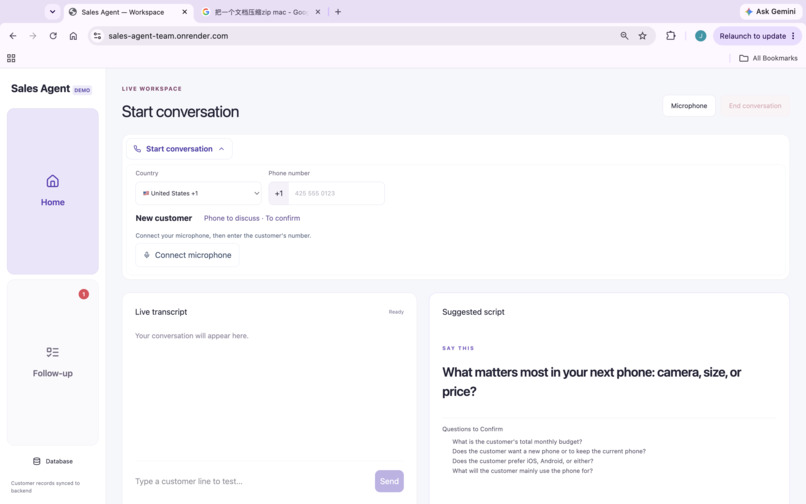
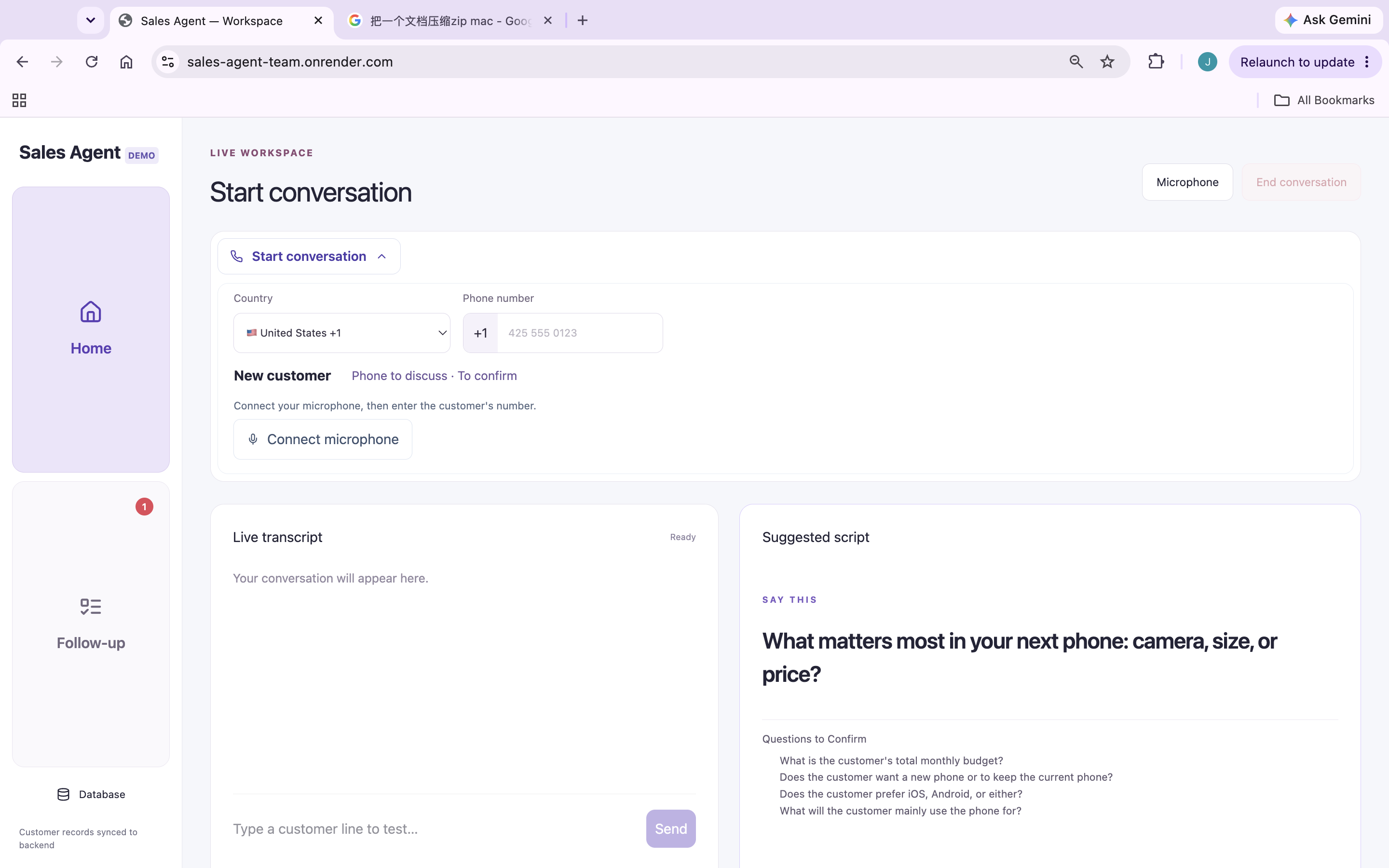
Homepage
-
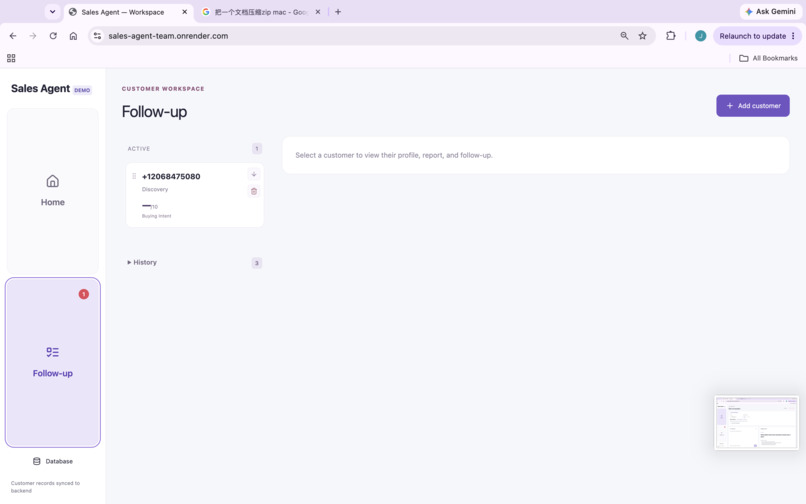
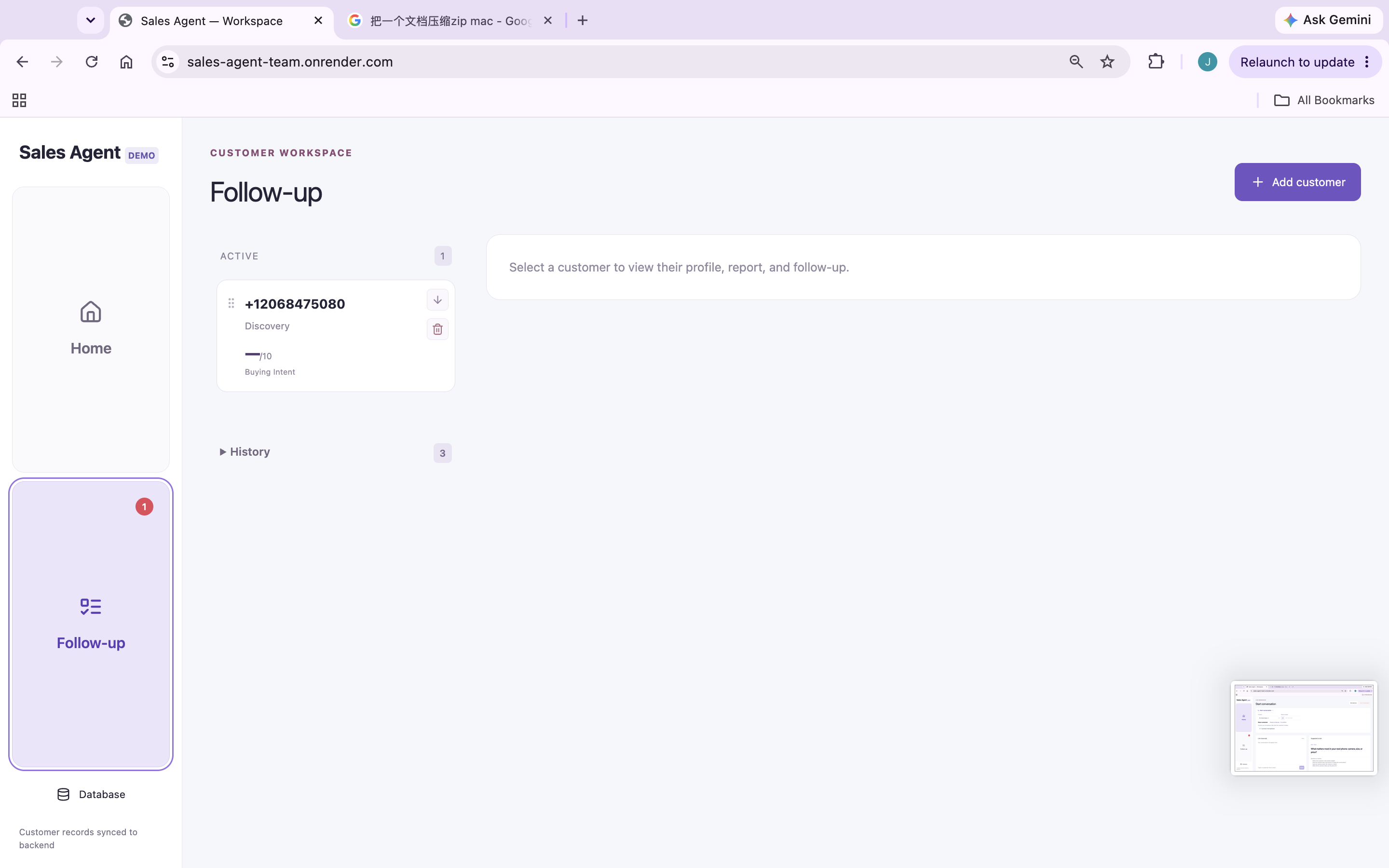
Follow_up Page
Inspiration:
One of our teammates worked at Landesk, where she noticed that many staff members were also students. As beginners in these jobs, they often felt nervous about making phone calls because customers might ask unexpected questions or bring up situations they weren't prepared for.
This made us wonder: What about new sales representatives? They face similar challenges, but they also have to understand customer needs, answer product-related questions, and respond to objections during a live conversation.
That's what inspired us to develop an AI Sales Copilot for T-Mobile sales, designed to guide new sales representatives during customer calls and help them analyze conversations and follow up with customers afterward.
What We Learned:
We learned how to break down a project into smaller tasks and divide the work among four people. We had one person responsible for the backend, one for phone-call input and transcription, one for UI/UX, and one for database and conversation analysis.
Some of our teammates were completely new to programming and didn't even know what a database was before the competition. But by the end, they could confidently explain how a website works, how its different components communicate through APIs, and how everything comes together as a functional product.
We also learned how to work under pressure and make quick decisions when things didn't go as planned. At first, we planned to make a short film featuring different sales scenarios to demonstrate our product. However, once we started filming, we realized it would take much more time than we expected. Rather than spending too much time on the video, we quickly switched to a more straightforward product demo that focused on showing how our system actually works. We also learned a lot about video editing along the way :)
How We Built It:
We used Claude to build the basic structure of our prototype during the first afternoon. Each of us worked on a separate Git branch, pushed our changes, and merged them into the main project. We then used Codex to refine the UI, remove unnecessary features, and highlight the features that mattered most to our sales use case, especially real-time suggestions and post-call follow-ups. The next morning, we continued debugging, testing how the different components worked together, and recording our demo video.
Challenges We Faced:
Our biggest technical challenge was latency. In our first version, we used a lightweight local Python speech recognition model. However, it took around ten seconds from a customer speaking to the system producing a suggestion. By that point, the conversation might have already moved on, making the suggestion much less useful.
We switched to Deepgram for real-time transcription, which improved transcription quality and made it easier to distinguish the sales representative from the customer. This also helped reduce the delay between a customer speaking and the AI providing a suggestion. In our tests, we observed a reduction in latency of roughly six seconds, making the assistant much more practical for live conversations.
My teammates are still polishing and testing our latest version while I'm writing this story. I feel very lucky to be facing these challenges with them.
Built With
- fastapi
- github
- openai
- python
- react
- tailwind
- typescript
- vite


Log in or sign up for Devpost to join the conversation.