



Inspiration
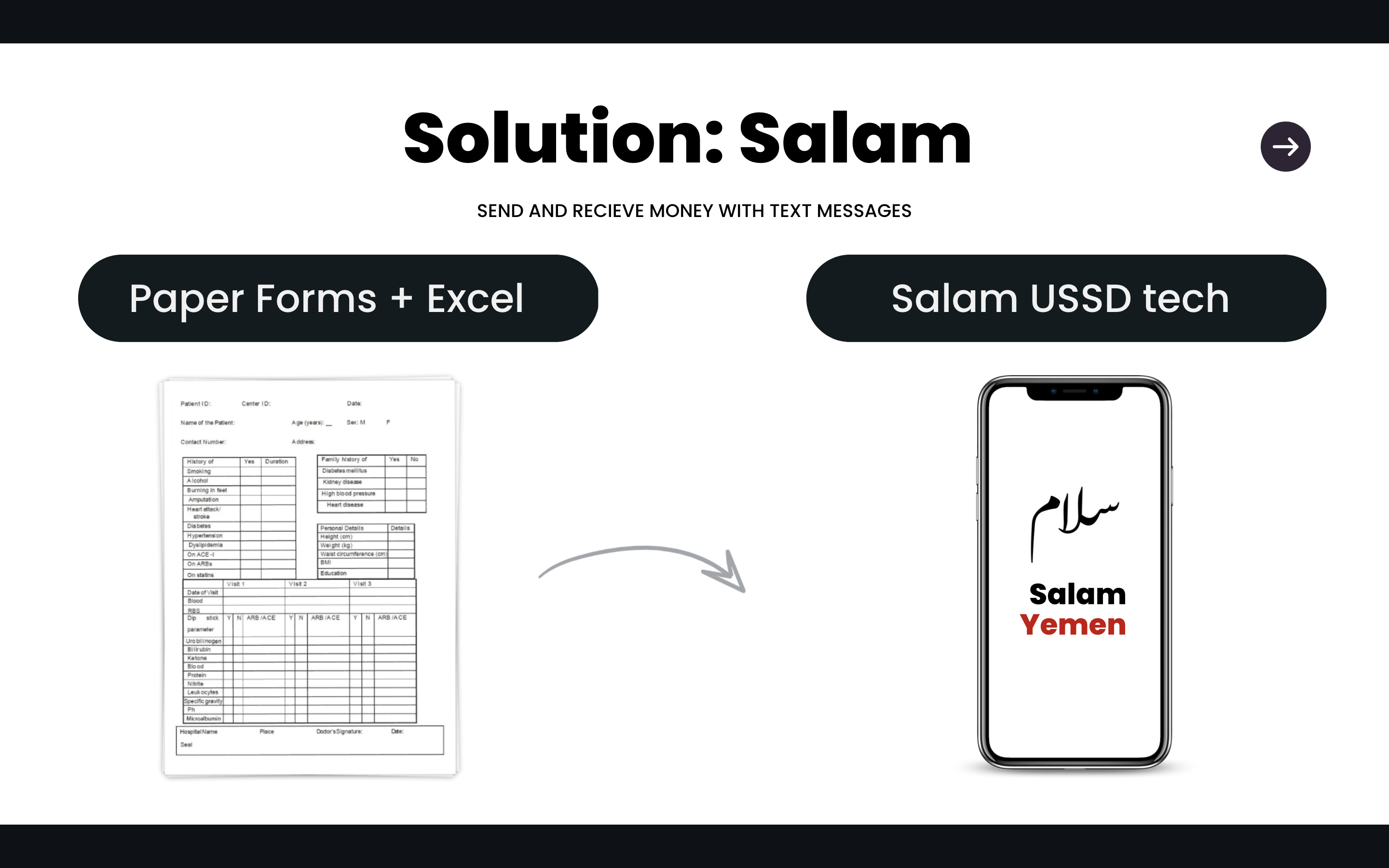
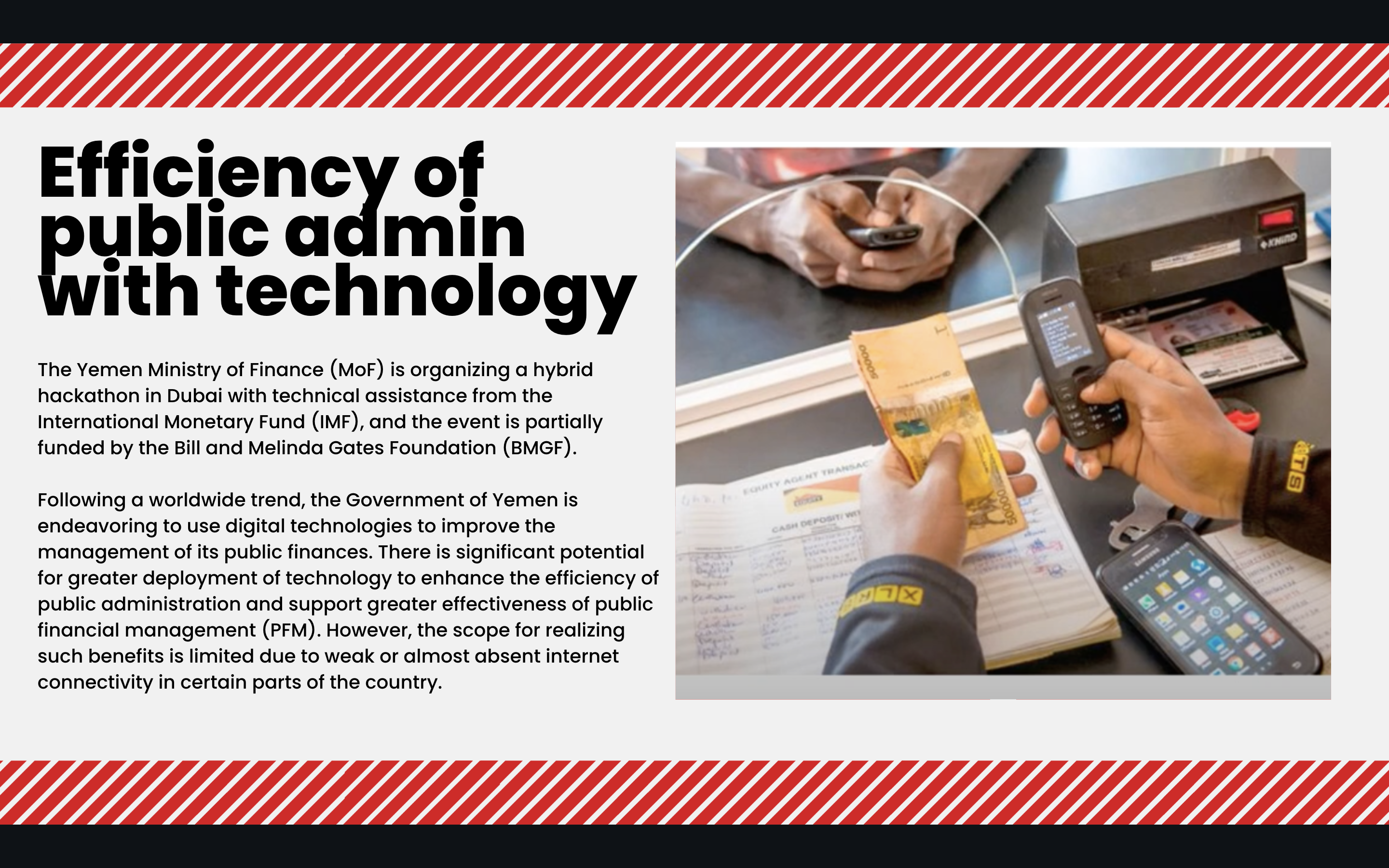
Salam's purpose : Providing a peaceful, stress-free approach to data collection and management. They incorporate the name "Salam" to emphasize the app's commitment to peace and harmony. Intended to appeal to businesses, organizations, and individuals who value a peaceful, organized approach to data collection and management. Following a worldwide trend, the Government of Yemen is endeavoring to use digital technologies to improve the management of its public finances. There is significant potential for greater deployment of technology to enhance the efficiency of public administration and support greater effectiveness of public financial management (PFM). However, the scope for realizing such benefits is limited due to weak or almost absent internet connectivity in certain parts of the country.
"Data collection made peaceful" "Create peace of mind with your data" "Harmonize your data collection process" "Experience the calm of streamlined data collection" "Connect your data with a peaceful approach" "Salam: where data collection meets peace"
- Other names suggestions included: Mawqef (meaning "survey" in Arabic) Raqim (meaning "data" in Arabic) Sinafah (meaning "collection" in Arabic)
PROBLEM LACK OF INTERNET:
https://en.wikipedia.org/wiki/Internet_in_Yemen
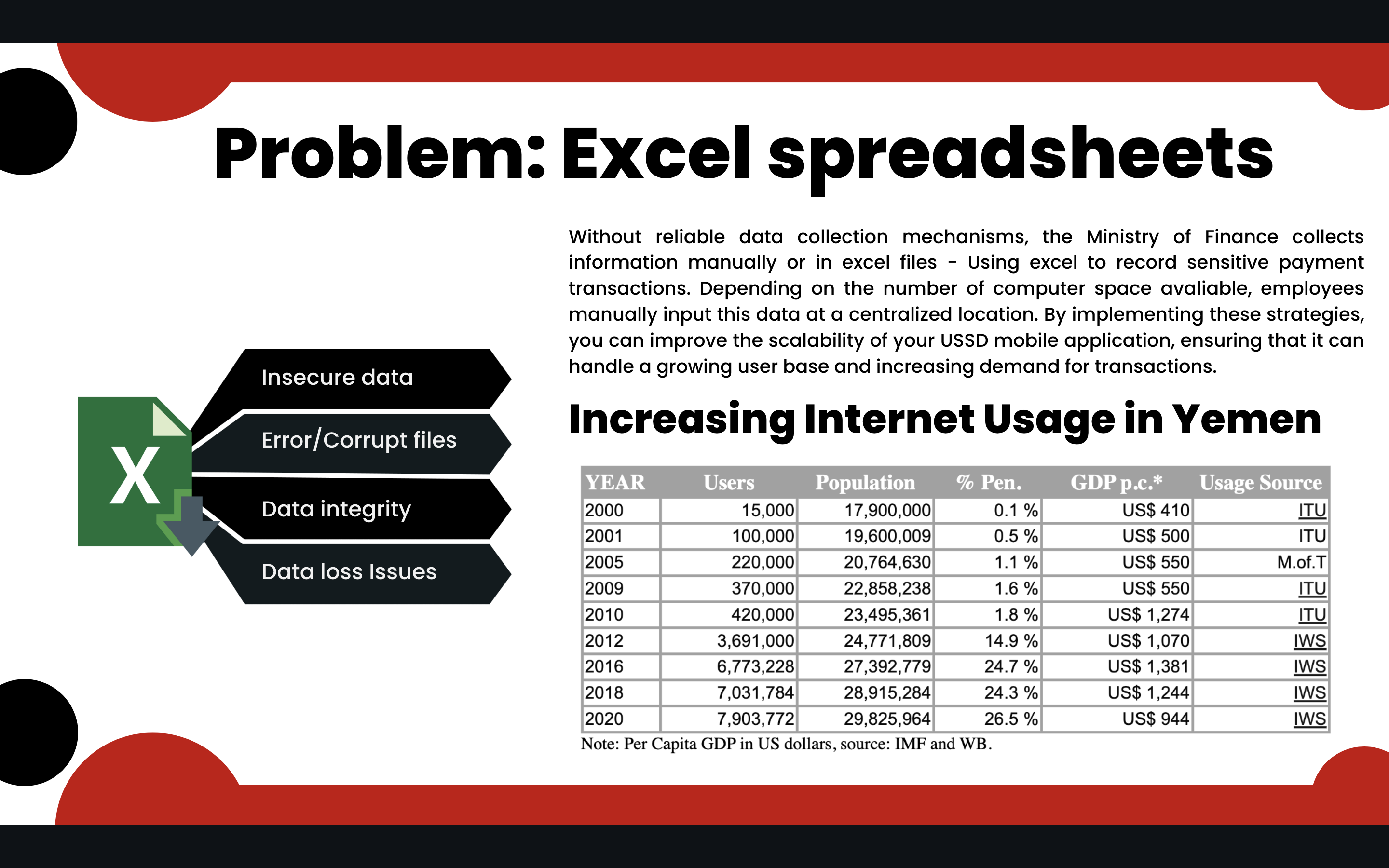
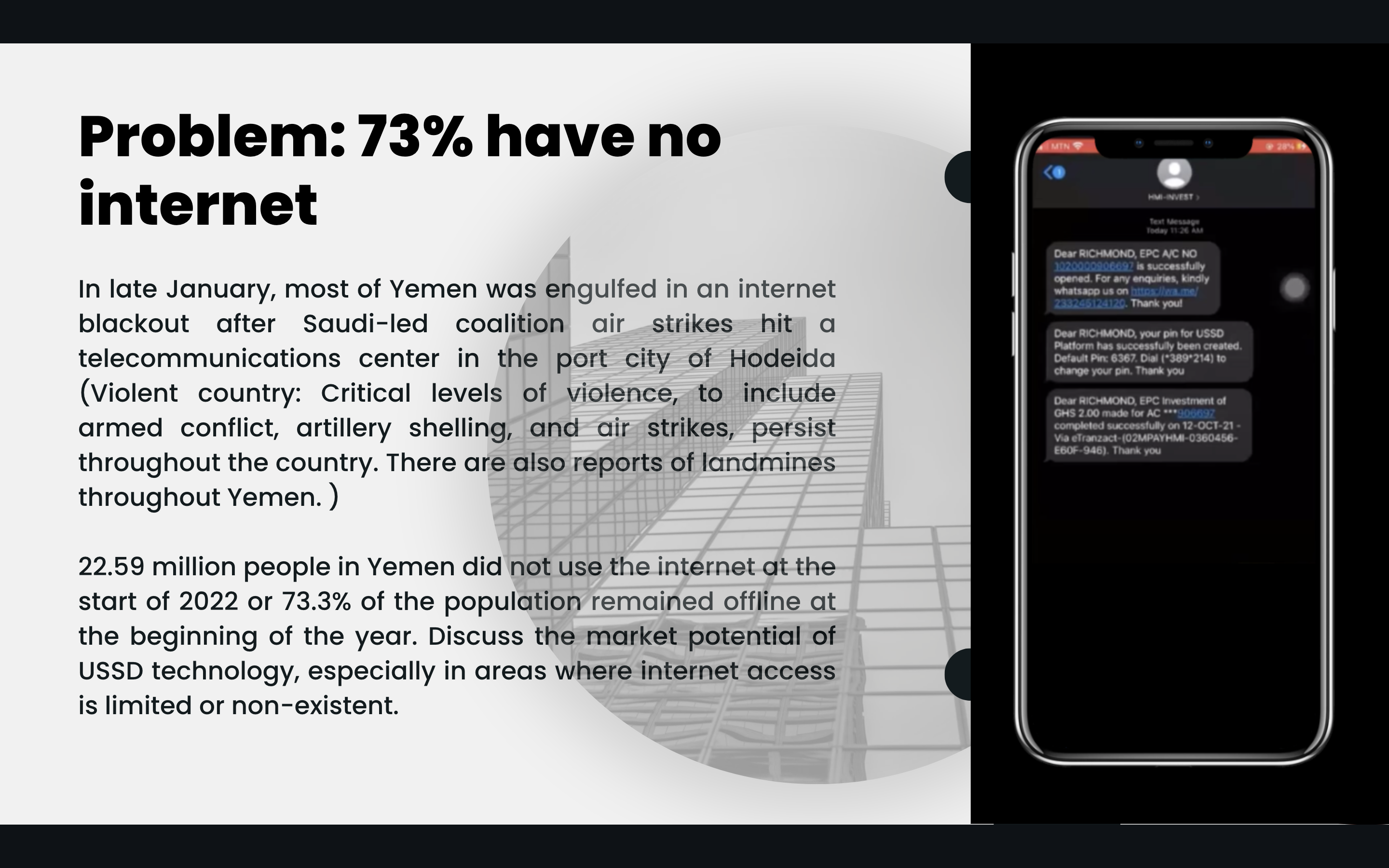
For perspective, these user figures reveal that 22.59 million people in Yemen did not use the internet at the start of 2022, meaning that 73.3 percent of the population remained offline at the beginning of the year. In late January, most of Yemen was engulfed in an internet blackout after Saudi-led coalition air strikes hit a telecommunications center in the port city of Hodeida (Violent country: Critical levels of violence, to include armed conflict, artillery shelling, and air strikes, persist throughout the country. There are also reports of landmines throughout Yemen. )
22.59 million people in Yemen did not use the internet at the start of 2022 or 73.3% of the population remained offline at the beginning of the year. Discuss the market potential of USSD technology, especially in areas where internet access is limited or non-existent.
In late January, most of Yemen was engulfed in an internet blackout after Saudi-led coalition air strikes hit a telecommunications center in the port city of Hodeida (Violent country: Critical levels of violence, to include armed conflict, artillery shelling, and air strikes, persist throughout the country. There are also reports of landmines throughout Yemen. )
POVERTY
Technology reduces the cost of doing much of the work. Accessibility means that payments are universally available to all clients regardless of geographical location - which is not possible in Yemen due to interenet access.The lower cost of production helps to increase the profit margin, which is essential in eradicating poverty. Simple and easy-to-navigate user interface, low-skilled and low-literate communities will access farm information decreasing the growing digital divide in LMICs. Offline data collection apps are more likely to be used in areas of poor connectivity. These apps are essential for industries or tasks carried out in areas with limited WiFi or data connectivity.
https://www.unicef.org/appeals/yemen yemen people do not have phones // every 2 people have 1 phone // Compared to the United States, Yemen is massively lagging behind in the development of telecommunications. Under the country code +967, there were a total of 16.42 million connections in 2021. Among them were 15.18 million mobile phones, which corresponds to an average of 0.47 per person. As researchers today see the immense advantages of using mobile survey apps over paper-based forms, the number of data collection solutions grows. With this article, we hope to answer the question of which of these options may suit your research purposes best with a market segementation in LMICs with a focus on remote areas. The data will be synced when you are connected to the Internet again. When stored locally, the data has little to no chance of getting breached.
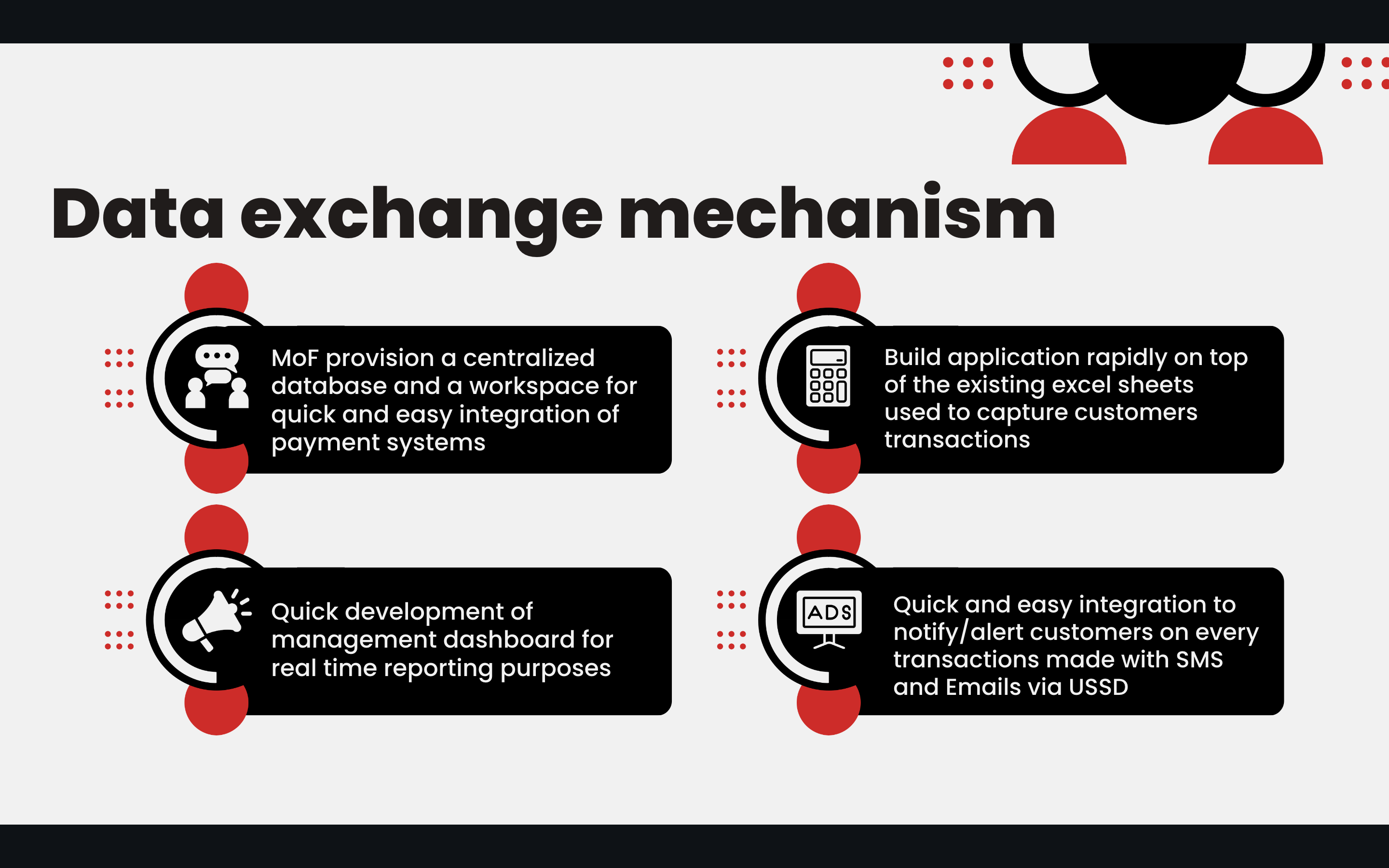
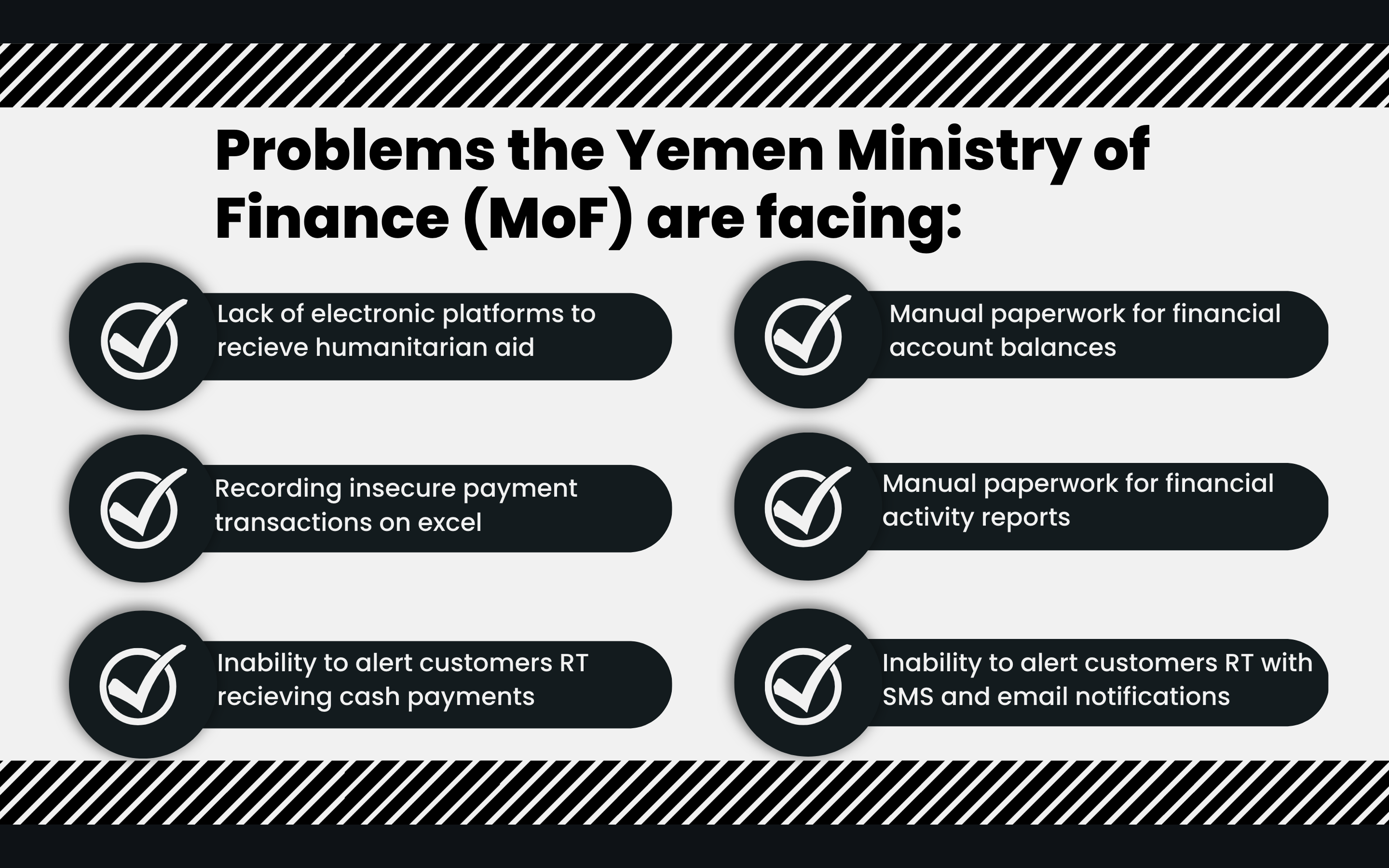
Problems the Yemen Ministry of Finance (MoF) are facing:
- Lack of electronic platforms to recieve humanitarian aid
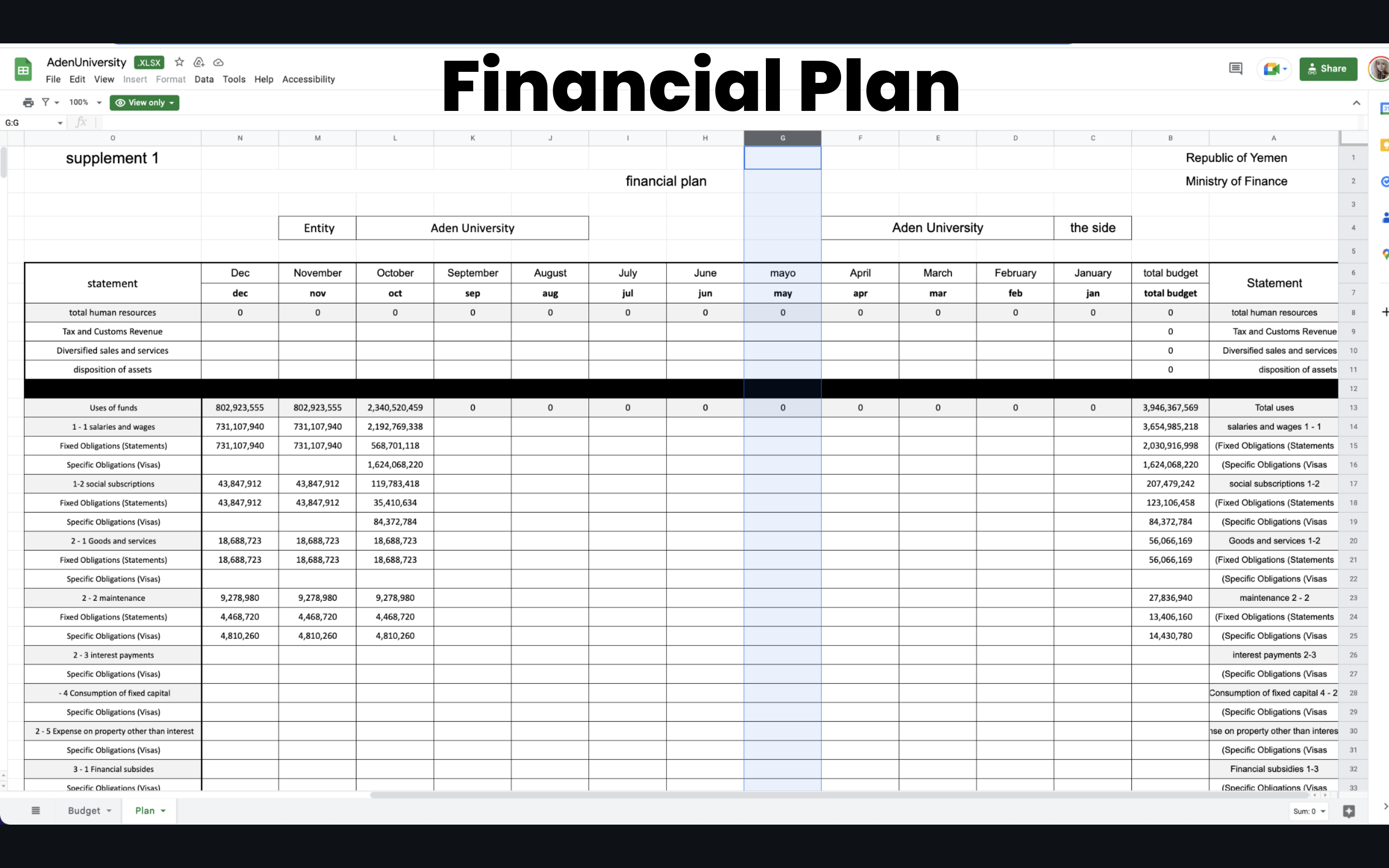
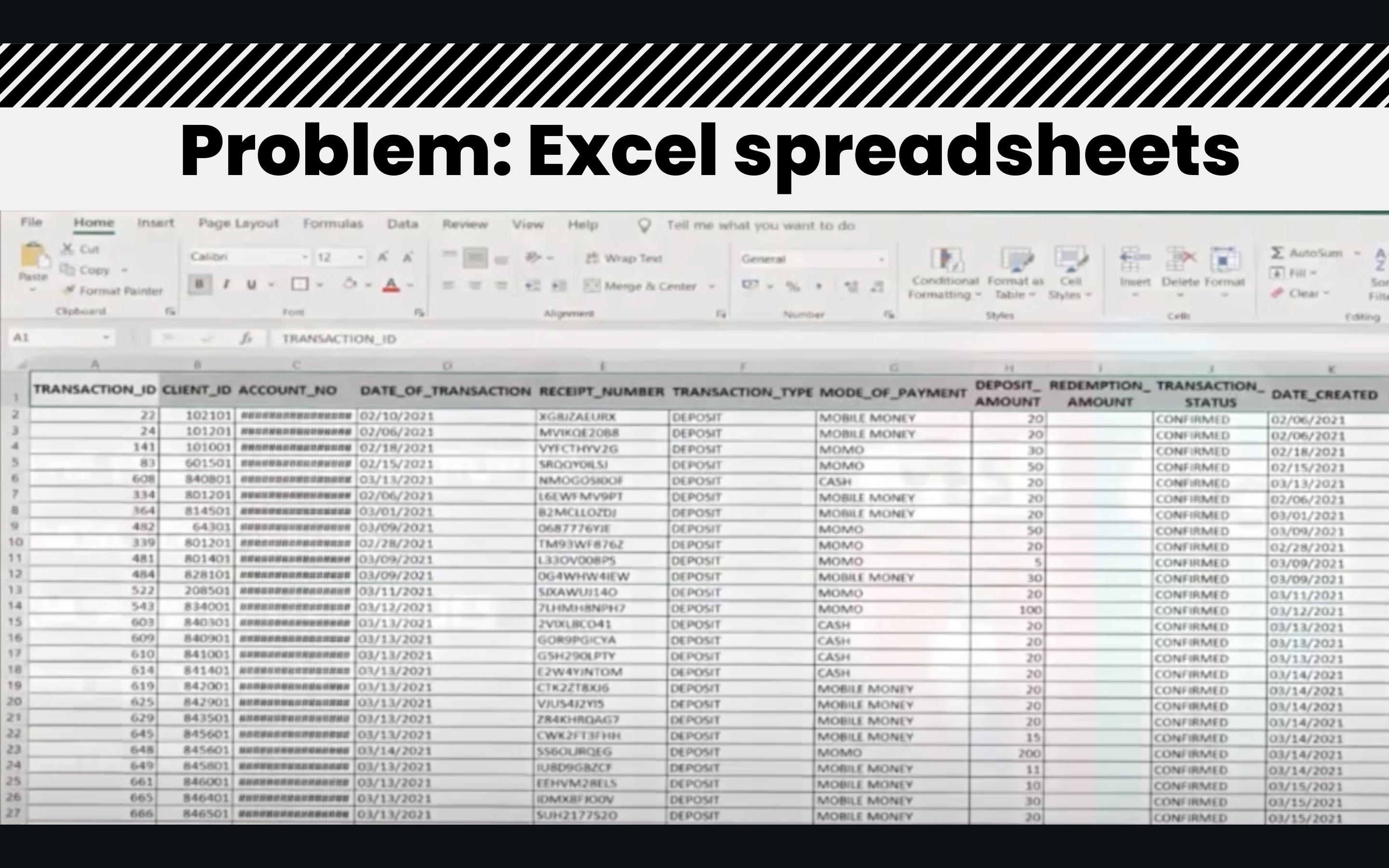
- Recording insecure payment transactions on excel
- Inability to alert customers RT recieving cash payments
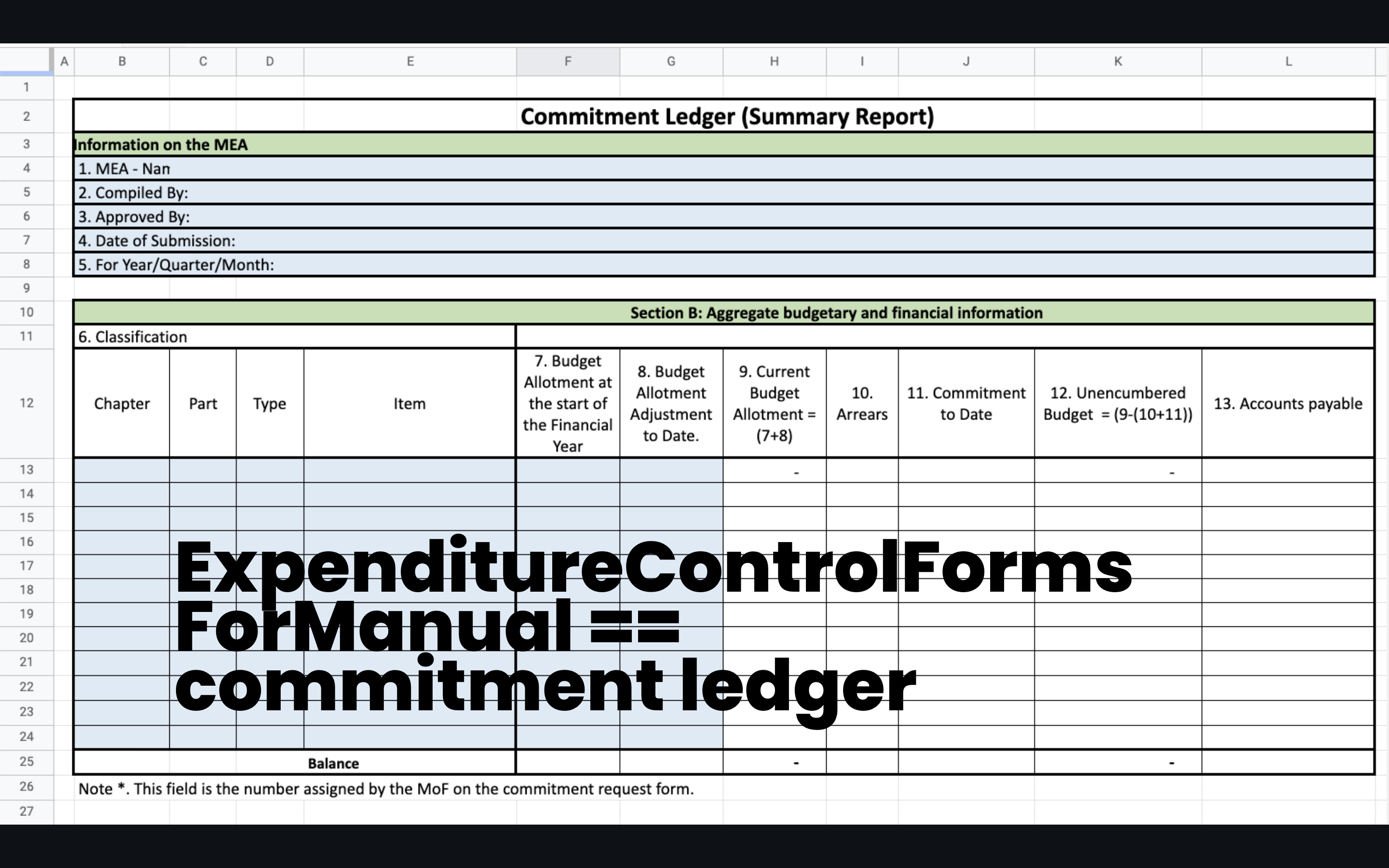
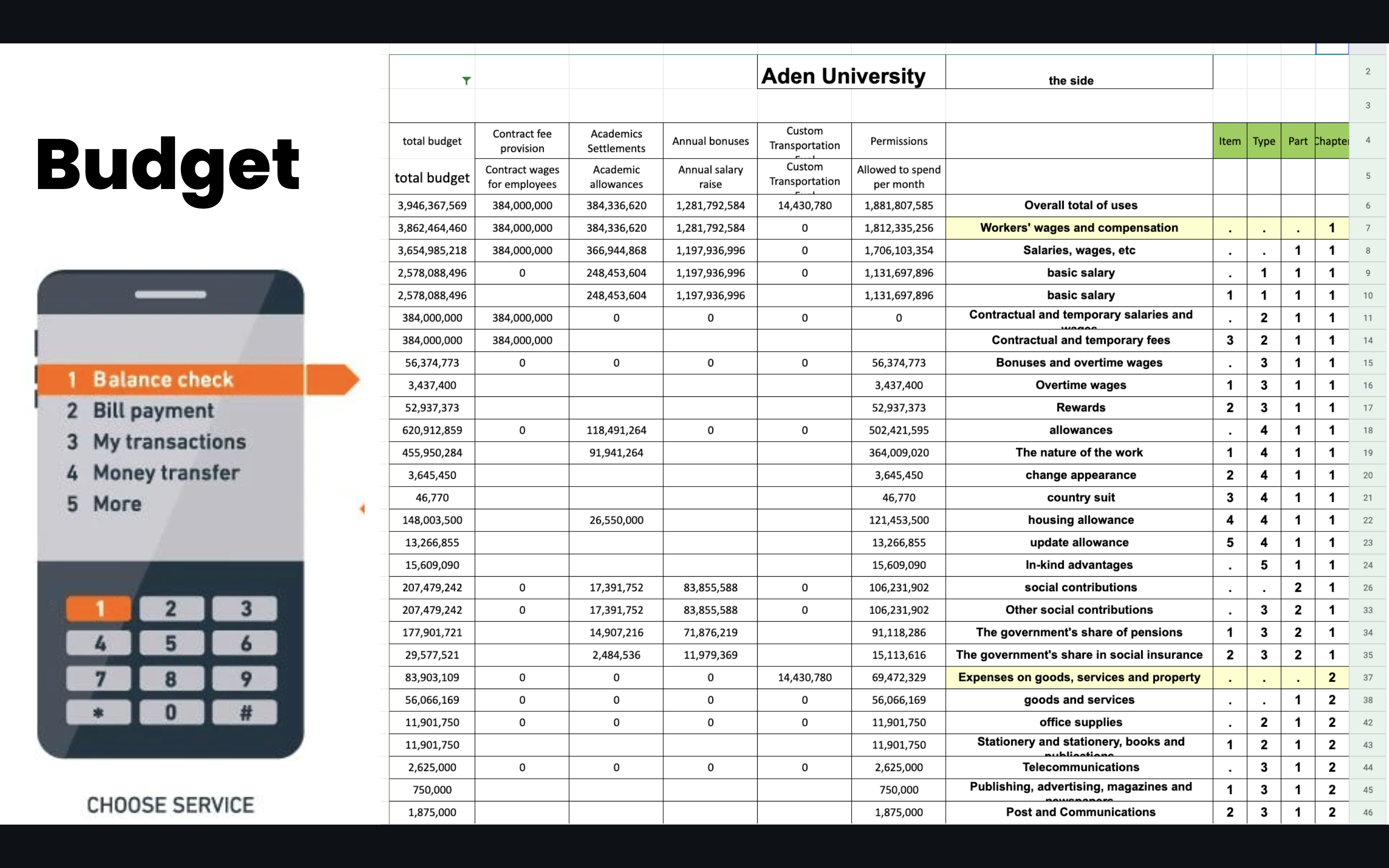
- Manual paperwork for financial account balances
- Manual paperwork for financial activity reports
- Inability to alert customers RT with SMS and email notifications
What it does
NO INTERNET COLLECTION Collecting data on a mobile phone without an internet connection is possible through various methods. data Another innovation is the development of an offline mode for use in districts with unreliable Internet access. IfInternet access is lost, data can still be entered offline and then uploaded to the server when access is restored.
- A low-speed internet connection
- Times of the day when there's low bandwidth because of network usage in an area.
- Low-bandwidth periods because of outages local to MoF or residences, but, which affect performance nonetheless.
- Non-bandwidth issues (for example, issues with hardware) that masquerade as low-bandwidth issues.
Here are some ways to collect data without an internet connection.
- Offline Forms: Offline forms can be used to collect data even when the mobile phone does not have an internet connection. Offline forms can be created using a form builder or a mobile app, and the data collected can be stored locally on the phone until the internet connection is restored.
- Mobile Data Collection Apps: Mobile data collection apps such as ODK Collect, Kobo Toolbox, and Magpi can be used to collect data without an internet connection. These apps allow you to create custom forms, and the data collected can be stored locally on the phone until an internet connection is available.
- Bluetooth: Bluetooth can be used to transfer data between two mobile phones without an internet connection. This method is suitable for transferring small amounts of data and requires both devices to have Bluetooth enabled.
- NFC: Near Field Communication (NFC) can be used to transfer data between two mobile phones without an internet connection. This method is suitable for transferring small amounts of data and requires both devices to have NFC enabled.
- USB Cable: A USB cable can be used to transfer data from a mobile phone to a computer or another mobile phone without an internet connection. This method requires a USB cable and a computer or another mobile phone that has a USB port.
It's important to note that while these methods allow for data collection without an internet connection, the data collected will need to be uploaded to a database or server once an internet connection is available.
===========================
USSD TELECOMMUNICATIONS
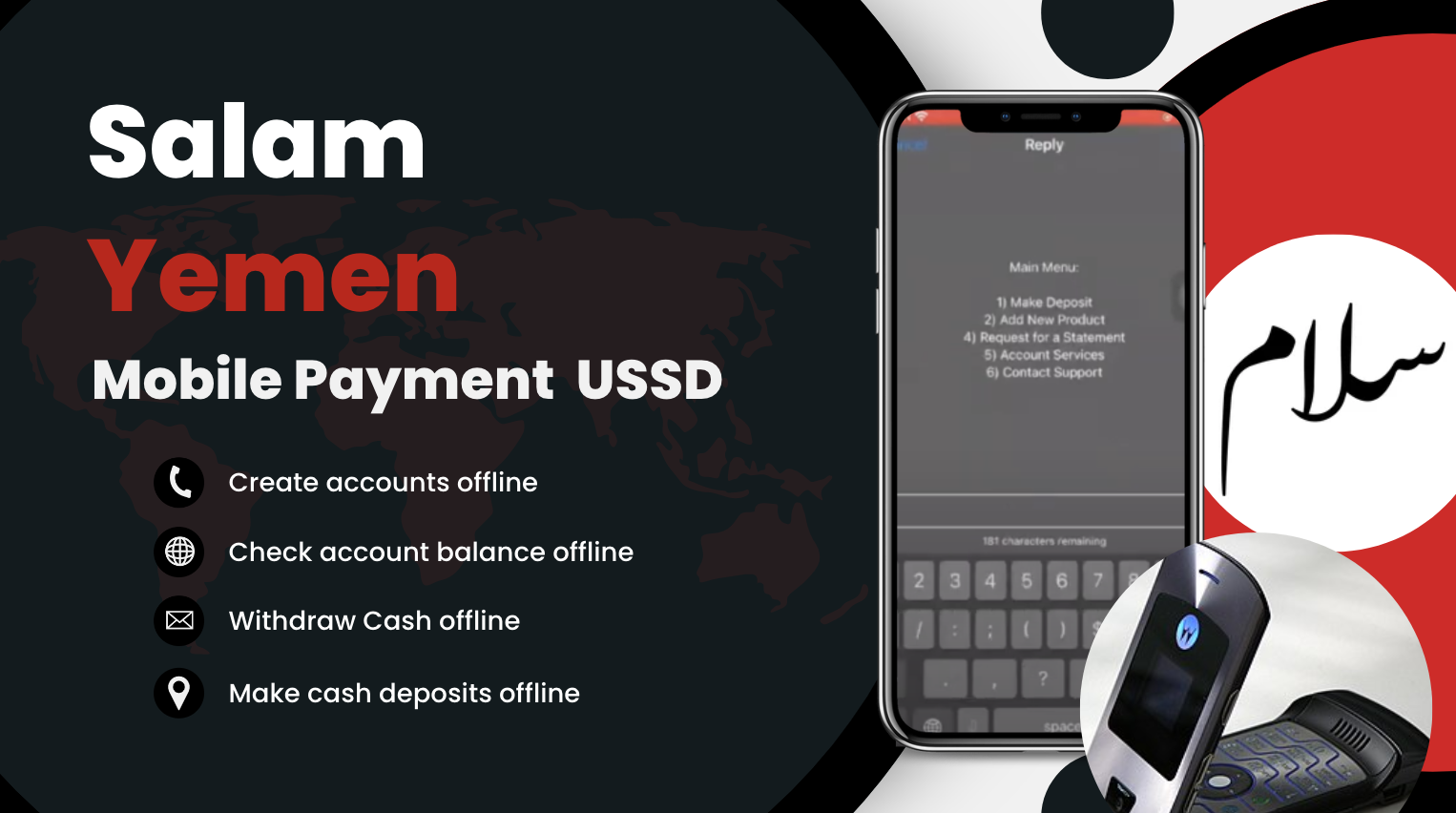
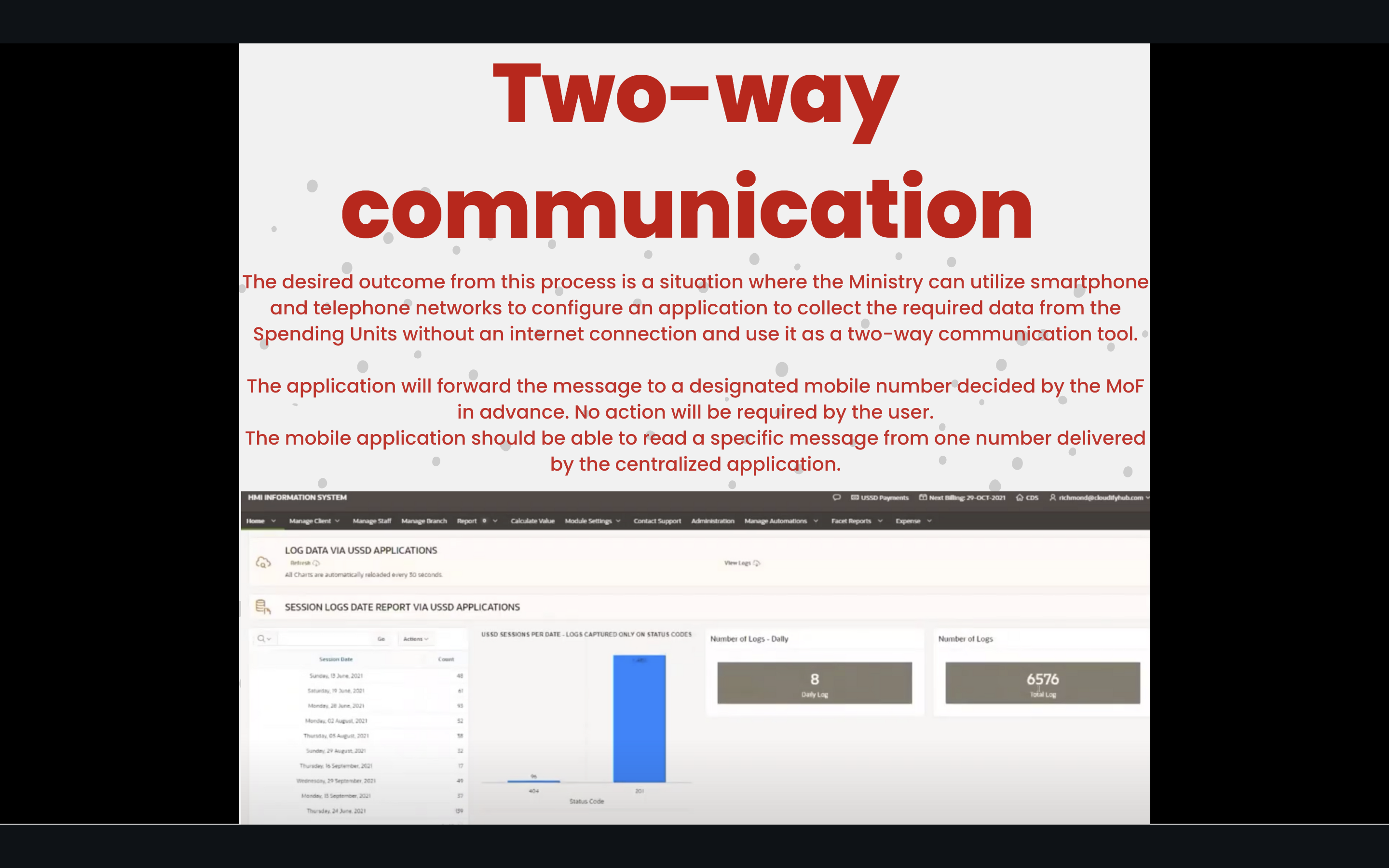
Widespread mobile phone use and improved broadband connectivity are expanding the possibilities for developing countries to improve access. USSD is commonly used for banking, lending, customer order management, telcommunications and government application services. The use of phones can be used for ensuring improved connectivity and access. By 2025, it is expected that almost three quarters (72.6 percent or 3.7 billion people) of internet users will access the web solely via their phones. The use of phones can be used for ensuring improved connectivity and access. Highlight the advantages of using USSD technology, such as its ability to work offline and its simplicity and ease of use. Collect different types of data, like recorded voice, scanned barcodes, geolocation, and electronic signatures. A mechanism to securely encrypt and share information with a centralized MoF Ministry of Finance application using a mobile number without an internet connection.
Preview and revise SMS-base survey forms efficiently with the testing interface. Create summary reports with graphs and tables - aggregate data in reports i.e. by gender, region or educational level. Useful for governments, Humanitarian Organizations, Researchers, Aid Workers & Everyone Else
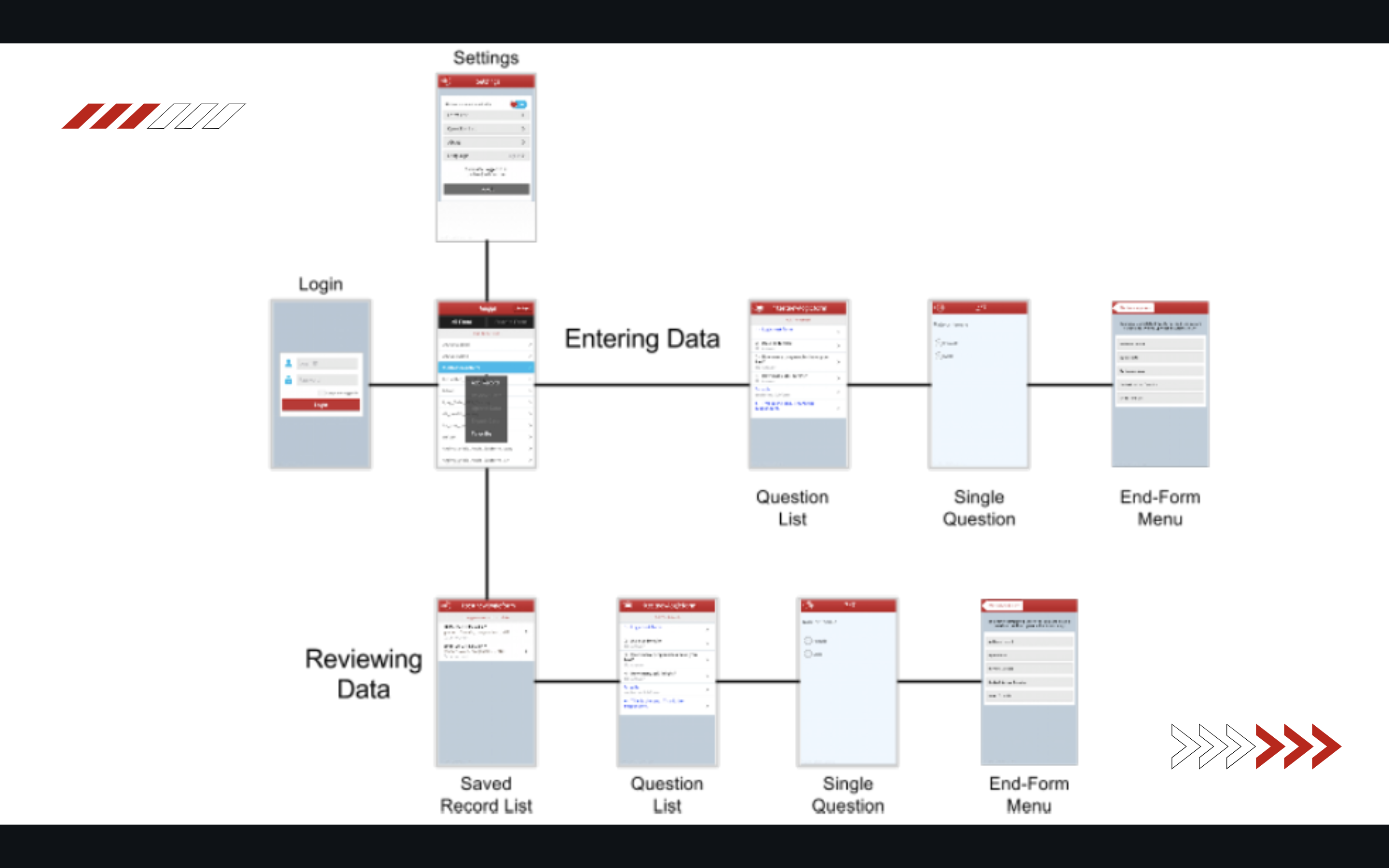
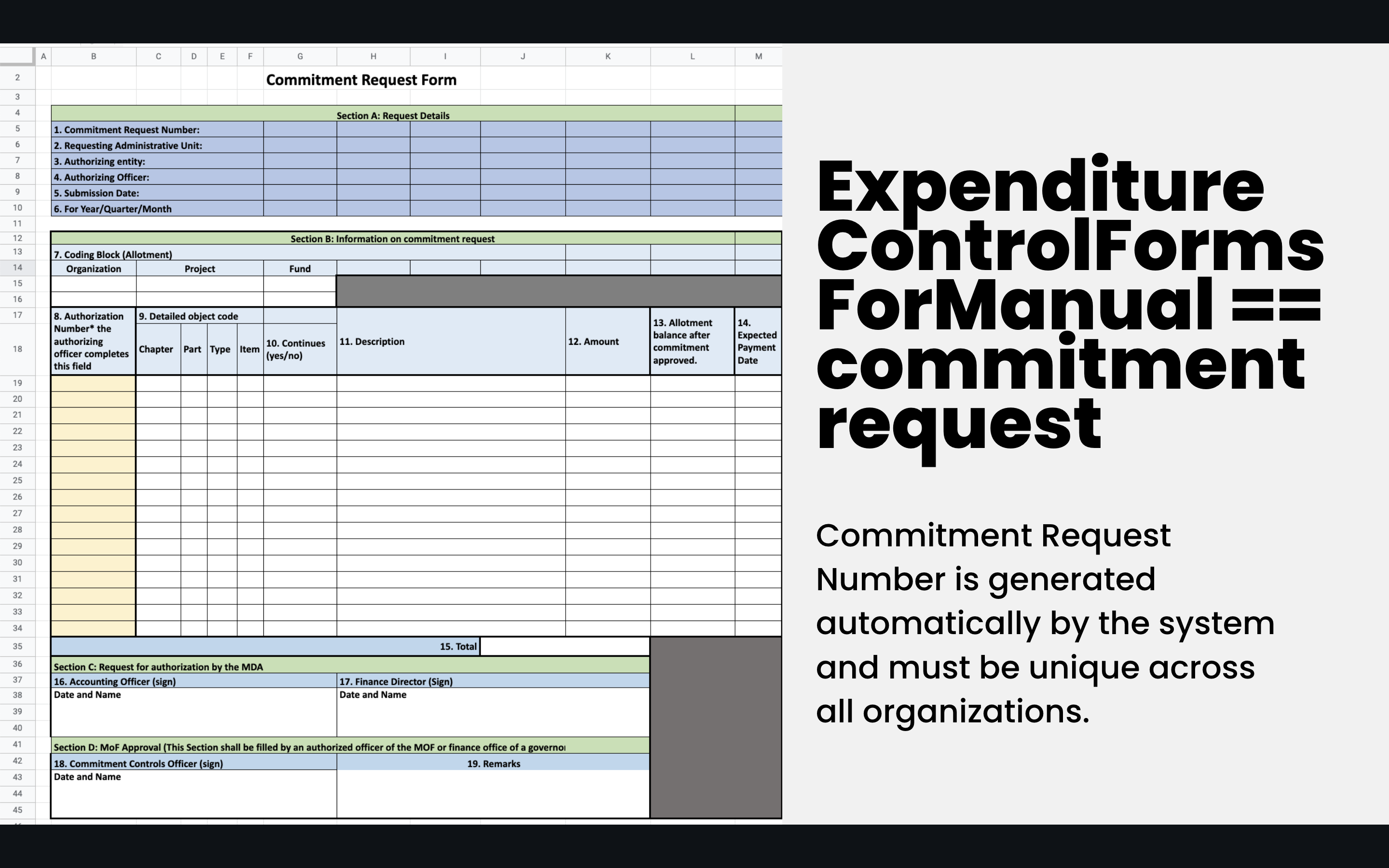
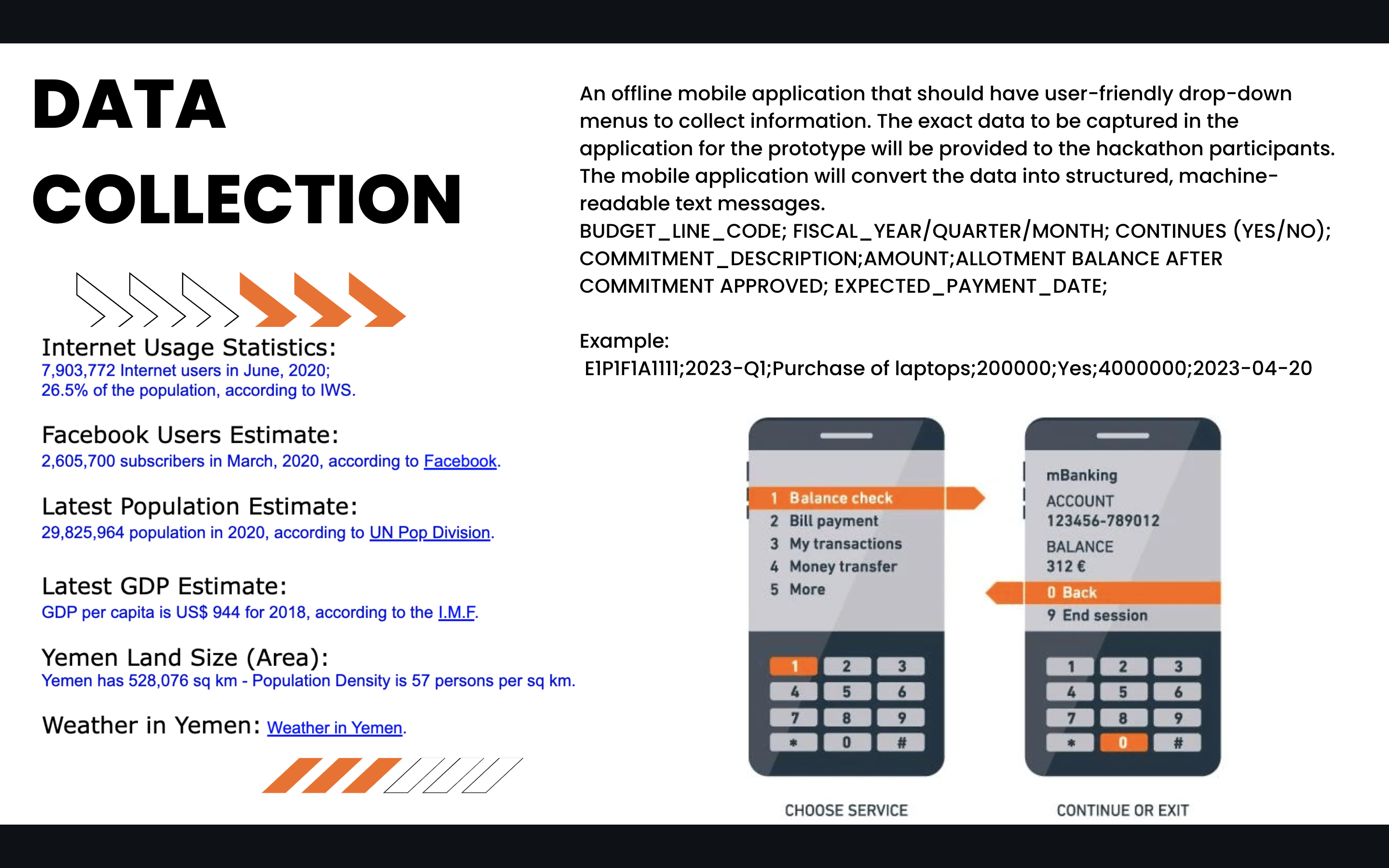
An offline mobile application that should have user-friendly drop-down menus to collect information. The exact data to be captured in the application for the prototype will be provided to the hackathon participants. The mobile application will convert the data into structured, machine-readable text messages. BUDGET_LINE_CODE; FISCAL_YEAR/QUARTER/MONTH; CONTINUES (YES/NO); COMMITMENT_DESCRIPTION;AMOUNT;ALLOTMENT BALANCE AFTER COMMITMENT APPROVED; EXPECTED_PAYMENT_DATE;
Example: E1P1F1A1111;2023-Q1;Purchase of laptops;200000;Yes;4000000;2023-04-20
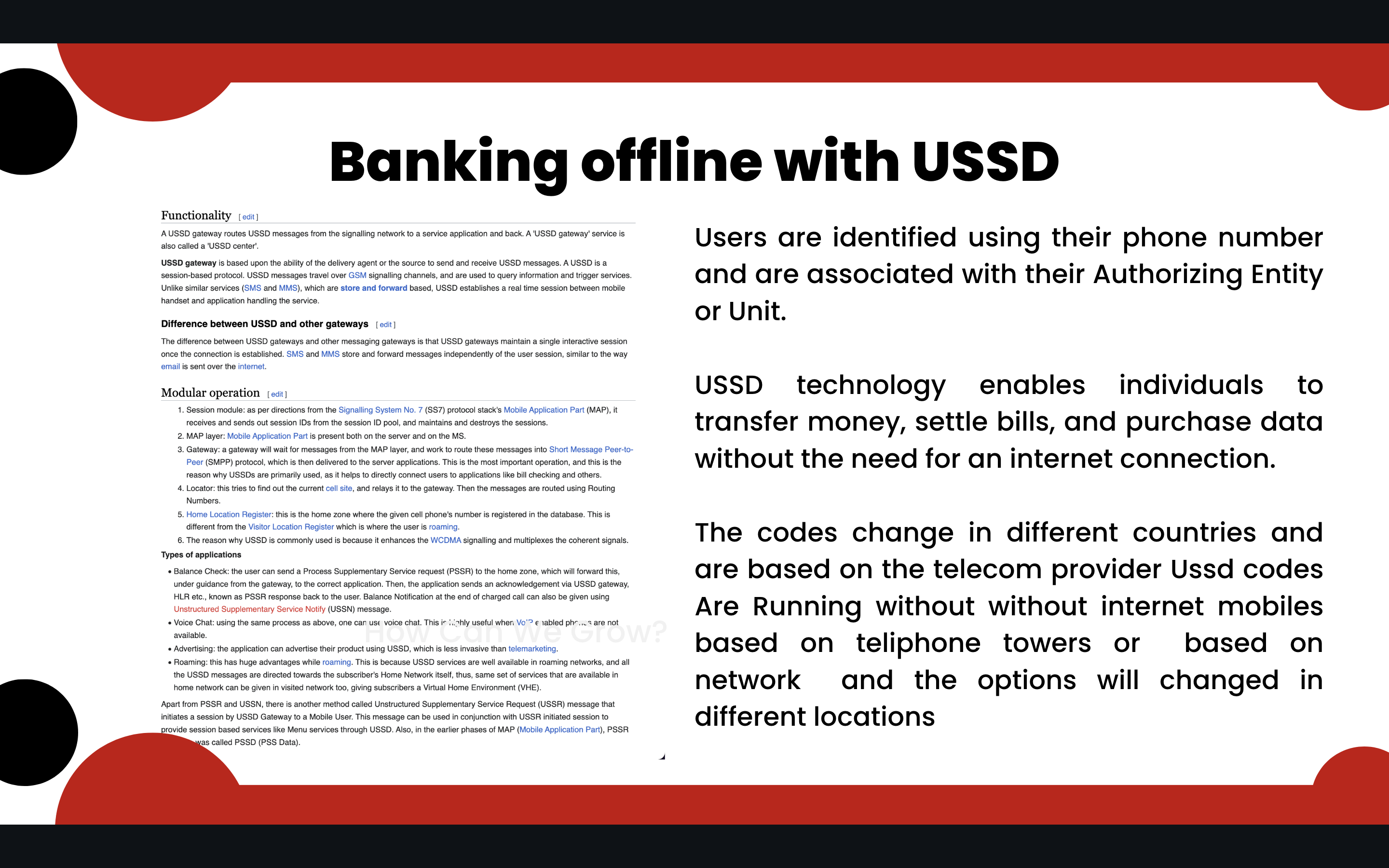
[USSD telecommunications] the codes change in different countries and are based on the telecom provider Ussd codes Are Running without without internet mobiles based on teliphone towers or based on network and the options will changed in different locations. To make a USSD mobile application reusable, you could consider the following steps:
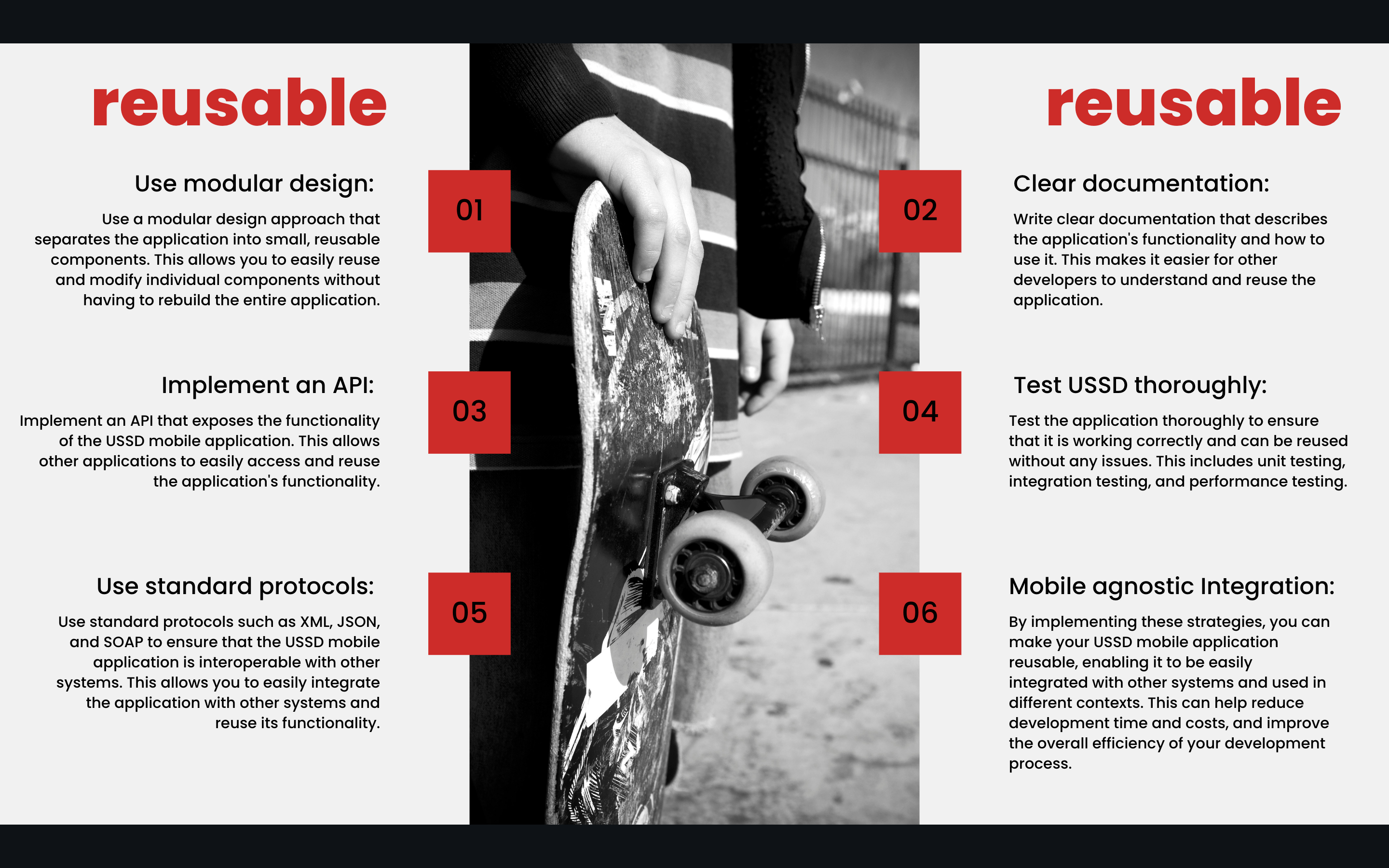
Use modular design: Use a modular design approach that separates the application into small, reusable components. This allows you to easily reuse and modify individual components without having to rebuild the entire application.
Implement an API: Implement an API that exposes the functionality of the USSD mobile application. This allows other applications to easily access and reuse the application's functionality.
Use standard protocols: Use standard protocols such as XML, JSON, and SOAP to ensure that the USSD mobile application is interoperable with other systems. This allows you to easily integrate the application with other systems and reuse its functionality. The gathering of data is important for getting ideas, making comparisons, testing a change, or making improvements.
Write clear documentation: Write clear documentation that describes the application's functionality and how to use it. This makes it easier for other developers to understand and reuse the application.
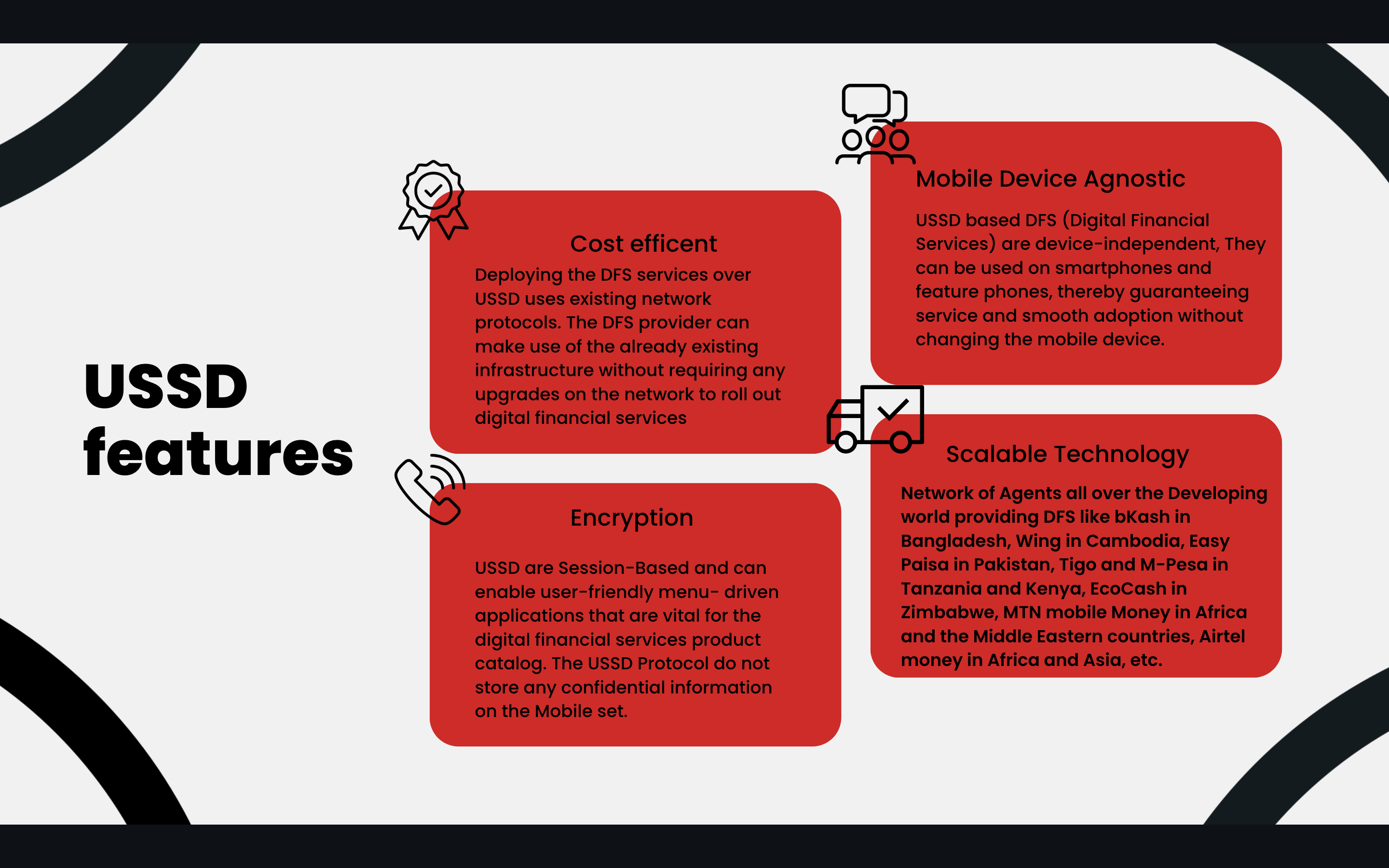
Test thoroughly: Test the application thoroughly to ensure that it is working correctly and can be reused without any issues. This includes unit testing, integration testing, and performance testing. Deploying the DFS services over USSD uses existing network protocols. The DFS provider can make use of the already existing infrastructure without requiring any upgrades on the network to roll out digital financial services
By implementing these strategies, you can make your USSD mobile application reusable, enabling it to be easily integrated with other systems and used in different contexts. This can help reduce development time and costs, and improve the overall efficiency of your development process. To make a USSD mobile application scalable, you could consider the following steps:
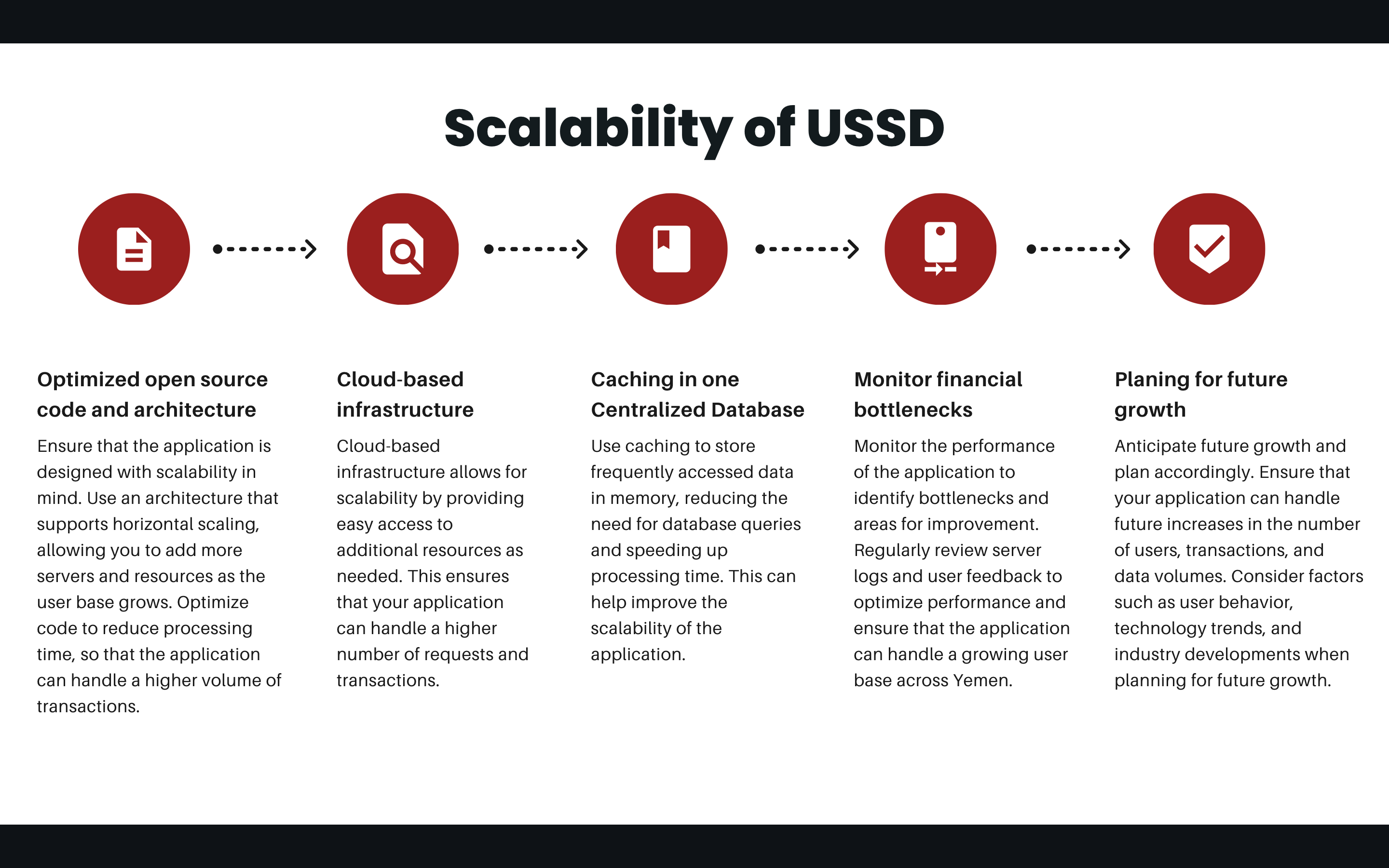
Optimize code and architecture: Ensure that the application is designed with scalability in mind. Use an architecture that supports horizontal scaling, allowing you to add more servers and resources as the user base grows. Optimize code to reduce processing time, so that the application can handle a higher volume of transactions. USSD based DFS (Digital Financial Services) are device-independent, They can be used on smartphones and feature phones, thereby guaranteeing service and smooth adoption without changing the mobile device.
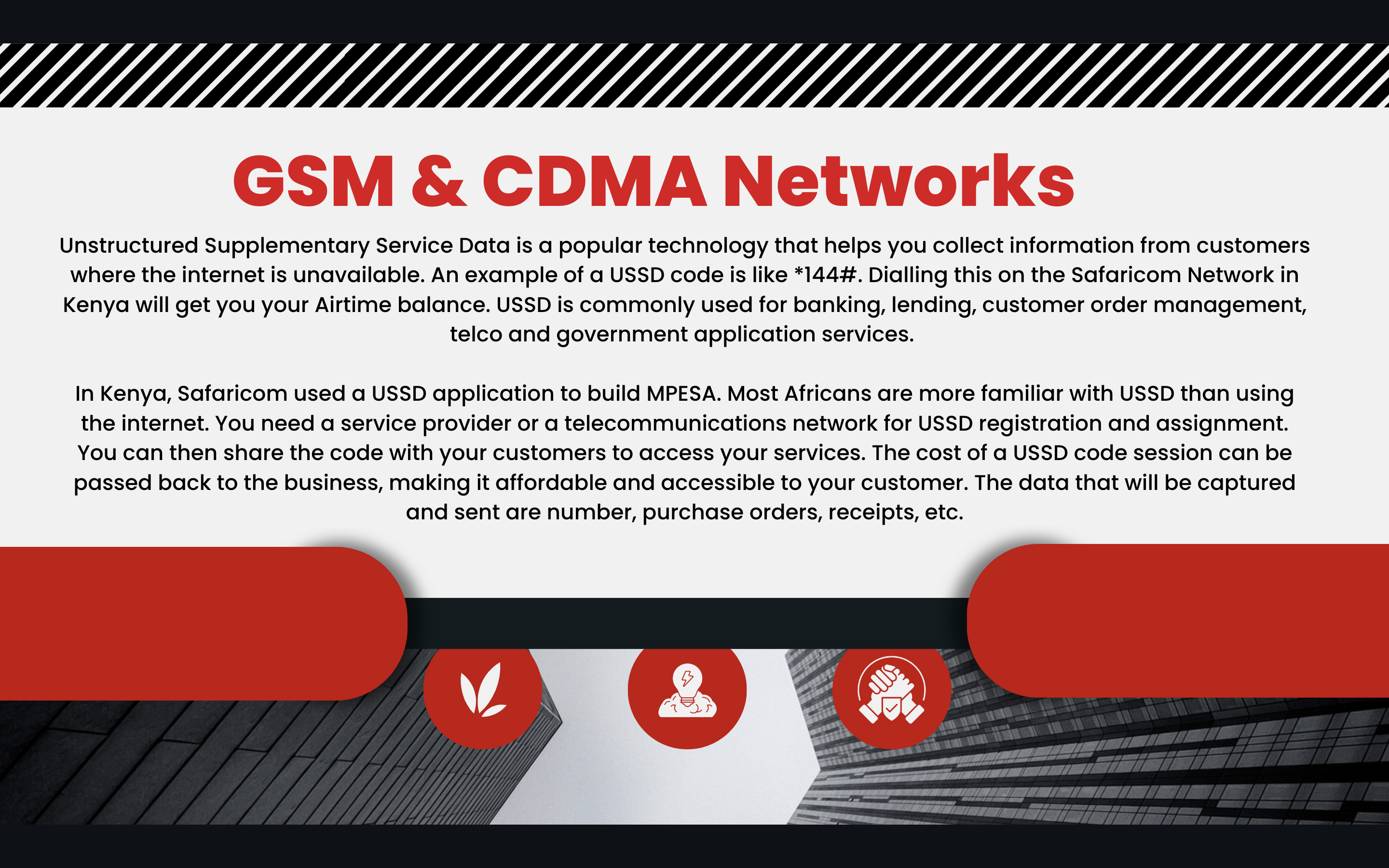
Use cloud-based infrastructure: Cloud-based infrastructure allows for scalability by providing easy access to additional resources as needed. This ensures that your application can handle a higher number of requests and transactions. USSD are Session-Based and can enable user-friendly menu- driven applications that are vital for the digital financial services product catalog. The USSD Protocol do not store any confidential information on the Mobile set. Unstructured Supplementary Service Data is a popular technology that helps you collect information from customers where the internet is unavailable. An example of a USSD code is like *144#. Dialling this on the Safaricom Network in Kenya will get you your Airtime balance. USSD is commonly used for banking, lending, customer order management, telco and government application services.
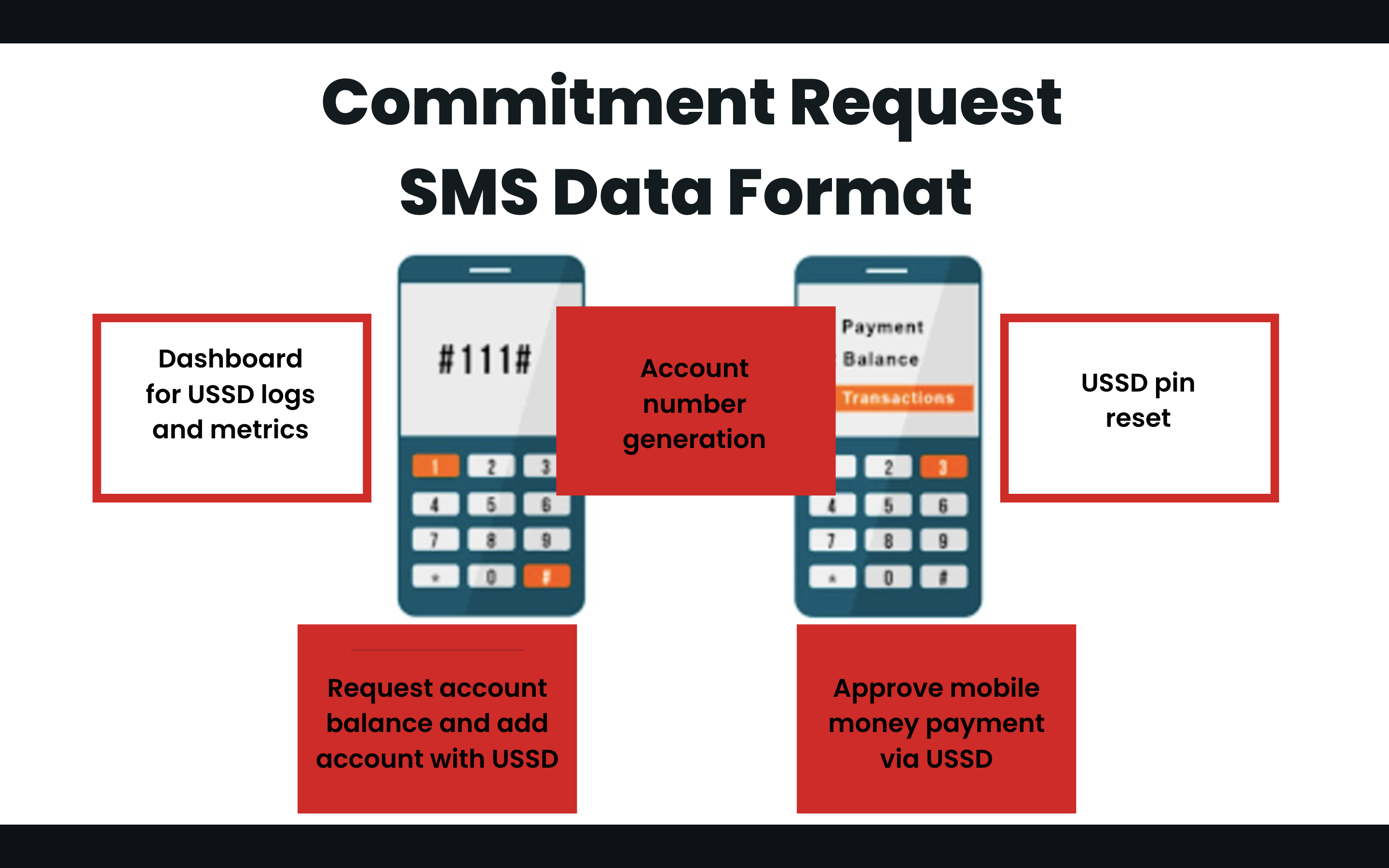
- Account number generation
- USSD pin reset
- Approve mobile money payment via USSD
- Request account balance and add account with USSD
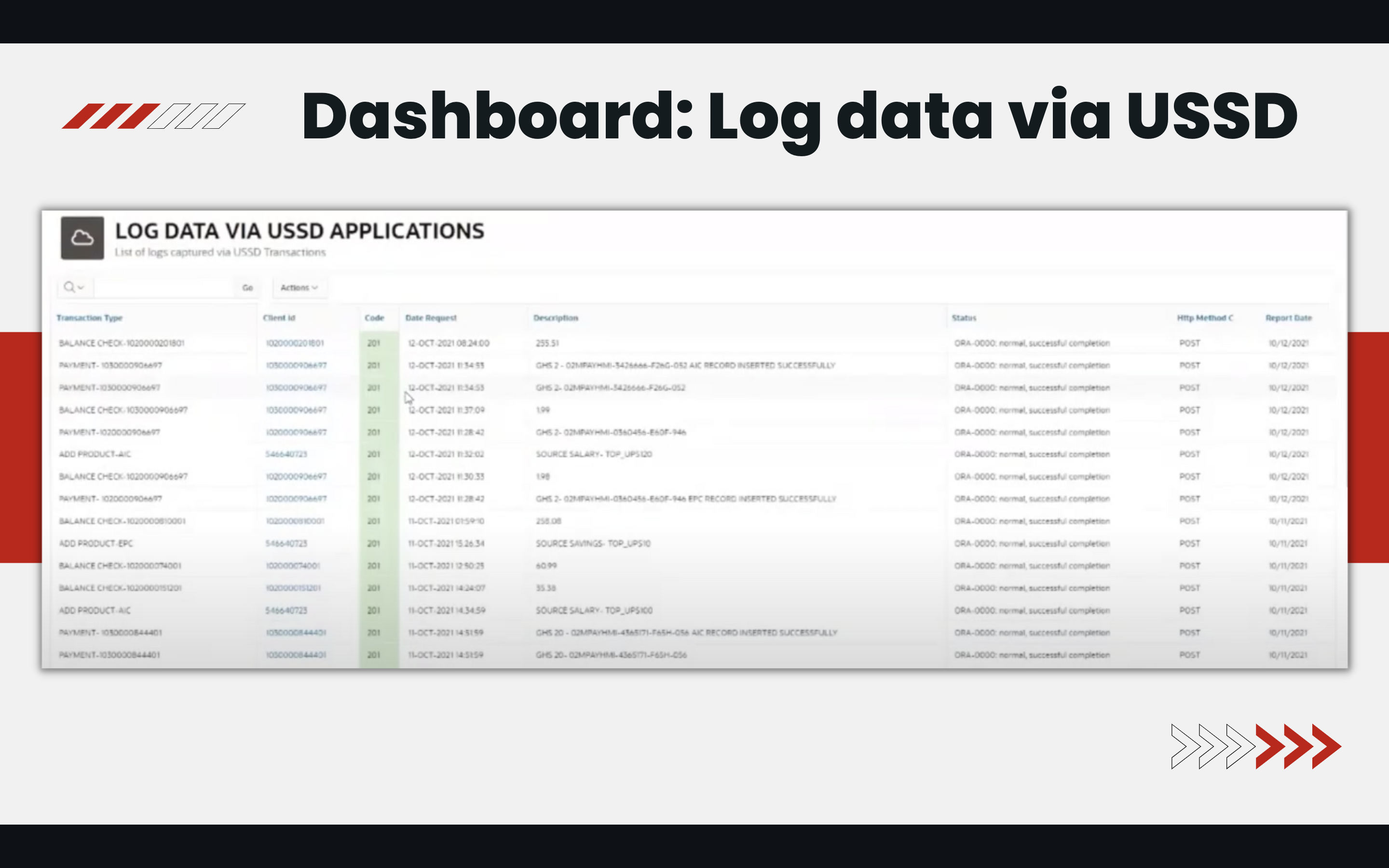
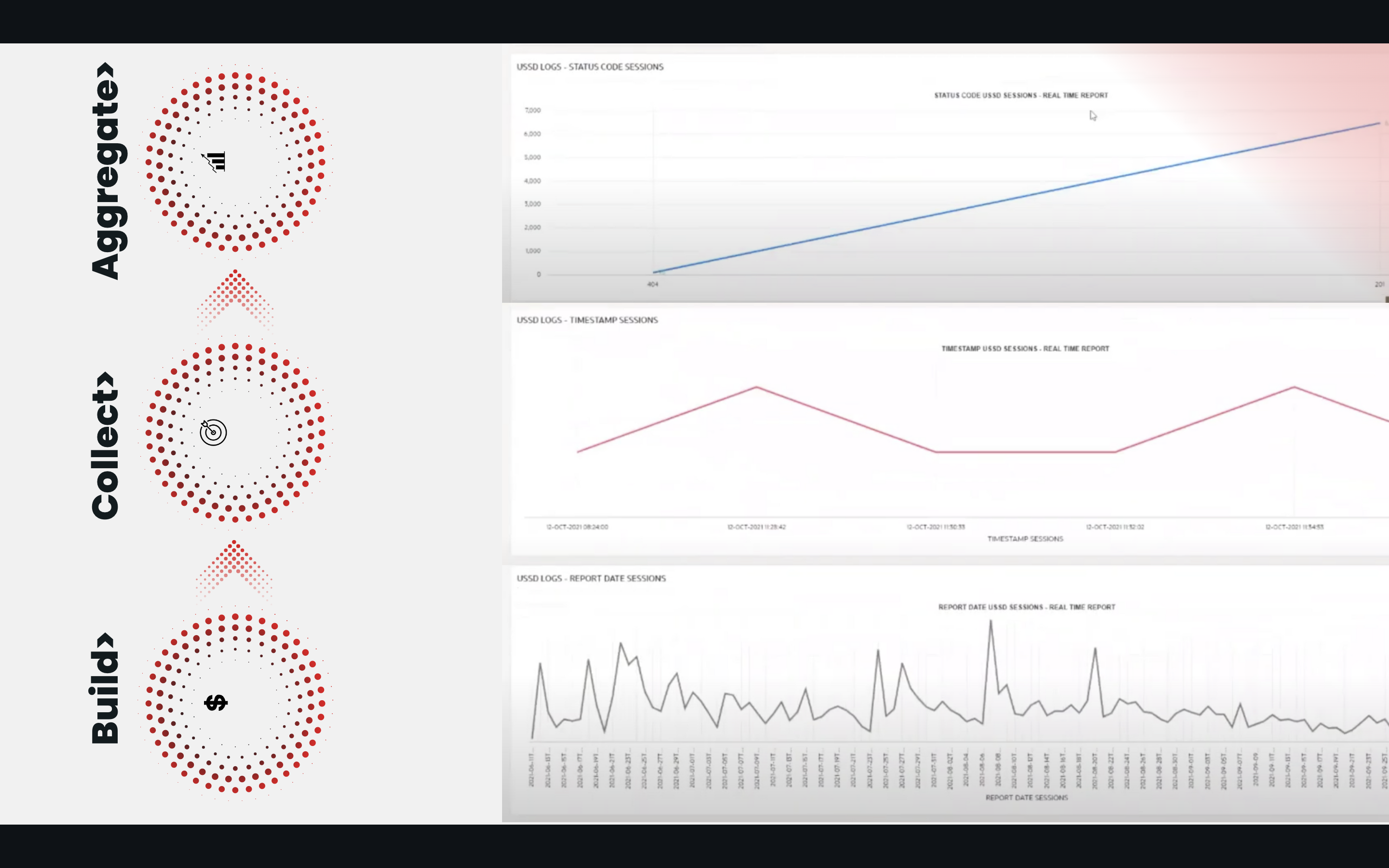
- Dashboard for USSD logs and metrics
In Kenya, Safaricom used a USSD application to build MPESA. Most Africans are more familiar with USSD than using the internet. You need a service provider or a telecommunications network for USSD registration and assignment. You can then share the code with your customers to access your services. The cost of a USSD code session can be passed back to the business, making it affordable and accessible to your customer. The data that will be captured and sent are number, purchase orders, receipts, etc.
Implement caching: Use caching to store frequently accessed data in memory, reducing the need for database queries and speeding up processing time. This can help improve the scalability of the application.
Monitor performance: Monitor the performance of the application to identify bottlenecks and areas for improvement. Regularly review server logs and user feedback to optimize performance and ensure that the application can handle a growing user base.
Plan for future growth: Anticipate future growth and plan accordingly. Ensure that your application can handle future increases in the number of users, transactions, and data volumes. Consider factors such as user behavior, technology trends, and industry developments when planning for future growth. The codes change in different countries and are based on the telecom provider Ussd codes Are Running without without internet mobiles based on teliphone towers or based on network and the options will changed in different locations. Network of Agents all over the Developing world providing DFS like bKash in Bangladesh, Wing in Cambodia, Easy Paisa in Pakistan, Tigo and M-Pesa in Tanzania and Kenya, EcoCash in Zimbabwe, MTN mobile Money in Africa and the Middle Eastern countries, Airtel money in Africa and Asia, etc.
By implementing these strategies, you can improve the scalability of your USSD mobile application, ensuring that it can handle a growing user base and increasing demand for transactions.
You need a service provider or a telecommunications network for USSD registration and assignment. You can then share the code with your customers to access your services.
The cost of a USSD code session can be passed back to the business, making it affordable and accessible to your customer.
How we built it
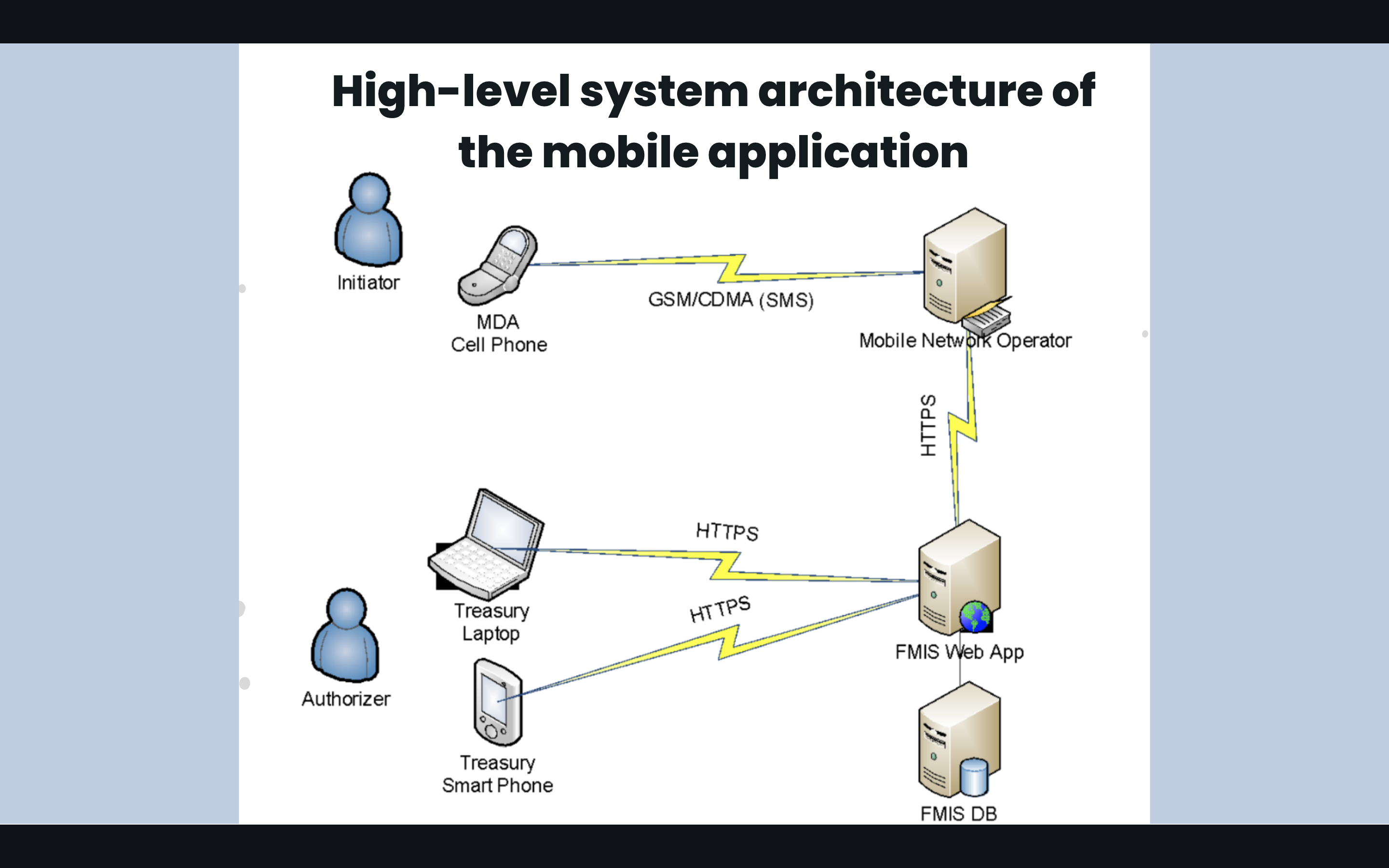
needs a mobile application architecture diagram High-level system architecture of the mobile application
A high-level system architecture of a mobile application typically consists of three main layers:
Presentation Layer: This layer is responsible for the user interface (UI) of the mobile application. It includes screens, buttons, menus, and other visual elements that allow the user to interact with the application. This layer is often implemented using a combination of native or cross-platform mobile app frameworks like React Native, Flutter, or Xamarin.
Business Logic Layer: This layer contains the core business logic of the mobile application. It defines how the application processes and manipulates data, and how it responds to user input. This layer is often implemented using a server-side technology stack such as Node.js or Ruby on Rails, and exposes an API that the presentation layer can consume.
Data Layer: This layer is responsible for storing and retrieving data used by the mobile application. This may include data stored on the device, such as settings or cached data, as well as data stored remotely on servers. The data layer is often implemented using a combination of local storage mechanisms, such as SQLite, and remote storage mechanisms, such as RESTful APIs or GraphQL endpoints.
Overall, the high-level system architecture of a mobile application is designed to provide a scalable and flexible framework for developing and maintaining a robust and reliable mobile application that can be deployed across multiple platforms and devices.
===============================
ENCRYPTION SECURITY + HACKING
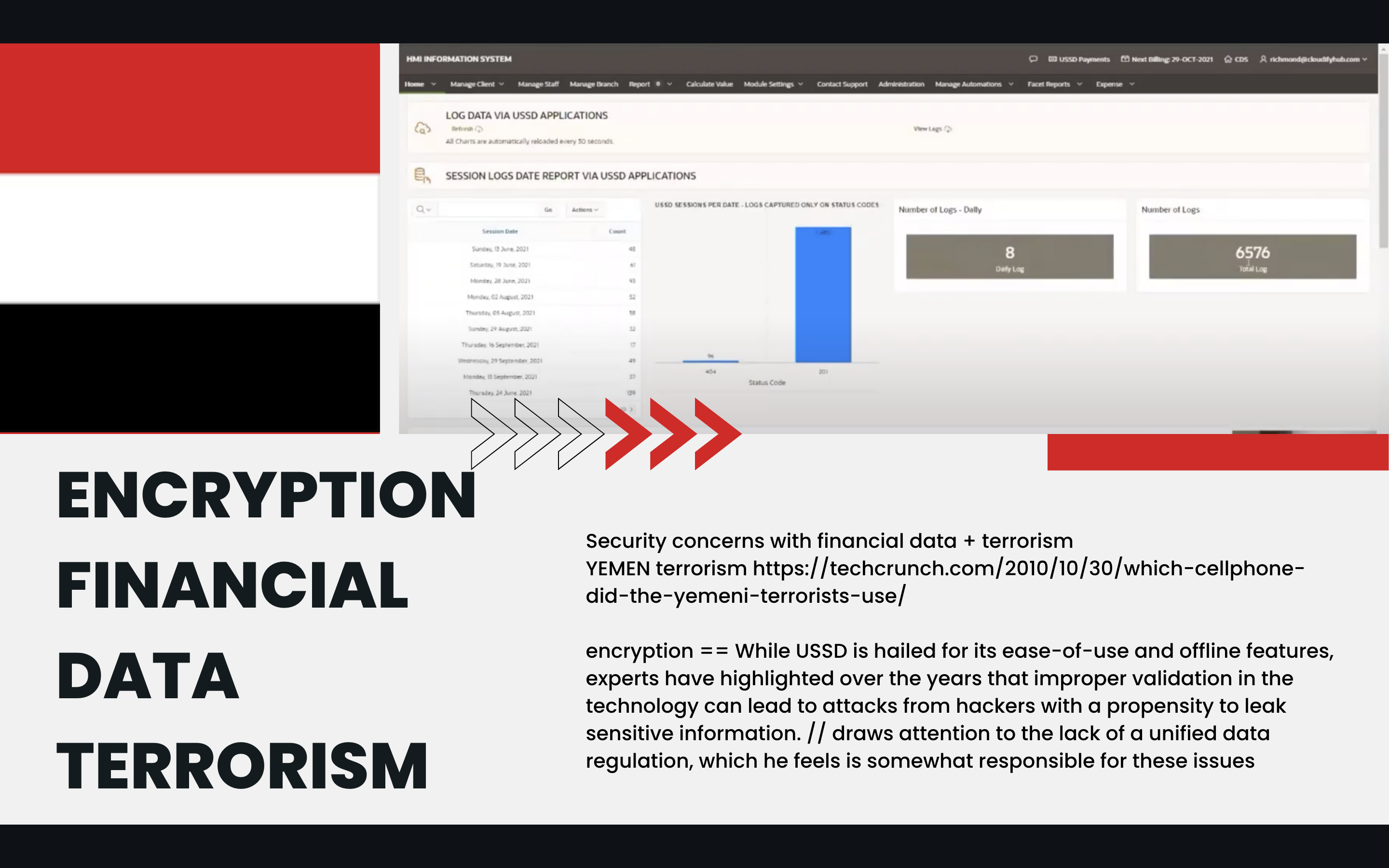
Security concerns with financial data + terrorism YEMEN terrorism https://techcrunch.com/2010/10/30/which-cellphone-did-the-yemeni-terrorists-use/
What if someone hack the telecommunications tower and terrorists start dialing *xxx#?
This is a security concern because the phone wants to send a code to the tower and the tower granted access the phone not just access but a number that contains virus that can collects private info. Current data collection systems is that they eliminate the use of paper surveys and allow data to be quickly exported for data analysis and reporting but the data is not encrypted. This is a problem as many text messaging platforms do not feature end-to-end encryption so data can be intercepted in transit.which can be a huge problem in Yemen.
Messages can remain on devices indefinitely creating a major privacy risk and if mobile devices are lost or stolen, text messages containing electronic protected health information could easily be viewed by unauthorized individuals. Maintaining anonymity, confidentiality, integrity, security problems are some issues with text communcation. There is no control over where messages are sent, messages are not encrypted so they can be intercepted in transit, and messages can be stored on service providers’ servers for long periods of time and could be accessed by unauthorized individuals. It is important for the safety that doctors reassure patients that their feedback will be confidential.
While USSD is hailed for its ease-of-use and offline features, experts have highlighted over the years that improper validation in the technology can lead to attacks from hackers with a propensity to leak sensitive information. // draws attention to the lack of a unified data regulation, which he feels is somewhat responsible for these issues
================================
TELECOMMUNICATIONS
Collect data offline Use either the mobile app or the web app. Your data is automatically synced when a network connection is found.
Offline data collection
No wifi or cell? No problem. We use text-message surveys to gather information for payments via USSD. Designed for easy offline data collection, our form builder lets you build forms that can collect and save data offline and later sync them when connected to the internet. Data is collected via SMS phone services and sent to a custom excel sheet form allow healthcare workers to collect data without the internet. Data gets stored locally and is synced to the cloud whenever the user is back in an internet zone. Offline forms allow researchers that are working in places with unreliable internet to store a backup of their data on their mobile device and upload it once an internet connection is available.
Offline mobile application that sends data from authorized users to the main database using GSM and or CDMA network. // The data that will be captured and sent are " number, purchase orders, receipts, etc...
Challenges we ran into
- Duplicate errors given 2 USSD codes with error handling with dialog saying try again *100*1# and 100*1*2#
- Interested in how IP copyrights over the material transfer to The Ministry of Finance will go
- Brainstorm and develop a proposal to solve the data exchange problems
Looking at Licenses & Standards since only open-source technology and tools are allowed
encryption == While USSD is hailed for its ease-of-use and offline features, experts have highlighted over the years that improper validation in the technology can lead to attacks from hackers with a propensity to leak sensitive information. // draws attention to the lack of a unified data regulation, which he feels is somewhat responsible for these issues
lack of a unified data regulation for USSD where improper validation in the technology can lead to attacks from hackers with a propensity to leak sensitive information
Accomplishments that we're proud of
What we learned
Telephony Manager,
Requesting Run Time permission,
collect user input(USSD Code),
encoding user input,
Running USSD Code in the background while updating the UI accordingly (for android API 26 or higher), Call Activity Intent for android API less than 26.
Text View,
Constraint Layout,
Button,
Alert Dialog & its Builder,
Loading indicator,
Edit Text view,
Layout Background etc.
What's next for Salam
- Smart invoicing and account recievvables
- Integrated with third party parment systems
- Cross-selling users with data-backed insights
- Charge commissions from partner brand
- Blockchain == self custody crypto wallet starting with USDC so users can buy airtime when they dial nonfinancial codes. Blockchain or Distributed Ledger Technology Offers Potential Benefits in
- SOCIAL interact with subject matter experts, well-known figures in the tech industry, IMF mentors, and representatives from Yemen's Ministry of Finance over the course of two action-packed days.
- FINANCE smart invoicing and account recievvables integrated with third party parment systems
- Low Trust Environments The features of blockchain immutable, distributed digital ledgers for data, monetary, and non-monetary transactions and linked contracts – have the potential to be very useful, especially in low-trust environments in developing countries.
- Could ALSO be used for People who have a smartphone, but no internet
Built With
- mobile

Log in or sign up for Devpost to join the conversation.