-
-
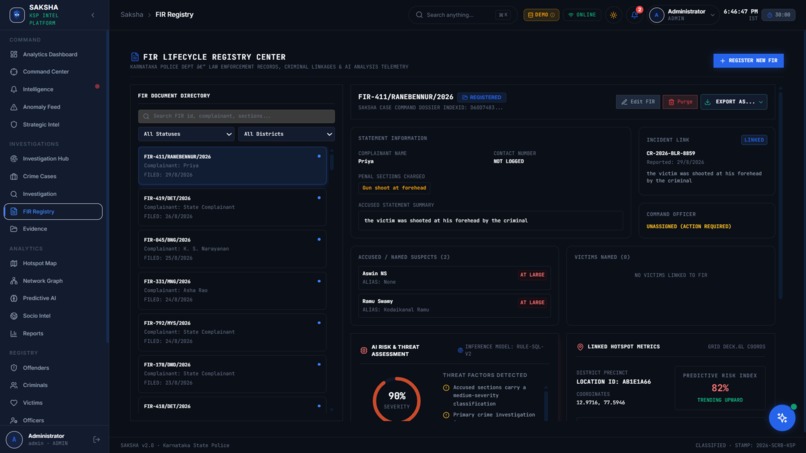
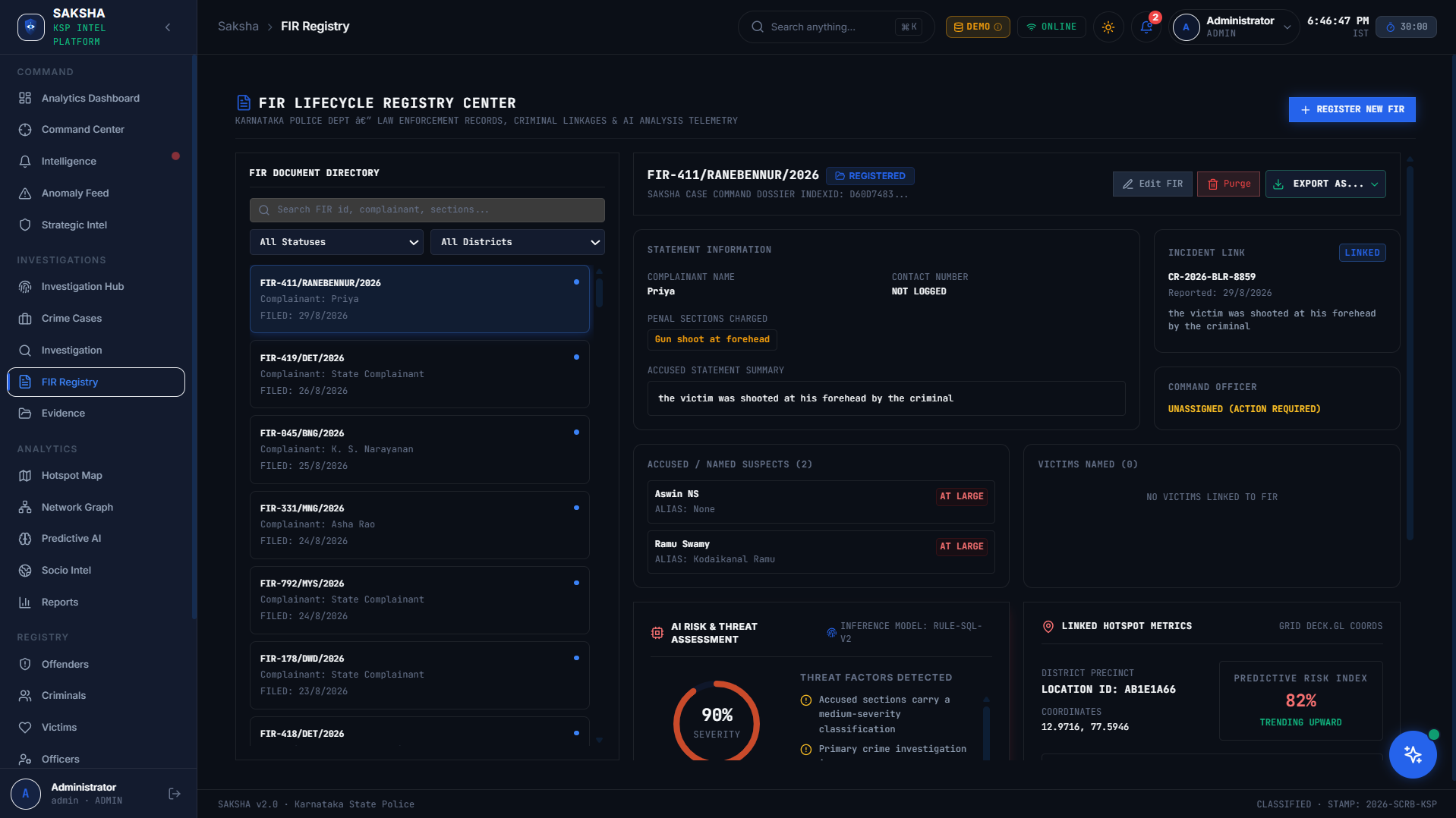
FIR Registry
-
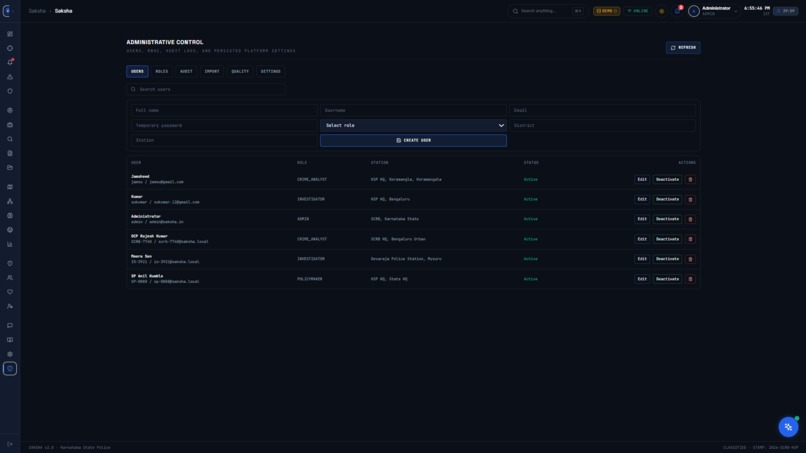
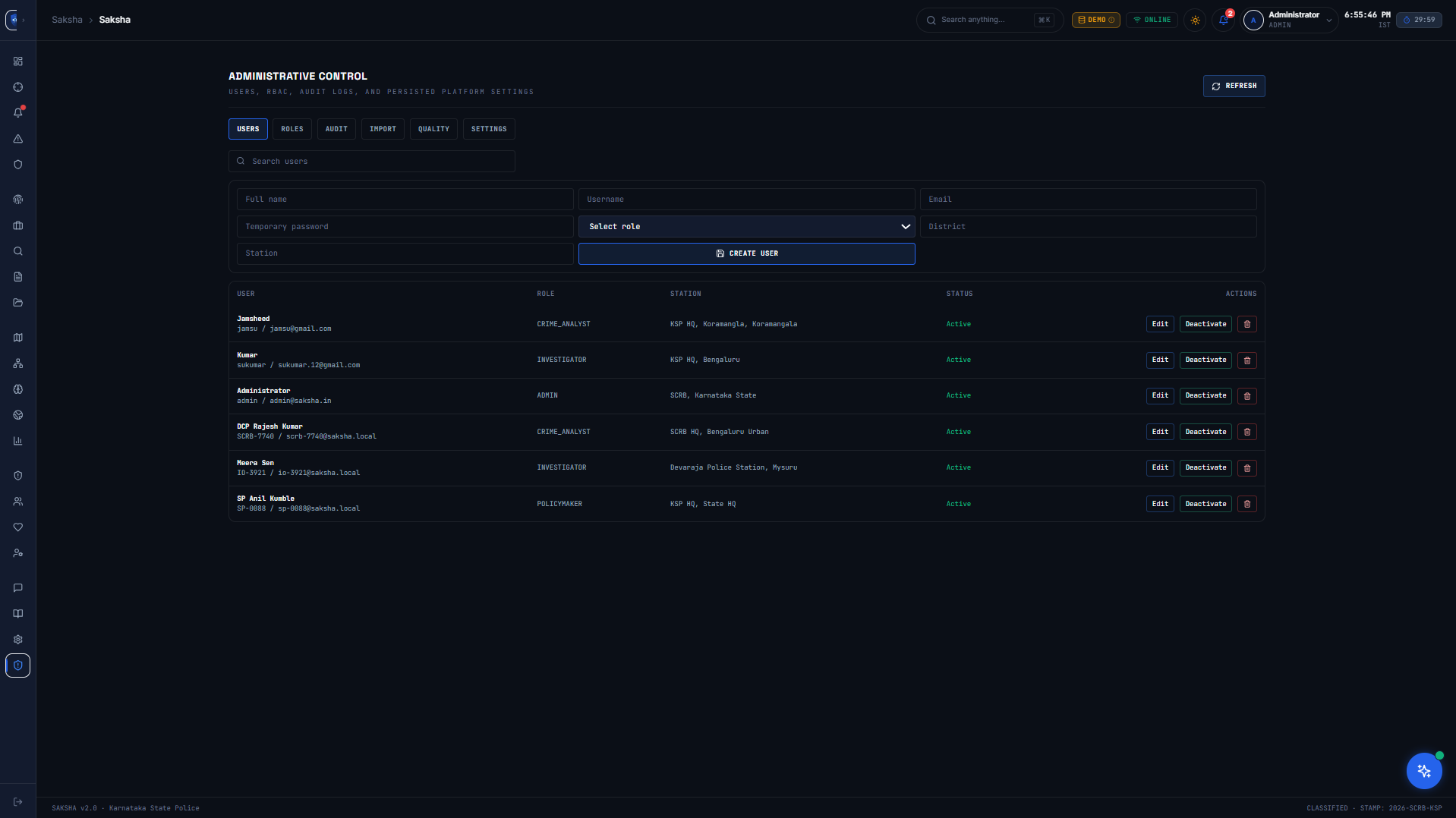
Admin Panel
-
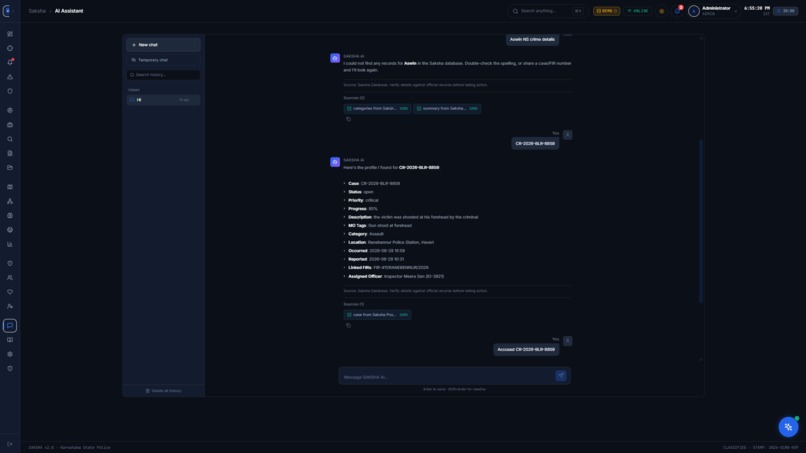
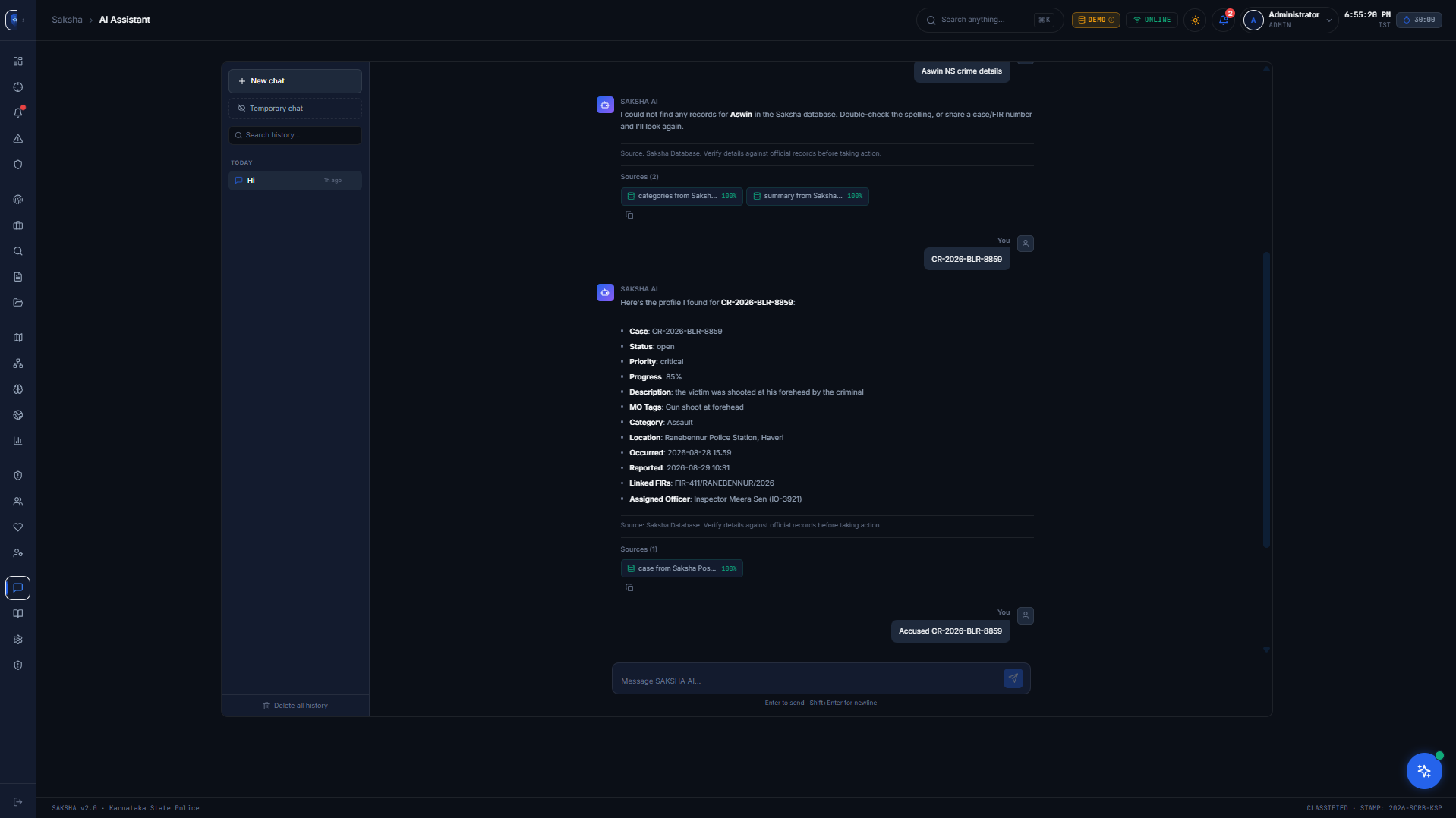
AI conversational chat
-
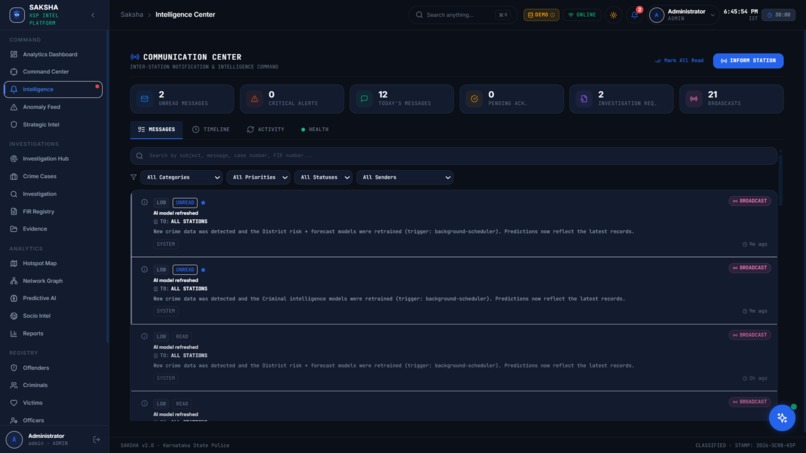
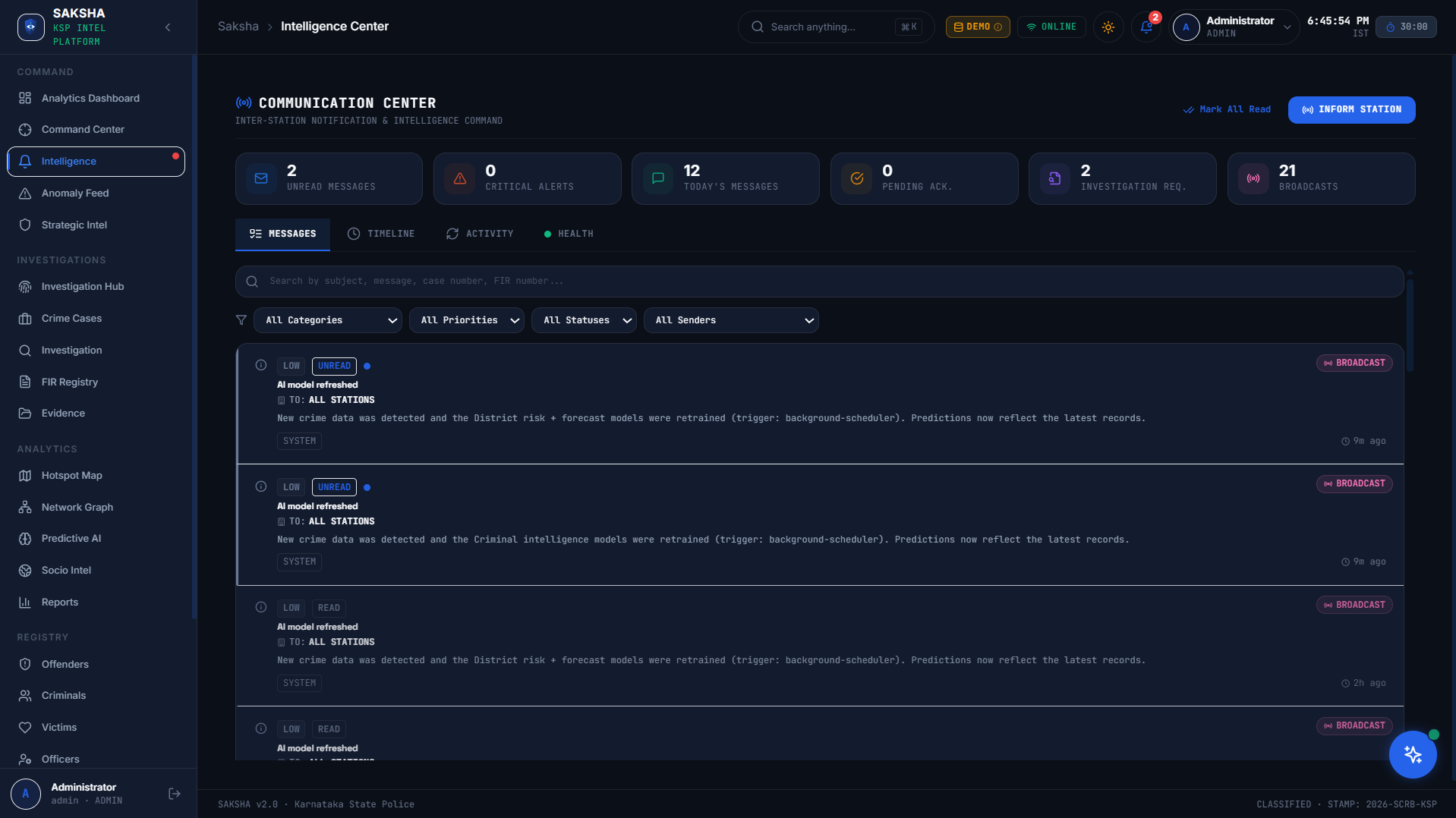
Notifications intelligence
-
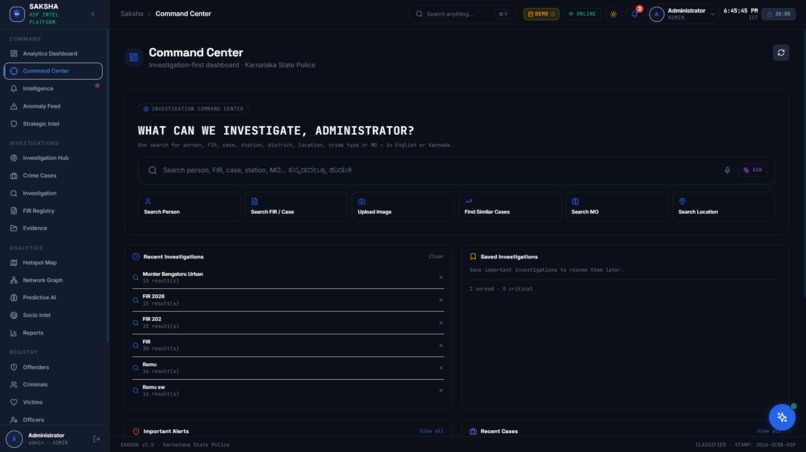
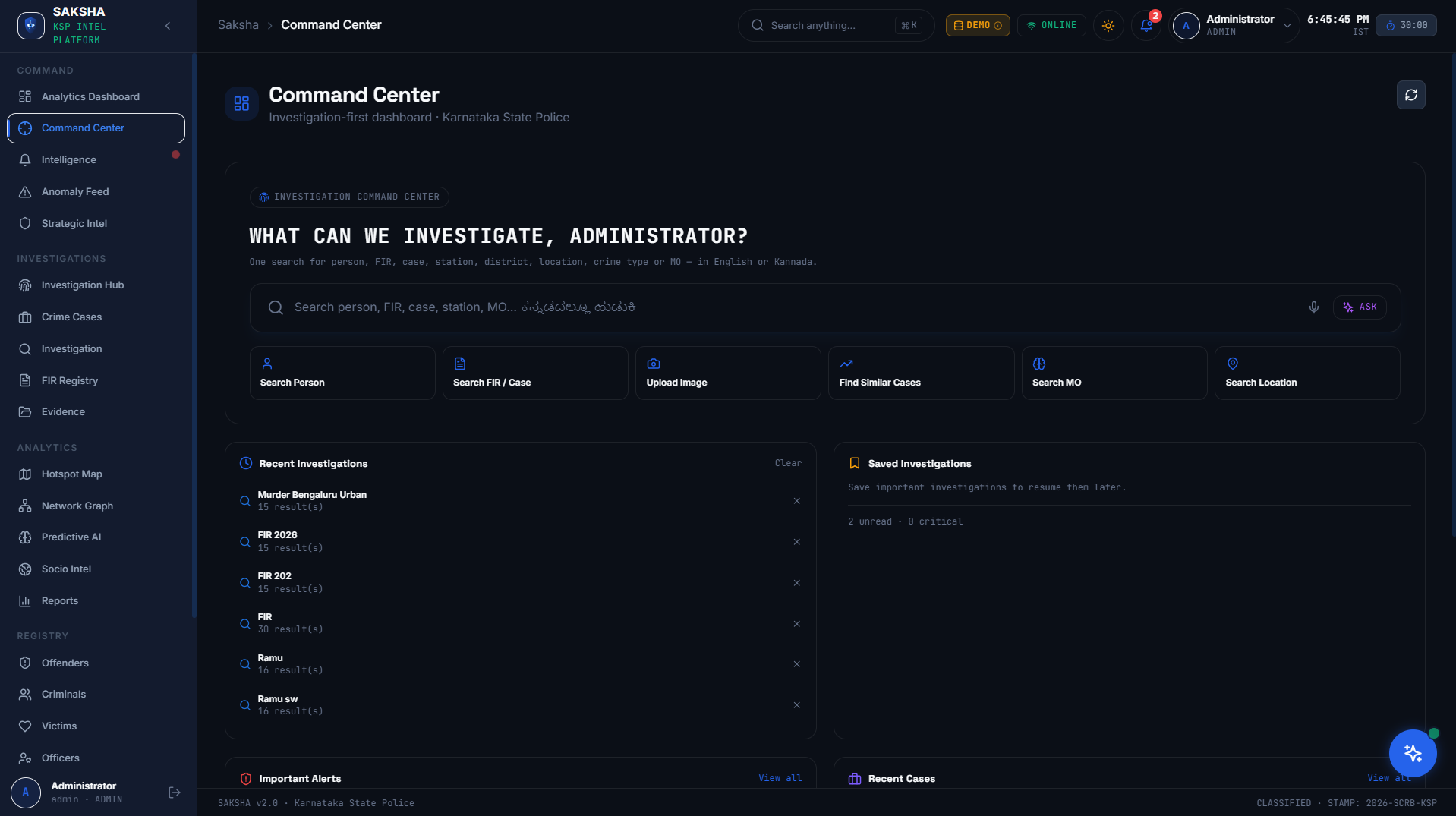
Command Center
-
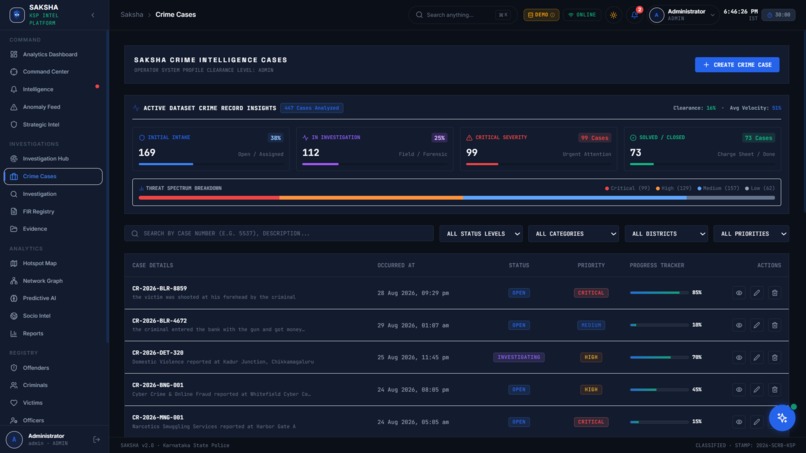
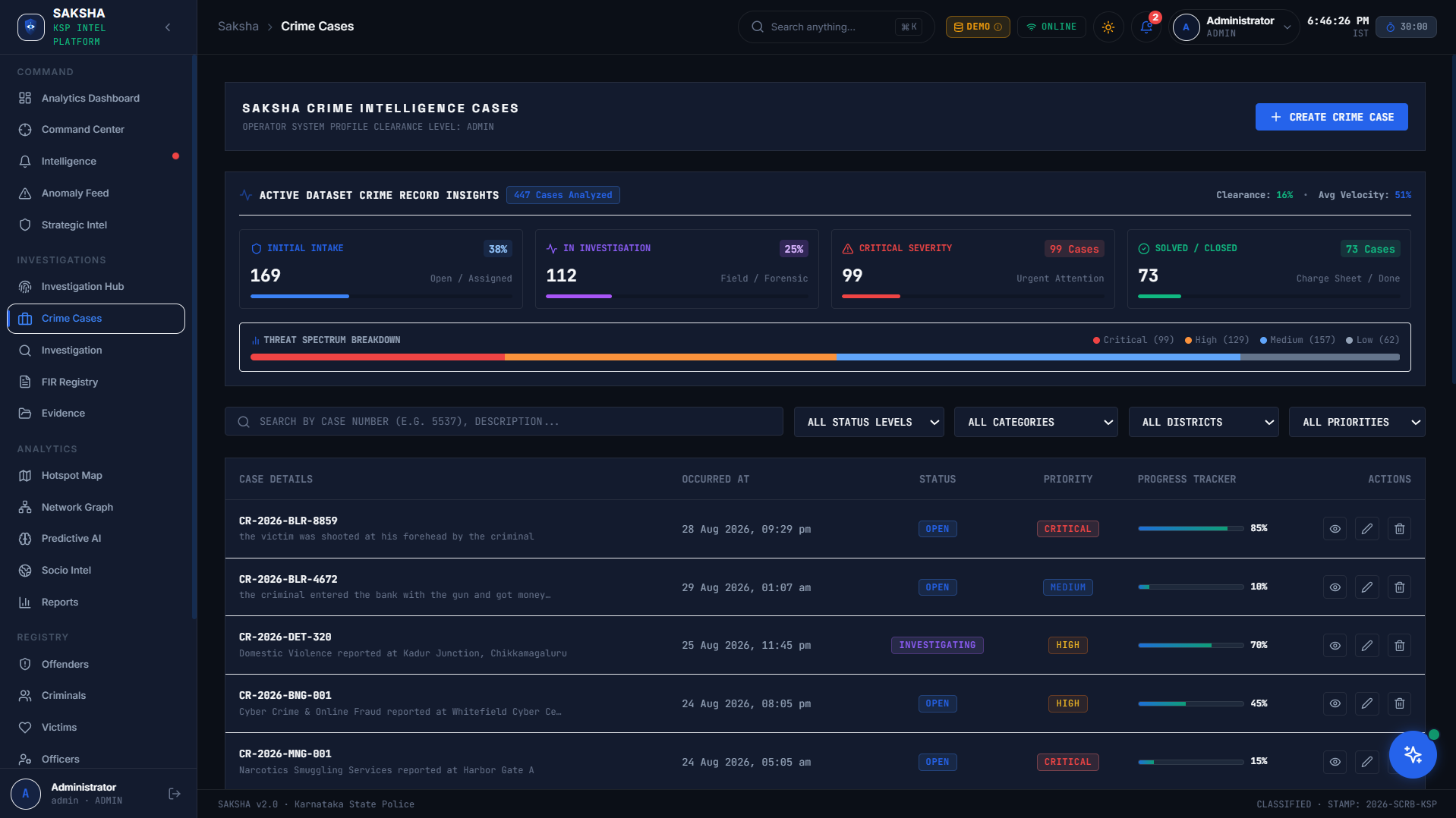
Crime case management
-
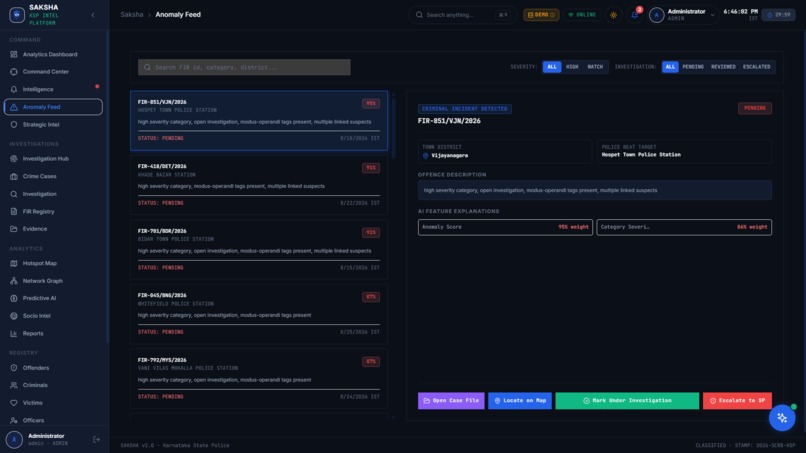
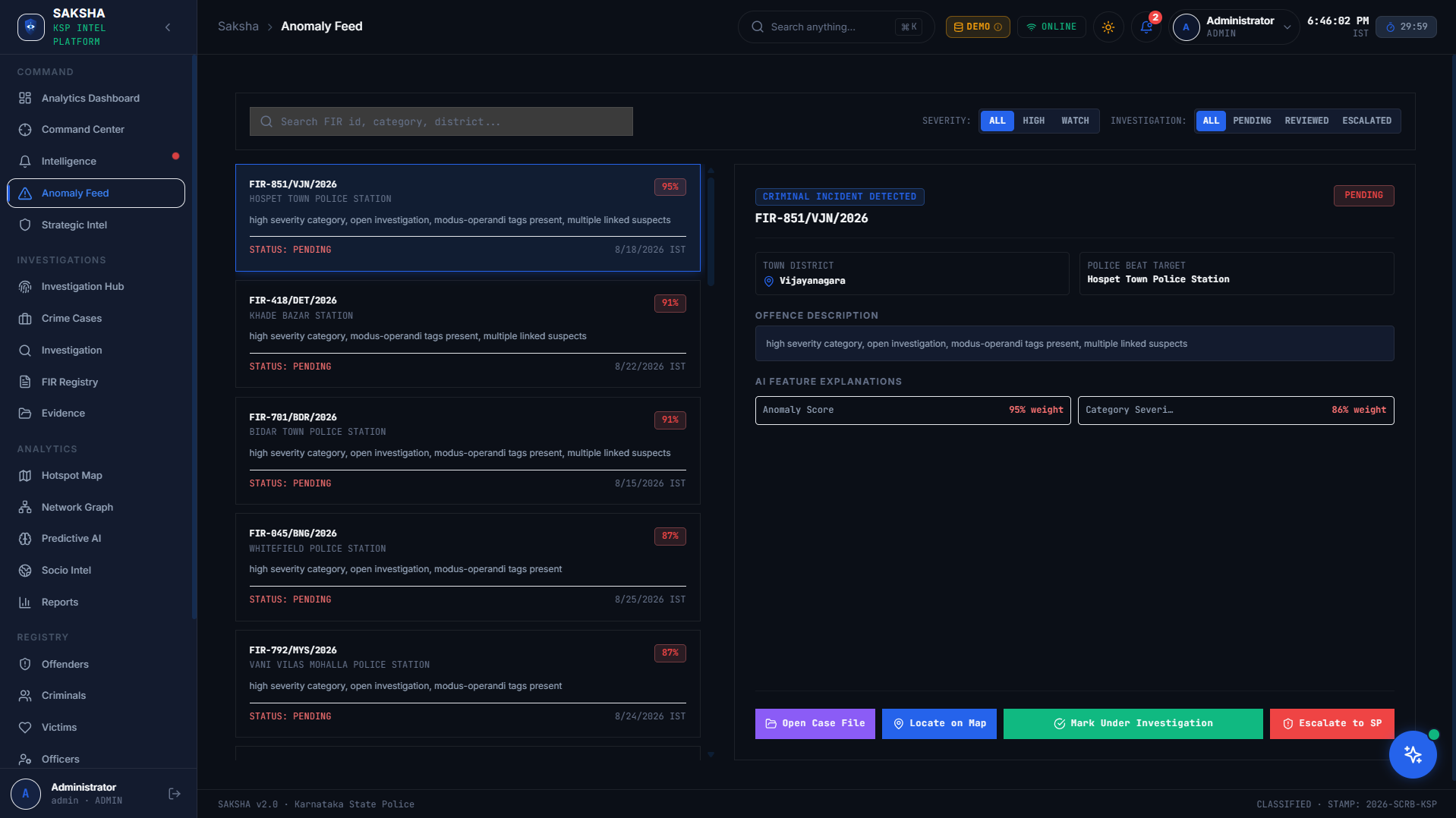
Anomaly
-
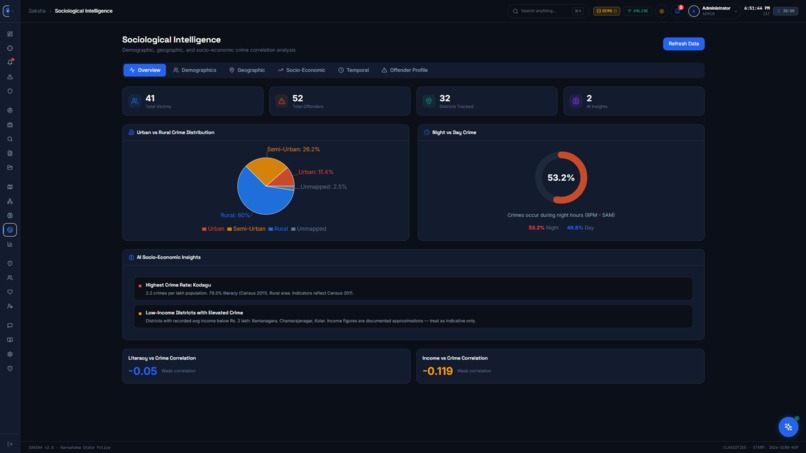
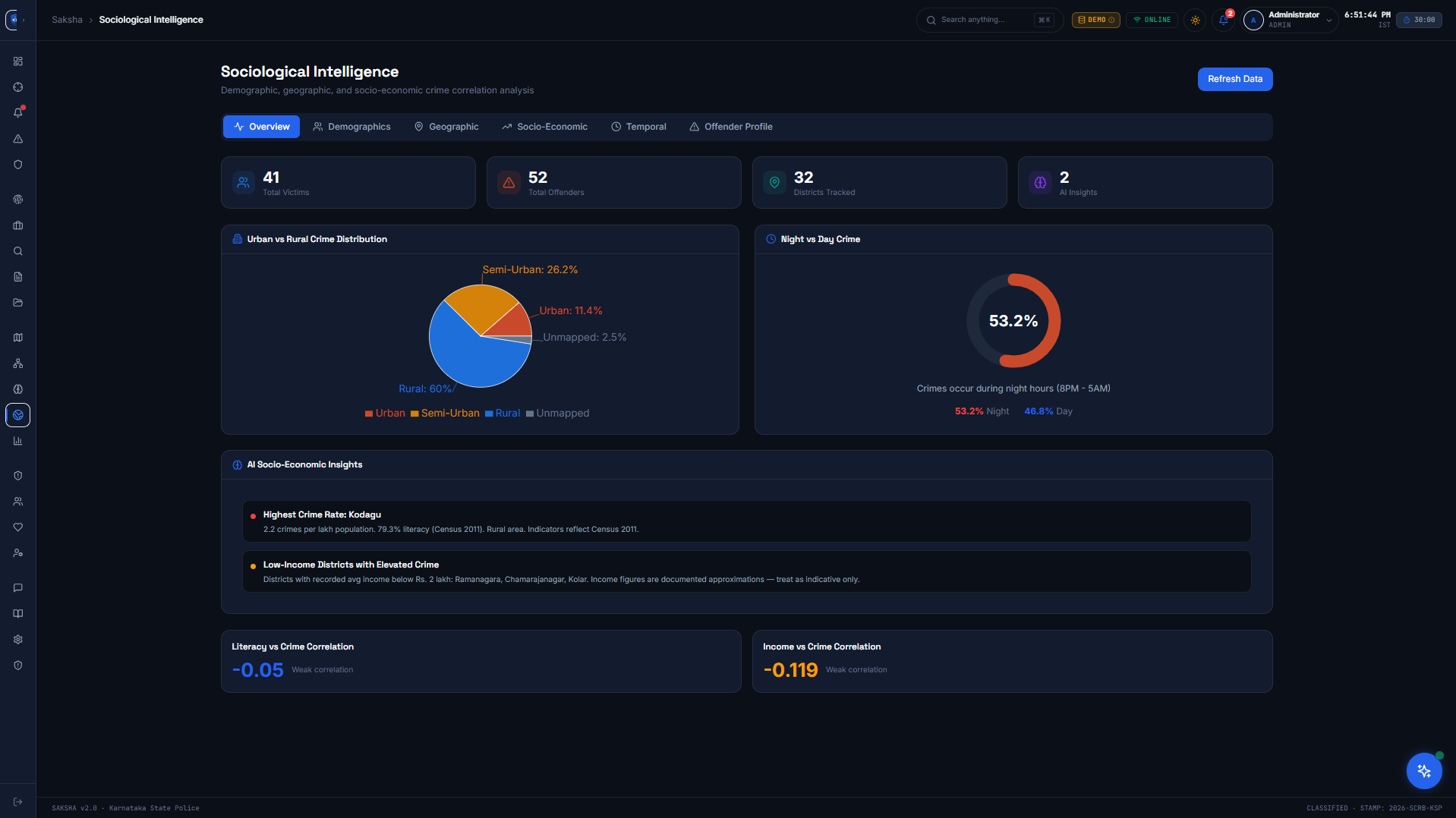
Sociological intelligence
-
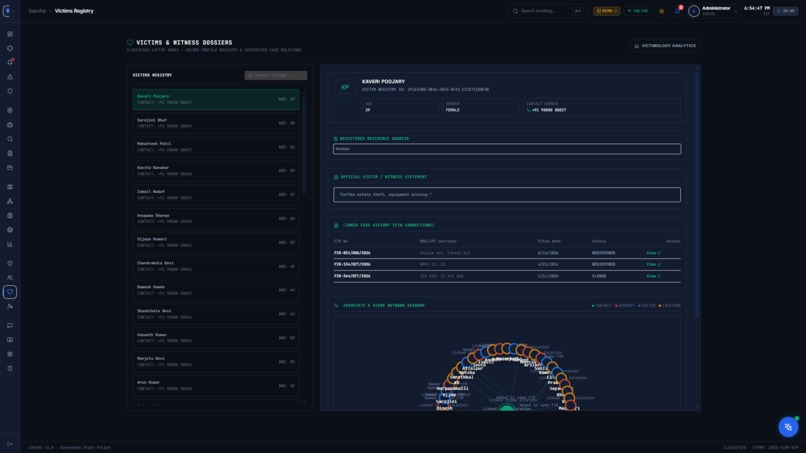
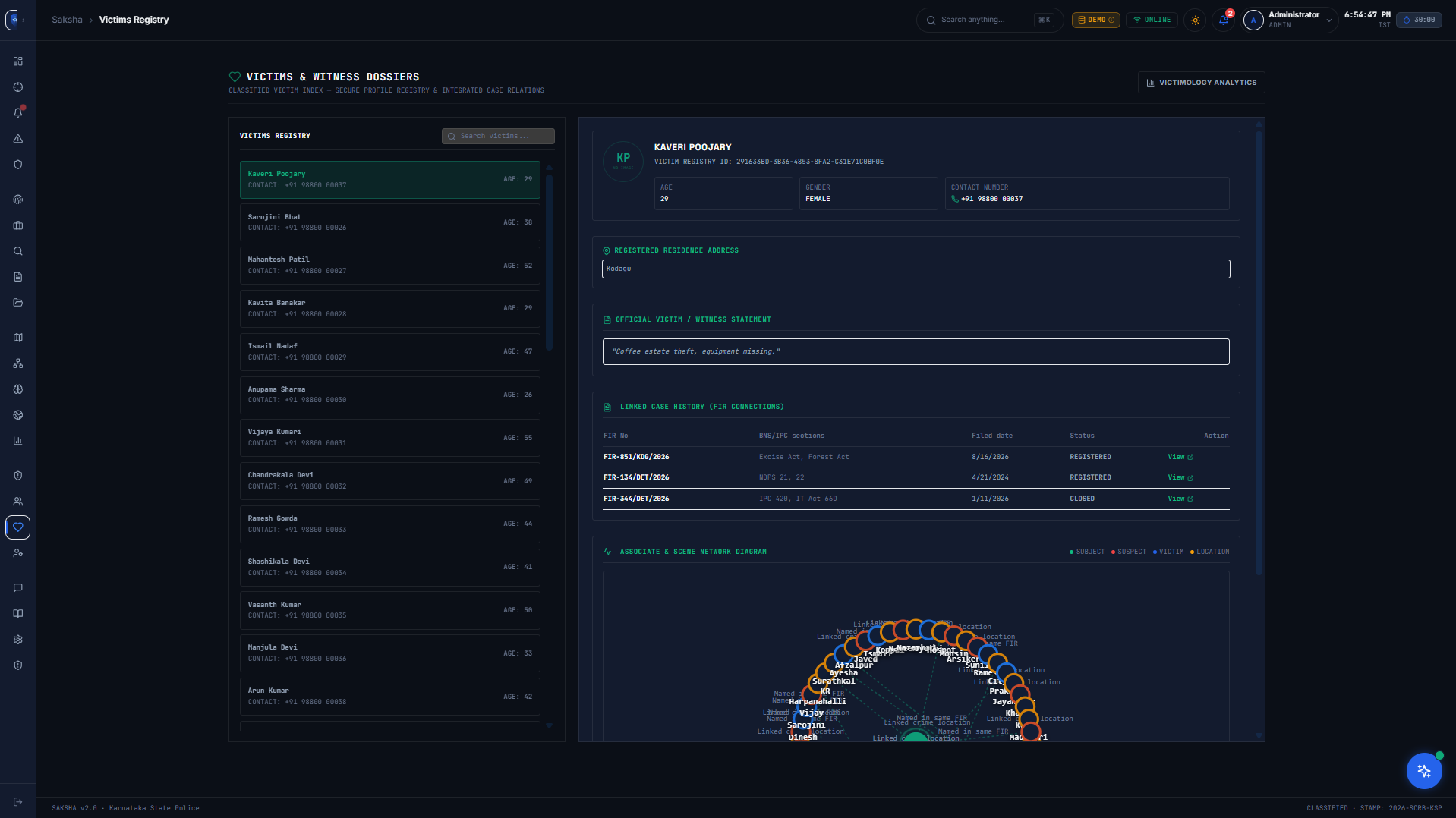
Victim registry
-
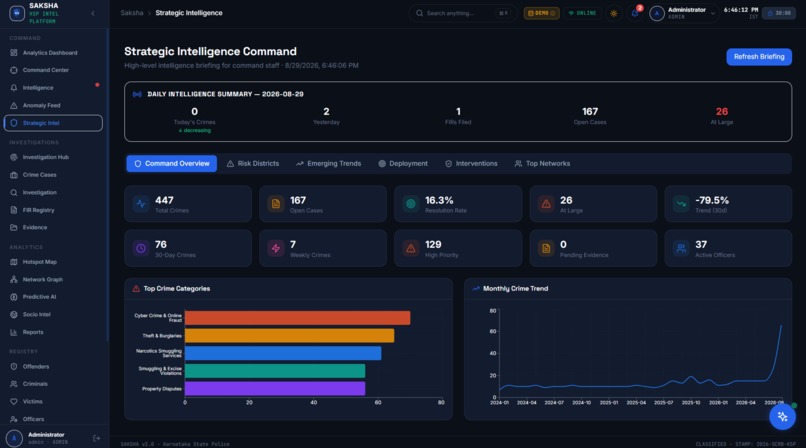
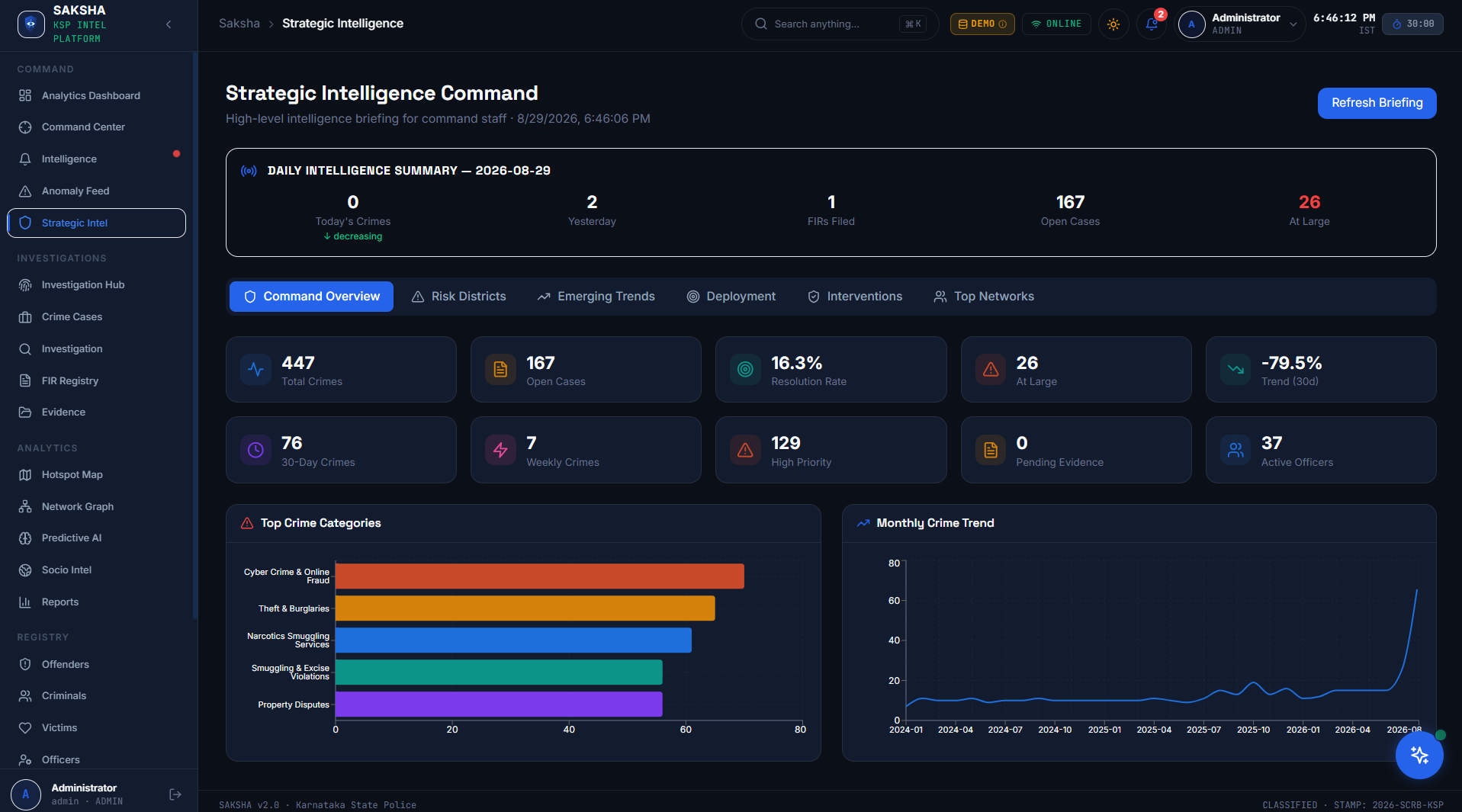
Strategic
-
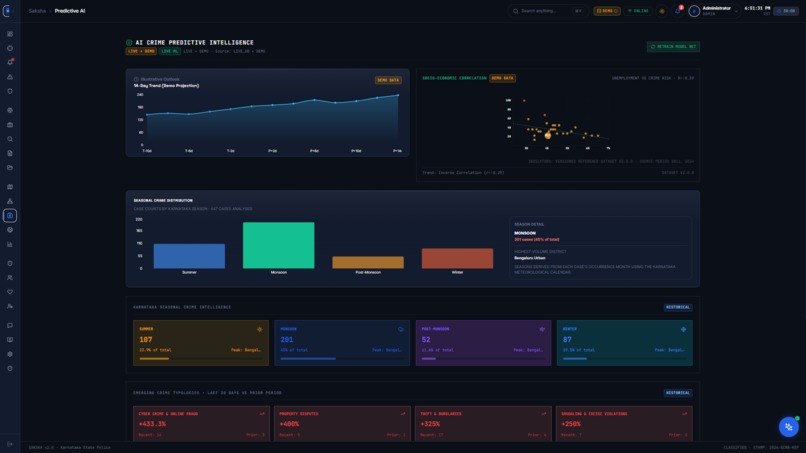
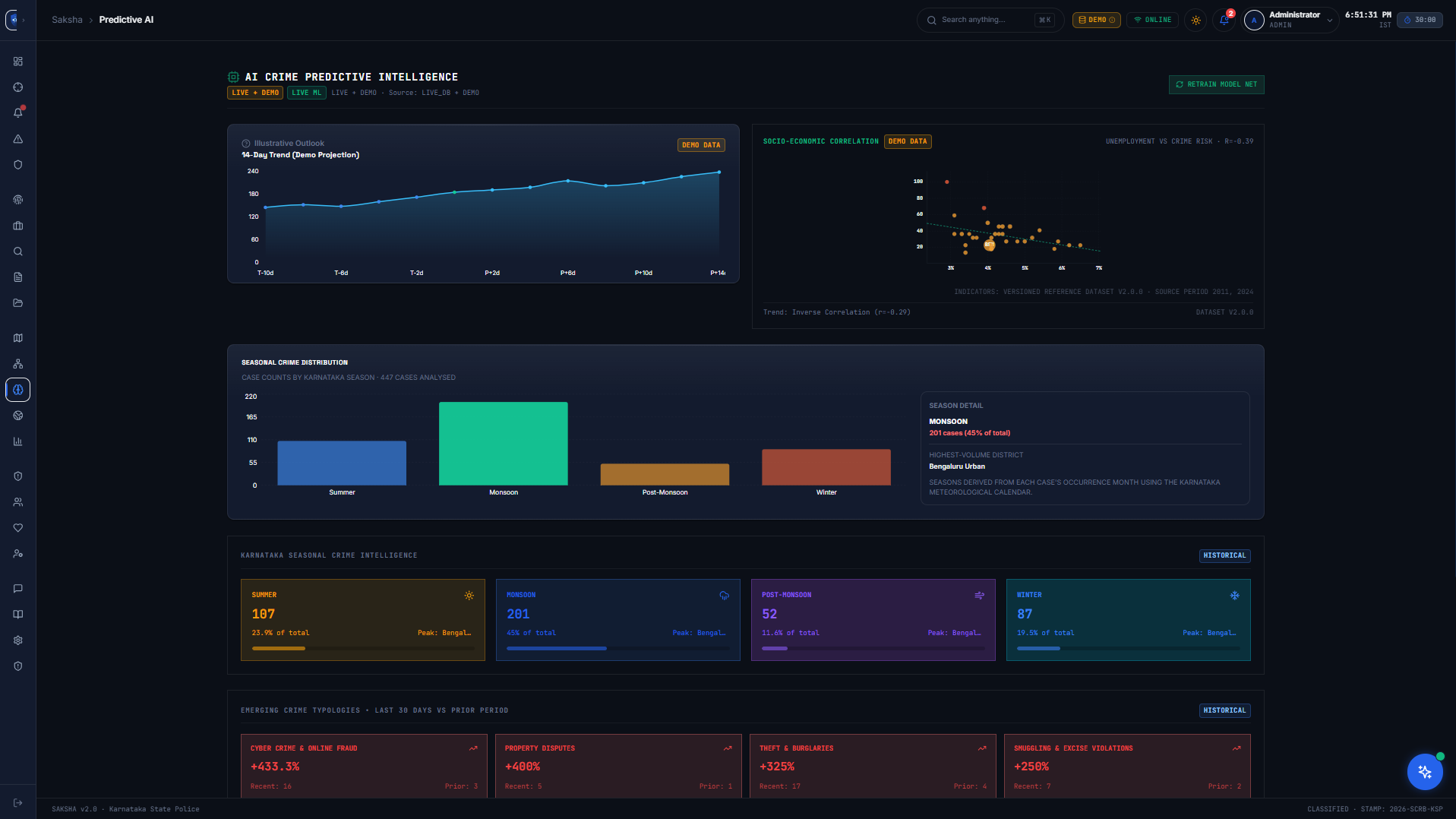
Predective AI
-
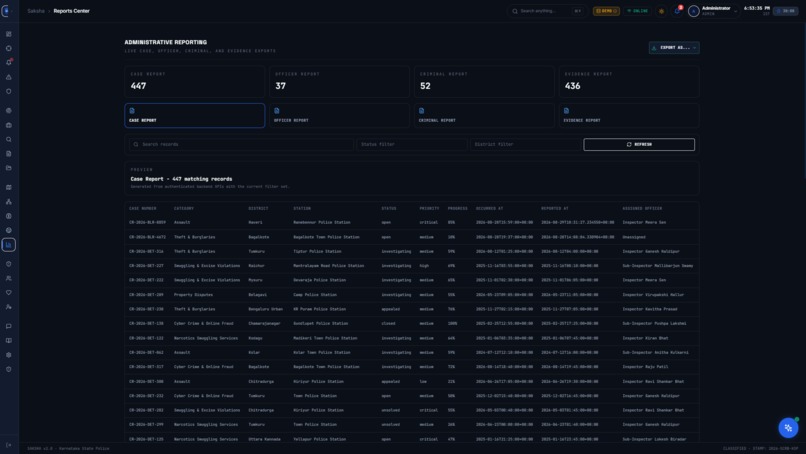
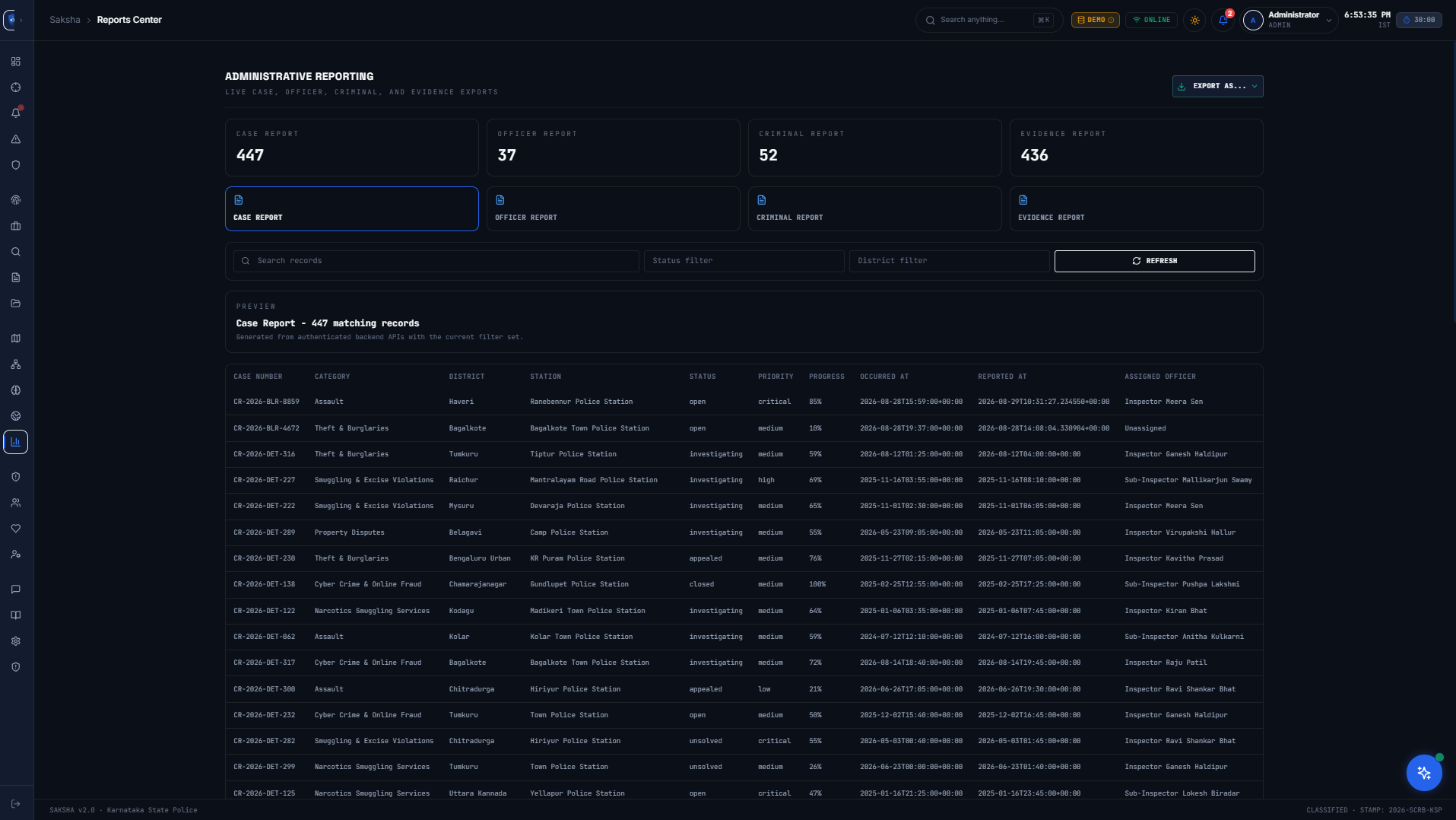
Reports
-
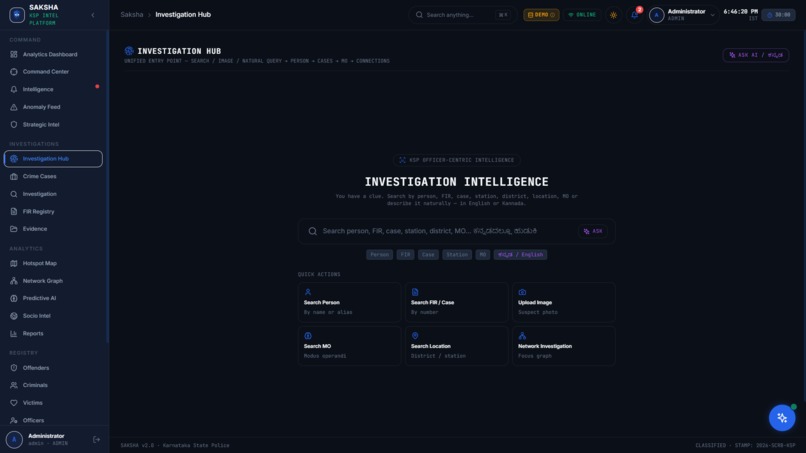
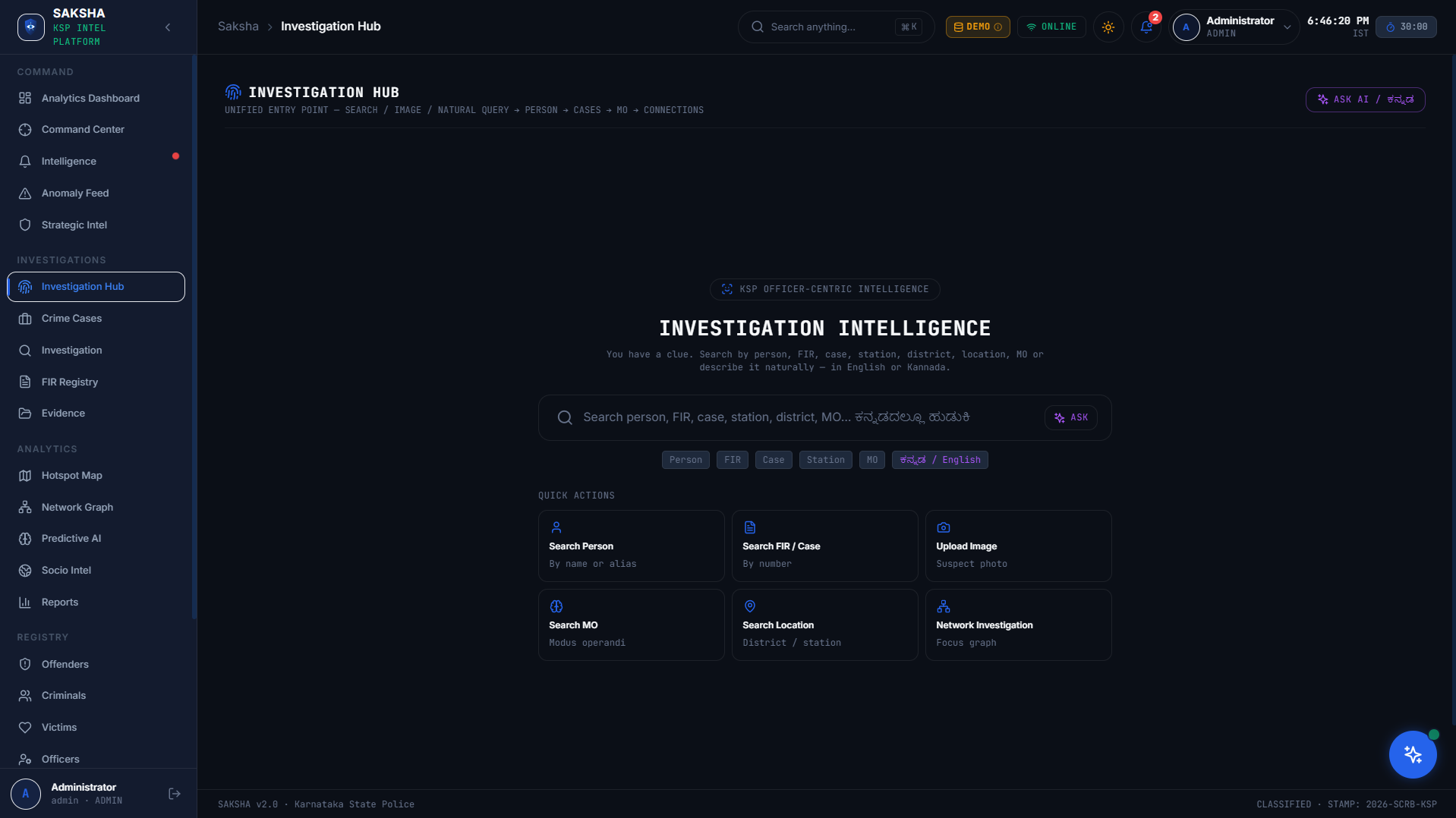
Investigation Hub
-
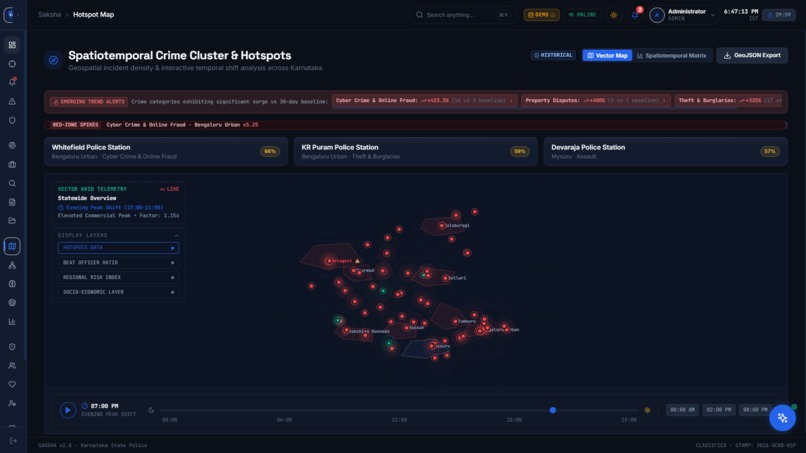
Hotspot Map
-
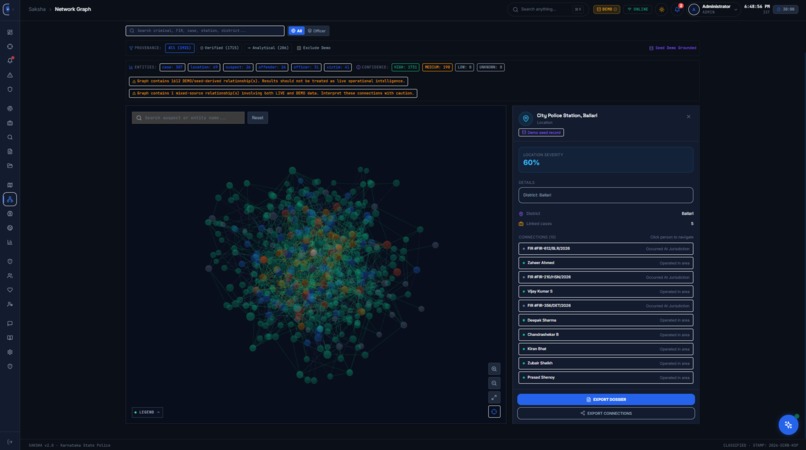
Network Page
Inspiration
Traditional law enforcement workflows are heavily bogged down by data silos and manual, Excel-based reporting. When vital information about offenders, locations, and incident details is fragmented, investigators miss the hidden patterns required to stop organized crime. We wanted to move policing away from reactive incident response and toward a proactive, intelligence-driven prevention model that saves lives and optimizes resources.
What it does
Saksha is a comprehensive, AI-powered Crime Intelligence and Analytical Platform designed to turn raw data logs into a connected intelligence ecosystem.
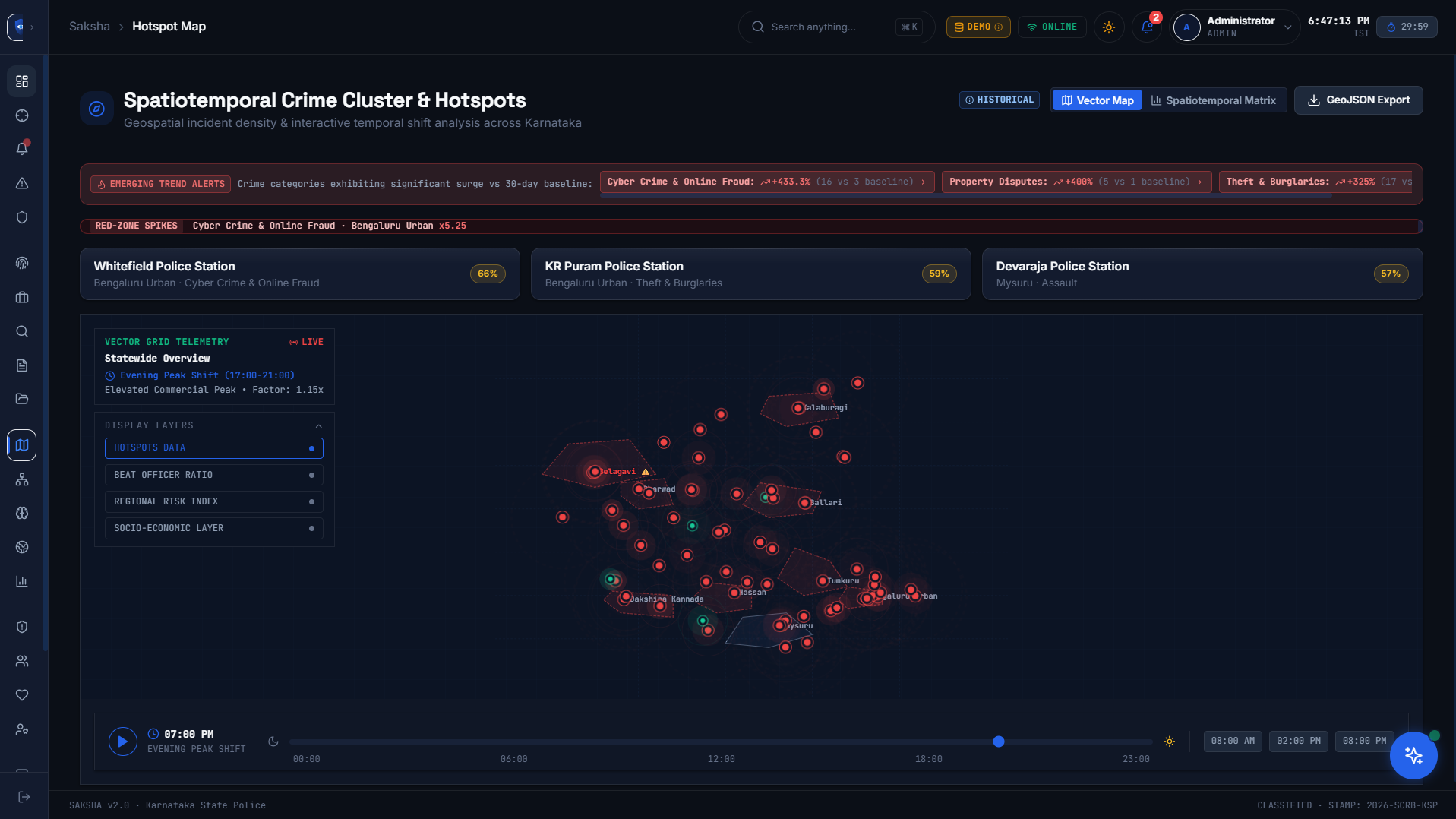
- Geospatial Analytics: Maps out interactive spatiotemporal hotspots and triggers alerts for emerging high-risk zones using DBSCAN and K-Means clustering.
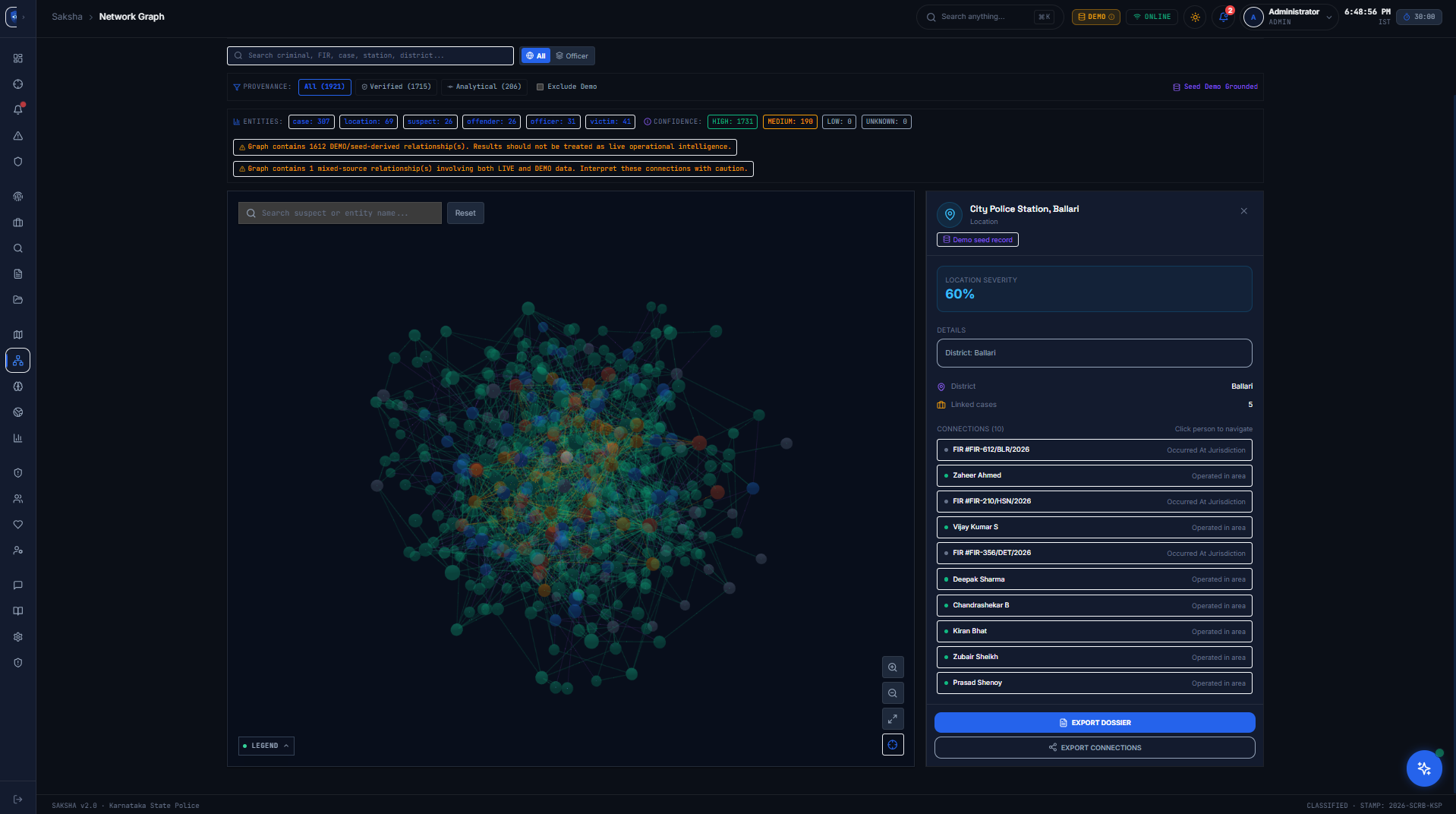
- Criminal Network Engine: Translates loose records into interactive relationship graphs, mapping links between suspects, vehicles, phone numbers, and locations.
- Modus Operandi Tracker: Profiles behavioral footprints to flag multi-jurisdictional repeat offenders.
- Predictive Risk & Anomaly Detection: Utilizes machine learning to forecast regional crime trends and isolate anomalous criminal activities using a custom Z-score L2 deviation framework.
- Conversational AI Analyst: Empowers investigators to query the central repository instantly using natural language (e.g., "Show burglary hotspots") via an LLM-driven RAG architecture.
How we built it
We engineered a robust, decoupled technology stack designed for speed, scale, and geospatial data processing:
- Frontend: Built with React.js and Tailwind CSS, using Mapbox/Leaflet for geospatial rendering and D3.js/Plotly for interactive network graphs.
- Backend & Database: Orchestrated using FastAPI, backed by a relational PostgreSQL database supercharged with PostGIS extensions for spatial data queries.
- Graph Intelligence: Powered by a dedicated Neo4j graph database layer working alongside NetworkX for topological link analyses.
- AI & Predictive Engines: Leveraged Scikit-Learn, XGBoost, and NumPy for predictive modeling, paired with a Llama LLM and LangChain framework to handle the conversational RAG pipeline.
Challenges we ran into
Building a production-ready intelligence application came with massive hurdles. Merging scattered datasets meant handling highly irregular, messy, and incomplete data formats. Ensuring that graph relationships loaded efficiently without exploding memory limits required strict optimizations inside Neo4j. Additionally, we initially experimented with standard Isolation Forest models for anomaly detection but found they suffered from cold-start issues when trained artifacts weren't fully generated. We had to pivot, designing and implementing a custom Z-score L2 deviation model built directly on NumPy to ensure reliable anomaly detection with robust rule-based fallbacks.
Accomplishments that we're proud of
We successfully shipped a complete end-to-end intelligence workspace that feels truly seamless. We are incredibly proud of our Conversational AI Analyst, which bridges the gap between complex data science and front-line operators, allowing everyday investigators to extract graph connections and hot-zone predictions using simple natural language. Furthermore, we finalized a comprehensive Production Operations Runbook, ensuring that database replication, AI model evaluation, and backend monitoring can be sustained cleanly without needing to sift through thousands of lines of raw source code.
What we learned
We learned that when dealing with mission-critical applications like public safety, explainability and operational reliability trump hype. While building complex machine learning architectures is fun, ensuring the underlying database contains high-integrity provenance mapping is what makes the software trustworthy for decision-makers. We also deeply advanced our understanding of multi-model pipelines, specifically managing concurrent transactions across relational SQL datastores, spatial indexes, and graph networks simultaneously.
What's next for Saksha - Crime Intelligence & Analytical Platform
The next major milestone for Saksha is expanding the Socio-Economic Intelligence Engine. We intend to integrate live streams of changing public datasets—such as shifting urbanization indexes, local school enrollment trends, and infrastructure changes—to run deep correlation studies that help municipal leaders deploy long-term crime prevention policies before incidents ever occur.


Log in or sign up for Devpost to join the conversation.