-
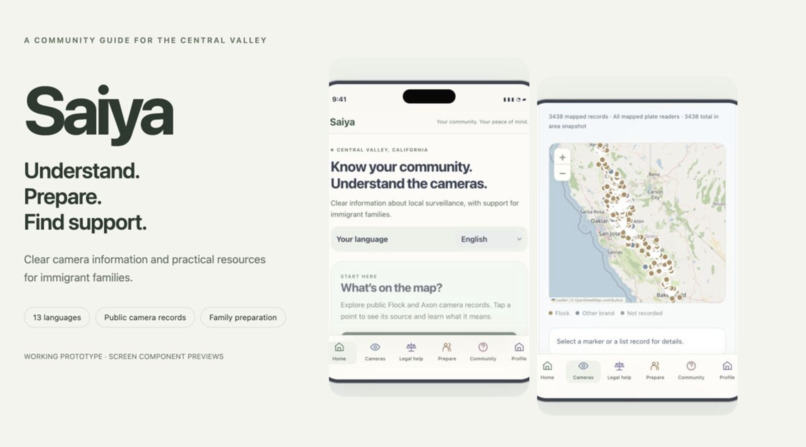
Saiya Interface Design
-
-
-
-
-
-
-
-
-
-
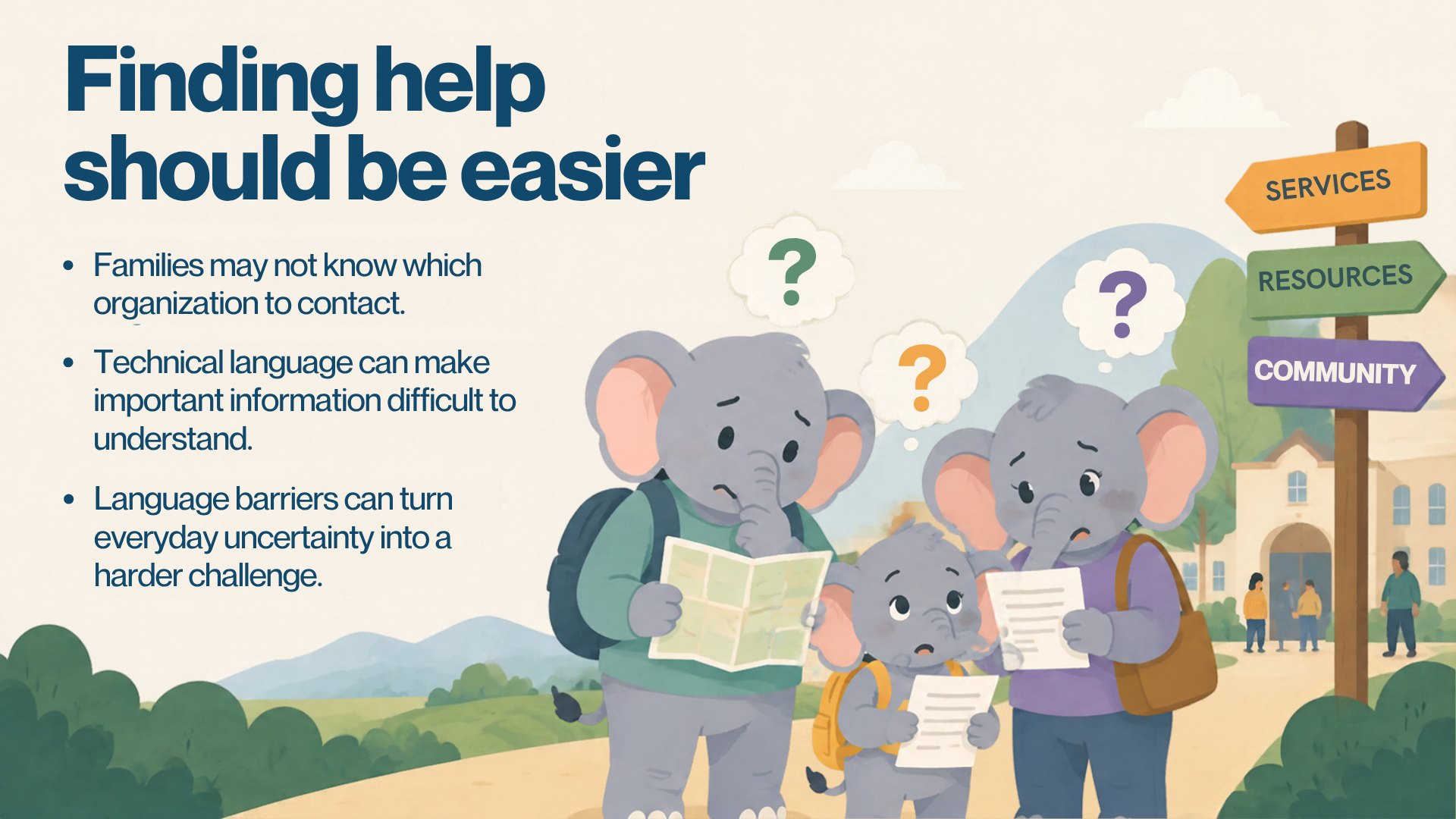
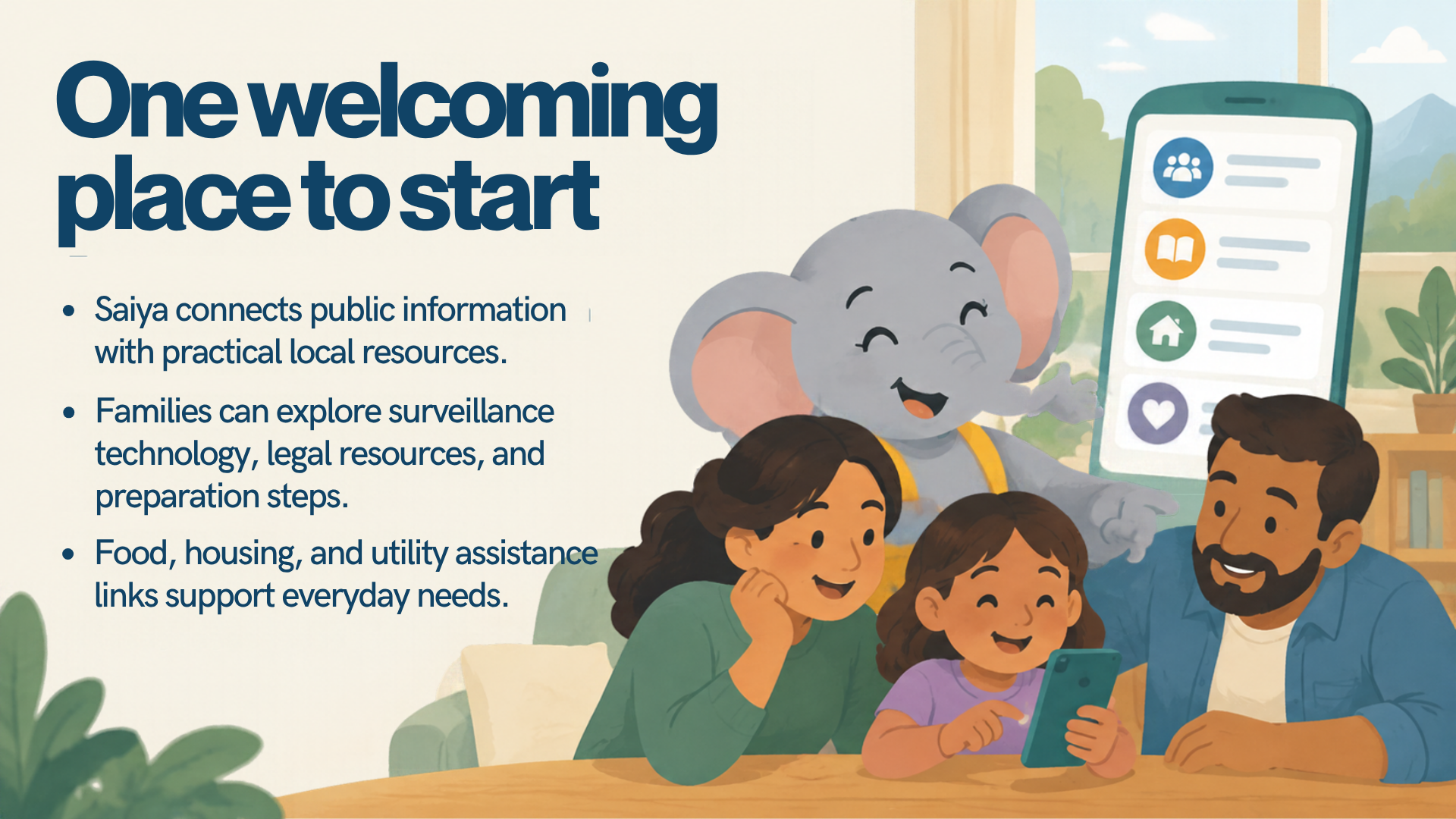
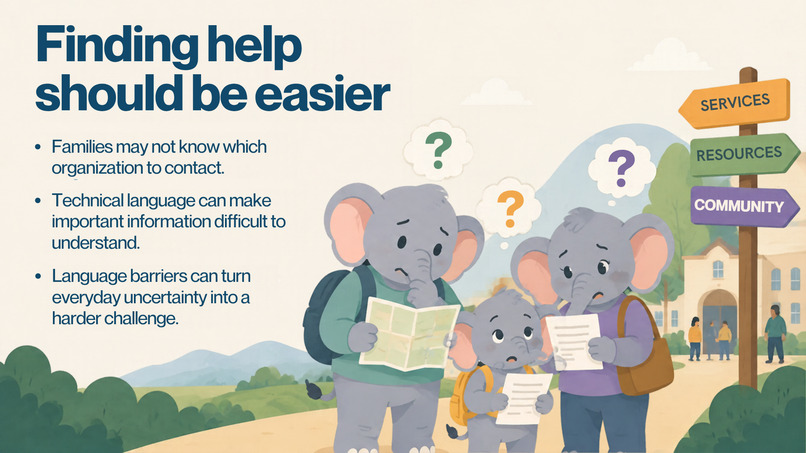
Inspiration: Finding help should not require knowing the right organization, understanding technical language, or speaking fluent English. For immigrant families in California’s Central Valley, those barriers can make everyday uncertainty harder to navigate.
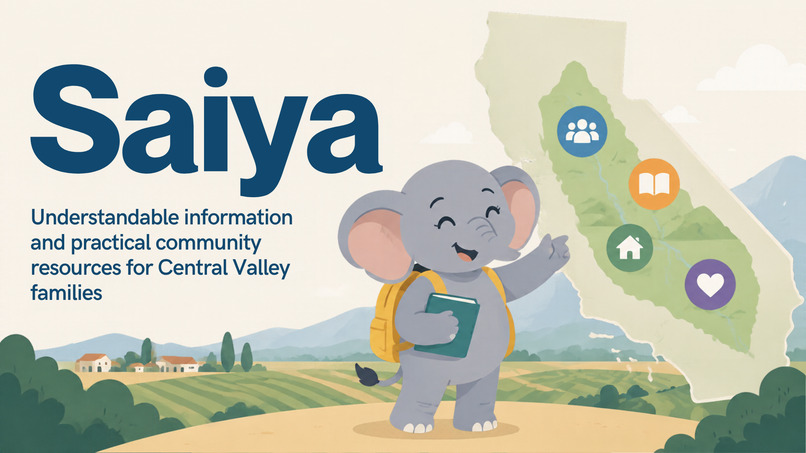
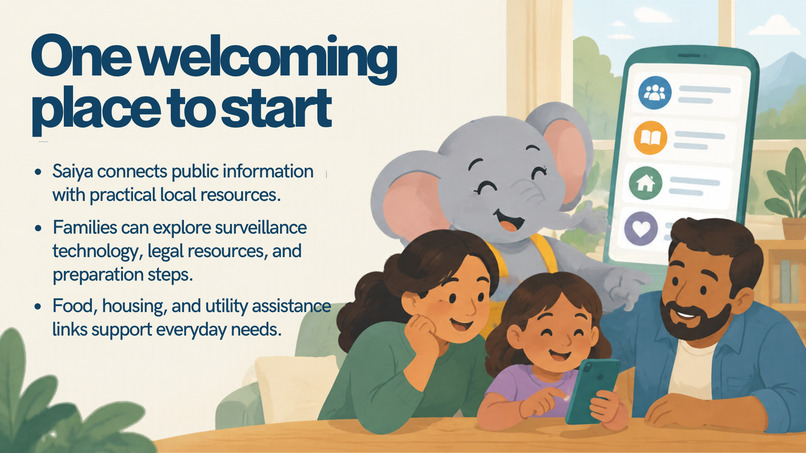
We created Saiya to bring understandable information and practical community resources into one welcoming place.
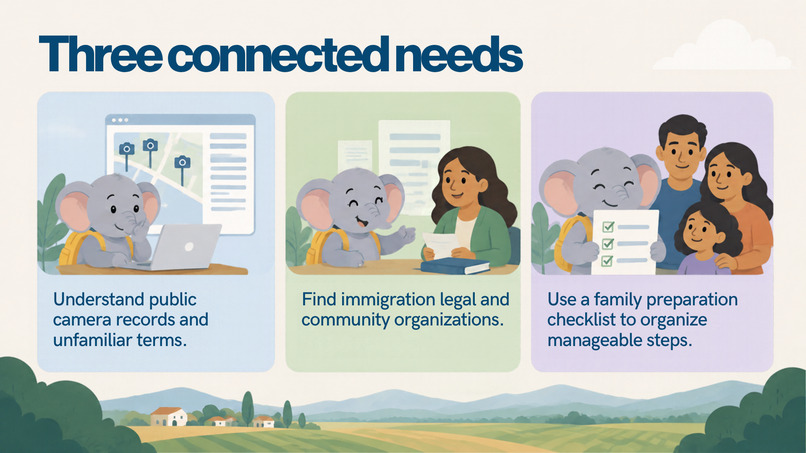
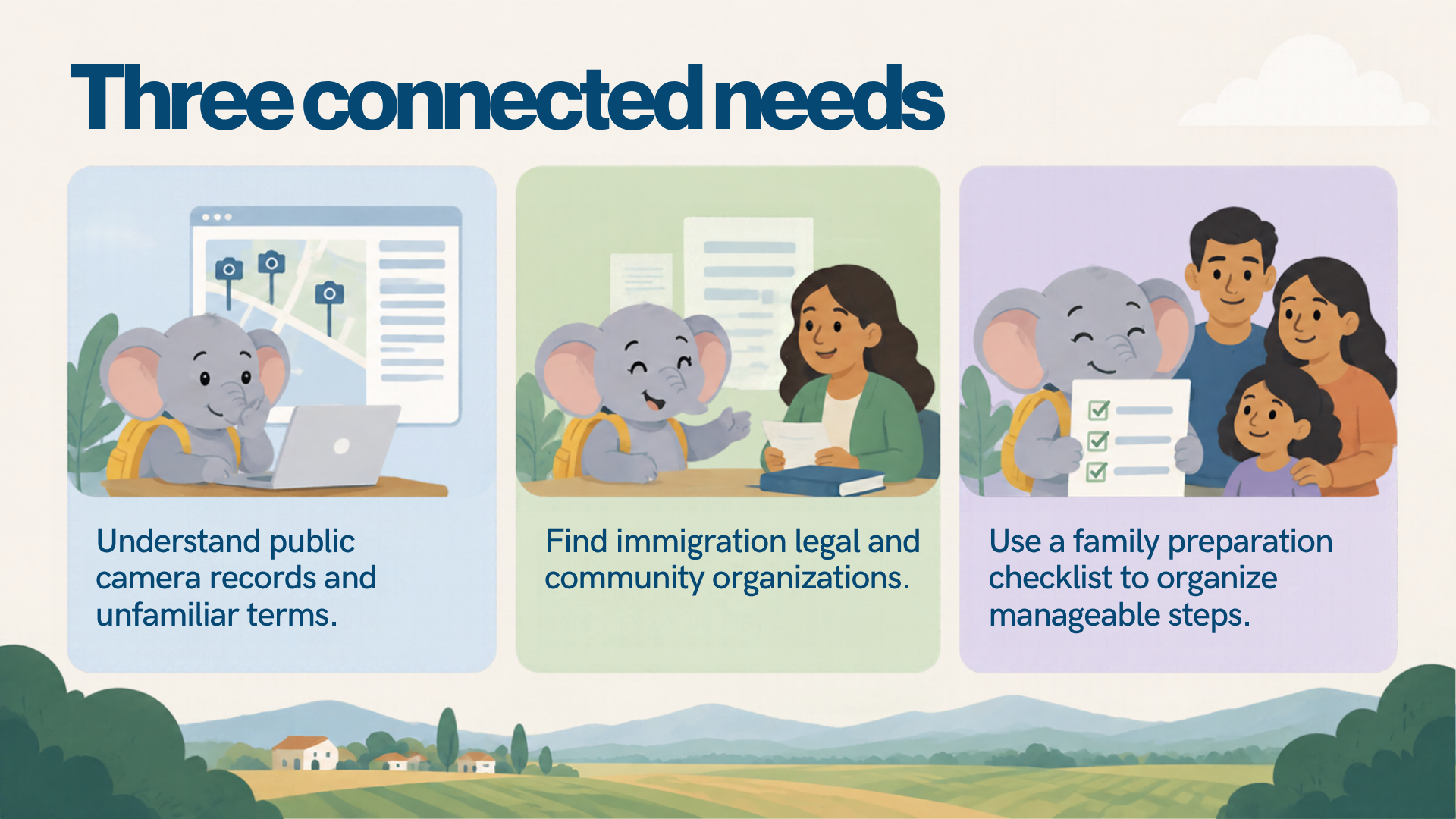
What it does: Saiya centers on three connected needs: understanding public surveillance technology, finding immigration legal resources, and preparing as a family.
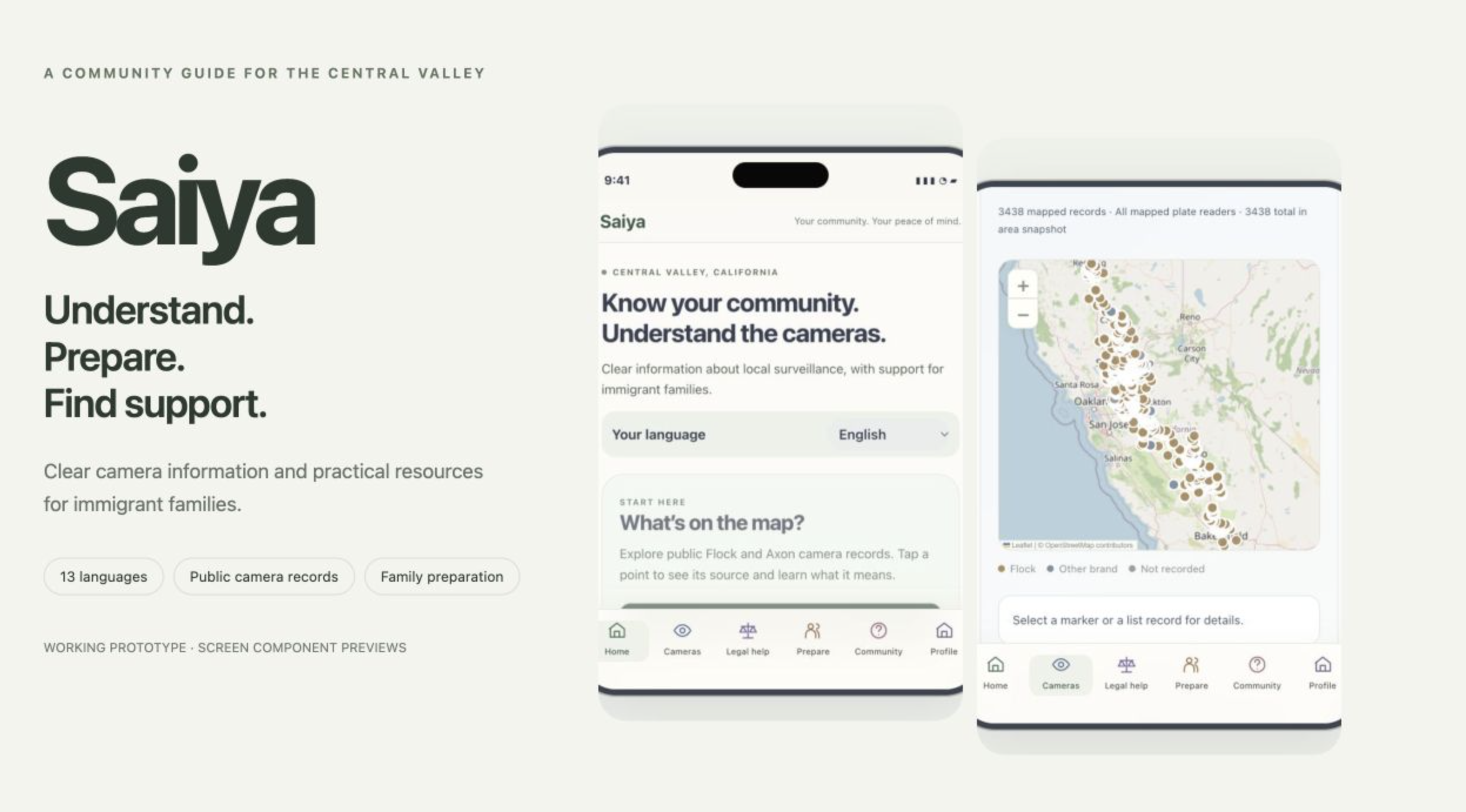
Users can explore publicly documented camera records, learn what terms such as Flock, Axon, and license plate reader mean, and find links to legal and community organizations. A family preparation checklist turns a difficult topic into manageable steps.
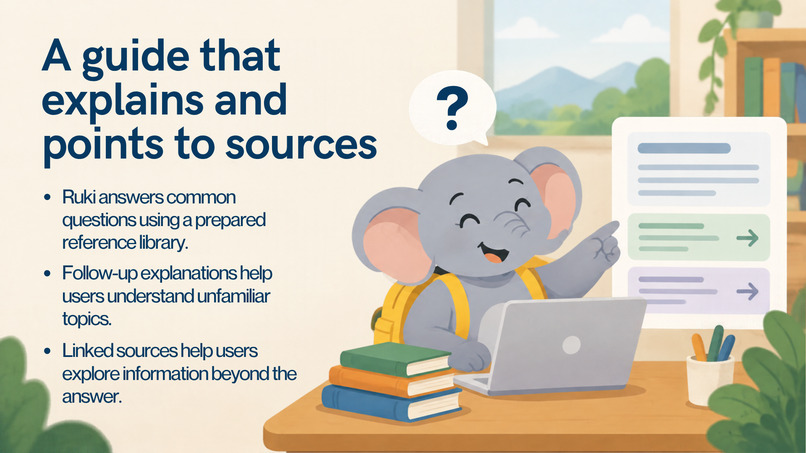
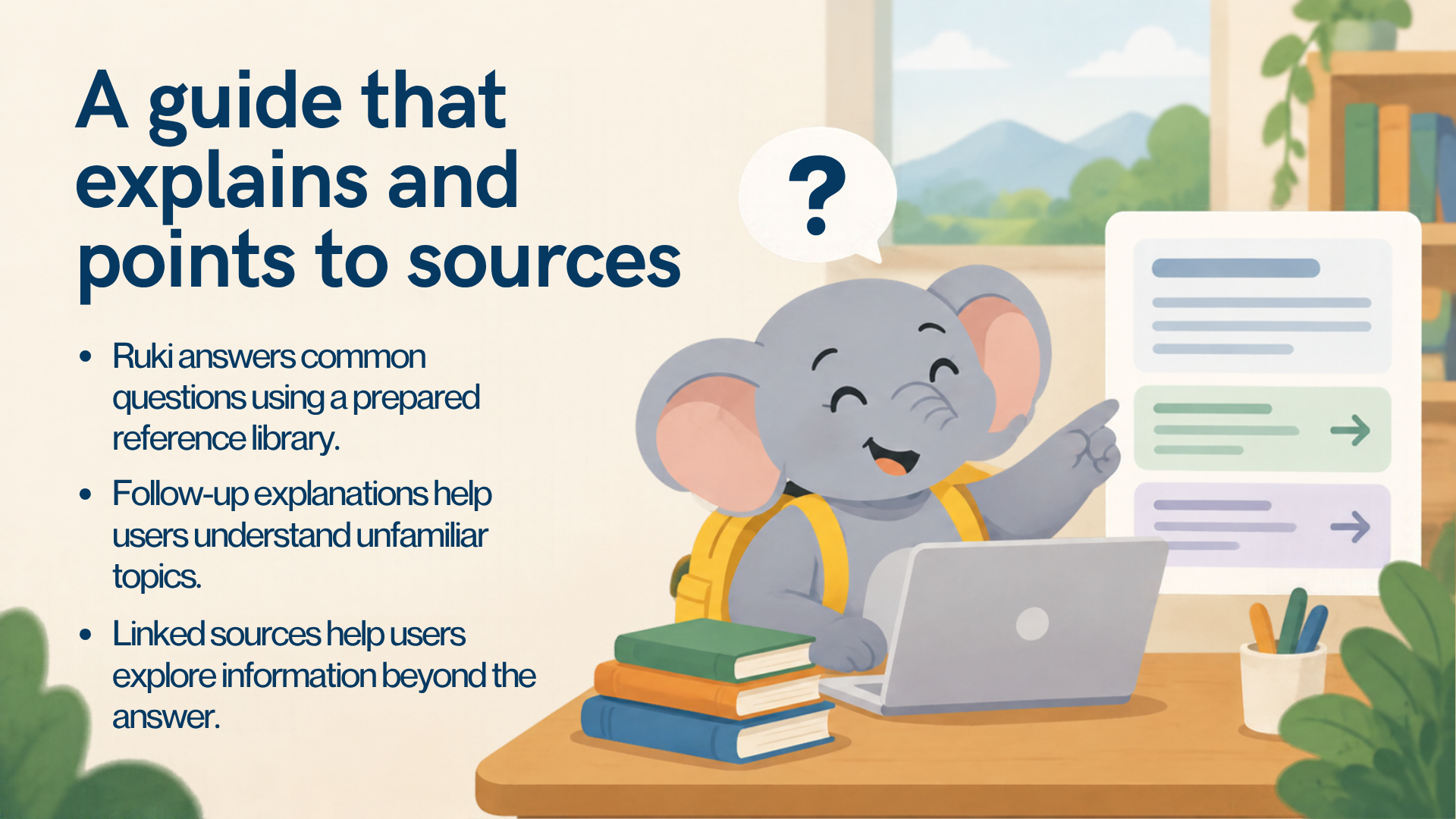
Our elephant guide, Ruki, answers common questions using a prepared reference library and offers follow-up explanations and sources. Community resources also connect users with food, housing, and utility assistance.
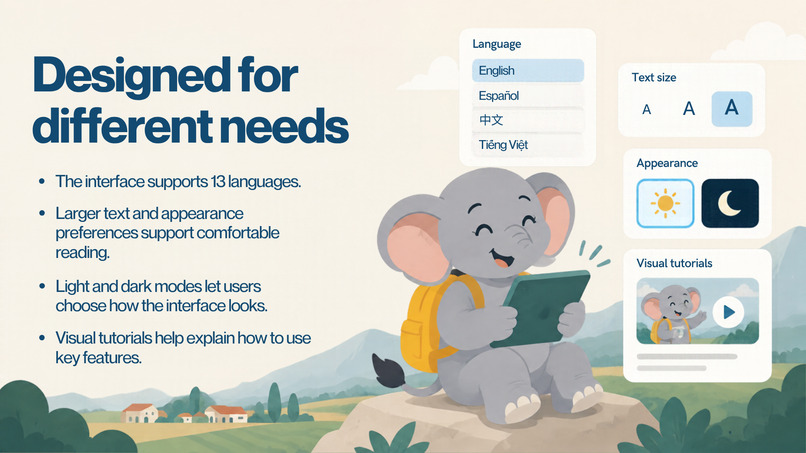
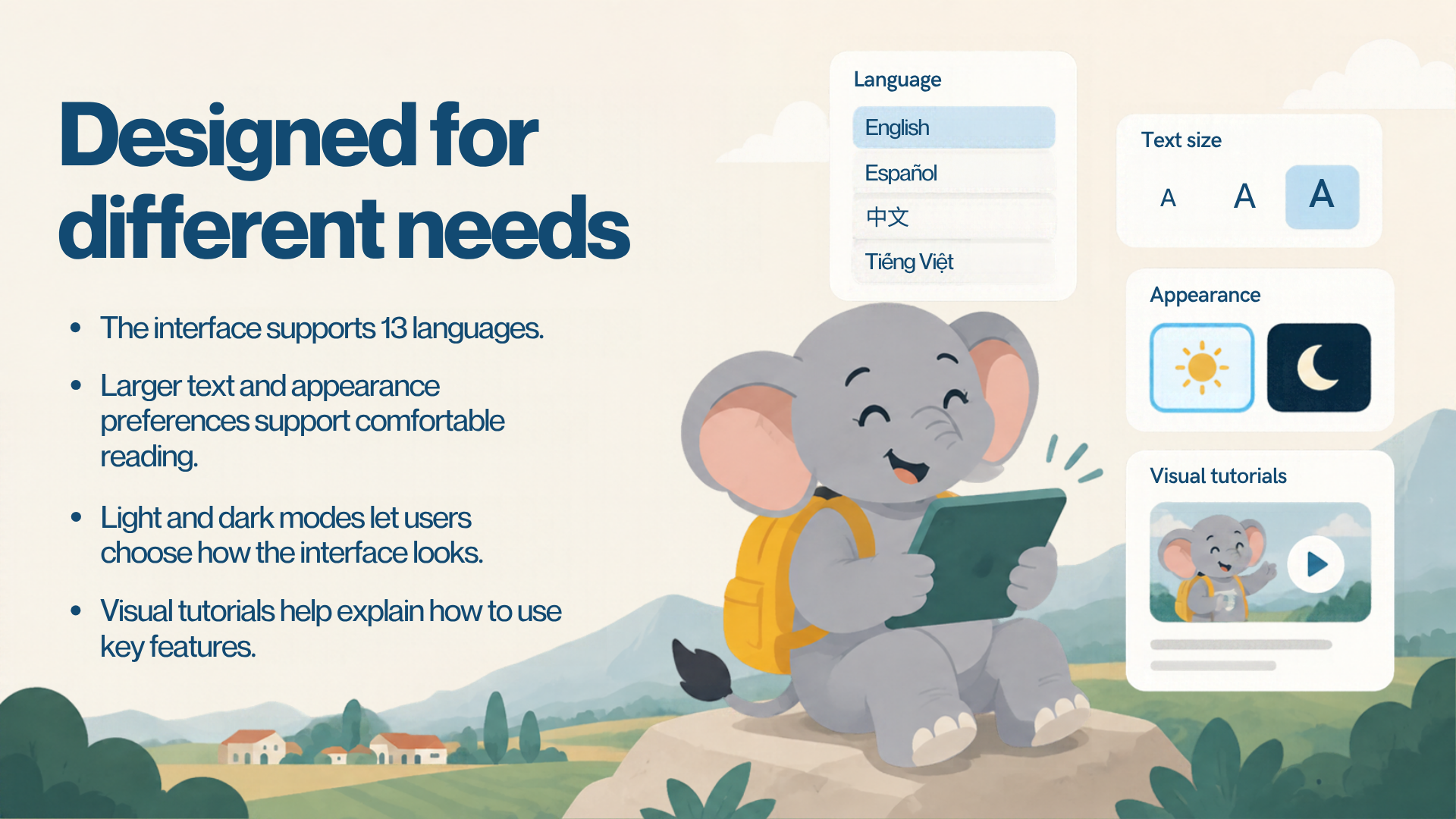
The interface supports 13 languages, larger text, light and dark modes, visual tutorials, and personal appearance preferences.
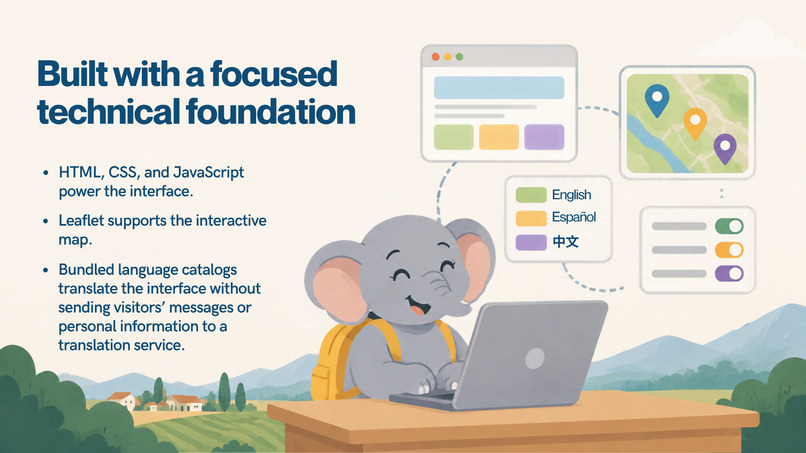
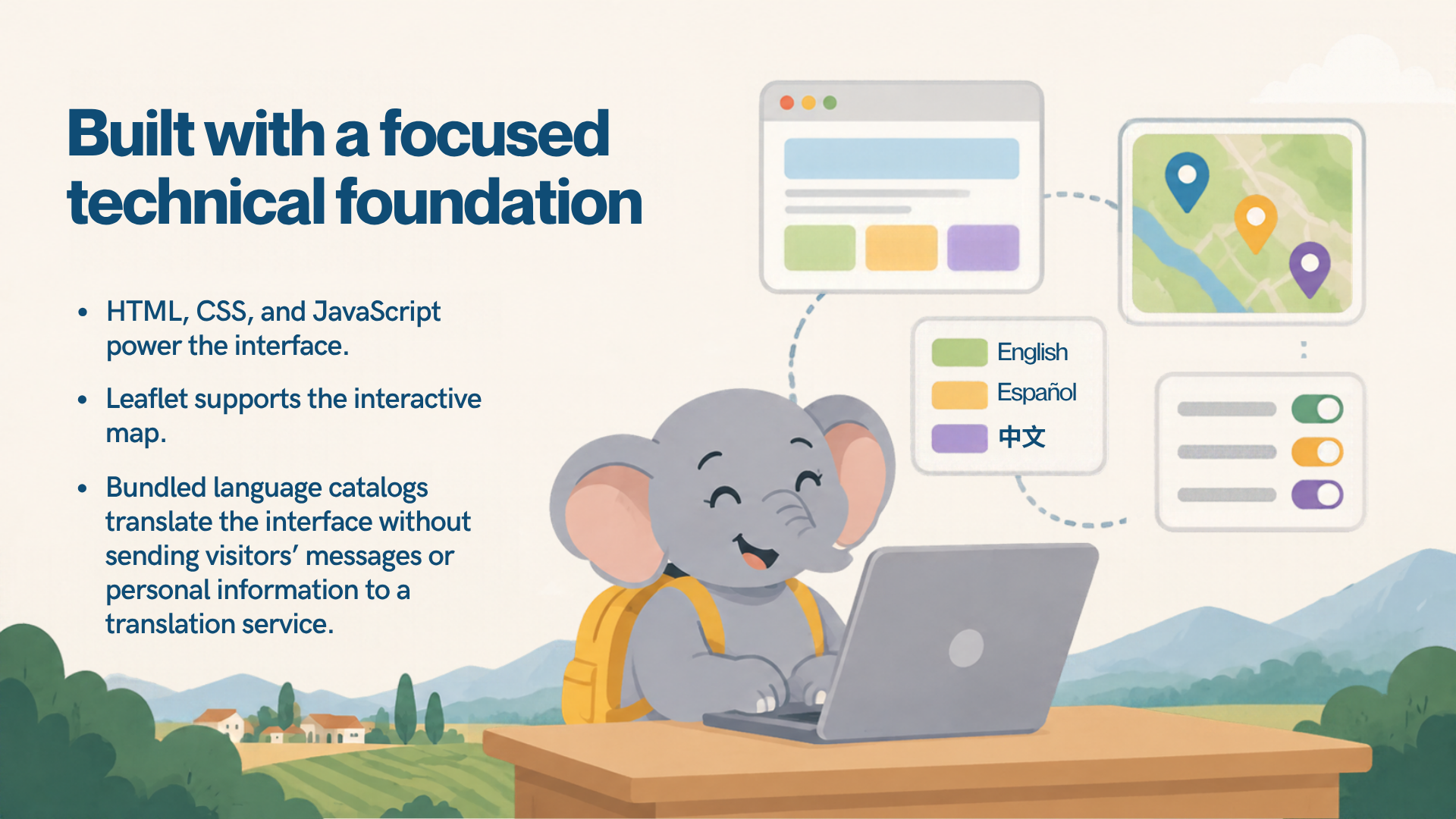
How we built it: We built Saiya with HTML, CSS, and JavaScript, using Leaflet for the interactive map. Bundled language catalogs translate the interface without sending visitors’ messages or personal information to a translation service.
Browser-local storage supports profile and appearance preferences. Ruki uses a structured reference library rather than a live AI service. We used OpenAI Codex to help develop and refine the app, and OpenAI Sites to publish it.
Challenges we faced: Our biggest challenge was making complex subjects understandable without making misleading promises.
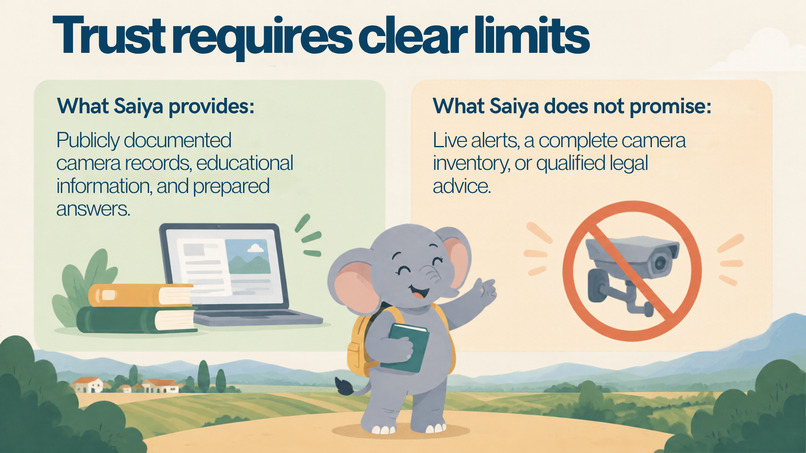
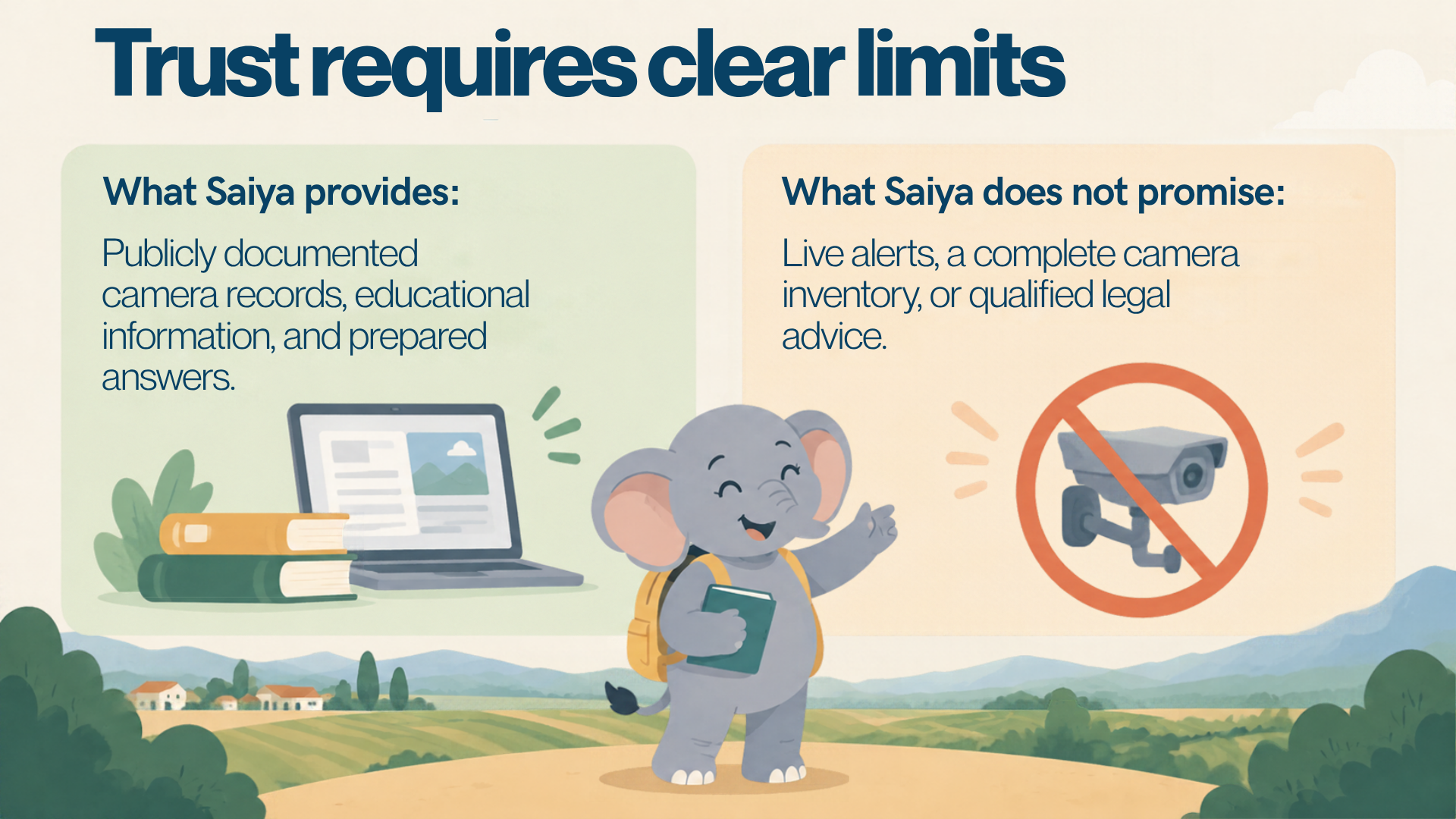
Camera records can be incomplete or outdated, so we distinguish public documentation from live alerts. Ruki needs to be helpful while being honest about the limits of its prepared answers. Language support also required more than translating navigation: tutorials, explanations, dialogs, and follow-up controls needed attention.
We balanced those needs with a simple interface that feels approachable for people with different languages, reading preferences, and levels of technical experience.
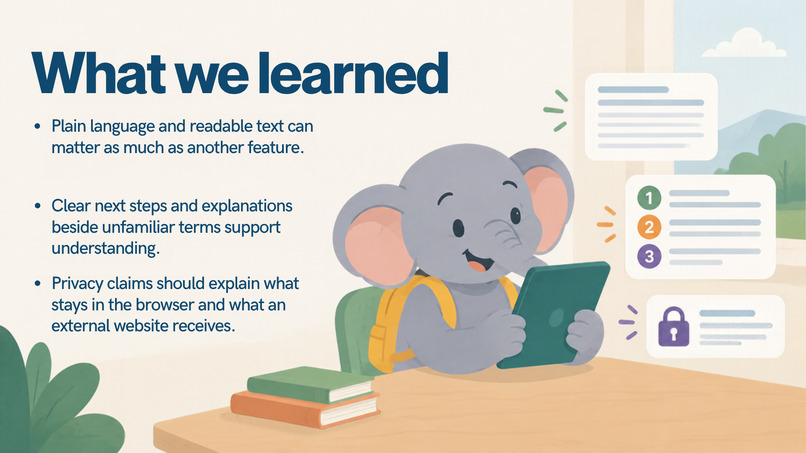
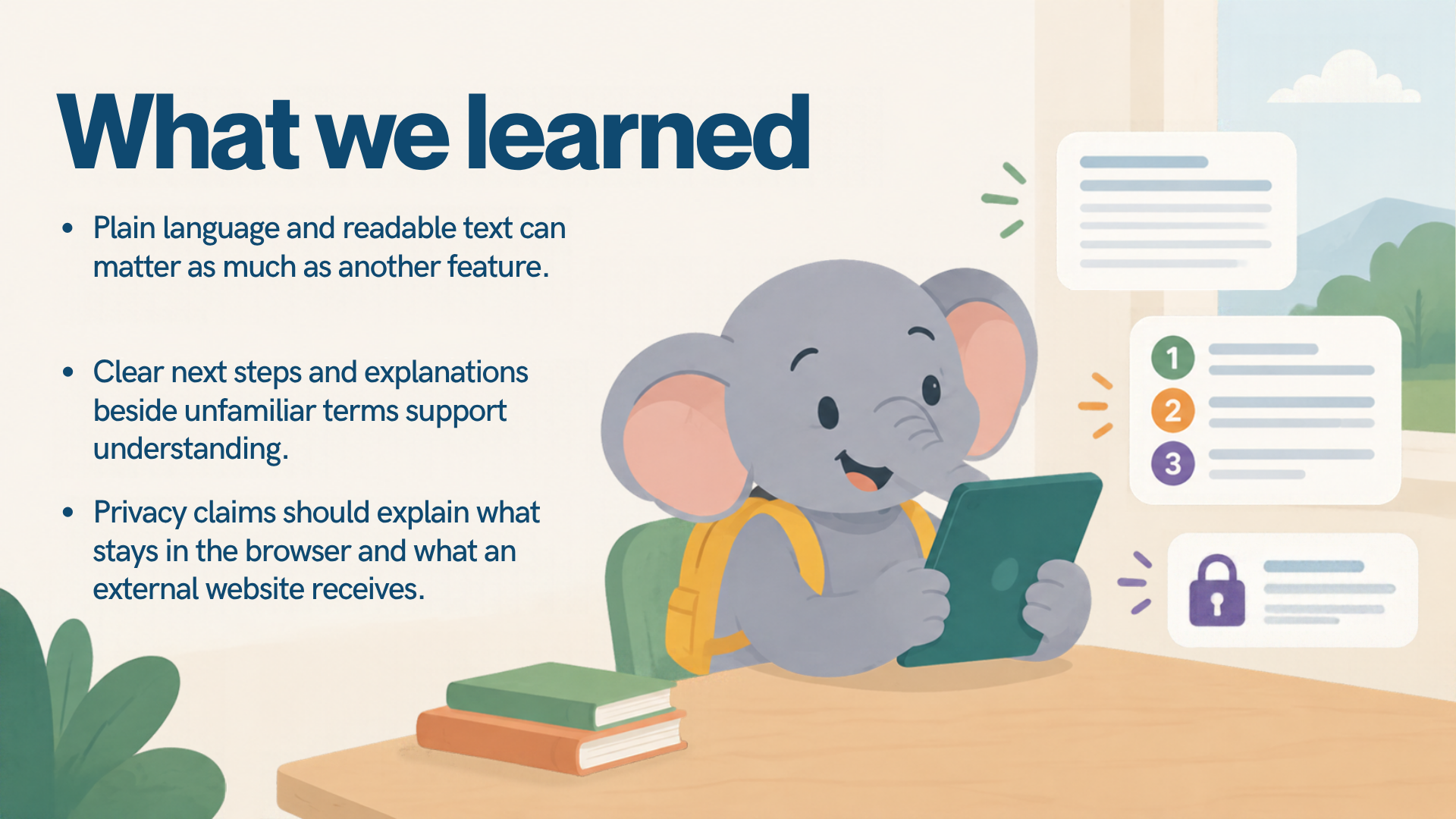
What we learned: We learned that accessibility depends on the whole experience. Plain language, clear next steps, readable text, and explanations beside unfamiliar terms can matter as much as adding another feature.
We also learned to make privacy claims specific: explain what stays in the browser, what an external website receives, and what a Quick Exit button can—and cannot—do.
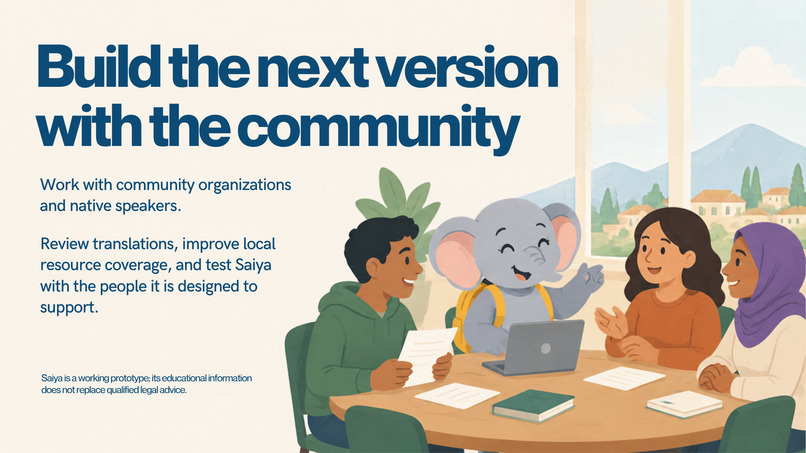
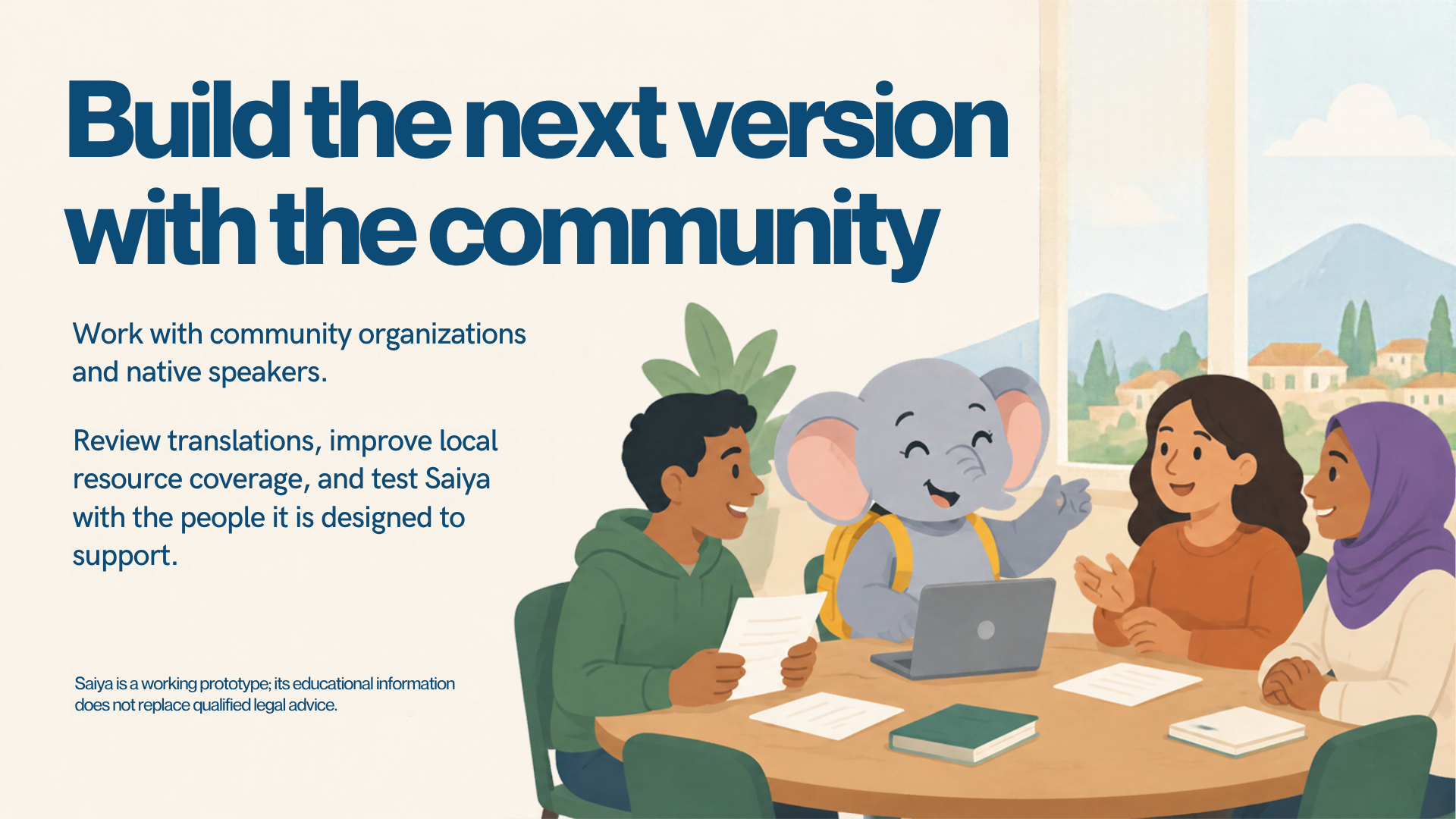
What’s next: We want to work with community organizations and native speakers to review translations, improve local resource coverage, and test Saiya with the people it is designed to support.
Saiya is a working prototype. Its translations are machine-generated, its camera map is not a complete or live surveillance inventory, and its educational information does not replace qualified legal advice.
Built With
- codex
- css3
- html5
- indexeddb
- javascript
- leaflet.js

Log in or sign up for Devpost to join the conversation.