-
-
Main IMG
-
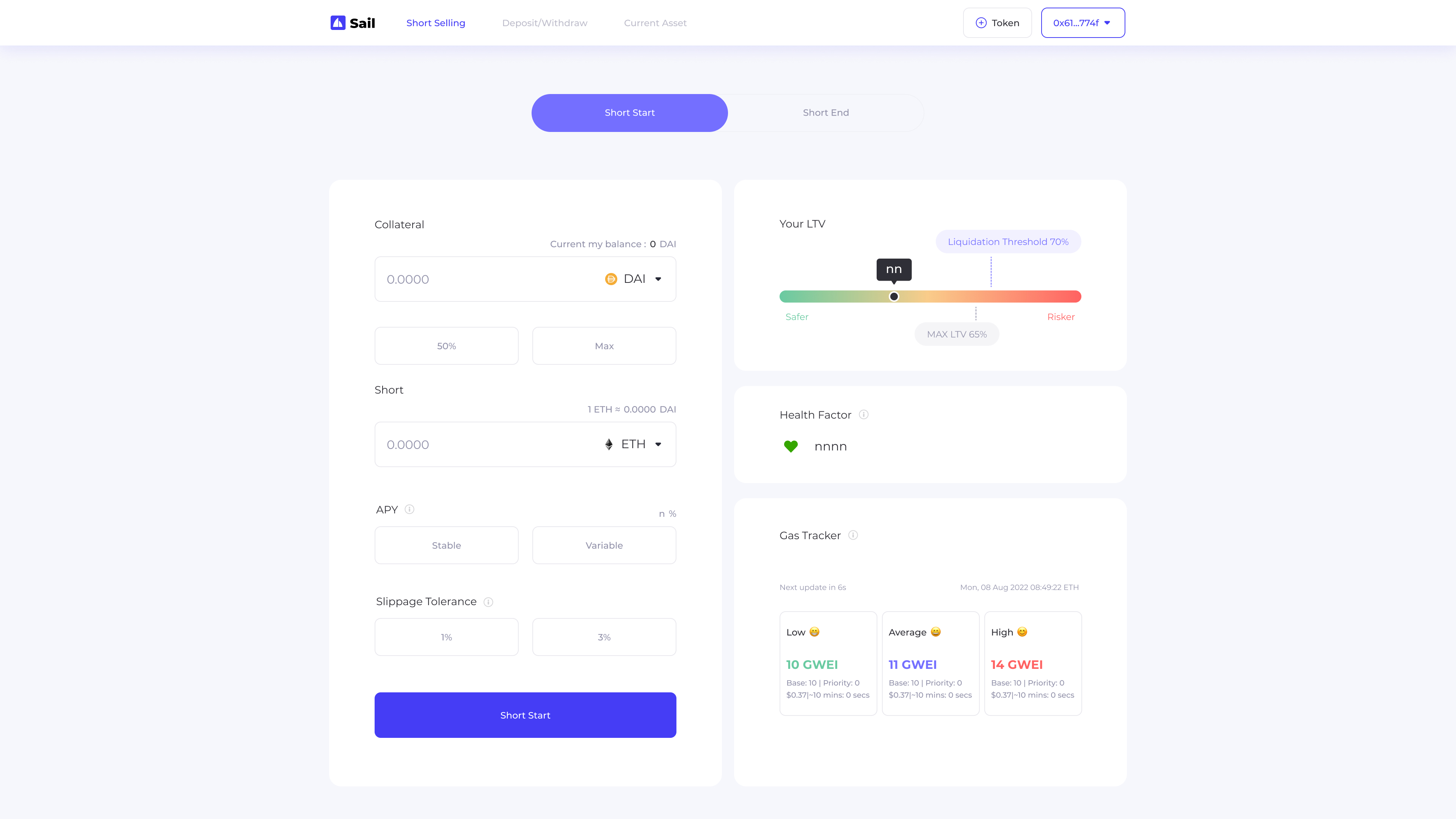
Start page
-
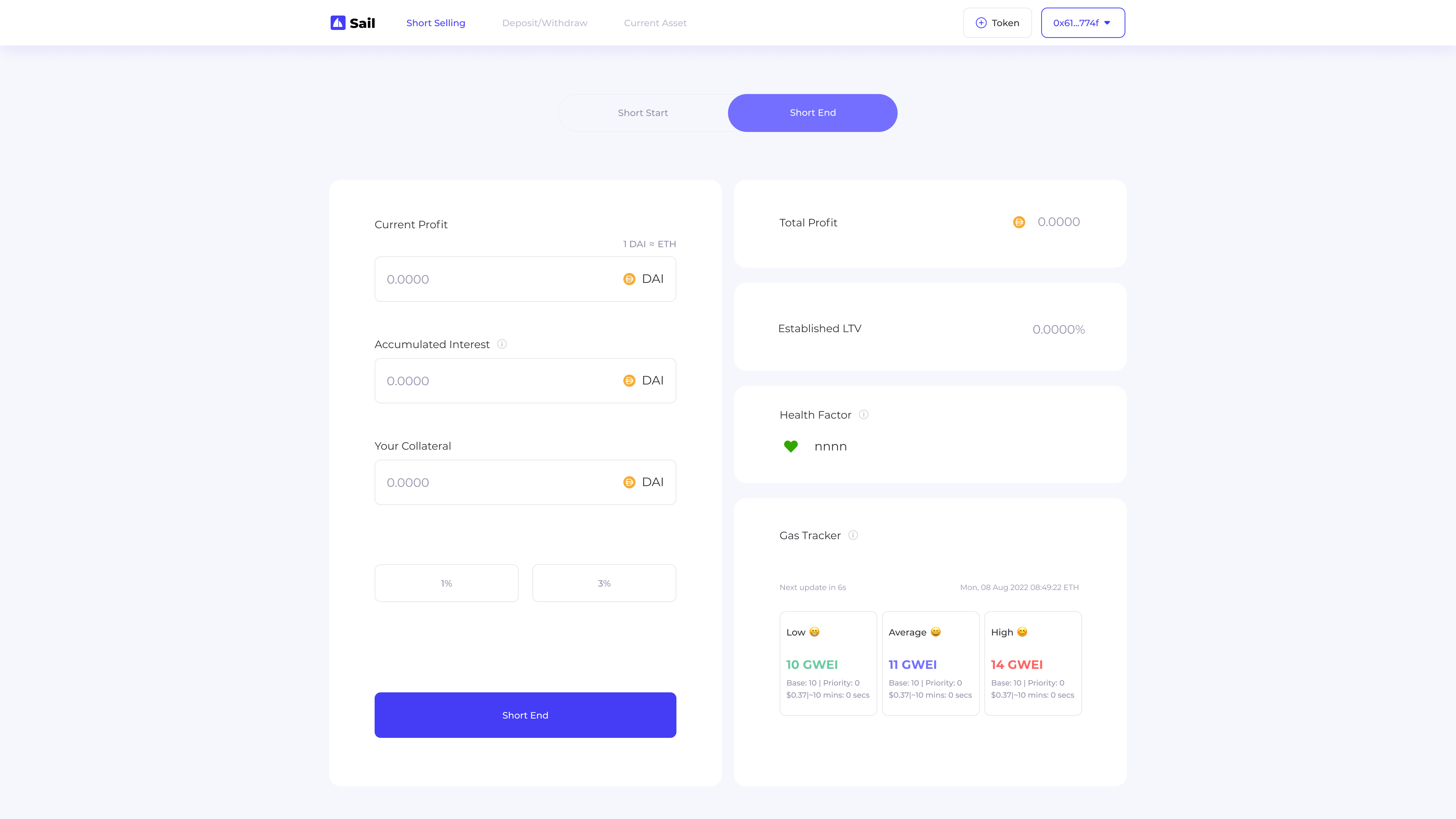
End page
-
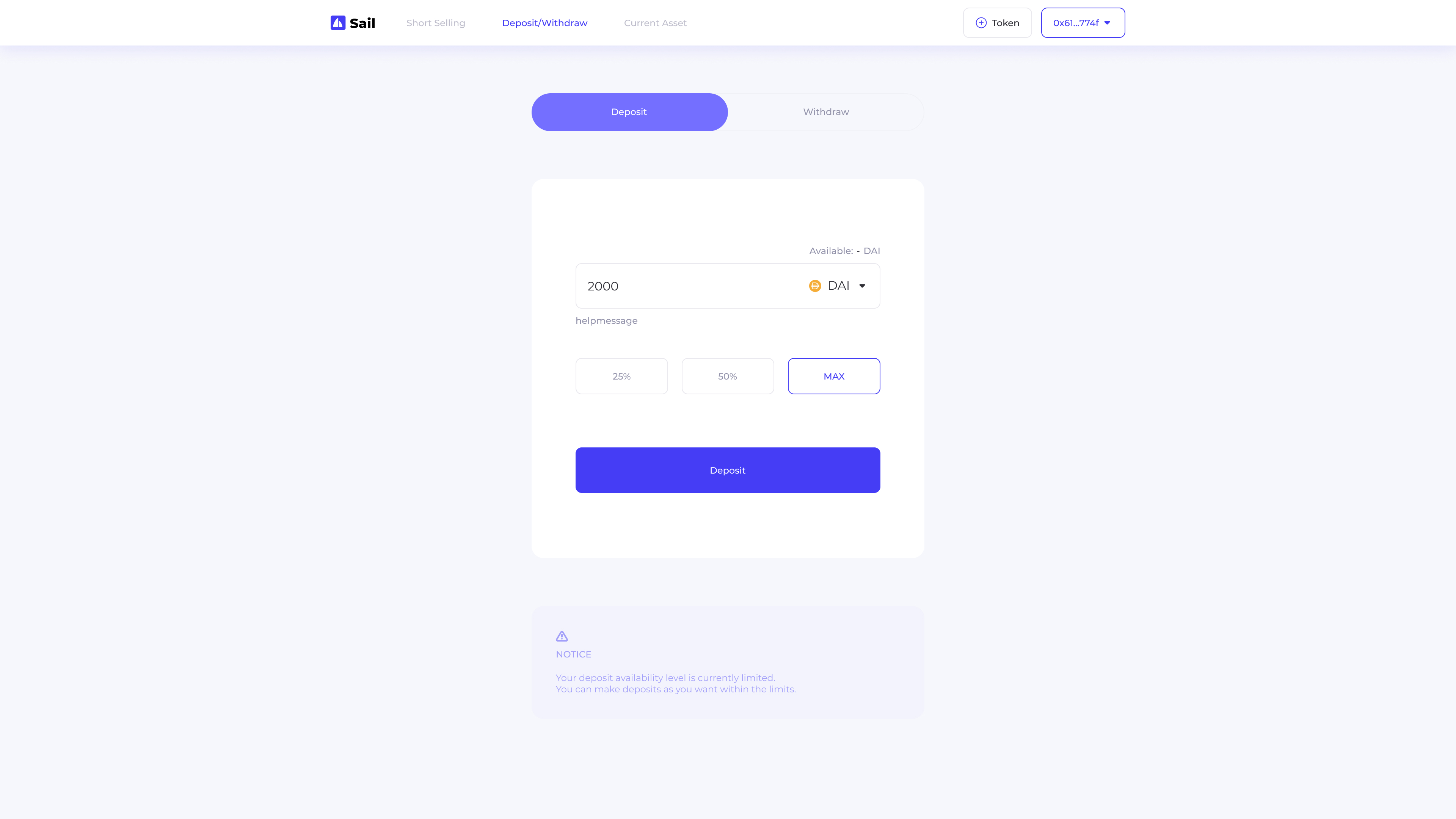
Deposit page
-
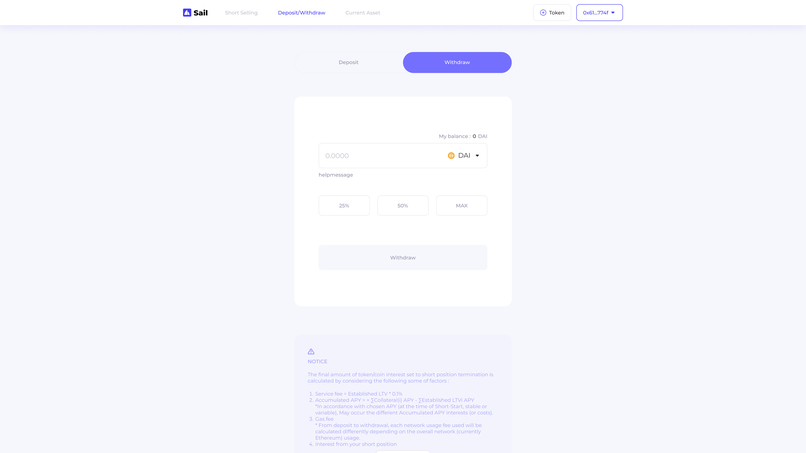
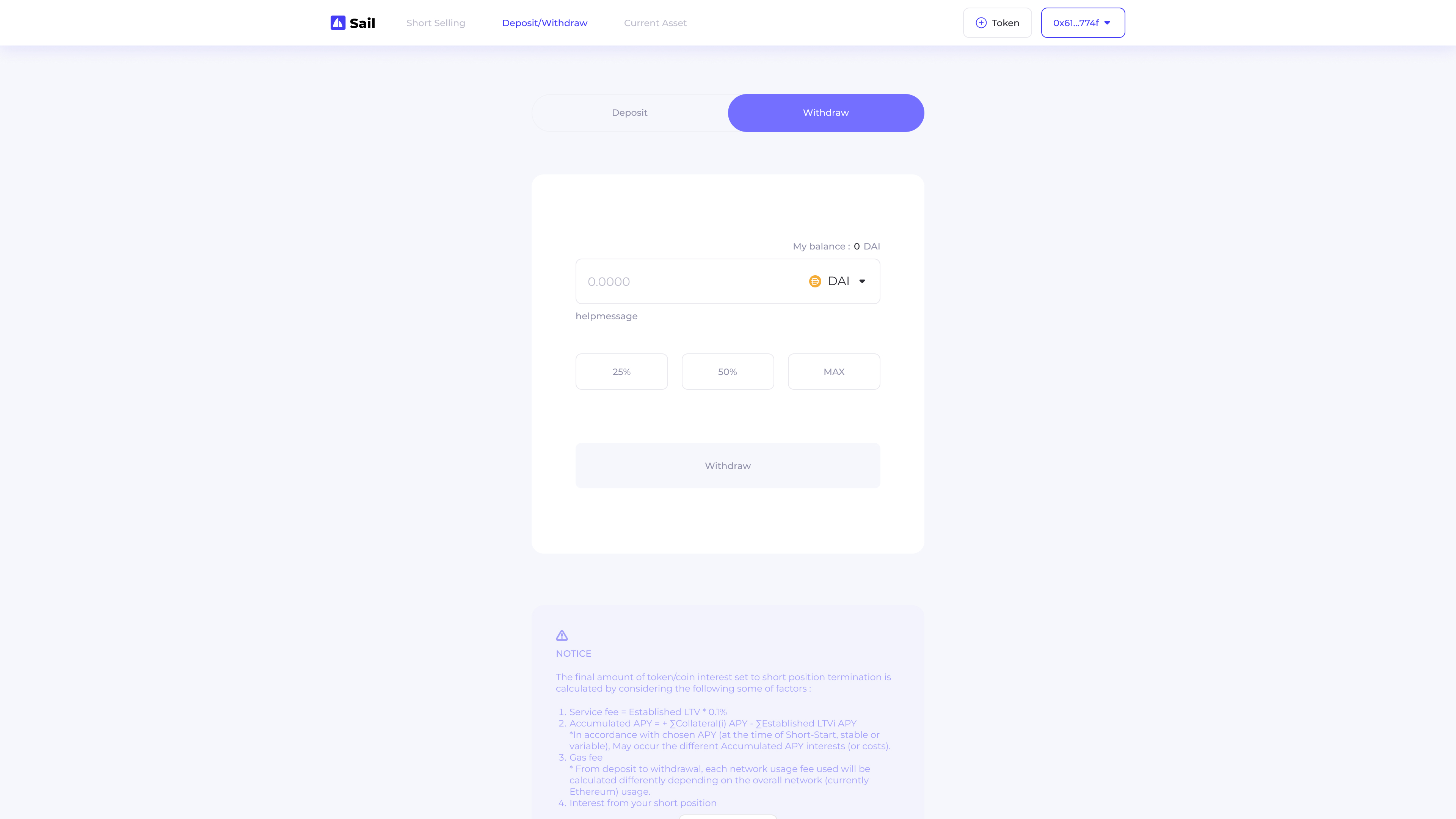
Withdraw page
Inspiration
Ultimately, in Evmos, our final goal is to make present an environment where the end-user could move seamlessly between Cosmos and Ethereum through. As a cornerstone of achieving this goal, We focused on the fact that in the blockchain scene, there are still not many products that the end-users can use very conveniently - there are still many general users who experience inconvenience when using multiple dApps and pages at the same time to navigate.
We believe that it will attract various ERC-20 based token-holders to Evmos ecosystem by deploying our One-click Defi protocol on Evmos. It can lead naturally the distribution of various tokens on Evmos.
What The Sail does
By optimizing and connecting more than 2 Defi services or functions built on Ethereum, we implemented the One-click Defi protocol providing much better user experiences on Evmos.
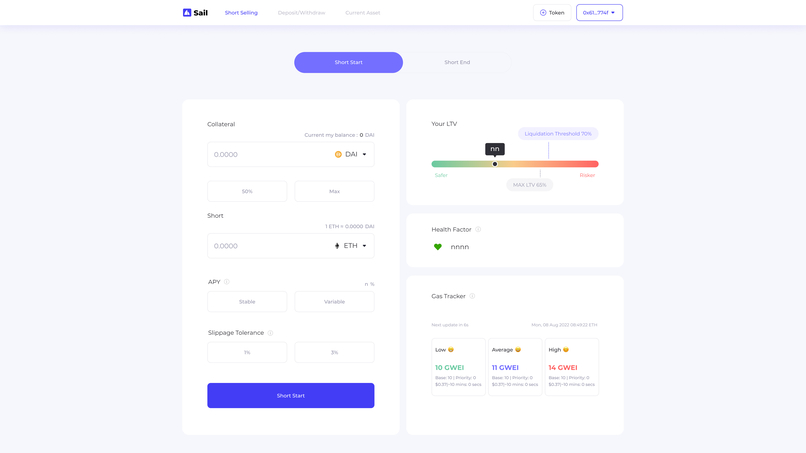
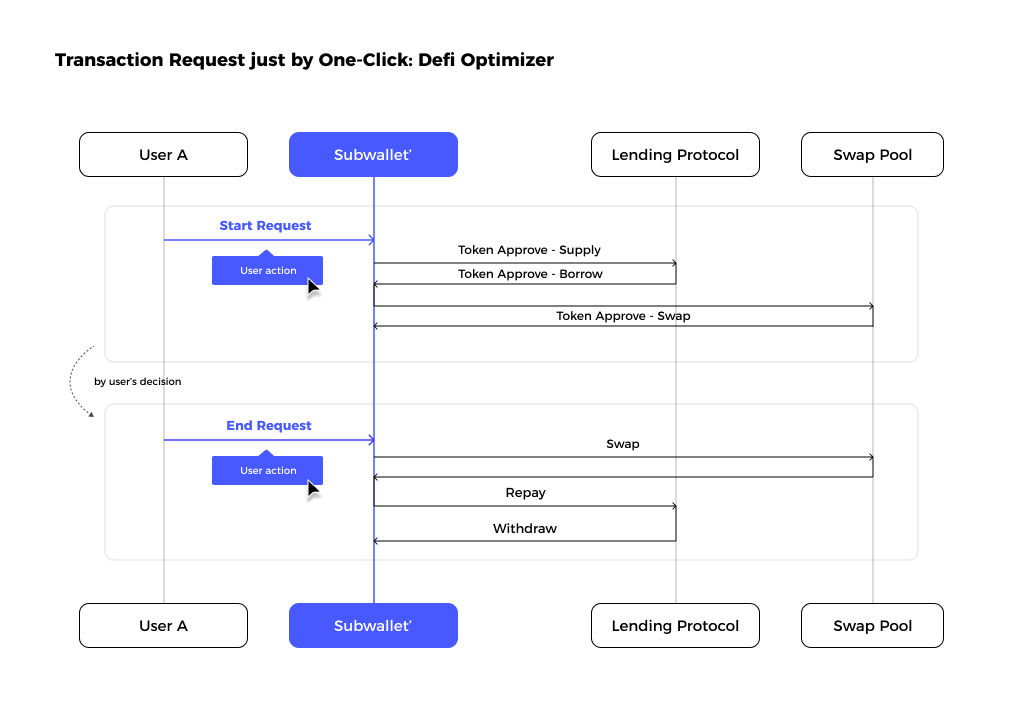
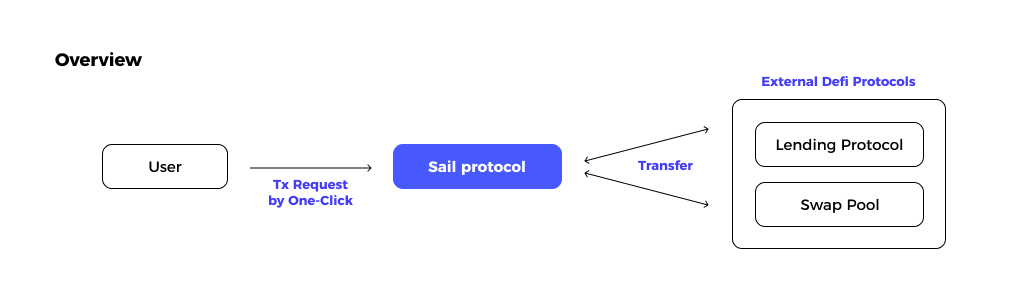 The first function we implemented is the One-click Defi optimizer that can counter the volatility of cryptocurrency.
It is composed of simple processes which reduce user actions more than twice as much as before, from the existing complex processes for risk-hedging which requires several transactions burden to users.
The first function we implemented is the One-click Defi optimizer that can counter the volatility of cryptocurrency.
It is composed of simple processes which reduce user actions more than twice as much as before, from the existing complex processes for risk-hedging which requires several transactions burden to users.
How we built it
① Minimal Proxy (EIP-1167) for Subwallet Factory
- Minimal proxy contract implementation allows us to deploy an extremely small stand-alone contract that inherits all of the logic of a larger deployed contract. And it also can result in a substantial reduction in deployment costs and less on-chain contract maintenance. We apply this method to the user's onboarding process, just like making a dedicated account to the Sail protocol with a simple button click, "Create Subwallet" on UI.
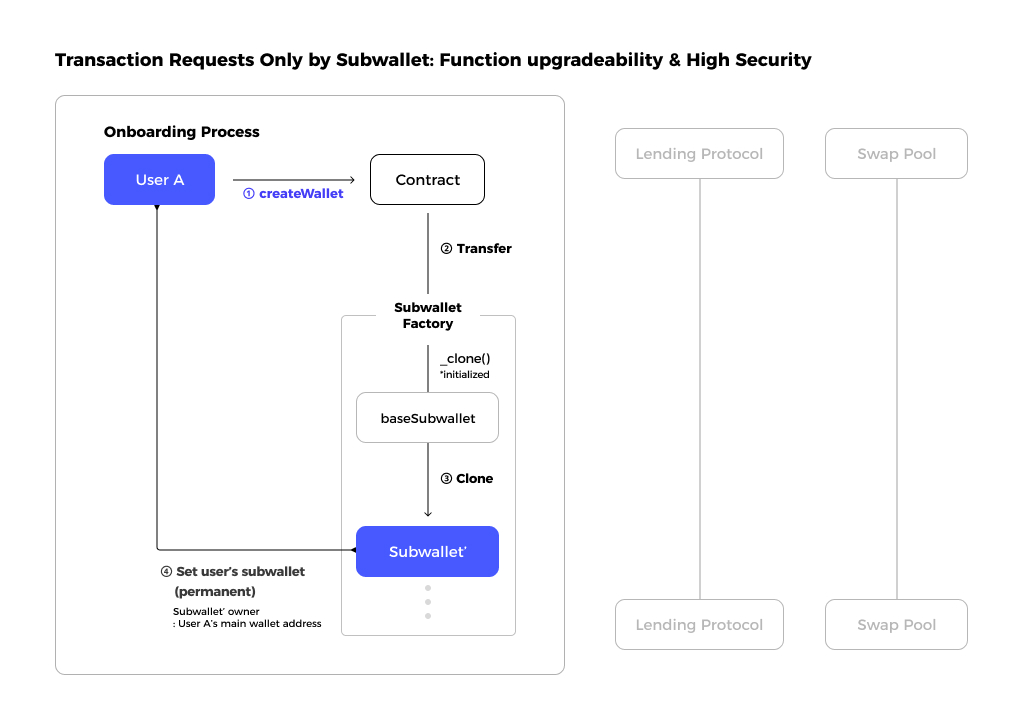
- Basically, in the Subwallet factory, there's a base Subwallet which will be cloned by user's requests. It includes the one-click Defi function we provide. If the functionality is updated on the Subwallet factory, every cloned Subwallet updates simultaneously. This will be a highly necessary step in creating an environment where users can freely use the functions that will be updated to our protocol in the future.
- Furthermore, the Subwallet works as a measure to increase security itself. Excepting when the functionality gets upgraded on our Subwallet factory, the only person who can control it is the user who owns that Subwallet. Because if the user creates a Subwallet for its main wallet address, then the Subwallet's owner will be dedicated to those who requested "Create Subwallet". (In order to show the logic of the Subwallet factory being able to implement on Evmos, we have deployed the initialized Subwallet factory on Evmos Testnet.)
② Contract Call, Solidity and React.js for One-Click Defi
- Using the contract call, we implemented the simplified UX Defi on complex Defi protocols. If the user runs a function in a single click at once, the Sail contract-the cloned Subwallet owned by the user-requests the transactions related to functions of Supply, Borrow, and Swap to the smart contract of Aave and Uniswap. And the frontend was built using React.js.
Challenges we ran into
- There were barriers at every moment when we had to call the external contacts. We had to process many transactions at once, find out the test networks that actually work, and be struggling with too many versions of docs.
- We had to have a decision about which the token exchange ratio standard between Aave and Uniswap.
Accomplishments that we're proud of
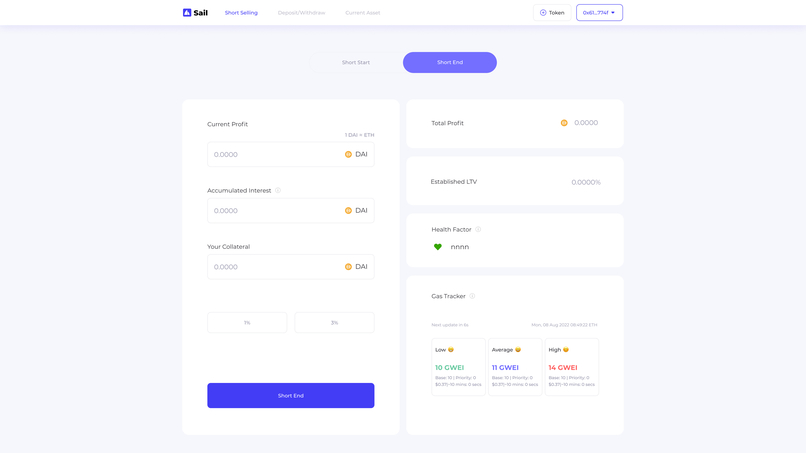
- We could implement the Defi protocol on the Evmos network, connecting several external contracts and data APIs built in Ethereum network. Even after excepting as mentioned above, it includes the current profits, accumulated interests, and the execution shortcuts of approving several tokens required.
What's next for the Sail protocol
- We plan to add more ERC-20 tokens to penetrate into Evmos.
- Focused on the mechanism of One-click Defi. : Liquid staking with the seamless bridge, Evridge.
Built With
- evm
- minimal-proxy
- react.js
- solidity


Log in or sign up for Devpost to join the conversation.