-
-
one page
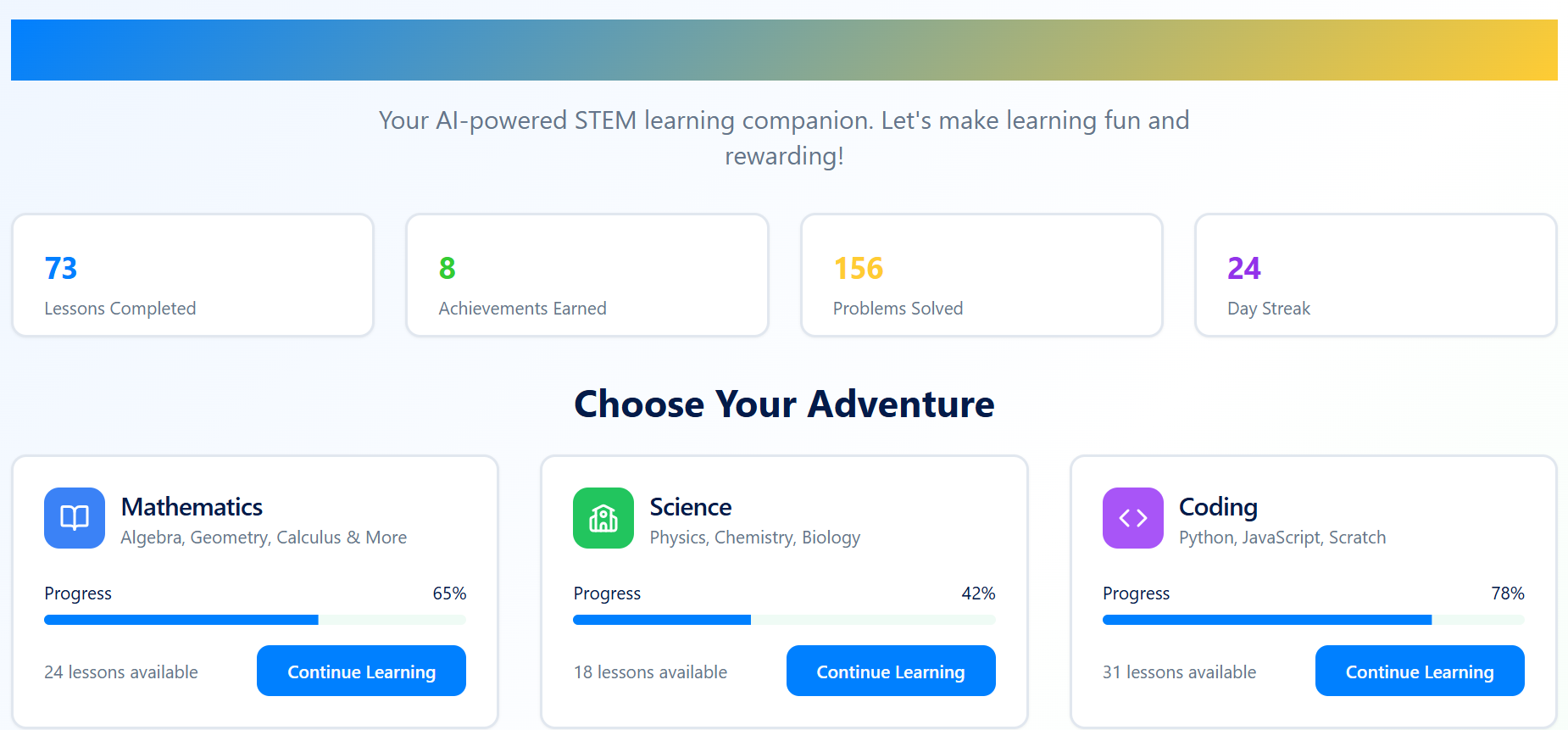
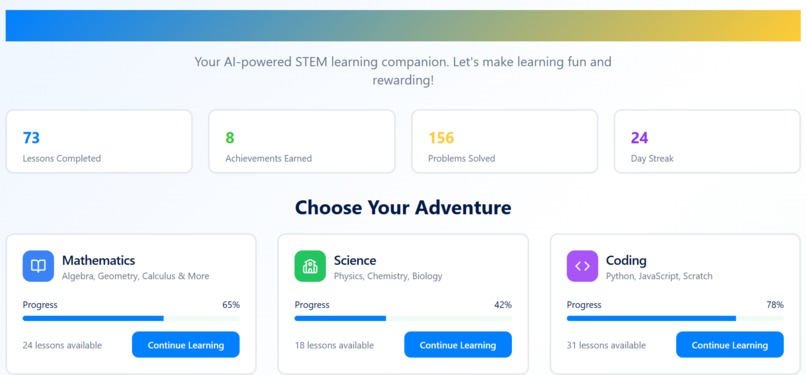
SAi: An AI Companion for STEM Education Inspiration The spark for SAi came from watching peers struggle with STEM subjects, often feeling overwhelmed or left behind. Growing up, I saw how unequal access to resources—like quality teachers or hands-on labs—could dim a student’s curiosity. AI’s potential to personalize learning blew my mind; I envisioned a tool that could be a patient mentor for every student, no matter their background. Inspired by pioneers like Grace Hopper, who made computing accessible, and modern EdTech innovators, I set out to create SAi—an AI companion to make STEM approachable, engaging, and equitable for all. What it does SAi is an AI-powered platform that transforms STEM learning for K-12 students. It acts as a personal tutor, offering real-time explanations for math, science, and coding concepts, tailored to each student’s pace. Key features include:
Interactive Lessons: Step-by-step guidance on topics like algebra or physics, with visual simulations. Coding Playground: A drag-and-drop interface for beginners and a Python editor for advanced learners. Teacher Tools: Dashboards to track student progress and suggest personalized assignments. Accessibility: Offline mode and multilingual support to reach underserved communities.SAi makes STEM feel like a game—fun, rewarding, and confidence-building—while aligning with school curricula.
How we built it Our small team of three—two developers and an educator—brought SAi to life through grit and iteration:
Research: We surveyed students and teachers to identify needs, like clear explanations and low-tech compatibility. Tech Stack: We used Python with Hugging Face transformers for the AI, trained on educational datasets to ensure clear, kid-friendly responses. The front end, built with Svelte, prioritizes simplicity. We used PostgreSQL for user data, with encryption for privacy. Development: We prototyped in agile sprints, testing with 30 students in a local school. Feedback led to features like voice narration and gamified quizzes. Deployment: SAi runs on Google Cloud for scalability, with service workers enabling offline access. Ethics: We implemented COPPA-compliant data protection and audited the AI to minimize biases in responses.Countless late nights and beta tests later, SAi became a tool students love and teachers trust.
Challenges we ran into Building SAi tested our resolve:
AI Clarity: Early AI responses were too technical for young learners. We retrained the model with simpler language, but it took months to get right. Resource Limits: With a tight budget, we relied on open-source tools and free cloud credits, which limited our testing scope. Engagement Balance: Some students got hooked on SAi’s rewards but skipped deeper learning. We redesigned the UI to prioritize progress. Adoption Hurdles: Schools were hesitant about AI, fearing it might replace teachers. We ran workshops to show SAi’s role as a support tool. Inclusivity: Supporting diverse learners—like those with disabilities or no internet—required complex features, stretching our timeline and skills.
Accomplishments that we're proud of We’re thrilled about:
Student Impact: In our pilot, 80% of students reported feeling more confident in math after using SAi for a month. Teacher Buy-In: Five local schools adopted SAi, with teachers praising its time-saving analytics. Accessibility: SAi works offline and in three languages, reaching students in rural areas. Ethical Design: Our bias audits and privacy measures earned trust from parents and educators. Team Grit: As a small team, building a functional, user-loved prototype in six months feels like a huge win.
What we learned SAi taught us as much as it teaches students. Technically, we mastered AI fine-tuning, responsive design, and secure data handling. We learned to prioritize user feedback—students wanted fun, teachers wanted simplicity. Ethically, we grappled with ensuring fairness and transparency in AI, which deepened our commitment to responsible tech. Most of all, we learned that persistence pays off; every bug fixed or feature added brought us closer to our vision. What's next for SAi SAi’s just getting started. We’re working on:
New Features: Virtual reality labs and AI-driven STEM career guidance. Global Reach: Partnerships with NGOs to bring SAi to underserved regions. Teacher Support: Training modules to help educators integrate SAi seamlessly. Scalability: Optimizing for larger user bases with more robust cloud infrastructure.Our dream is to make SAi a global companion, sparking STEM passion in every student, everywhere.

Log in or sign up for Devpost to join the conversation.