-
SähköDino!
-
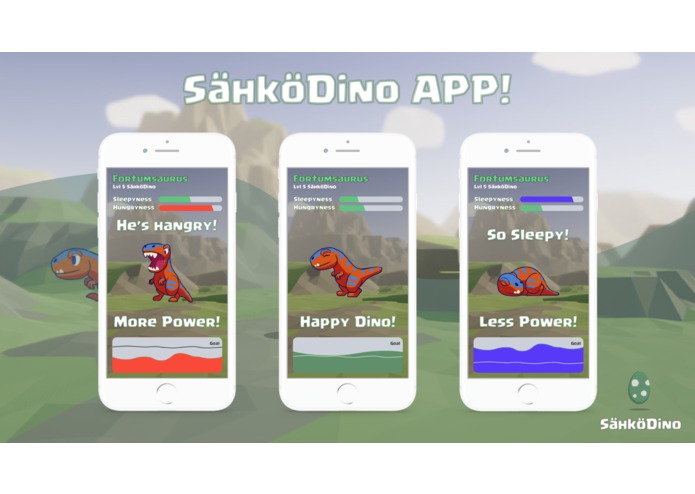
Tamagotchi inspired companion to help the smart grid
-
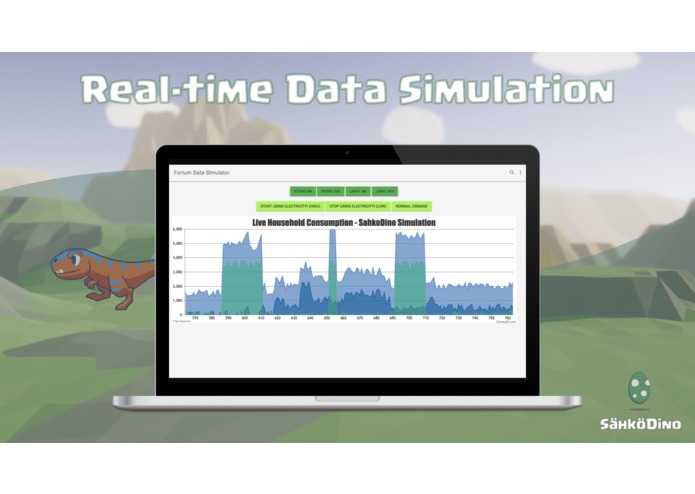
Simulated Data Dashboard
-
Dream Team
Inspiration
We jumped between a few ideas, and did quite a few pivots until we arrived at our amazingly simple idea! Remember playing with your Tamagotchi? Did you ever ask your parents to keep it alive when you went to school? There was a real emotional connection! Remember how sad you were when it died? That simple, yet powerful, connection inspired us to create SähköDino! (Sähkö=electricity, Dino=dinosaur, Literally an Electricity Dinosaur)
What it does
Given the real-time household consumption data (provided by Fortum at a per second granularity), we created a simple Tamagotchi inspired game that takes advantage of the real-time in-app response to actions taken inside the physical home. We created an augmented reality experience that allows the SähköDino inside the game to respond to lights going off or you turning on the oven!
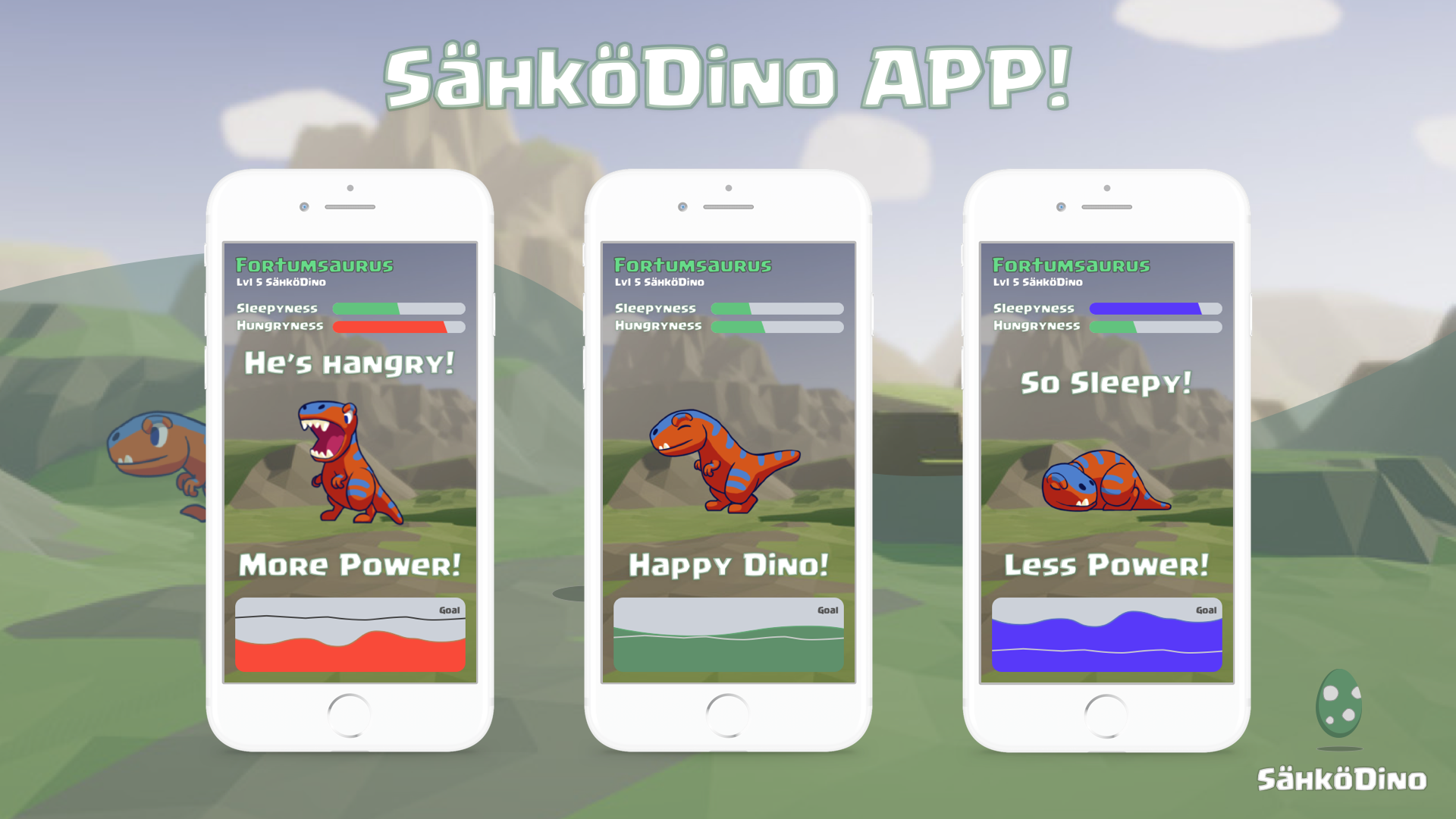
SähköDino lives inside your phone, and he loves eating electricity. He also has a very strange sleeping schedule (dinosaurs are strange creatures). When there is a high amount of load on the power grid, companies like Fortum utilize various mechanisms to reduce it (such as turning off water boilers remotely). Similarly, if the demand on the grid is low, but the production is very high (due to renewable sources), the grid needs to find an outlet for all this extra electricity! SähköDino is a novel approach to smart grid demand response. When the grid is experiencing high load or surplus supply, we can send out push notifications that your SähköDino is hungry or sleep! The desired response from consumers is determined by looking at current spot prices, production inside Finland, and demand on the grid.
When SähköDino is hungry, he needs to eat electricity! You better turn something on, maybe go sauna, or bake some korvapuusti! If he’s sleepy, it’s time to turn off the lights in your house (he likes to sleep in the dark and without too much electricity around).
How we built it
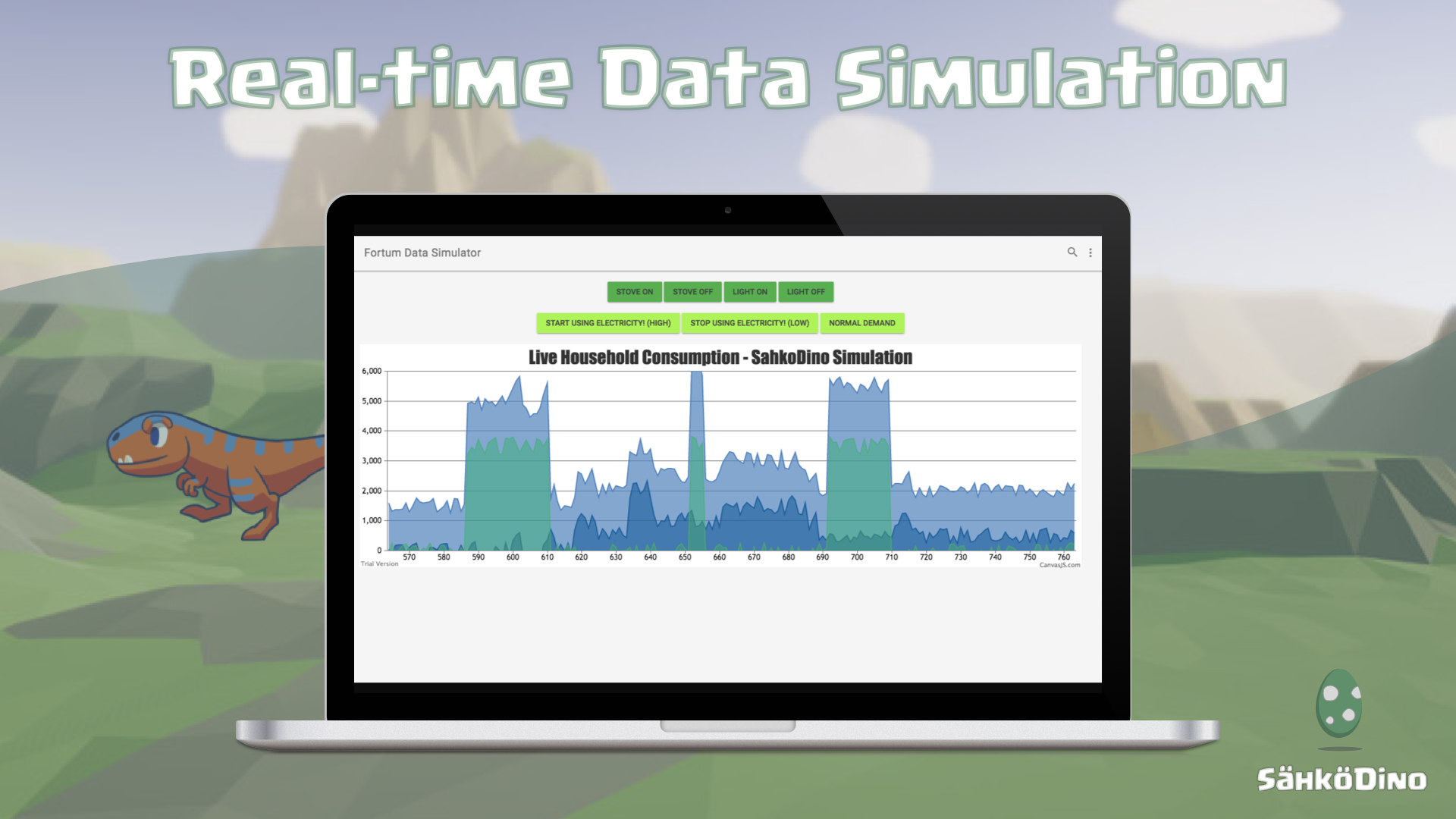
We started by understanding the data generated (given by Fortum), and build a real-time data simulation dashboard (That streams the real-time data to Firebase).
We then build the consumer-facing Android application that connects to Firebase and receives the data stream in real time. We also send the current state of the grid.
We can simulate changes in the grid and changes in the household consumption on the data simulation dashboard. The Android application responds to these changes, changing the demands and state of SähköDino.
Challenges we ran into
This was a design heavy project, learning a bit more about game design style along with manually slicing up sprite sheets was an interesting experience. The game states are simple, but keep track of everything proved to be a challenge on its own!
Accomplishments that we're proud of
We’re really proud of the overall experience of our project. We feel that SähköDino is instantly likable and really lovable! We would love to have SähköDino living on our phones, surviving off our home consumption!
What we learned
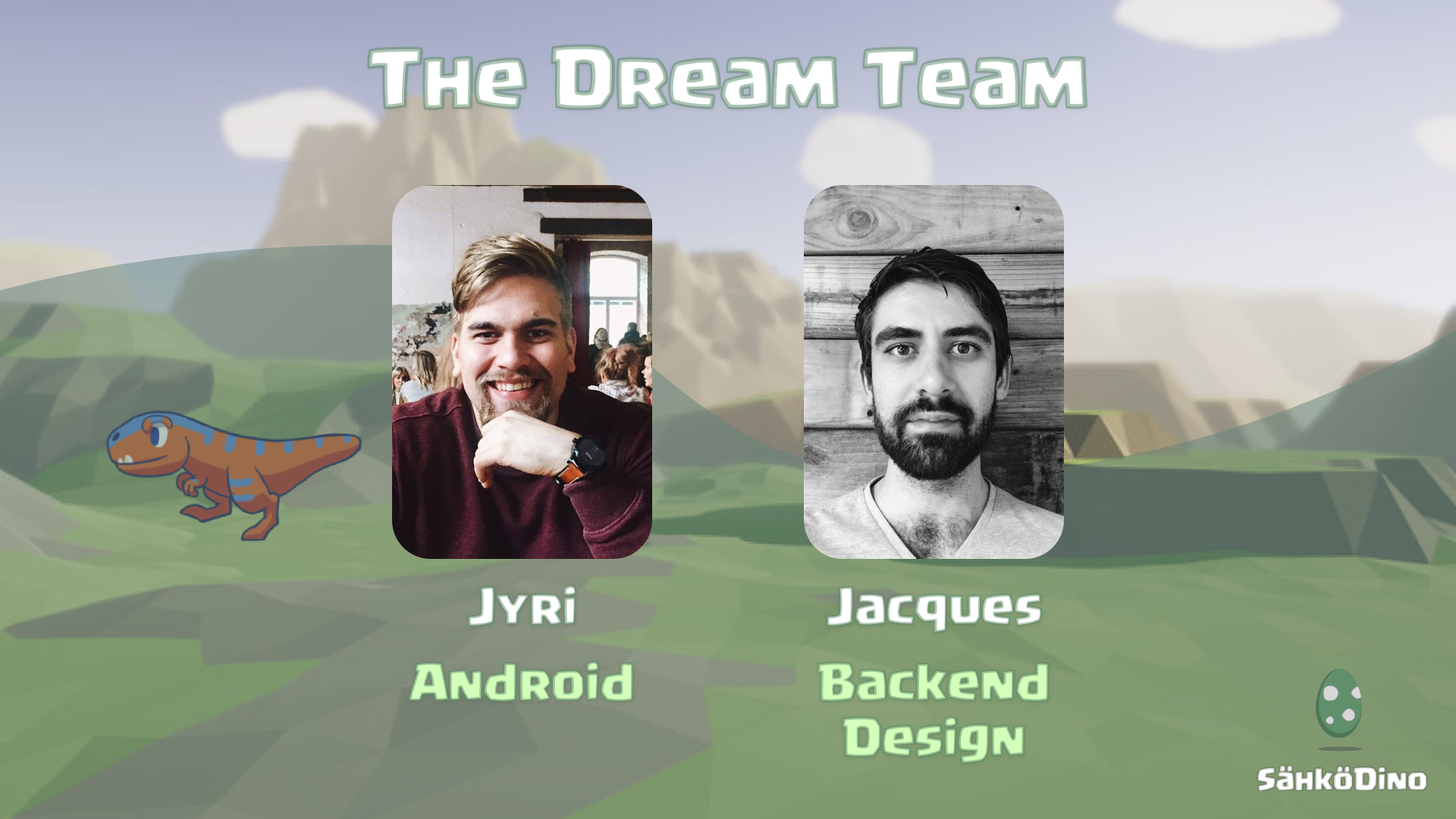
Be open to changing ideas, even way past the halfway point. We always choose a new stack or a new design style for every hackathon project. Jacques enjoyed working on some frontend web stuff again, while Jyri had a blast staring at pixels and slicing up dinosaur sprites (he’s not doing that again soon).
We learned a lot about Fortum, their current projects, and about the industry.
What's next for SähköDino
SähköDino hopes to work with Fortum and get into the hands of millions of families. He hopes to show children that turning off a light can have an amazing result, making a small dinosaur sleep better (and realizing later that they helped save our planet)!
Built With
- android-studio
- firebase
- java
- javascript
- material-design
- sketch

Log in or sign up for Devpost to join the conversation.