Project Story
Inspiration
As a tech enthusiast from Niger, I've always been passionate about hacking and cybersecurity. But my real motivation came from seeing friends and family fall victim to online scams: fake money transfers, phishing links, and identity theft. In a country where digital literacy is still growing, there was no simple, free tool for ordinary people to check a suspicious link or report a scam. I wanted to build something that could protect my community, using my skills for good. When I discovered the "Build with MeDo" hackathon, I saw a chance to turn that idea into reality – without writing a single line of code.
What I Learned
I learned that a detailed, well-structured specification can be the key to success with AI-powered development. By drafting a complete requirement document in French (the language of the target users), I was able to get MeDo to generate a fully functional web application in one prompt. I also learned how to integrate external APIs (Google Safe Browsing) using Supabase Edge Functions, how to manage environment secrets, and how to deploy a full-stack app. Most importantly, I learned that no-code tools like MeDo can empower anyone – not just professional developers – to create impactful, real-world solutions.
How I Built It
Planning – I wrote a detailed specification covering every page, feature, and business rule: a homepage, link checker, scam reporting form, educational tips, a chatbot, and user authentication.
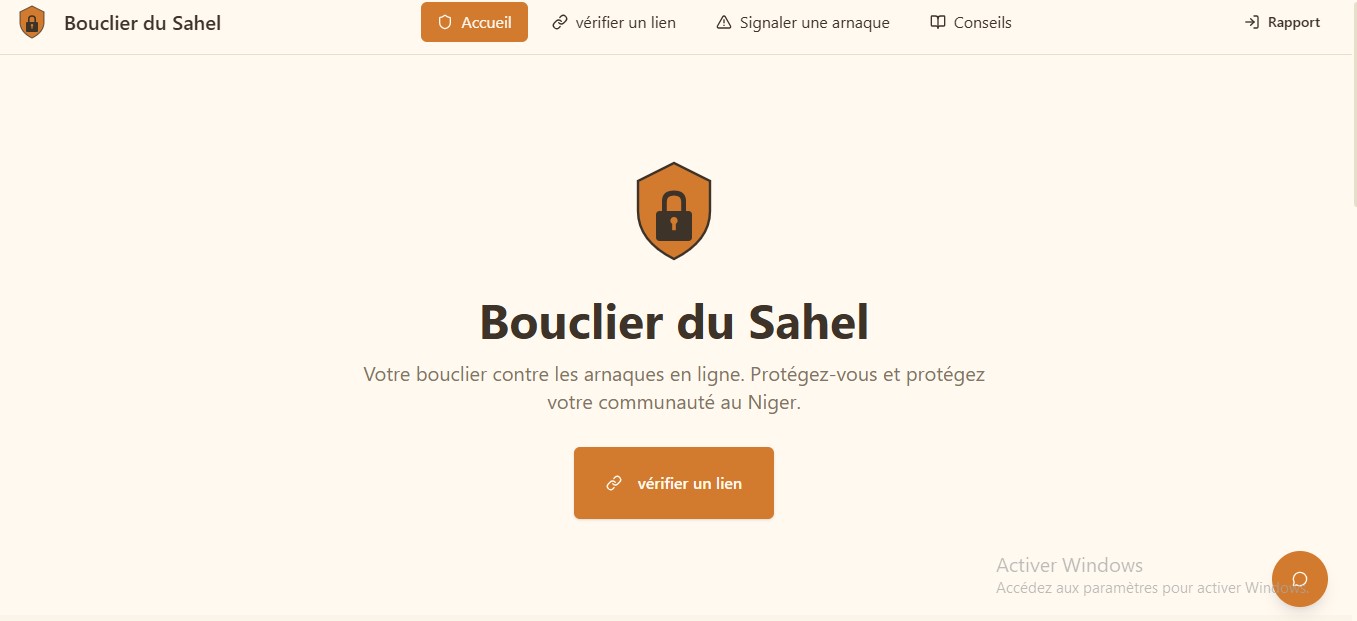
Generation – I submitted the entire specification as a single prompt to MeDo. The platform automatically generated the front-end, back-end, database schema, chatbot logic, and Edge Function for the Google Safe Browsing API.
Integration – I activated the Google Safe Browsing API on Google Cloud, created an API key, and added it as a secret (GOOGLE_SAFE_BROWSING_API_KEY) in Supabase. The Edge Function then used this key to analyze URLs in real time.
Testing – I tested the link checker with a known malicious URL and confirmed it returned "Dangerous". I also tested the reporting form, authentication, and chatbot.
Deployment – Finally, I published the app via MeDo and obtained the public URL.
Challenges Faced
API key configuration – Finding the right place in Supabase to store the secret was tricky; the "Secrets" section was hidden under Edge Functions settings.
Credit limit – After finalizing the app, my free credits ran out right before I could hit "Publish". I reached out to the MeDo community on Discord, and they generously helped me get the publication done.
Language barrier – The app interface is in French to serve my community, but all hackathon materials needed to be in English. Translating everything without losing meaning was an interesting exercise.
Testing with a real threat – I had to ensure the Safe Browsing API actually returned the correct result for a test malicious URL, which required reading Google’s documentation.
Despite these hurdles, Sahel Shield is now live and ready to help Nigeriens stay safe online. I'm proud that a single prompt, combined with perseverance, can produce a tool with real social impact.
Built With
- authentication
- css
- edge-functions)-google-safe-browsing-api-(link-verification)-typescript-/-javascript-(underlying-generated-code)-css-(responsive-design
- google-safe-browsing-api
- medo
- react
- supabase
- typescript

Log in or sign up for Devpost to join the conversation.