-
-
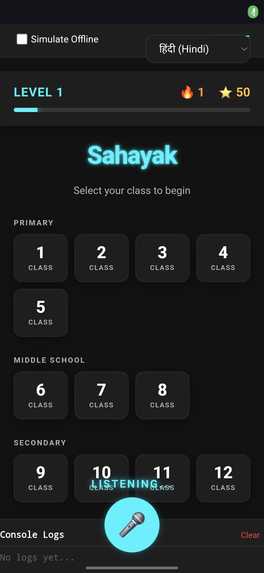
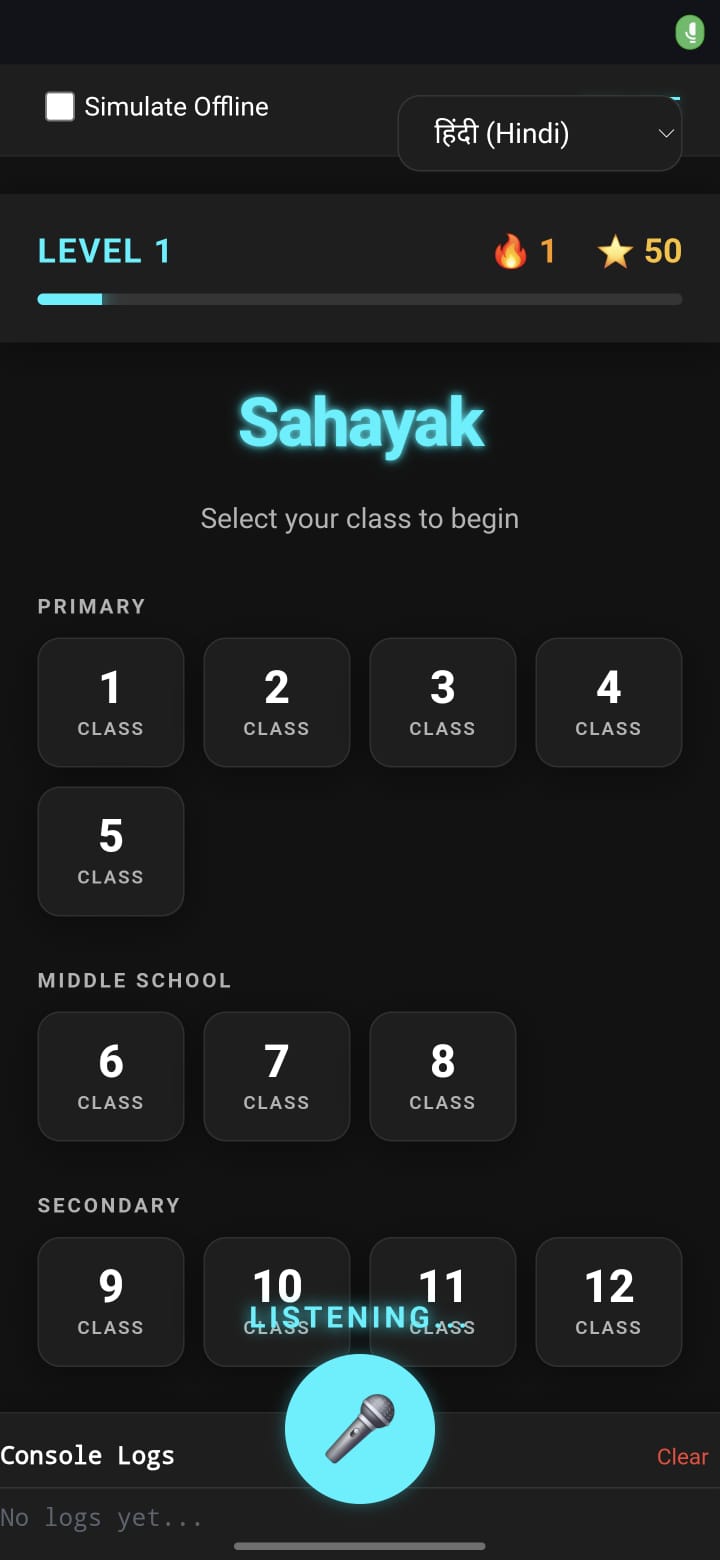
Local voice control via Web Speech API. Teachers navigate lessons and quizzes instantly without typing or menus.
-
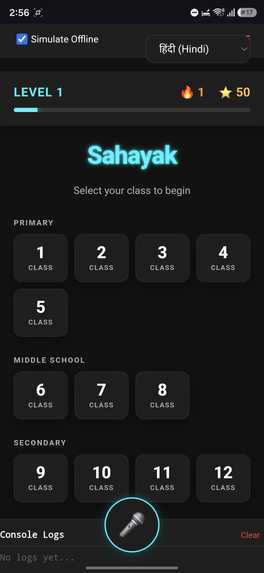
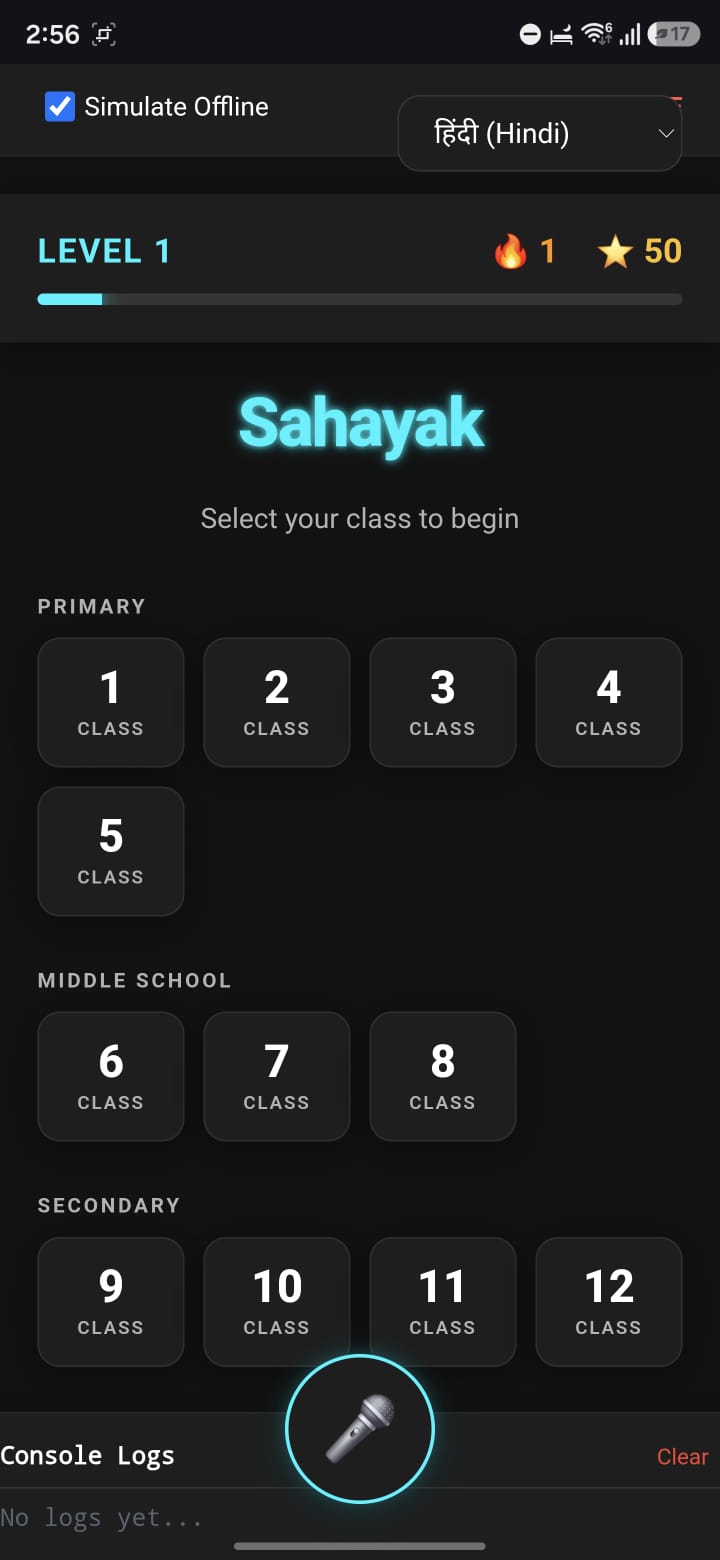
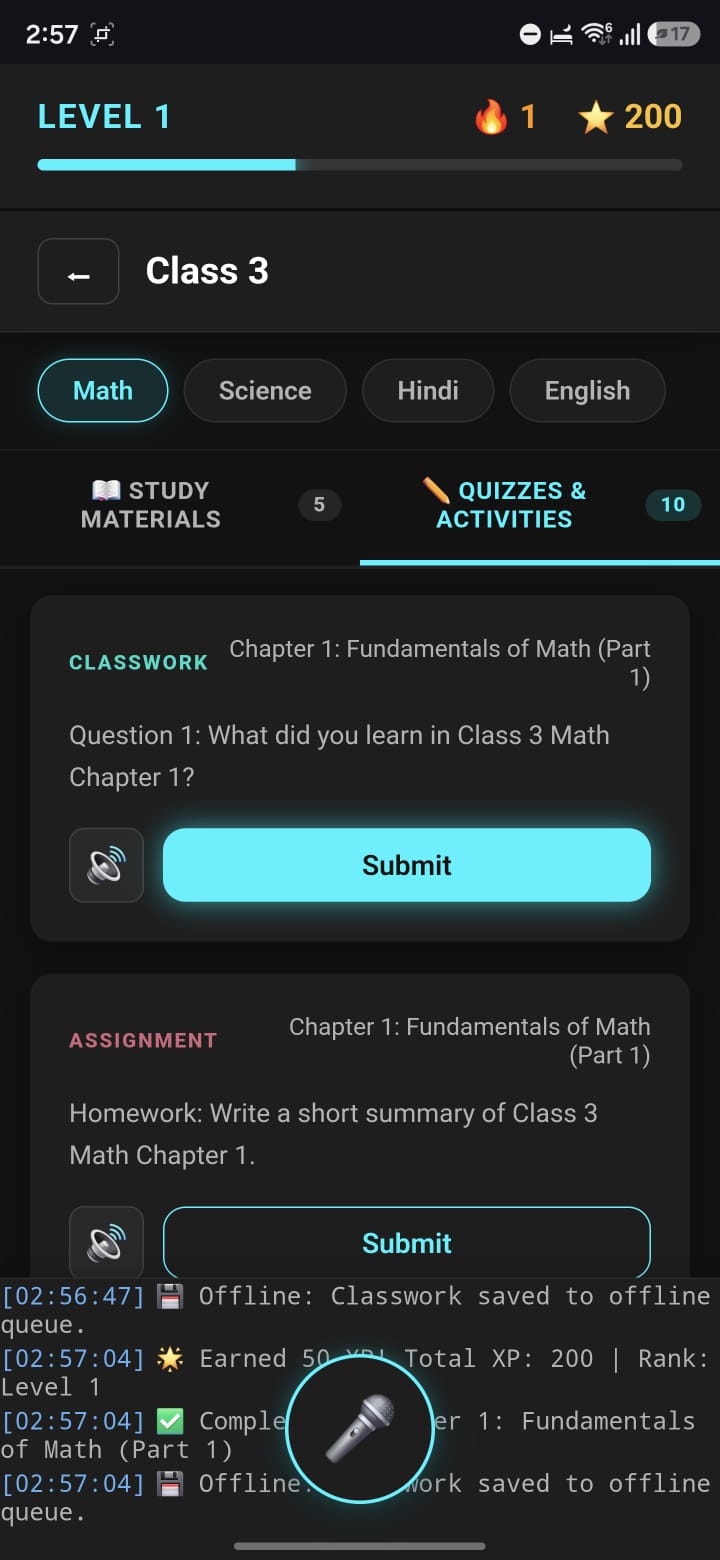
100% offline edge architecture. Workbox & Service Workers keep the full app running smoothly in connectivity dead zones
-
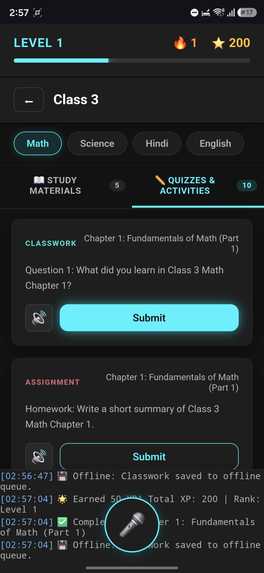
Zero cloud backend needed. Student XP streaks, scores, and progress save directly on-device using IndexedDB storage.
-
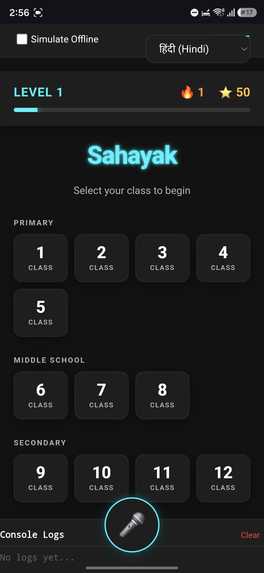
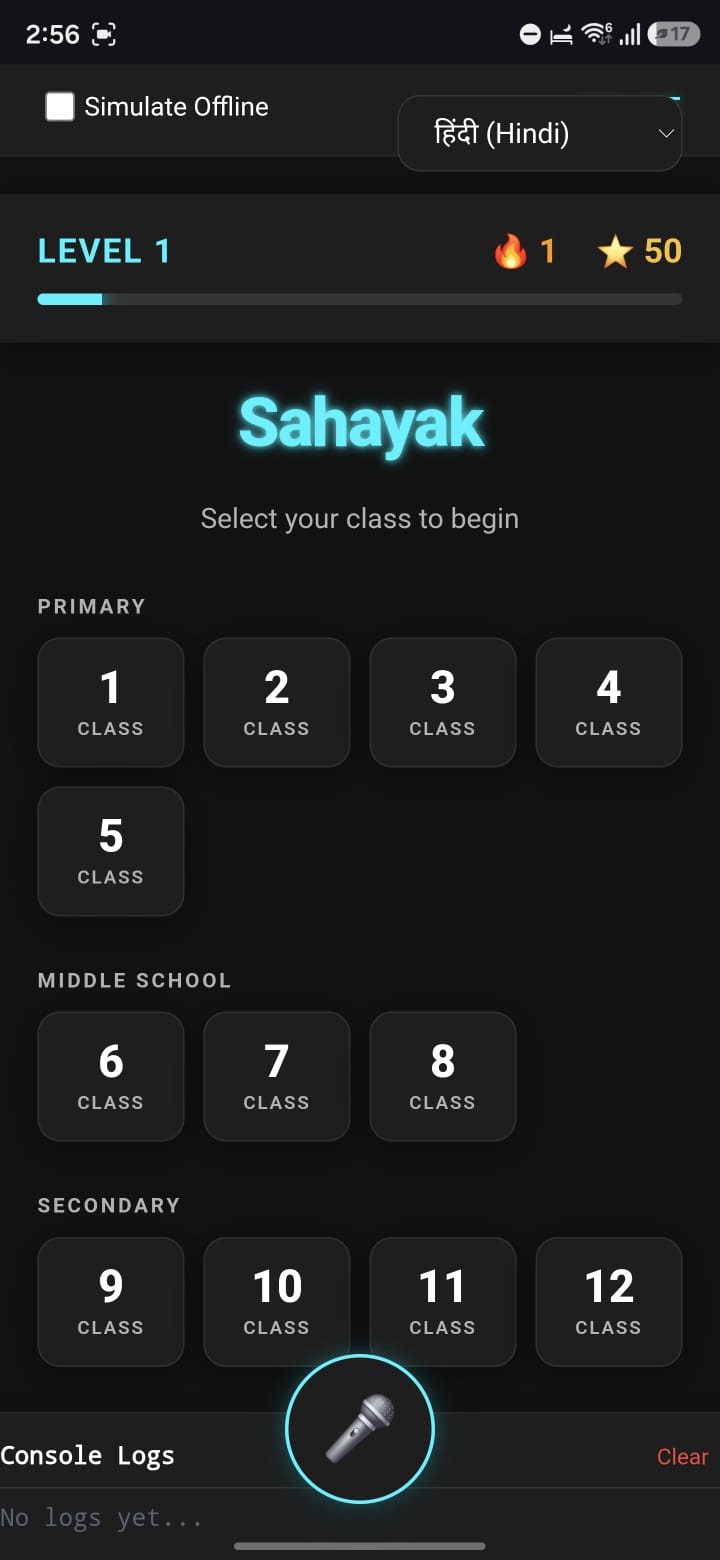
Clean, dark-mode UI for rural classrooms. Large touch targets ensure easy navigation without digital literacy barriers.
Inspiration
I grew up in a rural household where accessing quality education was so difficult that my family had to migrate to a city like Delhi just for my schooling. Leaving our hometown behind made me realize how broken rural infrastructure remains to this day. I wanted to build a solution for the community we had to leave behind.
What it does
Sahayak is a 100% offline, Zero-UI digital co-teacher designed for single-teacher, multi-graded classrooms . By using edge computing and native voice commands, it allows a single teacher to easily deliver interactive lessons ,navigate modules ,and track student progress without needing Wi-Fi ,a backend database, or high digital literacy
How we built it
We bought the server to the browser. the frontend it build with React(Vite) and scaffolded using antigravity IDE. To make it entirely offline, we used workbox service workers to cache the UI, IndexedDB for local noSQL data storage(like gamification XP streaks), and the browser's native web speech API for the zero-UI voice interface. it deployed as a delay-tolerant Progressive Web App(PWA) on Vercel.
Challenges we ran into
The biggest hurdle was making two-way voice loop function efficiently as an offline PWA. Modern browsers often rely on external servers for speech-to-text processing, so architecting a system that gracefully handles network drops without breaking the core UX took significant planning. We also had to navigate the quirks of Vercel's caching system to ensure the service worker updated properly during deployment
Accomplishments that we're proud of
I am incredibly proud of successfully proving that you don't need to bring the internet to the village to deliver quality EdTech. Getting the local gamification engine and the offline voice-trigger UI to work seamlessly together off the grid is a massive win. Executing the entire edge architecture and getting deployed in a single weekend is a huge technical milestone
What we learned
I learned the massive potential of edge computing and in-browser database like IndexedDB. Building Sahayak reinforced that sometimes the best user interface is "zero-UI" stripping away complex fundamentally more accessible for those who need it most.
What's next for Sahayak
The next step is expanding the mocked JSON curriculum into a full, lightweight algorithmic lesson generator to keep the edge application fast. I also plan to add deeper multi-language support for regional dialects and implement a workbox background sync "outbox" so teachers can queue up questions that automatically send when their device eventually connects to a cellular network


Log in or sign up for Devpost to join the conversation.