-
-
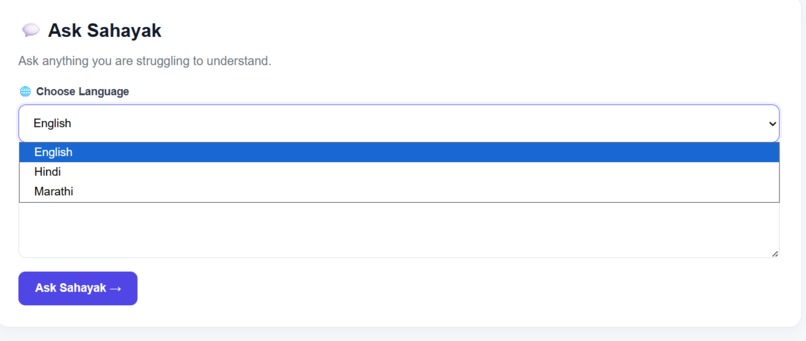
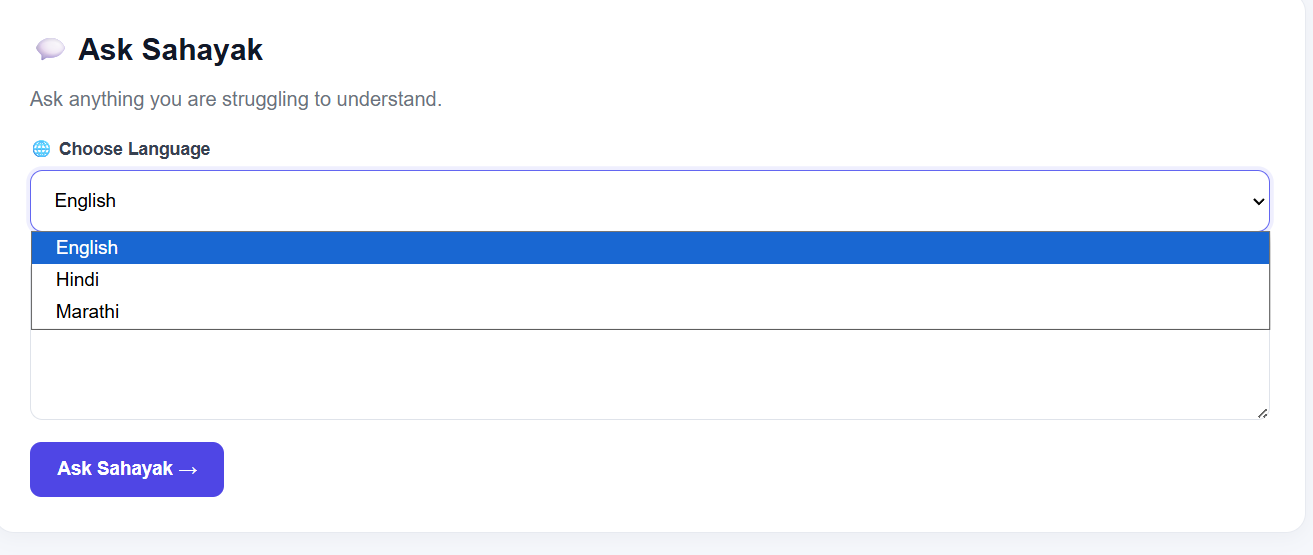
Language Options
-
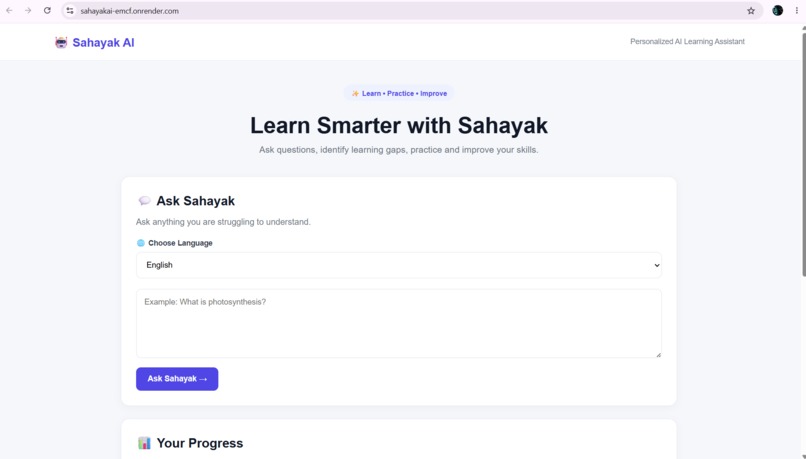
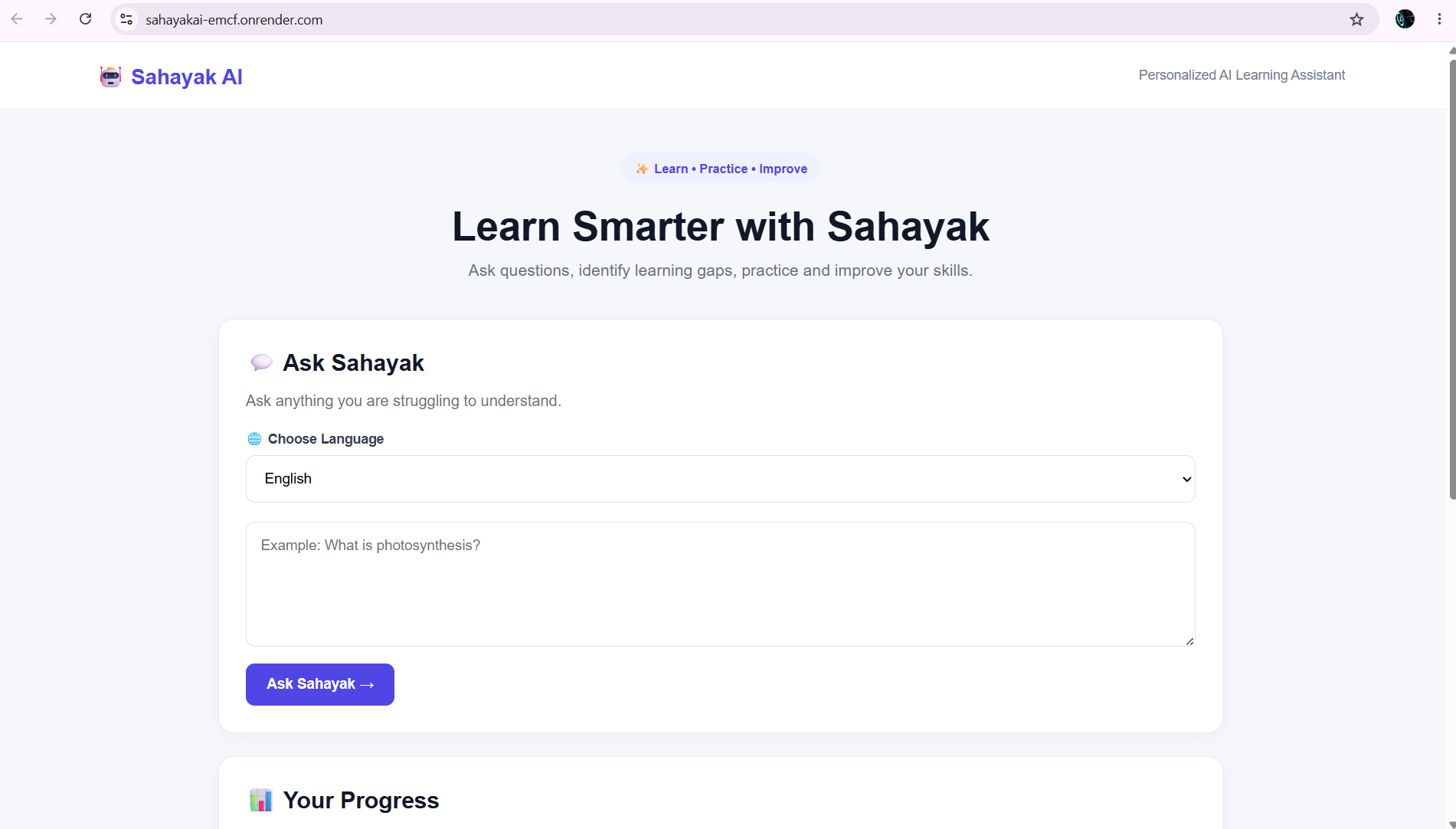
Homepage
-
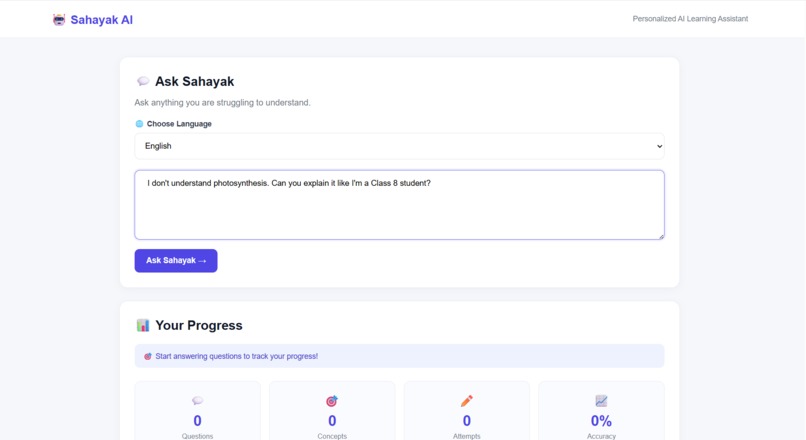
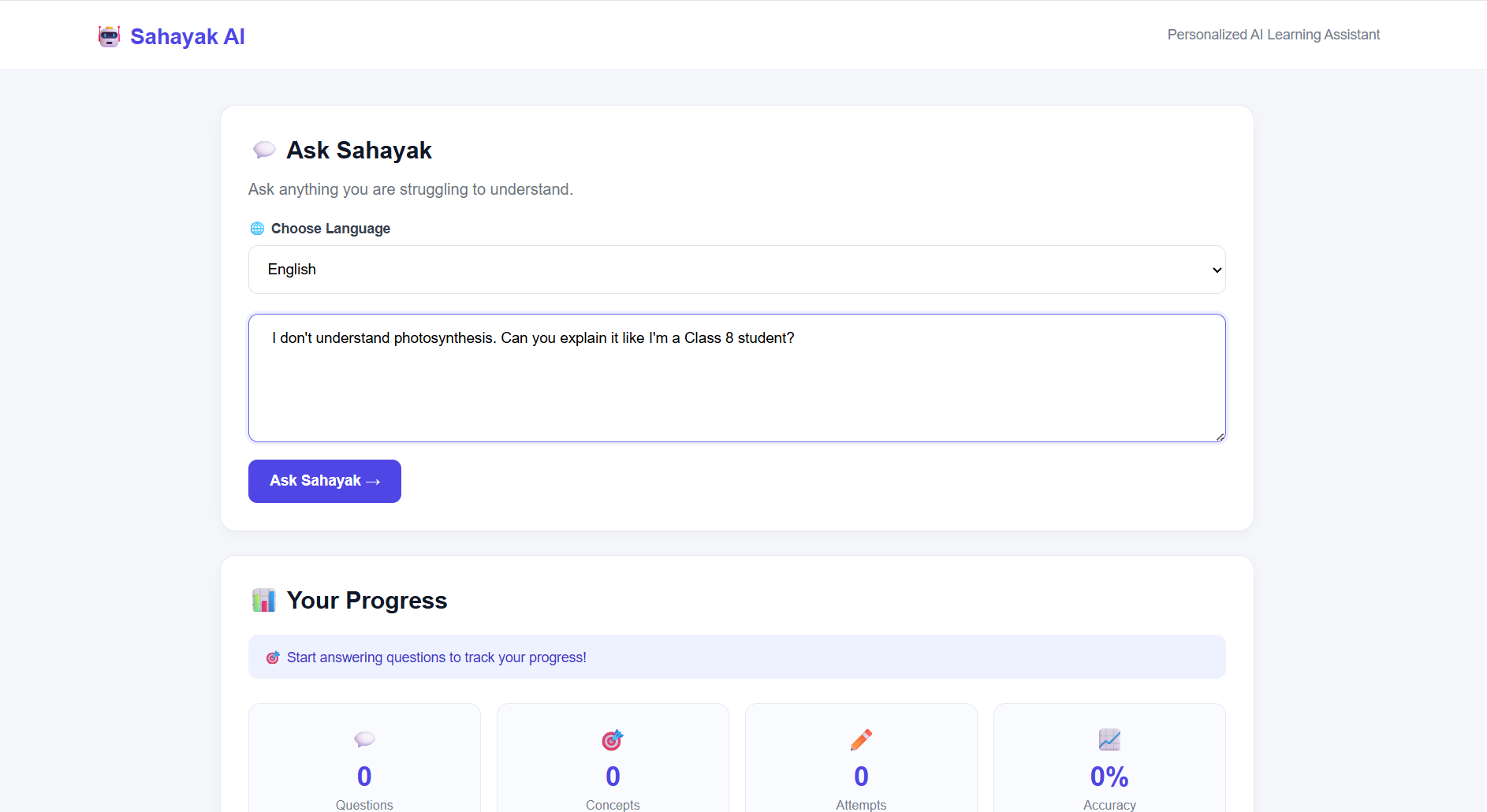
Ask Sahayak
-
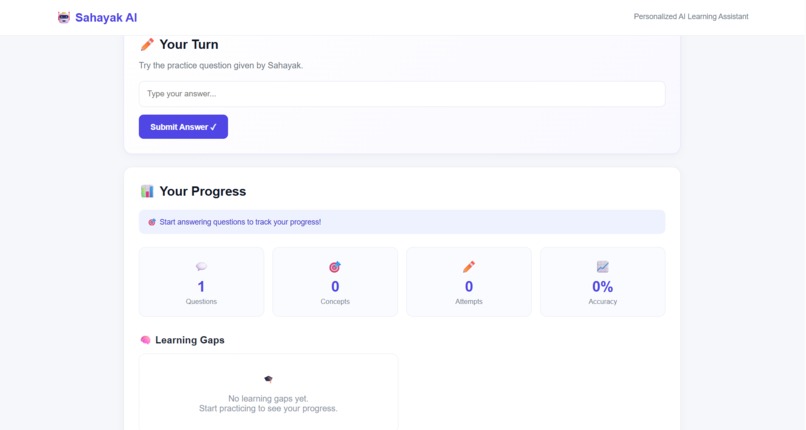
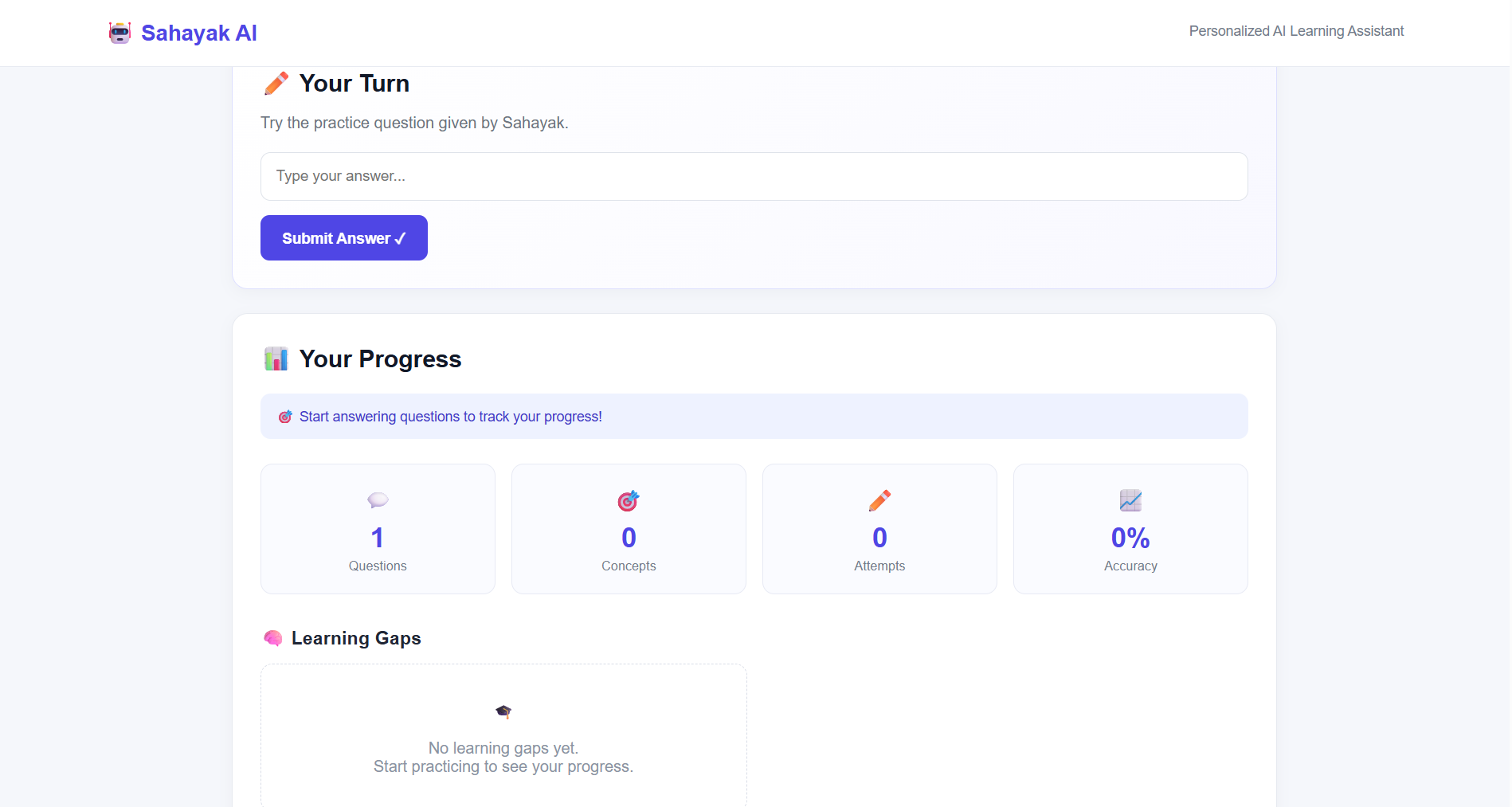
Practice/Progress
-
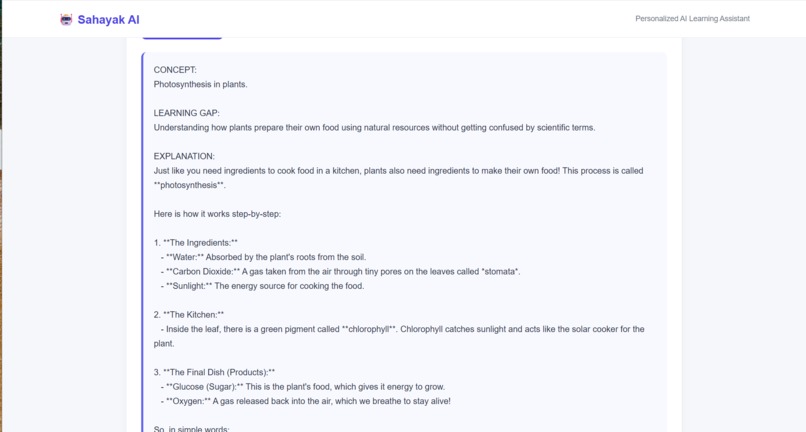
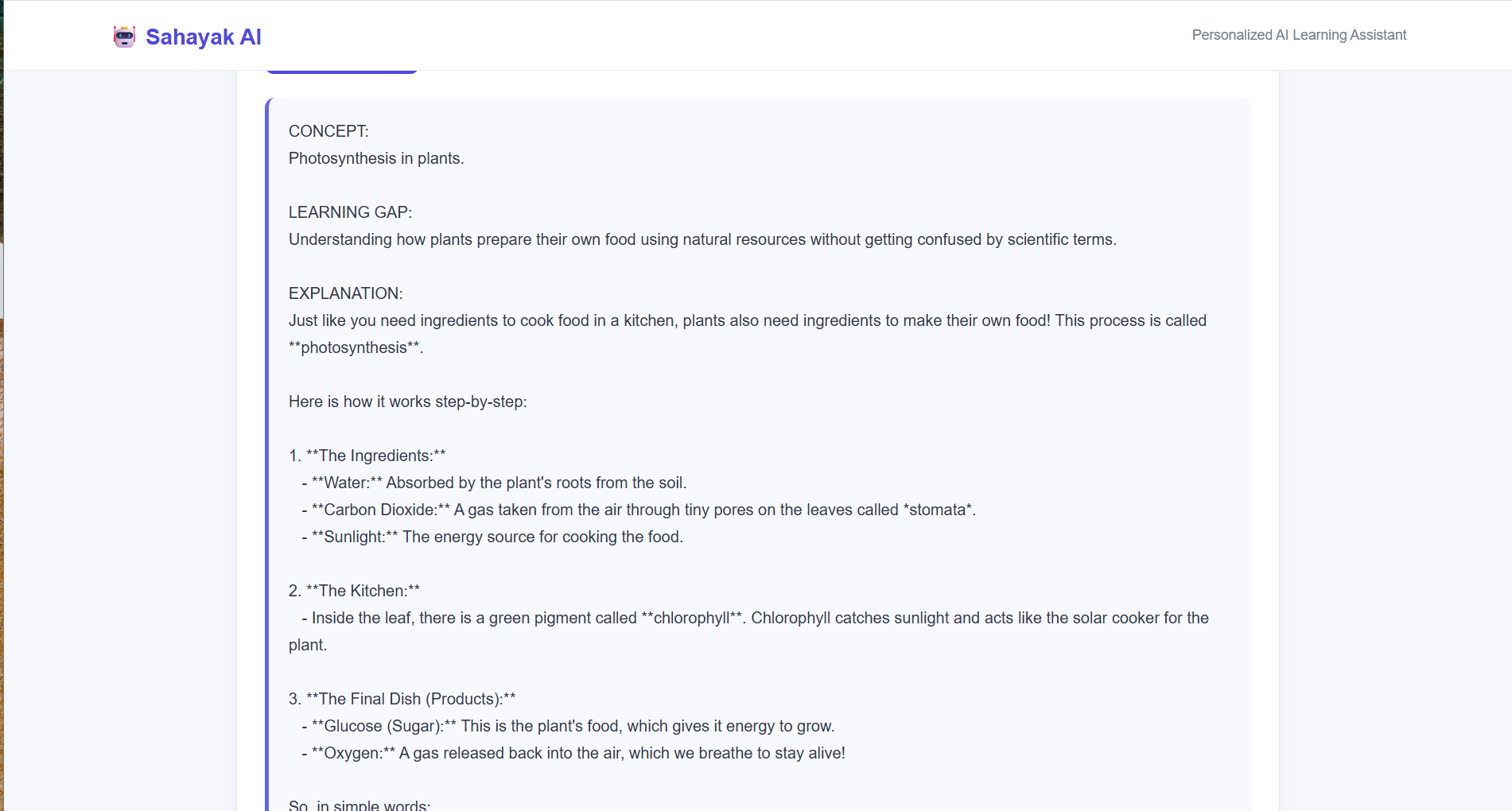
AI Response
Inspiration
Many students struggle to understand difficult academic concepts and may not always have access to personalized academic support. We wanted to build something that could act as a learning companion—something students could approach naturally whenever they were confused.
This inspired us to create Sahayak AI, an AI-powered educational assistant focused on making learning simpler, more accessible, and student-friendly.
What it does
Sahayak AI allows students to ask academic questions and receive AI-generated explanations in a simple and understandable way. Instead of relying only on static educational content, students can interact with the system and ask questions naturally.
The goal is to help students move from confusion to understanding.
How we built it
Sahayak AI was developed as a web application with a frontend for the student interface and a backend responsible for communicating with the AI service.
We integrated Google's Gemini API to provide generative AI capabilities and deployed the application using Render. GitHub was used for source-code management and version control.
Challenges we ran into
One of the major challenges was connecting the frontend, backend, and AI API reliably. We also had to debug API responses, handle environment variables securely, and make sure the deployed version behaved correctly.
Deployment introduced additional challenges because the application needed its API credentials and configuration to be correctly managed in the production environment without exposing sensitive information.
Accomplishments that we're proud of
We are proud of turning Sahayak AI from an idea into a fully working and deployed educational AI application.
We successfully integrated Google's Gemini API, built a clean student-focused interface, connected the frontend and backend, implemented interactive learning features, and deployed the application so it can be accessed through a live web URL.
We are especially proud of overcoming API, integration, debugging, and deployment challenges along the way. Most importantly, Sahayak AI is now a working product that students can actually use—not just a concept.
What we learned
Building Sahayak AI helped us learn how to integrate generative AI into a real web application, work with APIs, manage environment variables, debug frontend-backend communication, and deploy an AI-powered application.
More importantly, we learned that building an educational AI tool is not only about generating answers—it is about presenting information in a way that students can actually understand.
What's next for Sahayak AI
We plan to expand Sahayak AI with:
- Multilingual support for Indian regional languages
- Voice-based interaction
- Image-based question solving
- Personalized learning paths
- More advanced quizzes and practice
- Student progress analytics
- Teacher and institution dashboards ## Conclusion
Sahayak AI is our attempt to use generative AI to make learning more accessible, interactive, and understandable.
Sahayak AI — Turning Confusion Into Understanding.


Log in or sign up for Devpost to join the conversation.