-
-
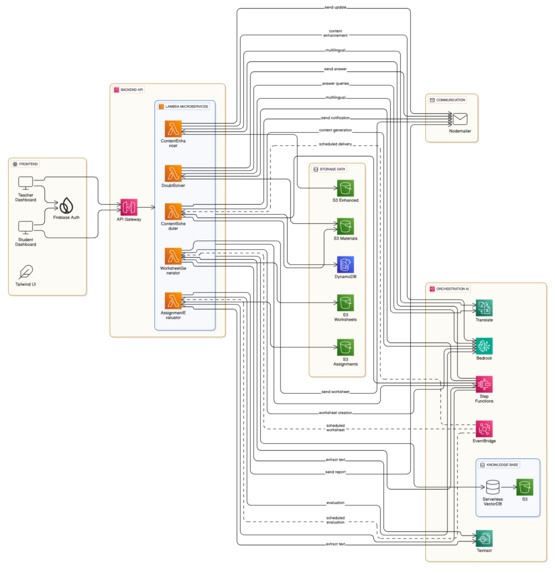
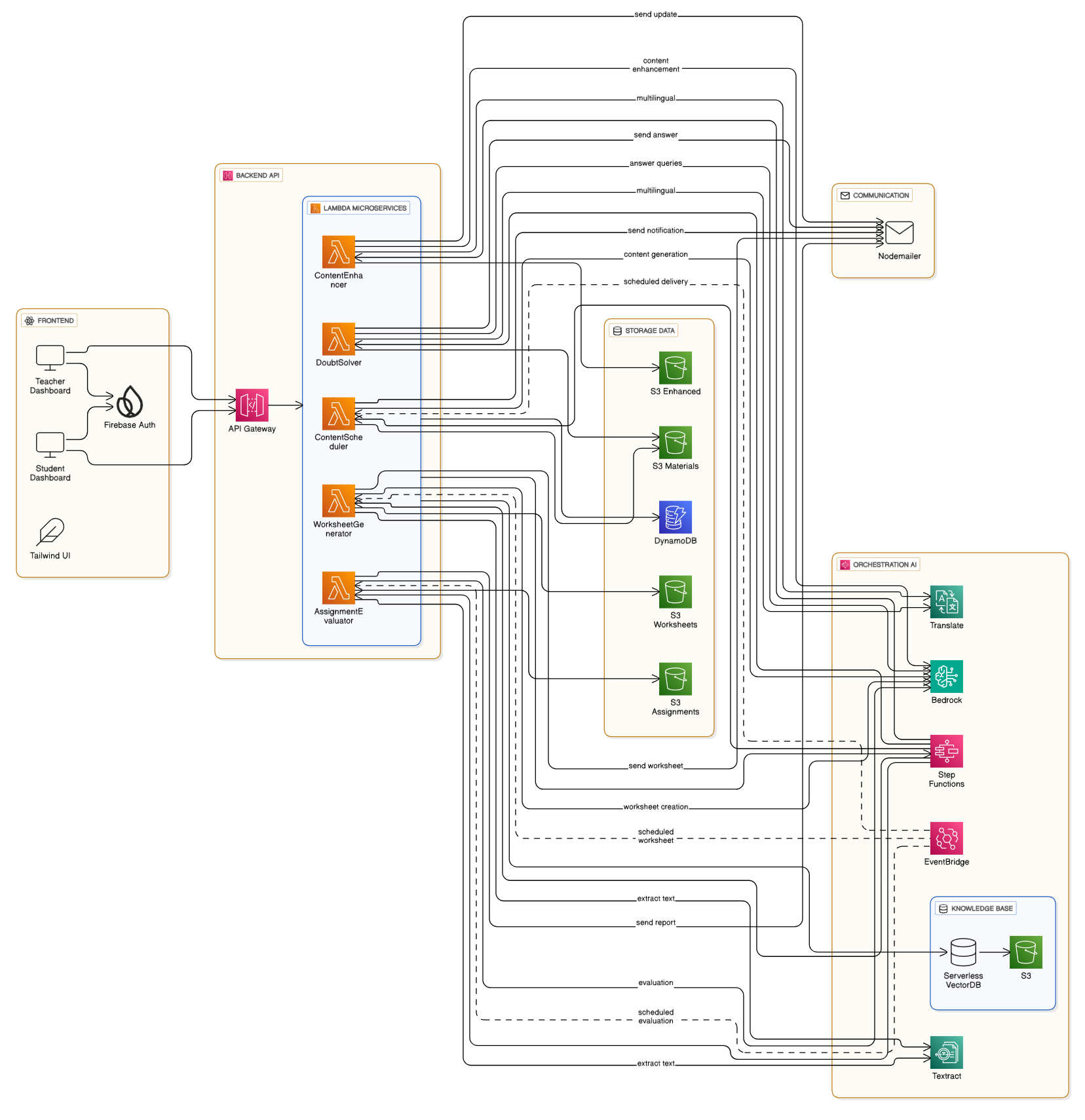
Sahayak Architecture Diagram
-
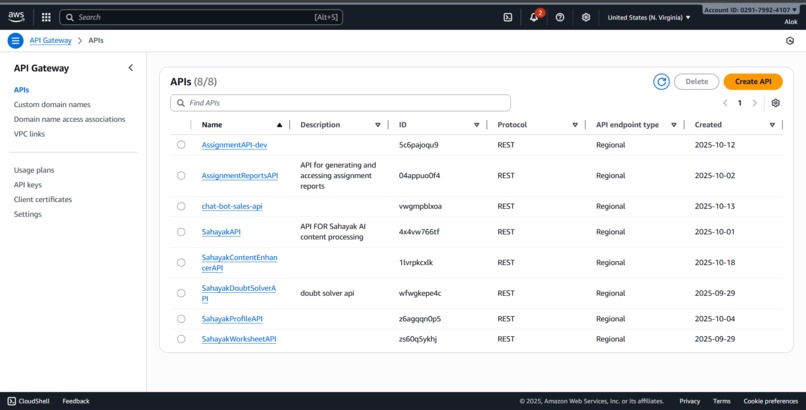
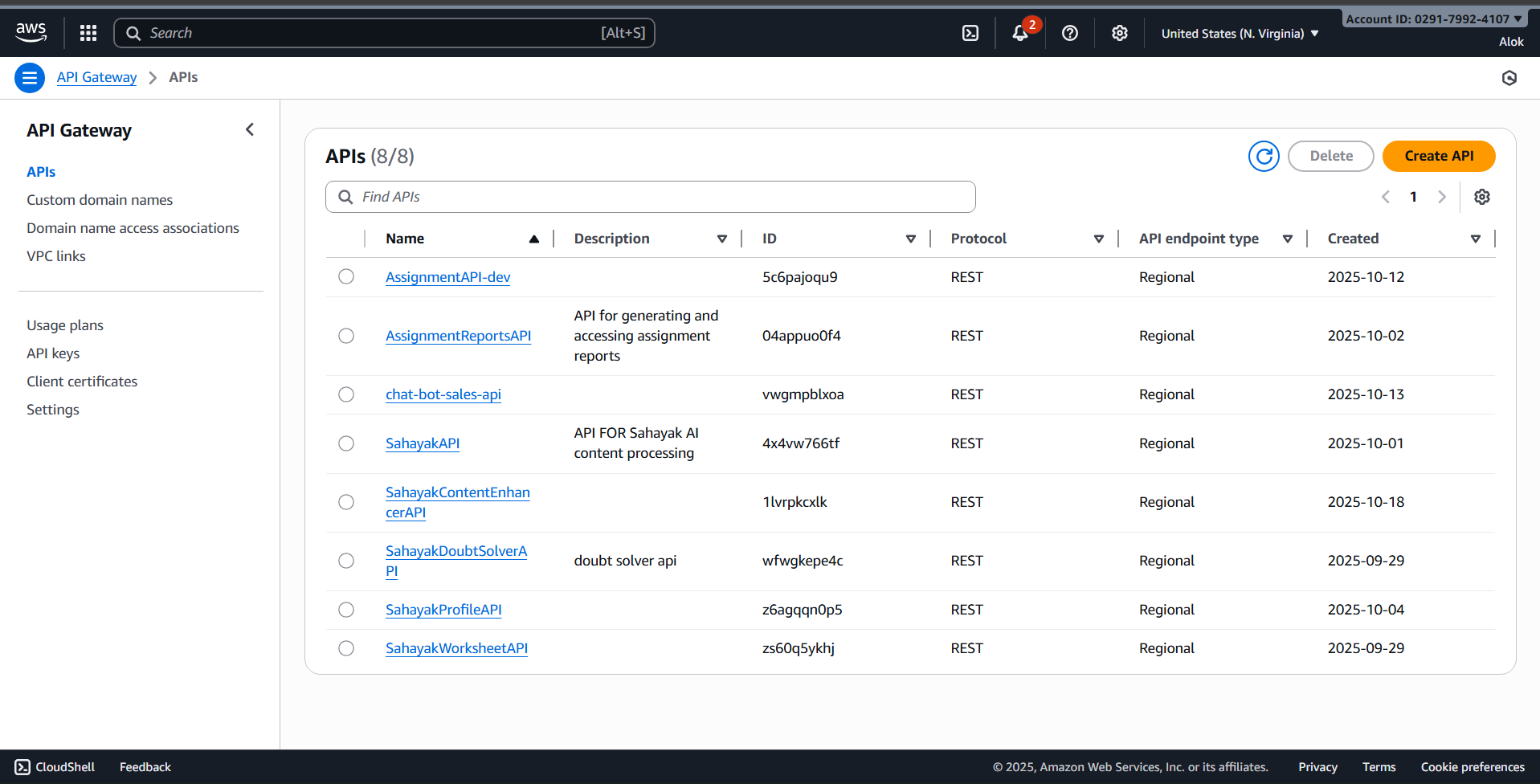
Sahayak Rest Apis
-
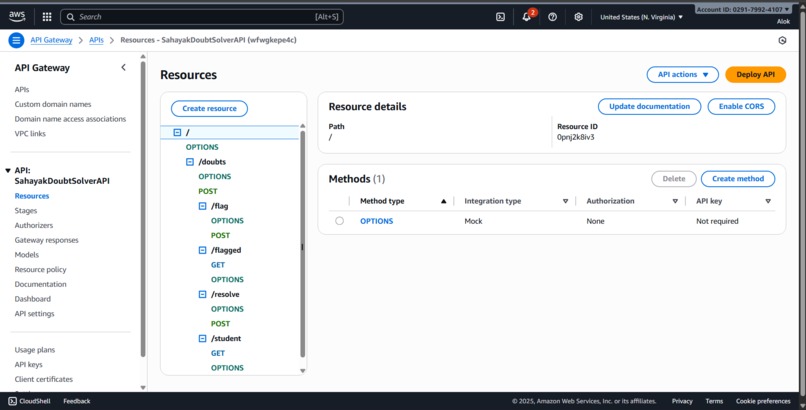
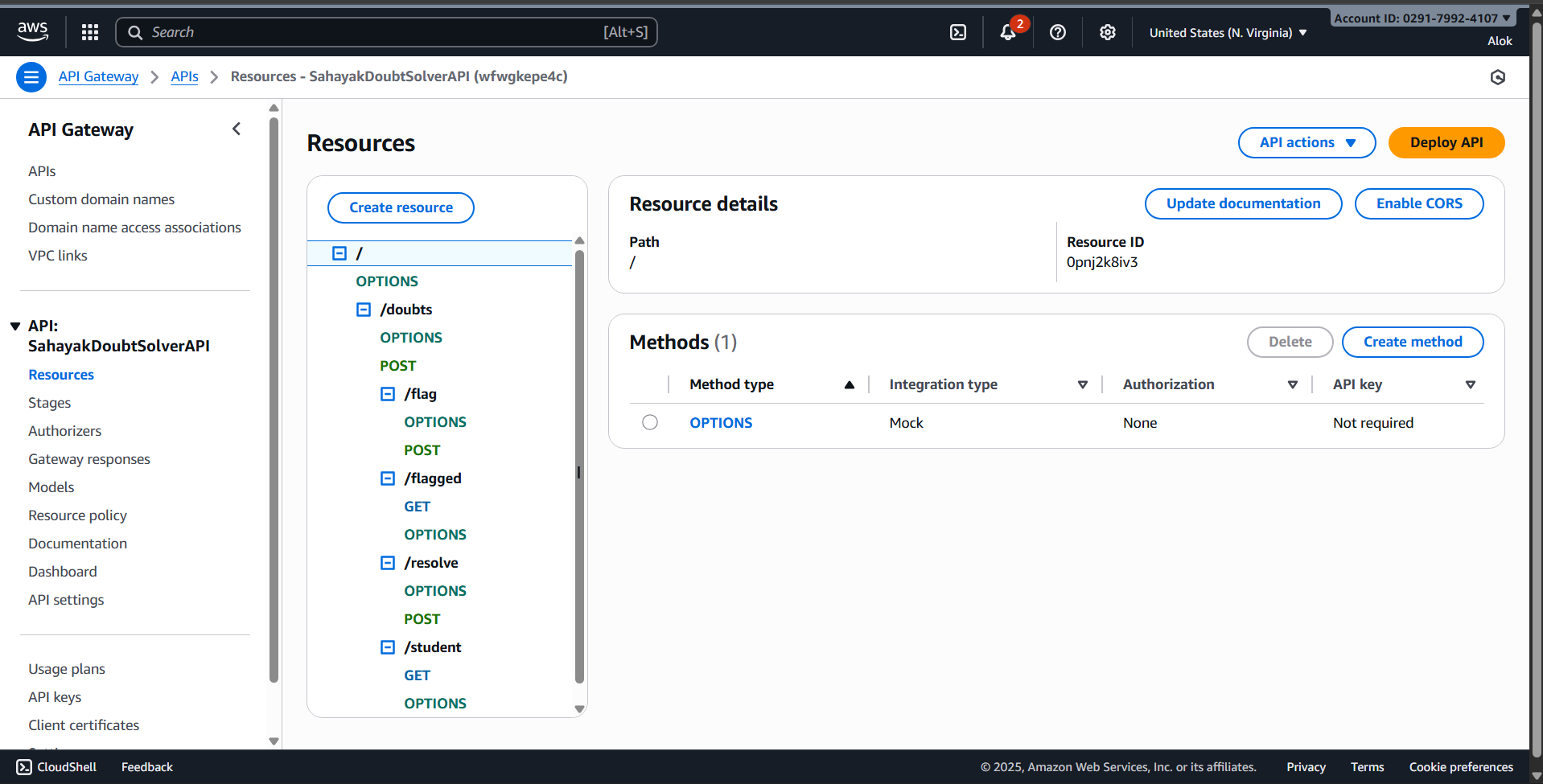
Sahayk API Resource Example
-
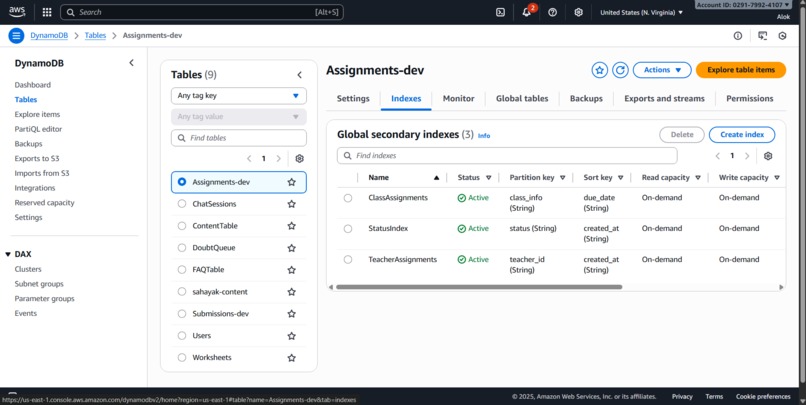
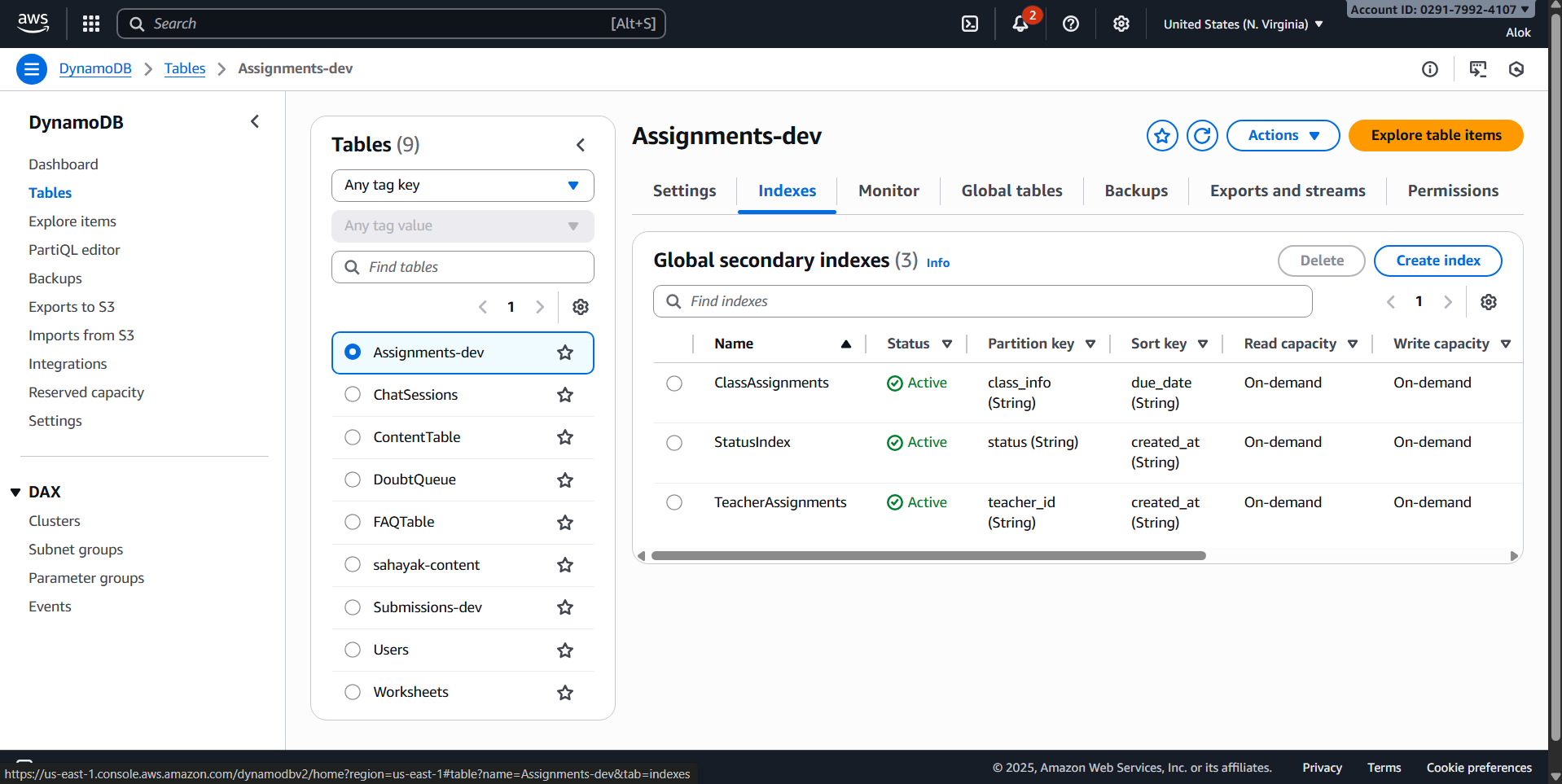
Sahayak Database Tables With Some Indexes
-
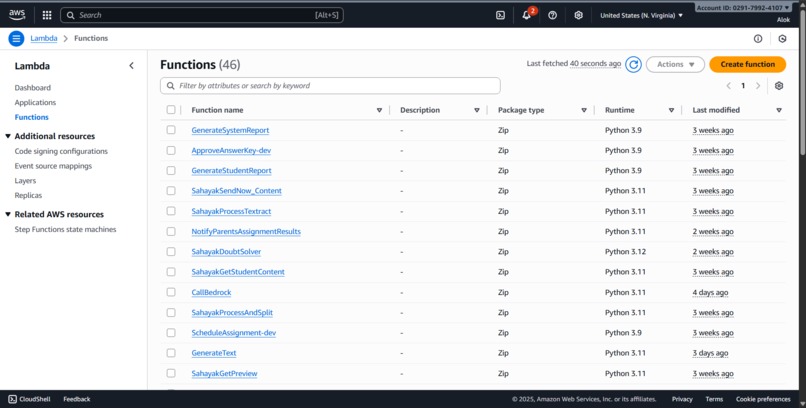
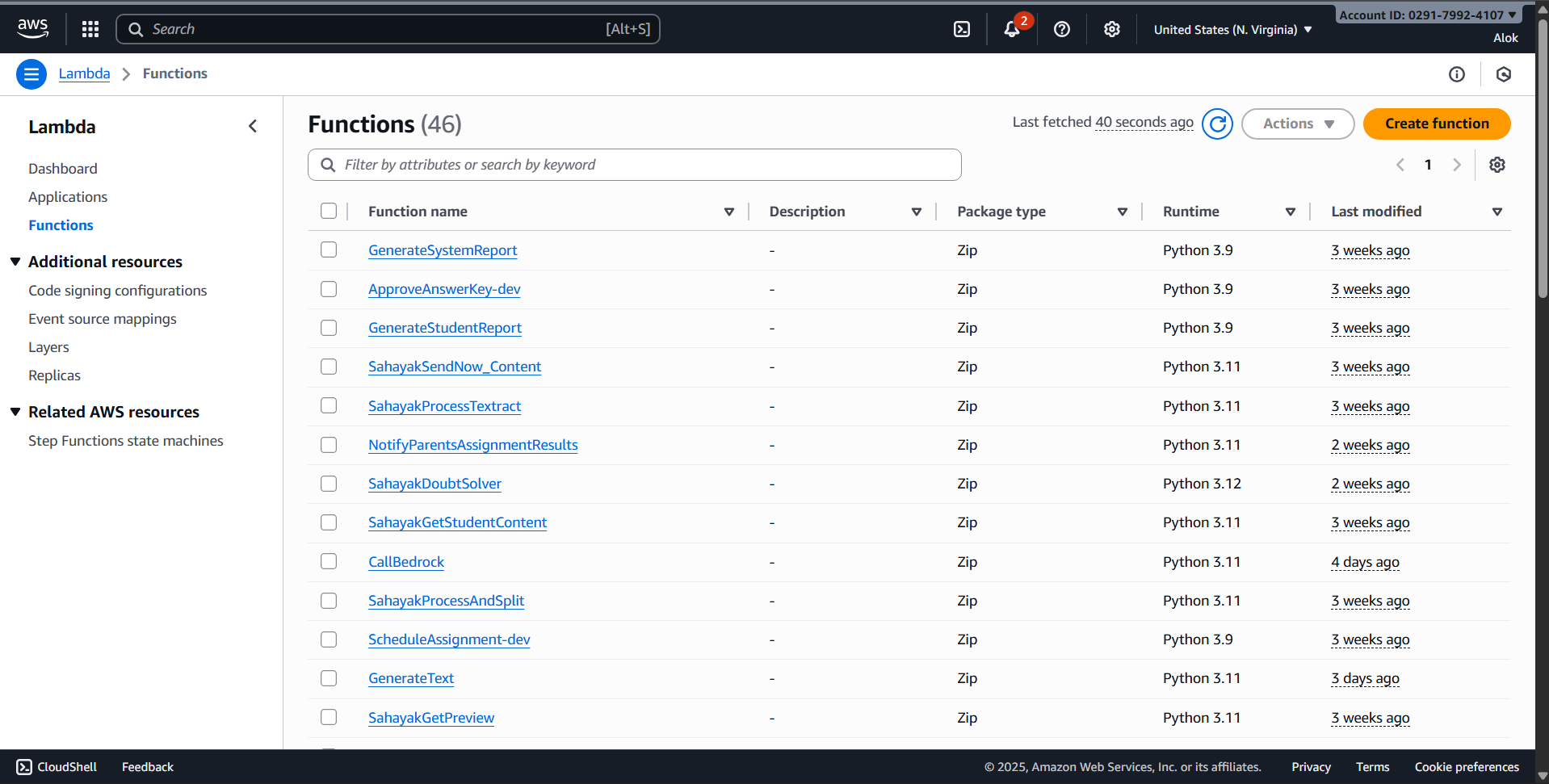
Sahayak Lambda Functions
-
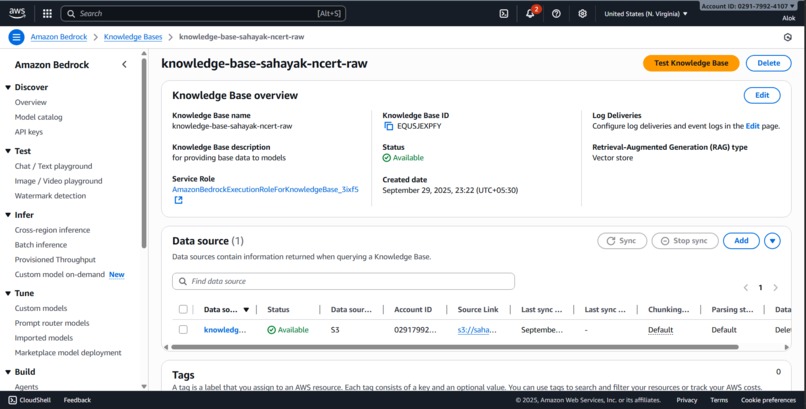
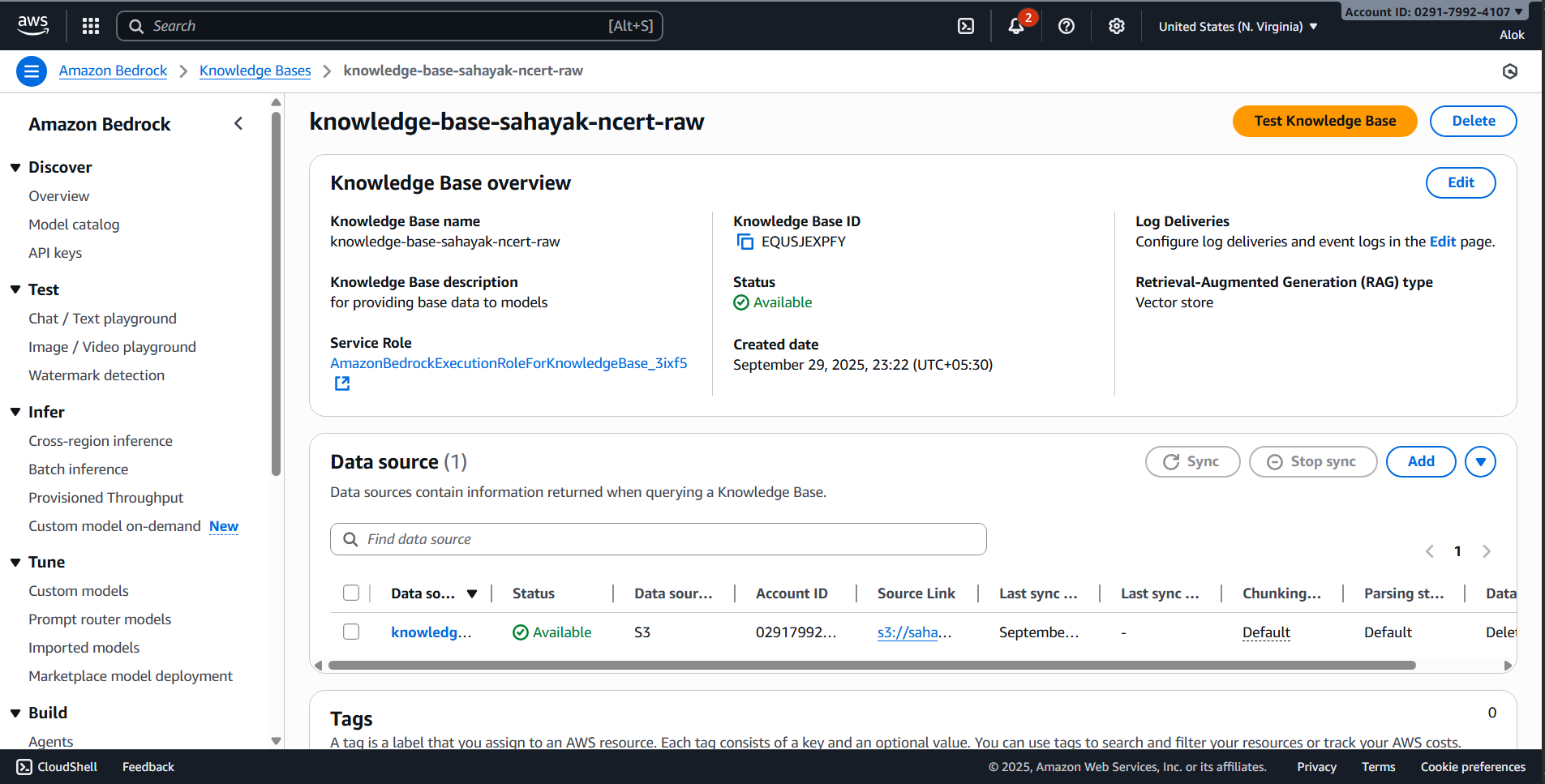
Sahayak Knowledge Base for Various Features
-
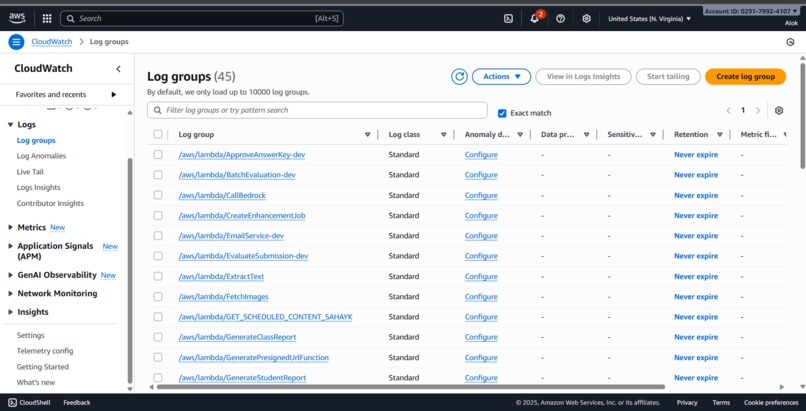
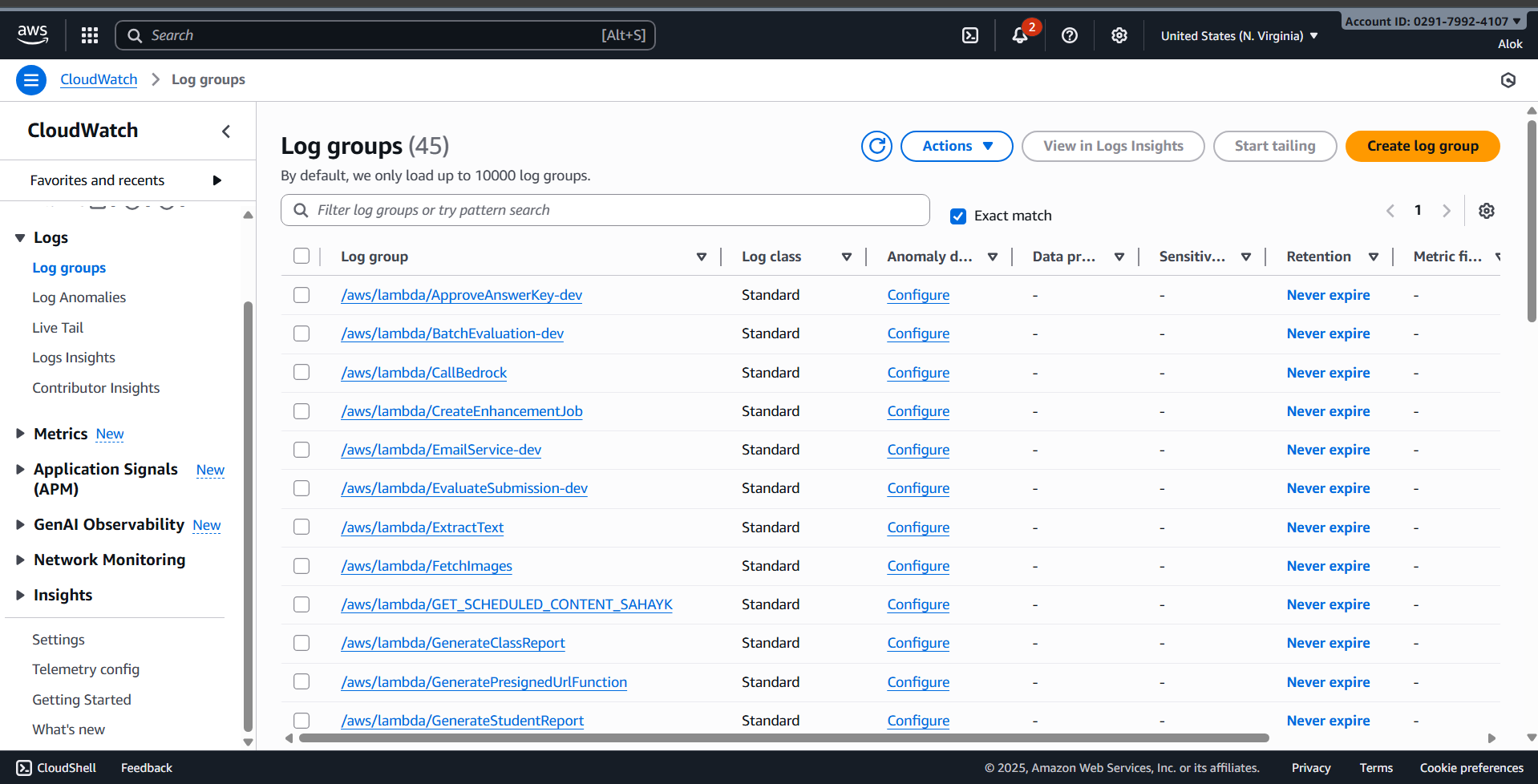
Sahayak CloudWatch Log Groups
-
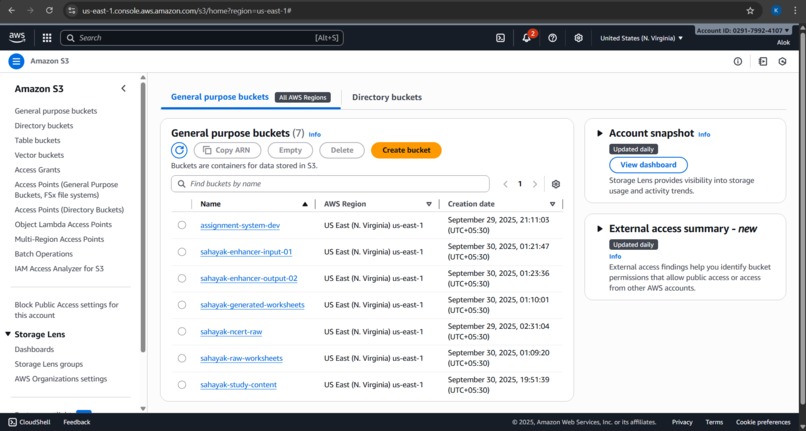
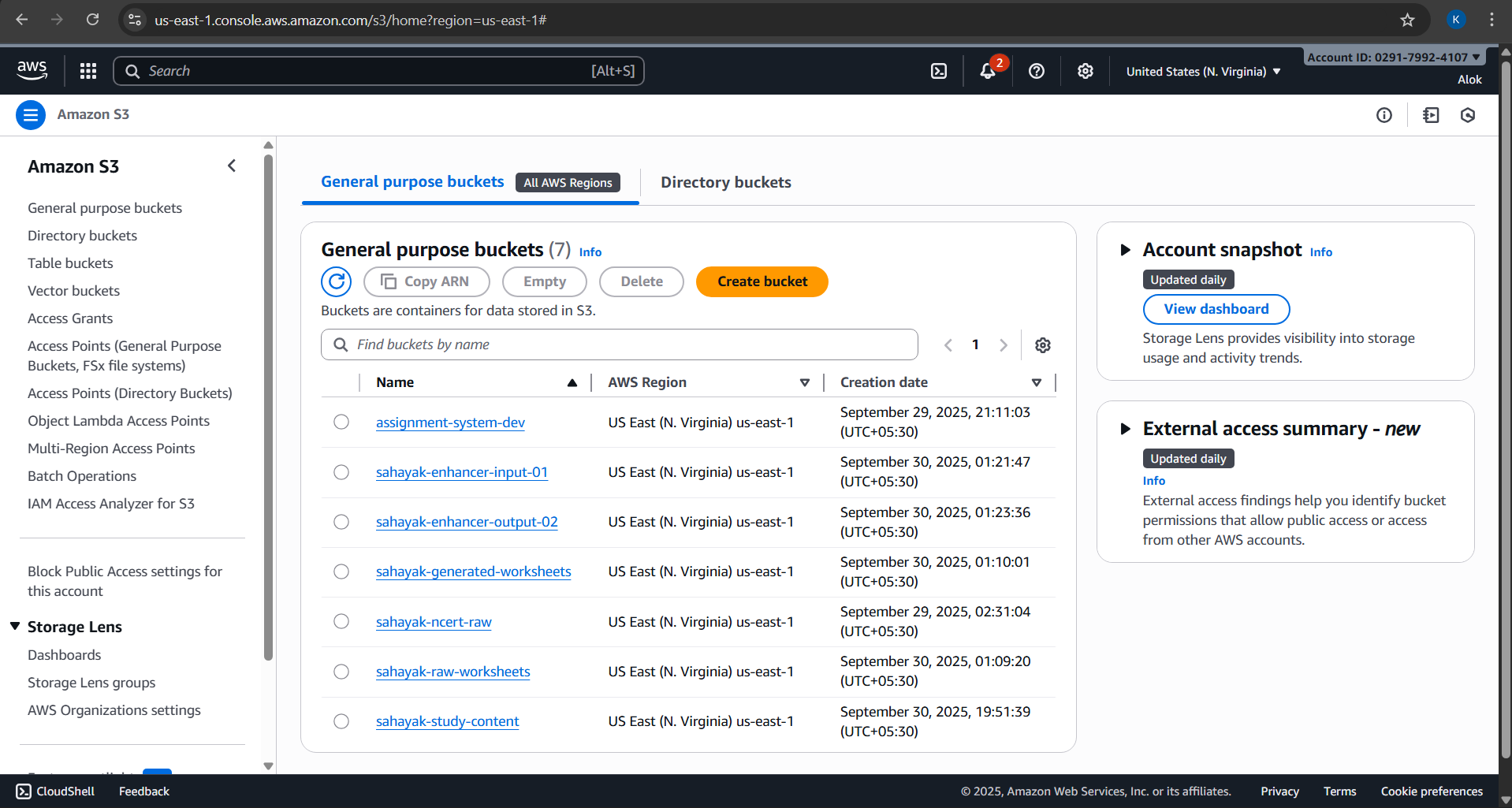
Sahayak Bucket Configration
-
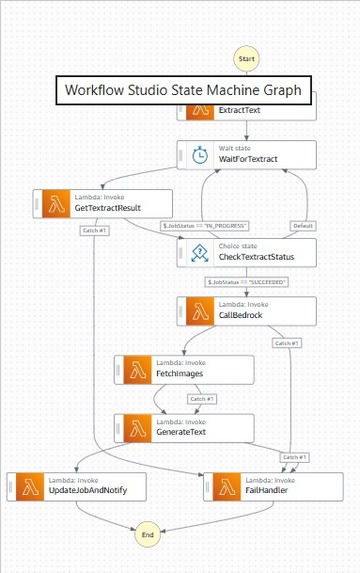
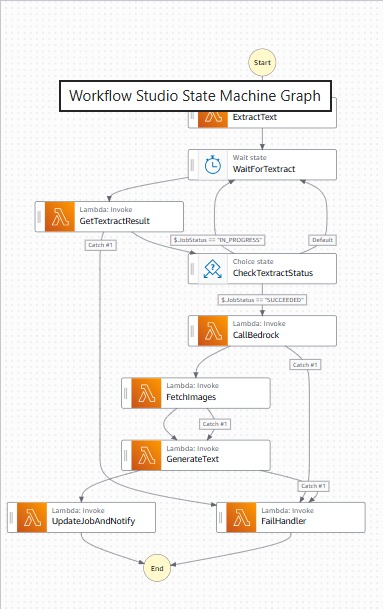
Sahayak Step Function Orchestration
-
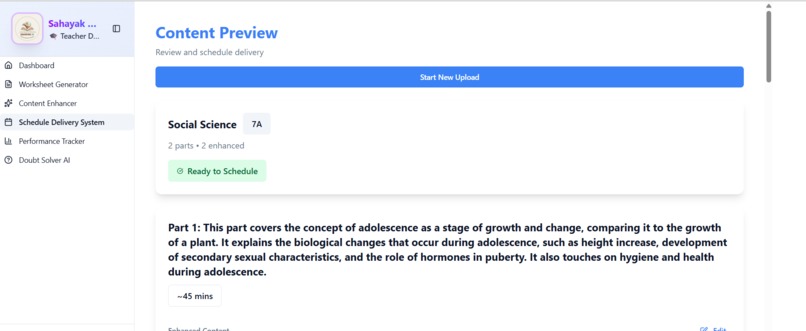
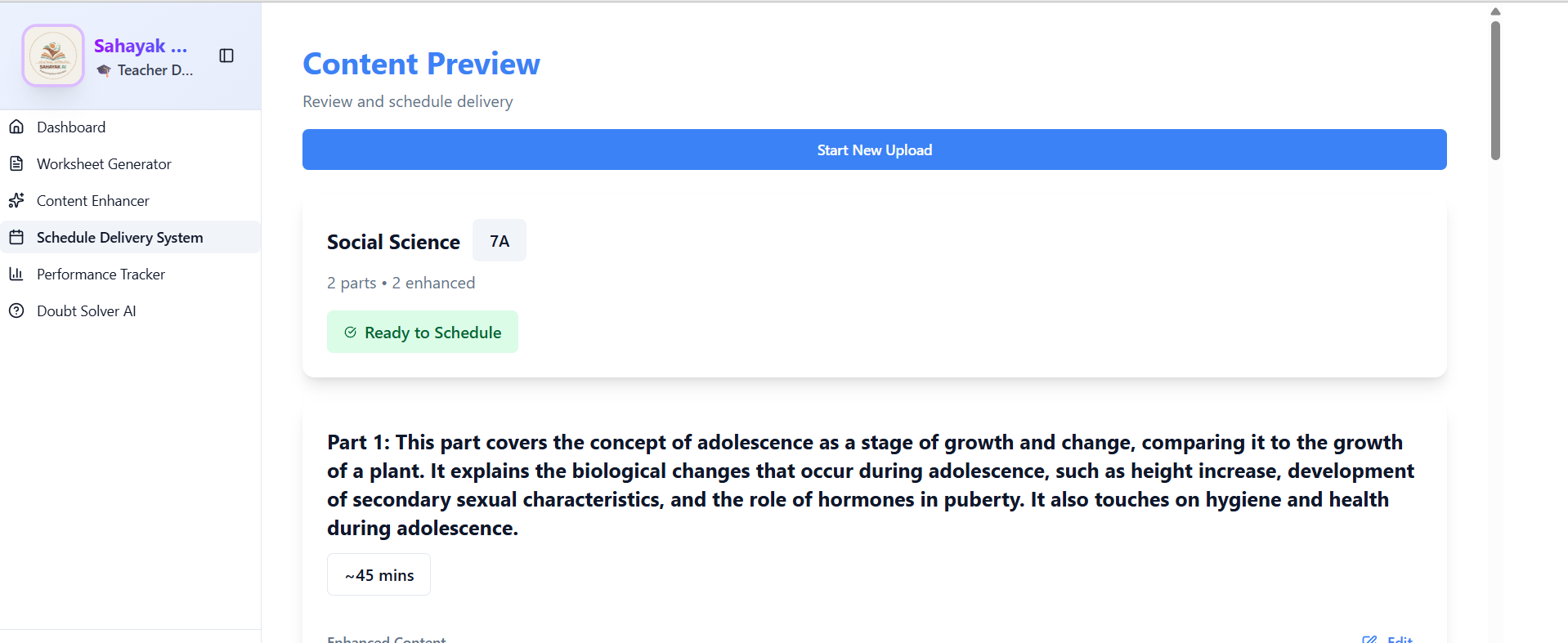
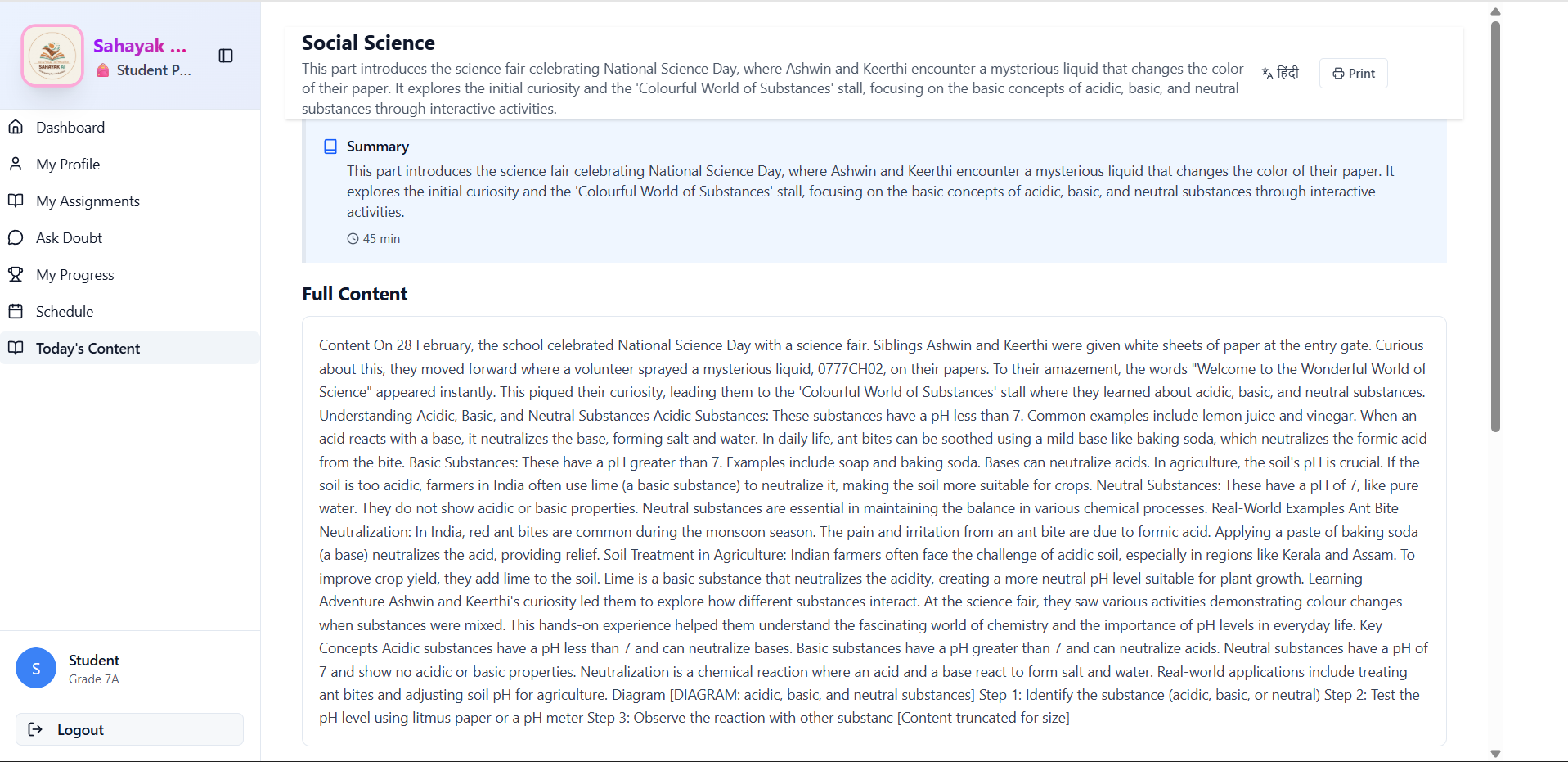
Sahayak Content preview
-
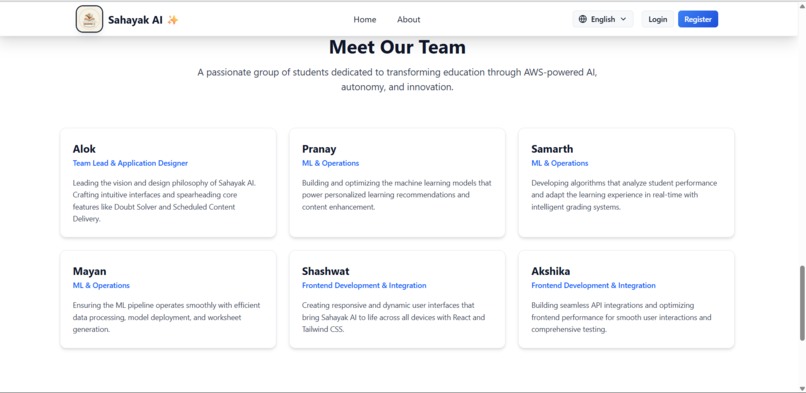
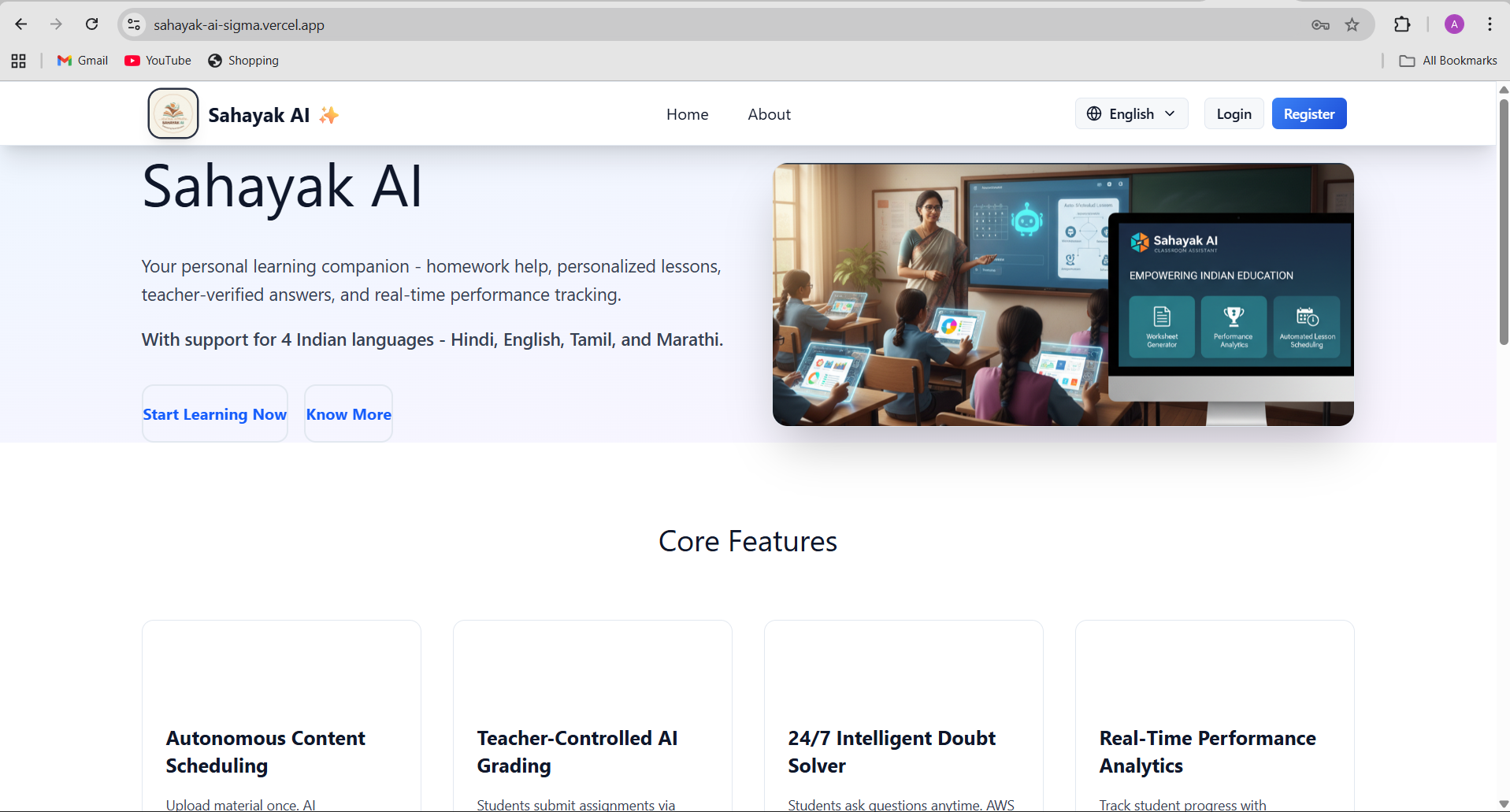
Sahayak About page
-
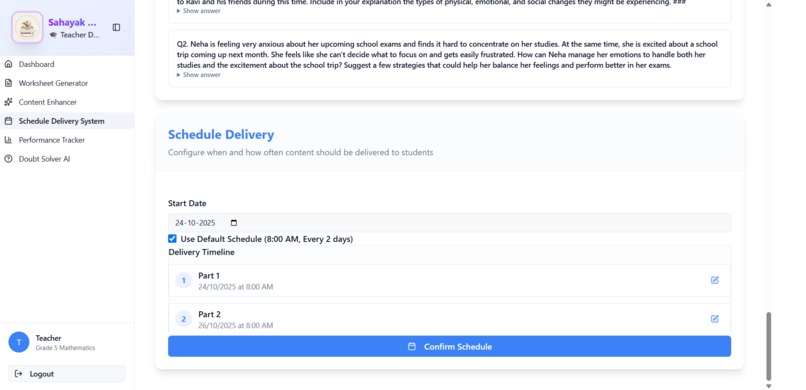
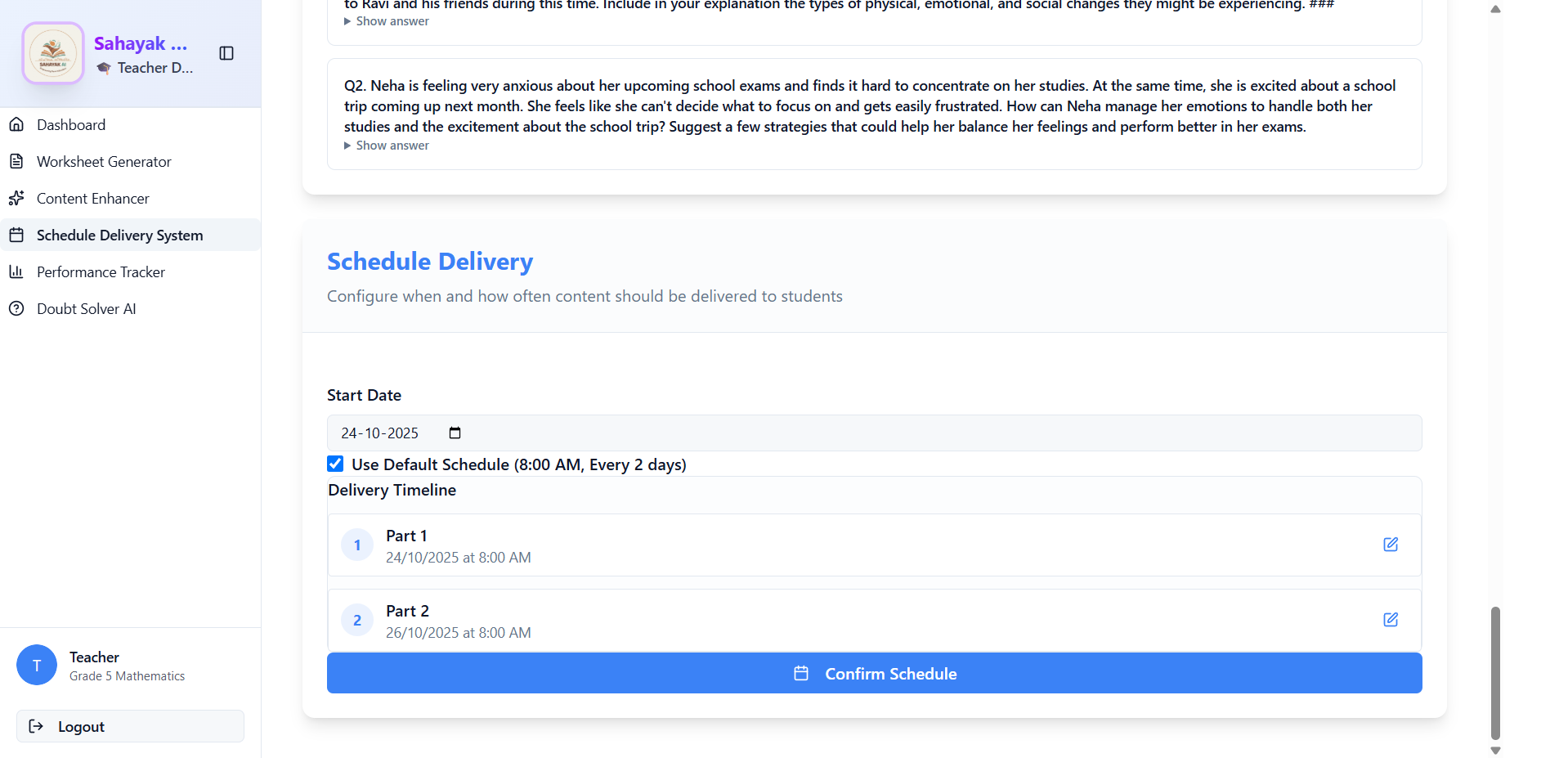
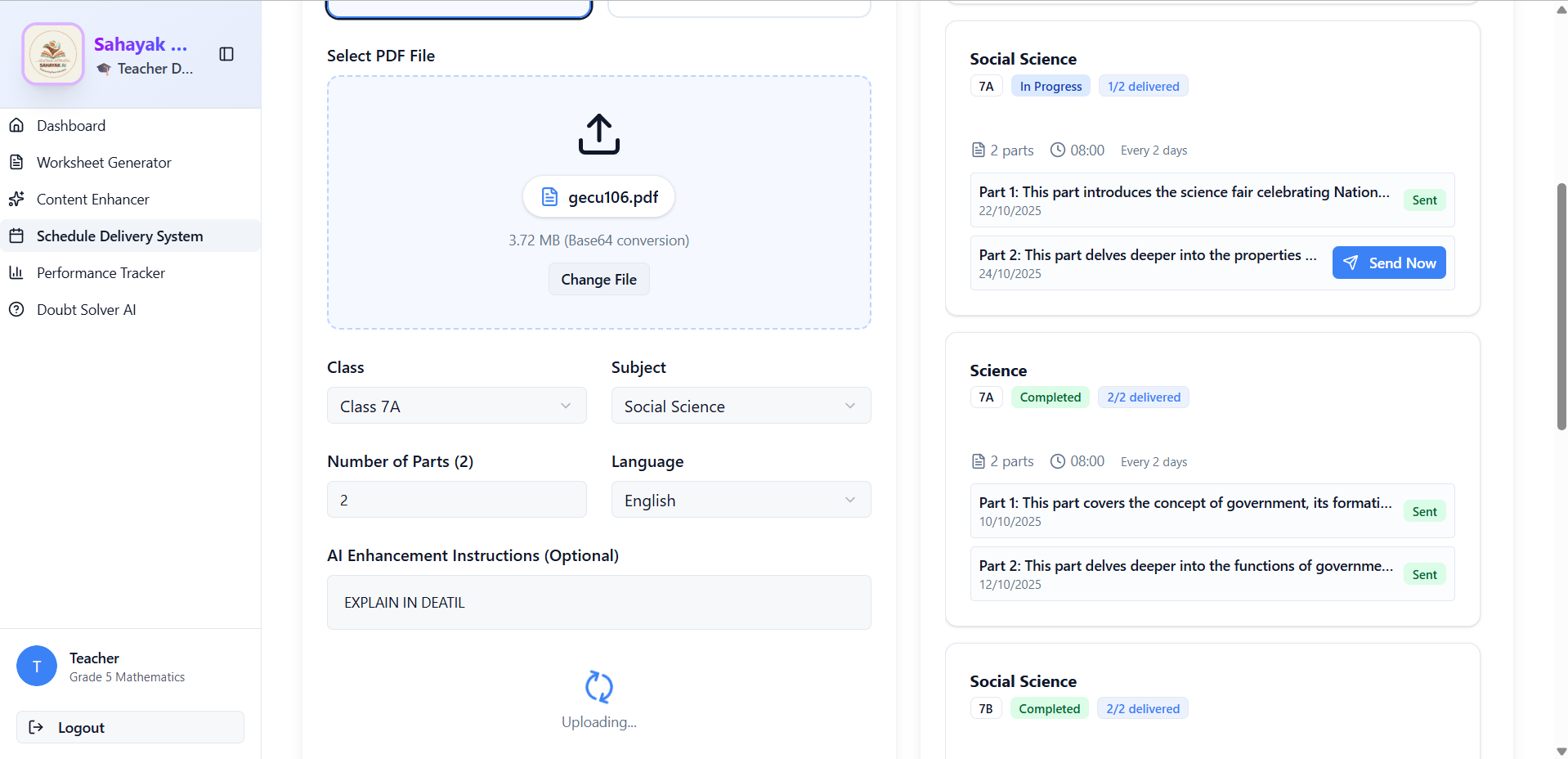
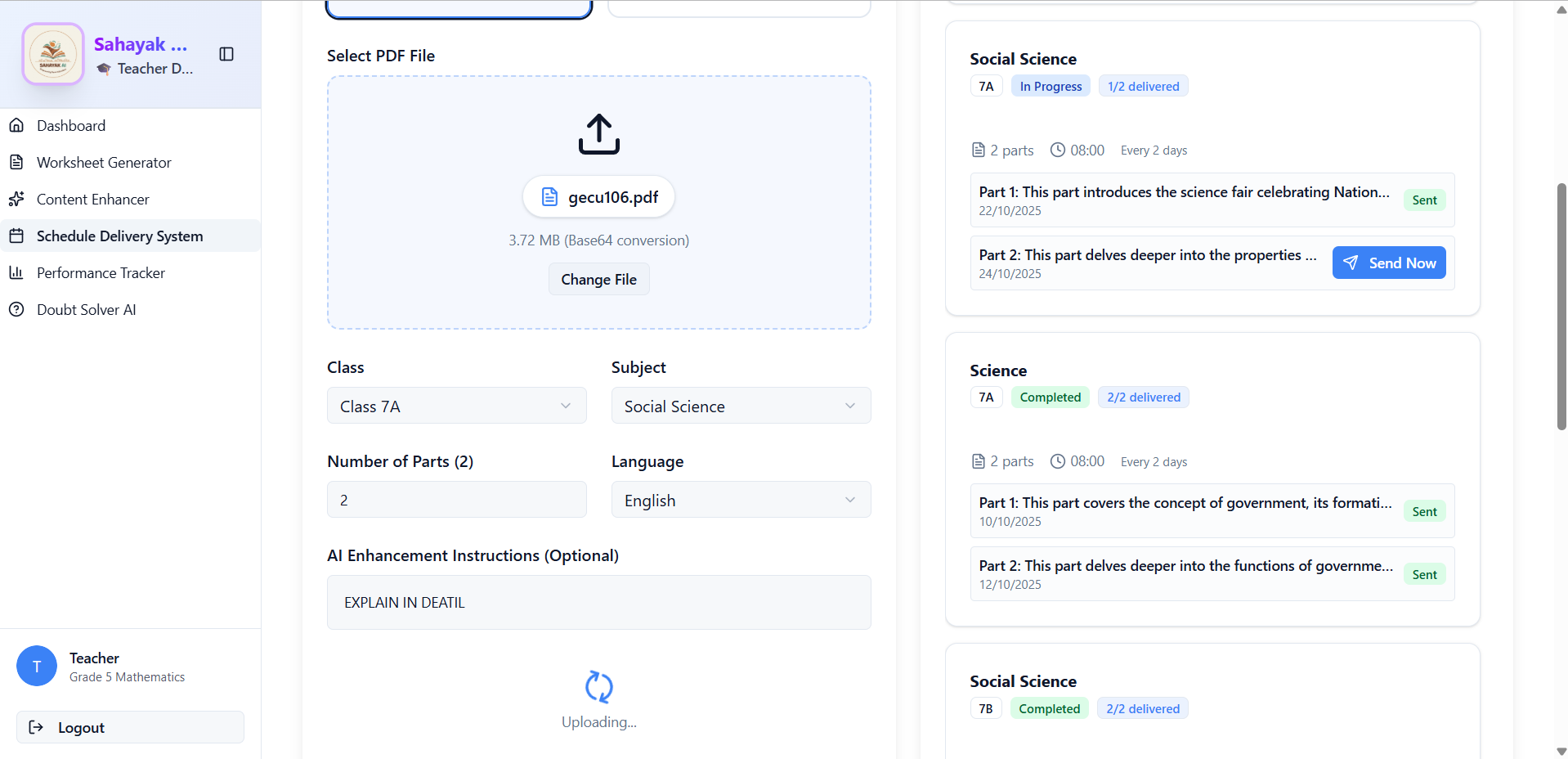
Schedule Content Delivery
-
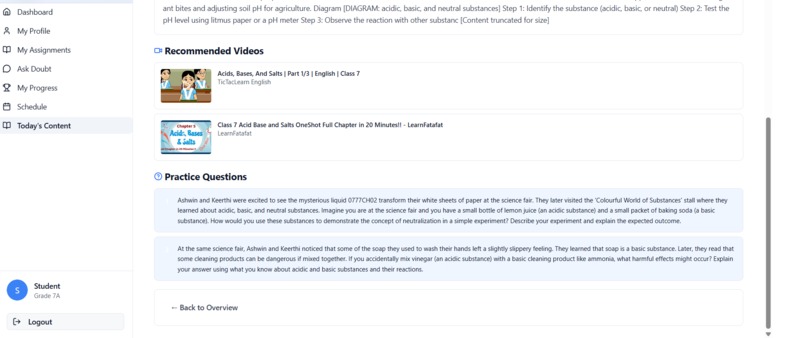
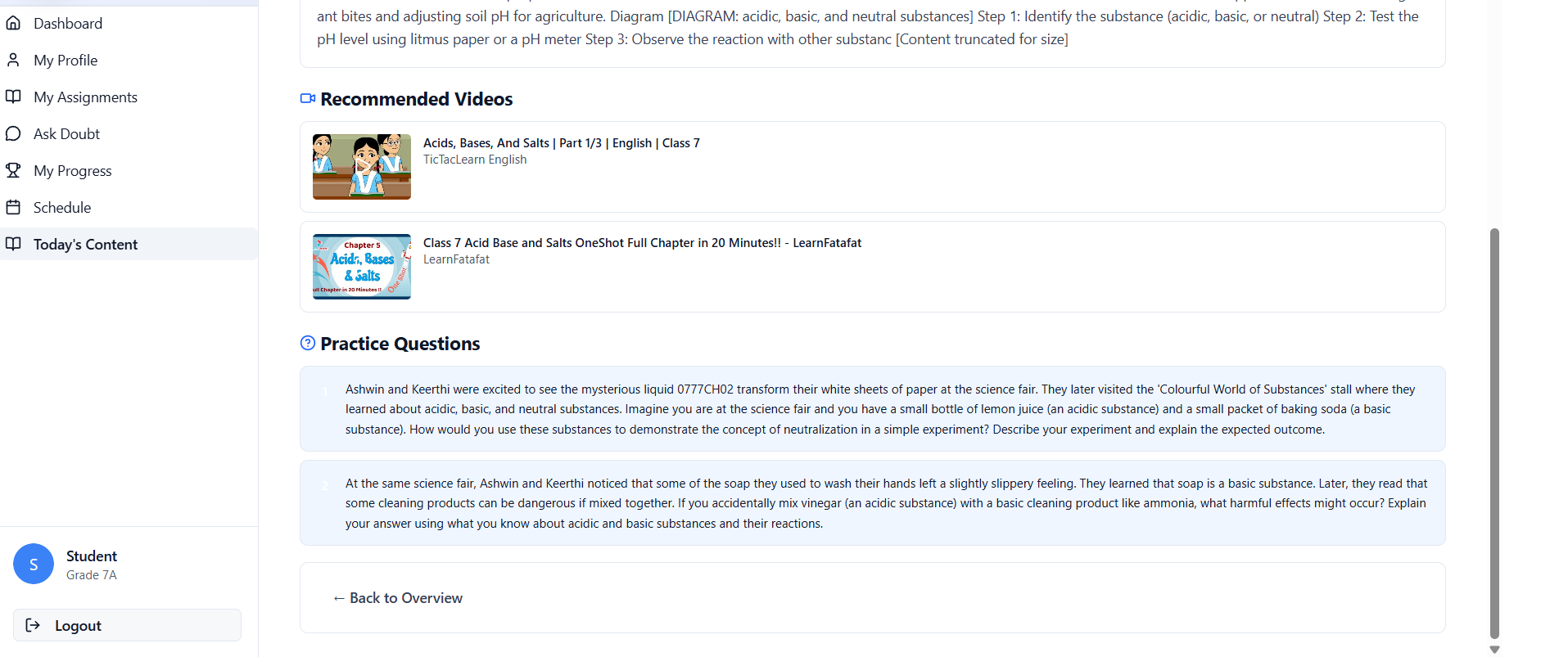
Schedule Content with Youtube Video in students Panel
-
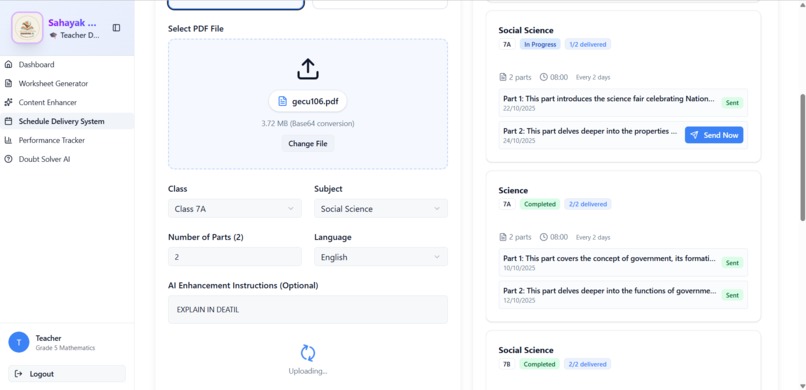
Content scheduling page
-
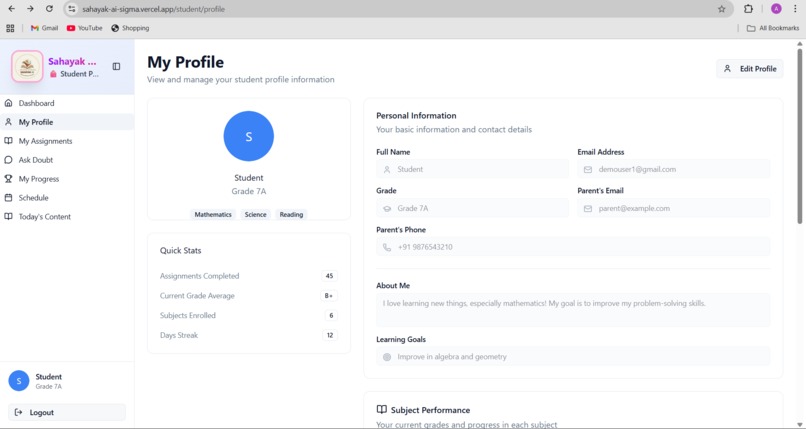
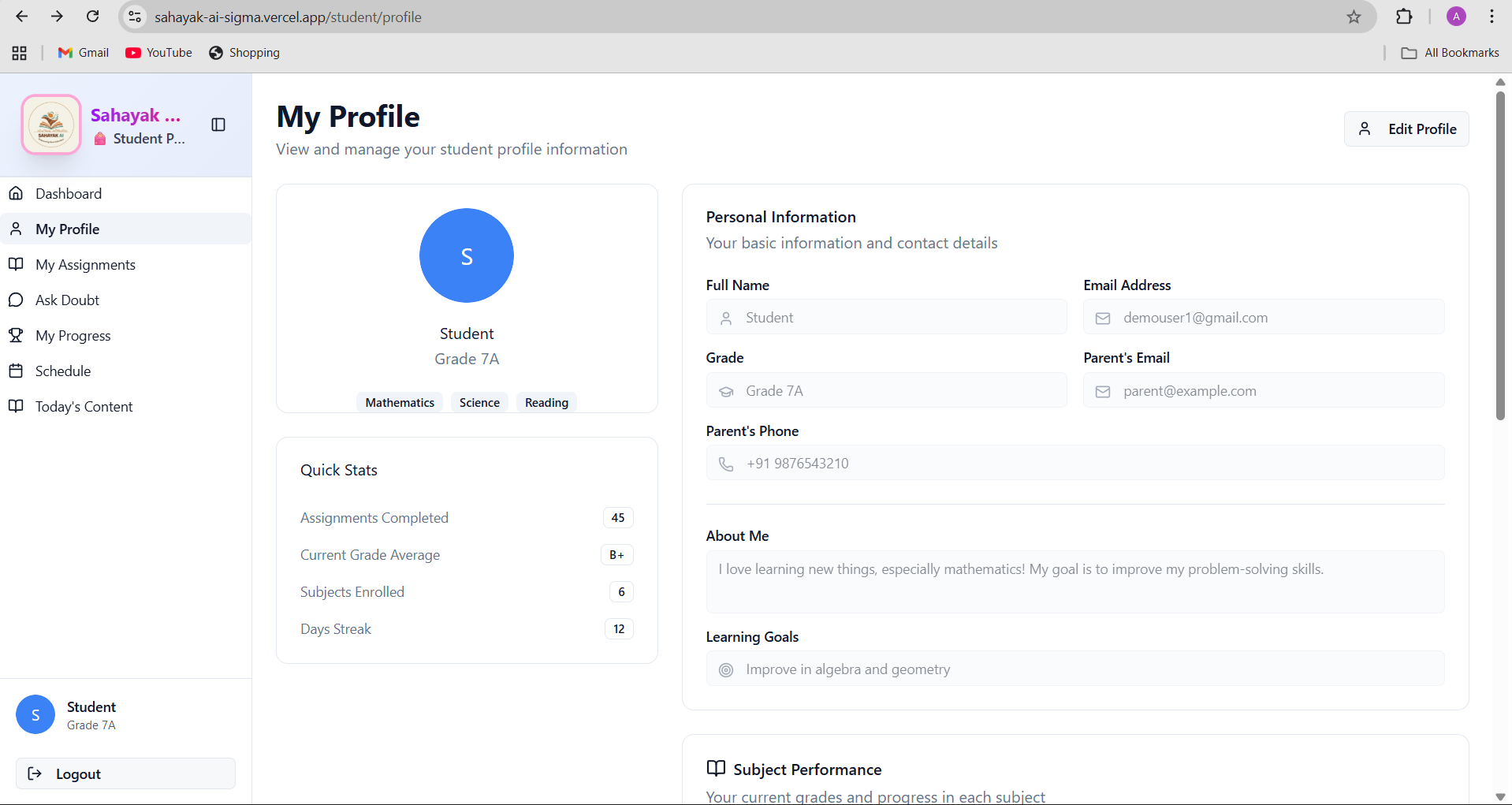
Profile page
-
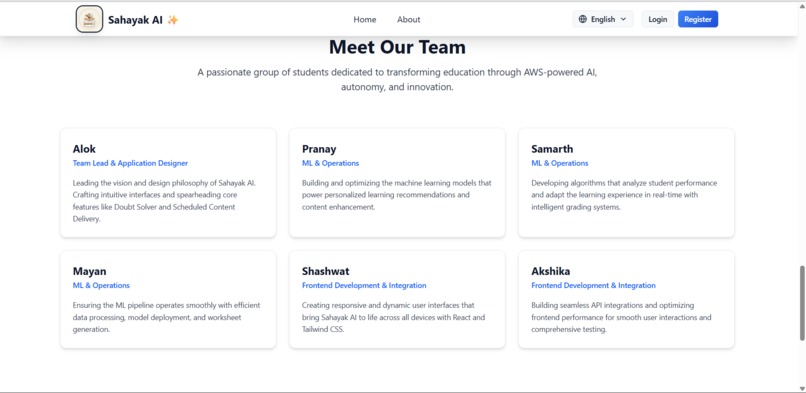
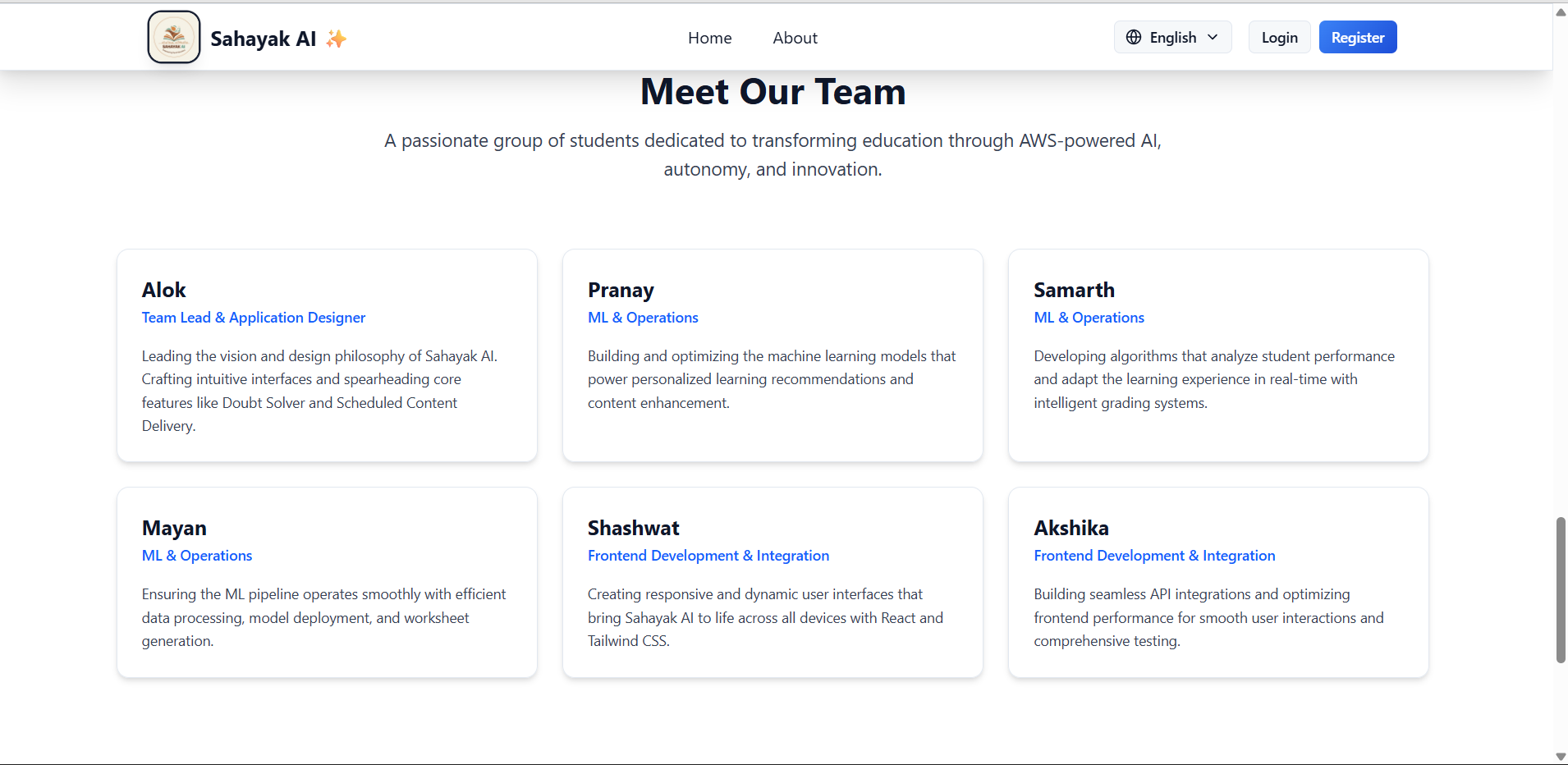
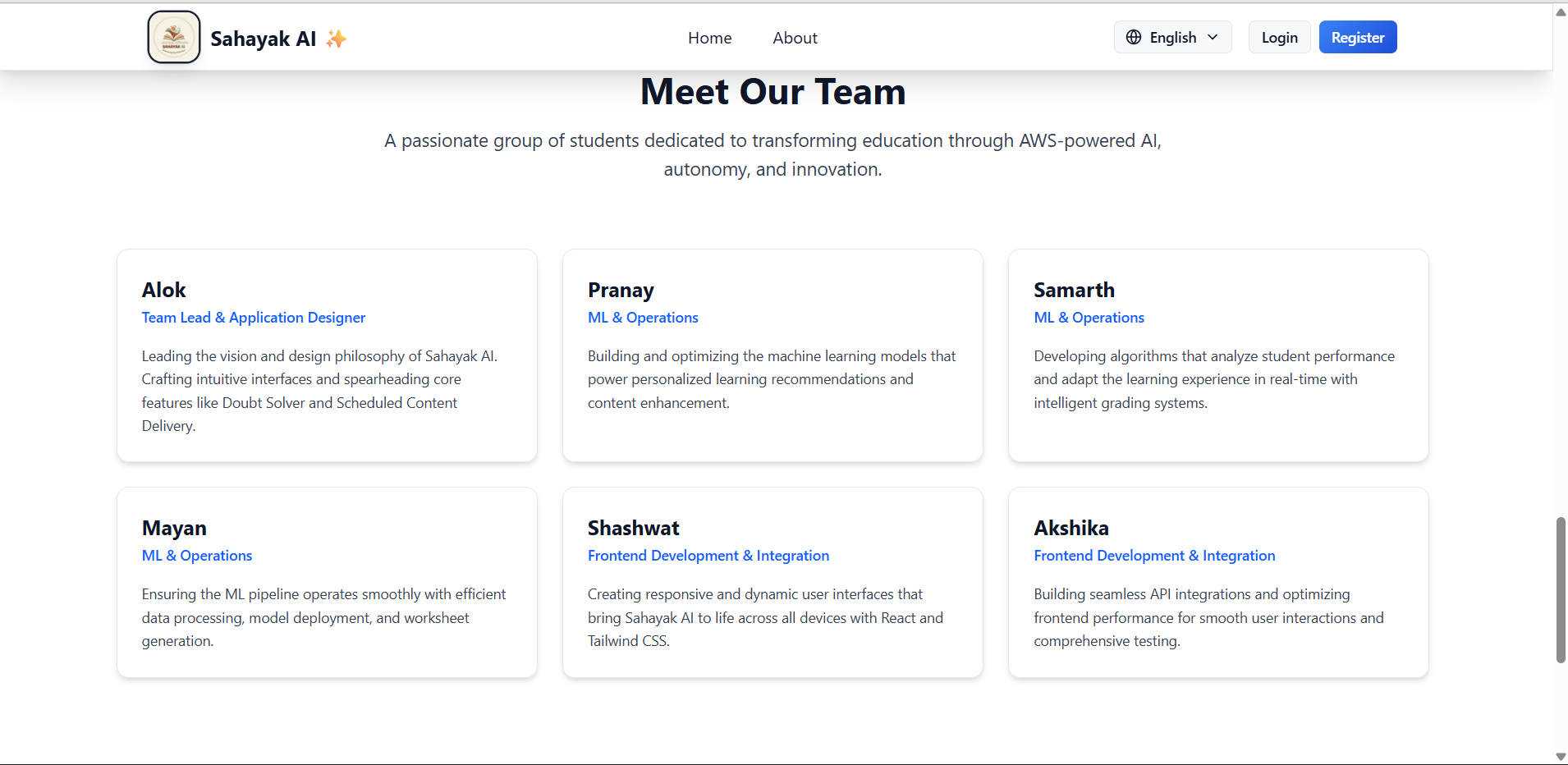
Sahayak Team
-
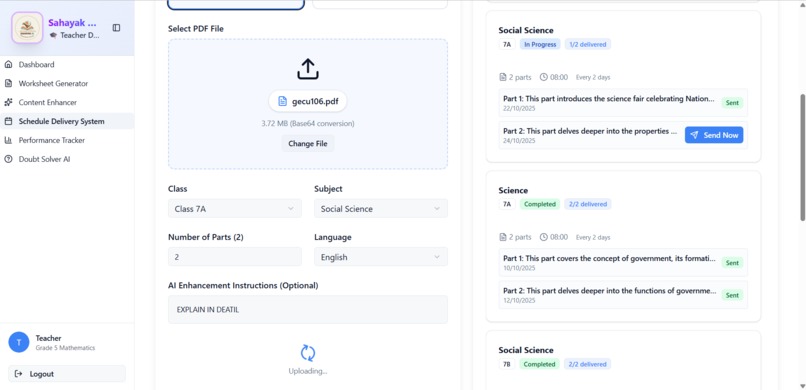
Content scheduler page
-
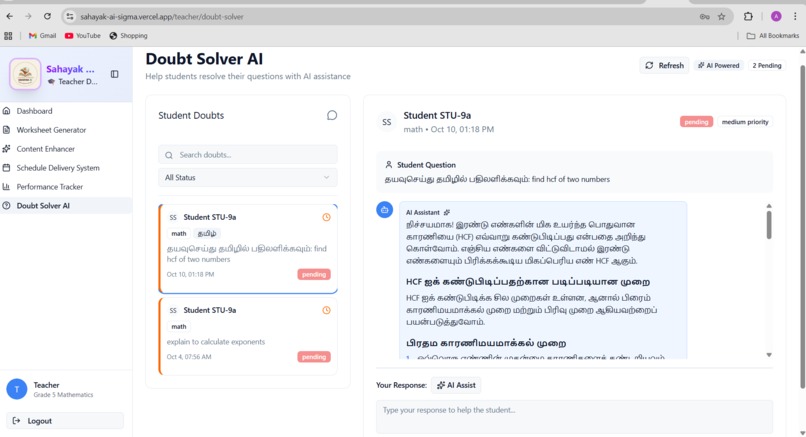
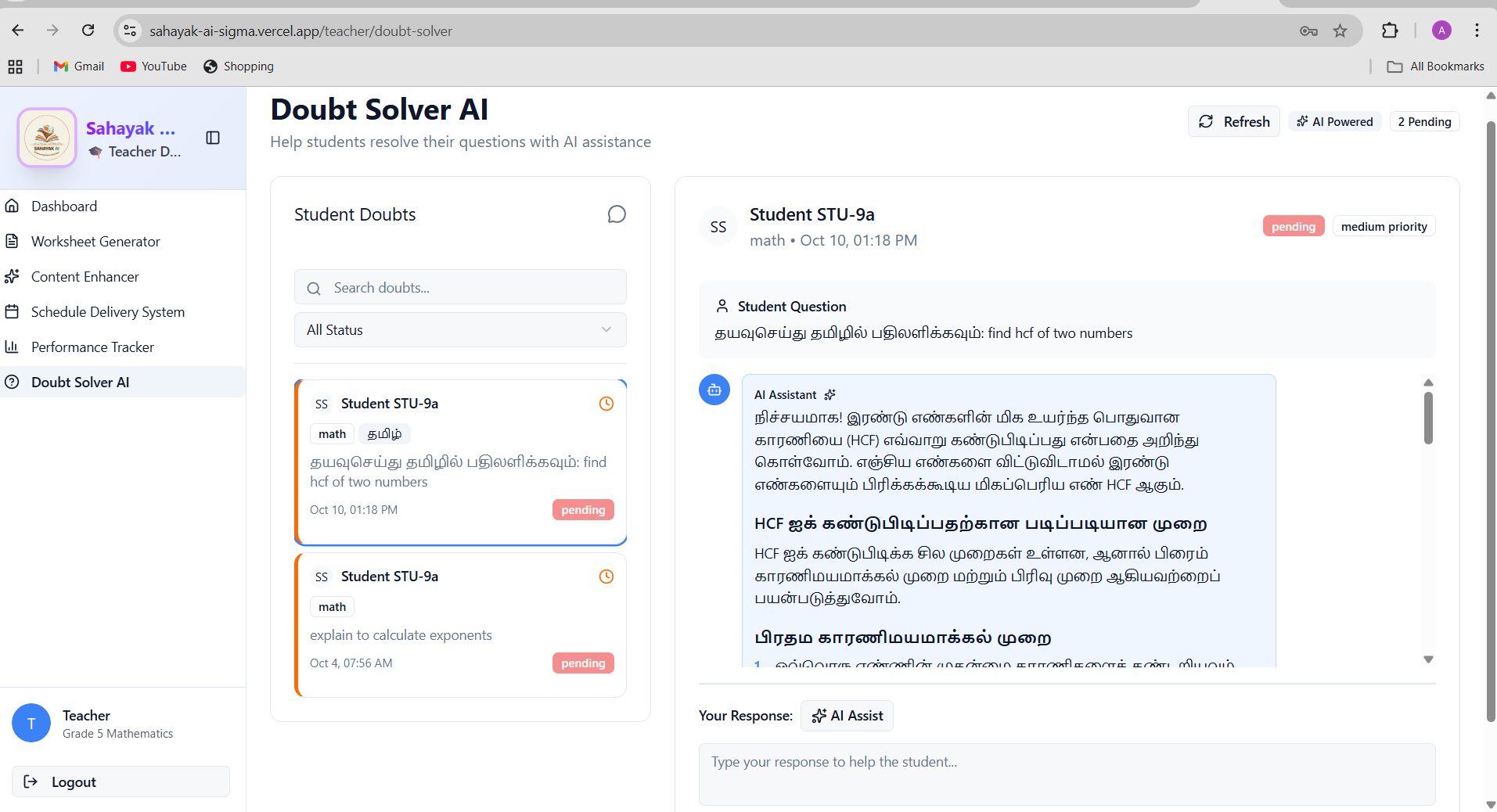
Flagged Doubts in Teacher Dashboard
-
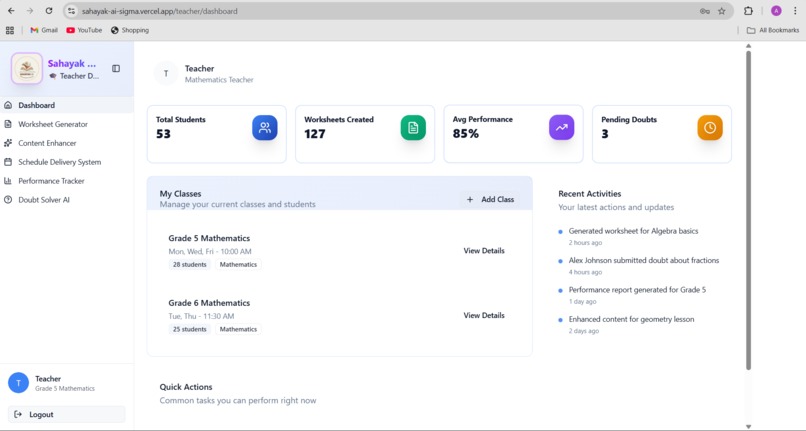
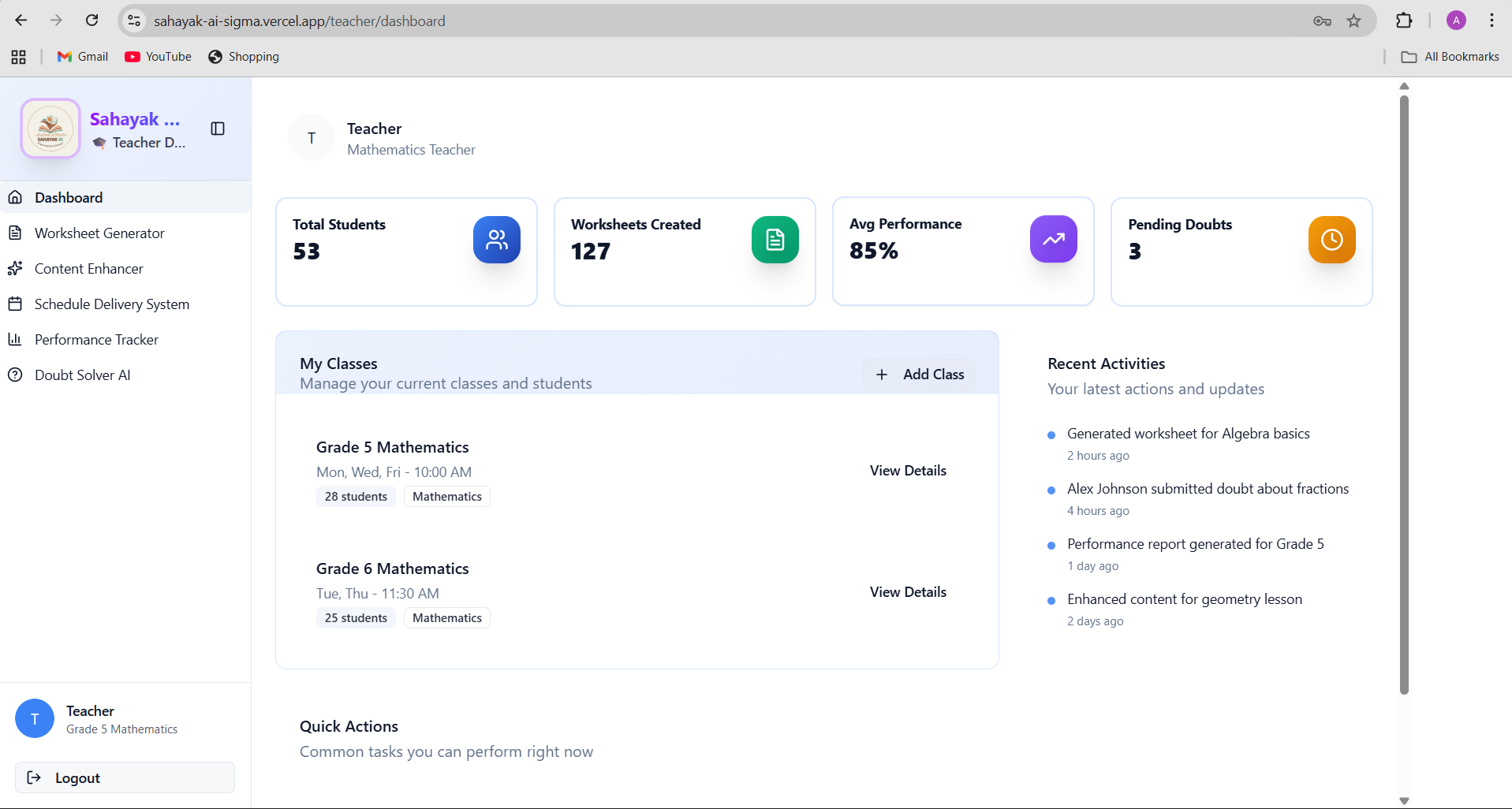
Sahayak Dashboard Page
-
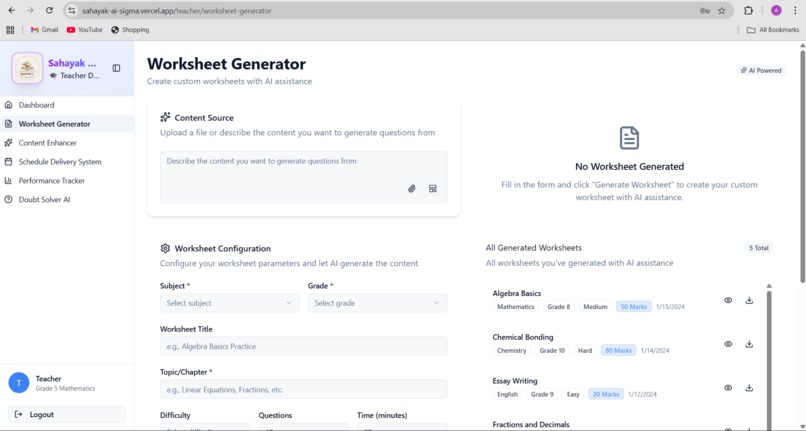
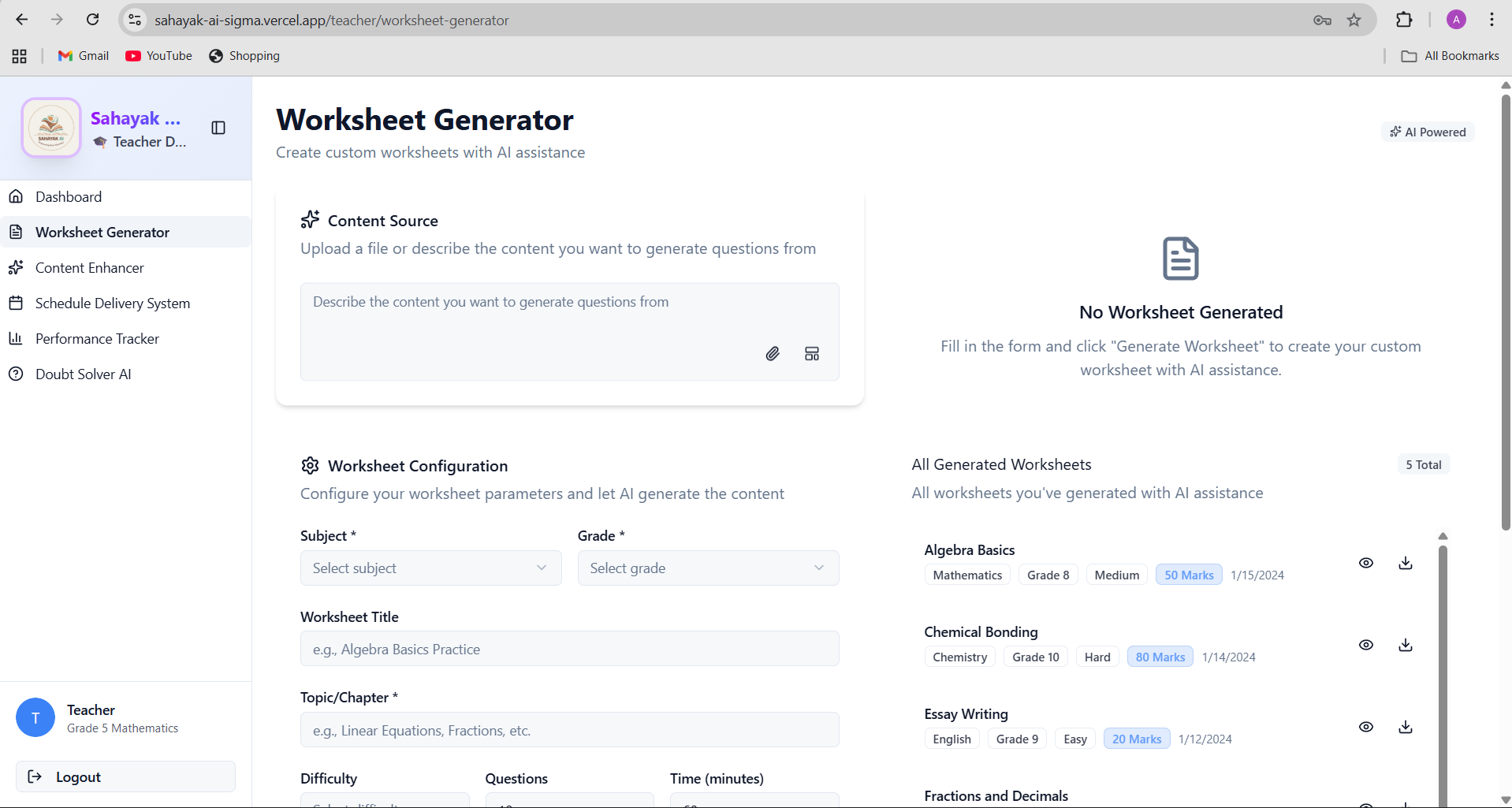
Sahayak Worksheet Generator Page
-
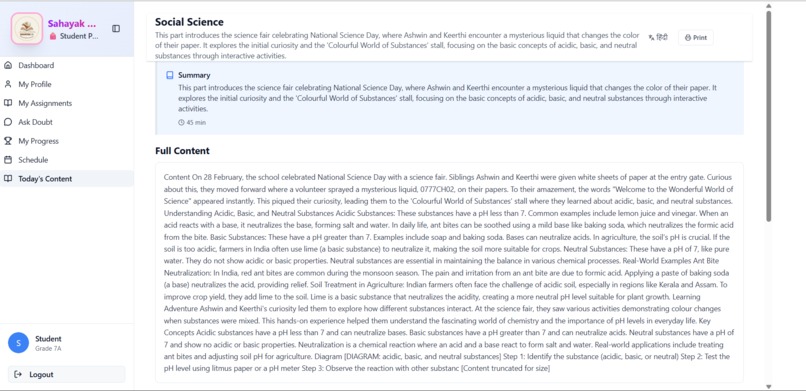
Scheduled Content in Student Panel
-
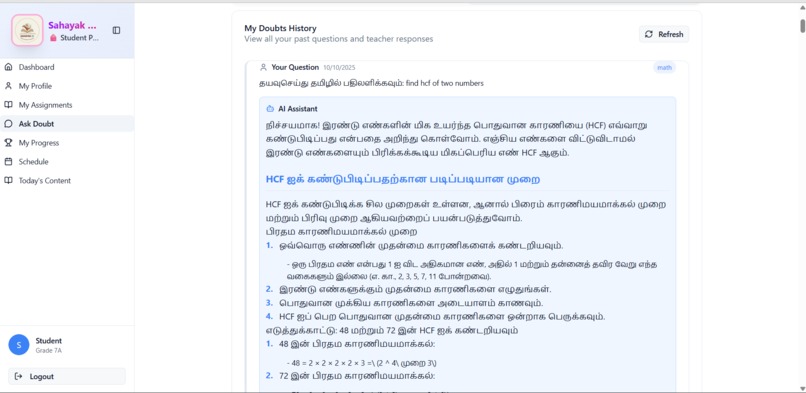
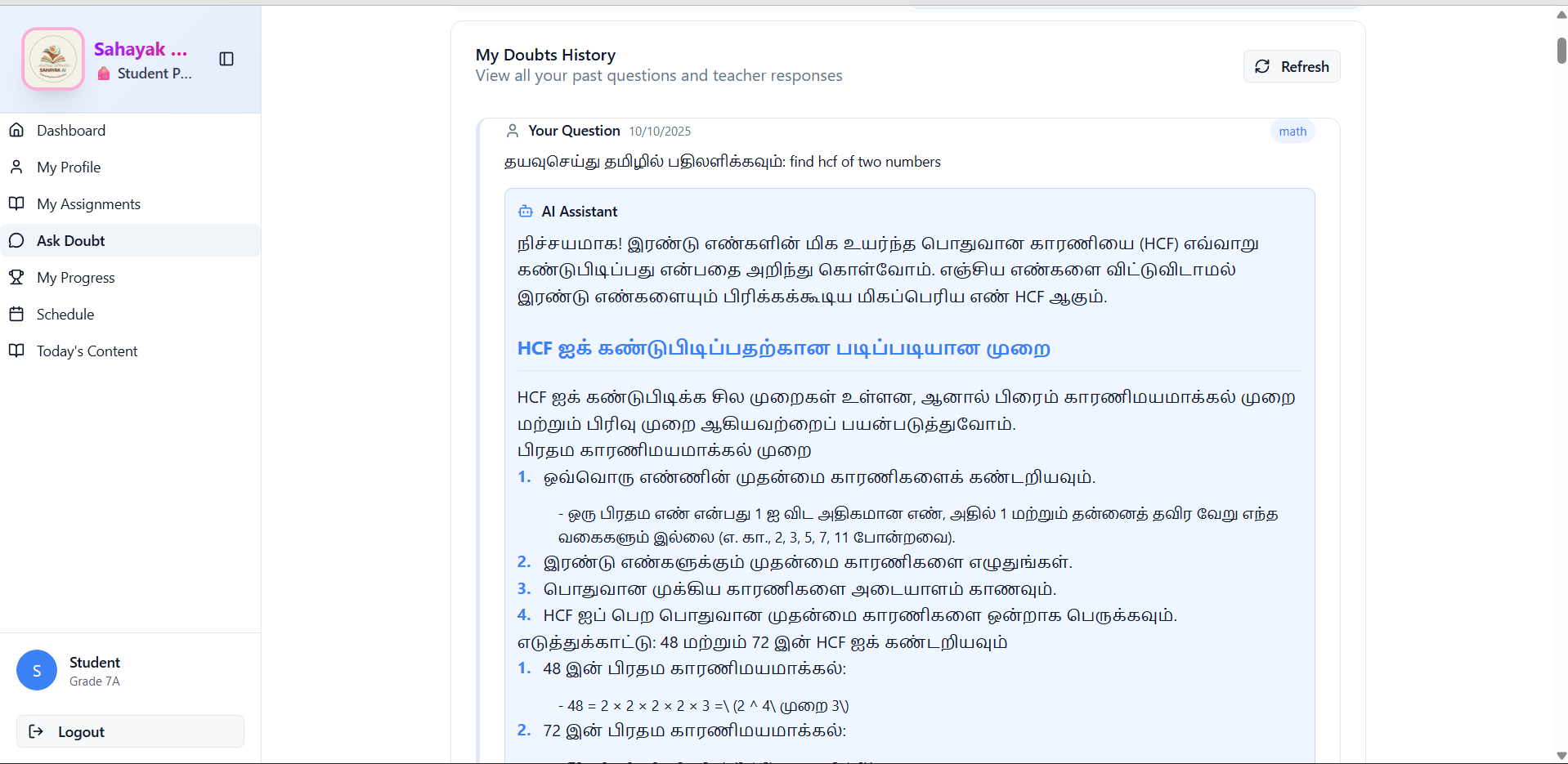
Sahayak Doubt History feature
-
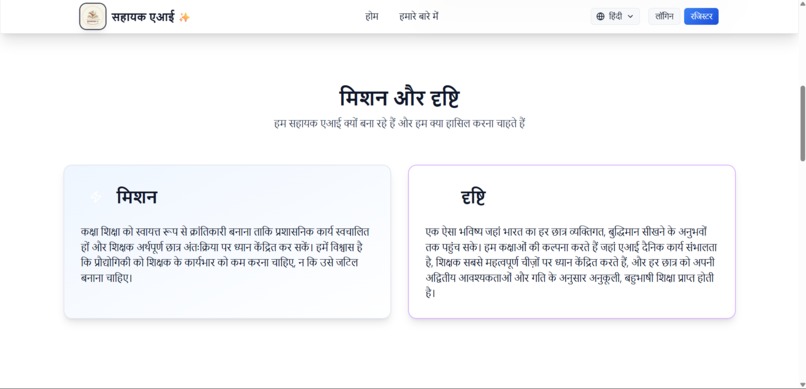
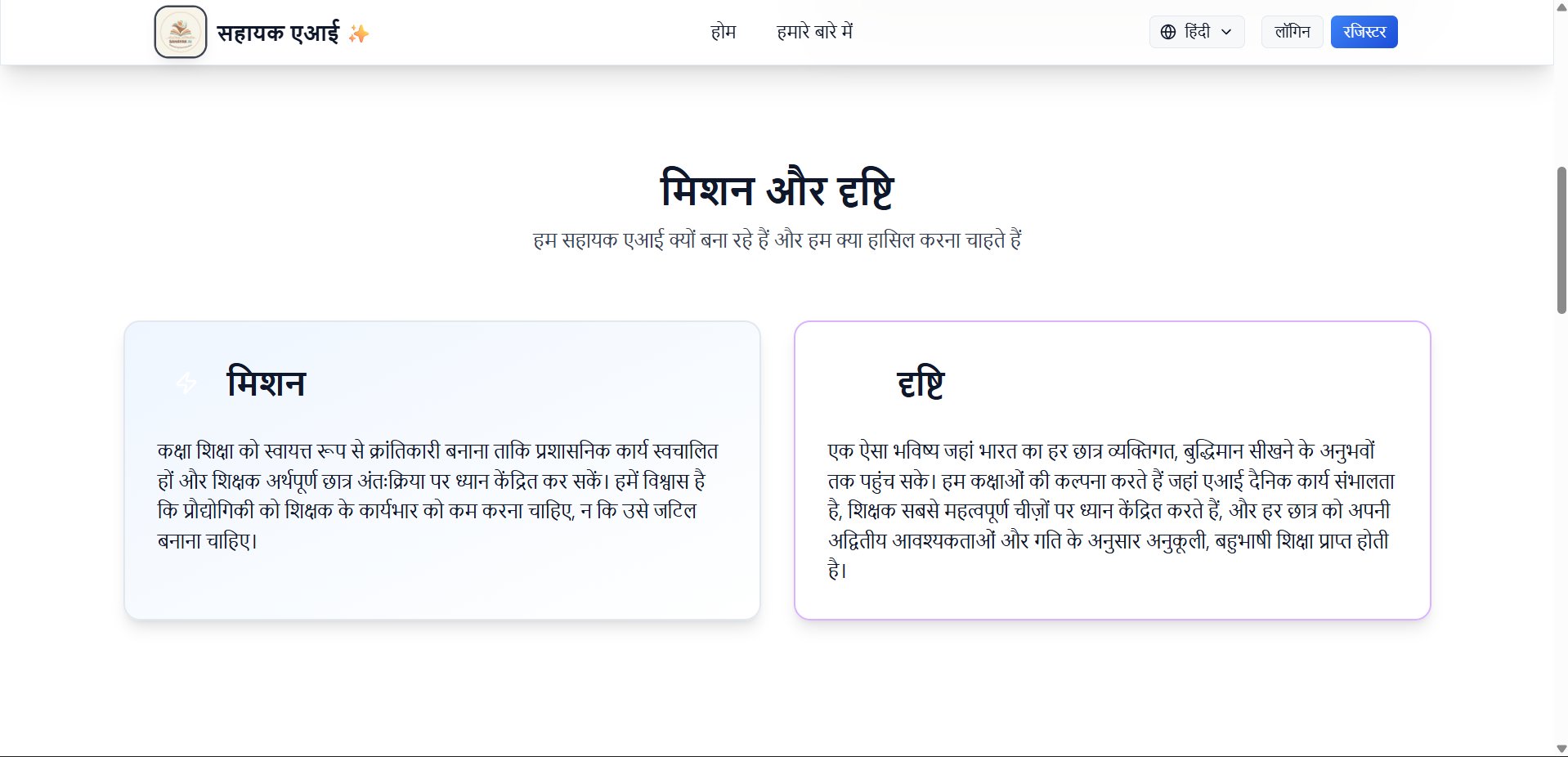
Sahayak Vision Page
-
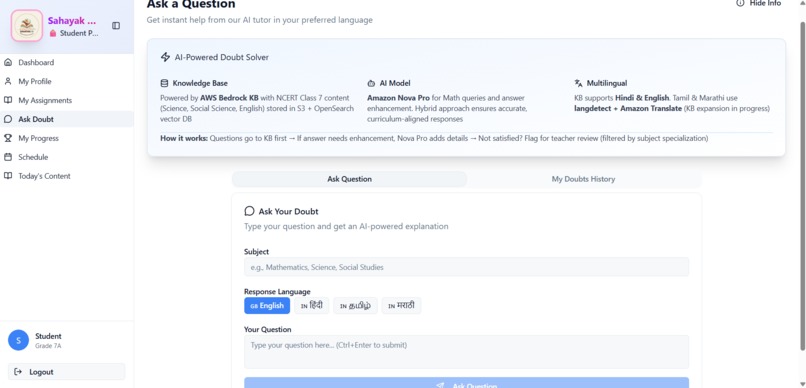
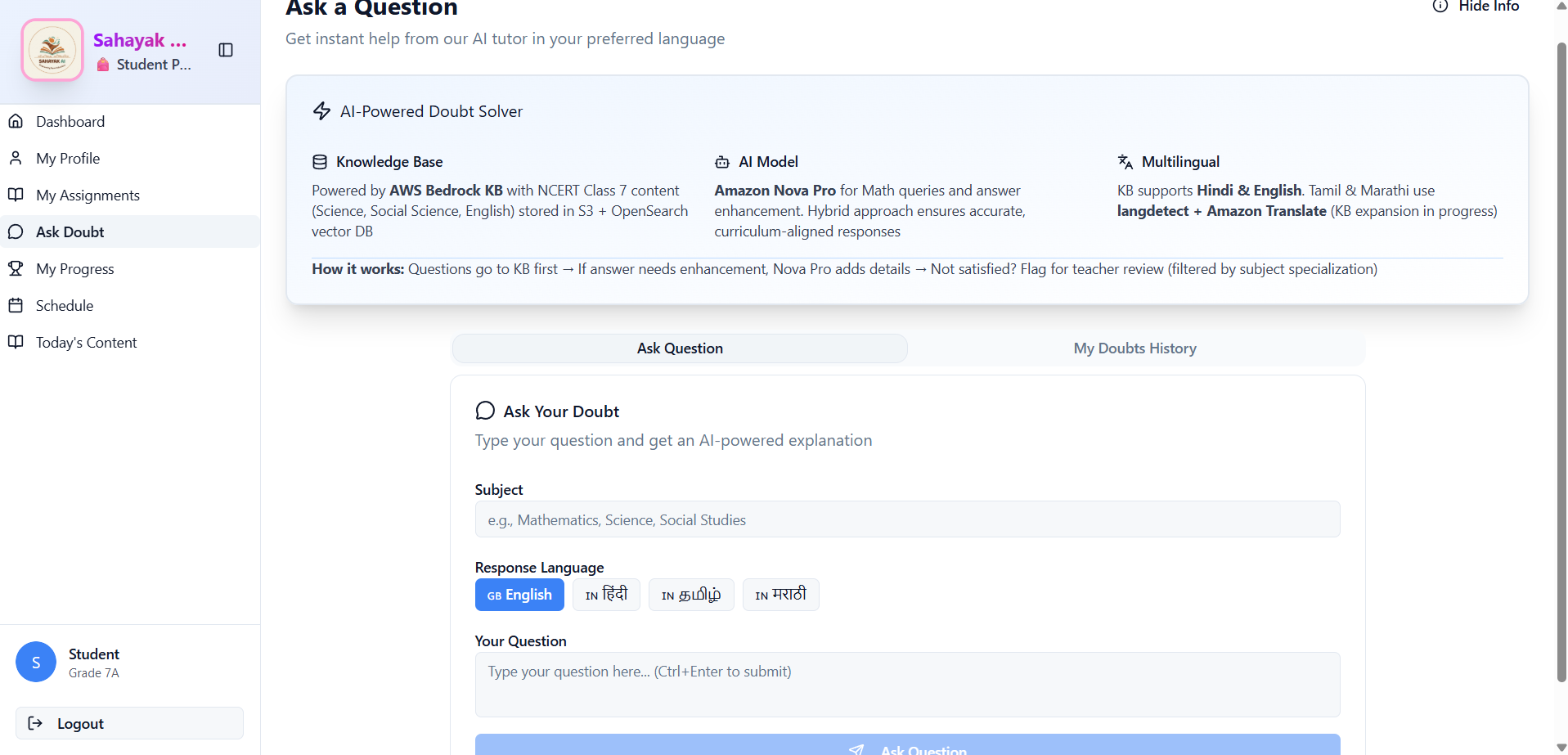
Doubt Solver Engine
-
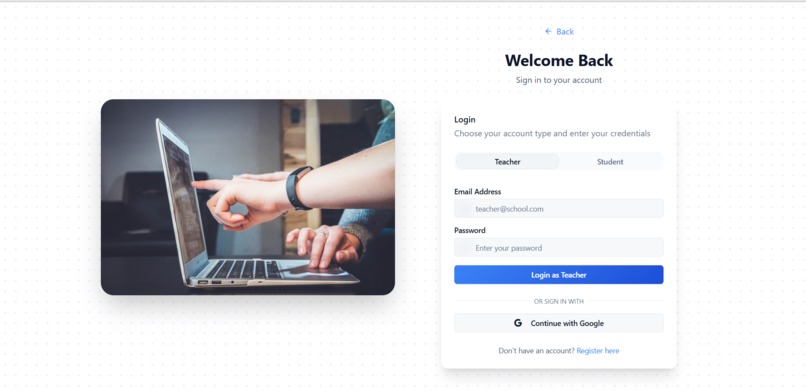
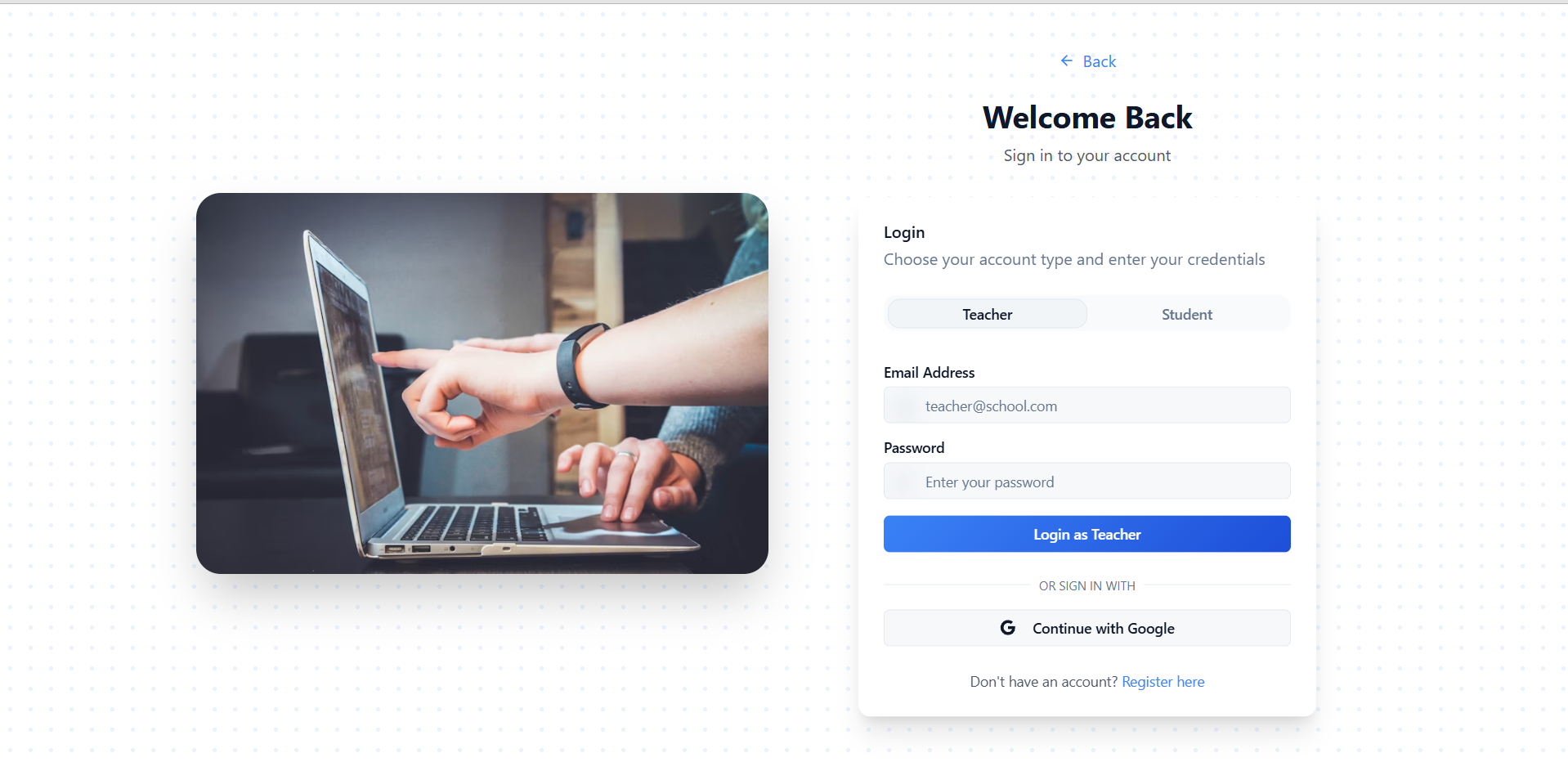
Sahayak Login Page
-
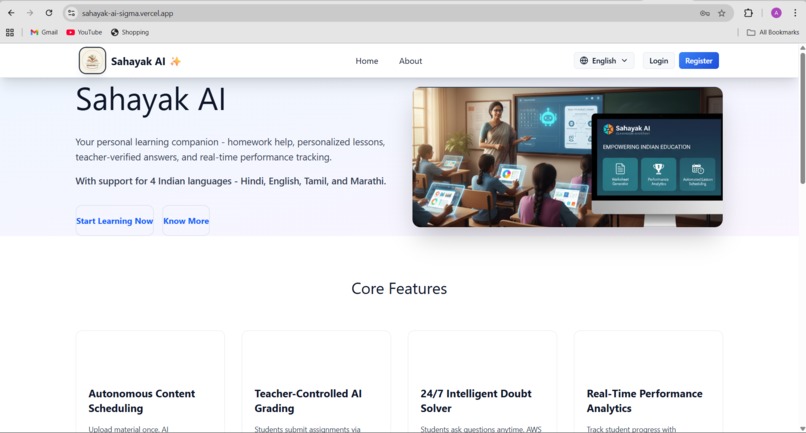
Sahayak About Page
-
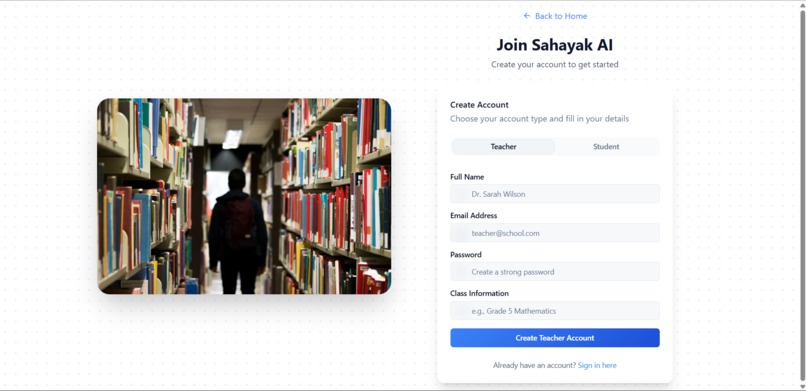
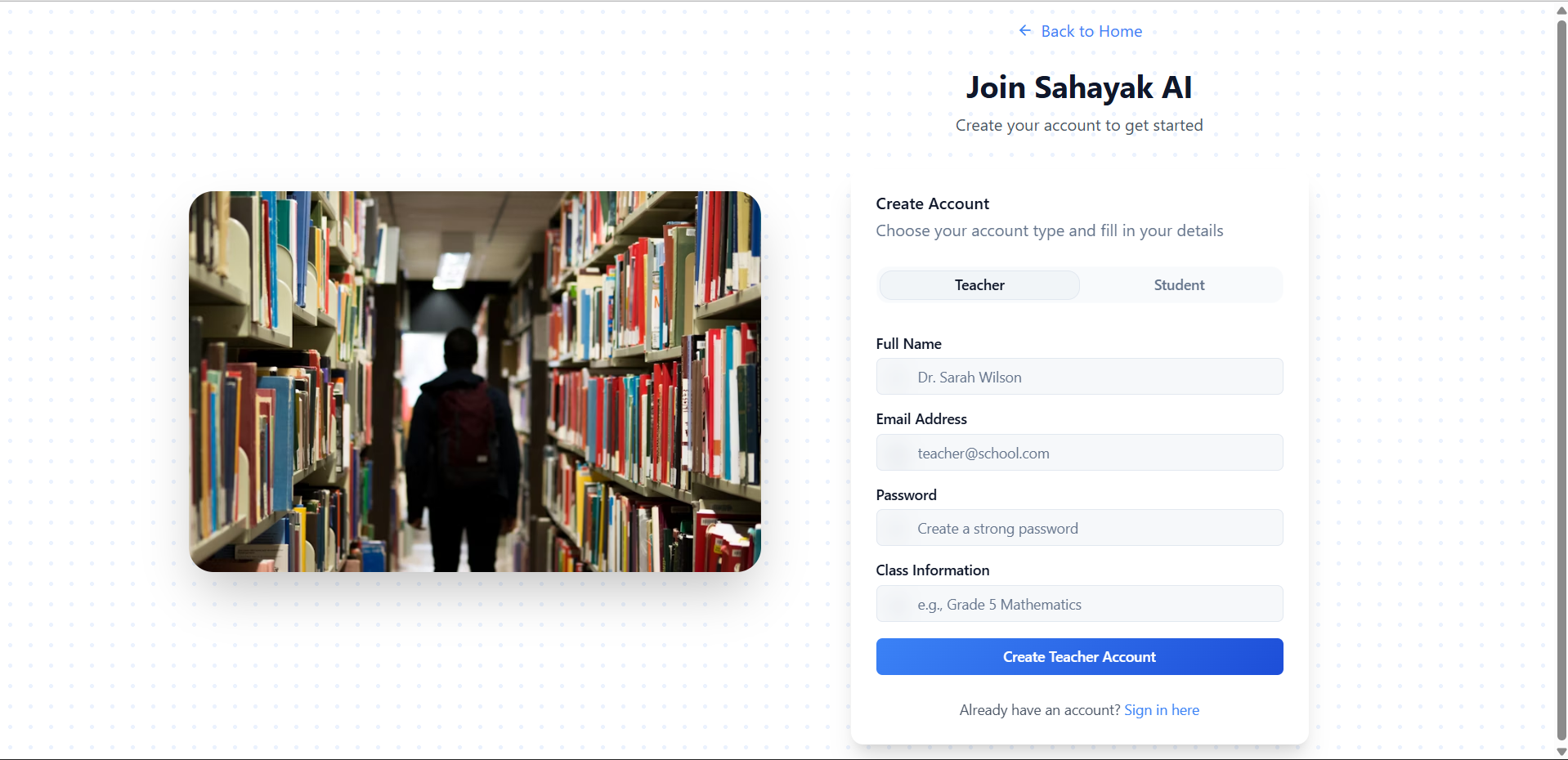
Sahayak Register Page
-
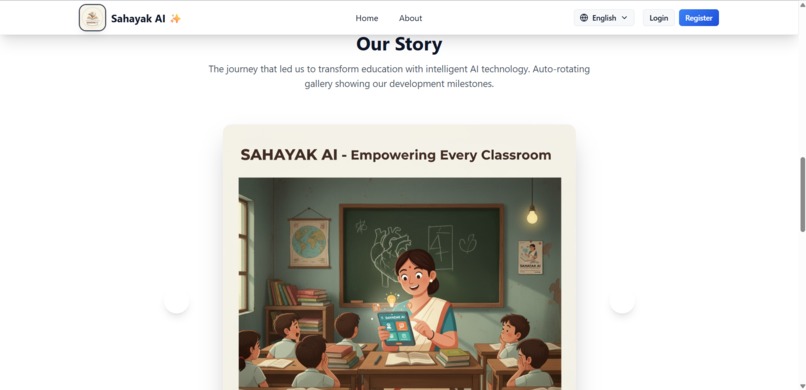
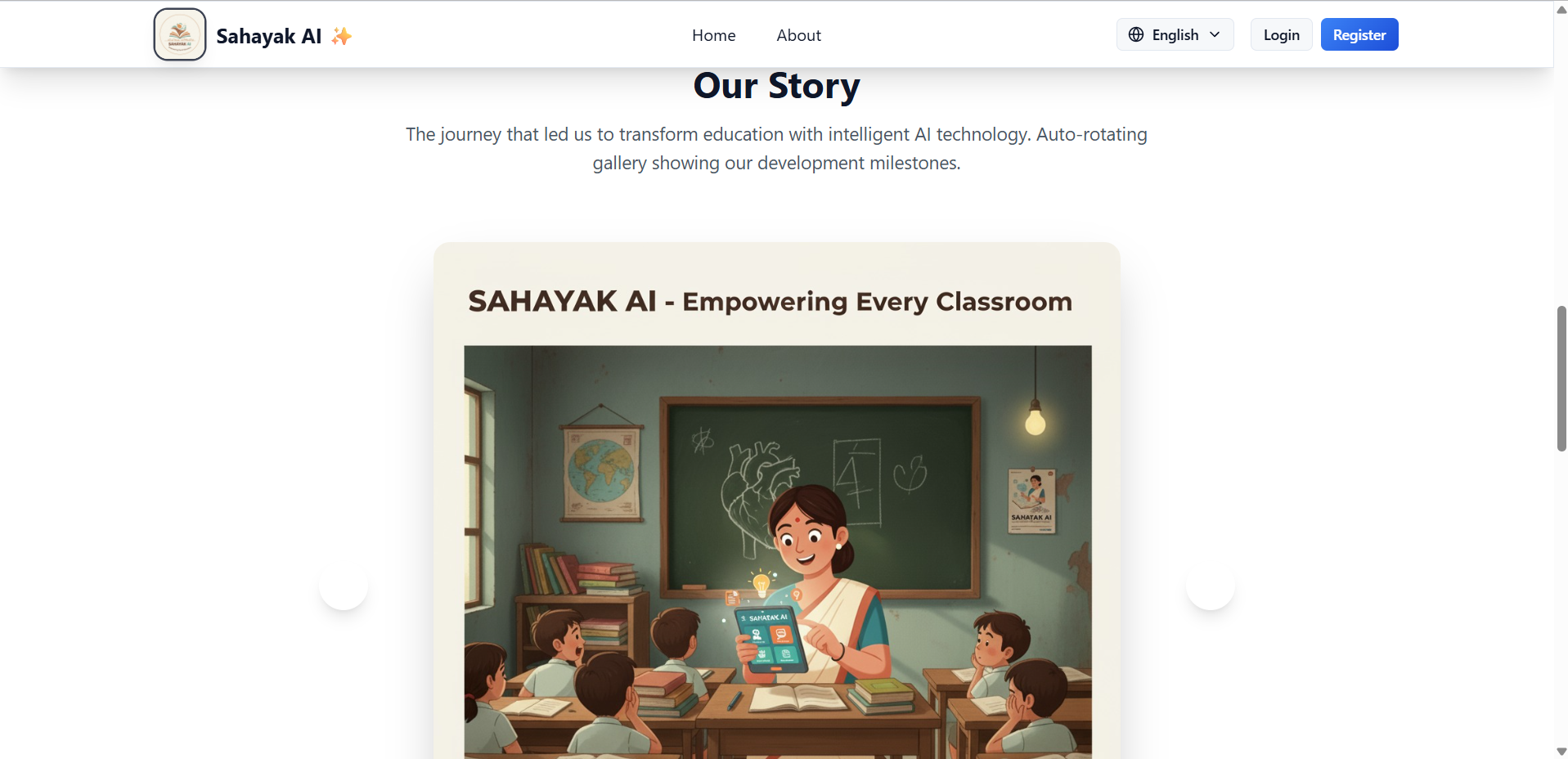
Sahayak Story and Inspiration
Sahayak AI – Project Story Inspiration
During volunteering at local schools, I noticed two major challenges:
Teachers spend hours creating worksheets, grading assignments, and scheduling lessons, leaving little time for personalized teaching.
Students often lack timely feedback, and parents have limited insights into learning progress.
This inspired us to build Sahayak AI, an autonomous AI-powered classroom assistant that helps teachers deliver personalized content, assess student performance, and streamline administrative tasks.
What it does
Sahayak AI automates multiple classroom workflows:
Scheduled Content Delivery: AI autonomously schedules lessons, enriches them with SEO-optimized, keyword-relevant YouTube videos, and notifies students.
Doubt Solver: Students submit questions; AI provides answers with a teacher review panel for unresolved queries.
Worksheet Generation: AI generates curriculum-aligned worksheets from teacher-provided content.
Assignment Scheduling & Evaluation: AI grades assignments submitted via Google Forms or Word docs, while allowing teachers to edit model answers and evaluation schemas for human-supervised accuracy.
Content Enhancer: AI simplifies, elaborates, and adds visuals to teacher notes.
Student Performance Analytics: Class and student dashboards highlight progress, trends, and top performers.
How we built it
Frontend: React.js, Tailwind CSS, Axios for API routing.
Backend: Node.js (Express) running on AWS Lambda with API Gateway.
Database & Storage: DynamoDB for metadata and S3 for files.
AI/ML: AWS Bedrock for doubt solving, content enhancement, and grading; optional SageMaker embeddings.
Scheduling & Notifications: EventBridge and SES/NodeMailer for automated alerts.
Our team of five collaborated efficiently: I, Alok (team lead), developed Doubt Solver and Scheduled Content Delivery, while teammates worked on Content Enhancer, Worksheet Generation, Assignment Scheduling & Grading, and API integration/testing.
Challenges we ran into
Integration Complexity: Coordinating multiple AWS services while maintaining autonomous workflows.
Frontend-Backend Sync: Some backend-heavy features were not fully integrated into the front-end for demo purposes.
AI Accuracy: Designing Bedrock prompts to accurately evaluate answers and enhance content.
Resource Management & API Limits: Overcame the 29-second API Gateway timeout using asynchronous calls and polling.
Accomplishments that we're proud of
Autonomous Content Delivery with Smart Enrichment: Added SEO-optimized, keyword-relevant YouTube videos automatically to lessons.
Overcoming AWS API Gateway Limits: Implemented async calls and polling to bypass the 29-second timeout, enabling long-running AI tasks.
Teacher-Controlled Evaluation: Teachers can edit model answers and evaluation schemas, avoiding rigid rubric- or keyword-based grading. Feature is in the final stage of testing.
Full AWS Integration for Autonomy: Coordinated Lambda, DynamoDB, S3, EventBridge, Bedrock, and SES/NodeMailer for end-to-end autonomous workflows.
Frontend-Backend Synchronization: Built responsive dashboards with React, Tailwind CSS, and Axios, connecting AI workflows to teacher and student interfaces.
What we learned
Cloud & AI Integration: Hands-on experience with AWS Lambda, Bedrock, EventBridge, and DynamoDB.
Team Collaboration & Leadership: Coordinating multiple developers across frontend and backend modules while maintaining consistent architecture.
Autonomous Workflow Design: Designing AI agents that operate independently and reliably.
Frontend-Backend Communication: Using Axios and API Gateway for seamless data exchange between dashboards and AI workflows.
What's next for Sahayak AI
Make remaining features fully production-ready and integrate them with the front-end.
Conduct demo sessions with teachers to gather real-world feedback.
Explore OCR and speech-to-text capabilities to simplify content submission and evaluation.
Optimize reporting and analytics to efficiently generate detailed student performance insights.
Expand AI capabilities wherever possible to enhance classroom automation and learning personalization.
Built With
- api-gateway
- aws-bedrock
- aws-lambda
- aws-step-functions
- aws-textract
- aws-translate
- dynamodb
- eventbridge
- firebase-auth
- nodemailer
- react.js
- s3
- tailwind-css
- youtubedataapi


Log in or sign up for Devpost to join the conversation.