-
-
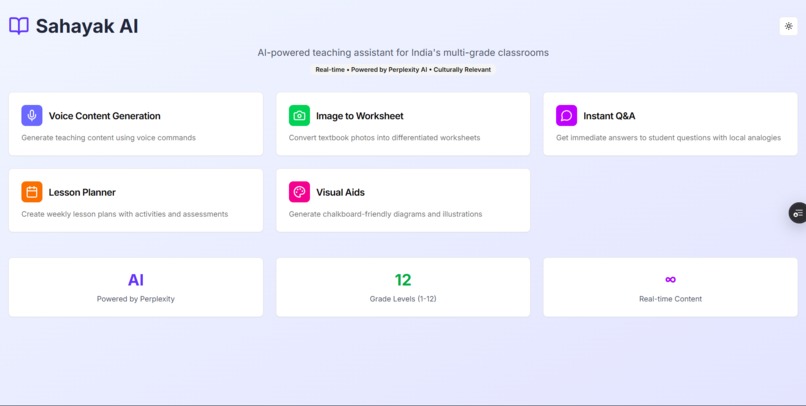
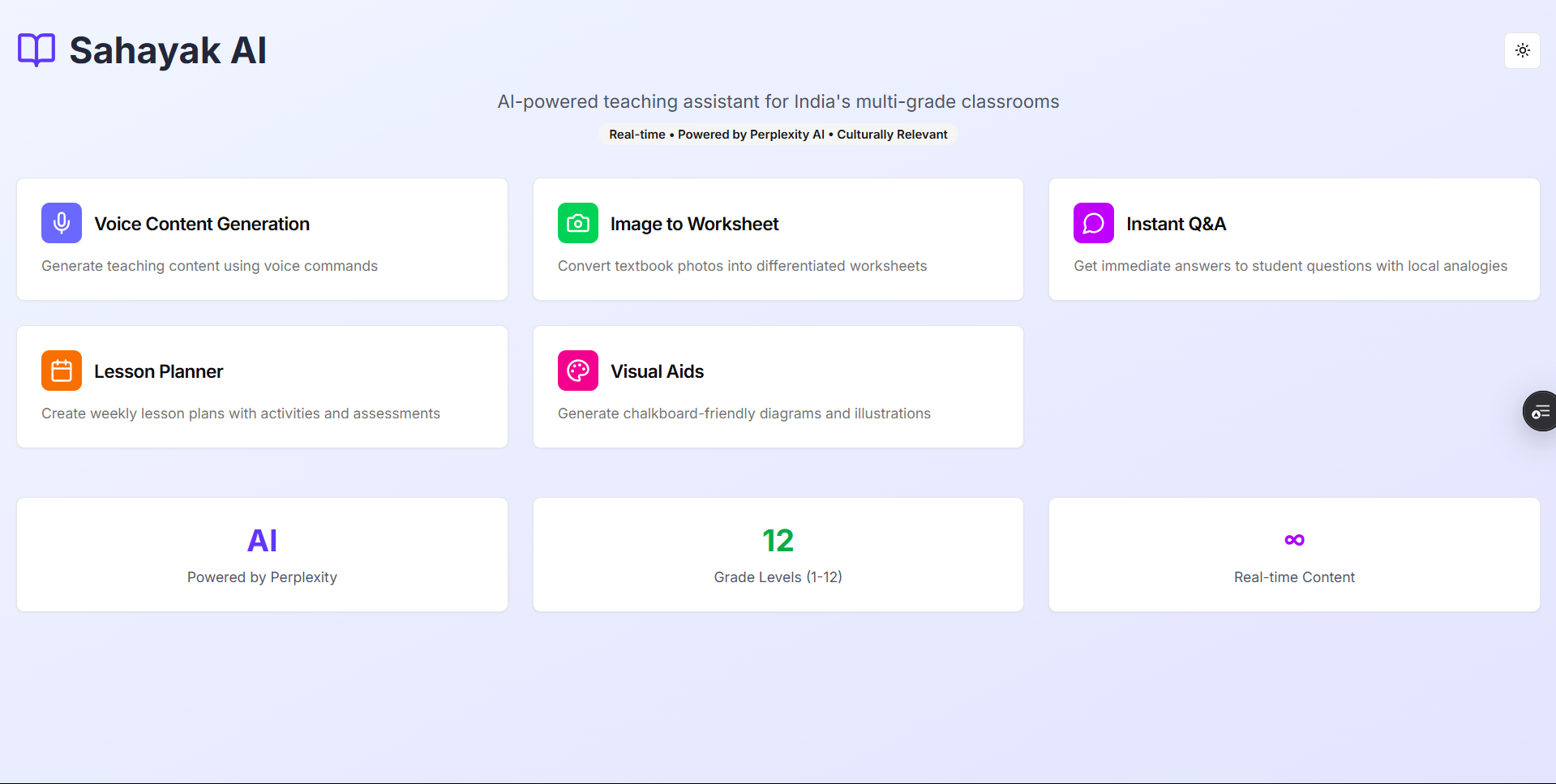
Home - Light Theme
-
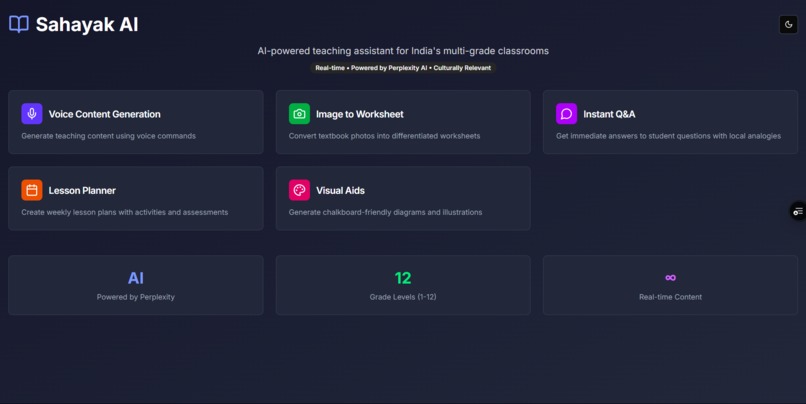
Home - Dark Theme
-
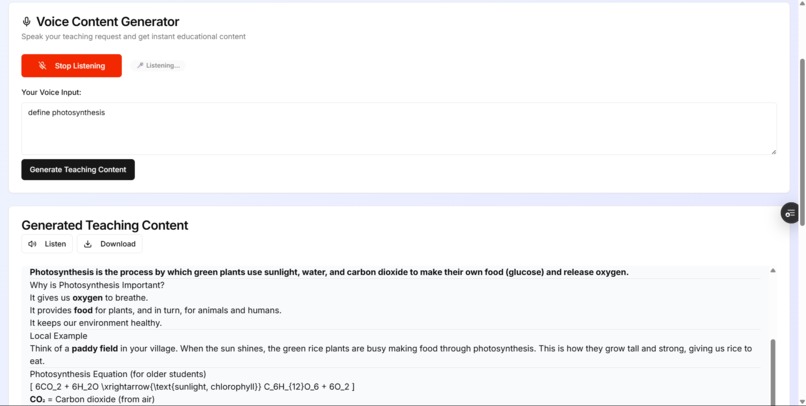
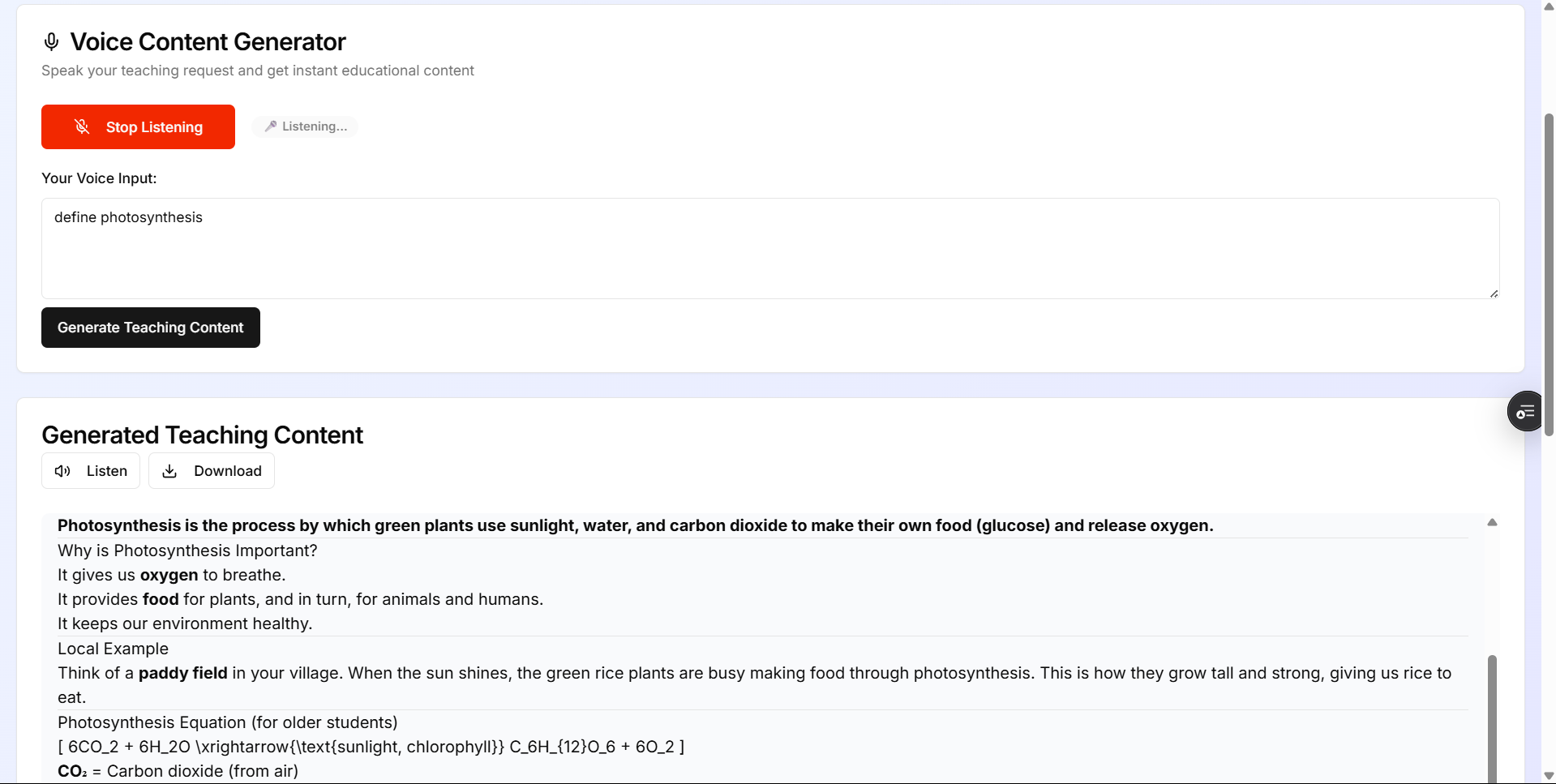
Voice Content Generation
-
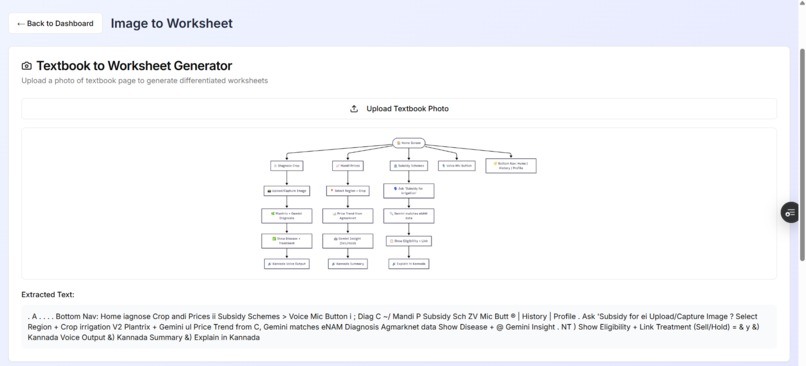
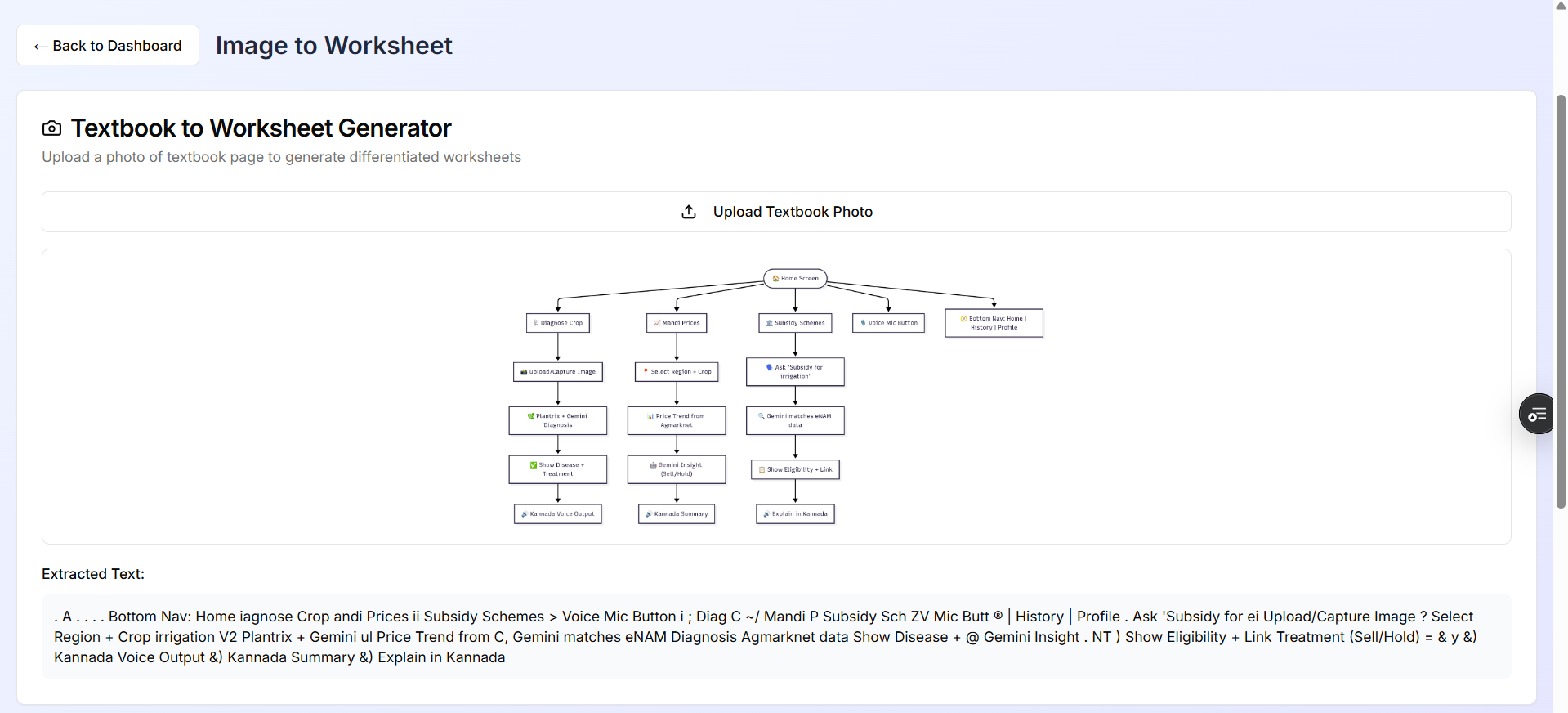
Image to Worksheet
-
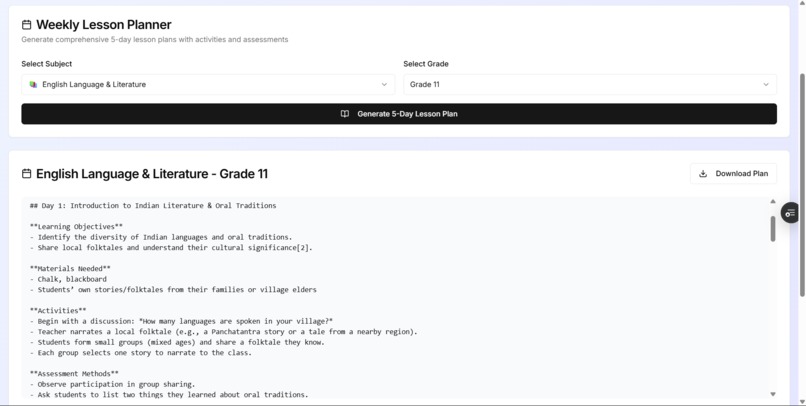
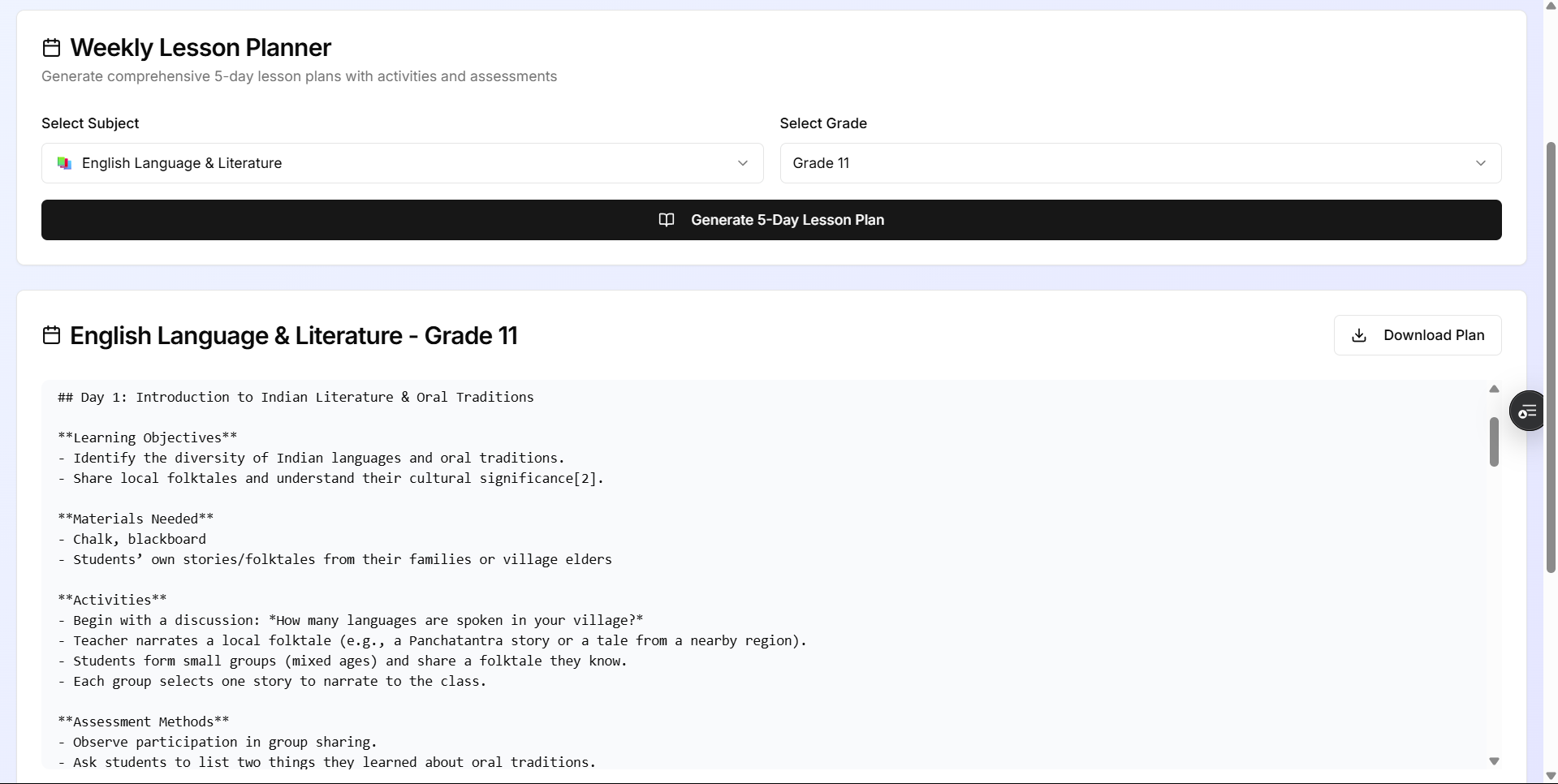
Lesson Planner
-
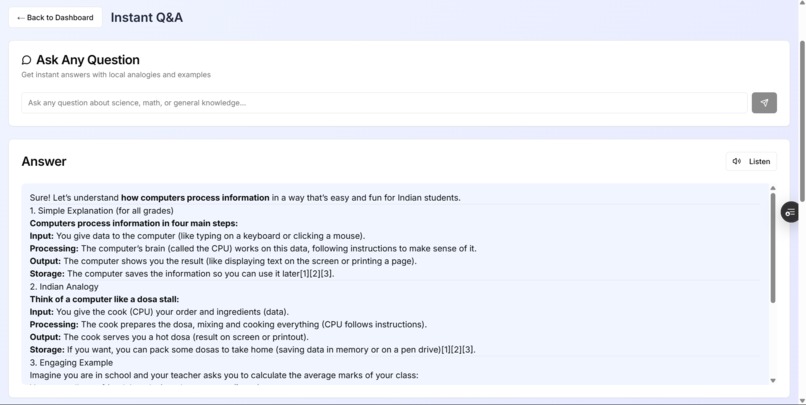
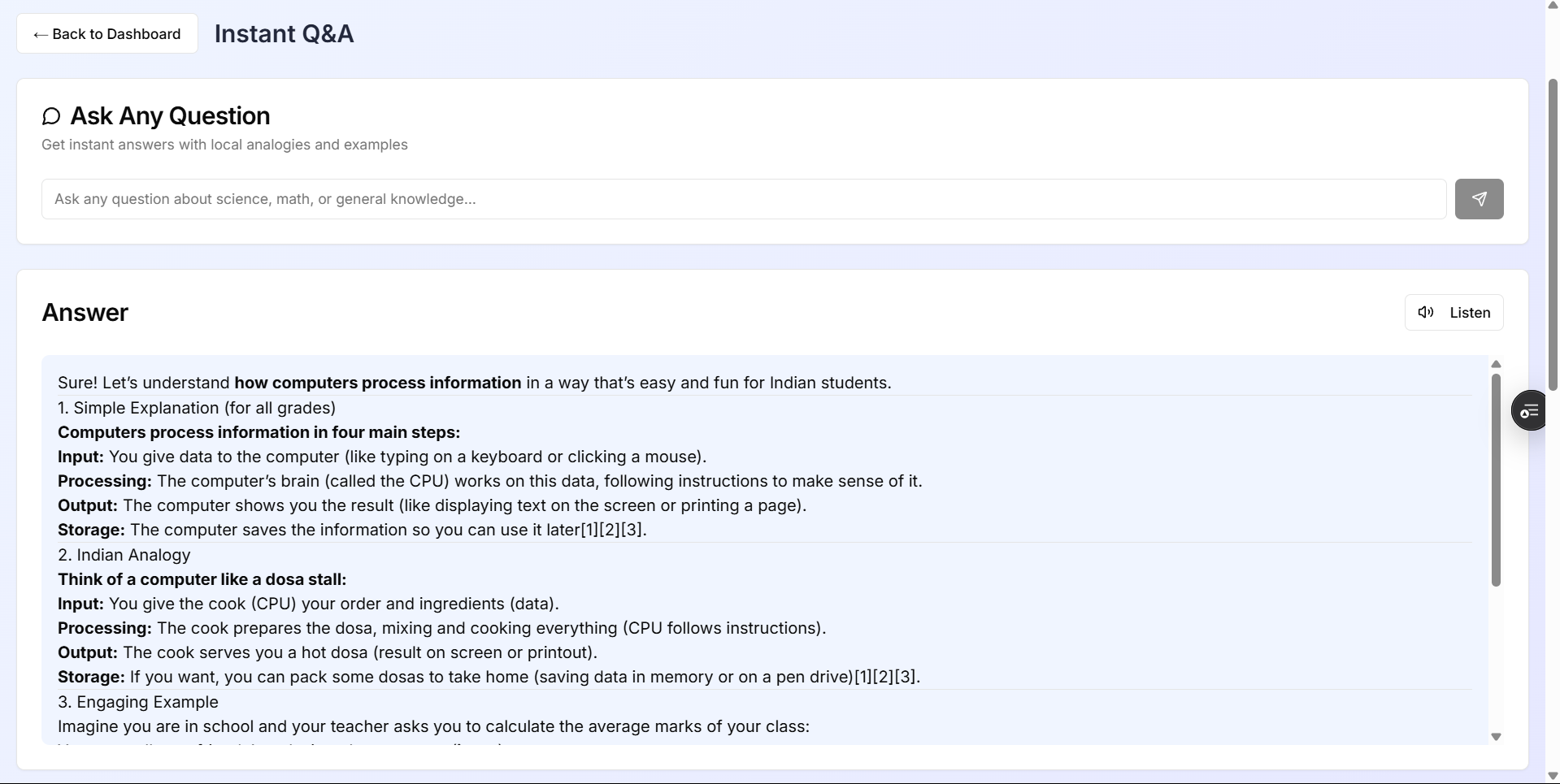
Instant Q&A
-
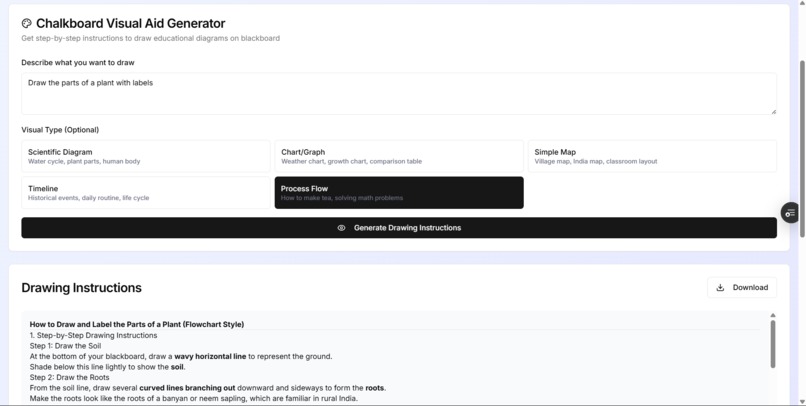
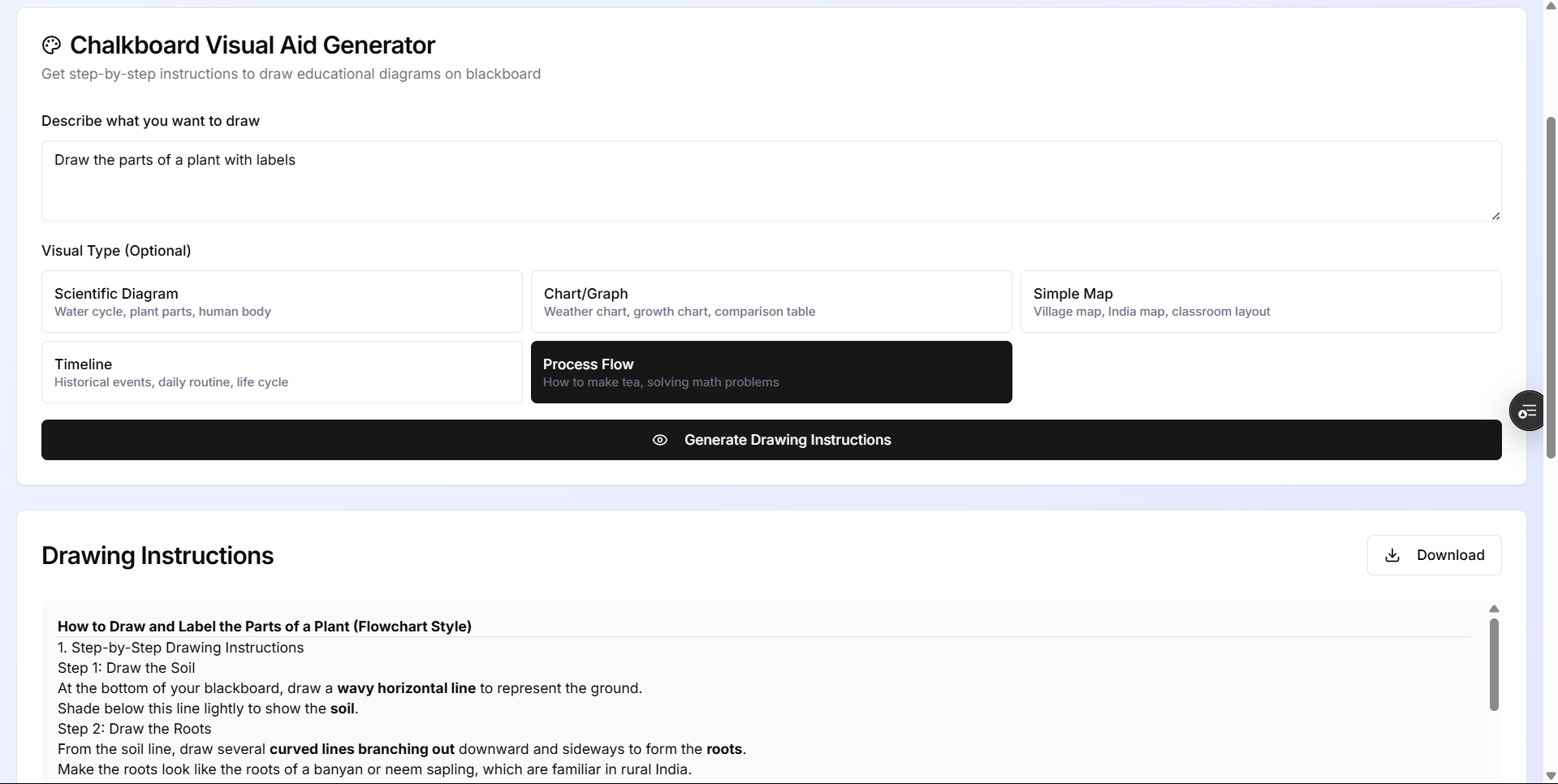
Visual Aids

Inspiration
In many classrooms around the world — especially in rural or under-resourced areas — a single teacher often manages multiple grades, diverse student needs, and limited access to digital resources. These educators are doing their best under immense pressure, but they’re stretched thin.
We were inspired by this reality. We didn’t want to build another flashy AI demo — we wanted to build something that could help real teachers right now.
That's where Sahayak-AI comes in — a lightweight, intuitive, AI-powered teaching assistant designed to support multi-grade educators with content generation, lesson planning, and real-time classroom support.
What it does
Sahayak-AI is a voice, image, and text-powered assistant that helps teachers instantly generate:
- Grade-specific worksheets from a photo of a textbook
- Visual aids that are blackboard-friendly
- Simple, contextual explanations for complex questions
- Creative, culturally-relevant educational stories
- Weekly lesson plans tailored to the classroom’s needs
It’s designed to save time, reduce planning stress, and bring more creativity into the classroom — without needing high-end hardware or deep tech skills.
How we built it
We began by walking through the typical day of a multi-grade classroom teacher, and identifying bottlenecks: planning, content creation, differentiation, and student engagement. We then mapped those needs to three input methods: text, voice, and images.
Stack Highlights:
- Perplexity AI API: For generating all contextual and instructional content
- Tesseract.js (OCR): To extract and parse content from textbook images
- React + Tailwind CSS: For the mobile-friendly frontend
- Firebase Hosting: For instant deployment and sharing
- Web Speech API: For voice-based prompts and interaction
From there, we built workflows that were simple, intuitive, and teacher-first.
Challenges we ran into
- Prompt design: Generating age-appropriate, relevant content from a variety of image inputs pushed us to refine how we structured prompts to the AI.
- Content quality: Ensuring the AI produced factual and aligned content meant we had to test across many edge cases and grade levels.
- Responsive design: Our users are likely to access Sahayak-AI on low-bandwidth or mobile devices, so we had to strip down the UI to the absolute essentials.
- Time: With just hours on the clock, we had to focus on the core value and leave advanced features for the future.
Accomplishments that we're proud of
- We built a fully functional, real-time, AI-powered classroom assistant — from idea to deployment — in under 10 hours.
- We nailed down grade-level differentiation for worksheets — a feature even large ed-tech tools often skip.
- We kept everything simple, accessible, and designed for real classroom needs, not just demos.
- We demonstrated how voice, image, and AI can come together to empower a teacher, not replace one.
What we learned
- Empathy leads to better design. Building for educators means listening to them — not just building with flashy tech.
- Less is more. A simpler interface made the product 10x more usable and intuitive.
- AI can genuinely support real-world education — when paired with the right context and care.
- Perplexity AI, despite being generic, can adapt surprisingly well to education if guided clearly.
What's next for Sahayak-AI
- 🎯 Add reading fluency assessments using speech-to-text
- 📲 Introduce offline support for areas with poor connectivity
- 🌐 Support multiple languages and curricula
- 🛠 Allow teachers to save, edit, and reuse worksheets and lesson plans
- 🤝 Partner with schools and educational nonprofits for pilot testing and feedback
We believe education is a fundamental right — and technology should make it easier, not harder, to deliver. Sahayak-AI is our contribution toward that goal: practical, teacher-focused, and built to make a difference where it matters most — inside the classroom.

Log in or sign up for Devpost to join the conversation.