Inspiration
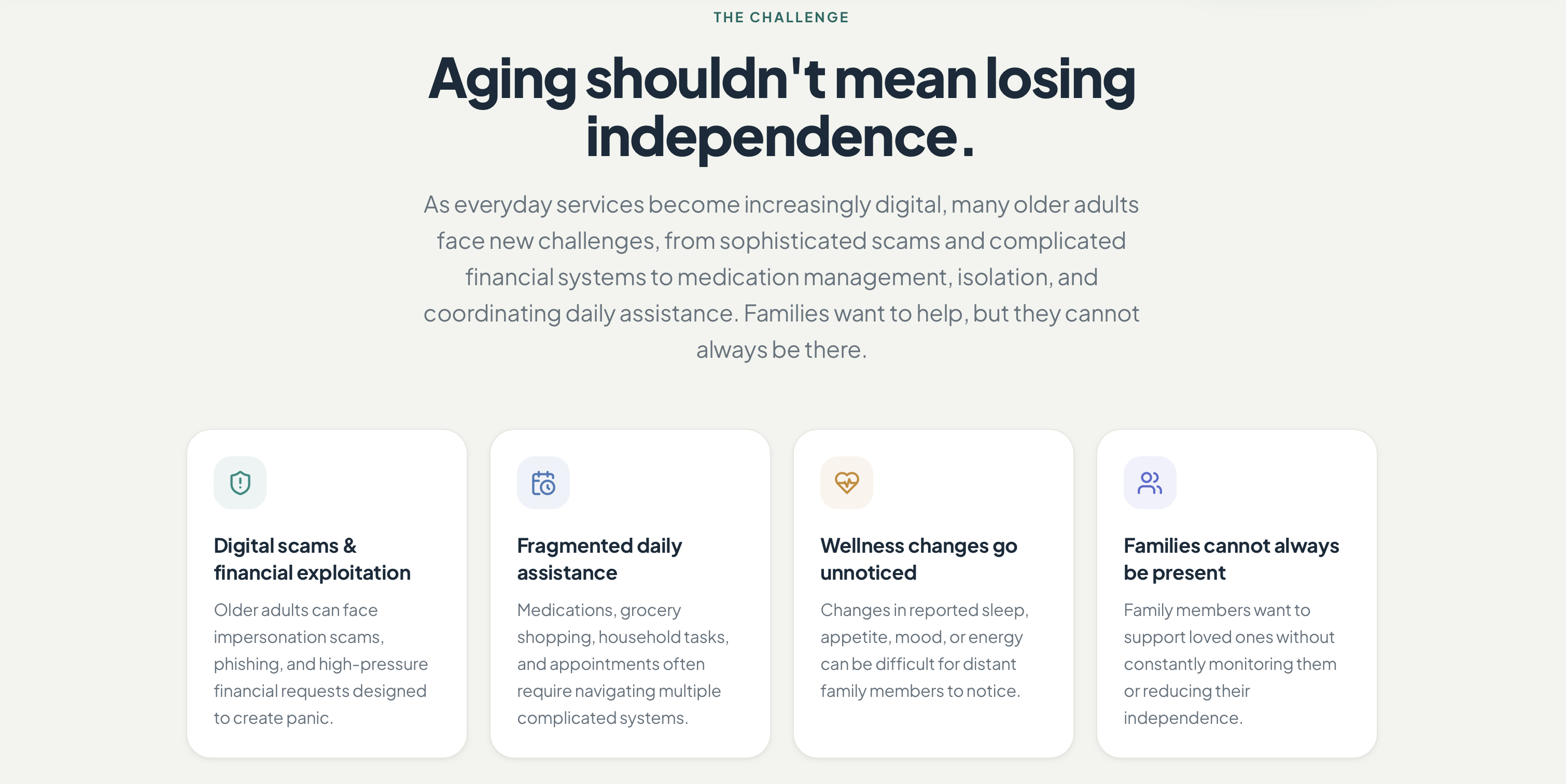
Many older adults live alone while family lives far away. They face scam calls, missed medications, confusing apps and bills, and health changes nobody notices. We wanted a voice-first companion that handles these risks without wearables or complicated apps and never takes a sensitive action without a person’s approval.
What it does
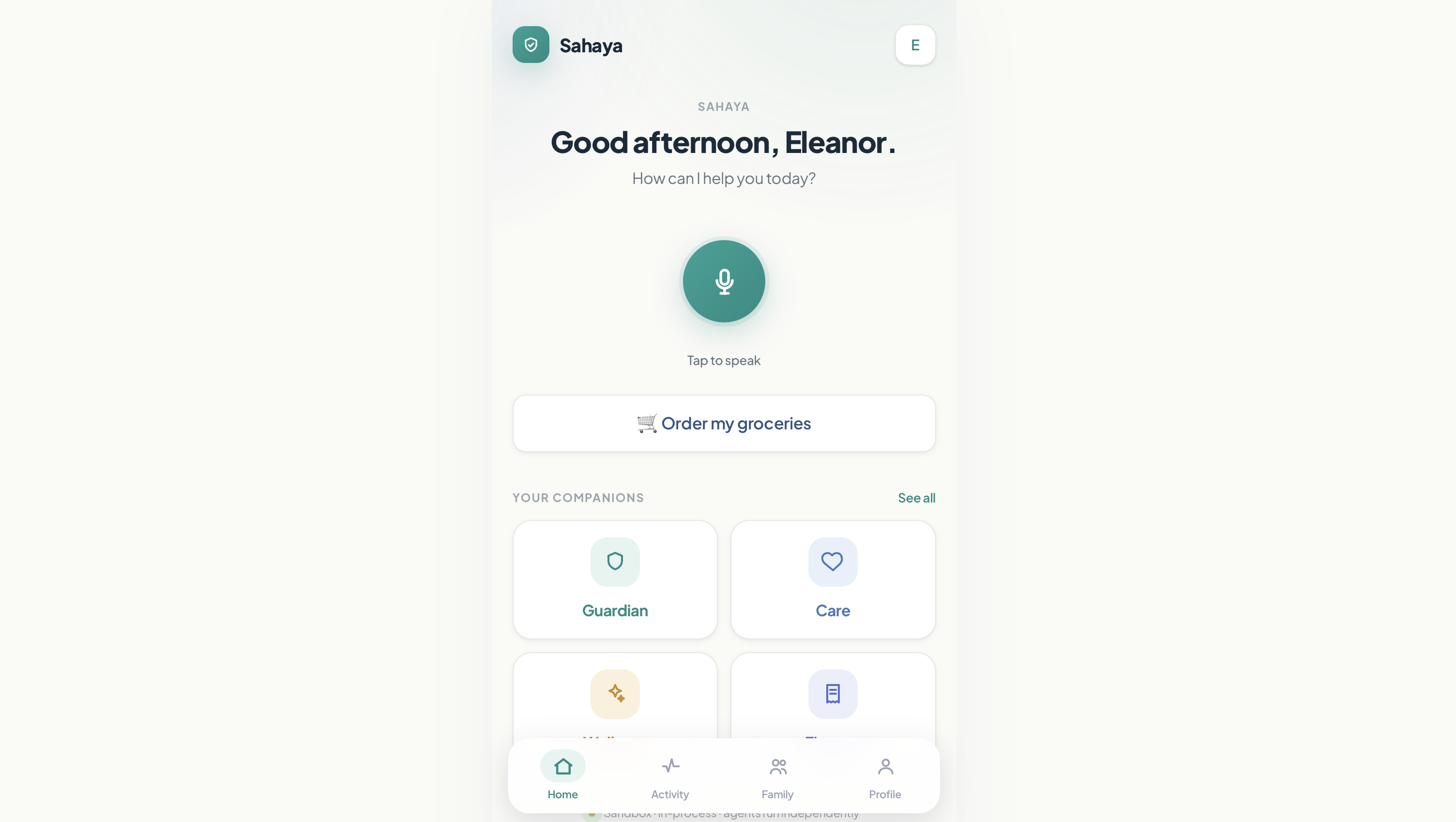
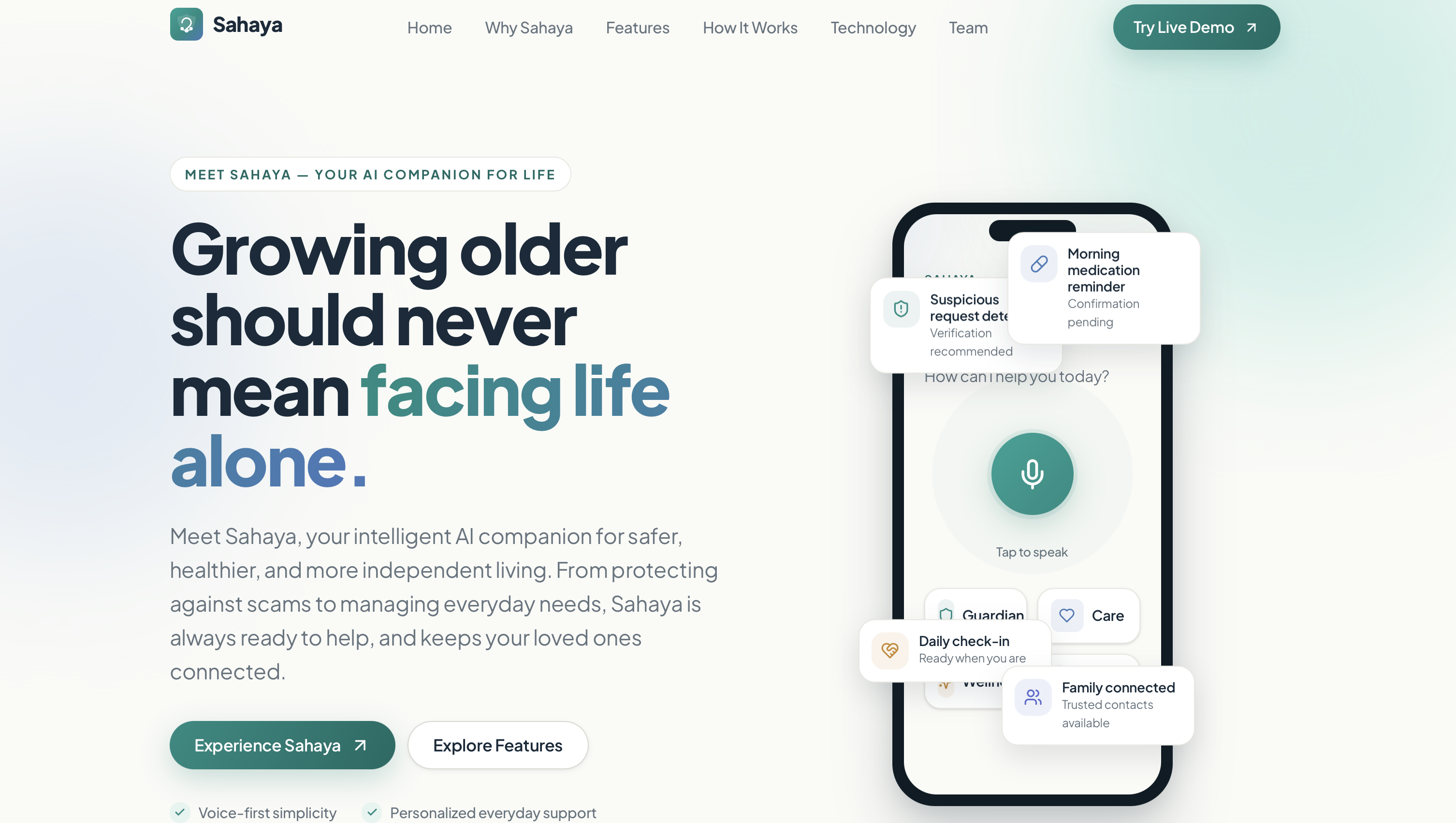
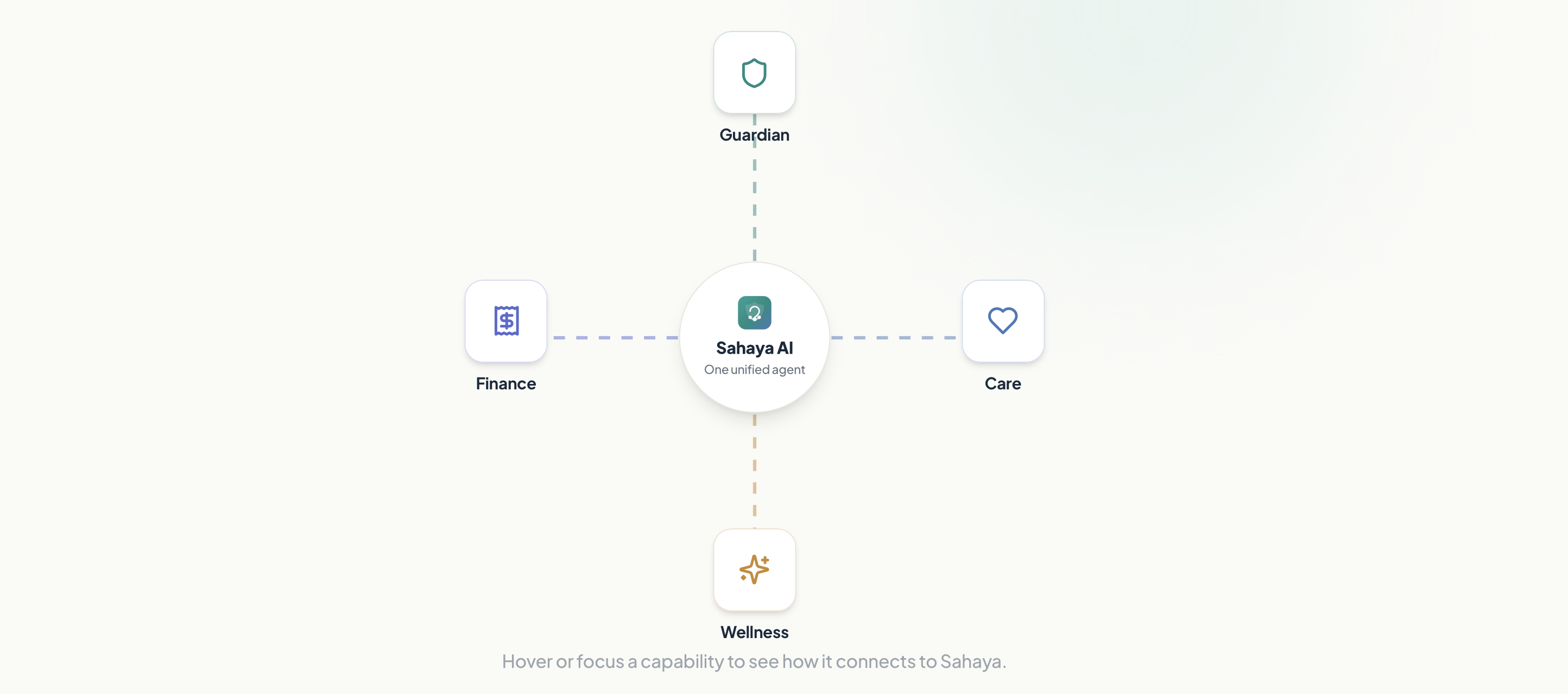
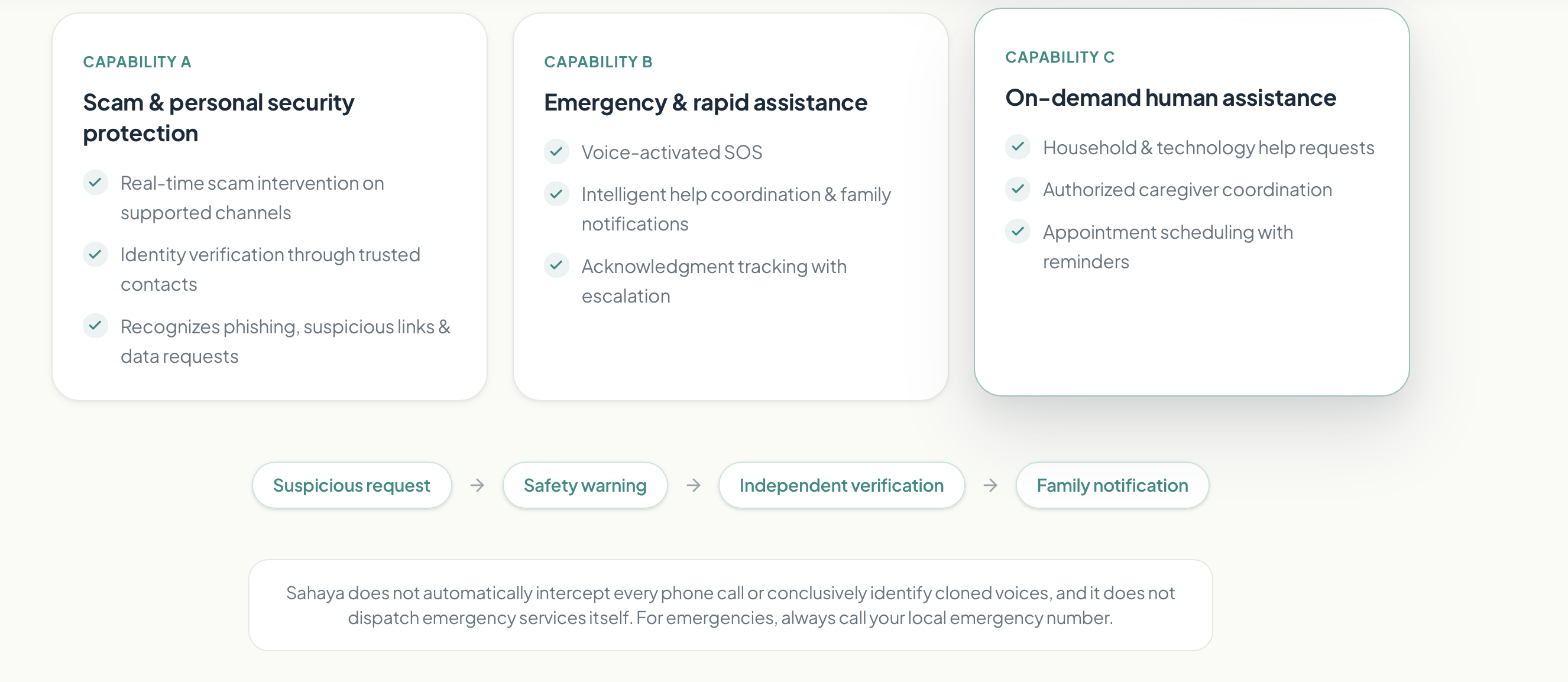
Sahaya is a voice-first, mobile-first PWA with four independent agents.
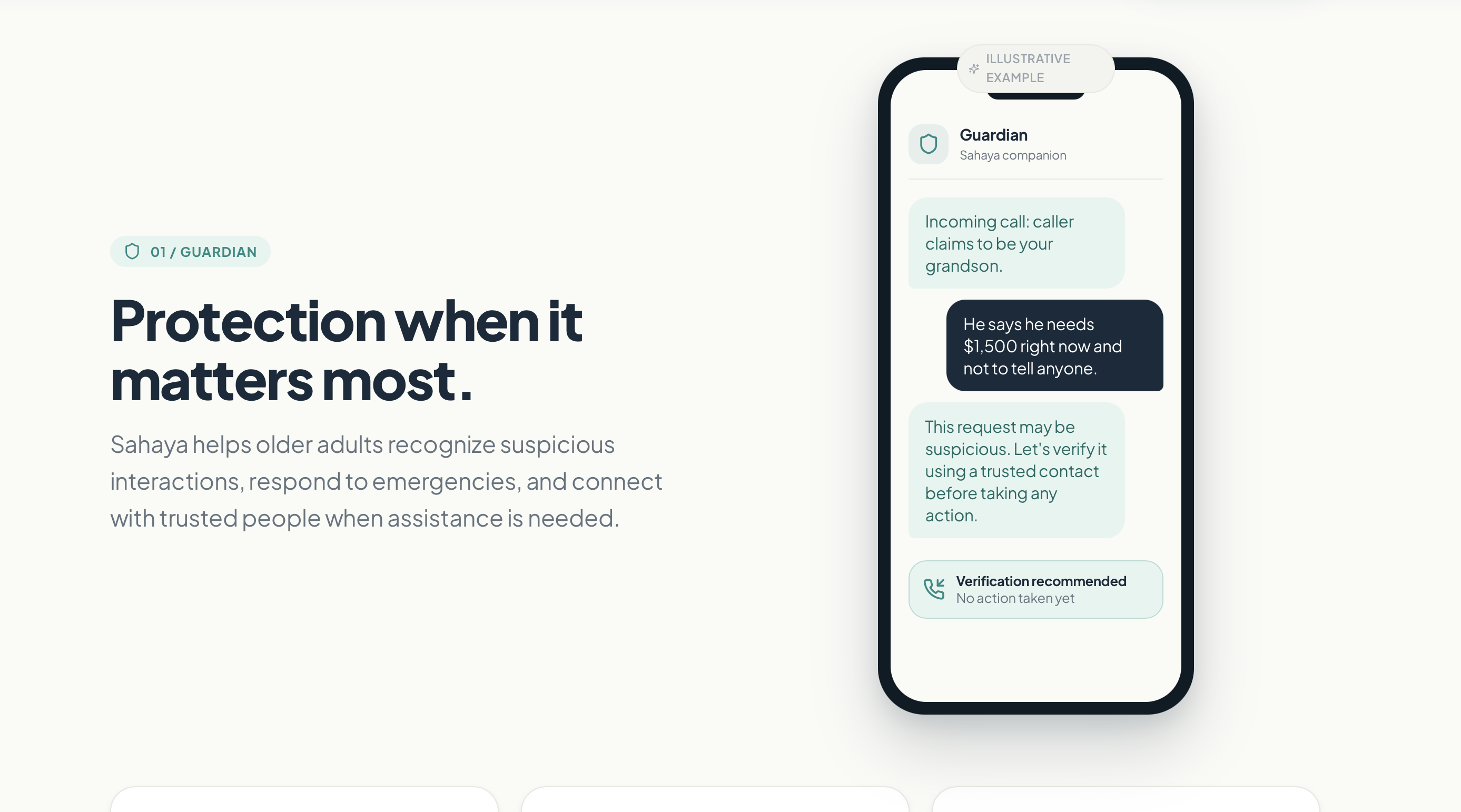
Guardian: screens messages and live calls for scams, verifies callers, alerts trusted contacts, and coordinates help. It can also answer “Has someone tried this scam before?” from the person’s own past incidents. Care: builds a grocery cart from “my usual groceries,” checks prices, turns a fridge photo into a dinner plan, and runs a sandbox checkout after approval. Wellness: runs daily check-ins, records mood, sleep, and social observations, remembers context between conversations, tracks trends against a personal baseline, and produces a family report. Finance: reviews spending for double charges and subscriptions, and compares hospital bills against insurance statements to draft dispute letters.
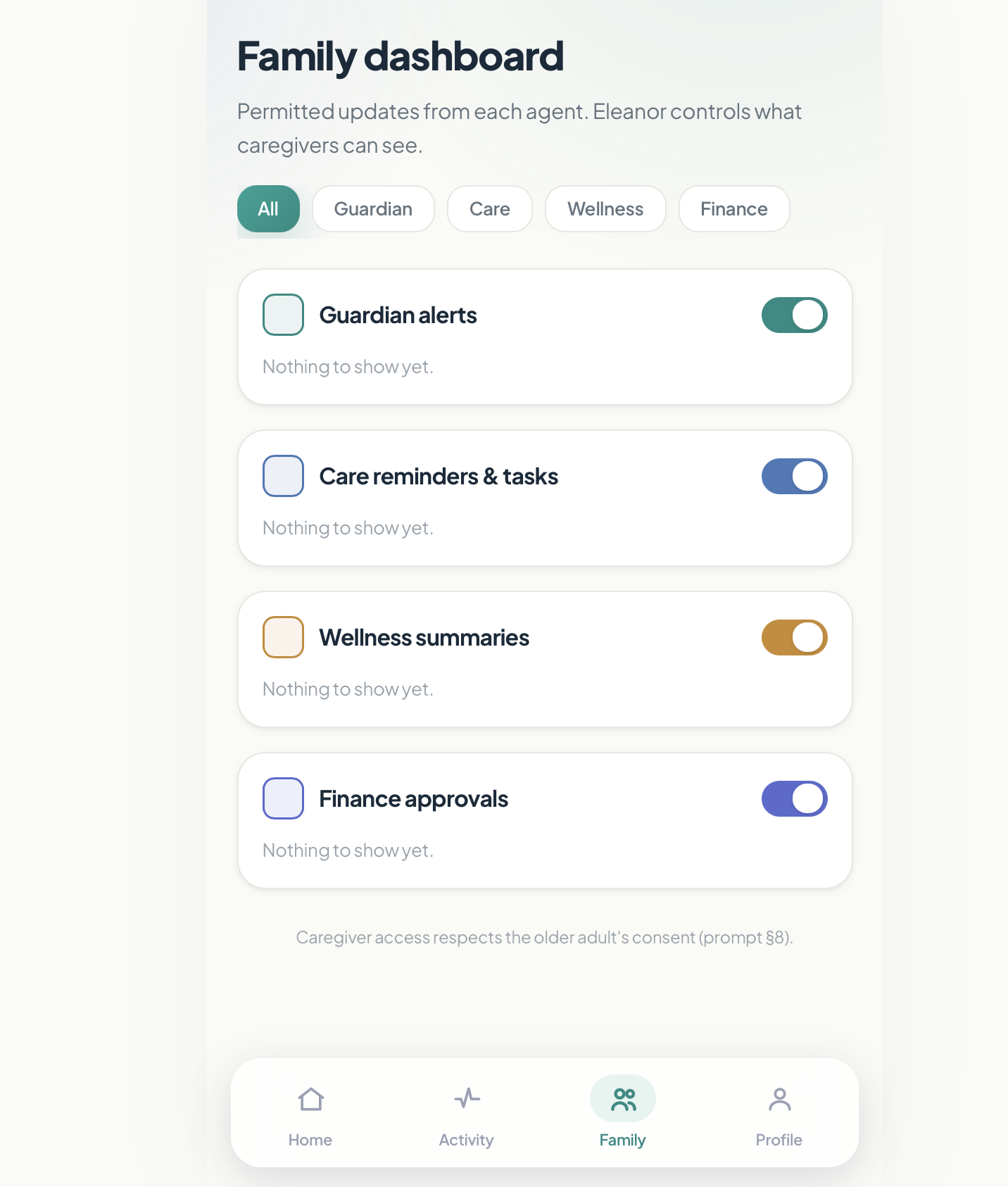
Anything sensitive, such as alerting family, placing an order, sending a dispute, or reading a bank account, waits for a person to approve it.
How we built it
Each agent has its own prompt, tools, scoped memory, and approval policy. They cooperate only through a Convex event bus that checks permissions, consent, and payload schema. The approval rule is enforced in code, not in a prompt.
Reasoning: Claude drives every agent through tool use. Bitdeer extracts structured wellness observations. Voice: Cartesia for text-to-speech and live speech-to-text during call screening. Data and identity: Convex for memory, events, tasks, and approvals. Auth0 for identity. Agent communication and review: Fetch.ai uAgents for agent-to-agent messaging. Atlassian Jira for human review, backed by a hash-chained audit trail. Memory and search: Moss for conversation continuity, Backboard for long-term context, Elastic for past scam incidents. Every result is re-verified against Convex. Care tools: Apify for grocery discovery, Bright Data for price checks, Gemini for pantry photos, Coinbase x402 for capped testnet payments, and a Visa test-card reference at sandbox checkout. Finance tools: Capital One Nessie for sandbox banking and Factory Droid for a locked-down bill investigation worker. Analytics: Tiger Data for wellness trends and Snowflake for the monthly family report. Deployment: Vercel, with tests for isolation, permissions, workflows, and red-team cases.
Each integration is labeled live, sandbox, or unavailable in the app, and falls back to a local stand-in when no key is set.
Challenges we ran into
Keeping four agents independent while letting them cooperate safely Treating all model and scraper output as untrusted and validating it in code Extracting health observations from casual conversation without making medical claims Keeping private data out of third-party services, with Convex as the authority Making approvals hold up even if a model or an external status is wrong
Accomplishments that we're proud of
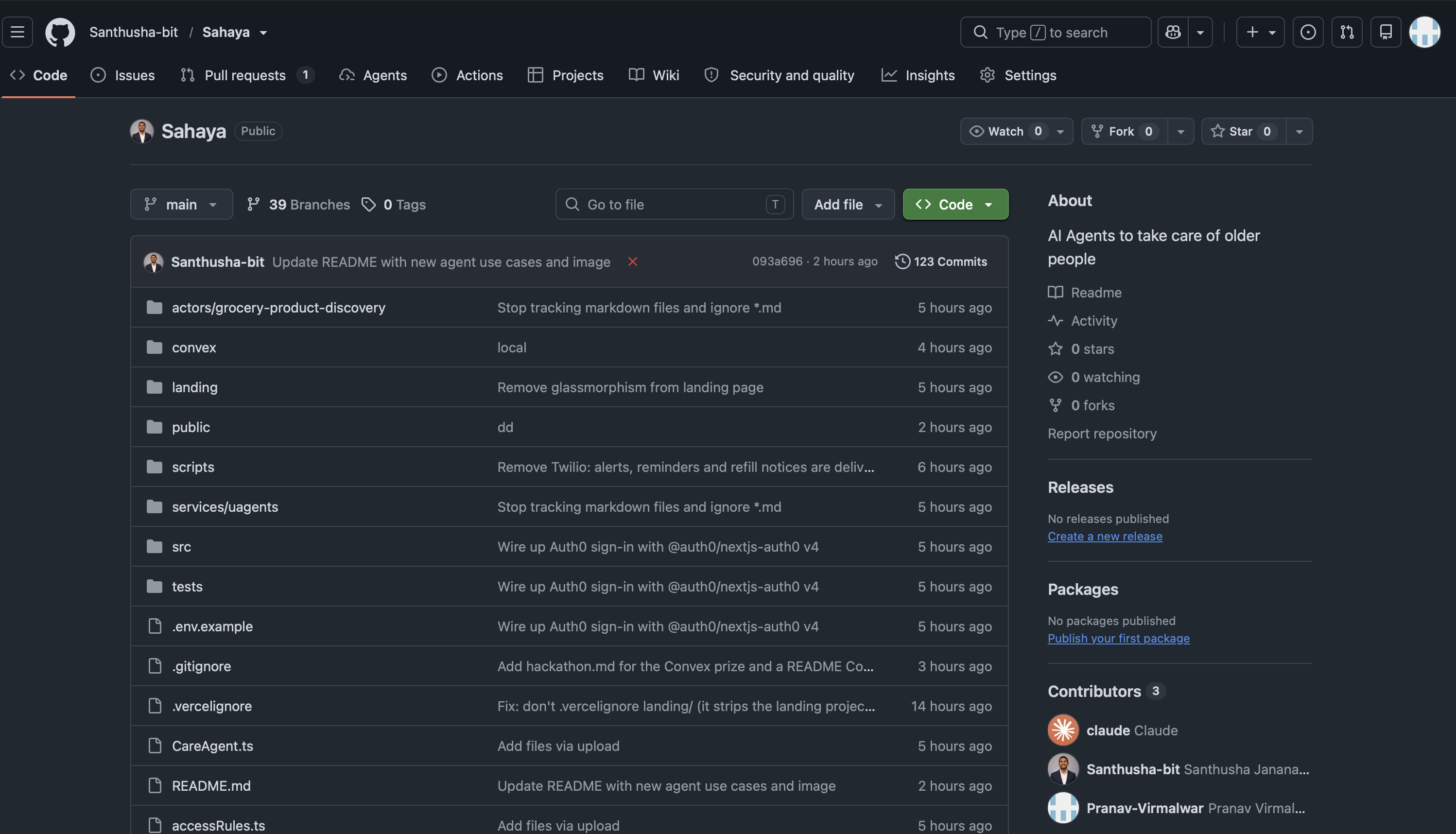
Four agents with isolated memory and an approval gate enforced in code A live app, a landing page, and a working demo for each integration A bill investigation that finds a duplicate charge and drafts the dispute letter Consent gates, de-identified analytics, and audit trails built in from the start
What we learned
Trust matters as much as capability for older adults. Making agents independent and enforcing approval in code made the system safer and easier to reason about than one large prompt.
What's next for Sahaya
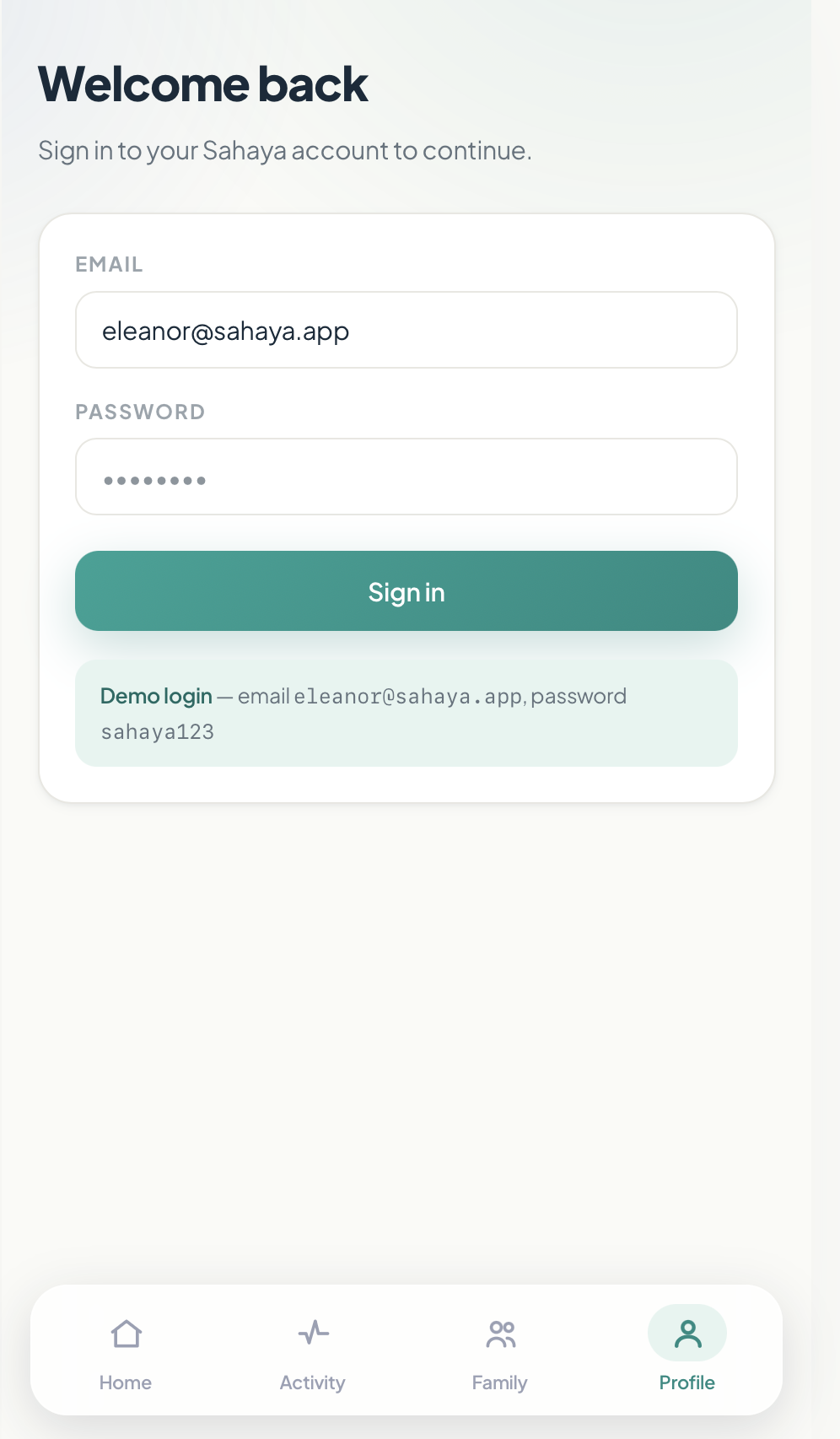
Merge the Auth0 login flow so the app moves past a single demo user. Replace sandbox services with live pharmacy, grocery, and banking integrations. Pilot with real older adults and caregivers. Expand into long-term care cost planning and benefits navigation.
Built With
- atlassian
- auth0
- backboard
- brightdata
- capital-one
- cartesia
- claude
- coinbase
- convex
- elastic
- fetch.ai
- google-gemini
- hyphenate
- moss
- python
- snowflake
- tigerdata
- typescript
- visa

Log in or sign up for Devpost to join the conversation.