-
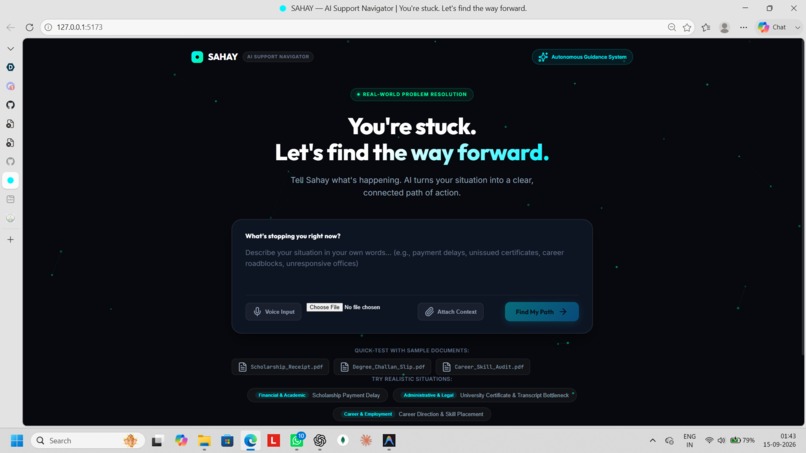
index
-
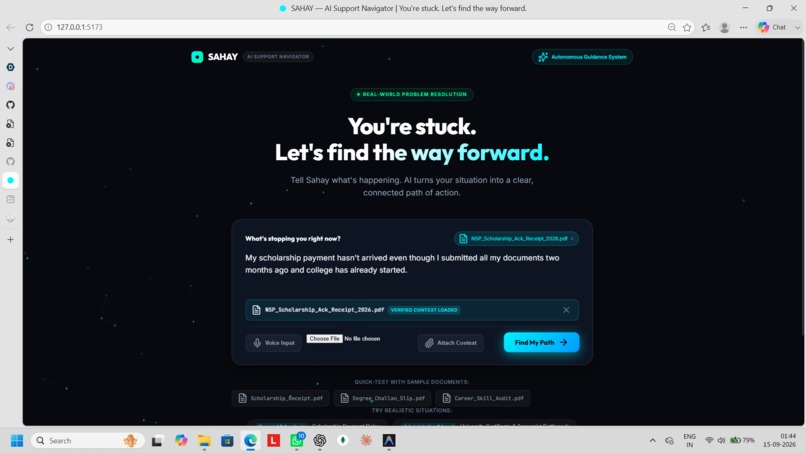
file uploaded
-
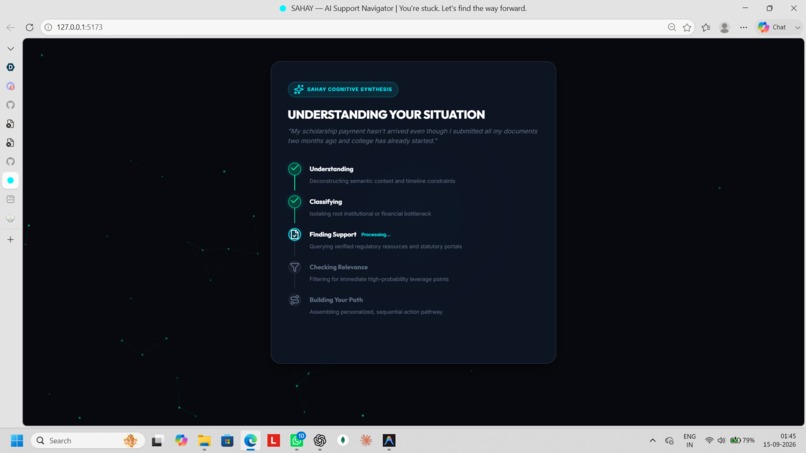
analysing
-
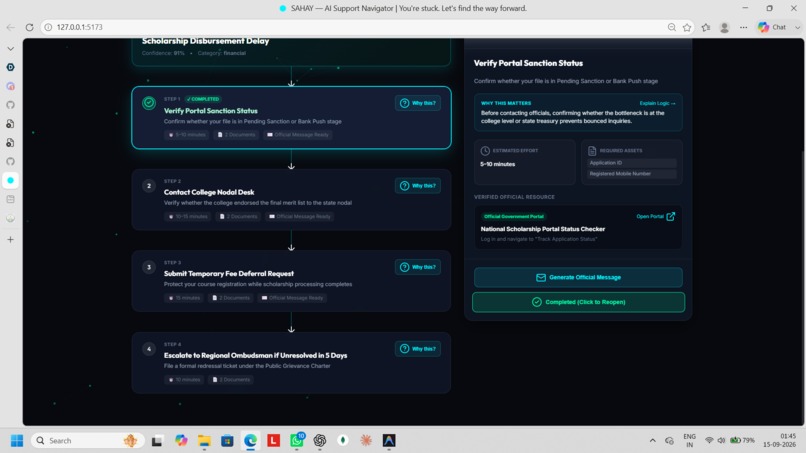
section1
-
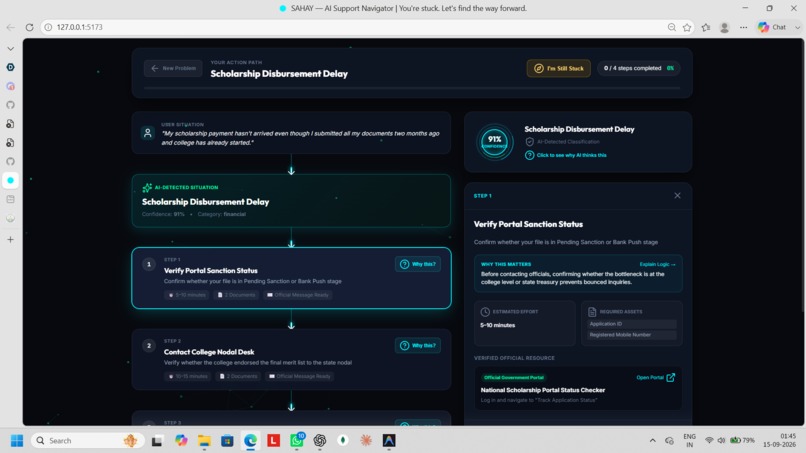
section2
-
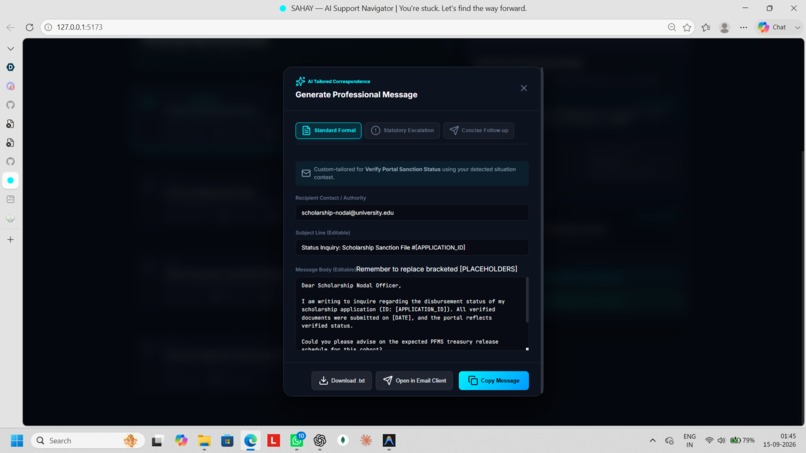
review
-
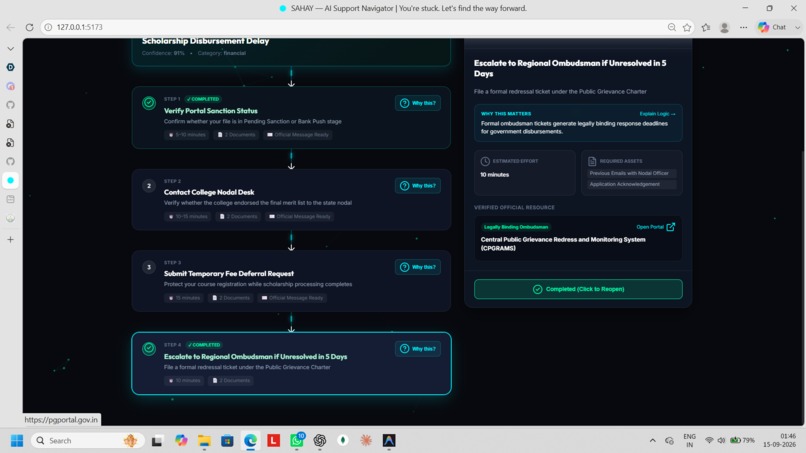
section4
-
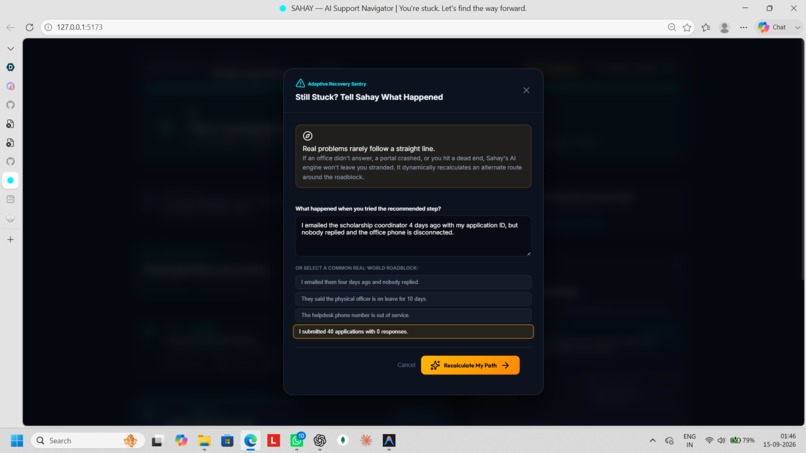
still stuck
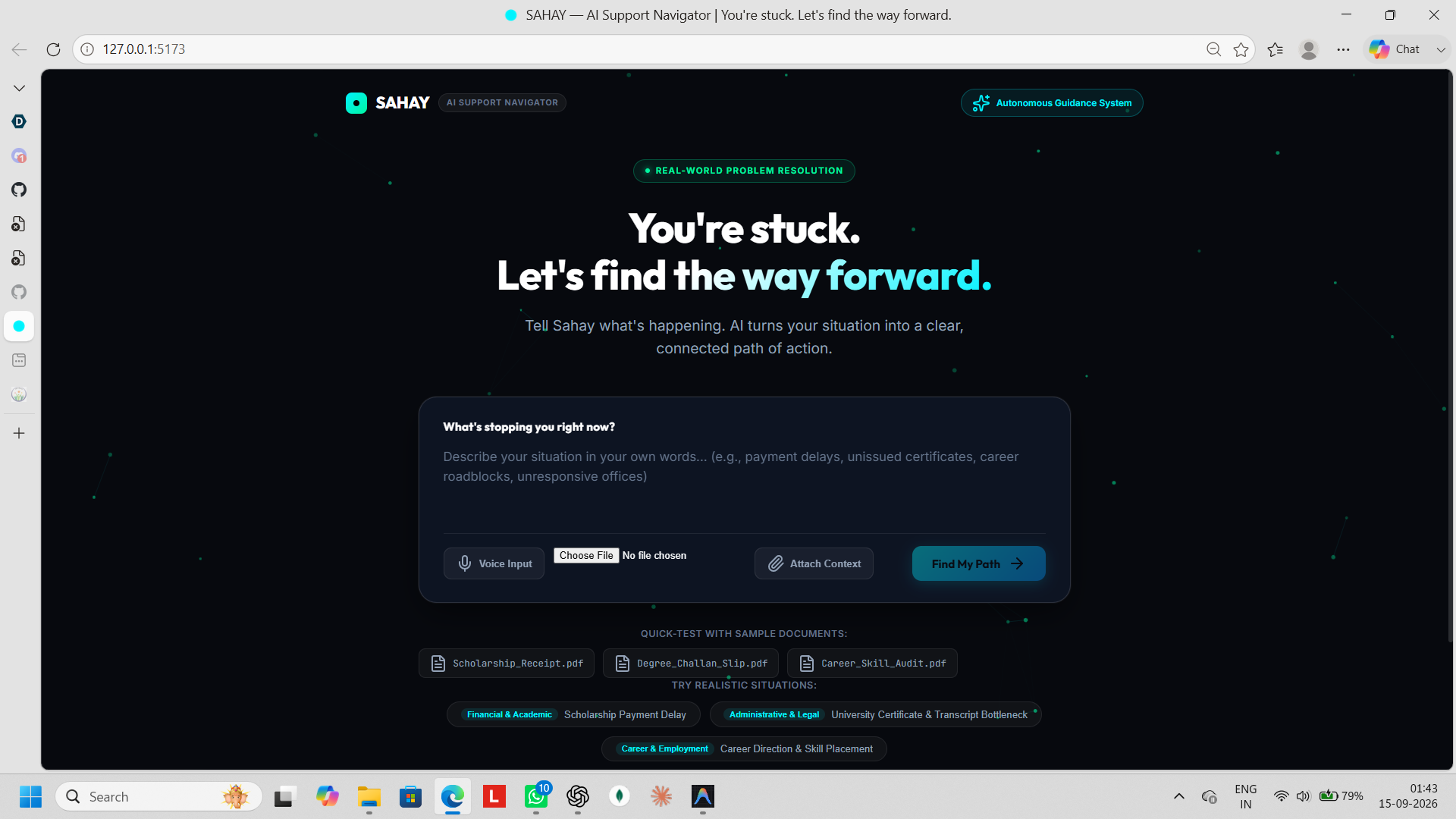
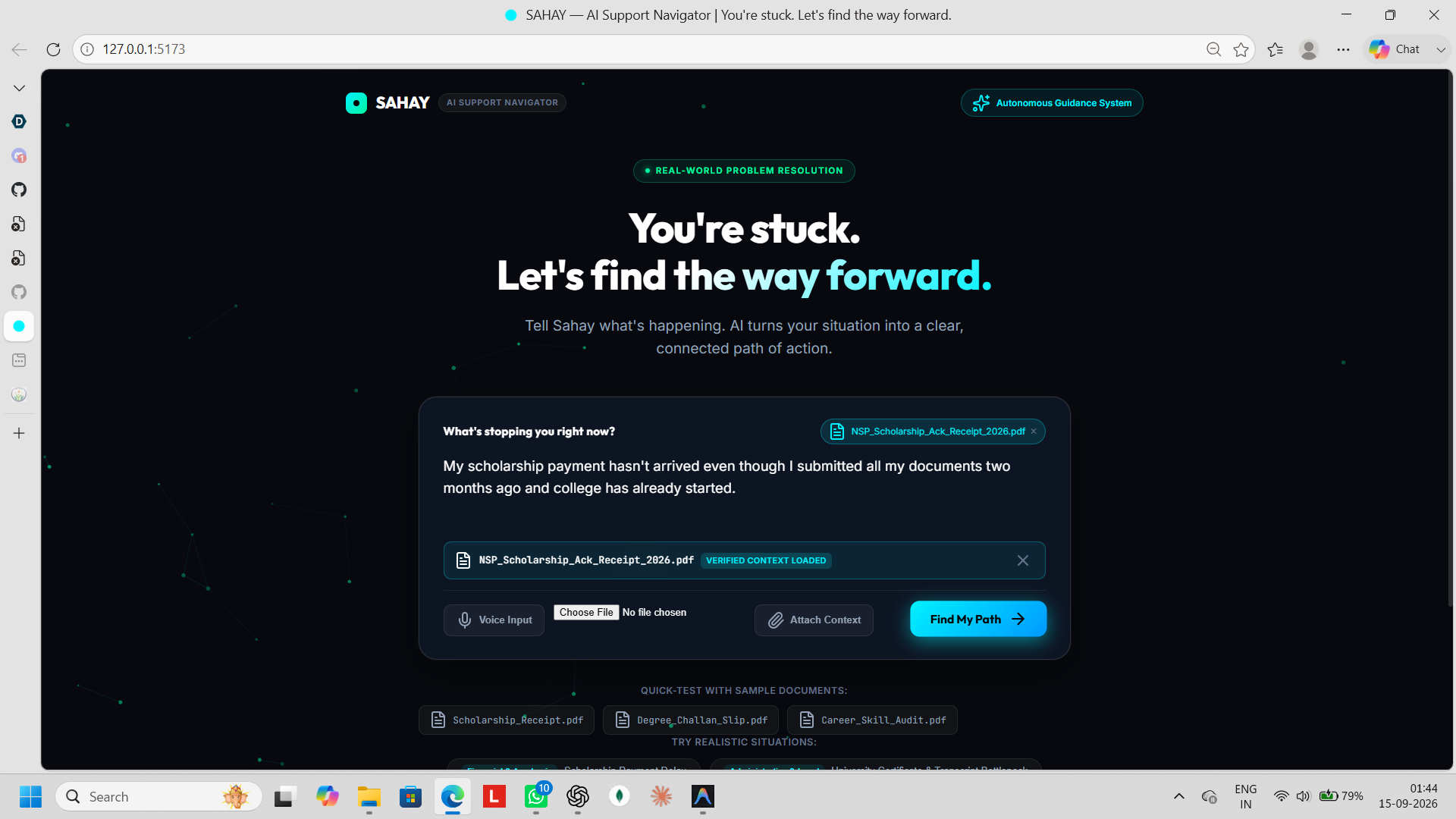
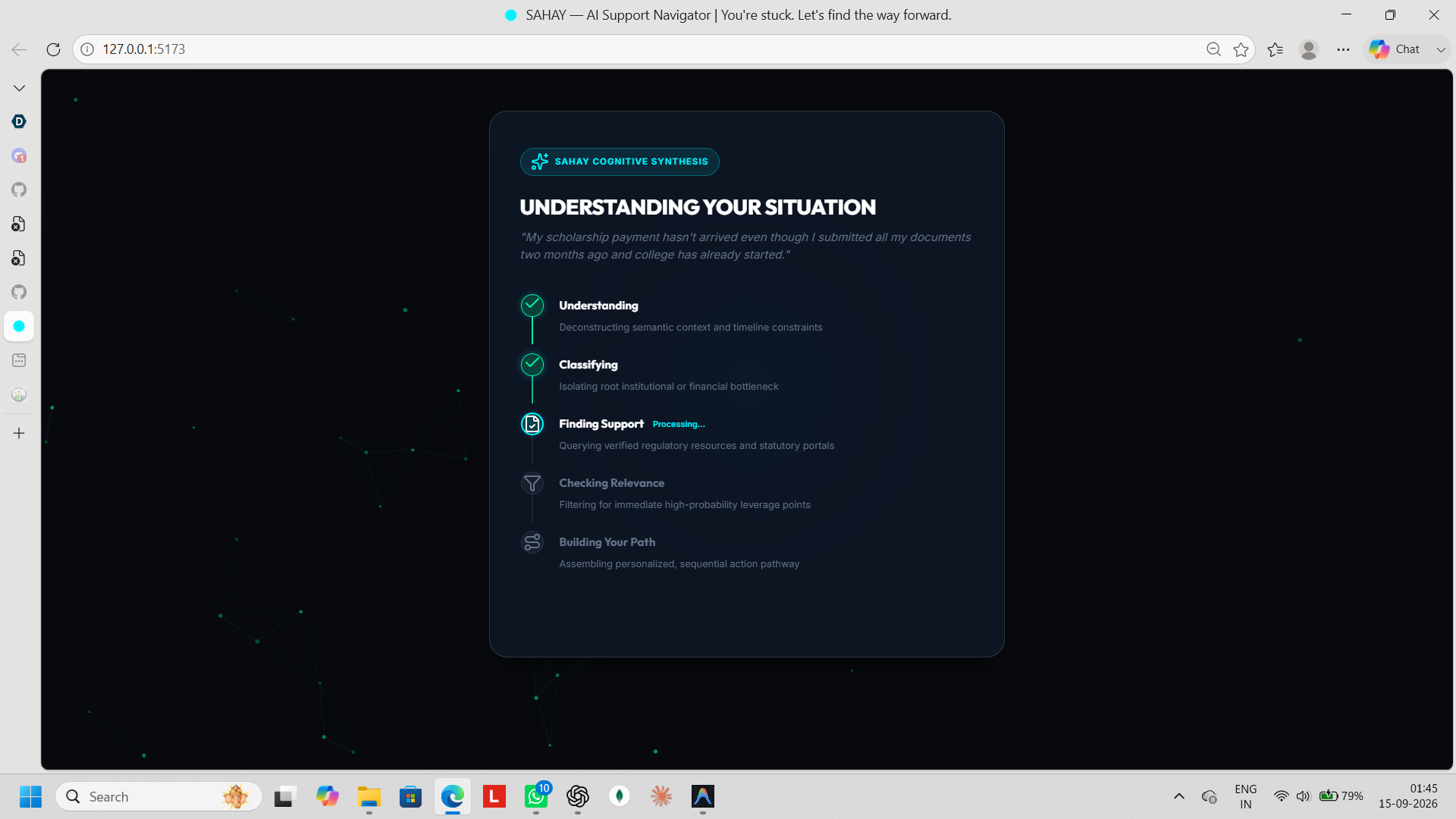
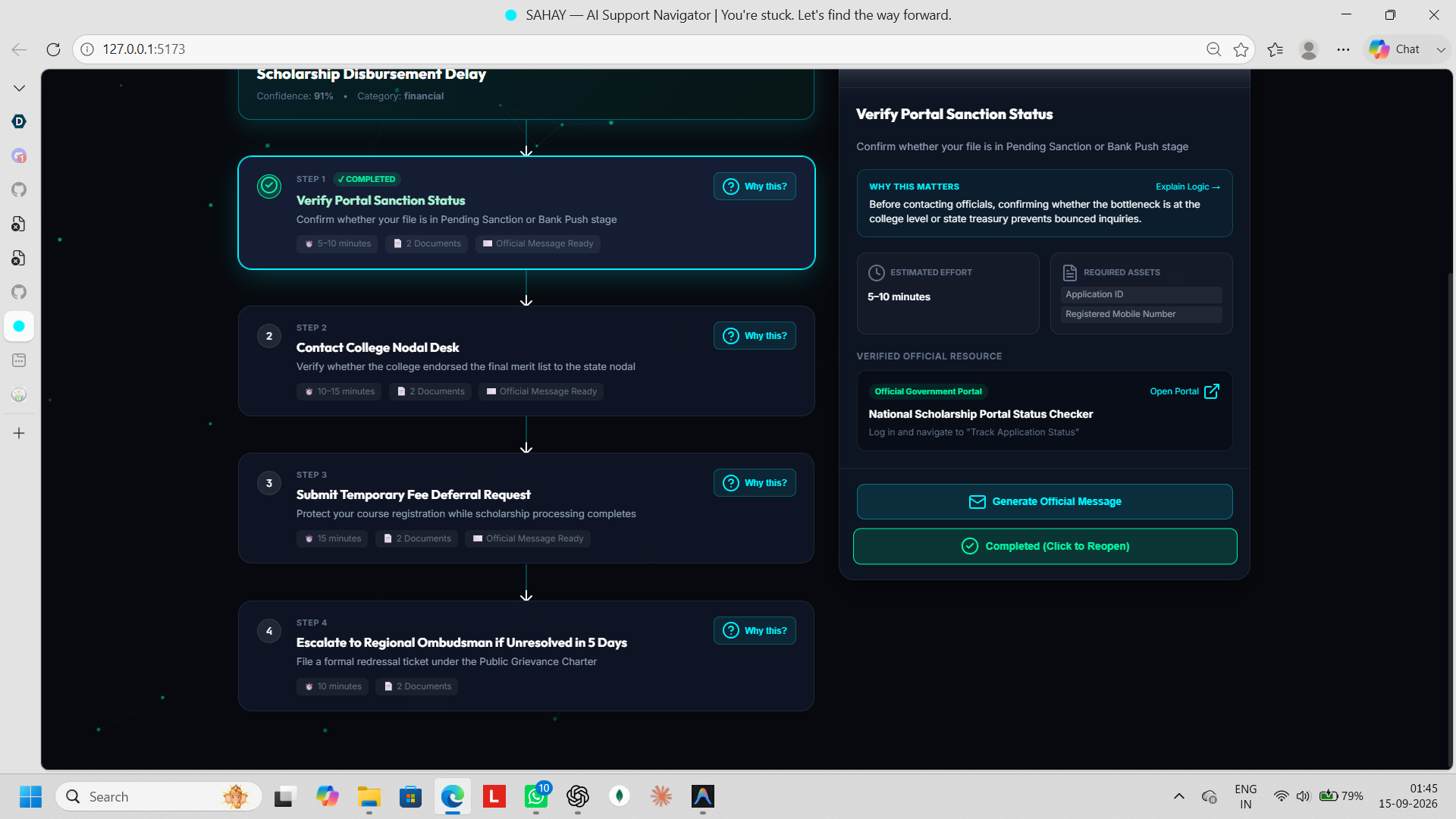
Inspiration
Every year, millions of people hit seemingly insurmountable institutional brick walls:
A university student has their government scholarship disbursal frozen right before semester fee deadlines without any explanatory remarks. A family undergoing medical treatment has an emergency health insurance cashless claim trapped in a circular hospital query loop. A salaried worker finds their retirement Provident Fund (PF) transfer arbitrarily rejected due to minor database mismatches. When faced with real-world institutional gridlock, existing tools fail:
Search engines return outdated, SEO-bloated articles that don't account for individual jurisdiction or documentation. Generic LLM Chatbots output walls of generic, non-committal advice with no verified escalation contacts and zero accountability. Most critically, traditional tools assume linear progress. In the real world, phone numbers disconnect, officers go on leave, and formal emails get ignored. We asked: What if an AI didn’t just answer questions, but actively diagnosed your problem, verified your rights, constructed a customized roadmap to resolution, and dynamically rerouted you the moment you hit a roadblock?
That inspired SAHAY (derived from the Sanskrit सहाय / सहायता, meaning Support or Aid) — an intelligent AI Support Navigator.
What it does
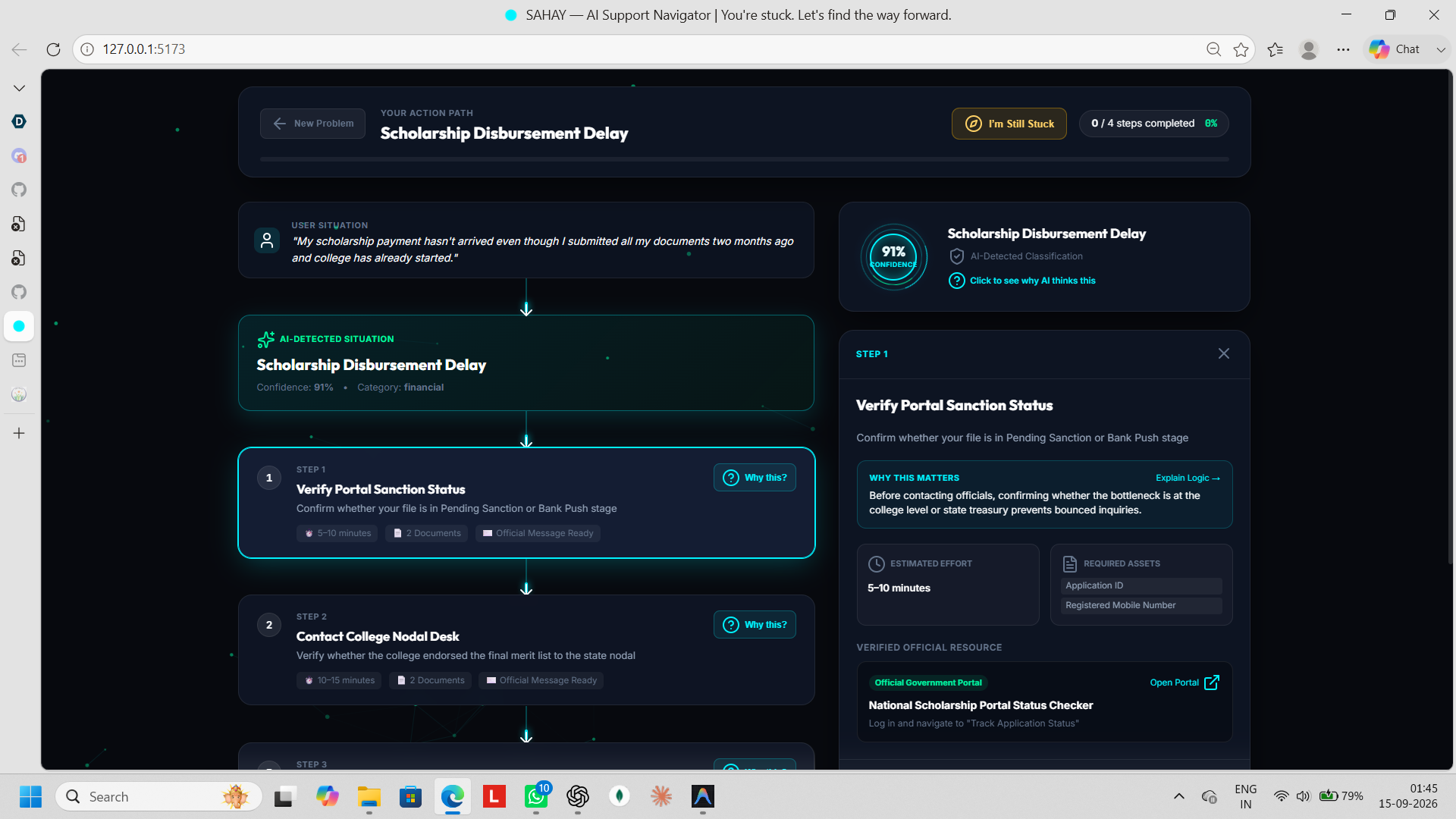
SAHAY turns unstructured, stressful real-world problems into structured, resilient paths to resolution through an interactive 5-stage paradigm:
$$\text{Problem} \longrightarrow \text{Understanding} \longrightarrow \text{Support} \longrightarrow \text{Action} \longrightarrow \text{Resolution}$$
Key Features
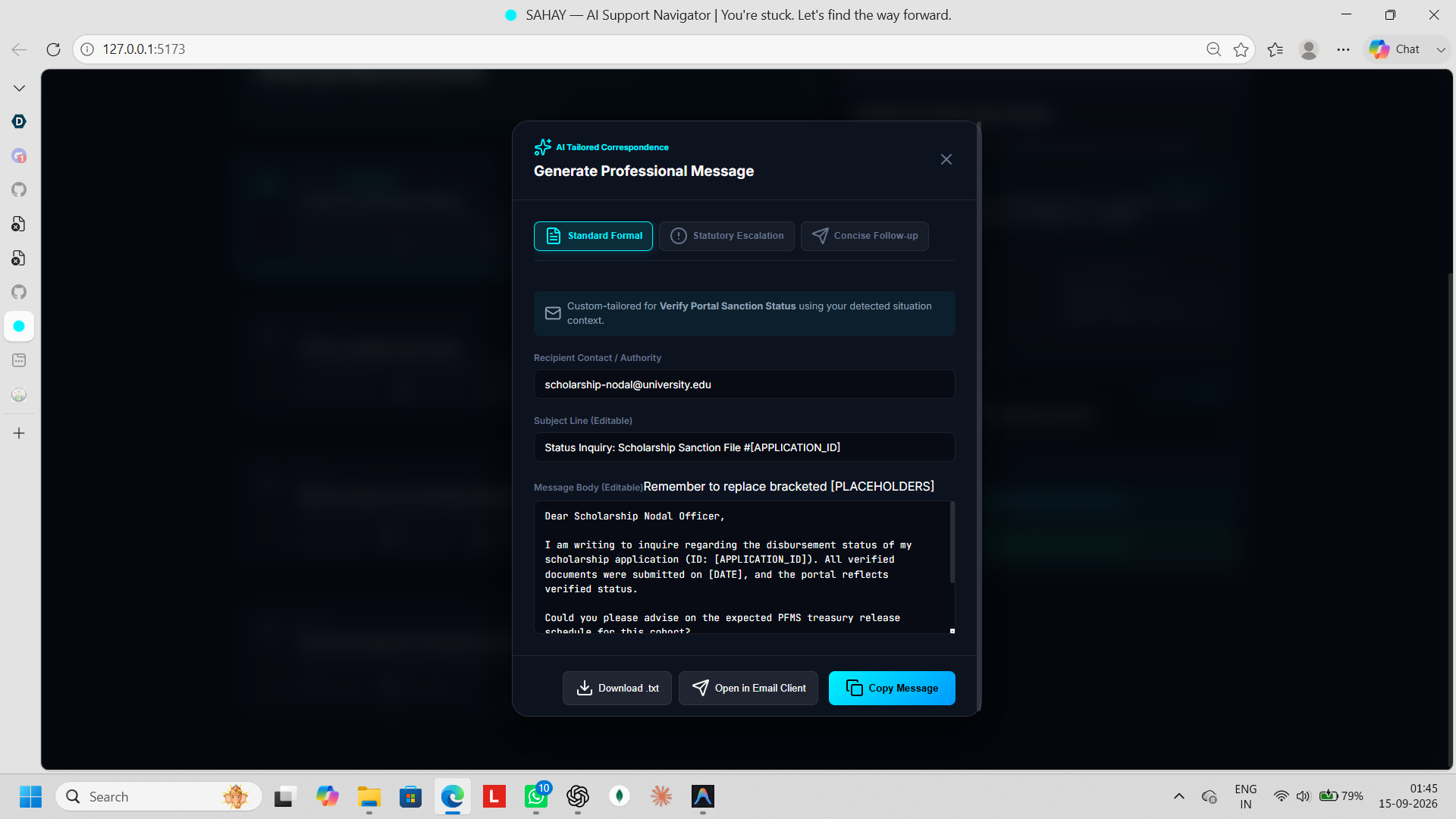
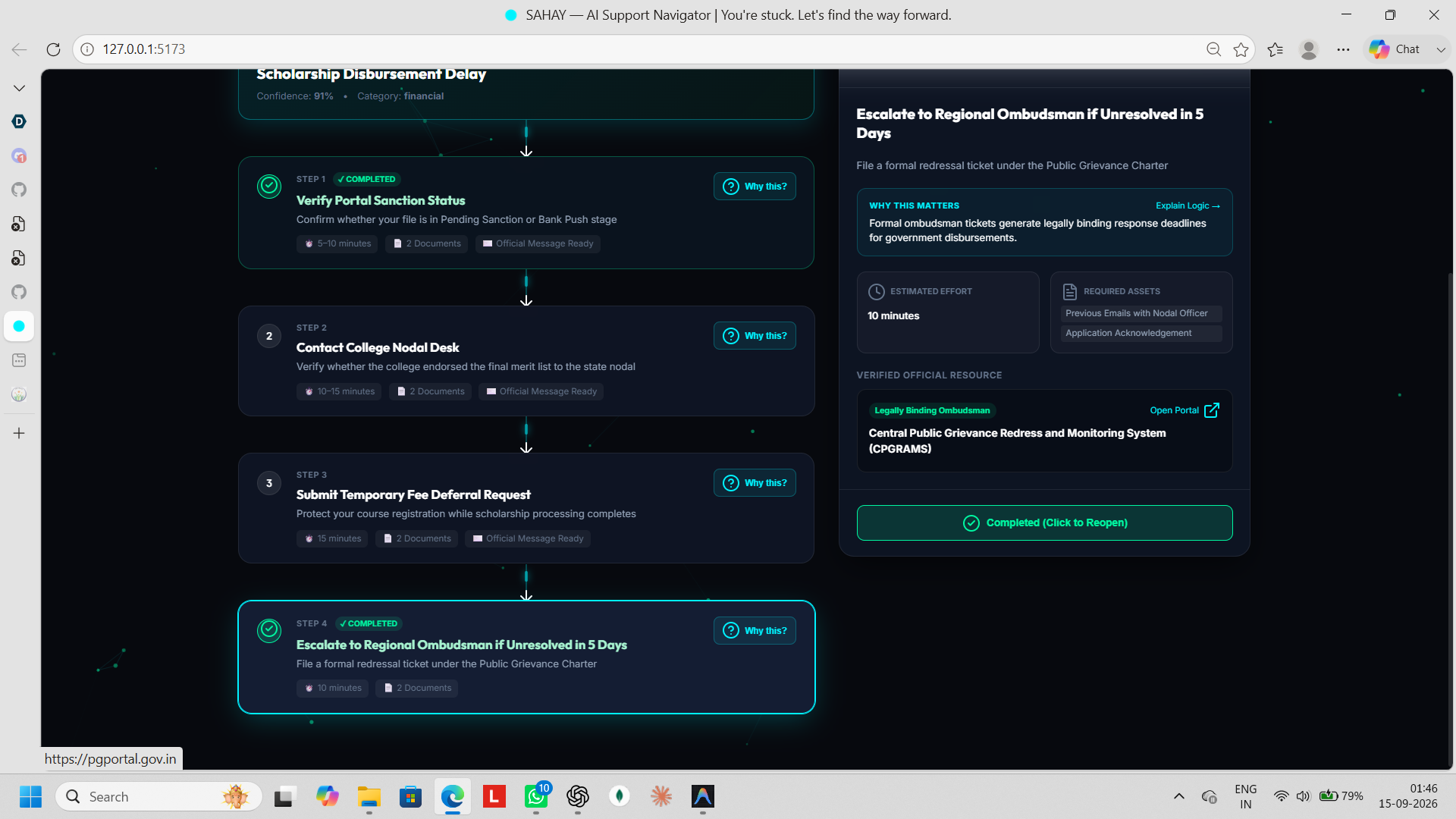
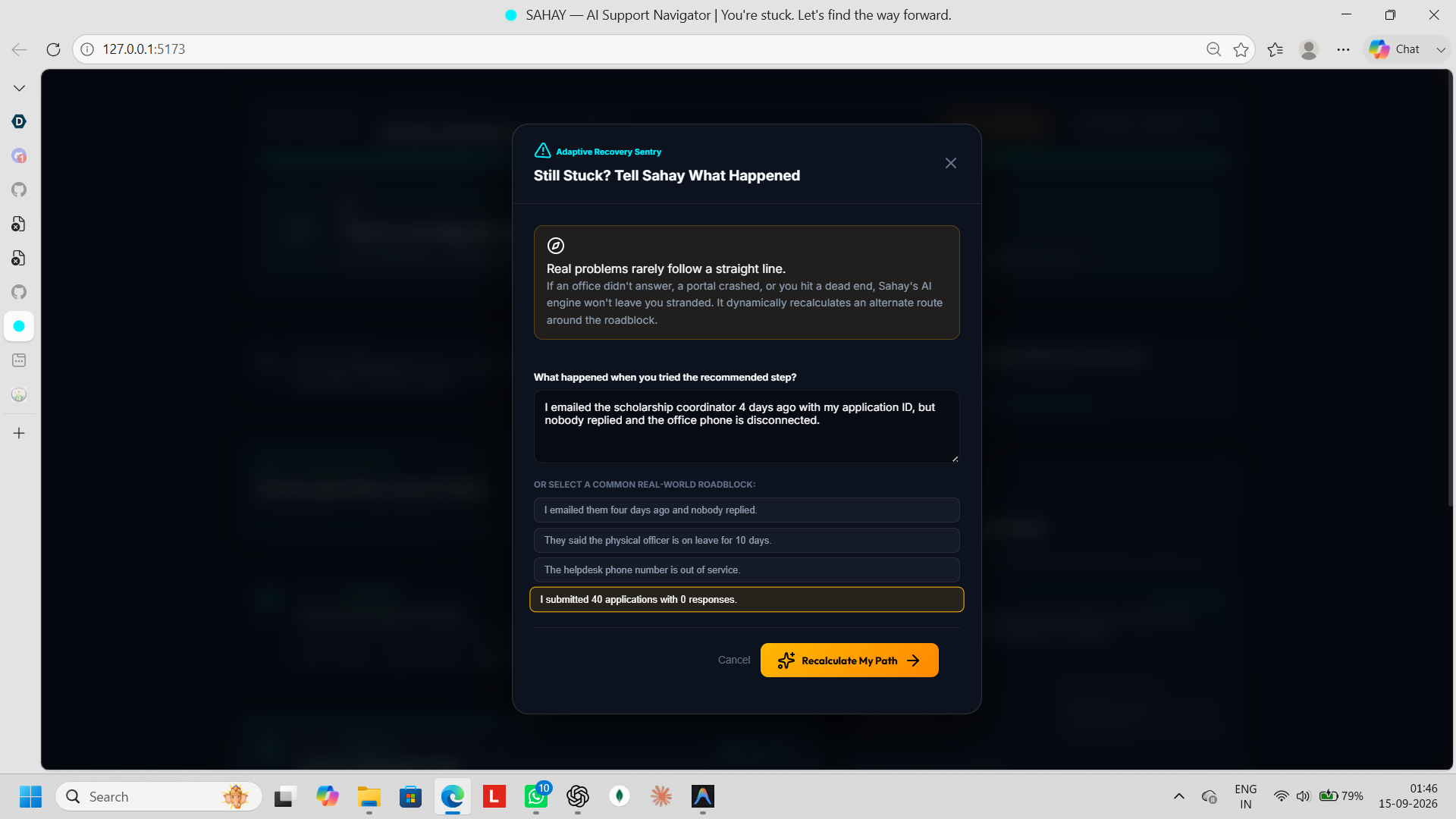
Multi-Modal Intake: Users can type naturally, speak via live voice dictation with an interactive waveform visualizer, or drag-and-drop official notices and rejection letters (.pdf, .docx, .png, .txt). 5-Stage Visual Cognition Engine: Rather than hiding behind a spinner, SAHAY visually demonstrates its reasoning process in real time: Parsing situation semantics & entity extraction Identifying jurisdictional authority & statutory regulations Extracting necessary compliance and evidentiary documentation Querying verified institutional & ombudsman escalation directories Synthesizing a personalized, resilient action pathway Sequential Interactive Action Pathway: Breaks complex legal, academic, and financial battles into clean, digestible milestone cards with dynamic connector tracks. Explainable AI Gyroscopic Confidence Orb: Displays classification certainty ( C \in [0, 100]% ) with an inspectable reasoning modal that articulates detected situational signals and plain-English legal logic. Multi-Tone Message Generator: Automatically drafts tailored correspondence for any step: Standard Formal (Official administrative inquiries) Statutory Escalation (Grievance redressal, CPGRAMS, Ombudsman appeals) Concise Follow-up (Short status checks with reference IDs) Features 1-click clipboard copy, .txt download, and native mailto: client launch. Adaptive Recovery Sentry ("I'm Still Stuck"): If an office doesn't answer or a portal crashes, the user simply clicks "I'm Still Stuck". SAHAY ingests the new obstacle and automatically recalculates an alternative bypass route.
How we built it
SAHAY is engineered as a high-performance, responsive Single-Page Application (SPA) designed for rapid real-time adaptability:
Frontend & State Architecture: Built with React 18, TypeScript, and Tailwind CSS, strictly typed to ensure predictable state propagation across complex multi-step workflows. Motion & Physics-Based UI: Powered by Framer Motion, implementing hardware-accelerated transitions, custom cubic-bezier curves: $$\text{ease} = [0.22, 1, 0.36, 1]$$ and to deliver a cohesive, cinematic user journey. Multi-Modal Processing: Client-side Web Speech API integration for real-time dictation, alongside an extensible document ingestion pipeline that extracts reference identifiers from official notices. API Service Layer: Designed to integrate seamlessly with a Python/Django REST Framework backend, featuring a simulated local neural state engine with realistic network latency and adaptive scenario matching. Decision & Pathway Optimization Model SAHAY models pathway generation as a constrained optimization problem. For a given problem context ( S ), it selects an ordered sequence of action nodes ( P^* = {n_1, n_2, \dots, n_k} ) that maximizes the expected probability of resolution while minimizing user cognitive and administrative effort:
$$P^* = \arg\max_{P} \sum_{i=1}^{k} \left[ \alpha \cdot \text{Impact}(n_i) - \beta \cdot \text{Effort}(n_i) \right]$$
$$\text{Subject to: } \quad \text{Prerequisites}(n_i) \subseteq {n_1, \dots, n_{i-1}}$$
When real-world obstruction ( O ) is reported via the sentry, the pathway dynamically updates:
$$P_{\text{recalculated}} = \mathcal{R}(P^*, O)$$
Challenges we ran into
Modeling Non-Linear Human Situations: Bureaucracy is rarely a straight line. Creating a data structure that could transition gracefully from a primary action path to an adaptive bypass route without losing prior progress required rigorous state management. Preventing Cognitive Overload: Users seeking support are already anxious. Balancing statutory and legal accuracy with a clean, calming, and empowering interface required dozens of design iterations on typography, color palettes, and glassmorphic depth. Multi-Modal Synchronization: Ensuring voice input, sample document loaders, and file dropzones all feed into the same unified problem-interpretation state without race conditions. Fluid Motion Without Layout Thrashing: Ensuring that dynamic entrance animations, progress bars, and modal dialogs run at a solid 60 FPS across desktop and mobile browsers.
Accomplishments that we're proud of
Zero Chat Clutter: We resisted the temptation to make "just another ChatGPT wrapper." SAHAY is a purpose-built tactical navigator with tactile components. Explainable AI as a First-Class Citizen: Users don't have to blindly trust the AI; the Confidence Orb explicitly reveals why each step was chosen and what statutory safeguards protect them. The "I'm Still Stuck" Architecture: Building an AI system that acknowledges failure modes and provides realistic contingency plans. Sub-Second Build & Type Safety: Clean compilation with 0 TypeScript warnings, and a production bundle built in under 800ms.
What we learned
Support is about agency, not just information: Simply telling someone what the law says doesn't solve their problem. Providing them with the exact recipient, pre-drafted grievance text, and an escalation ladder gives them immediate agency. Transparency reduces user panic: Showing the AI’s progressive analysis stages through visual feedback transforms a stressful waiting period into an engaging, trust-building experience.
What's next for SAHAY - AI Support Navigator
Direct Ombudsman & Portal API Integrations: Direct filing capabilities with platforms like CPGRAMS, RTI Online, and state grievance portals via authenticated APIs. Multi-Lingual Voice Support in 12+ Regional Languages: Expanding voice dictation and synthesized guidance to local vernacular languages so non-English speakers can navigate complex institutional portals with equal confidence. Automated Timeline Sentry: Background cron watchers that notify users when statutory response deadlines (e.g., RTI 30-day window or citizen charter timelines) have elapsed, prompting automated next-tier escalation.
Built With
- css3
- html5
- node.js
- react
- tailwindcss
- typescript
- vite

Log in or sign up for Devpost to join the conversation.