Inspiration
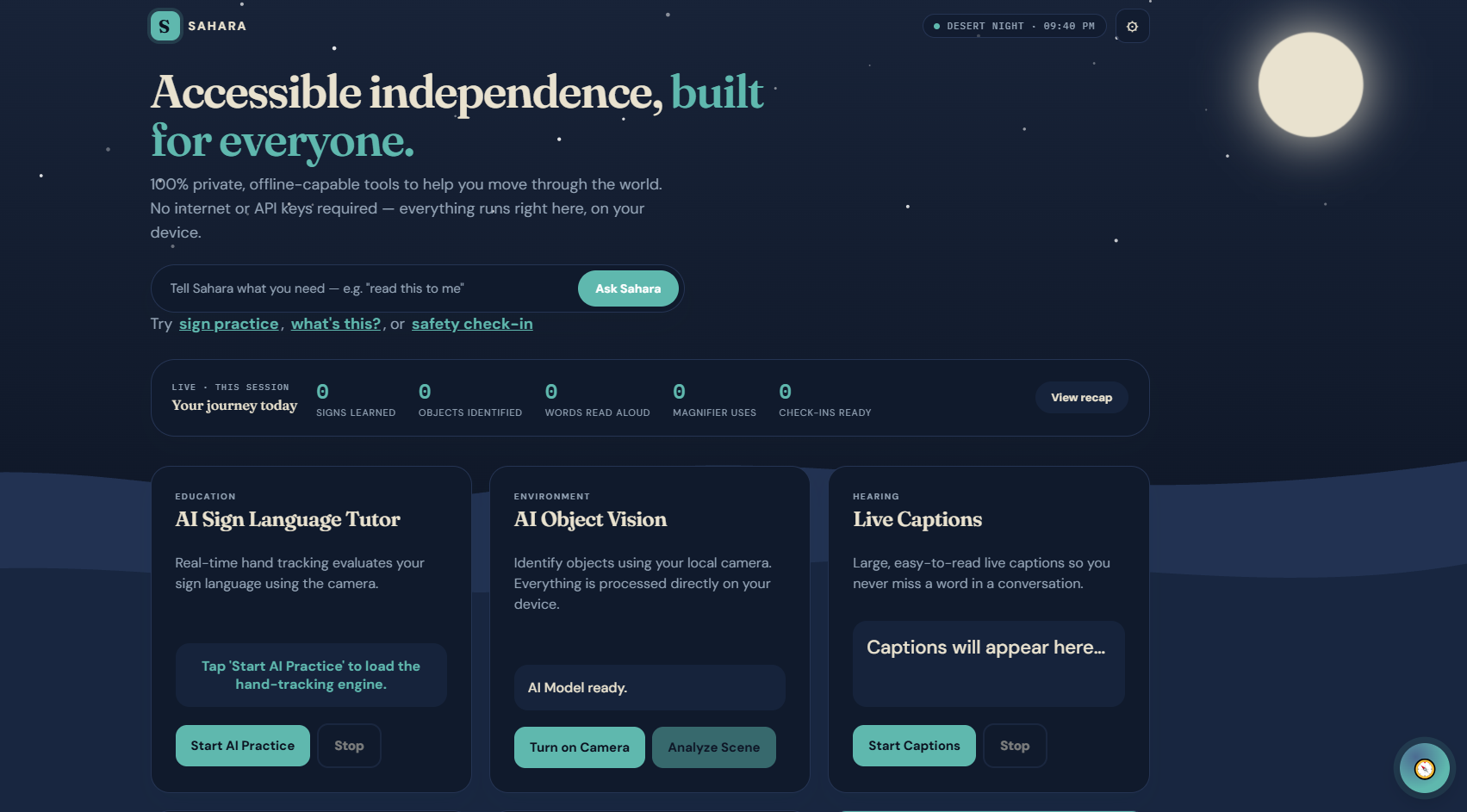
Accessibility tools are often scattered across multiple applications, making everyday tasks more difficult for people with disabilities. We wanted to create a single platform that combines essential AI-powered accessibility features into one simple, intuitive experience. Our goal was to build a solution that promotes independence while keeping user privacy in mind by processing as much as possible directly in the browser.
What it does
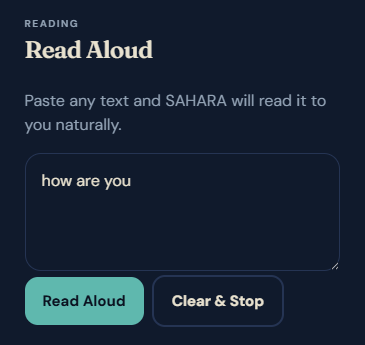
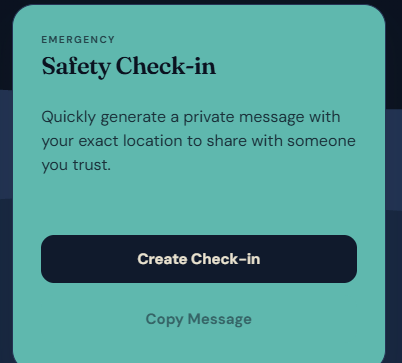
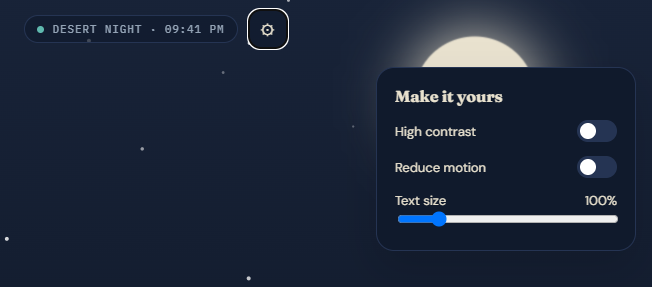
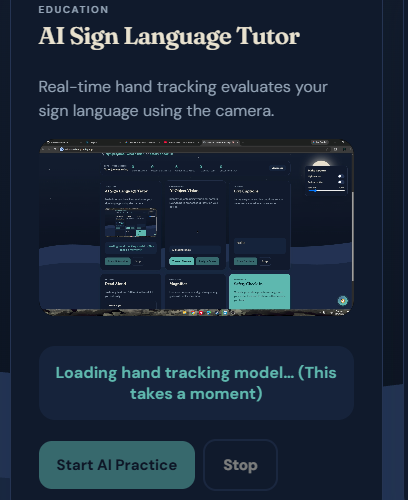
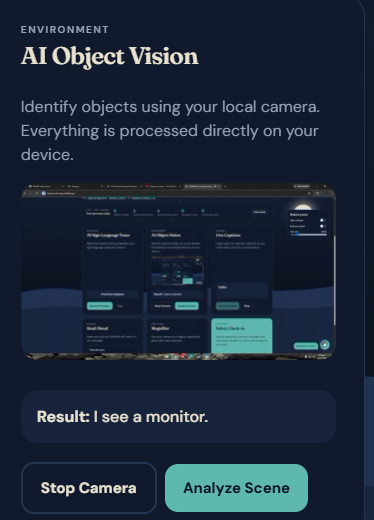
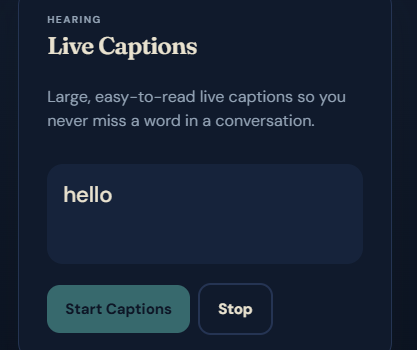
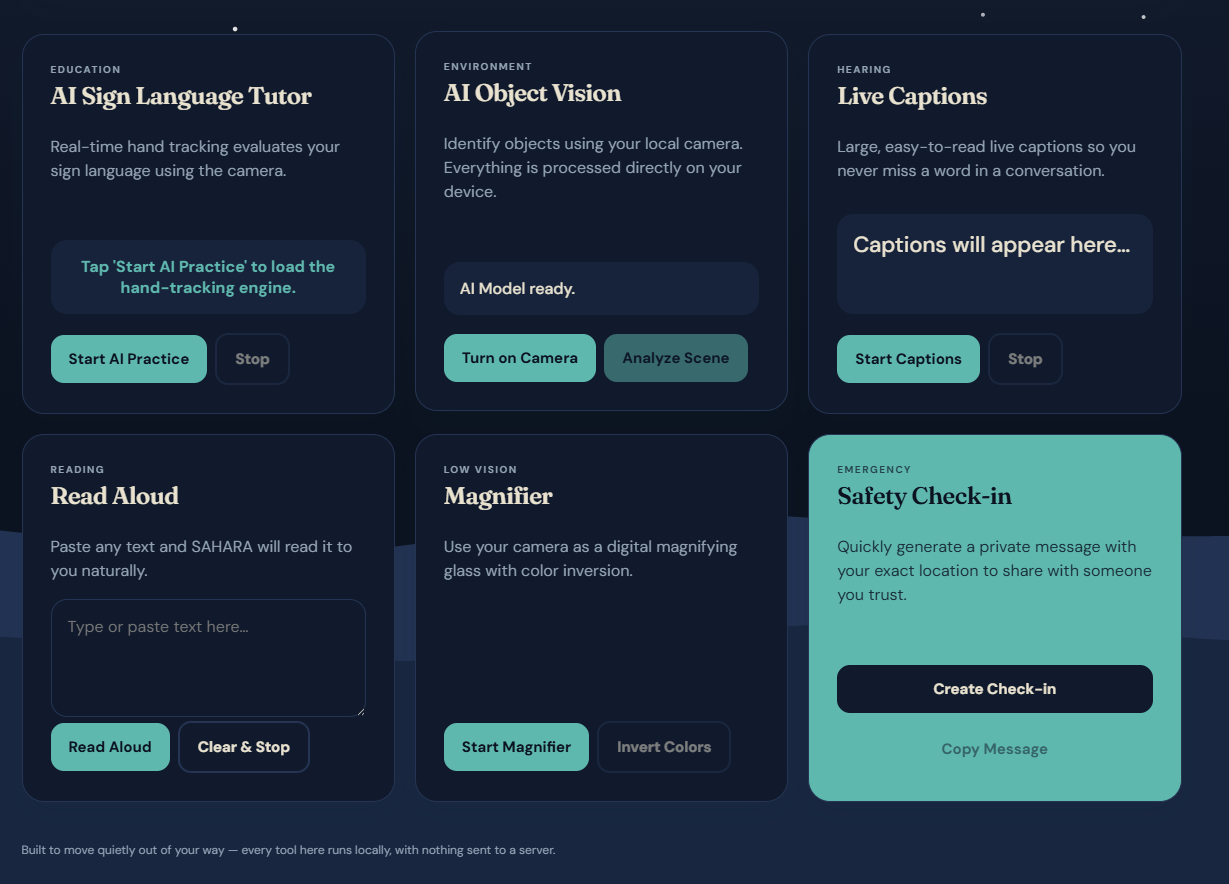
SAHARA is an AI-powered accessibility web application that brings together multiple assistive tools in one place. It features an AI Sign Language Tutor for real-time hand tracking, AI Object Vision for recognizing everyday objects, Live Speech-to-Text Captions, Text-to-Speech Read Aloud, a Digital Magnifier with zoom and color inversion, and a Safety Check-in tool that creates a location message users can quickly share. It also includes accessibility settings like high contrast mode, larger text, reduced motion, and an interactive guide to help users navigate the application.
How we built it
We built SAHARA using HTML, CSS, and JavaScript for the frontend, while ML5.js and TensorFlow.js power the AI features. MobileNet is used for object recognition and HandPose enables real-time sign language practice. We also integrated the Web Speech API for speech recognition and text-to-speech, along with browser Camera and Geolocation APIs to provide vision and safety features. The application is designed to run directly in the browser without requiring backend processing for its core functionality.
Challenges we ran into
One of the biggest challenges was integrating multiple browser APIs into a single seamless experience. Real-time computer vision required careful optimization to keep the application responsive, while handling camera, microphone, and location permissions consistently across browsers added additional complexity. Designing an interface that remains simple and accessible while supporting many different assistive tools was another important challenge.
Accomplishments that we're proud of
We're proud of building a complete accessibility platform instead of focusing on a single feature. Successfully combining AI-powered vision, speech, sign language recognition, and accessibility tools into one application was a major milestone. We're also proud that many of these features run locally in the browser, helping improve user privacy while demonstrating how AI can make technology more inclusive.
What we learned
This project gave us hands-on experience with browser-based AI, computer vision, speech technologies, accessibility-focused design, and integrating multiple machine learning models into a single web application. We also learned how important thoughtful UI/UX decisions are when designing software for users with different accessibility needs.
What's next for SAHARA
We plan to expand SAHARA by supporting additional sign languages, adding OCR for reading printed text, improving object recognition with more advanced AI models, introducing voice-controlled navigation, integrating emergency contacts for one-tap alerts, creating personalized accessibility profiles, adding multilingual support, and releasing it as a Progressive Web App for a better mobile experience.
Built With
- accessibility
- canvas-api
- computer-vision
- css3
- geolocation-api
- handpose
- html5
- javascript
- machine-learning
- mediadevices-api
- ml5.js
- mobilenet
- offline-first
- privacy
- tensorflow.js
- ui-design
- web-speech-api

Log in or sign up for Devpost to join the conversation.