-
-
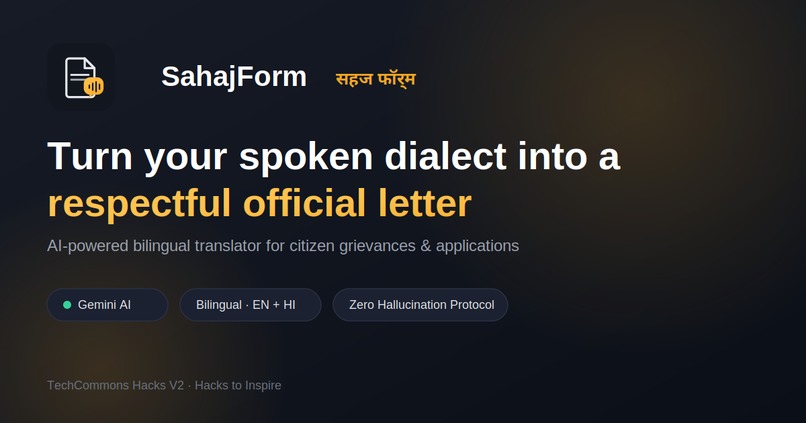
Project SahajForm
-
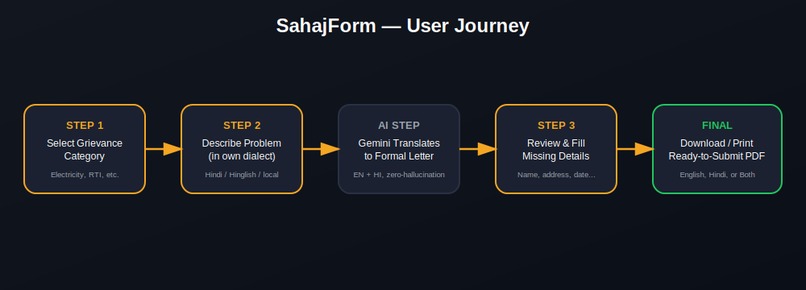
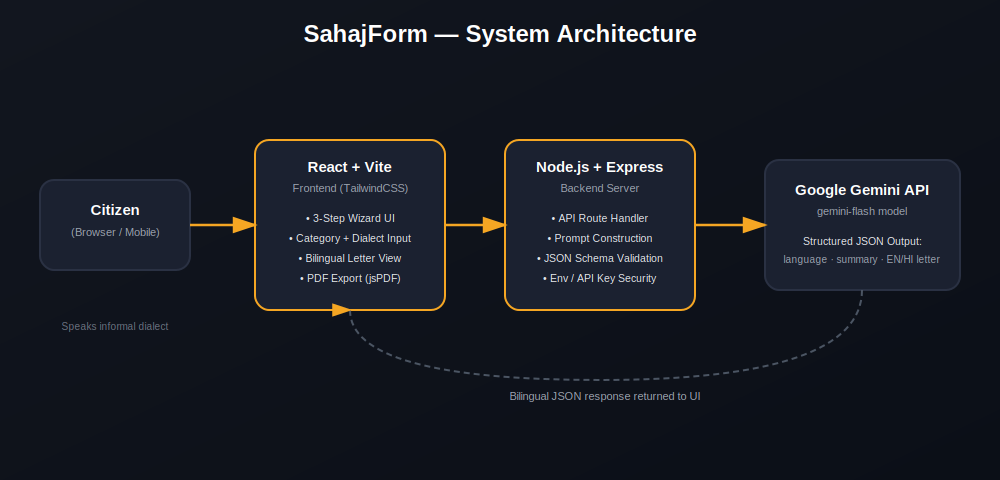
Architecture of Project
-
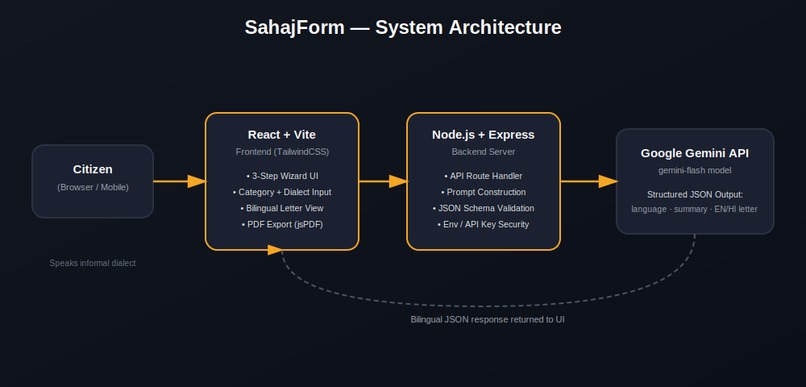
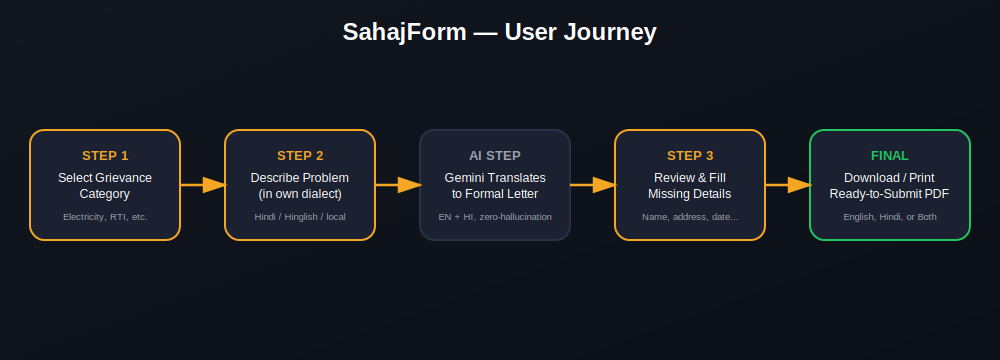
Flowchart of Website
-
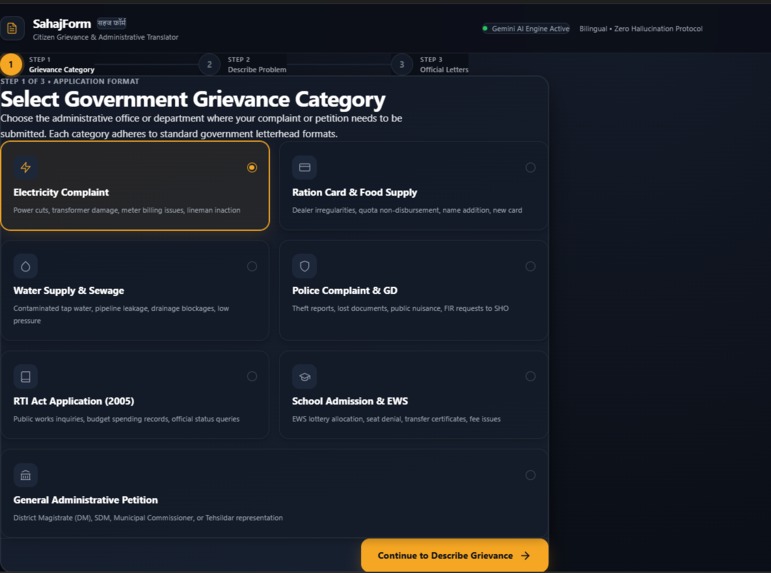
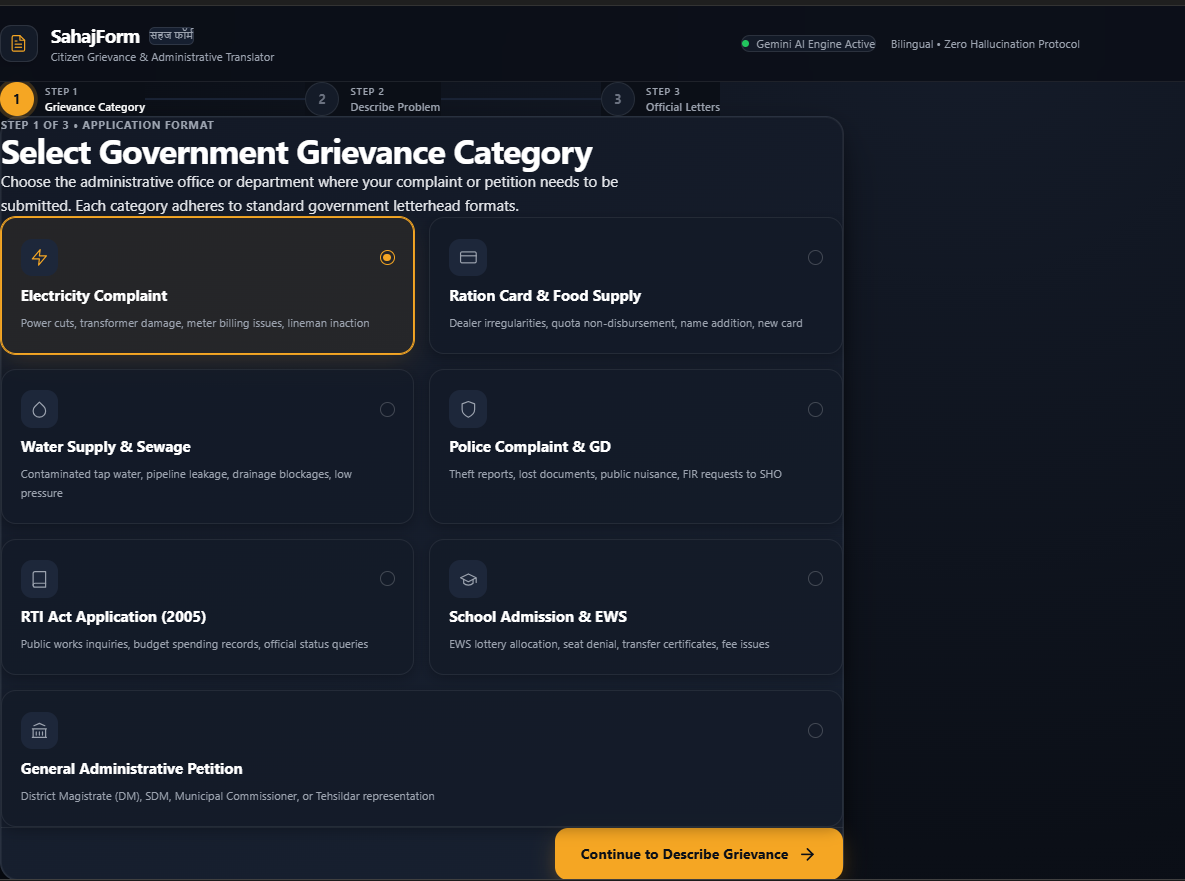
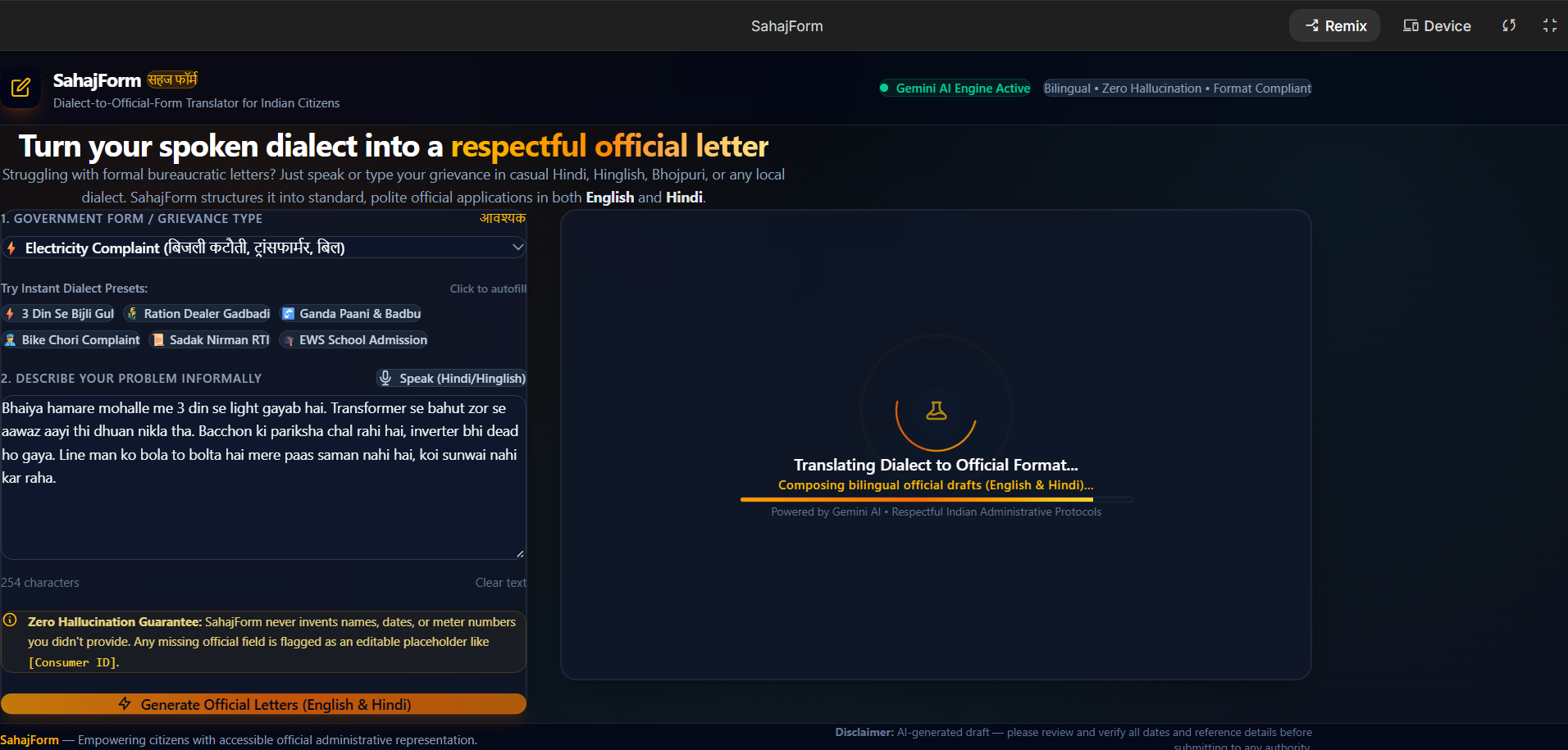
Website page
-
-
-
-
-
-
-

Inspiration
Millions of Indian citizens, especially in rural and semi-urban areas, struggle to write formal government complaint or application letters. They can only express their problems in informal Hindi, Hinglish, or local dialects — they don't know the formal language of bureaucracy. As a result, many genuine grievances (electricity, ration cards, police complaints) never get properly filed, or get rejected due to incomplete forms. We realized AI could bridge this digital-literacy gap — without any language barrier standing in the way.
What it does
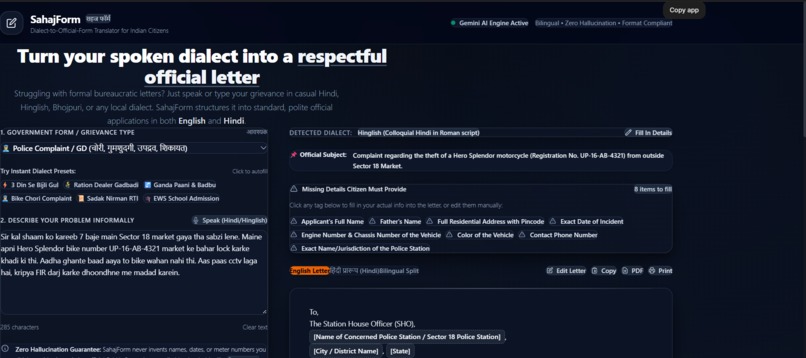
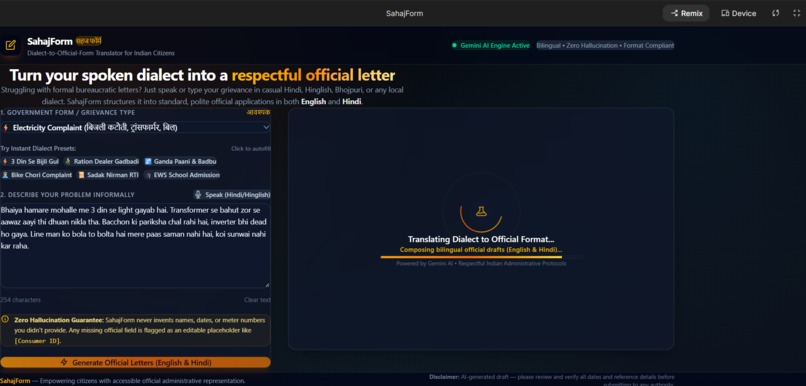
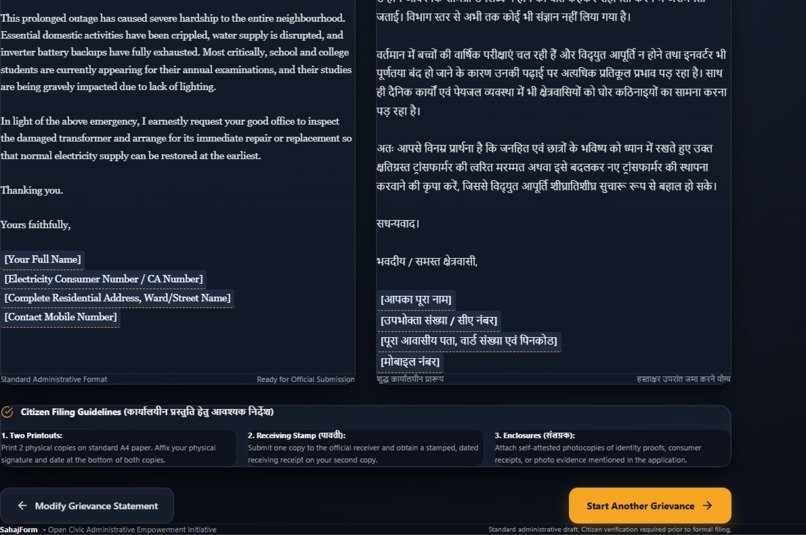
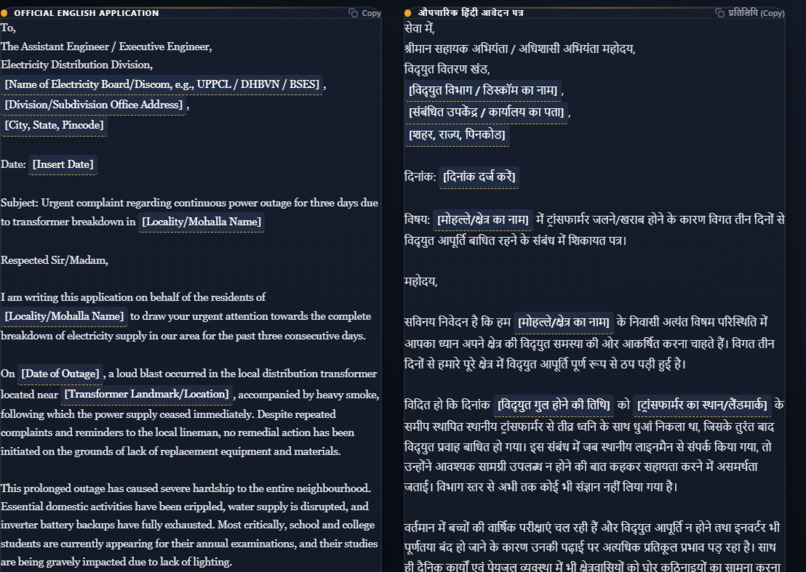
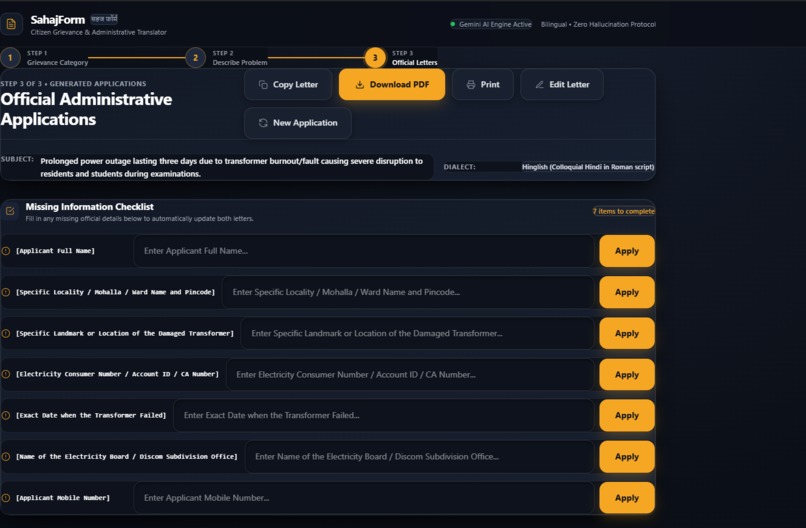
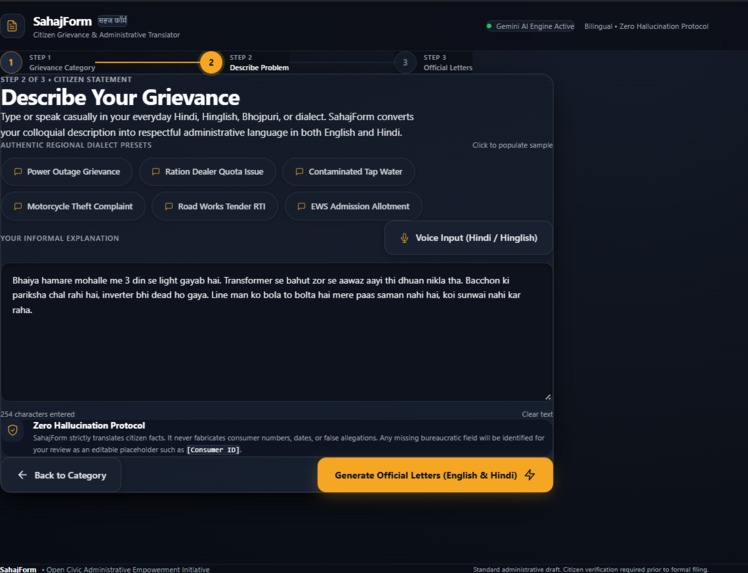
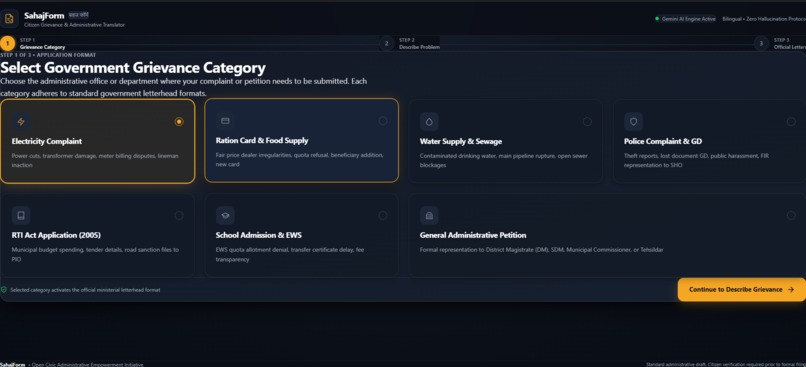
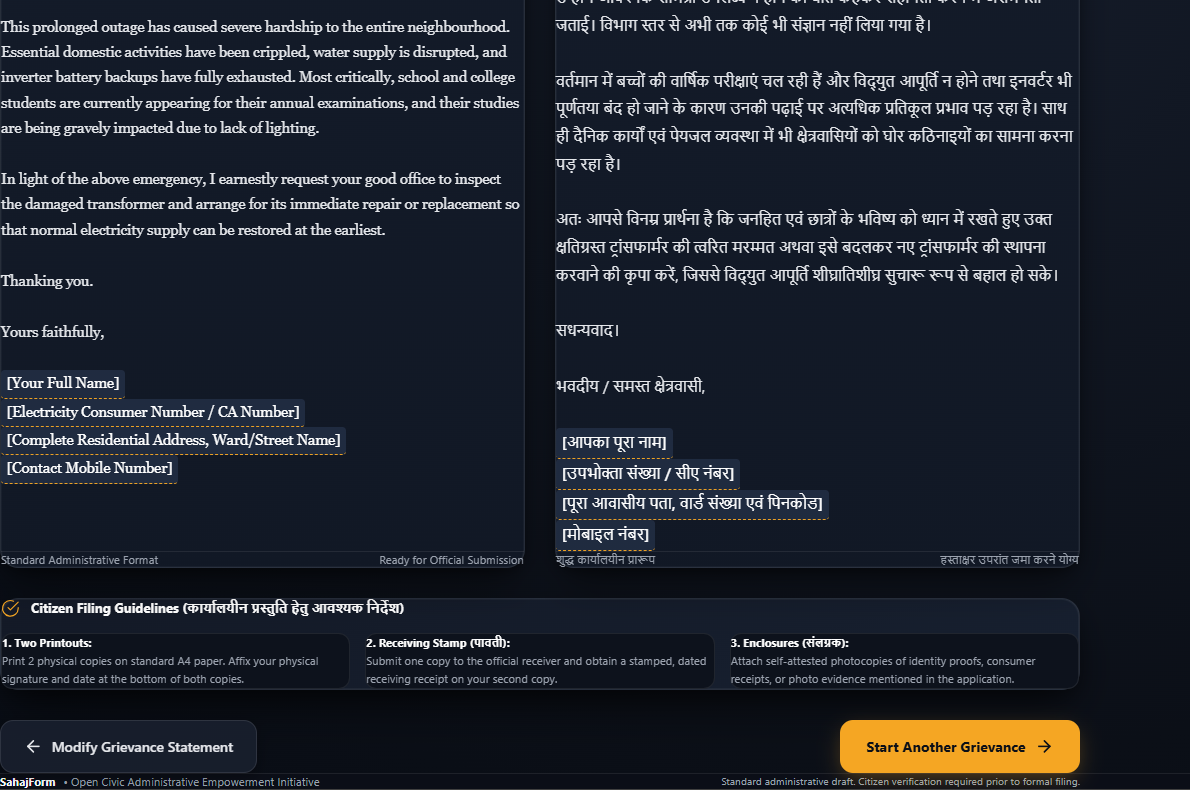
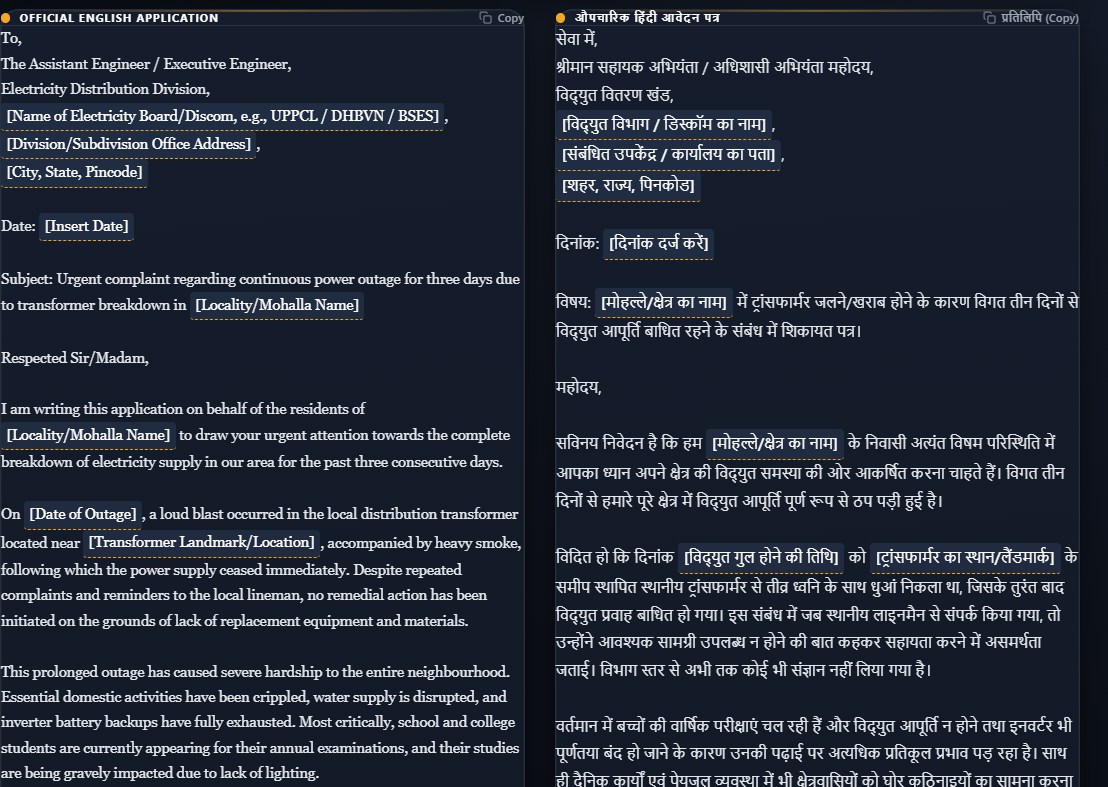
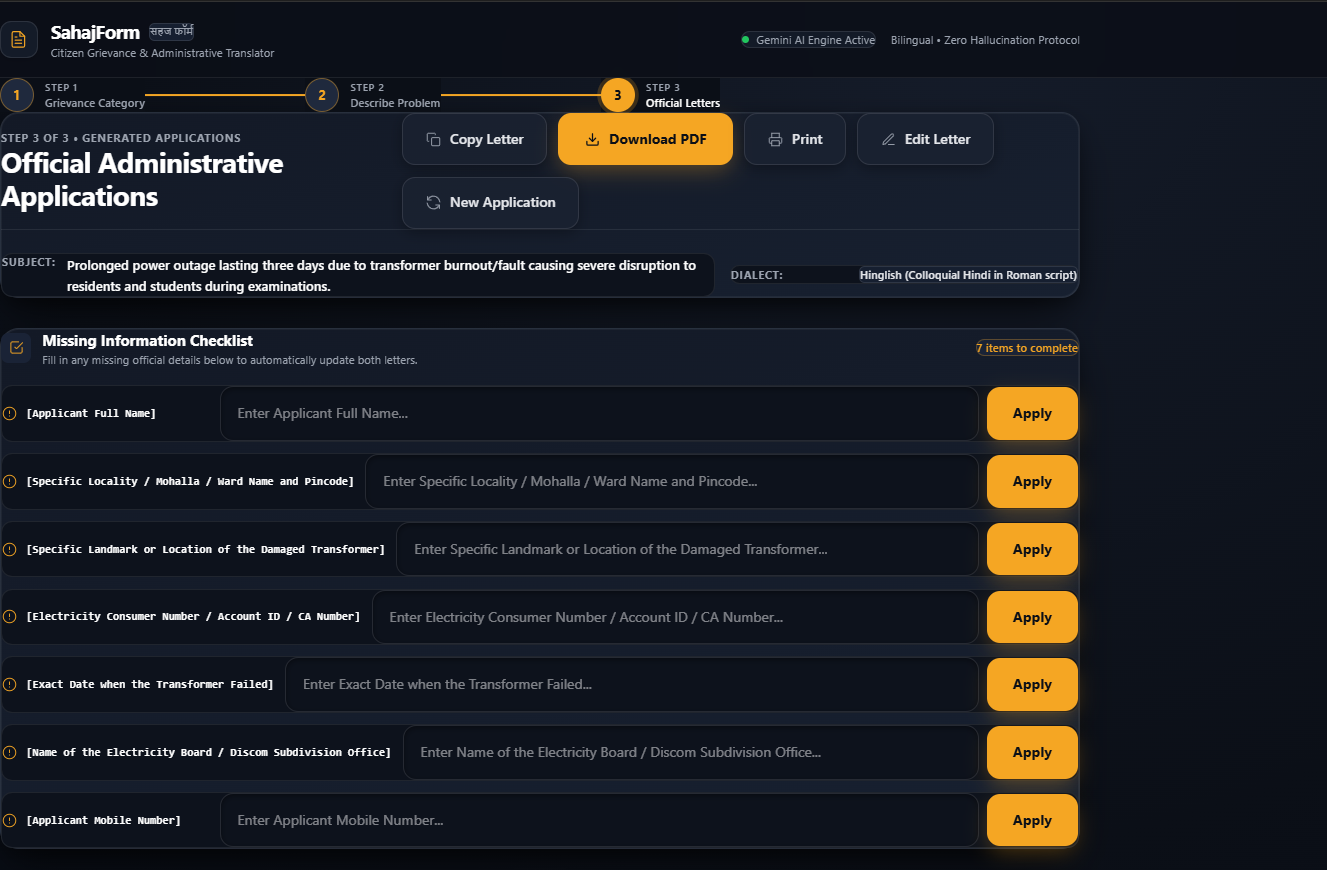
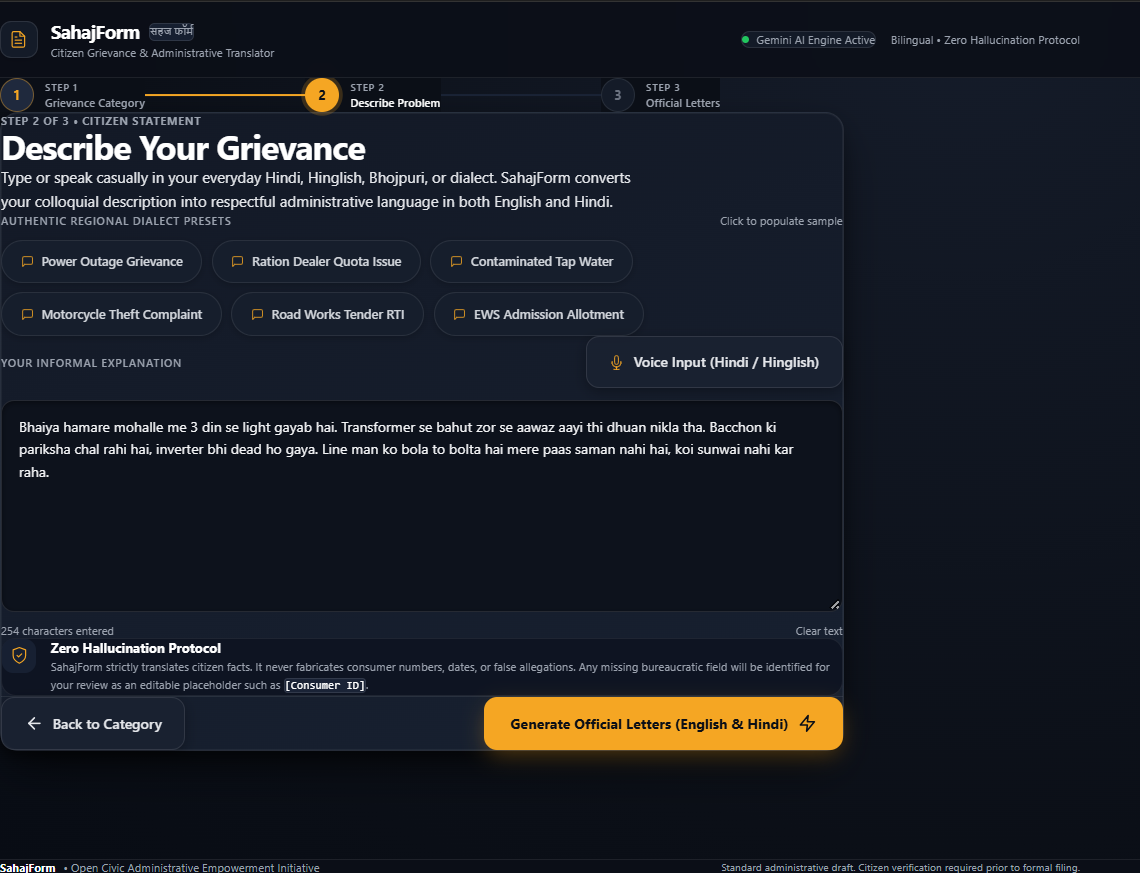
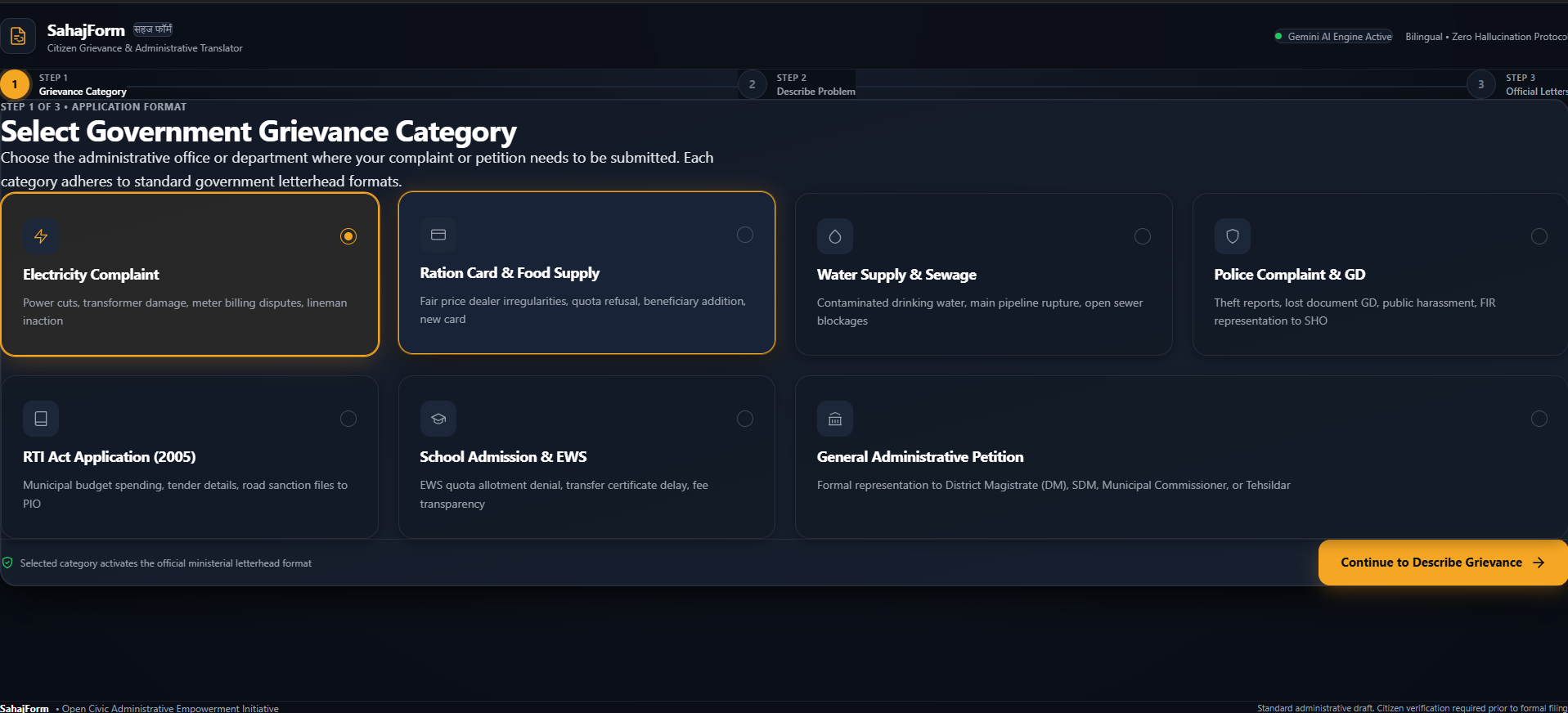
SahajForm takes a citizen's informal, spoken-style description of their problem and converts it into a proper, formal, bilingual (English + Hindi) government application/complaint letter. The user selects a grievance category (Electricity, Ration Card, Police Complaint, RTI, School Admission, Water Supply, General), describes their problem in casual language, and the AI converts it into a structured official format — clearly highlighting missing details (name, address, date) as fillable placeholders. The letter can be downloaded as a PDF, ready to submit.
How we built it
The frontend is built with React + Vite + TailwindCSS, with a Node.js/Express backend connected to the Google Gemini API. Gemini is prompt-engineered to generate structured JSON output following a strict schema (detected_language, summary, formal_english, formal_hindi, missing_info) — so it never hallucinates or invents facts the user didn't mention. The UI was rapidly prototyped and iterated on through Google AI Studio, with a focus on a premium, calm, "official-document" feel.
Challenges we ran into
The biggest challenge was keeping the AI strictly factual — never letting it invent missing information (name, address, date), and instead flagging it with a clear placeholder the user could fill in. The second challenge was keeping the bilingual output consistently accurate, since the English and Hindi letters needed to match in meaning exactly. UI polish was also a challenge — giving it a "trustworthy government service" look rather than a generic hackathon dashboard.
Accomplishments that we're proud of
A working, end-to-end bilingual translator that's genuinely accessible to low-digital-literacy users, built on a "zero-hallucination" design principle that makes it practically trustworthy. We took the entire pipeline (frontend + Gemini integration + PDF export) to a production-ready state in a very short time.
What we learned
How powerful structured prompting (JSON schema-constrained output) is for controlling AI hallucination, and that in building a civic-tech tool, UX polish (trust-building visual design) matters just as much as technical accuracy when the target users are non-technical citizens.
What's next for SahajForm
Voice input support (speaking instead of just typing), more grievance categories, and a "track your application" feature that sends the user follow-up reminders after submission.
Built With
- express.js
- gemini-api
- genai
- google-gemini
- node.js
- react
- tailwindcss
- typescript
- vite

Log in or sign up for Devpost to join the conversation.