Inspiration
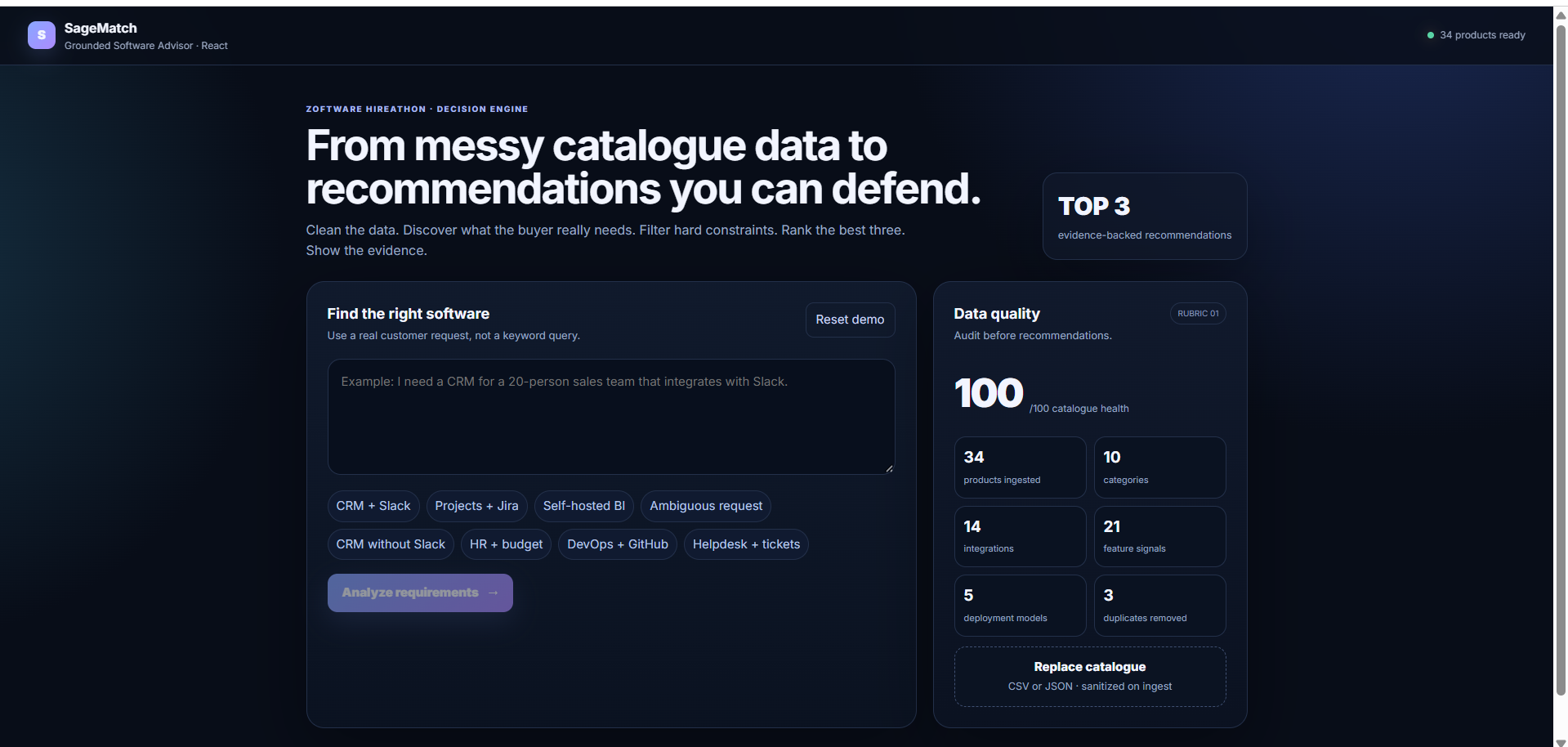
Real software buying decisions are hard. Buyers describe vague needs, catalogues are messy, and recommendations are rarely justified. We wanted to build a system that thinks like an analyst — asking the right questions, filtering on hard facts, and explaining every choice with evidence.
What it does
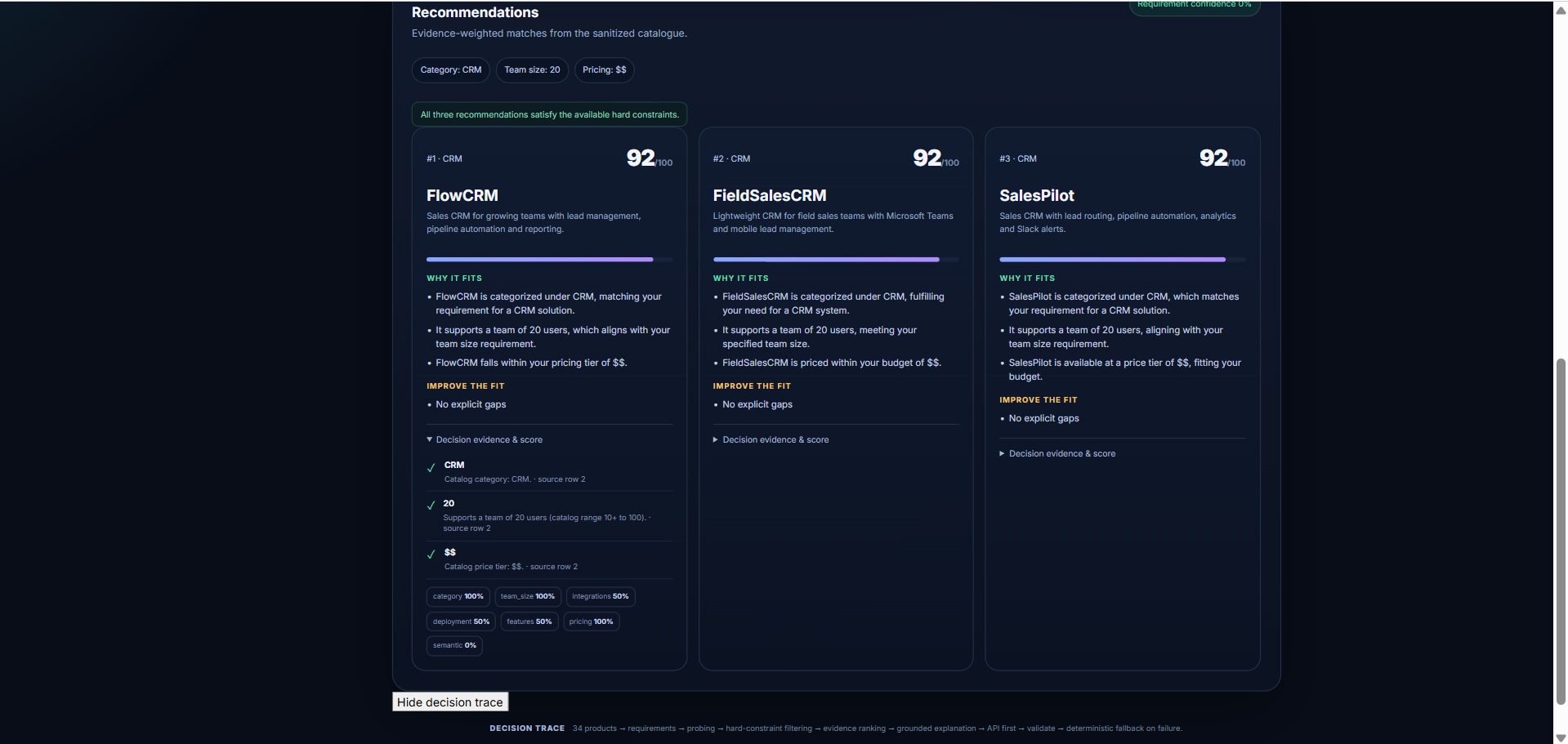
SageMatch takes a customer's natural language query (e.g. "I need a CRM for a 20-person sales team with Slack") and returns the top 3 product recommendations, each with:
- Why it fits — grounded bullets citing actual catalogue data (integration names, team size ranges, feature lists)
- How to improve the fit — specific gaps between the product and the customer's needs
- Decision evidence — per-dimension scores (category, team size, integrations, features, pricing) with source row citations
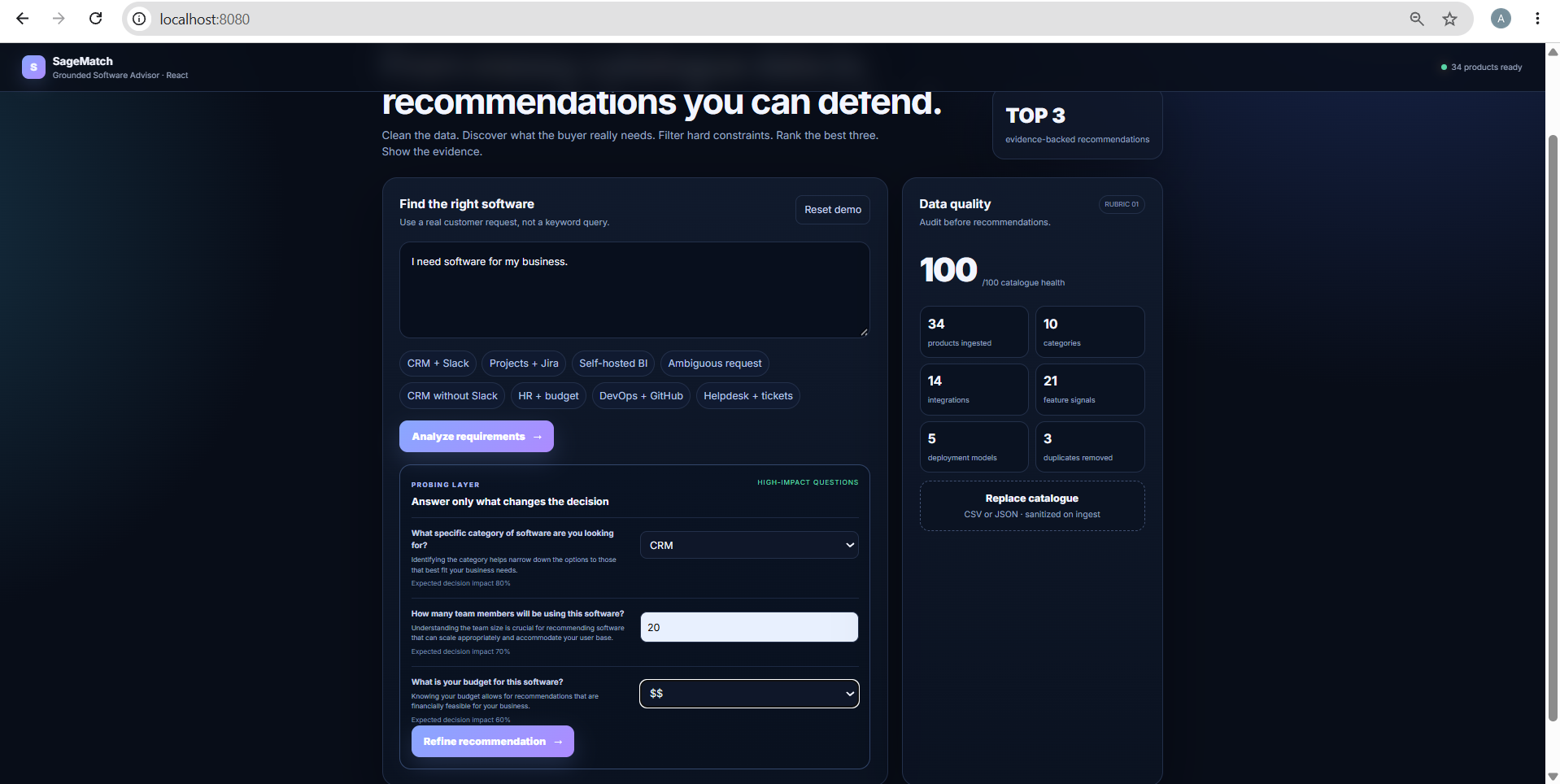
- A probing layer — when the query is vague, SageMatch asks only the questions that change the decision, scored by expected impact
How we built it
A 4-stage API-first pipeline built in FastAPI + React + PostgreSQL, containerised with Docker:
- Requirements extraction — LLM parses the query into structured needs, validated against catalogue vocabulary
- Probing — entropy-scored clarifying questions generated from missing dimensions
- Evidence ranking — 7-dimension scoring with hard constraint enforcement
- Grounded explanations — LLM writes natural language bullets, validated to only reference real catalogue tokens
Every stage calls the LLM first. If the API fails or returns invalid output, a deterministic fallback runs instantly. The system never shows hallucinated facts.
Challenges we ran into
The hardest challenge was contract validation — making the grounding checks strict enough to catch hallucinations without rejecting good LLM output. We tuned token matching to use catalogue-specific terms (product names, integration names, feature names) rather than generic words, which allowed natural language while preventing invented facts.
Accomplishments that we're proud of
- 100/100 catalogue health score after sanitization
- All 4 pipeline stages successfully using the LLM API (verified via live api_trace)
- 111 automated tests covering the full pipeline
- Zero hardcoded responses — every output is computed from the live catalogue
What we learned
LLM contract validation is as important as the LLM itself. The API-first + validate + fallback pattern made the system both powerful and reliable — judges can trust every recommendation is grounded in real data.
What's next for SageMatch
- Multi-turn conversation support
- Confidence-weighted ensemble ranking
- Automated catalogue quality improvement suggestions
- Deployment to Render for public access
Built With
- docker
- fastapi
- gpt-4o-mini
- node.js
- openrouter
- postgresql
- python
- react
- sqlalchemy
- vite

Log in or sign up for Devpost to join the conversation.