-
-
-
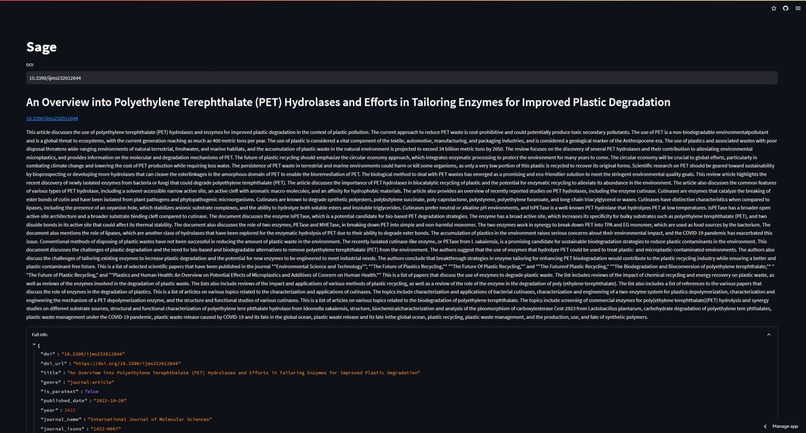
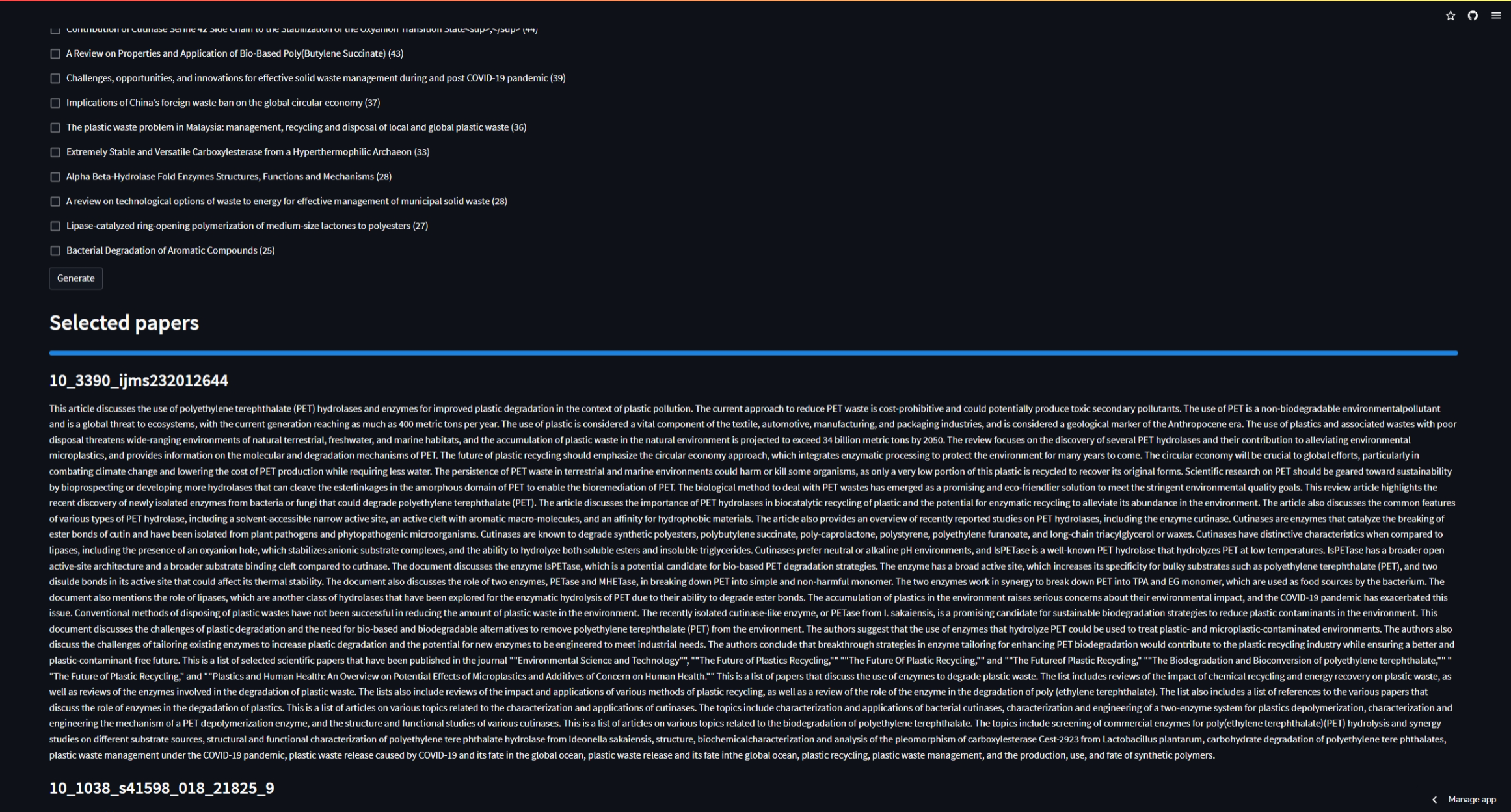
User enters a DOI as the starting off point, the model extracts all relevant data about the paper and summarizes it
-
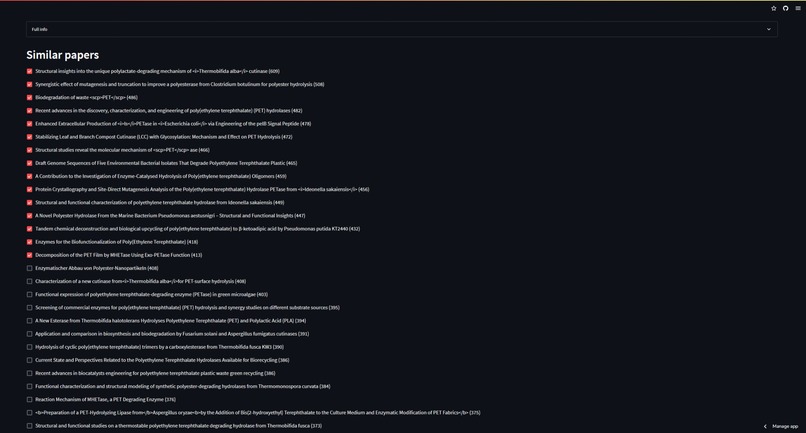
Using a recursive citation crawl, and via embeddings, the model determines which are the most similar papers in content
-
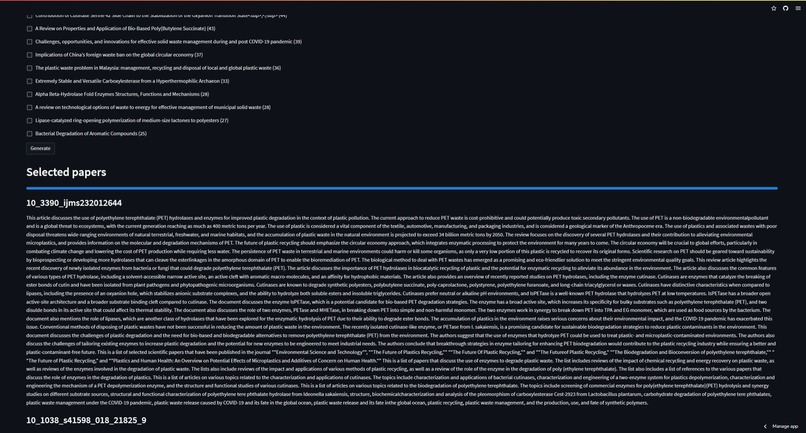
For each paper, it creates a summary explaining why this paper is similar to the source
-
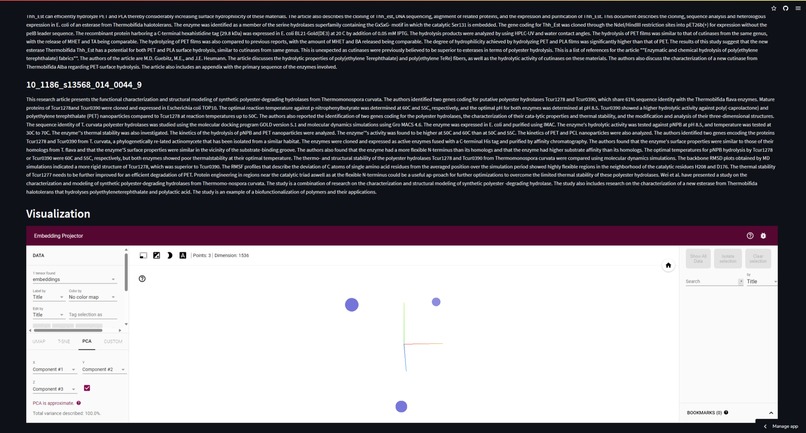
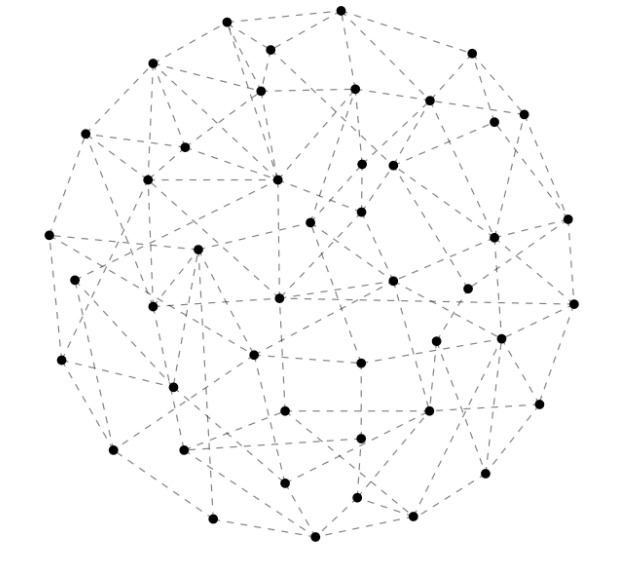
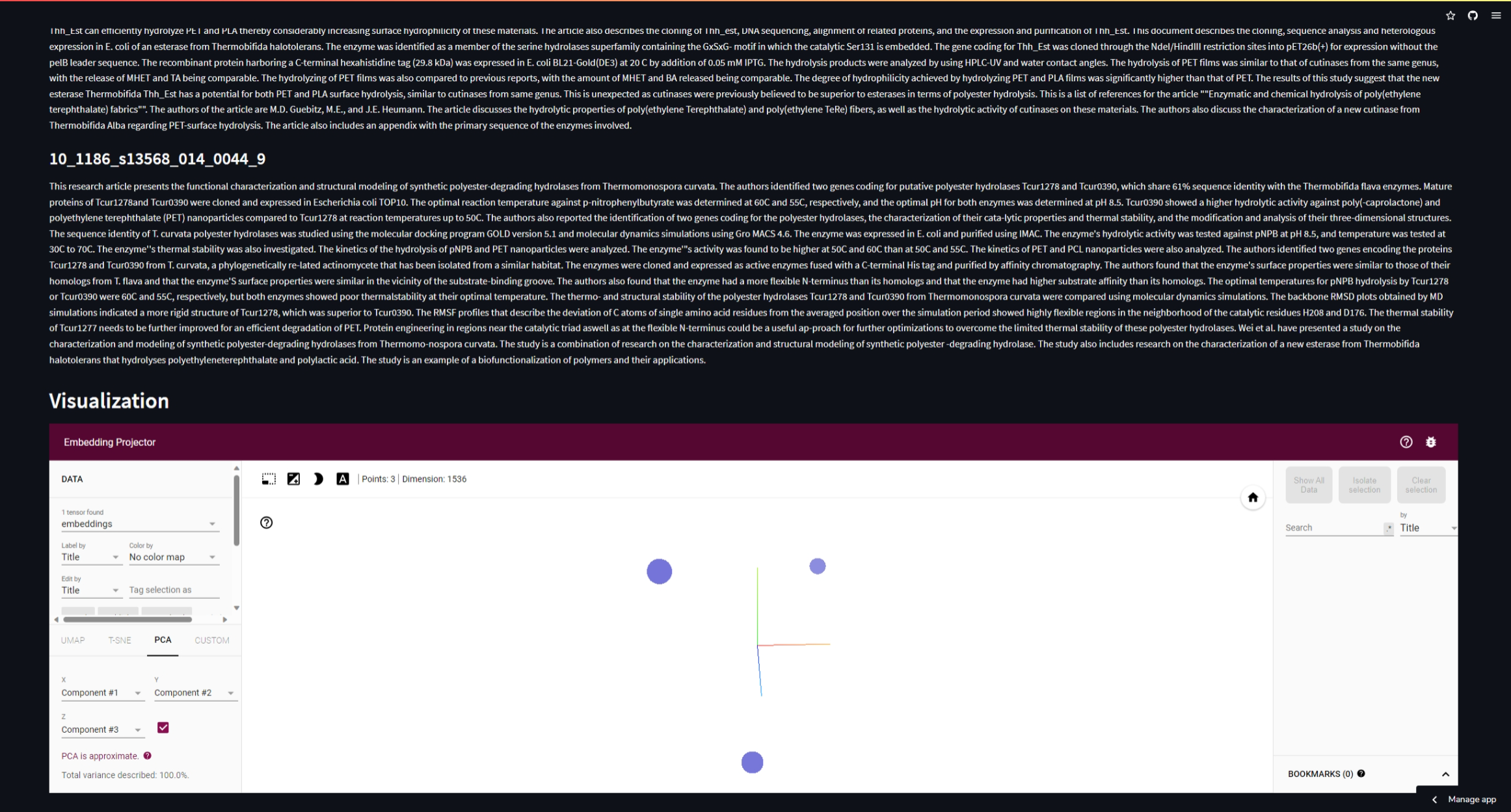
Visualization to see the papers
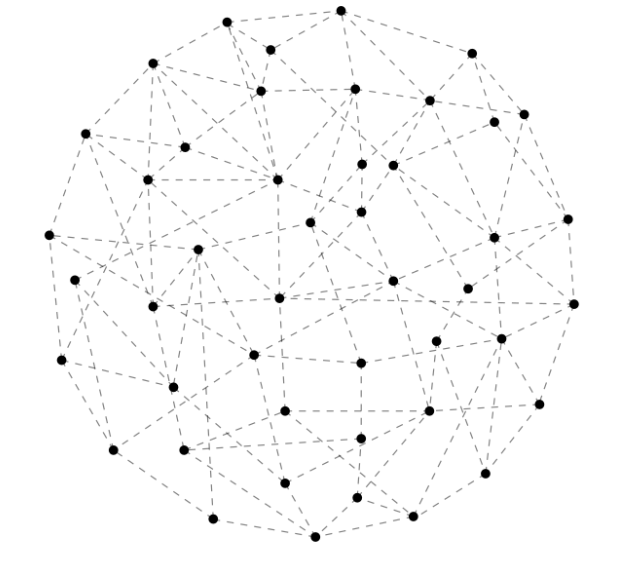
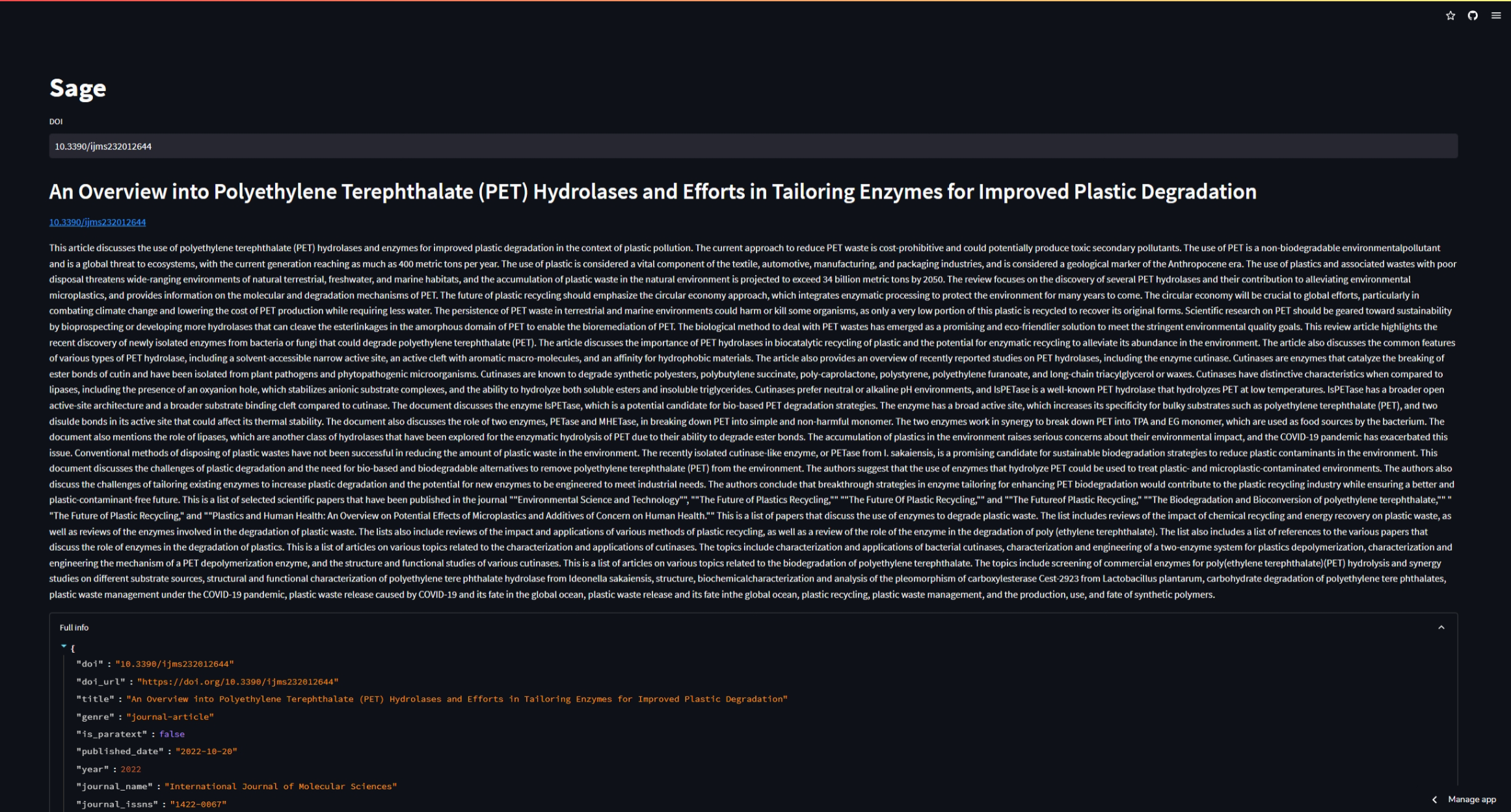
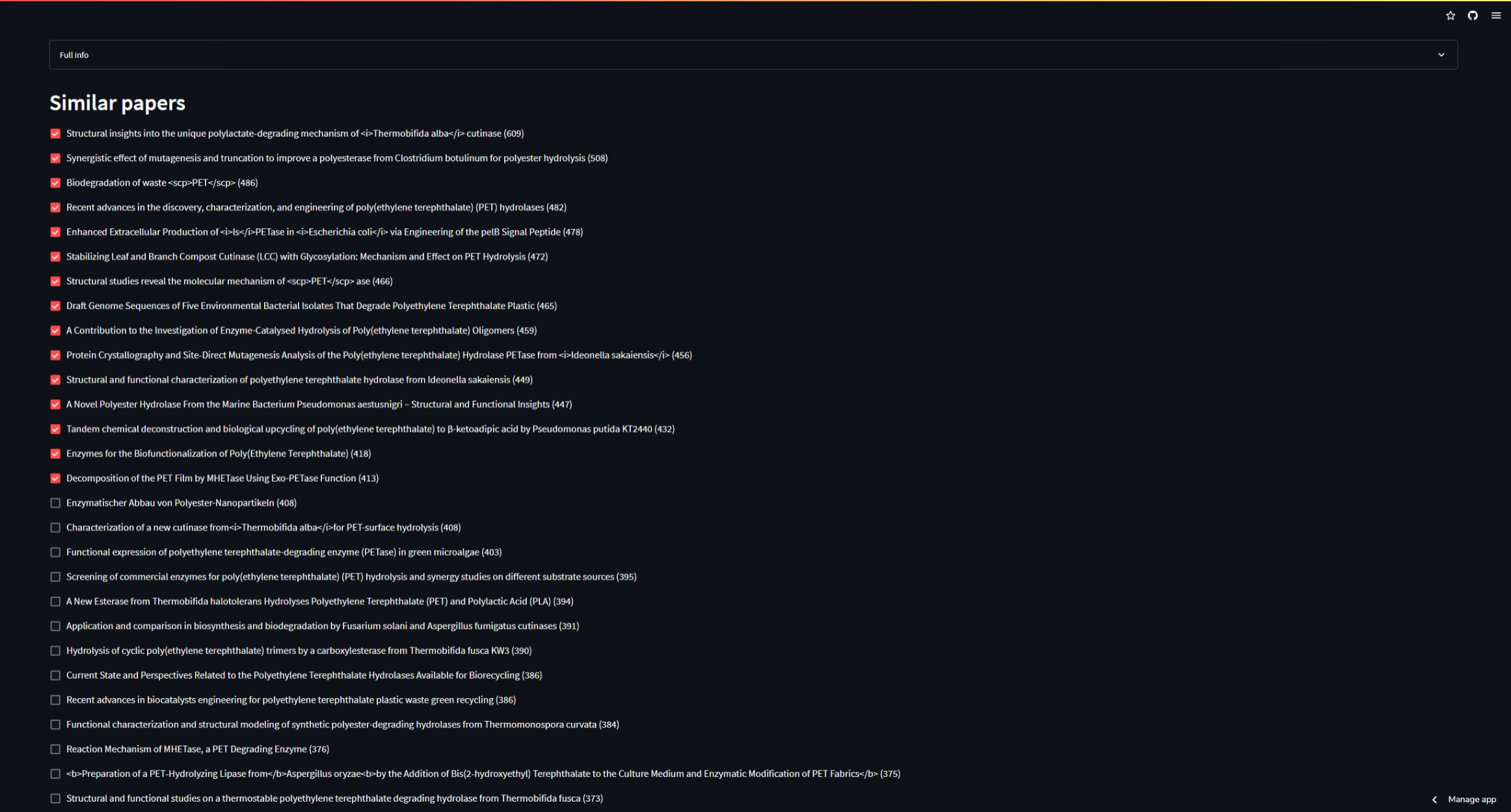
Slide Deck
https://www.beautiful.ai/player/-NWYYG6mMgYxhLfabS2O
video demo
in github https://github.com/punitarani/sage
Inspiration
This project aims to revolutionize the research process by enabling researchers to save hundreds of hours of valuable time. By leveraging advanced technologies, the project aims to develop a platform that not only allows researchers to explore a single paper but also effortlessly discover numerous related papers. This comprehensive approach empowers researchers to engage in informed discussions, challenge existing papers, and address potential blockers effectively. Moreover, the project places a strong emphasis on climate-focused research, seeking innovative ways to contribute to the global effort in tackling climate change and advancing the scientific process. By providing quick access to relevant research and promoting collaboration, the project aims to accelerate progress towards a sustainable future and facilitate meaningful contributions to the scientific community.
In addition to its time-saving benefits, the project aims to significantly improve the speed of the research process. Traditionally, it takes weeks or even months to gain a comprehensive understanding of a research topic. This project aims to reduce that timeframe to minutes or hours, empowering researchers to quickly access and digest relevant information. By streamlining the literature survey and analysis, researchers can expedite their research efforts, make faster decisions, and drive progress more efficiently. The project recognizes the value of speed in research and aims to provide researchers with the tools to accelerate their work and maximize their productivity.The project also addresses the bottleneck of hypothesis generation in research. By enabling researchers to rapidly understand the state of the art and gain insights from a wide range of papers, it facilitates cross-discipline innovation. The ability to explore related papers, identify emerging trends, and grasp the current landscape of research empowers researchers to generate hypotheses more efficiently. This not only saves time but also fosters interdisciplinary collaboration and the exploration of novel ideas.
What it does
Our project combines cutting-edge technologies with scholarly exploration to revolutionize the research landscape. It offers the following capabilities:
Captivating 3D Visualization: Experience a mesmerizing visualization of research papers in a carefully designed 3D space. Uncover hidden patterns and textual similarities, providing a unique perspective that surpasses traditional reading methods.
Advanced Dimensionality Reduction: Through innovative techniques like PCA, our project enables researchers to navigate a refined subset of papers, saving valuable time and honing their literature surveys with unparalleled precision.
Seamless Retrieval and Analysis: Leveraging the power of Digital Object Identifiers (DOIs), we effortlessly retrieve and analyze primary research papers. We explore citations and cross-references, unraveling the rich tapestry of related research activities over time.
Concise and Comprehensive Summaries: Our project distills the essence of selected research papers into concise and comprehensive summaries. These summaries provide deep insights, empowering researchers to grasp the core ideas and findings quickly.
Dynamic Intellectual Discourse: Engage in invigorating discussions and intellectual exchanges through our integrated chat platform. Connect with a vibrant community of knowledge seekers, fostering collaboration and stimulating new ideas.
In essence, our project empowers researchers to transcend traditional methodologies, making research insights effortlessly accessible. It eliminates the laborious aspects of literature surveys, enabling researchers to embark on extraordinary voyages of discovery. By combining technology and scholarship, we propel research endeavors to unprecedented heights, unlocking new frontiers of knowledge.
How we built it
We built our project by leveraging a powerful combination of technologies. We utilized Azure Cognitive Services, Steamlit, Langchain, and OpenAI to develop a robust and innovative research platform. These technologies provided the foundation for our visualization, data analysis, natural language processing, and machine learning capabilities.
Challenges we ran into
During the development process, we encountered various challenges that tested our skills and perseverance. Some of these challenges included integrating different technologies seamlessly, optimizing performance and scalability, and ensuring the accuracy and reliability of the results. However, through teamwork and innovative problem-solving, we were able to overcome these obstacles and create a successful solution.
Accomplishments that we're proud of
We take great pride in the accomplishments we have achieved through our project. One notable accomplishment is the development of a captivating 3D visualization of research papers, enabling users to uncover hidden patterns and textual similarities. We are also proud of implementing advanced dimensionality reduction techniques like PCA to enhance the efficiency and precision of literature surveys. Additionally, our seamless retrieval and analysis of primary research papers, along with the generation of concise and comprehensive summaries, are significant accomplishments we celebrate.
What we learned
Throughout the development of this project, we have gained invaluable knowledge and insights. We have deepened our understanding of Azure Cognitive Services, Steamlit, Langchain, and OpenAI, and their applications in research and data analysis. We have also learned the importance of effective integration between different technologies to create a cohesive and powerful solution. Additionally, we have honed our skills in natural language processing, machine learning, and data visualization, further enriching our expertise in these domains.
What's next for Sage
Fine-tuning the model: Continuously refining and improving the underlying model used for text analysis and summarization. This could involve fine-tuning the model using domain-specific data or incorporating user feedback to enhance its performance and accuracy.
Incorporating more advanced techniques: Exploring and integrating advanced techniques, such as natural language processing (NLP) algorithms, machine learning models, or deep learning architectures, to further enhance the capabilities of the system. This could enable more sophisticated analysis, better understanding of context, and improved summarization accuracy.
Scaling and performance optimization: Optimizing the system to handle larger volumes of data and increasing its scalability. This could involve implementing distributed computing techniques, leveraging cloud infrastructure, or utilizing parallel processing to ensure efficient and timely processing of research papers and queries.
Collaboration and knowledge sharing: Facilitating collaboration among researchers by incorporating features that enable knowledge sharing, peer review, and collaborative discussions within the platform. This could include integrating social features, enabling annotation and commenting on research papers, or providing a platform for virtual research communities.
Integration with existing research tools: Integrating the platform with existing research tools, reference management systems, or academic databases to streamline the research workflow and enhance usability. This could involve seamless import/export of data, interoperability with popular research platforms, or integration with citation management tools.
User feedback and customization: Gathering feedback from users to understand their needs and preferences, and incorporating those insights into the development process. Providing customization options and personalization features to tailor the platform to individual researchers' requirements.
Expanding domain coverage: Broadening the scope of the project to cover a wider range of domains and research areas. This would involve training the system on diverse datasets and incorporating domain-specific knowledge to ensure its relevance and effectiveness across various scientific disciplines.
By pursuing these future plans, the project aims to continually enhance its capabilities, provide researchers with powerful tools for efficient literature survey and analysis, foster collaboration and knowledge sharing, and ultimately contribute to advancements in scientific research and discovery.


Log in or sign up for Devpost to join the conversation.