-
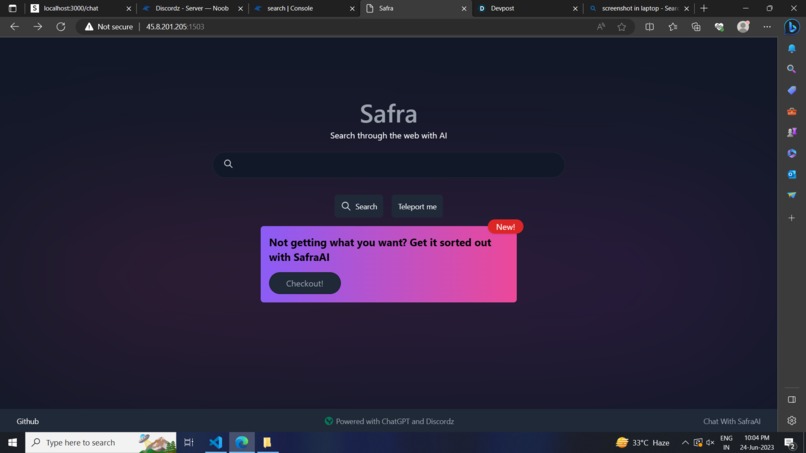
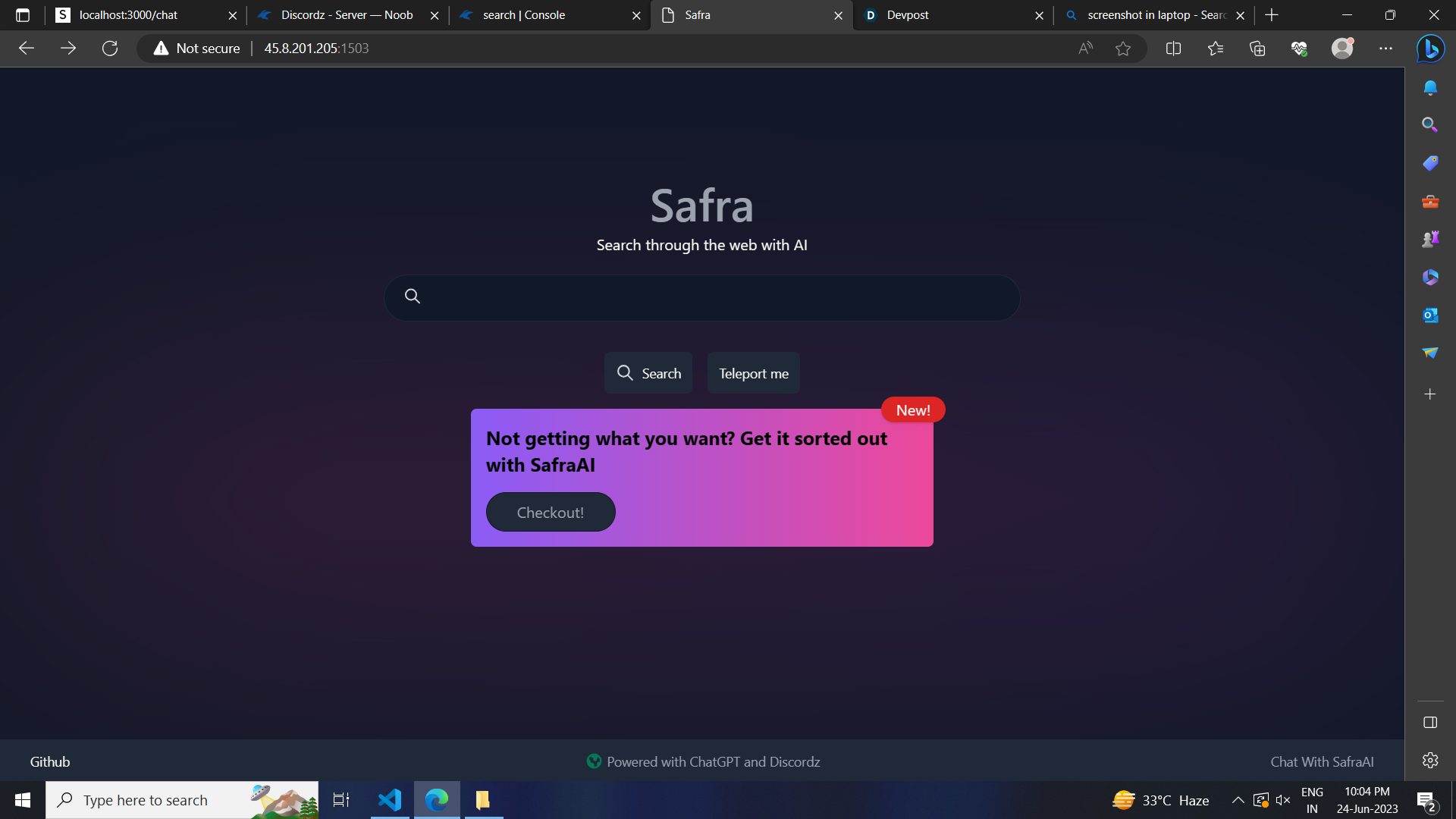
homepage
-
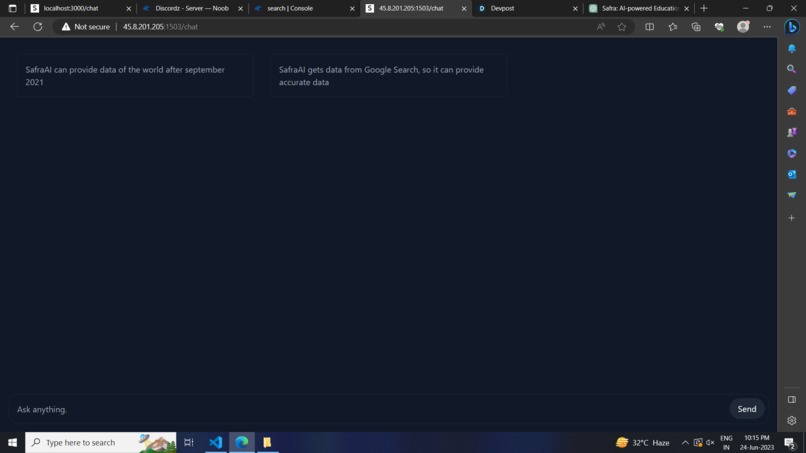
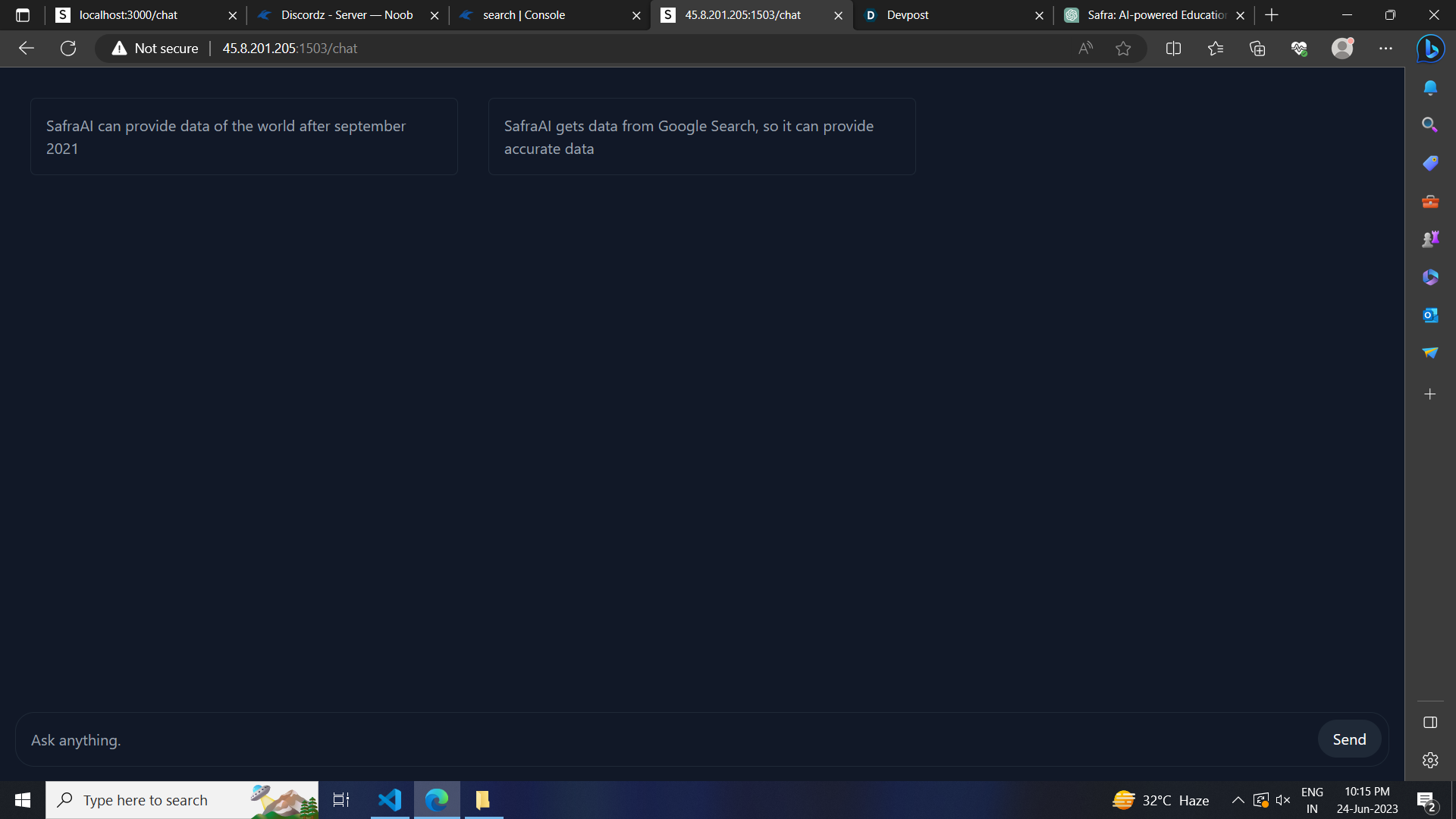
chat with ai
-
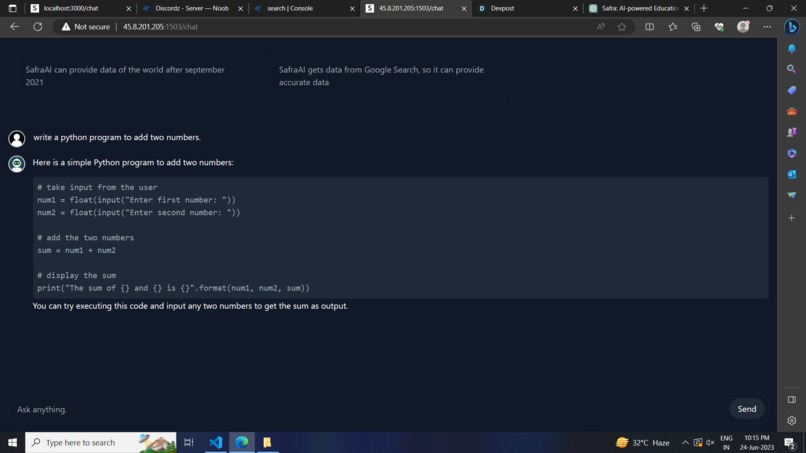
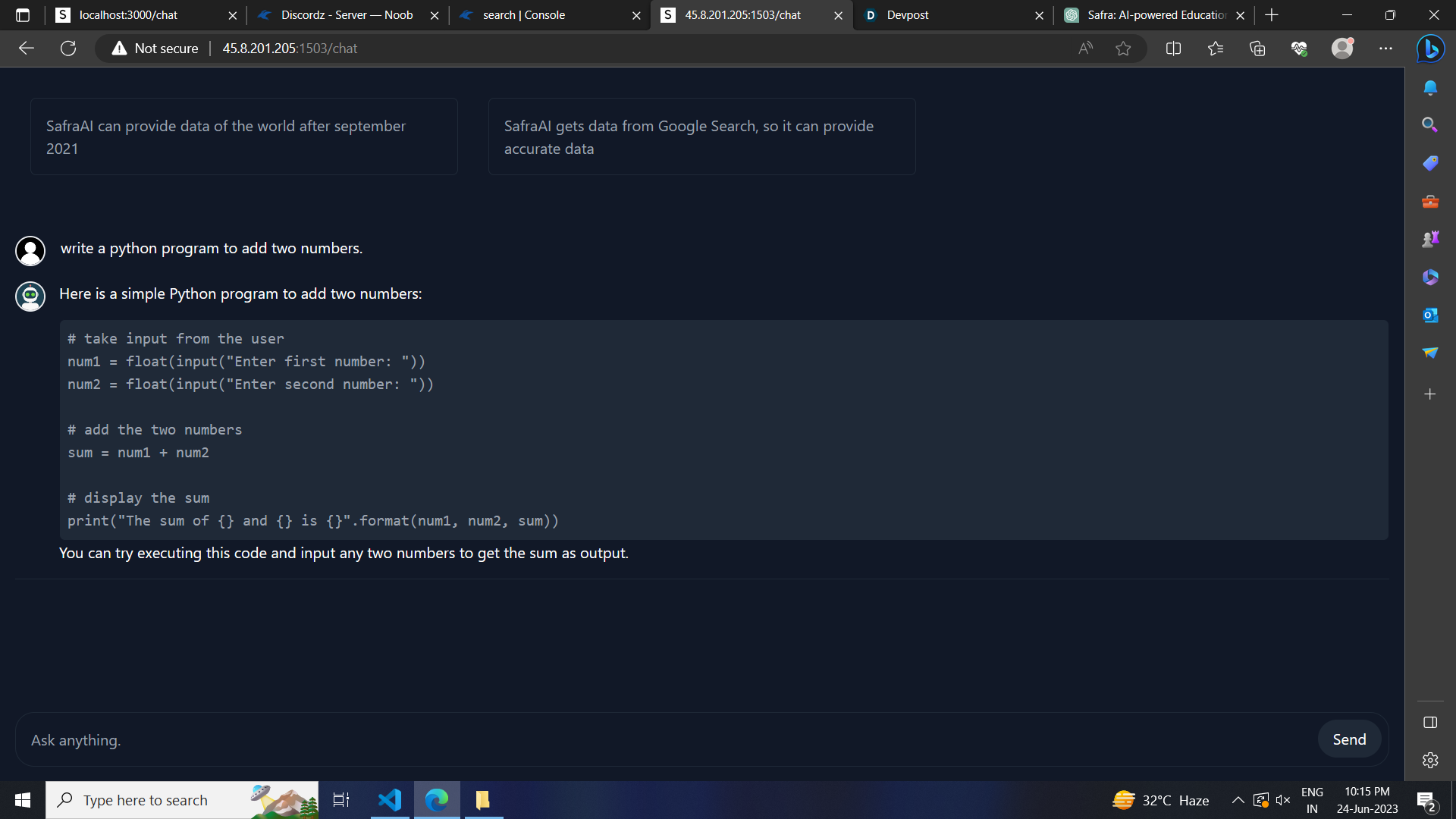
asking to write program
-
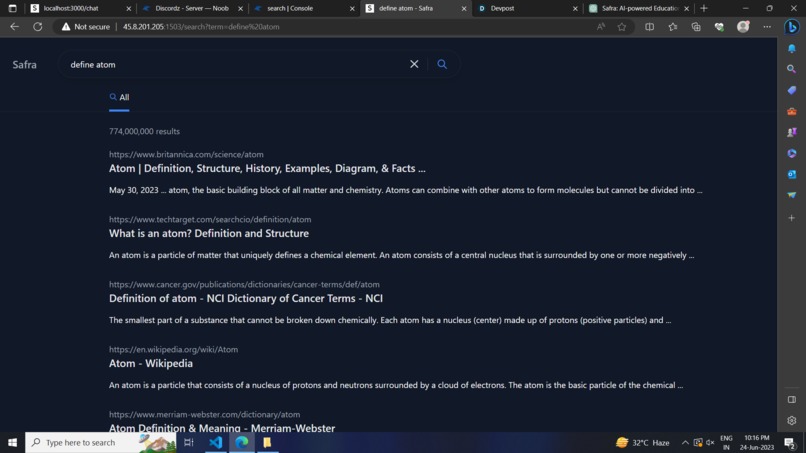
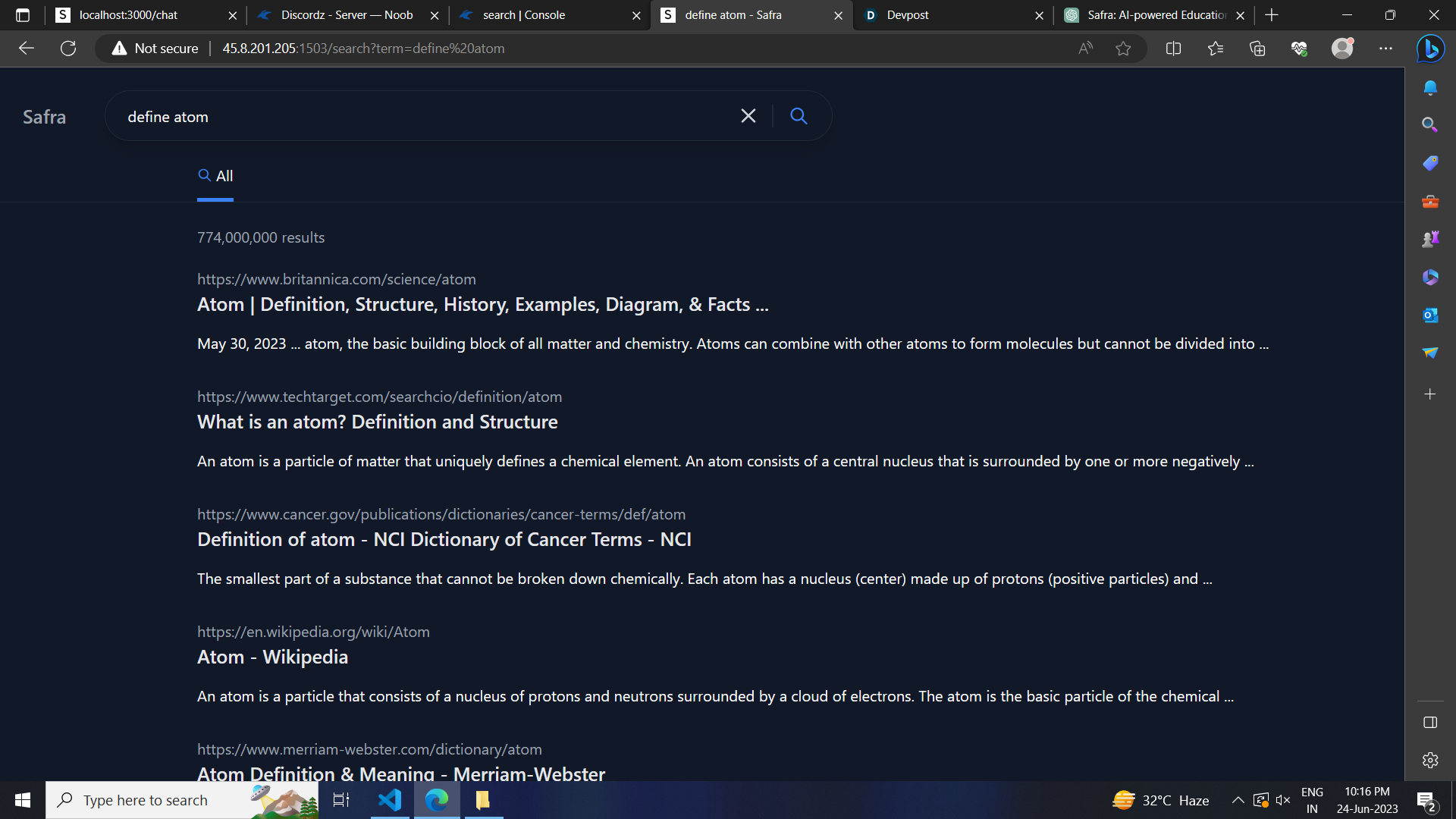
searching
Inspiration
The development of SafraAI is an embodiment of the inspiration derived from models like ChatGPT, as it strives to harness the potential of AI to revolutionize the way we search for information and learn. By building upon the foundations laid by ChatGPT, SafraAI seeks to deliver a more interactive, personalized, and immersive educational experience, empowering users to unlock their full learning potential.
What it does
SafraAI, the AI-powered search engine and chatbot, draws inspiration from the remarkable advancements achieved by models like ChatGPT. ChatGPT's ability to engage in interactive and human-like conversations has served as a catalyst for SafraAI's development, shaping its vision to provide an immersive educational experience.
Just like ChatGPT, SafraAI aims to create a conversational learning environment where users can engage in dynamic interactions to enhance their educational journey. The remarkable natural language processing capabilities of ChatGPT have influenced SafraAI's chatbot feature, enabling it to understand and respond to user queries with accuracy and relevance.
How we built it
SafraAI is built using JavaScript (JS) and Next.js for the front-end and back-end. Tailwind CSS is used for styling, providing a clean and consistent design. The chatbot functionality is powered by the GPT-3.5 Turbo model from OpenAI, enabling natural language understanding and generation. SafraAI integrates the Google Custom Search API to enhance search capabilities, delivering accurate and relevant results from educational resources. This combination of technologies creates a user-friendly and interactive educational search engine with an AI-powered chatbot.
Challenges we ran into
During the development of SafraAI, we faced challenges in training the GPT model and providing accurate search results. Training GPT-3.5 Turbo required significant computational resources and expertise, while ensuring accuracy and minimizing bias. Providing accurate search results in an educational context involved filtering out irrelevant content and evaluating source credibility. We addressed these challenges through careful experimentation, refining algorithms, and continuous improvement to deliver a reliable and accurate educational experience through SafraAI.
Accomplishments that we're proud of
We are proud to have achieved several significant accomplishments throughout the development of SafraAI. Here are a few notable achievements:
Successful Integration of AI Chatbot: One of our major accomplishments is the seamless integration of the AI chatbot powered by the GPT-3.5 Turbo model. This involved fine-tuning the model and optimizing its performance to provide accurate and engaging conversations. The chatbot's ability to understand user queries and generate relevant responses is a testament to our dedication to delivering a high-quality educational chat experience.
Accurate and Relevant Search Results: Ensuring the delivery of accurate and relevant search results was a priority for us. We have implemented robust algorithms and leveraged the Google Custom Search API to filter and curate educational resources. Our accomplishment lies in providing users with reliable and up-to-date information, empowering them to explore topics and expand their knowledge with confidence.
User-Focused Design and Experience: We are proud of our user-focused design approach, which prioritizes intuitive navigation, clean interfaces, and seamless interactions. SafraAI's user-friendly interface allows learners of all backgrounds to easily search for information, engage in conversations, and access educational resources. Creating a positive and enjoyable learning experience for our users has been a significant accomplishment.
What we learned
the development of SafraAI has provided me with valuable insights and learnings. Here are some key lessons I have learned throughout the process:
Full-stack development: Building SafraAI as an individual project allowed me to gain a comprehensive understanding of the entire development stack, from front-end to back-end. I learned how to leverage JavaScript, Next.js, and Tailwind CSS to create a responsive and visually appealing user interface.
AI model integration: Integrating the GPT-3.5 Turbo model into SafraAI was a significant learning experience. I gained hands-on experience with working with AI models, including training, fine-tuning, and optimizing their performance. This process deepened my understanding of natural language processing and AI-powered conversational systems.
Data management and API integration: SafraAI's integration with the Google Custom Search API required me to handle and manage data effectively. I learned how to retrieve and process search results, curate educational resources, and ensure the accuracy and relevance of information presented to users.
User-centered design: Throughout the project, I emphasized the importance of user-centered design principles. I learned to empathize with the needs and preferences of users, incorporating their feedback to enhance the user experience. This process involved iterative design, usability testing, and continuous improvement based on user insights.
Problem-solving and adaptability: Developing SafraAI as an individual project required me to tackle various challenges independently. I learned to think critically, troubleshoot issues, and adapt my approach when faced with obstacles. This experience honed my problem-solving skills and resourcefulness.
What's next for Safra
Looking ahead, SafraAI has an exciting future planned. We aim to enhance its AI capabilities, personalize the learning experience, foster collaboration, expand educational resources, develop a mobile application, and continuously improve based on user feedback. Our focus remains on providing a top-notch educational search engine and chatbot experience, pushing the boundaries of AI technology and creating an inclusive learning community.
Built With
- javascript
- nextjs
- node.js
- tailwind


Log in or sign up for Devpost to join the conversation.