Inspiration::Emergencies such as road accidents, floods, fires, and landslides can happen unexpectedly. We wanted to create a simple platform that helps people become aware of incidents around their area and make better-informed safety decisions.
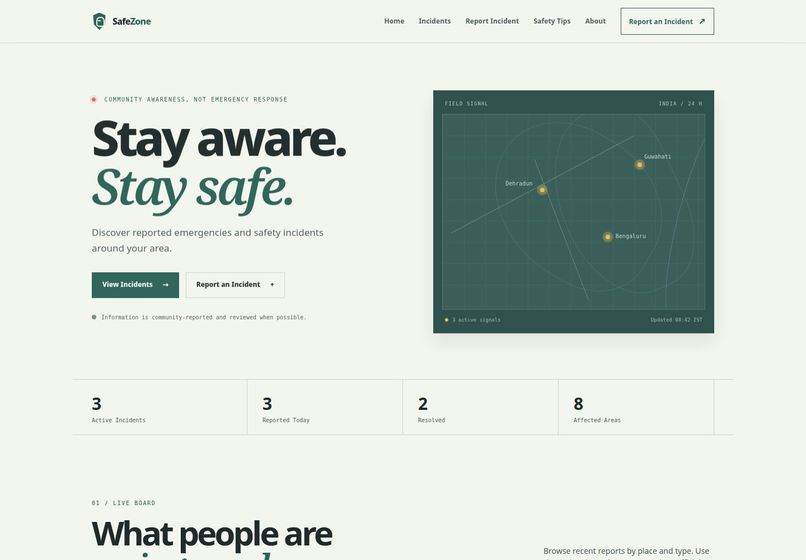
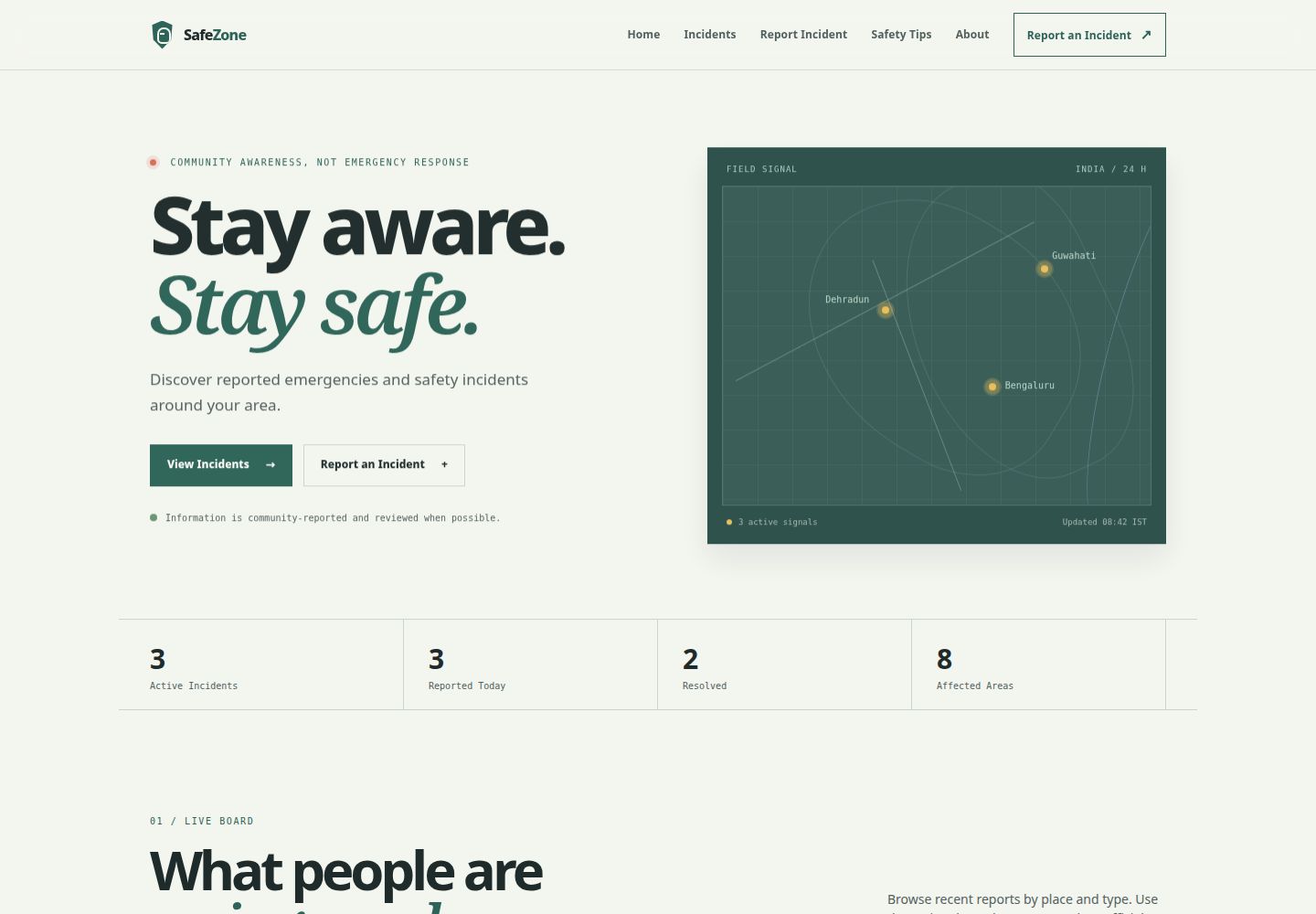
What it does::SafeZone is a local emergency awareness platform that displays reported incidents such as road accidents, floods, fires, landslides, and road blockages. Users can explore incidents by location and category, view important details, and quickly understand which areas may require extra caution.
How we built it::SafeZone is being built using HTML, CSS, and JavaScript. We focused on creating a simple, responsive, and easy-to-use interface. JavaScript is used for incident filtering, searching, displaying incident information, and handling user interactions. LocalStorage can be used to save relevant user-side data.
Challenges we ran into::One of our main challenges was designing the incident information in a way that is easy to understand during an emergency. We also had to make the interface responsive for both desktop and mobile users while keeping the project simple enough for quick access.
Accomplishments that we're proud of::We are proud of creating a simple platform focused on emergency awareness rather than making the interface unnecessarily complicated. We also focused on organizing different types of incidents in one place and making the information easy to find.
What we learned::Through SafeZone, we learned how to structure a real-world problem into a web application, design user-friendly interfaces, work with JavaScript for dynamic content, and think about responsive design and accessibility.
What's next for SafeZone::In the future, we plan to add a real-time database, verified incident reporting, interactive maps, location-based alerts, weather and disaster APIs, emergency contact information, and a verification system to improve the reliability of reported incidents.


Log in or sign up for Devpost to join the conversation.