Inspiration
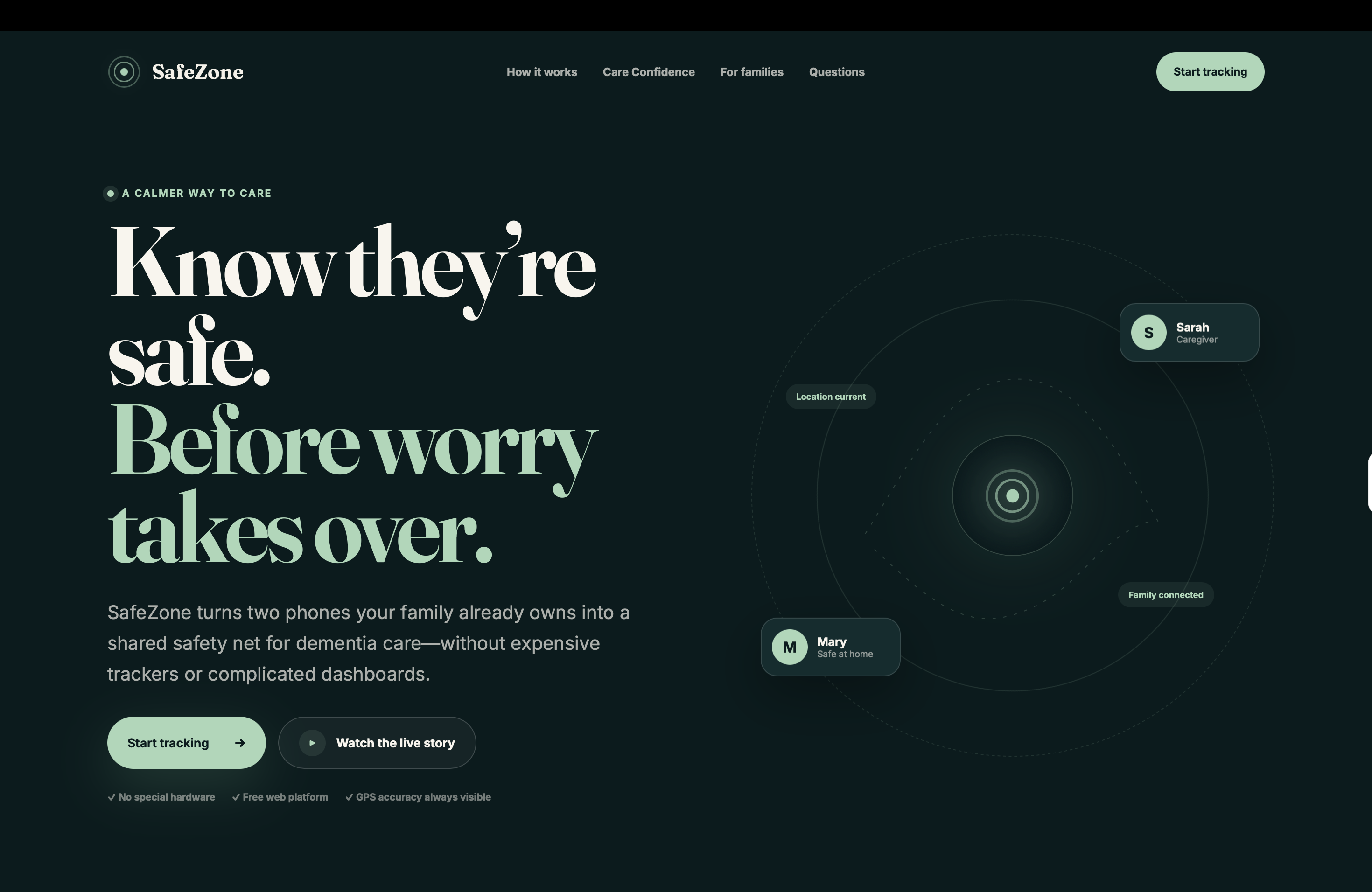
Dementia care is full of quiet panic. Someone you love walks the same loop every day — until they don’t. Families don’t need another complicated gadget. They need three answers, fast: Are they safe? Where are they? Do I need to act? SafeZone was inspired by that moment of waiting, and by the idea that two phones a family already owns should be enough to build a calmer safety net.
What it does
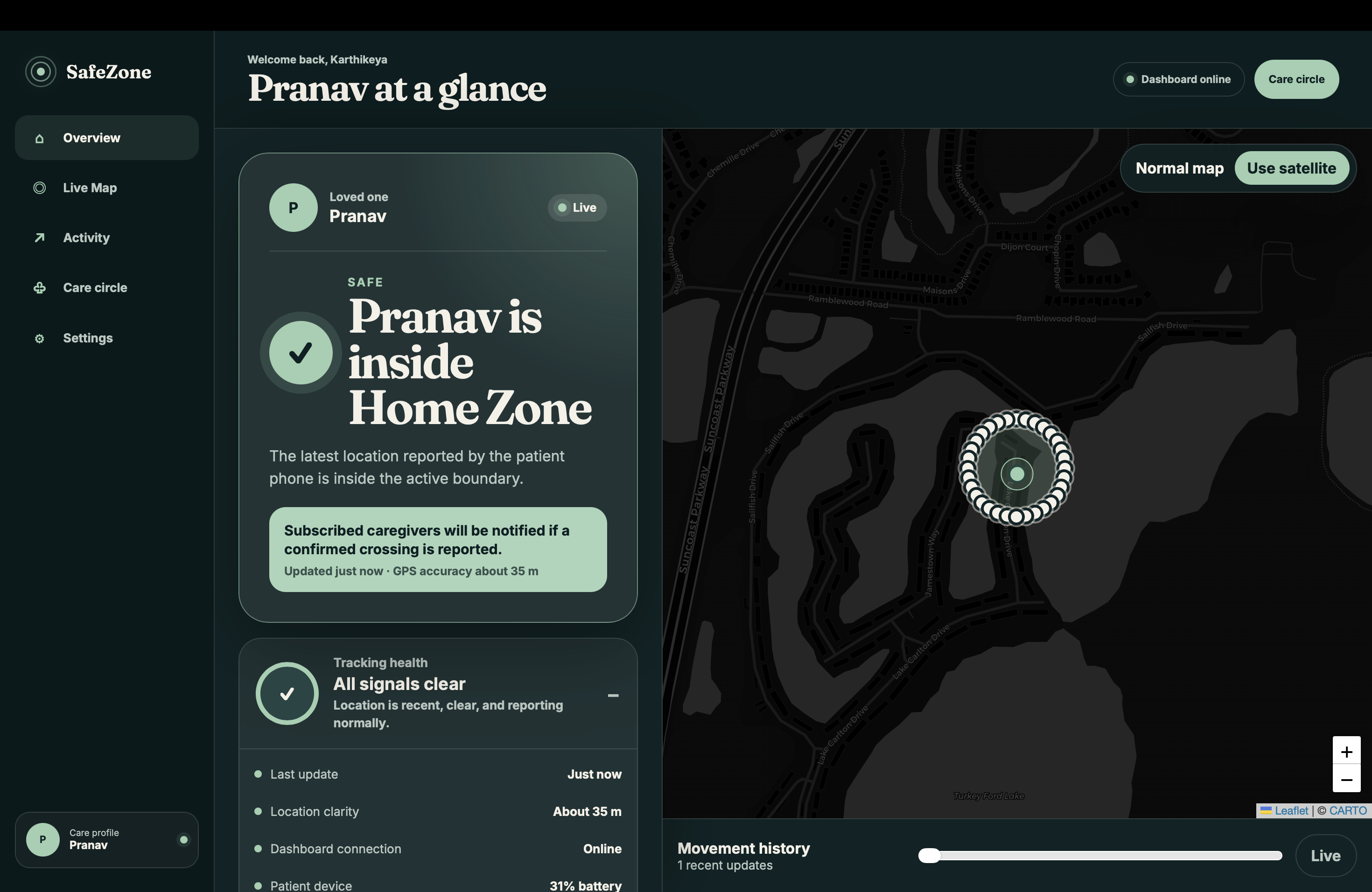
SafeZone is a browser-based safety system for families caring for someone with dementia.
- The patient phone shares live location
- The caregiver phone shows a clear safety status and map
- Families draw a Home Zone around home or the neighborhood
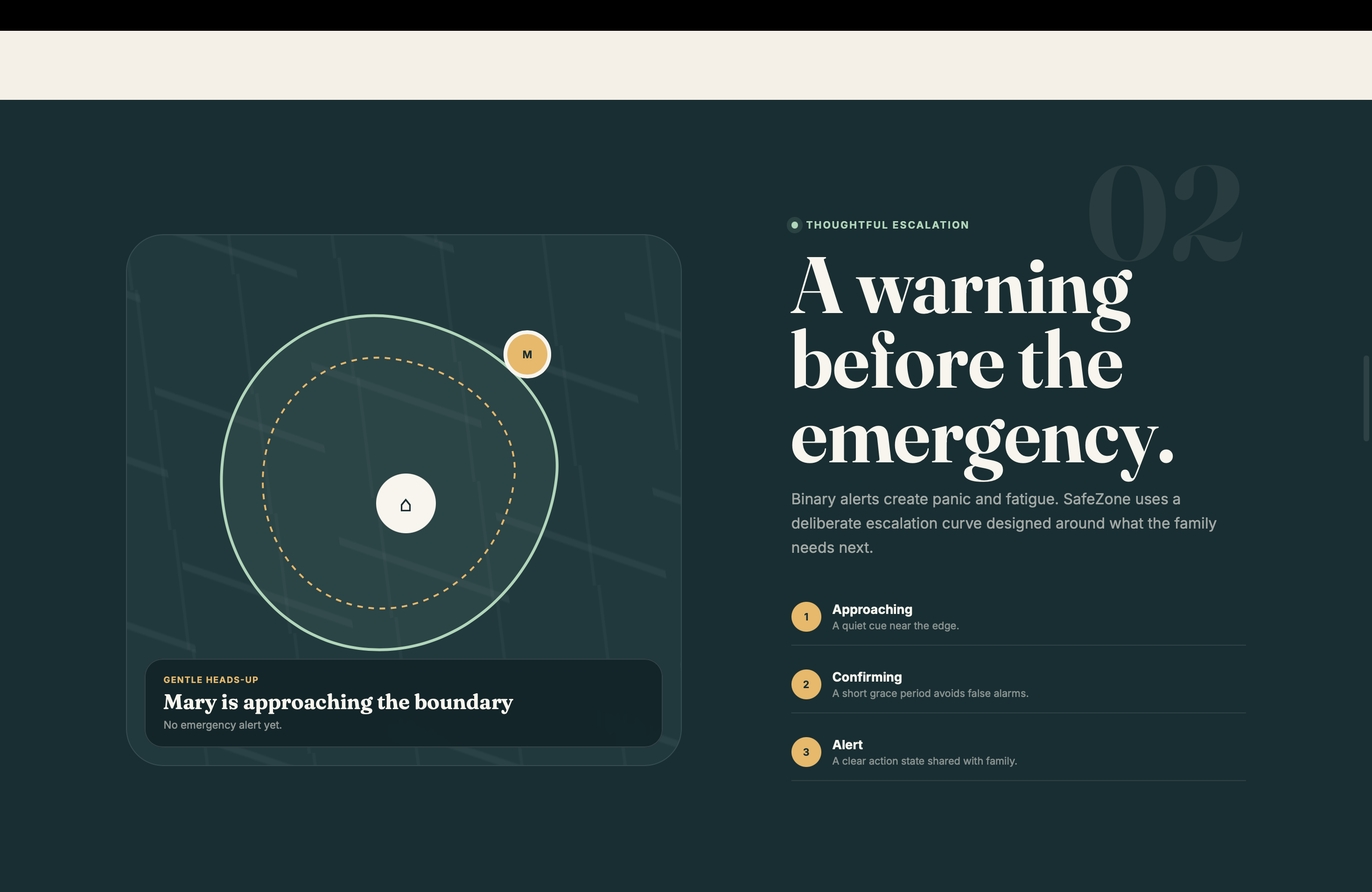
- Status escalates thoughtfully: safe → approaching → alert → family responding
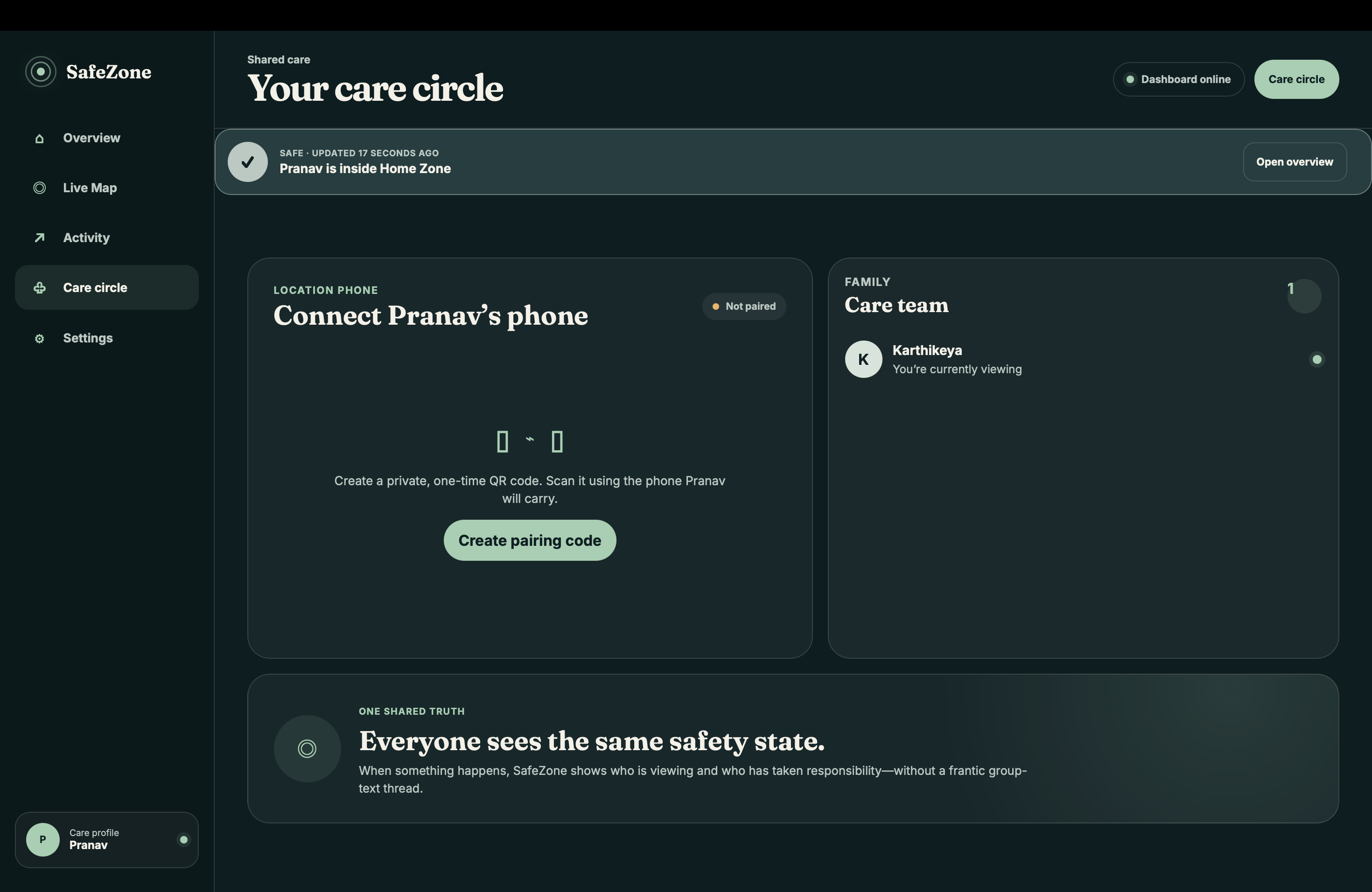
- Caregivers get shared alerts and can claim “I’m responding” so the whole family stays coordinated
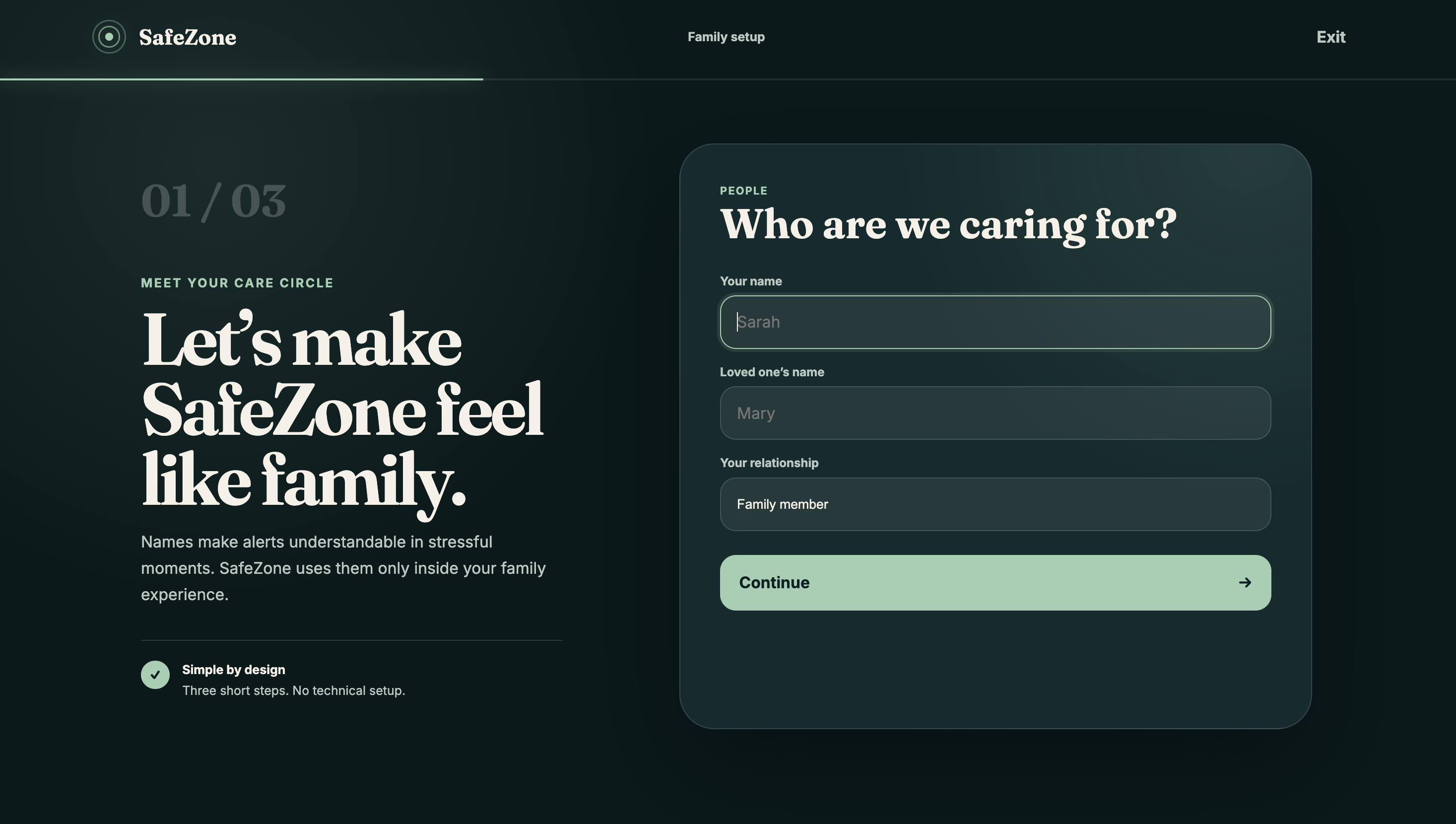
- Setup is short: names → Home Zone → one-time QR pairing
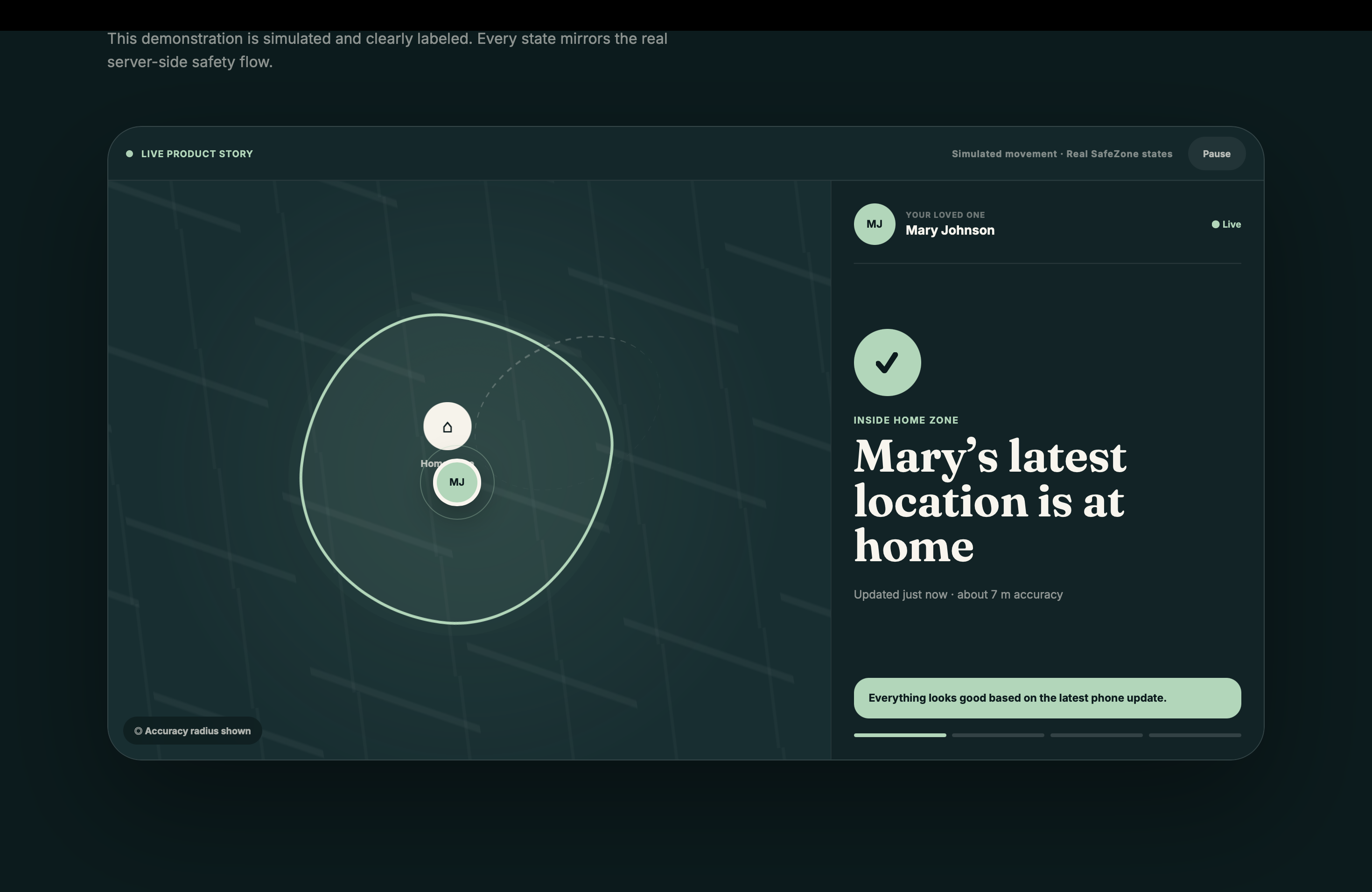
SafeZone stays honest about GPS — it always shows the accuracy radius instead of pretending to be room-level precise.
Try it: https://safe-zone-app.vercel.app
Guided demo: https://safe-zone-app.vercel.app/caregiver?demo=1
How we built it
- Frontend: React + Vite PWA with a caregiver dashboard, patient tracker, and guided onboarding
- Backend / data: Supabase Auth, Postgres, Row Level Security, Realtime, and Edge Functions
- Core logic: geofence state machine (safe / approaching / grace / alert), pairing tokens, location ingest, care responses
- Notifications: Web Push (VAPID) for boundary alerts
- Deploy: Vercel for the app, Supabase for persistence and realtime
- Also includes a local Express + WebSocket prototype path for fast hacking
Challenges we ran into
- Browser location limits: a PWA can’t reliably track in the background once iOS/Android suspends the browser, so we designed around an open patient session and were honest about that boundary
- Auth friction: email magic-link rate limits and redirect/PKCE issues during demos
- Edge Function pairing failures in production, which forced fast fallbacks and clearer demo paths
- Balancing a calm caregiver UX with enough technical truth (accuracy, freshness, connection) to be trustworthy
Accomplishments that we're proud of
- A full end-to-end product story: landing → onboarding → pairing → live caregiver dashboard
- A guided demo that runs the real geofence states, not a fake slideshow
- Design centered on reassurance first, not dashboard clutter
- Secure one-time QR pairing instead of sharing permanent secrets
- Shipping a live deploy families can actually open on two phones
What we learned
- In dementia care, clarity beats features — one sentence of safety status matters more than ten charts
- Honest GPS communication builds more trust than false precision
- Real-world constraints (mobile browsers, push permissions, auth email limits) shape the product as much as the idea
- The best demo is a story caregivers recognize immediately: worry → warning → action → relief
What's next for SafeZone
- Native patient tracking for true background location on iOS/Android
- Multi-caregiver invites and richer family coordination
- Smarter quiet hours / reduced alert fatigue
- Offline-tolerant patient buffering when connectivity drops
- Care facility pilots with clearer onboarding for non-technical families

Log in or sign up for Devpost to join the conversation.