-
-
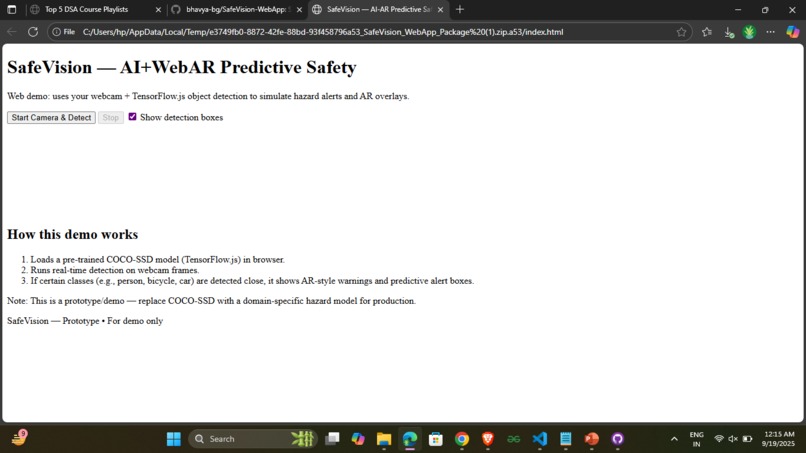
Home Page Interface,Detection in Progress,Blurring Result,Video Processing, User-Friendly Dashboard

About SafeVision-WebApp
Inspiration
The idea for SafeVision-WebApp came from the need to make digital content safer for general audiences. Manual detection and moderation of explicit content in images and videos is time-consuming and prone to errors. We wanted to create an automated solution that could reliably detect and blur inappropriate content, helping both individuals and organizations maintain safe content environments.
What We Learned
During this project, we learned:
- How to implement image and video processing using OpenCV.
- Basics of AI/ML-based object detection for nudity recognition.
- Integrating backend (Flask) with frontend (HTML/CSS/JS) for a functional web application.
- Best practices in organizing code, handling media files, and deploying projects on platforms like GitHub Pages or Testnet.
How We Built It
- Backend: Built using Python and Flask to handle file uploads, processing, and serving results.
- Media Processing: Used OpenCV along with ML models for detecting explicit content.
- Frontend: HTML, CSS, and Bootstrap for responsive and user-friendly interface.
- Deployment: Hosted static frontend on GitHub Pages; backend can run locally or on Testnet/other cloud platforms.
Challenges Faced
- Handling large video files efficiently without slowing down the app.
- Ensuring detection accuracy for different skin tones, lighting conditions, and video quality.
- Integrating frontend and backend smoothly, while keeping the UI simple for users.
- Configuring deployment to work both locally and as a public demo.


Log in or sign up for Devpost to join the conversation.