-
-
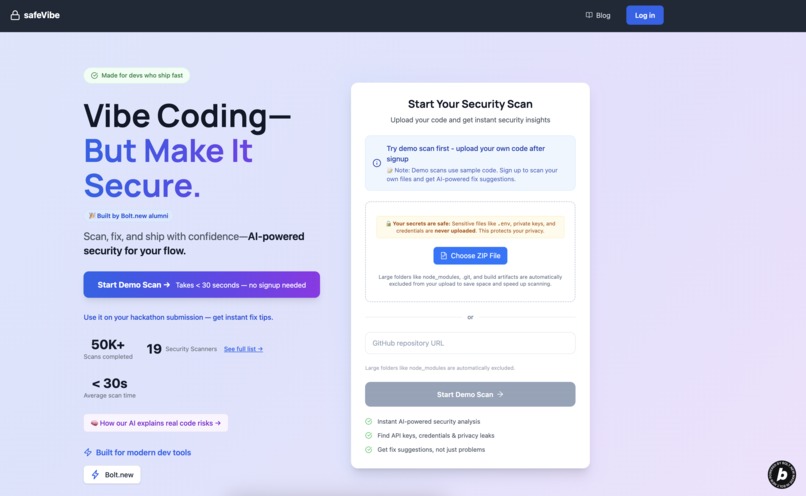
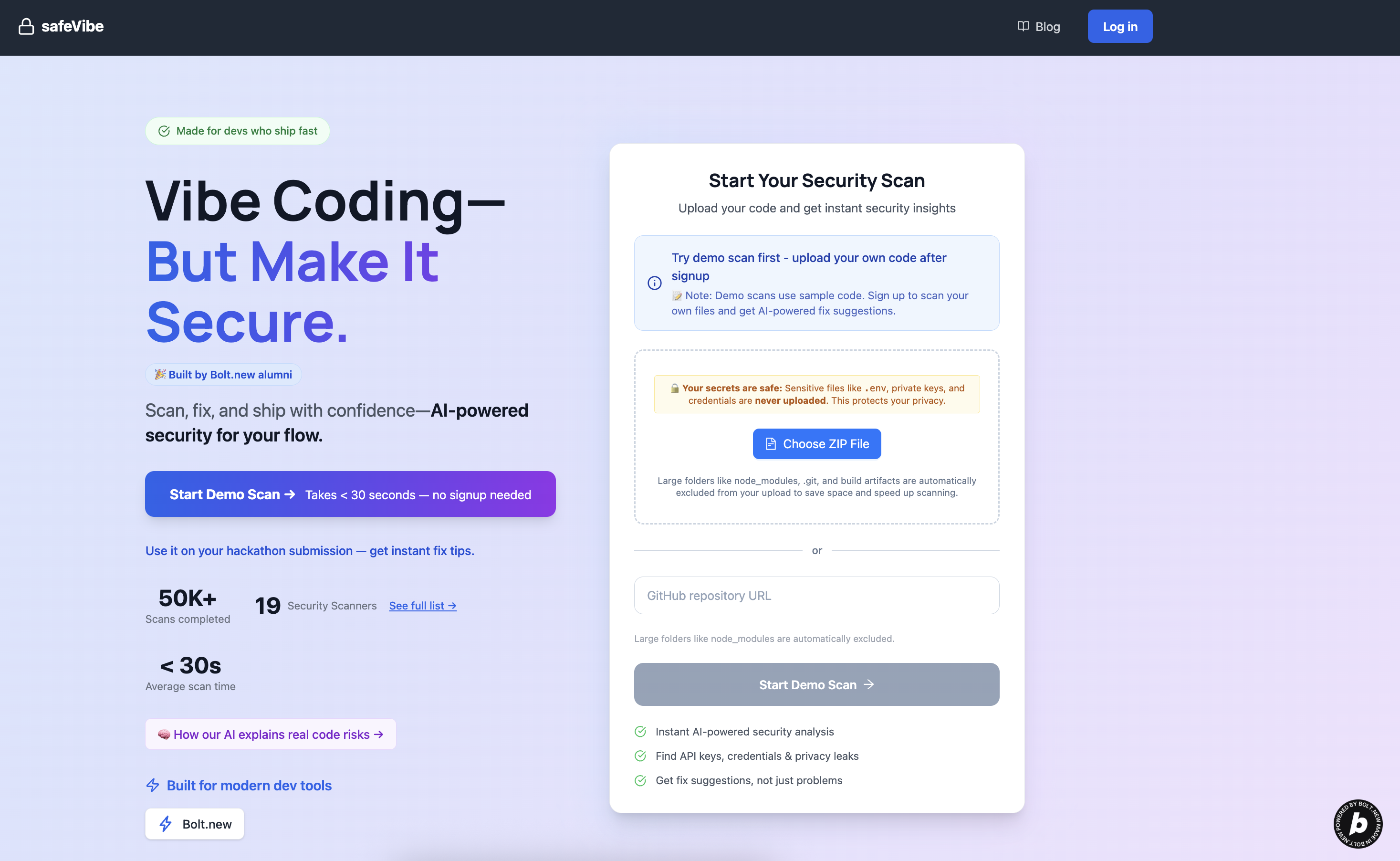
Home Screen
-
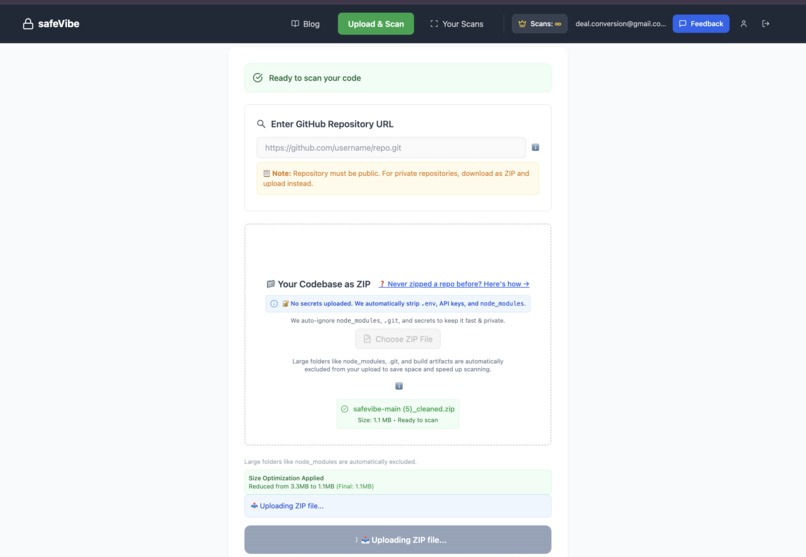
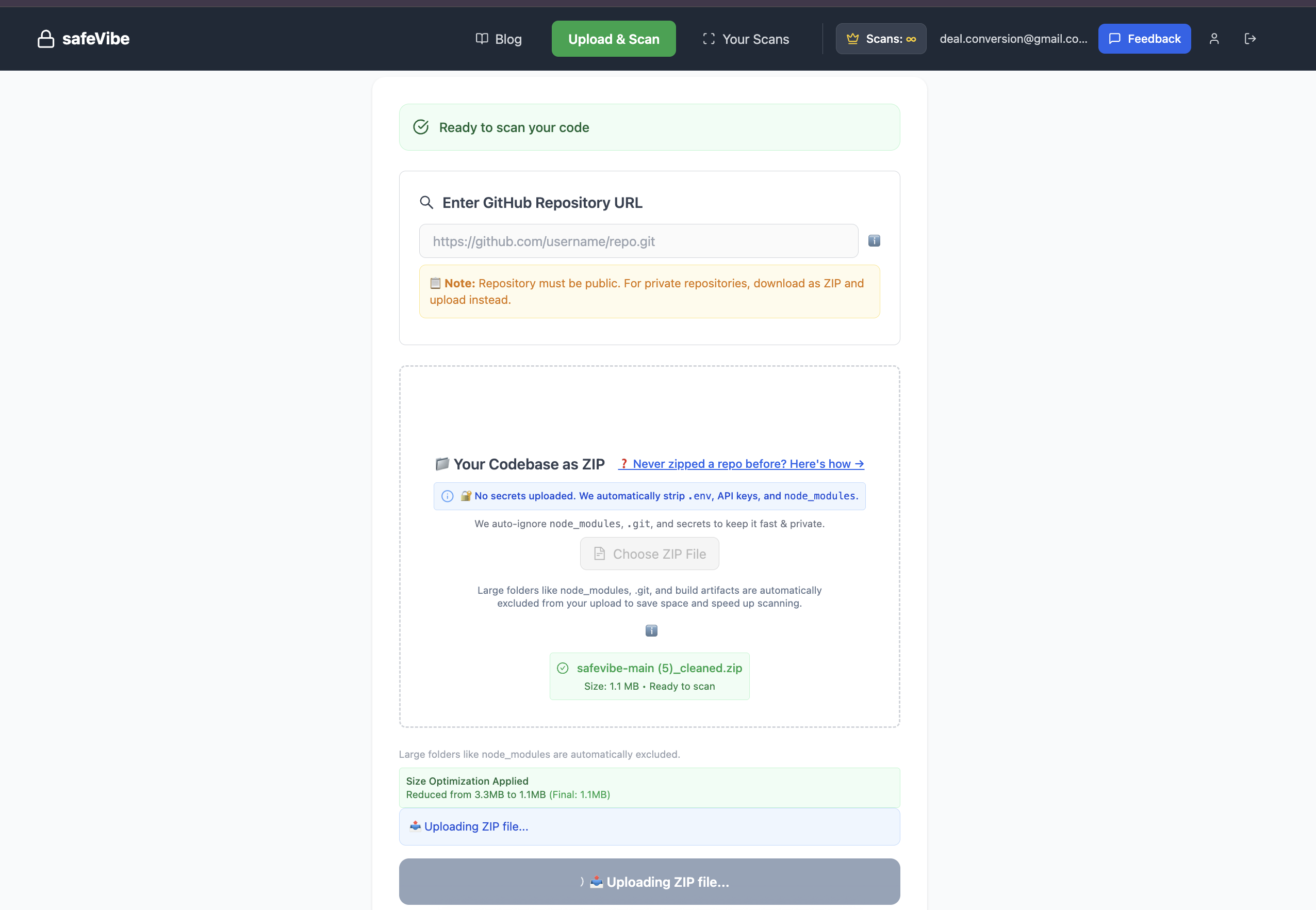
Check you code for security issues - Github / ZIP upload
-
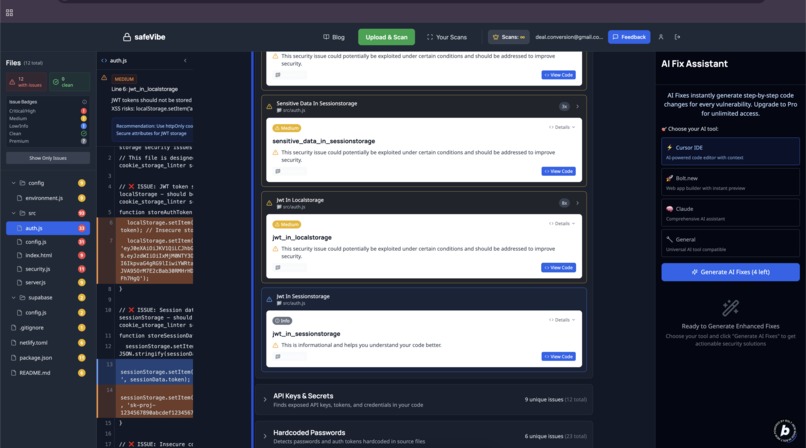
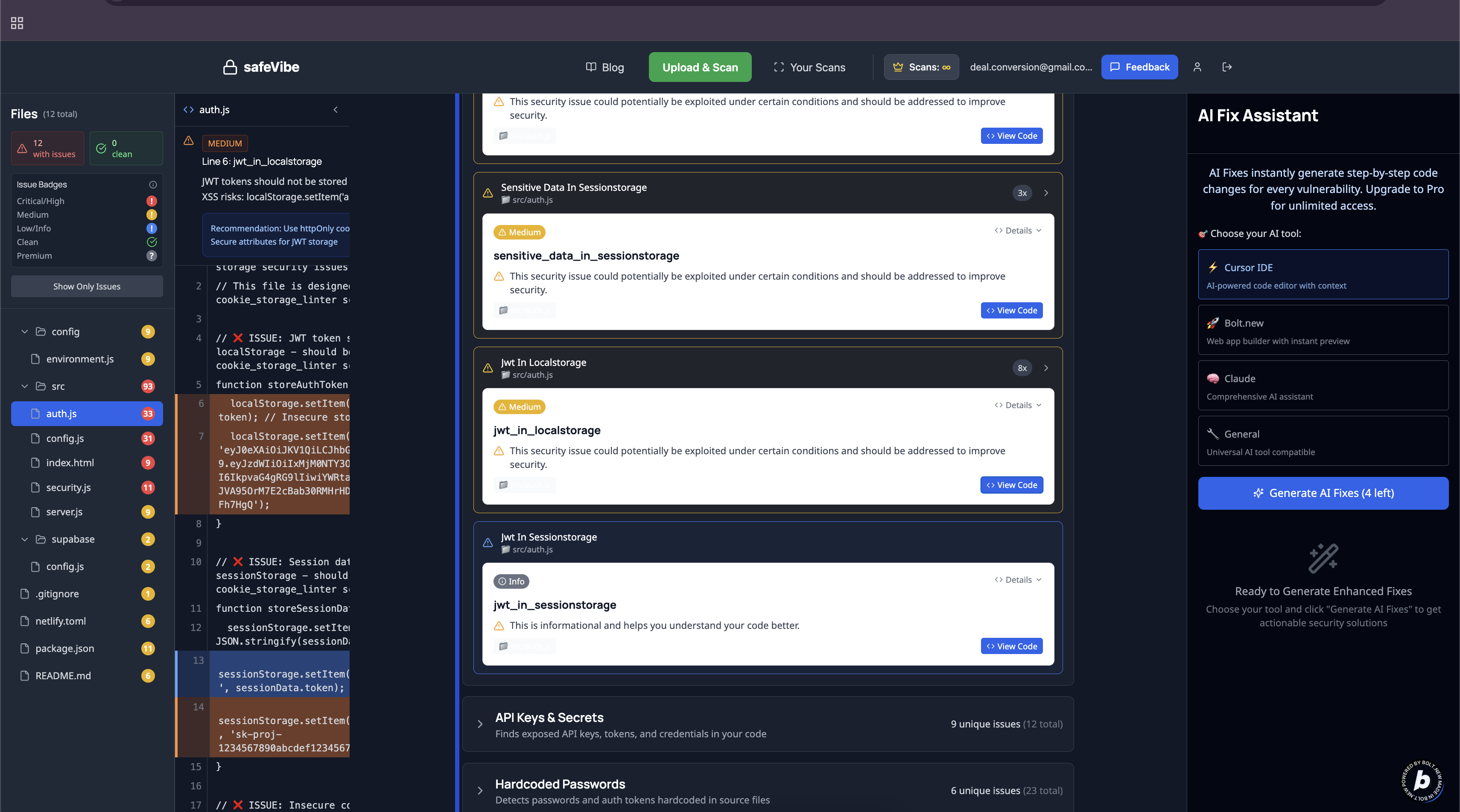
Security check results
-
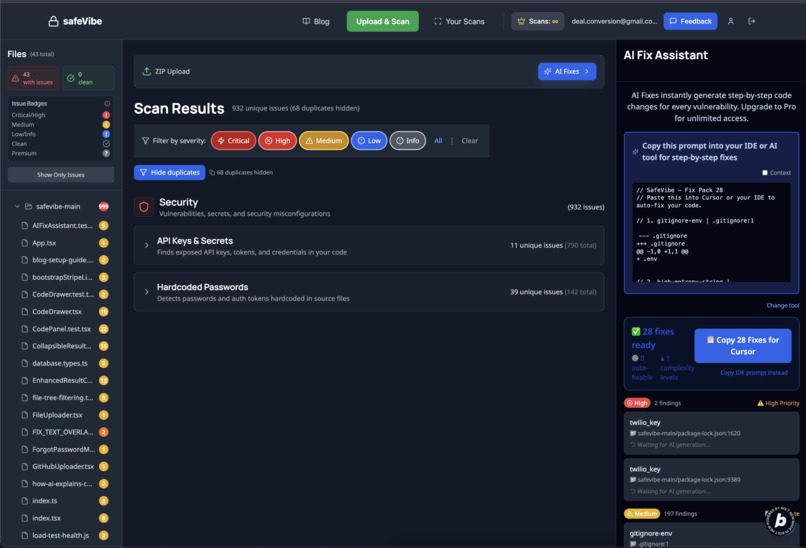
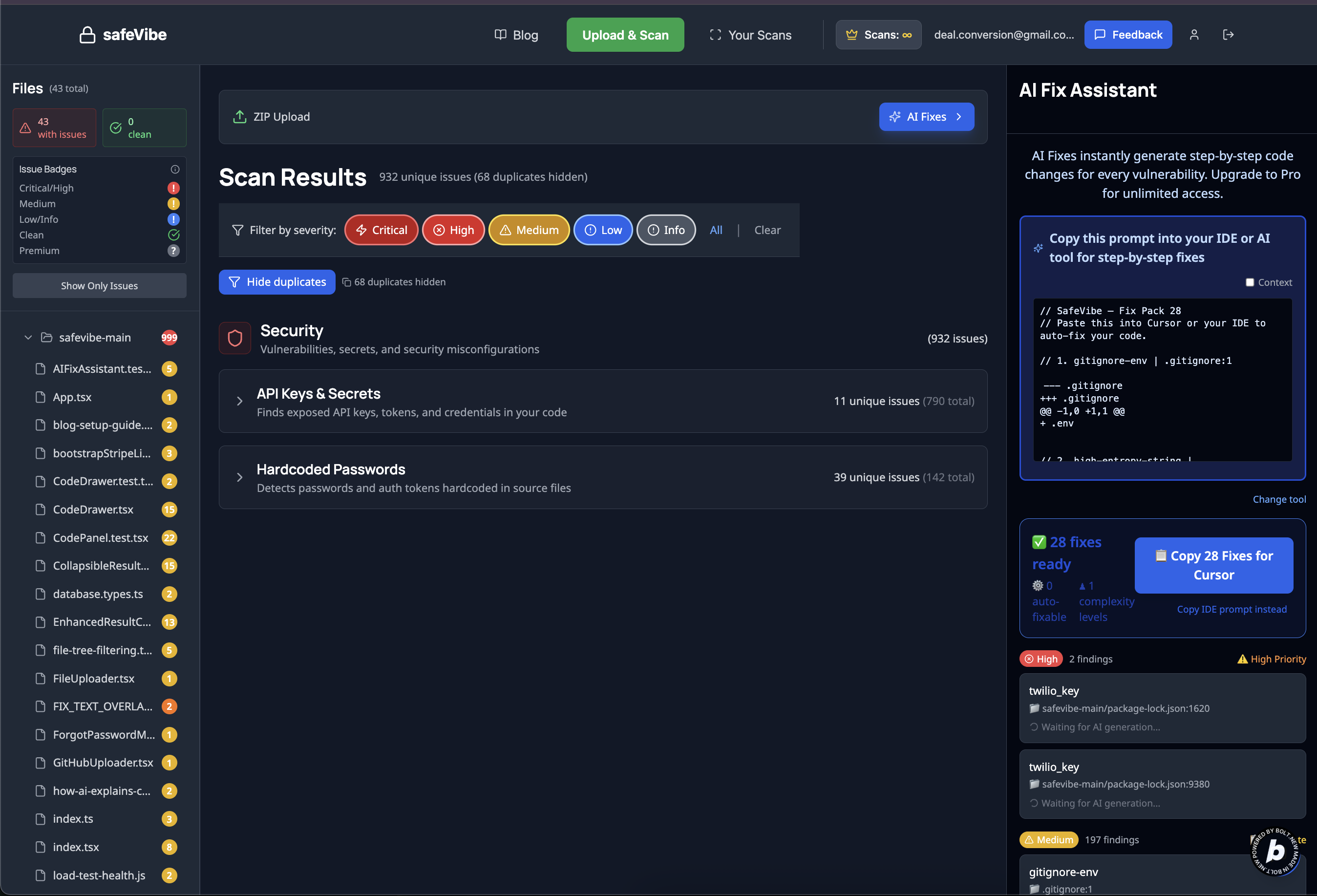
Fix Security Issues with AI
-
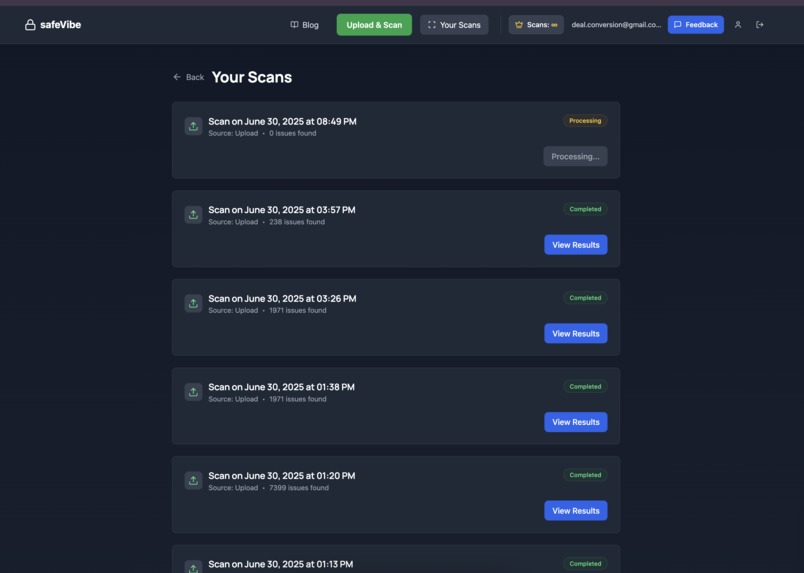
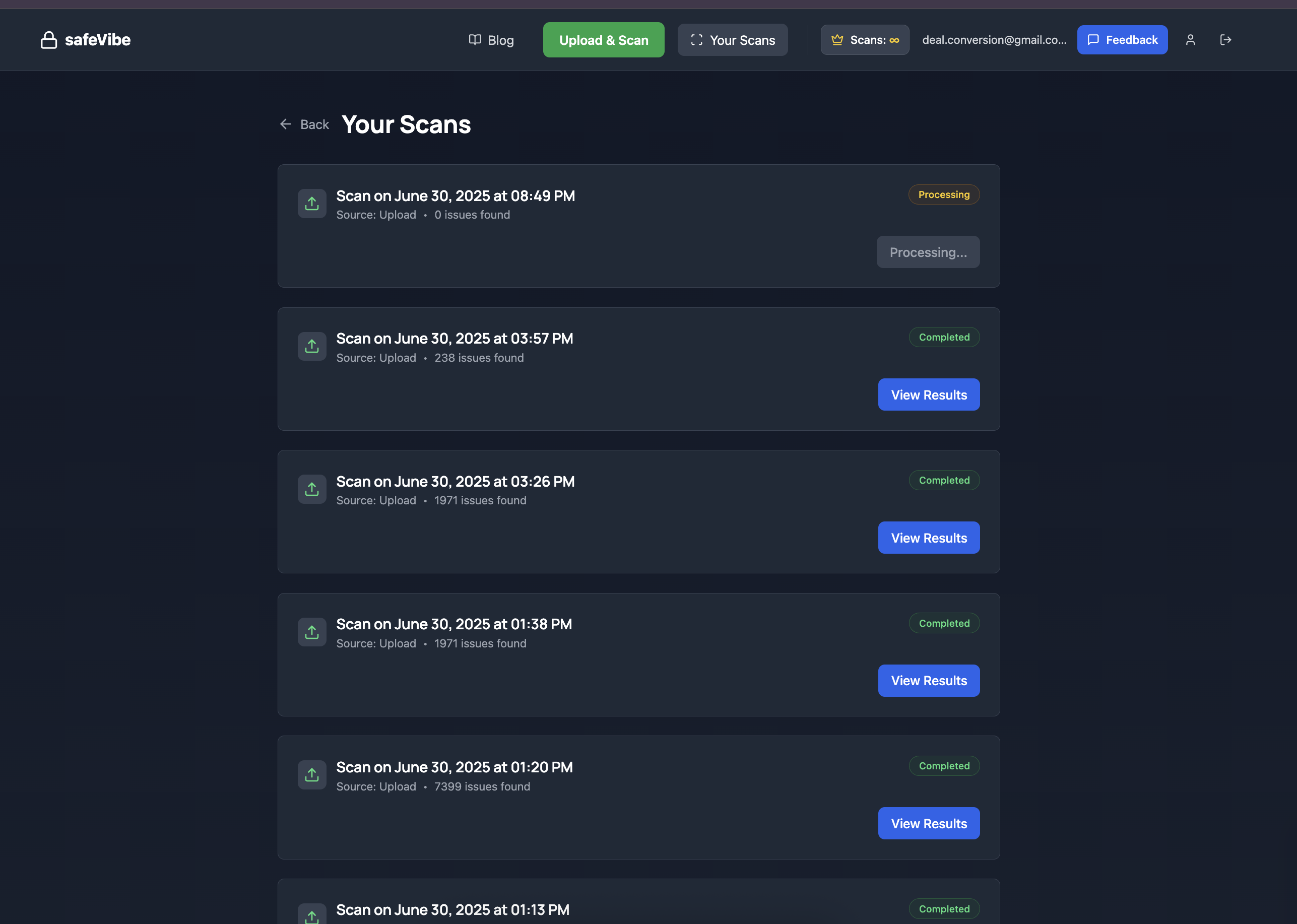
Past Scans
-
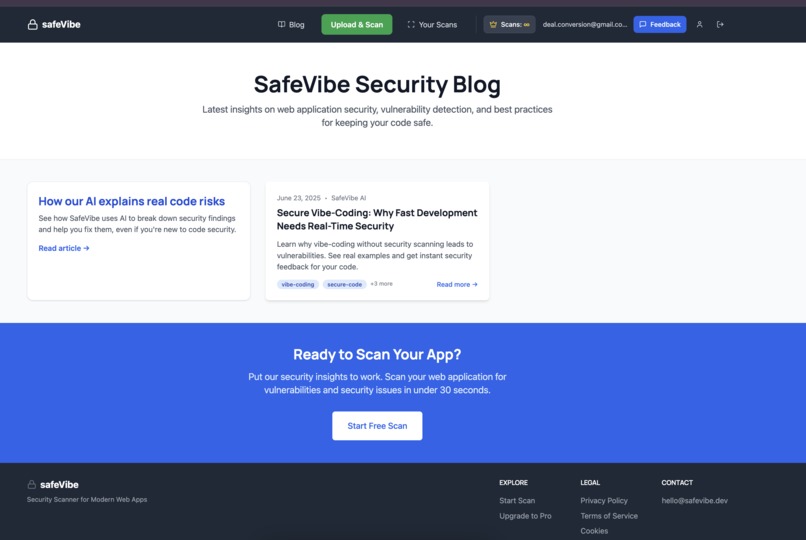
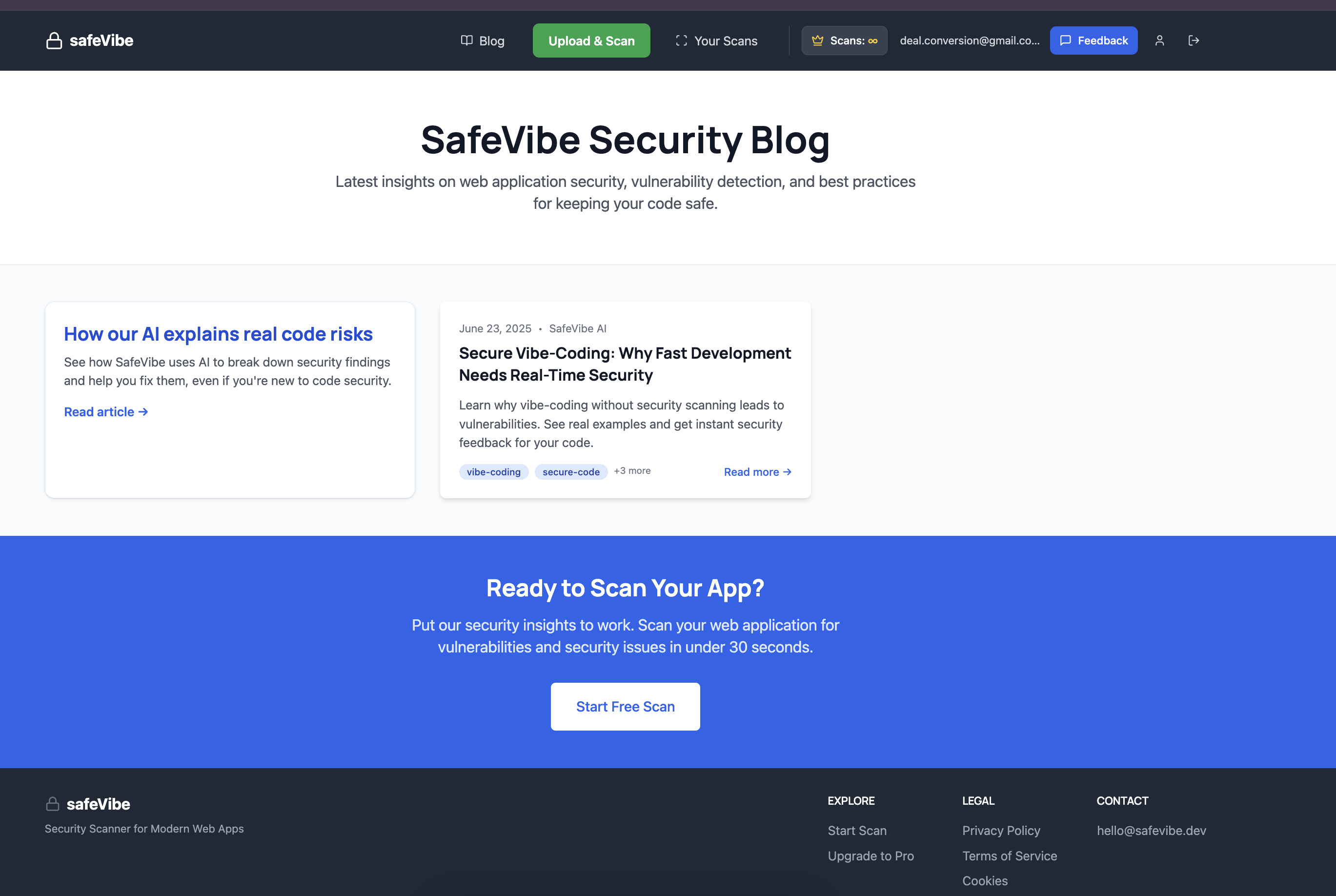
Blog
-
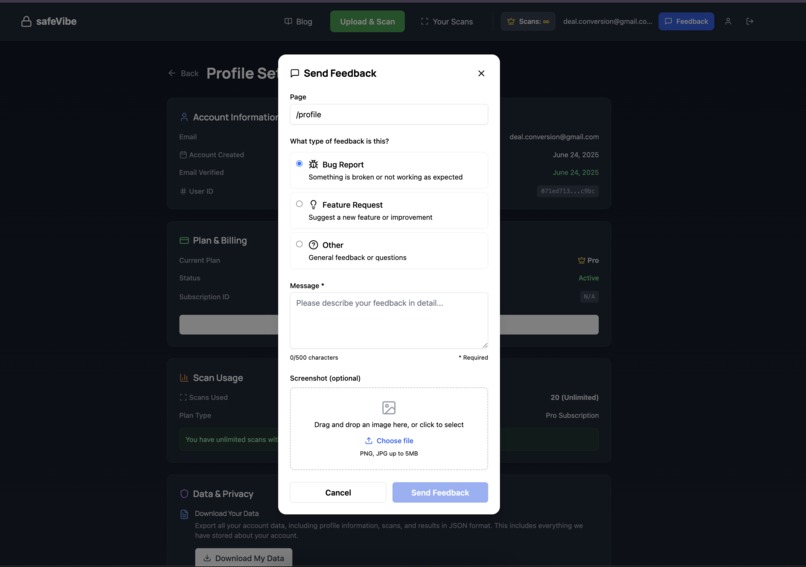
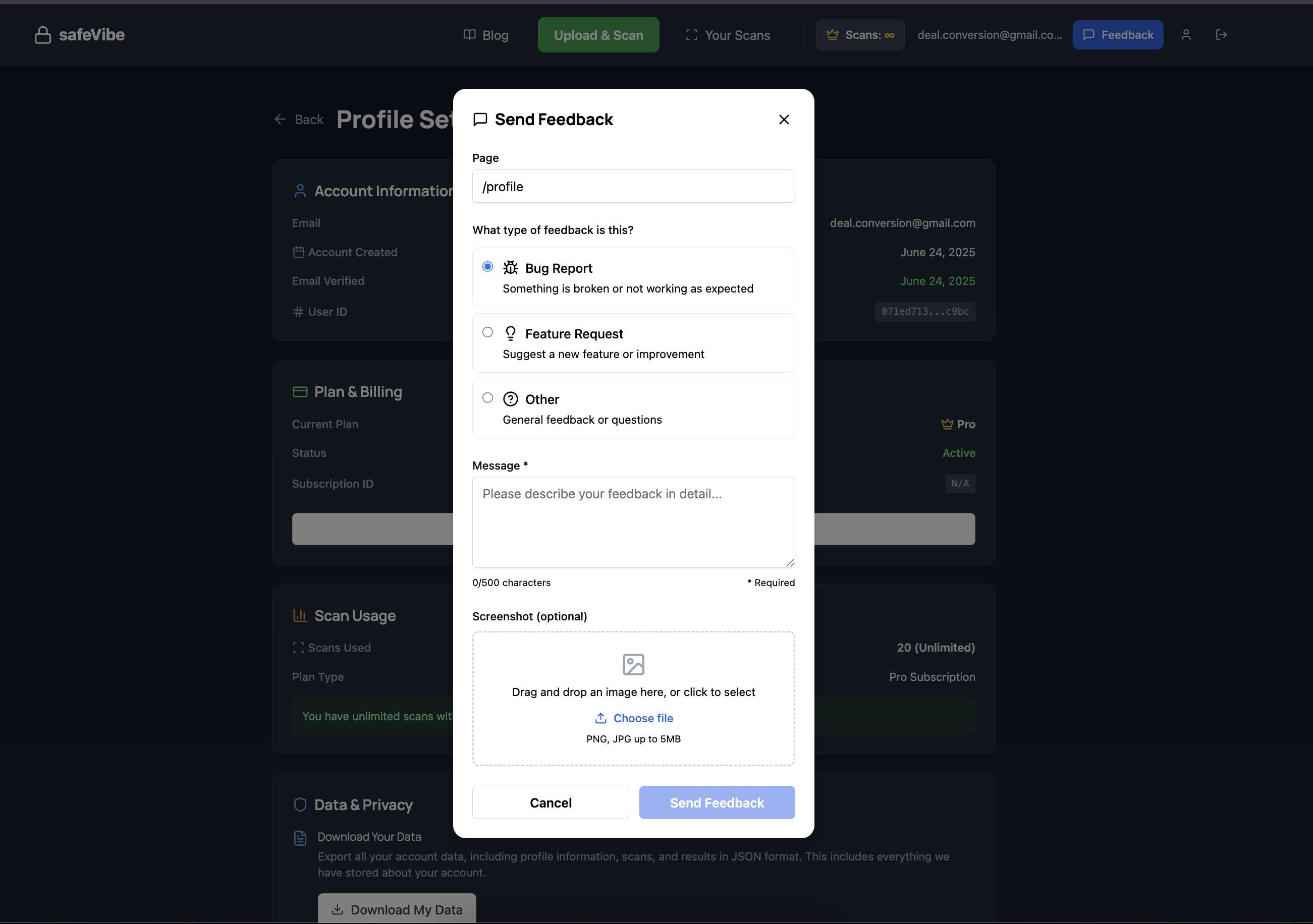
Bug Reports
-
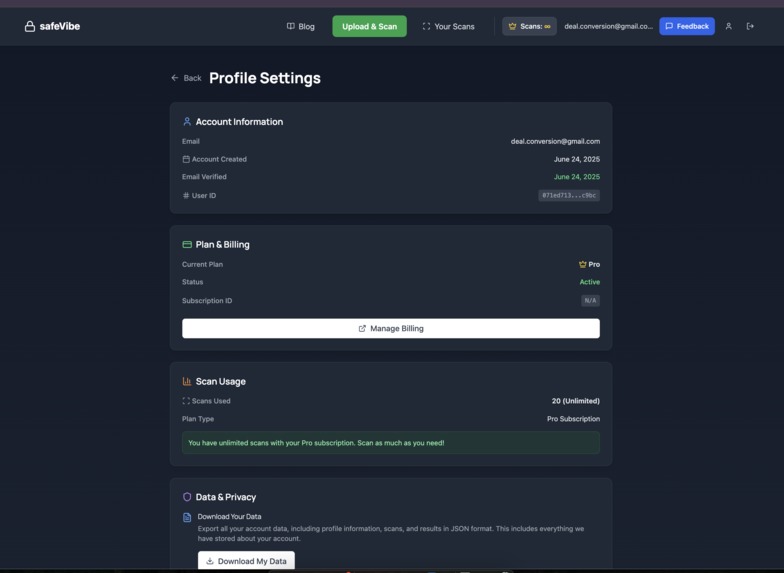
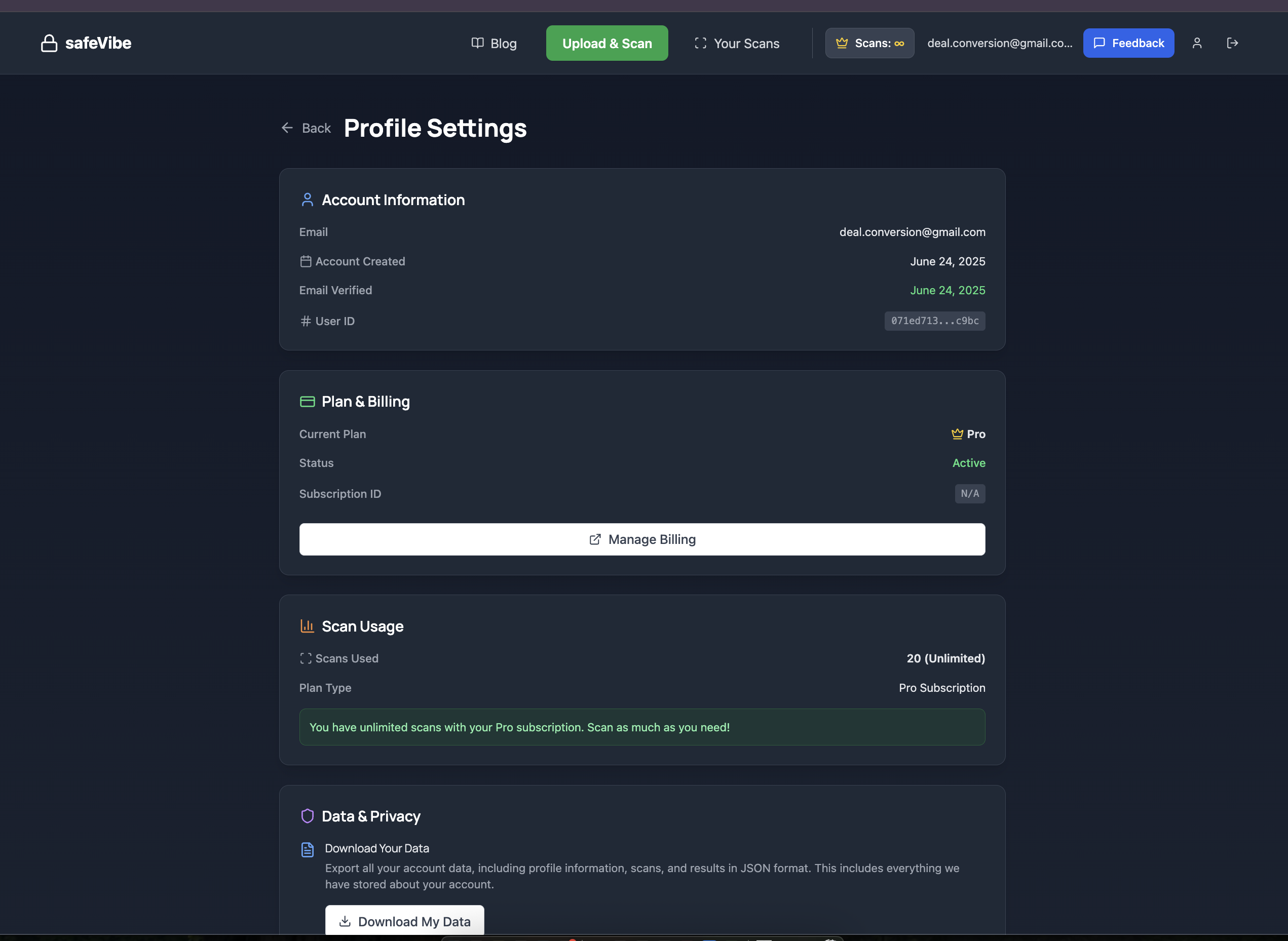
Profile
Inspiration
As vibe coding tools empower more non-technical founders to ship apps at lightning speed, I saw a growing risk: shipping features without security checks can lead to leaked API keys, exposed user data, and surprise bills. I experienced this firsthand when my first “vibe-coded” project ran up thousands of dollars in unauthorized API charges overnight. That wake-up call inspired me to build a simple, zero-install way for creators to scan their apps before going live.
What I Built
SafeVibe.dev is a browser-based security scanner that:
- Accepts vibe-code project's GitHub repos, or ZIP
- Strips it of sensitive files like .env
- Runs entirely in browser
- Highlights OWASP issues (CORS, CSP, environment leaks, outdated deps)
- Produces a security assessment and returns to you a bolt.new prompt of which files need security fixes/privacy pathces.
How I Built It
- Bolt.new scaffolded the UI and frontend components—GPT-4 prompted Bolt to spin up the initial pages.
- I hand-wrote some of the backend and spun up GPT Assistants.
- Tried to do all of the Supabase Edge Functions in bolt but gave up because i could not make secure scanning and avoid logging secrets.
- Integrated Stripe payment flows in prod (OAuth, webhooks, CORS), which turned out to be surprisingly intricate.
- Deployed styling with Tailwind, continuous deployment via Netlify, and polished my demo videos in Descript.
Challenges & Learnings
- Security mindset: Treat security as your launch gate, not an afterthought—every release needs a pulse check.
- Edge debugging: Wiring up Supabase Edge Functions and keeping file-watch triggers from overwriting my code was a deep dive.
- Payments in production: Getting Stripe’s webhooks, secret rotation, and header rules just right took dedicated late-night sessions.
Impact
In open beta, over 4,000 critical issues were uncovered and fixed, preventing data leaks and potential API bills exceeding thousands of dollars.
Built With
- bolt.new
- ci/cd)
- claude
- css
- descript
- github
- gpt-4
- next.js-(app-router)
- openai
- stripe
- supabase
- tailwind
- typescript


Log in or sign up for Devpost to join the conversation.