-
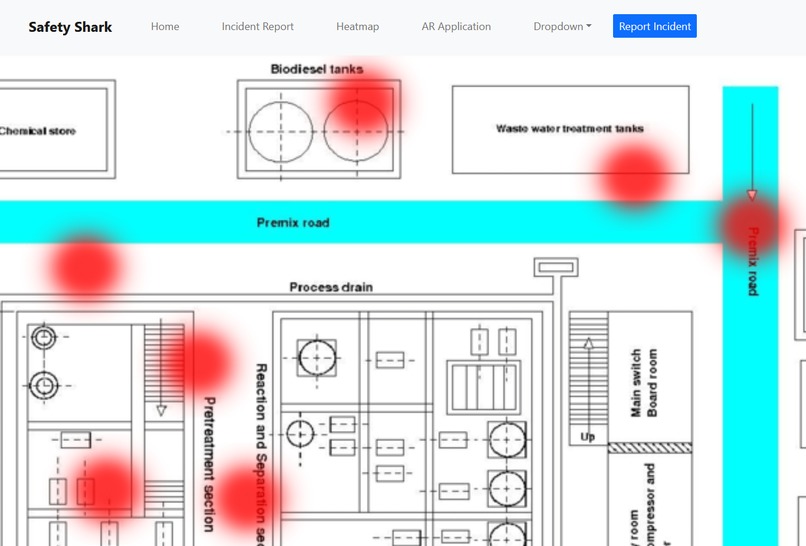
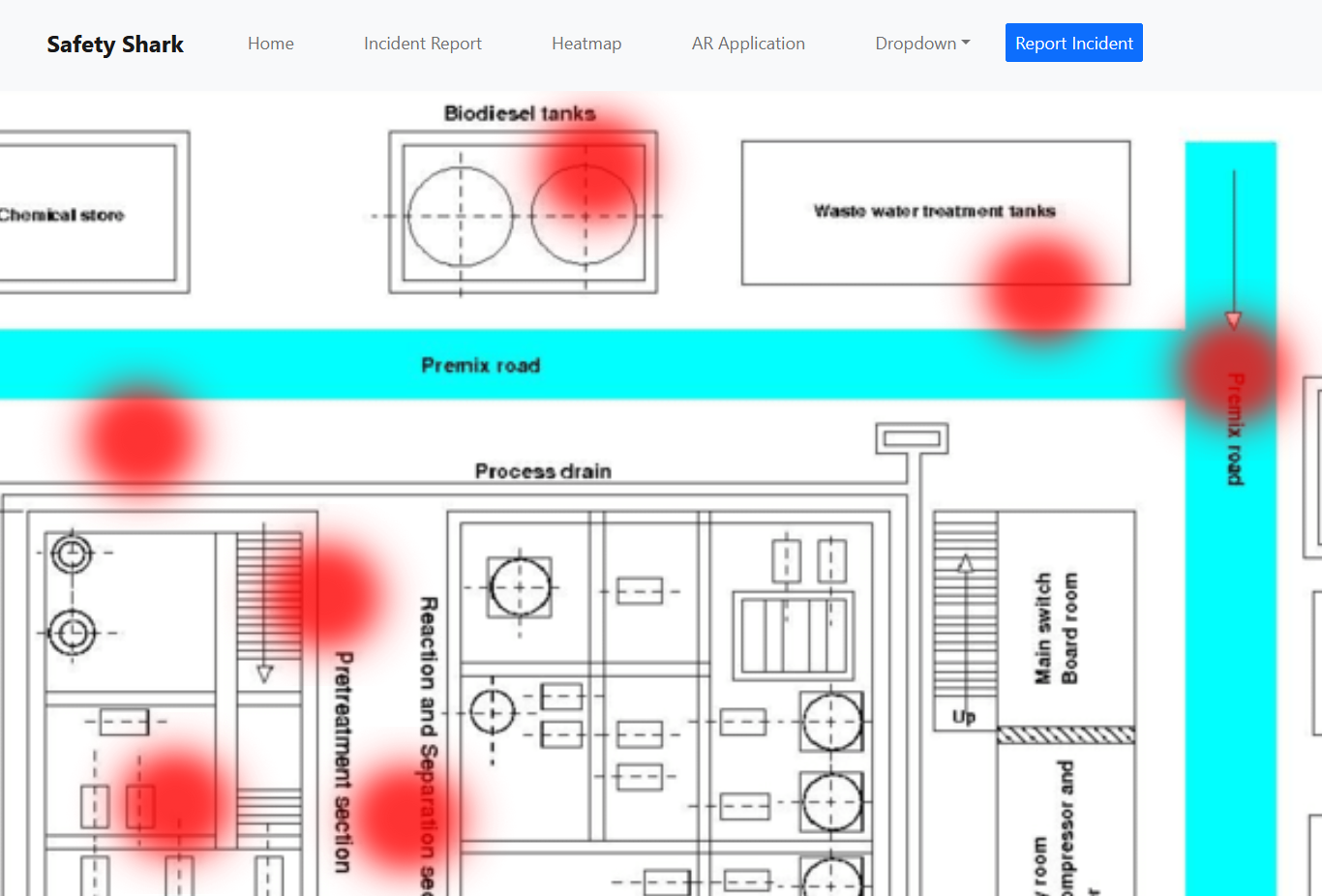
Heatmap, displaying incidents that have occured on a floorplan.
-
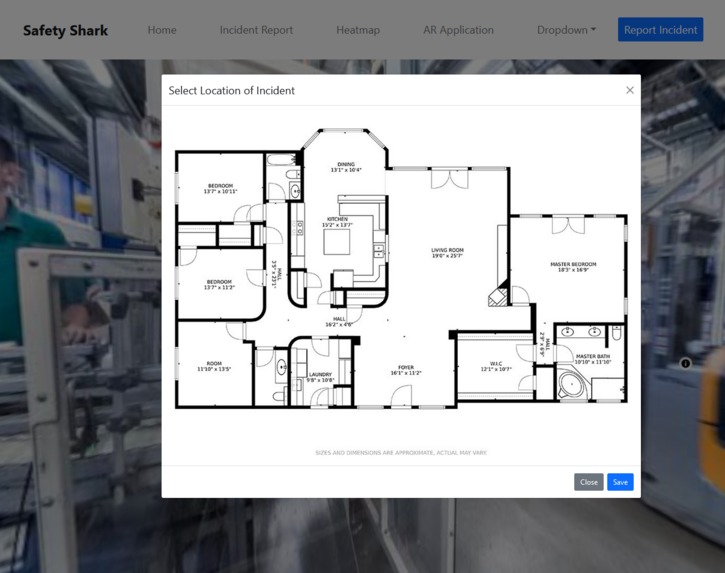
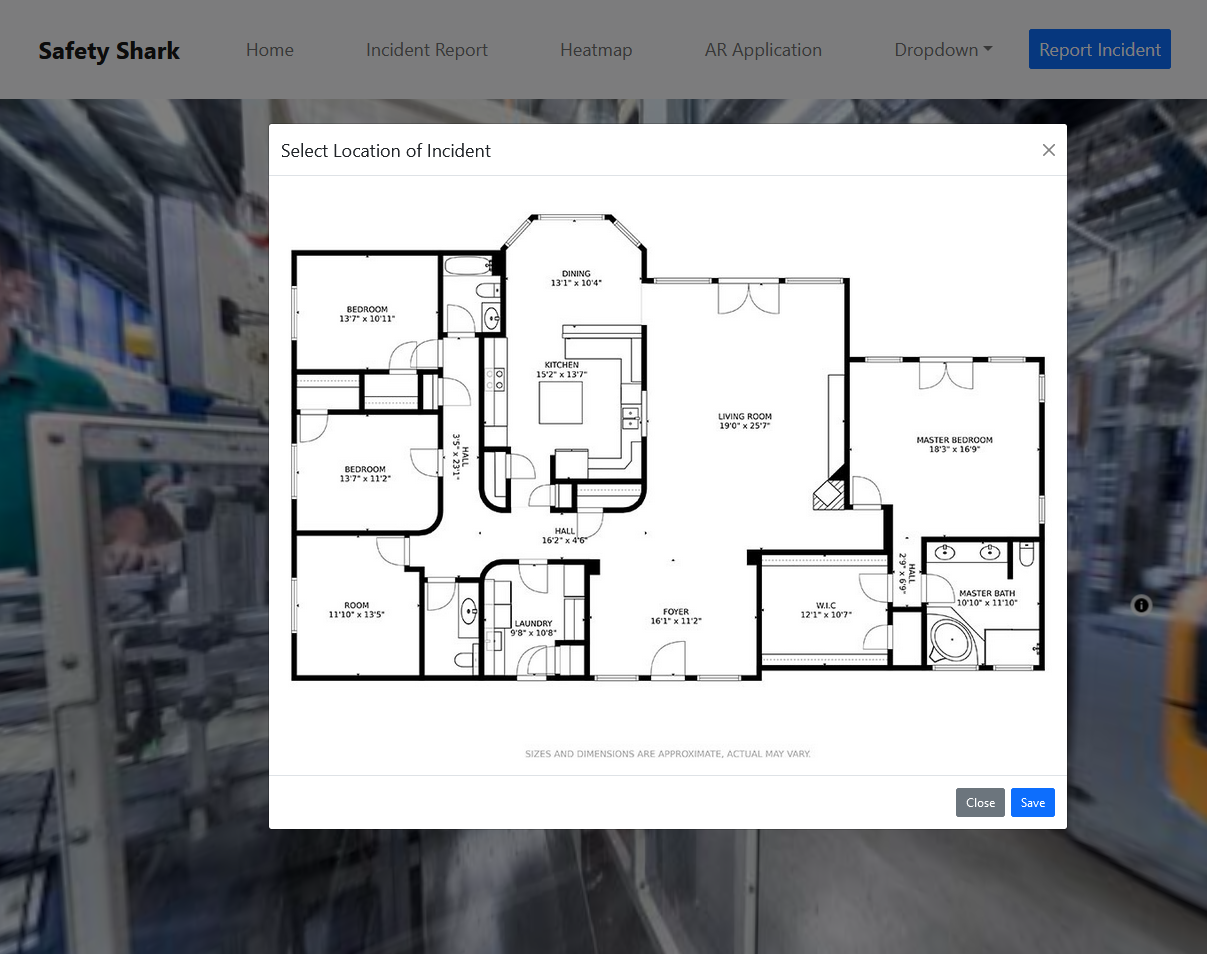
Select locations for incidents, to be viewed on the heatmap.
-
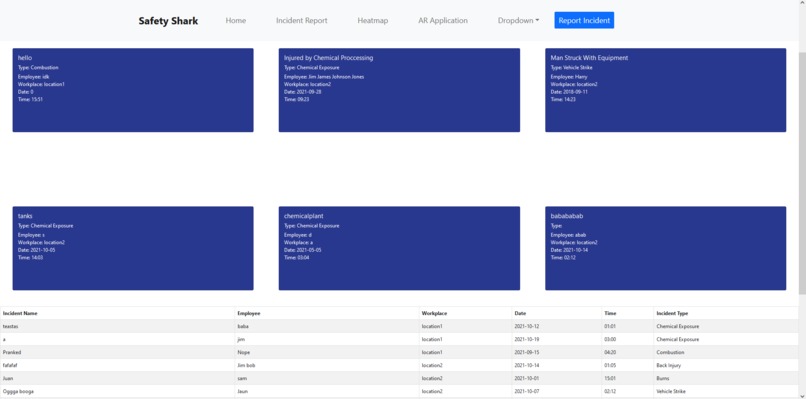
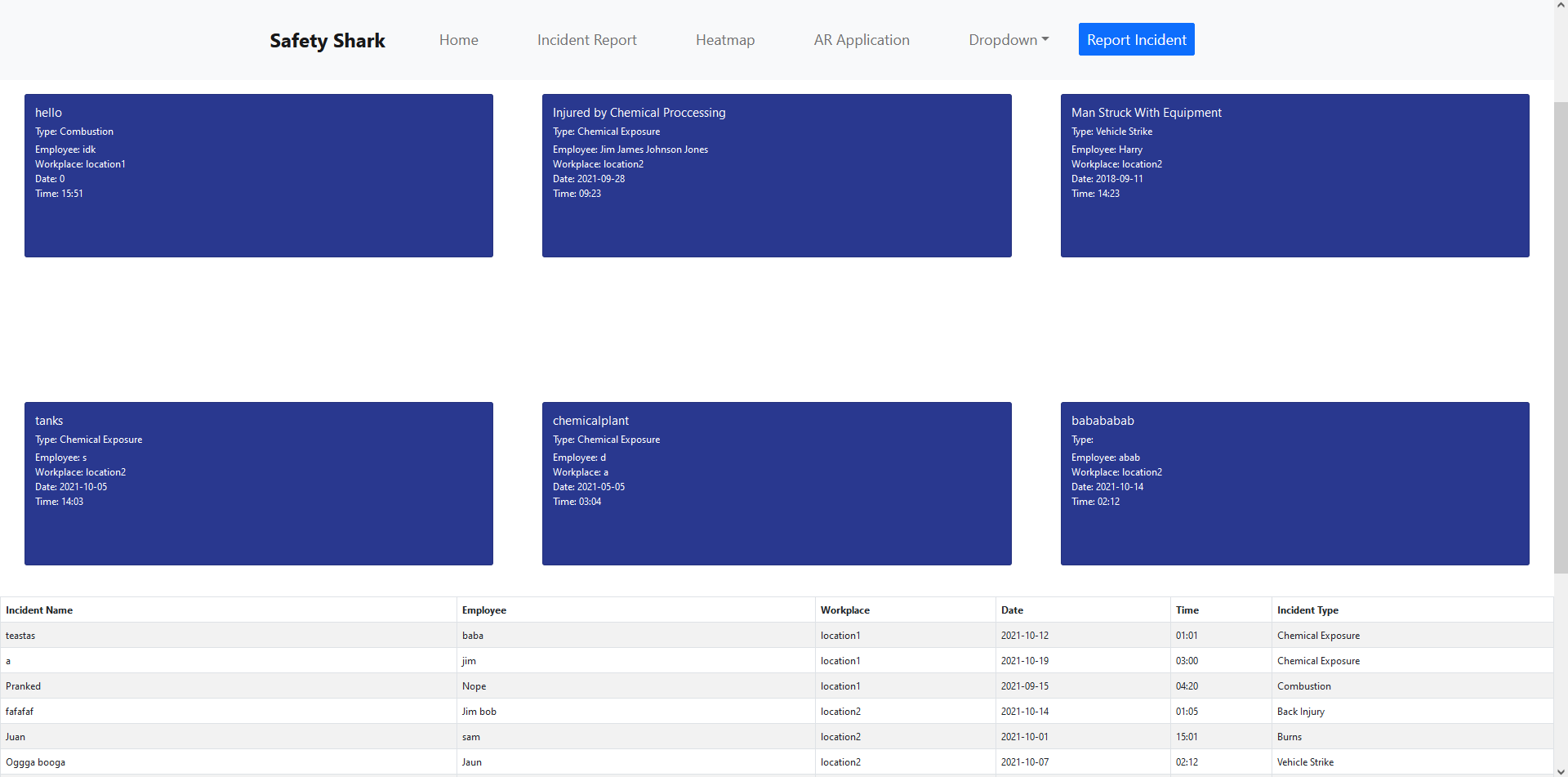
View recent Incidents easily, as well as a complete history of incidents down below.
-
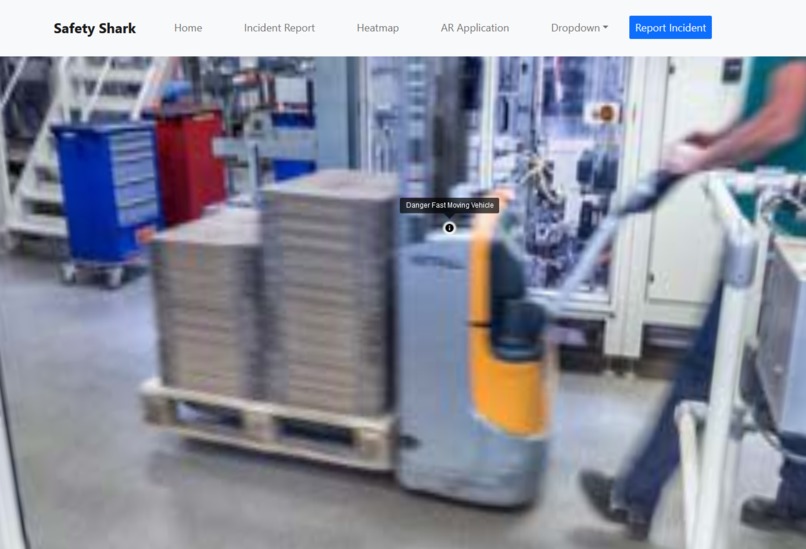
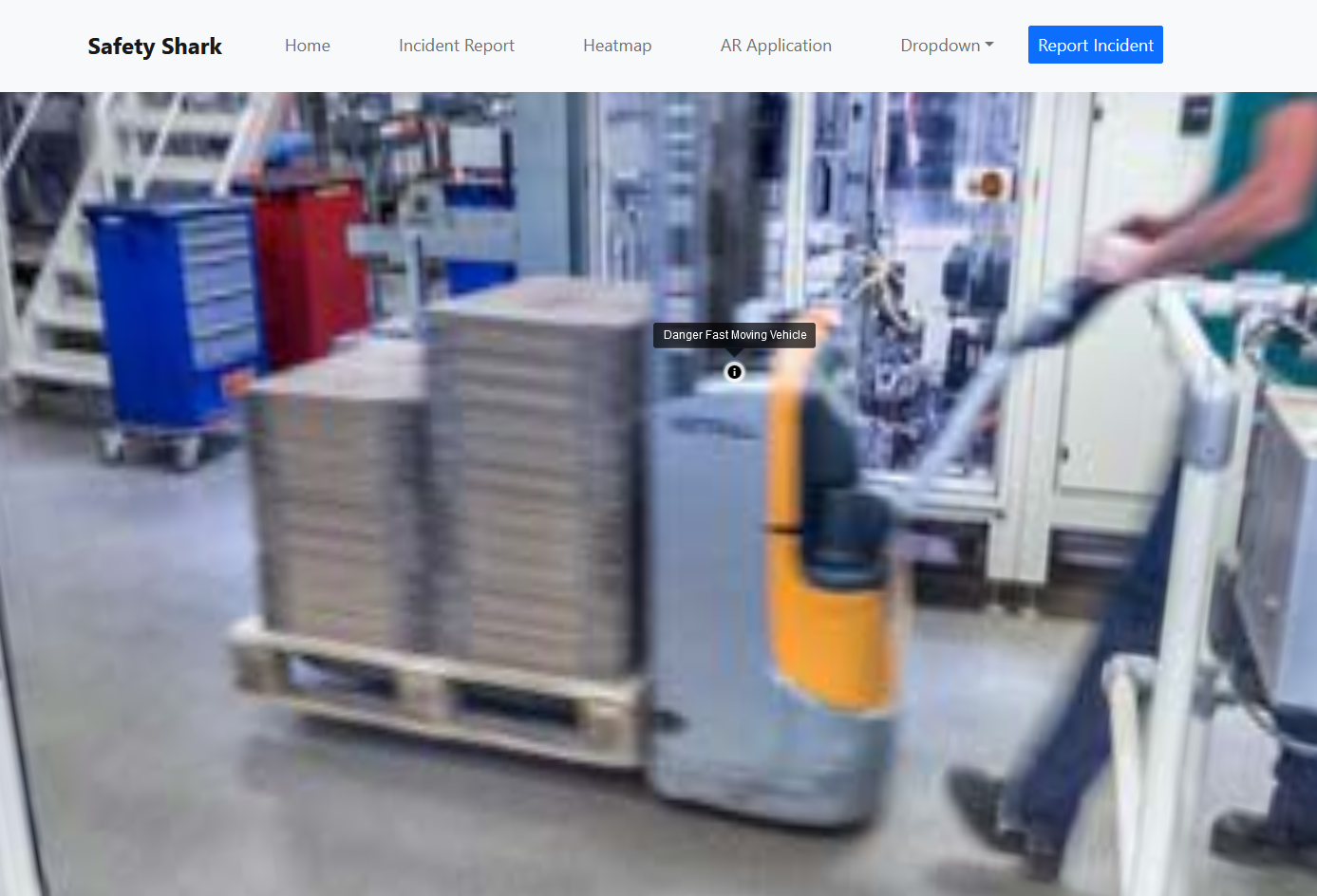
360 Panorama View of floorplan with pins containing links to past incidents.
Inspiration
Safety has always been paramount in the field of worker's labor, with billions spent and thousands employed across the United States to aggregate swaths of technical data to better ensure the safety of work crews. But the question remains: how do you present what could be massive, statistics-based data to the average site worker in a readable, understandable, and most importantly actionable way? That is where Safety Shark finds its niche: presenting enormous data in a stream-lined fashion so that everyone from CEOs to cleaning crews can have live, accurate data on risks, hazards, and accident hotspots.
What it does
Safety Shark incorporates existing database structures containing incident reports and live maps the data onto blueprint models (2D and 3D environments) generating a heat-map of potential hazard hotspots. In addition, Safety Shark can provide detailed information that is tailored by location to separate various incident clauses to specific user IDs ensuring that every user is fed only the data relevant to their situation.
How we built it
We developed a MongoDB server environment to allow the storage and retrieval of vast numbers of incident reports and location data, then utilized a web development interface to feed new generated reports into the server and parse the results into generated heat-maps. Utilizing React and Bootstrap in combination with standard javascript and node.js libraries, we developed a simple and intuitive UI that allows efficient navigation and clear readability of the presented data.
Challenges we ran into
Accessing a usable implementation of the heat-map was no small feat, and deep in development was confronted with the fact that no such system was readily available within our environment. As such, we needed to implement by-point incident reporting on the heat-map and develop functionality by hand.
Accomplishments that we're proud of
The readability and overall simplicity is a merit to the work put in to create such an environment: that was our goal, after all. It should look simple, easy, and intuitive, and by no means did it look as such in our earlier iterations. Honing the project to the degree we had in the time allotted is a feat we all are proud of. Additionally, developing a clean UI structure on top of our functionality is credit to our commitment to the user-case of the project.
What we learned
Many of us had little experience with front-end and back-end web development of the MERN model, and as such had to spend hours gathering the resources and libraries needed. Our confidence in web development has increased dramatically, and the exposure to a wide development toolset is wonderful.
What's next for Safety Shark
Expanding into the AR field with live-instance mapping available to the on-site workers is a definite next step in the extensibility development.


Log in or sign up for Devpost to join the conversation.