-
-
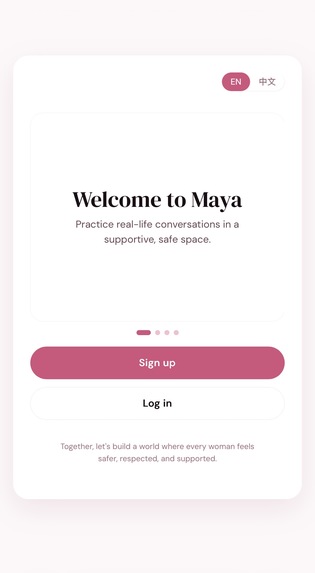
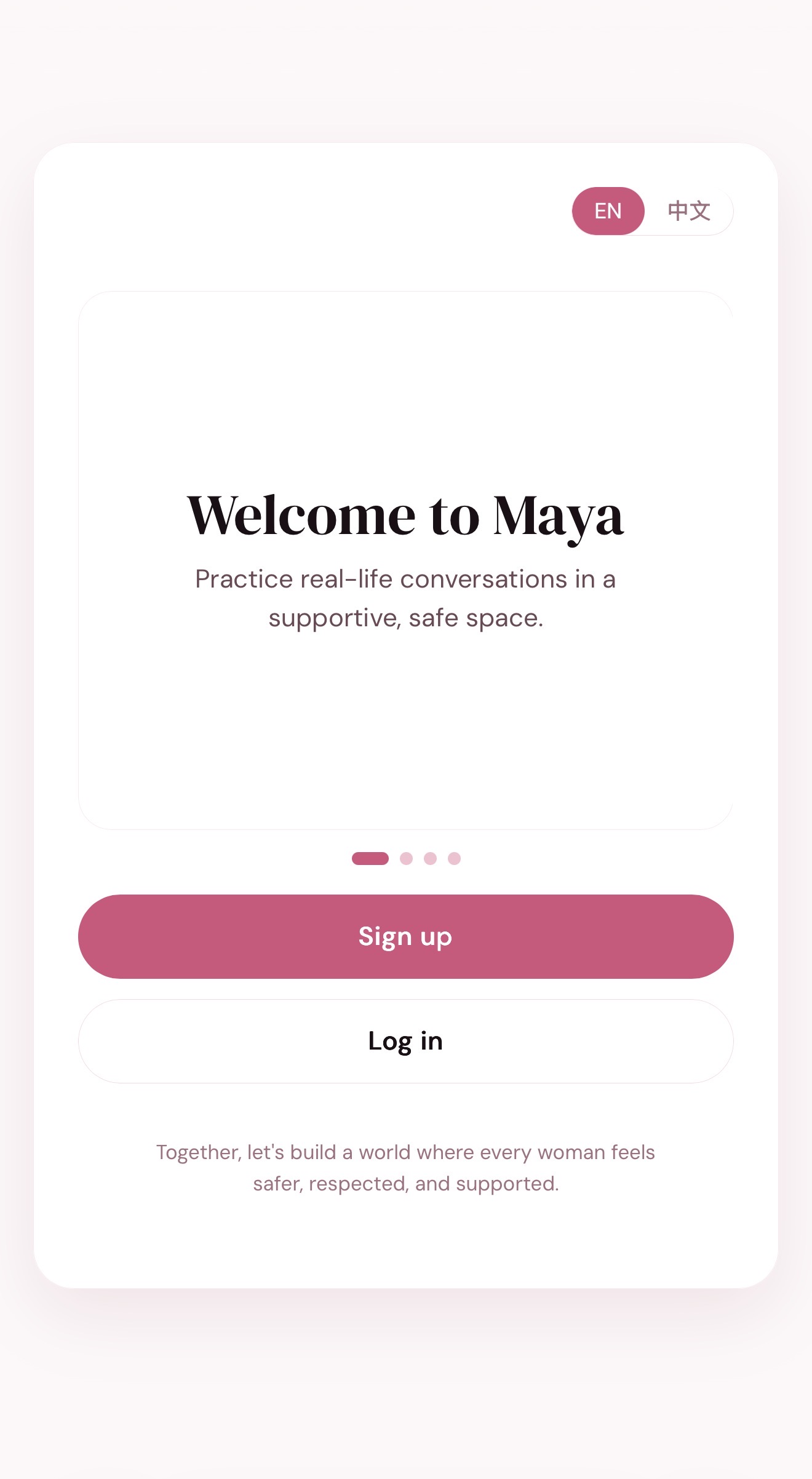
log in page
-
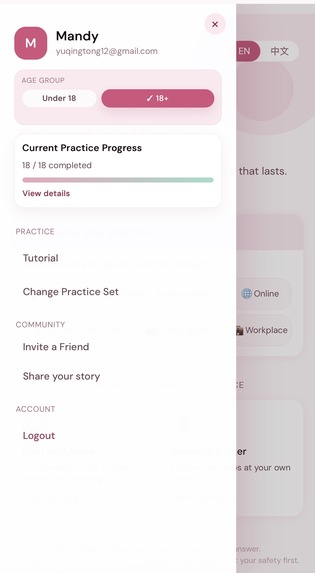
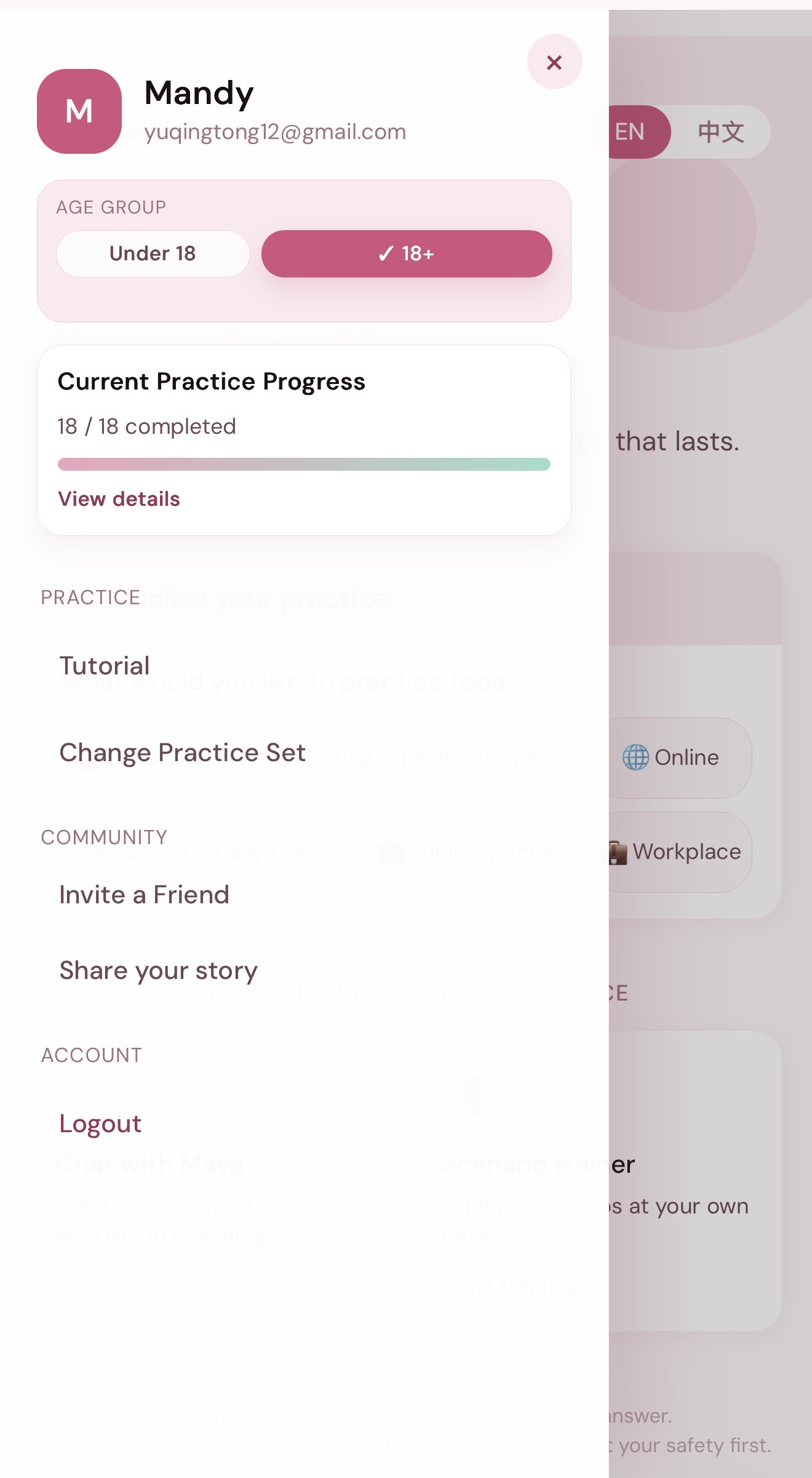
user panel
-
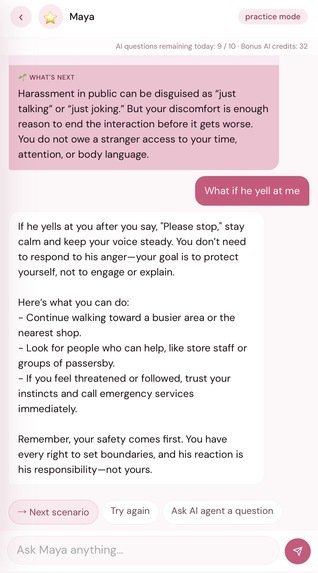
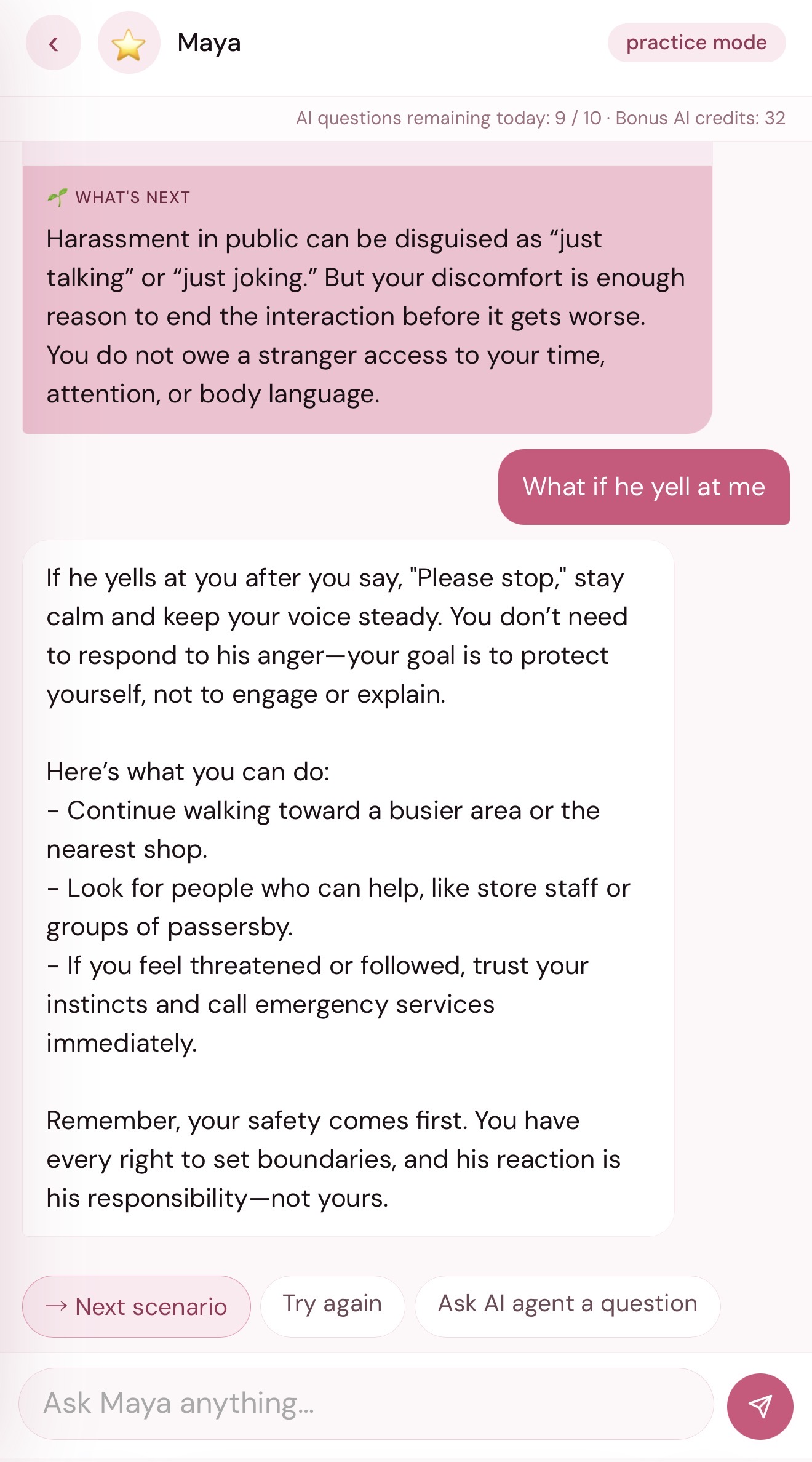
AI conversation part
-
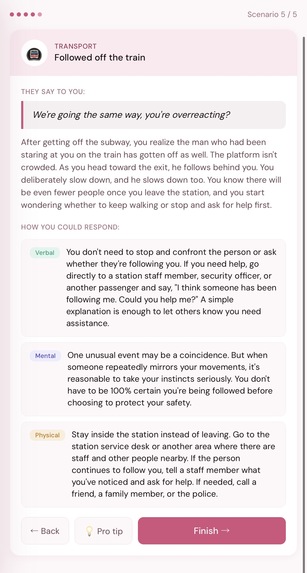
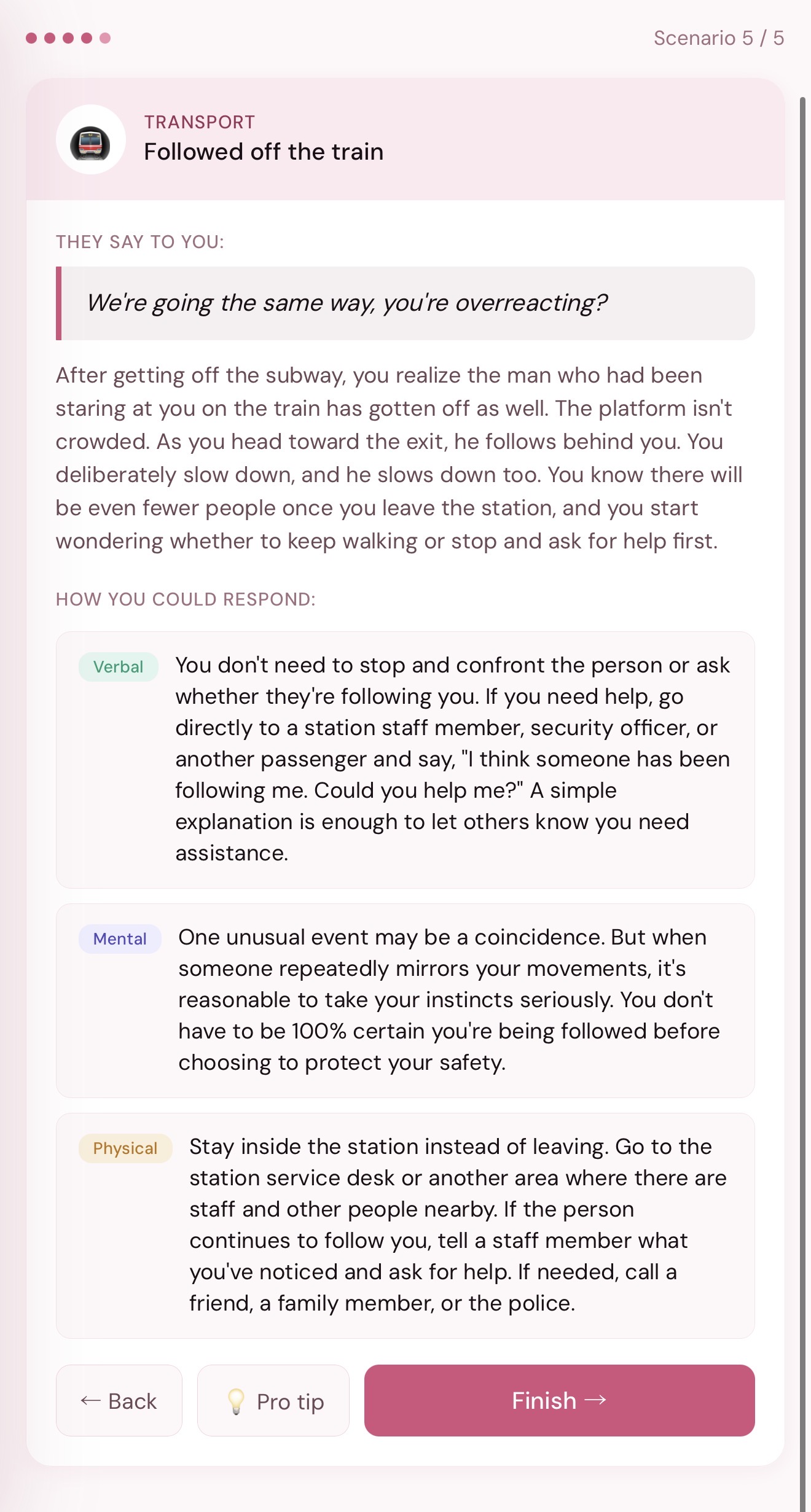
Scenario trainer part
-
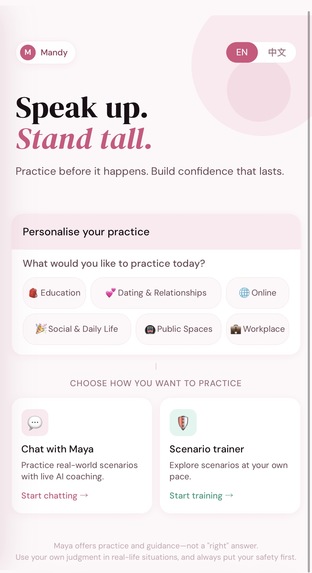
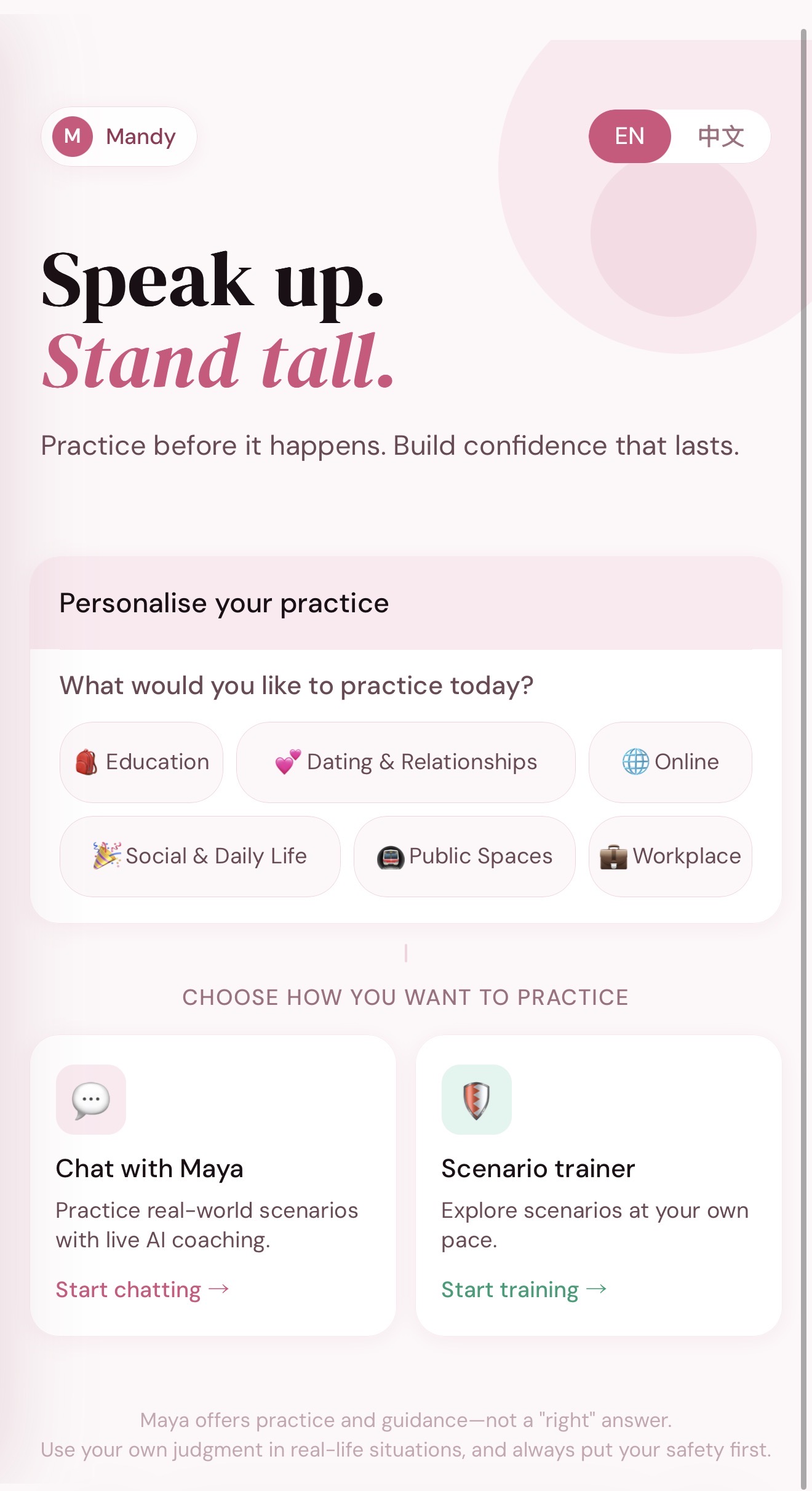
home page
-
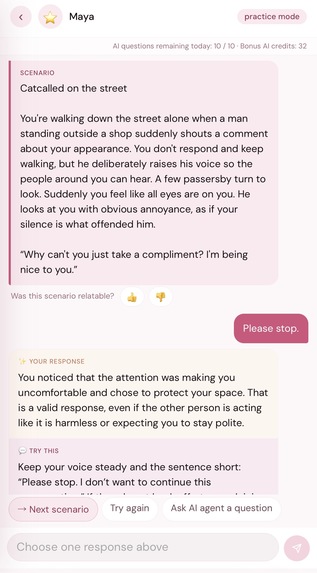
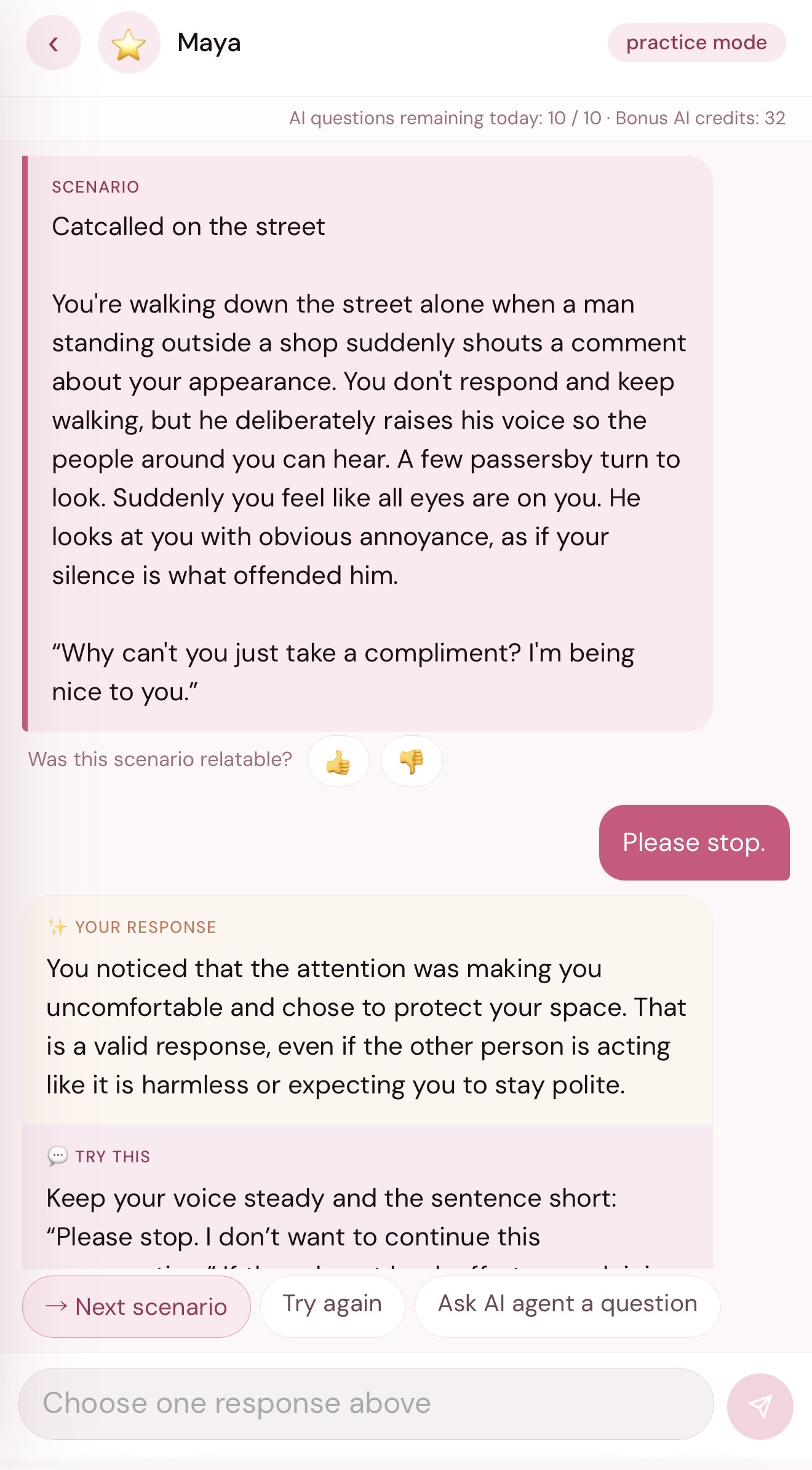
Chat page
Inspiration
Maya was inspired by a shared experience among many women around me, including myself: we often encounter uncomfortable situations in daily life but struggle to respond in the moment. It might be an inappropriate joke, unwanted physical contact, or an intimidating conversation. When it happens, we freeze because we feel surprised, nervous, or afraid of escalating the conflict. And later, we replay the moment in our minds and regret. “Why didn’t I say something?” “Why didn’t I fight back?”
I gradually realized that as we grow up, we never systematically learn or practice how to recognize boundary violations, find the right words under pressure, and choose a response when we face these situations. At the same time, we don't usually share these experiences because retelling them can bring feelings of shame, fear, or self-doubt.
This inspire me to create Maya—a safe, scenario-based practice platform designed to help women recognize boundaries, communicate under pressure, and protect themselves before they face these situations in real life. By sharing user's own scenario and create a supporting community, we believe we can create a world where women can feel safer, respected, and supported.
What it does
Maya presents realistic scenarios from workplaces, dating and intimate relationships, online interactions, and public spaces. It helps women practice different ways to respond before they encounter similar situations. Each scenario provides guidance in three areas: Verbal response: What you could say in the moment. Emotional response: How to understand your feelings and recognize manipulation or boundary violations. Practical response: How to leave, preserve evidence, or seek support
Maya’s goal is not to provide one “correct” answer. It is to help women prepare more options from which they can choose.
How we built it
My professional background is in data analytics, and I did not have comprehensive product development experience. When I started this project, I was relatively unfamiliar with product management, frontend and backend development, databases, and deployment workflows.
With the help of Codex, I broke the complex development process into tasks that I could learn and complete step by step. I worked through the entire process—from product experience design, frontend and backend development, and database integration to testing and deployment.
Maya ultimately became a bilingual, full-stack application with features including: Personalized practice Structured scenario training AI-powered follow-up questions User progress tracking Content feedback
Challenges we ran into
With no prior programming experience—and little familiarity with platforms like GitHub—every deployment step felt risky. I worried that one wrong action might overwrite something important or break the product. Codex made this process much easier by explaining each update, asking for my permission before making changes, and helping me organize the development workflow step by step.
Accomplishments that we're proud of
We collected real scenarios from user feedback and successfully combined them with AI-powered guidance. This approach allows us to continuously expand our scenario library while giving users the flexibility to explore personalized responses. With the discussion with Codex, Maya also evolved from a simple coaching tool into a product with a long-term community vision—one where women can learn from shared experiences, support one another, and prepare together.
What we learned
I learned that Codex is not only a strong programmer, but also a versatile collaborator. At first, I only asked it coding-related questions. When I struggled to organize Maya’s product logic without a product manager, I realized that Codex could take on that role as well. By exploring the product from technical, product, and user perspectives, our collaboration evolved from simply “me and a coding assistant” into something that felt like a cross-functional team.
What's next for Maya - Safety Practice coach built for Women
Maya’s next step is to develop a stronger marketing and user-growth strategy with Codex’s support. During our soft launch, we found that educational products often have low initial conversion because users may not feel an immediate need to begin practicing. We plan to explore how to lower the barrier to the first practice session, and motivate more women to engage with the product.

Log in or sign up for Devpost to join the conversation.