-
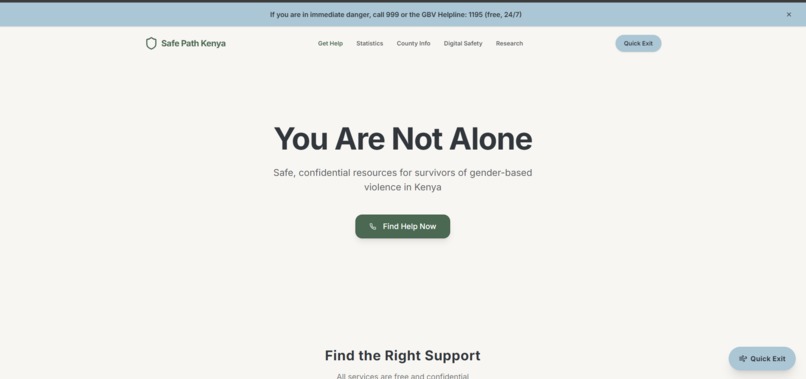
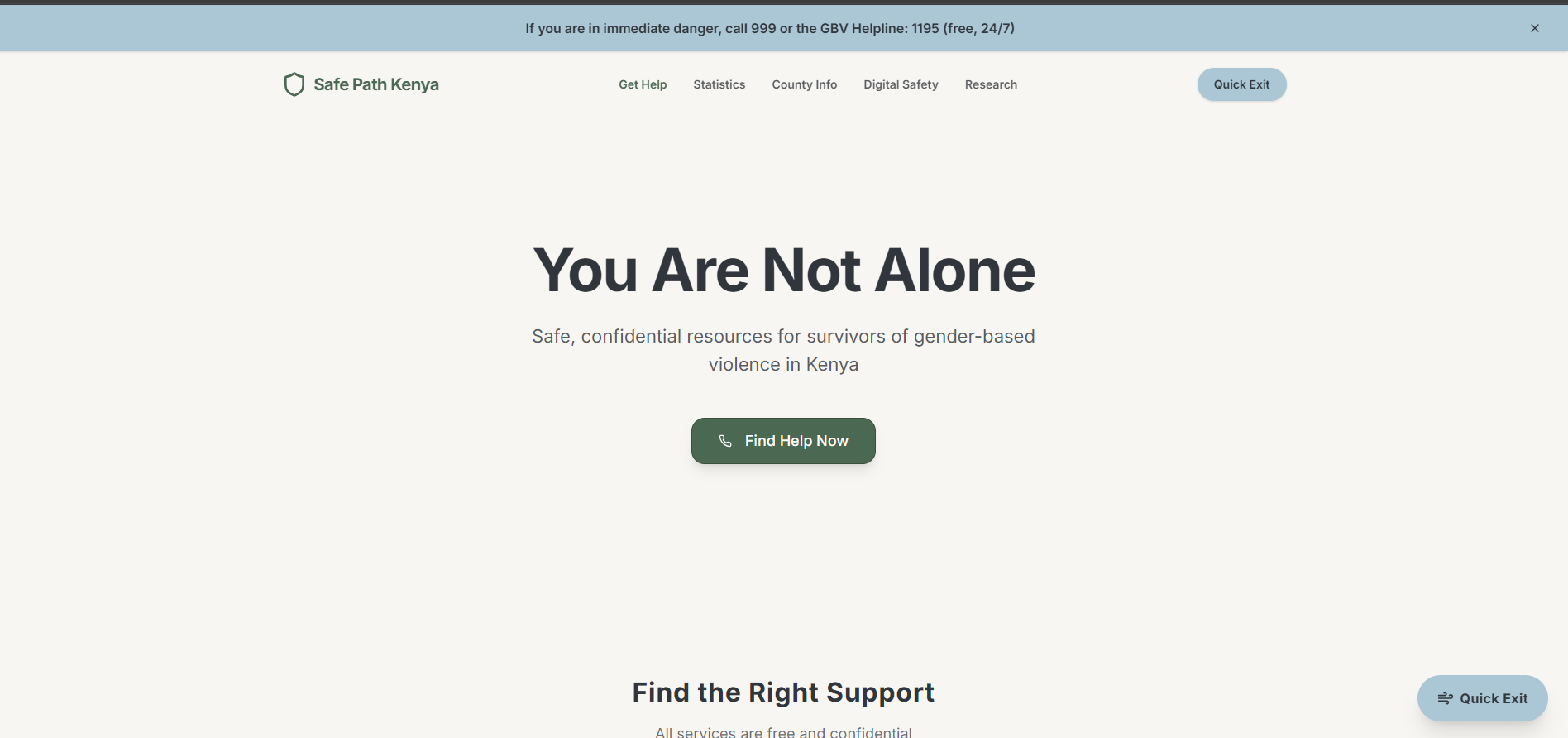
Landing page
-
-
Inspiration
A close friend of mine went through intimate partner violence and felt entirely alone. She didn't know what options were open to her, the perpetrator got away with the abuse, and she missed out on critical support provided by NGOs and the government. Seeing how a lack of clear information lets abusers walk free while the intensity of violence increases drove me to build a safe, accessible tool to guide others through the darkness.
What it does
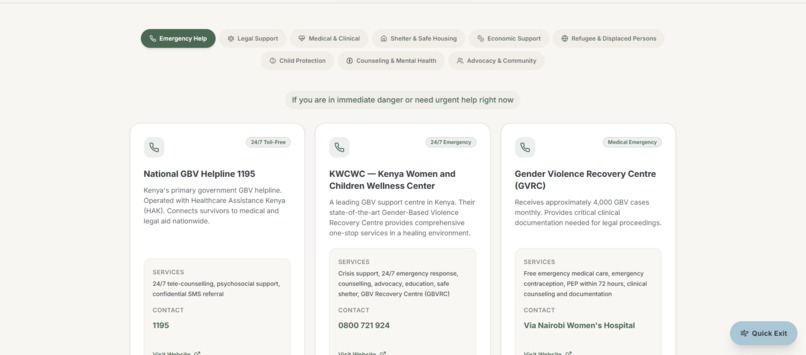
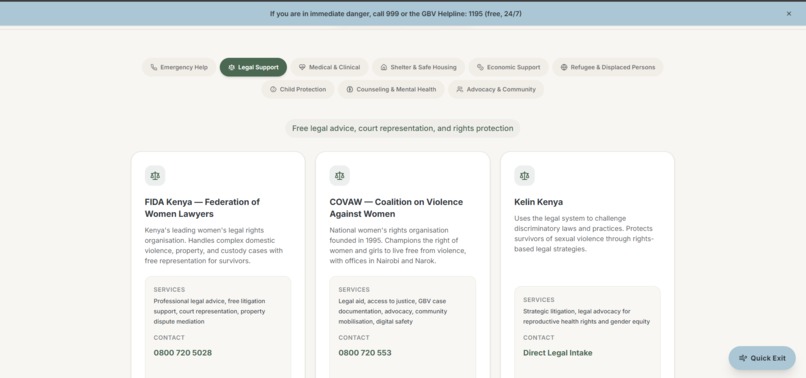
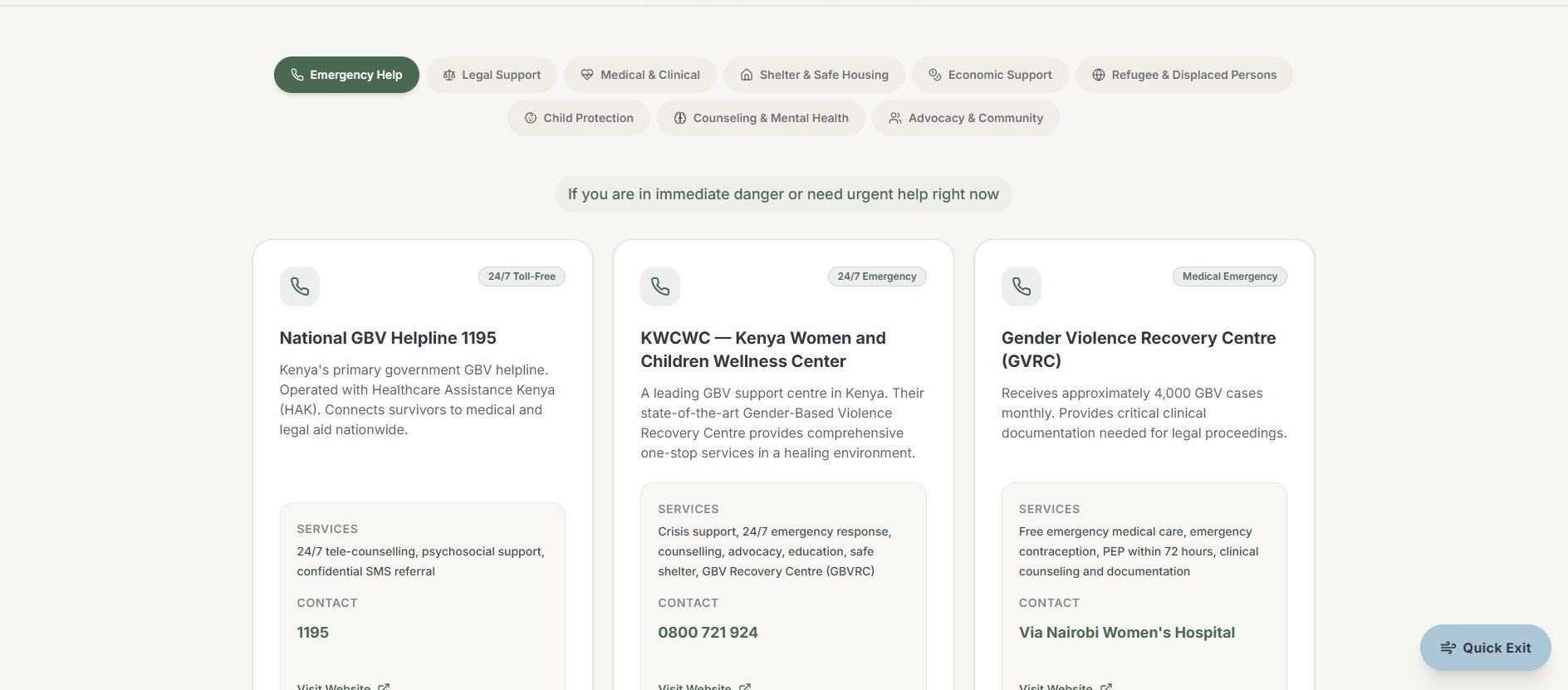
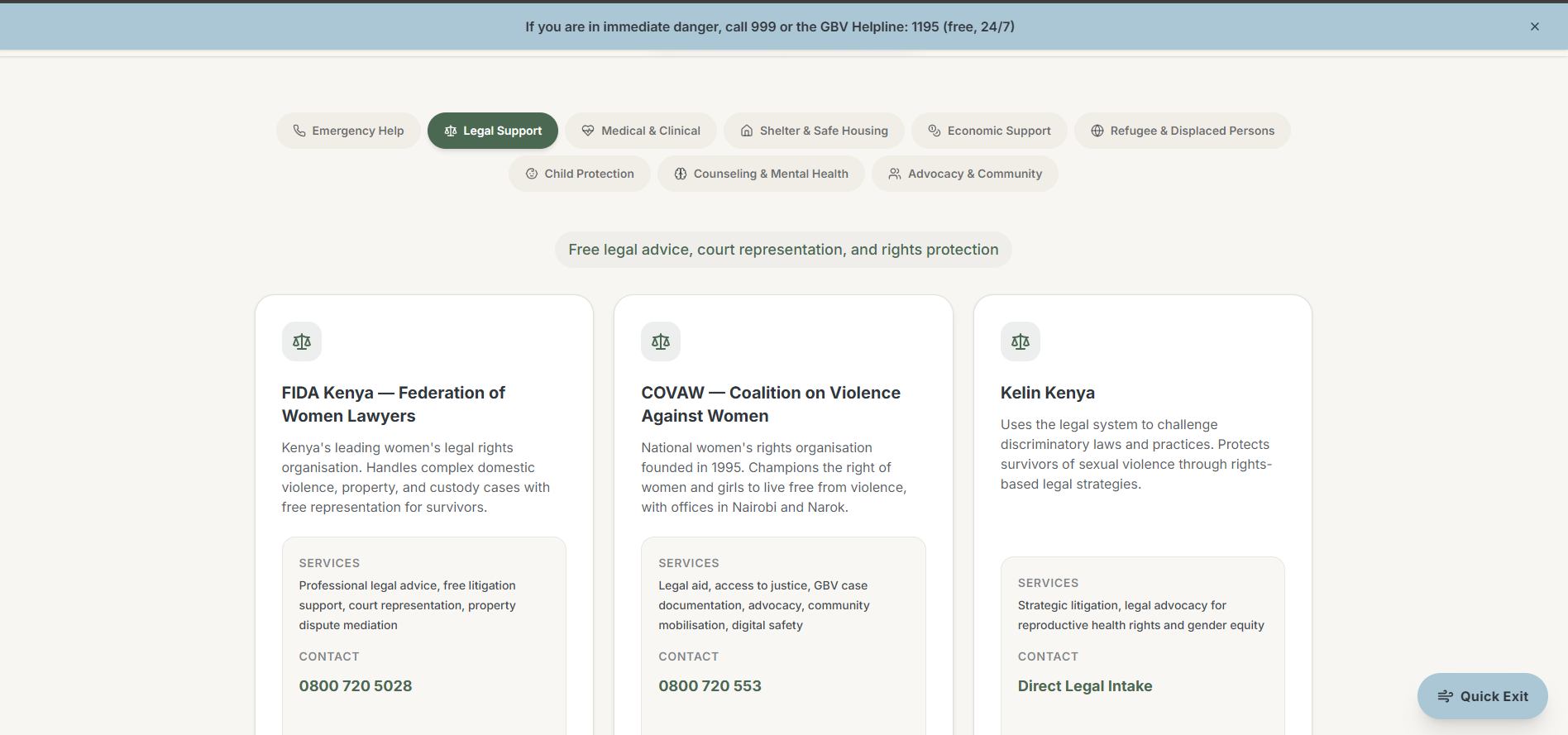
Safety Pathway Portal is a mobile-first, zero-tracking web app that acts as a secure "cognitive shield" for Kenyan abuse survivors. It strips away legal jargon and panic to show clear, progressive pathways to safety divided into three categories: Social & Shelter, Legal & Reporting, and Economic Support.
The app guides users through vital local steps—like obtaining a P3 Police Medical Examination Form or reaching out to the Gender Violence Recovery Centre (GVRC)—filtered completely by region without requiring tracking permissions. To protect users from device monitoring, it features an instant "Quick Exit" button that clears browser history and redirects to Google, as well as a "Disguise Mode" that instantly transforms the site into an innocent flatbread and collard greens cooking blog.
How we built it
The portal was built as a lightweight, standalone static application optimized to load instantly on low-end mobile devices and spotty networks. We used clean HTML5, modern client-side JavaScript, and utility-first CSS styling to maintain zero server overhead. The user interface prioritizes a tranquil, calming design system—using soft sage greens, slate blues, and generous spacing to reduce anxiety. Everything runs entirely in the browser's volatile memory, utilizing pre-bundled data arrays instead of an active backend database to protect user privacy.
Challenges we ran into
Designing for a hostile user environment forced us to rethink normal web development rules. Our biggest challenge was making the "Quick Exit" button completely foolproof; a simple redirect isn't enough if a perpetrator can just hit the browser's "Back" button. We had to carefully engineer the state history replacement to lock down the user's tracks.
Additionally, avoiding location tracking APIs (which trigger highly visible permission alerts on shared mobile plans) while still providing local county and metropolitan resources required creating an completely manual, anonymous dropdown filtering system.
Accomplishments that we're proud of
We successfully created a web app that leaves absolutely zero footprint on the user's device—no cookies, no local storage, and zero tracking pixels. We are incredibly proud of the seamless integration between the critical health/legal pathways (like securing Post-Rape Care forms and emergency shelters) and the "Disguise Mode," which gives survivors a plausible cover story if their phone is actively audited by an abuser.
What we learned
We learned that information barriers are just as dangerous as physical ones. Survivors frequently want to report abuse or seek shelter but are paralyzed by cognitive overload and fear of discovery. In high-stress Human-Computer Interaction (HCI), traditional tech metrics like user retention, accounts, and sign-ups are completely useless. When designing for safety, success means leaving no trace behind.
What's next for Safety Pathway Portal
The immediate next step is expanding our pre-vetted resource directory from the pilot metropolitan areas to cover all 47 counties in Kenya. We also want to configure the platform as a fully offline-capable Progressive Web App (PWA) so that once a user loads the site a single time, they can access every phone number, shelter location, and legal pathway even when they have completely run out of mobile data.

Log in or sign up for Devpost to join the conversation.