-
A straight to the point landing page.
-
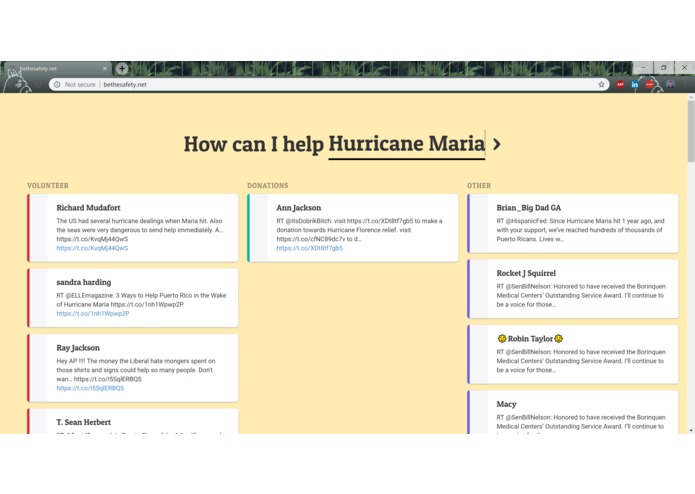
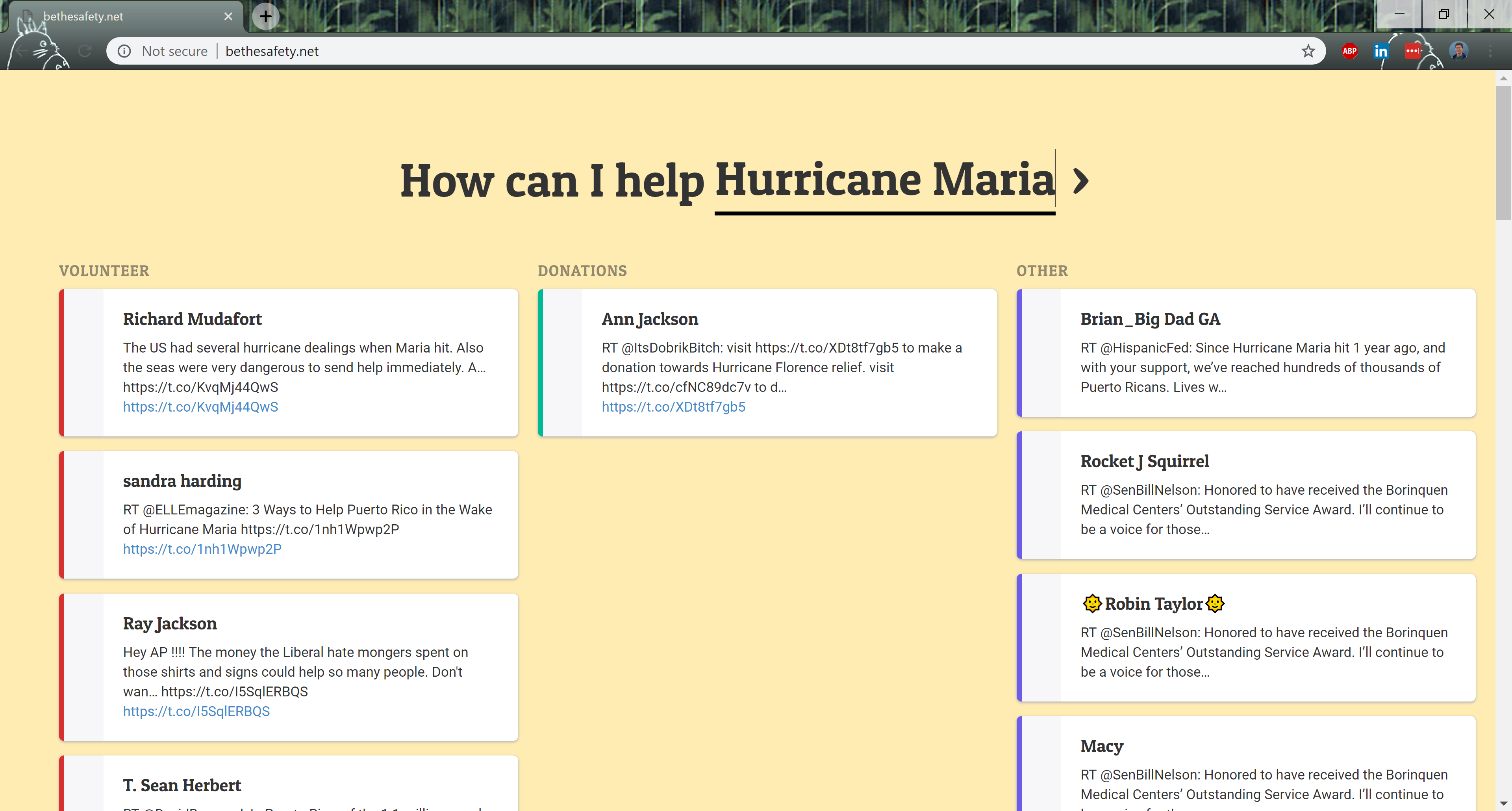
A neatly compiled list of ways that you can help.
Inspiration
With the recent impact of Hurricane Florence, David Zhao wasn't the only one wondering how he could try and help the millions impacted along the East Coast. But when he tried, all he could find were small compilations from independent news organizations, and what should've been a fast easy process turned into a crawl through multiple sites to vet reliability and make sure the organizations were actually effective.
What it does
The Safety Net provides you a one stop location on the most effective ways that you can help people in need. Data is scraped and listed in a clean, easy to view way and separated by categories: volunteers, donations, and other.
How we built it
We use Python to scrape Twitter for search terms, all powered by the Google Cloud Platform. A custom MongoDB Stitch function kicks off the GCP compute function and stores the returned data into Atlas. Meanwhile, an elegant custom written front-end (registered at bethesafety.net) calls another Stitch function, returning all the recent data related to the query. Javascript takes the response and parses it, both beautifying the data and sorting it into categories to ultimately display as modern, flat cards for the user.
Challenges we ran into
Accomplishments that we're proud of
What we learned
What's next for Safety Net
Incorporating tensorflow machine learning algorithm to make our categorization filter even better. Adding automatic scraping for future disasters.
Built With
- css3
- gcp
- html5
- javascript
- jquery
- mongodb
- stitch


Log in or sign up for Devpost to join the conversation.