-
-
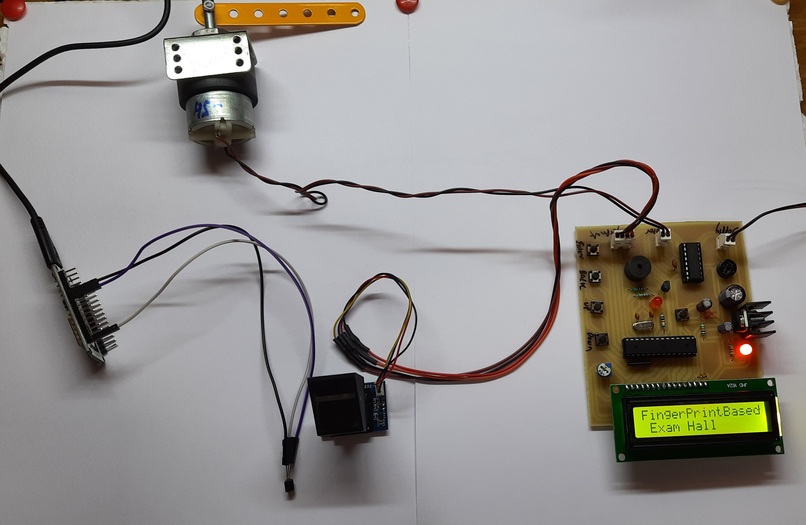
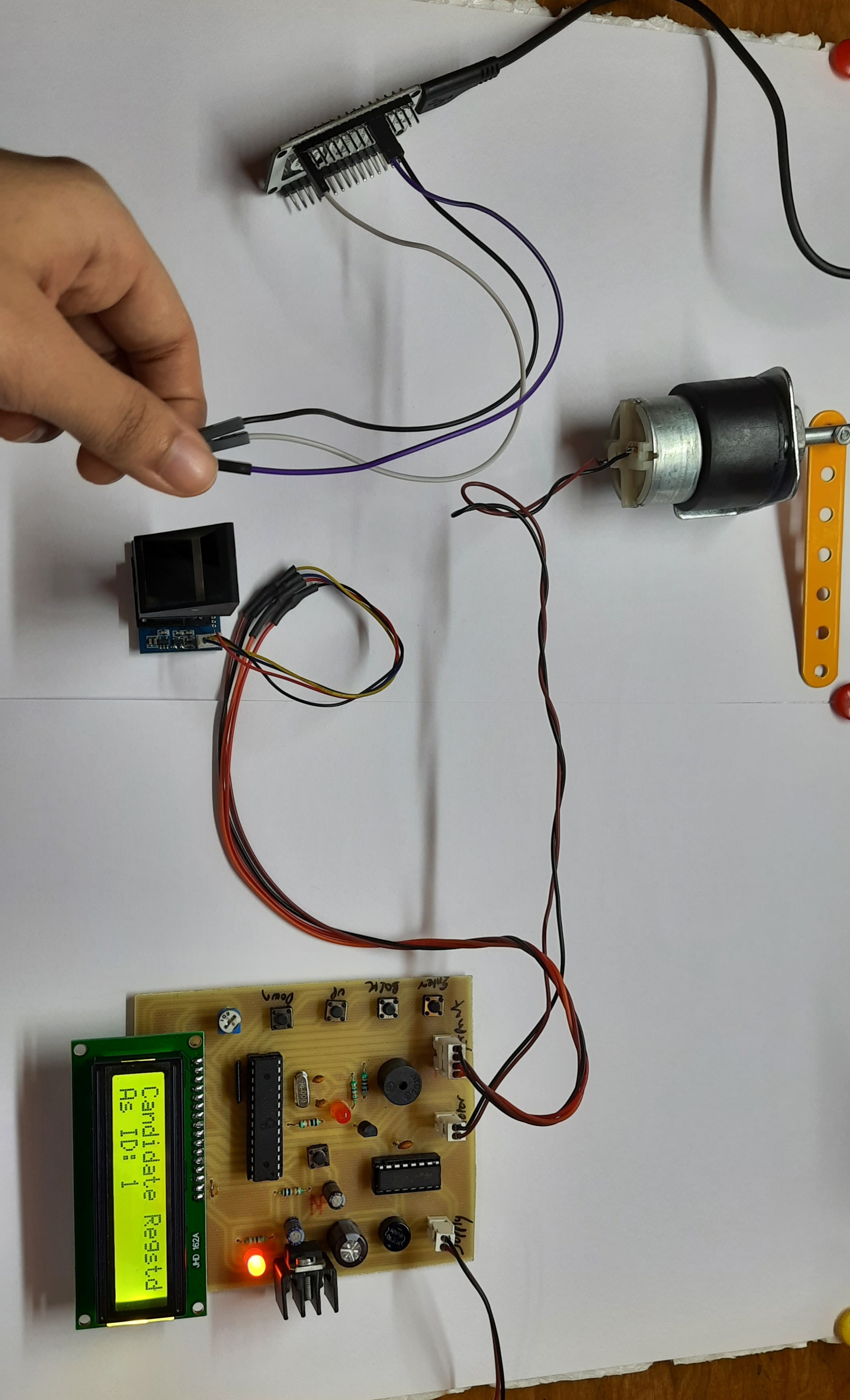
experimental setup
-
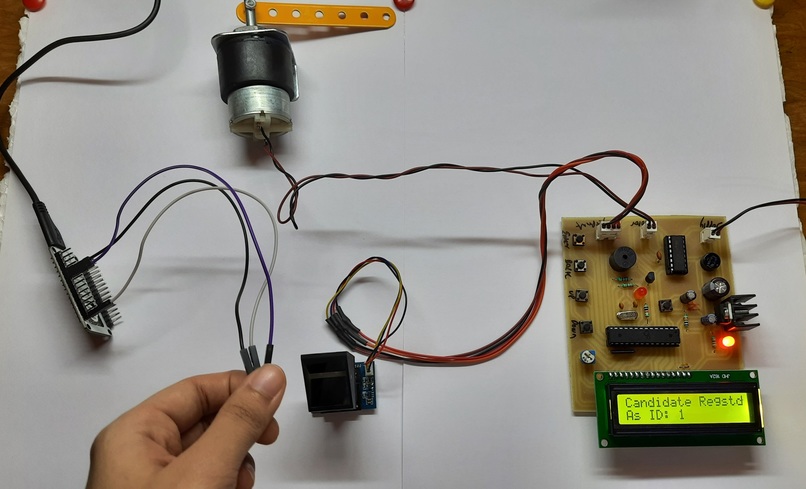
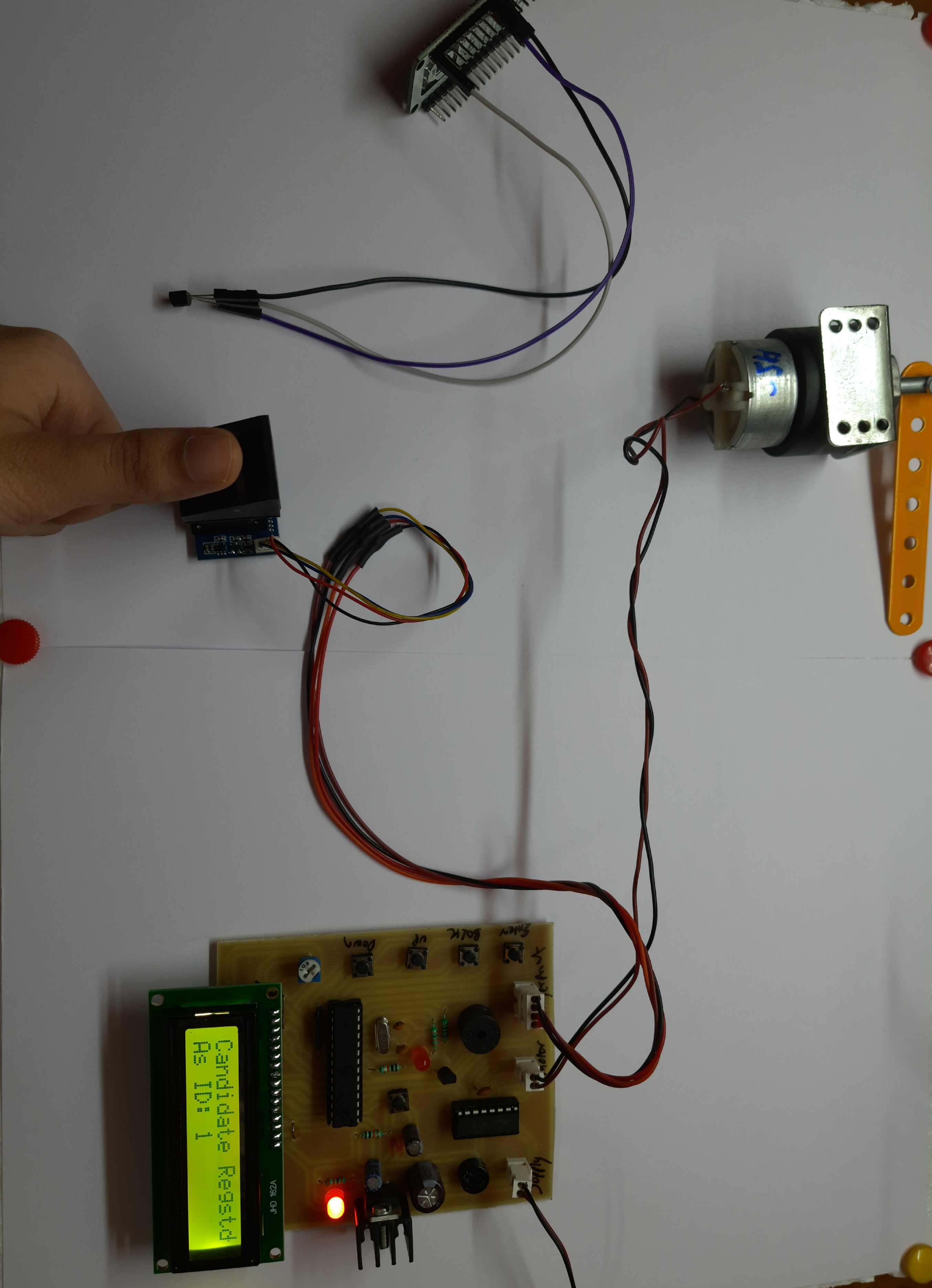
temperature sensing
-
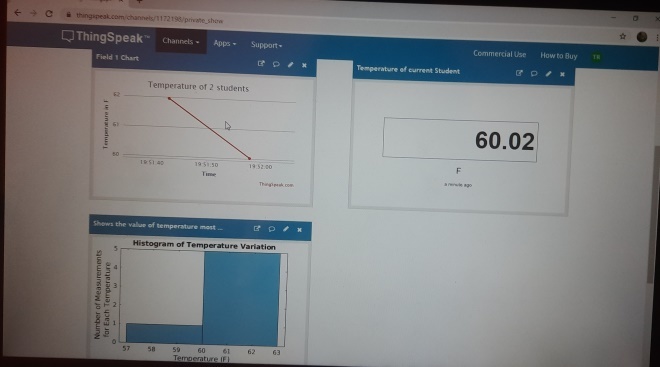
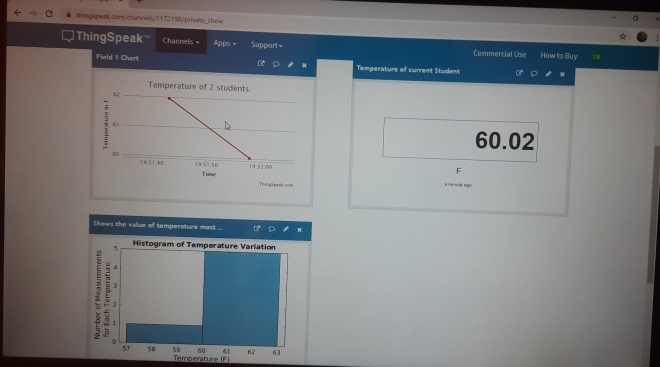
Thingspeak
-
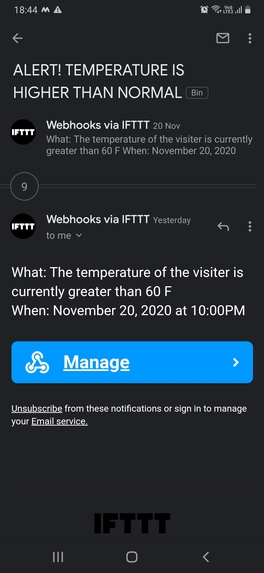
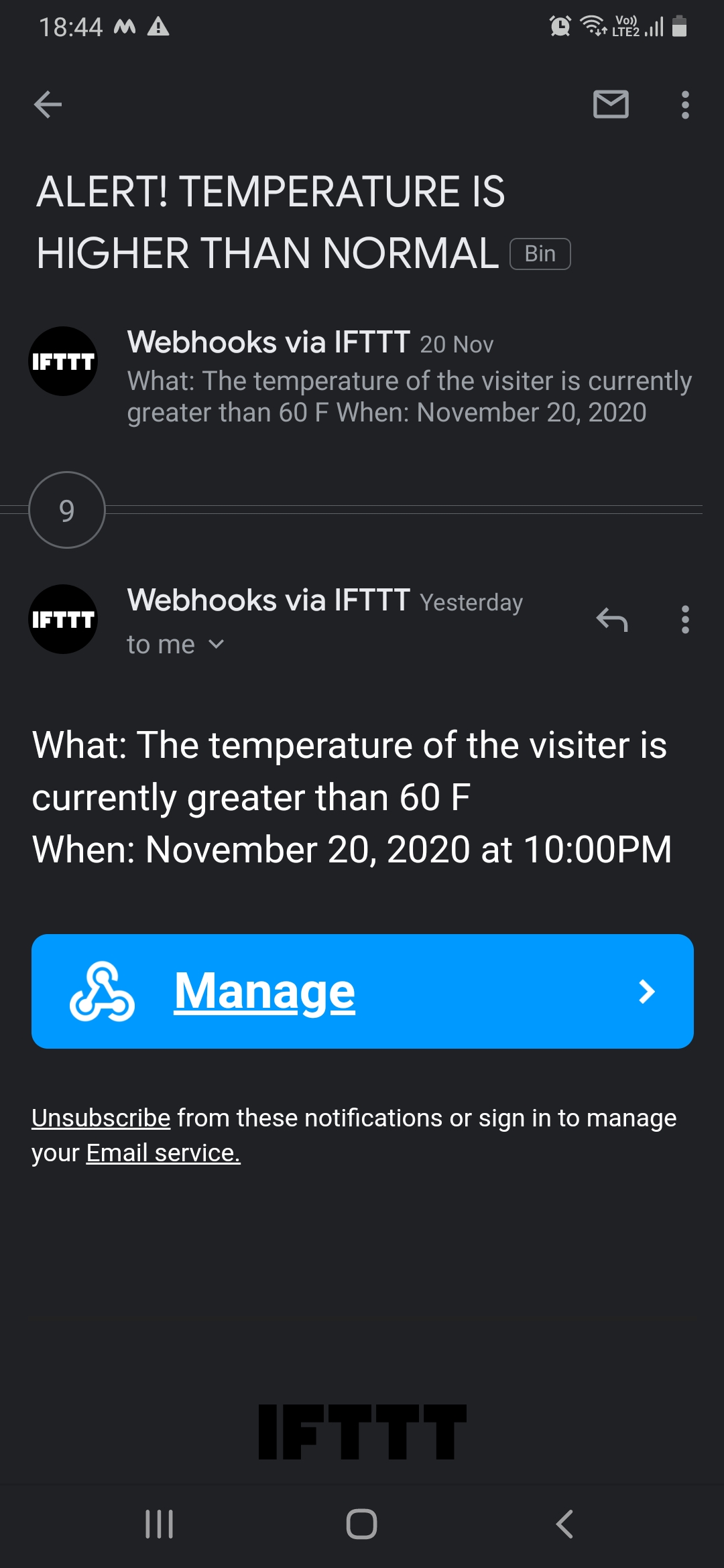
email alert
-
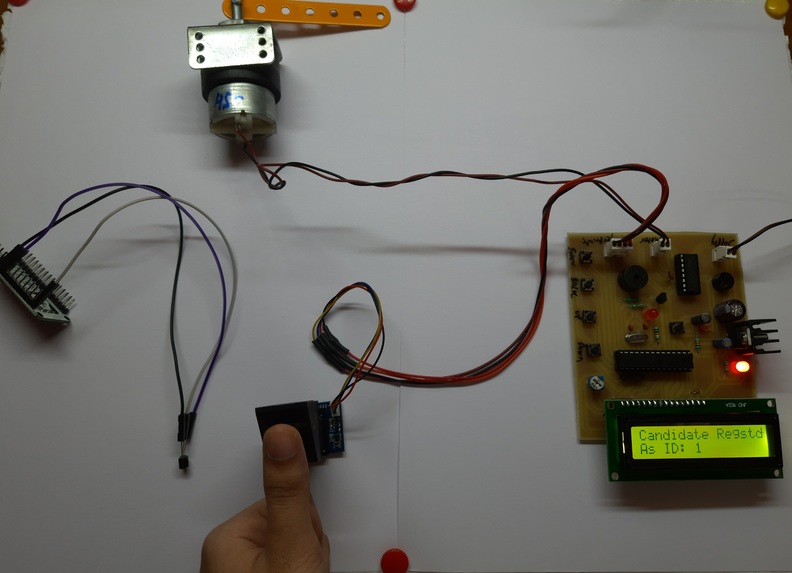
registration of candidate
-
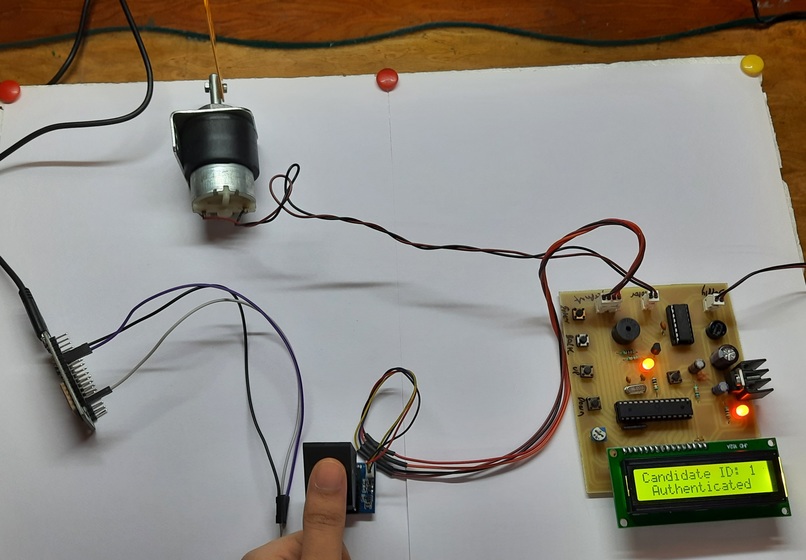
door opens upon authentication of candidate
-
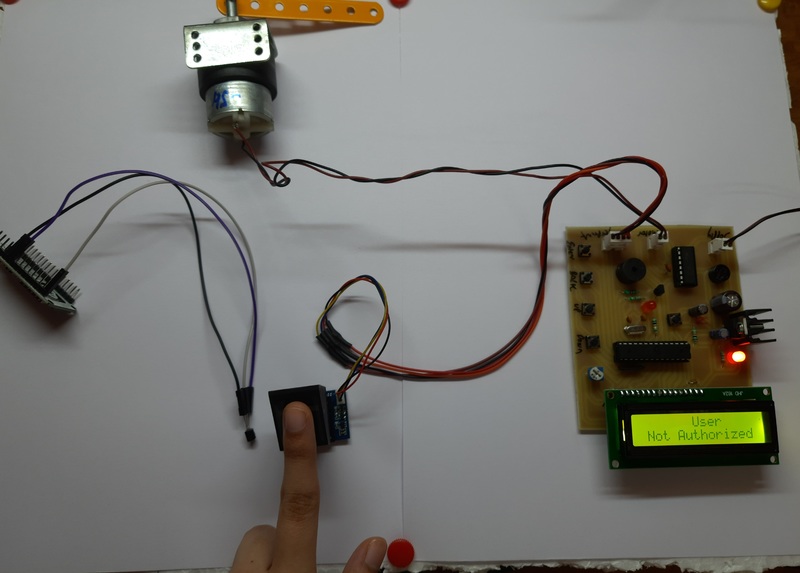
unregistered candidate
Inspiration
The world is going through a global crisis due to the contemporary COVID 19 pandemic situations. In these taxing times, students have been severely affected. So our government has not compromised their future and has decided to conduct all competitive examinations. Thus, it becomes crucial for the students to register for the exams. However, the traditional exam hall authentication system does not assure that the students would not be exposed to the infection. Fingerprint and iris are only two parts that are unique to each human being. Fingerprint recognition is straightforward and can be implemented easily than iris recognition. Also, it can easily differentiate between an authorized person and an imposter.
What it does
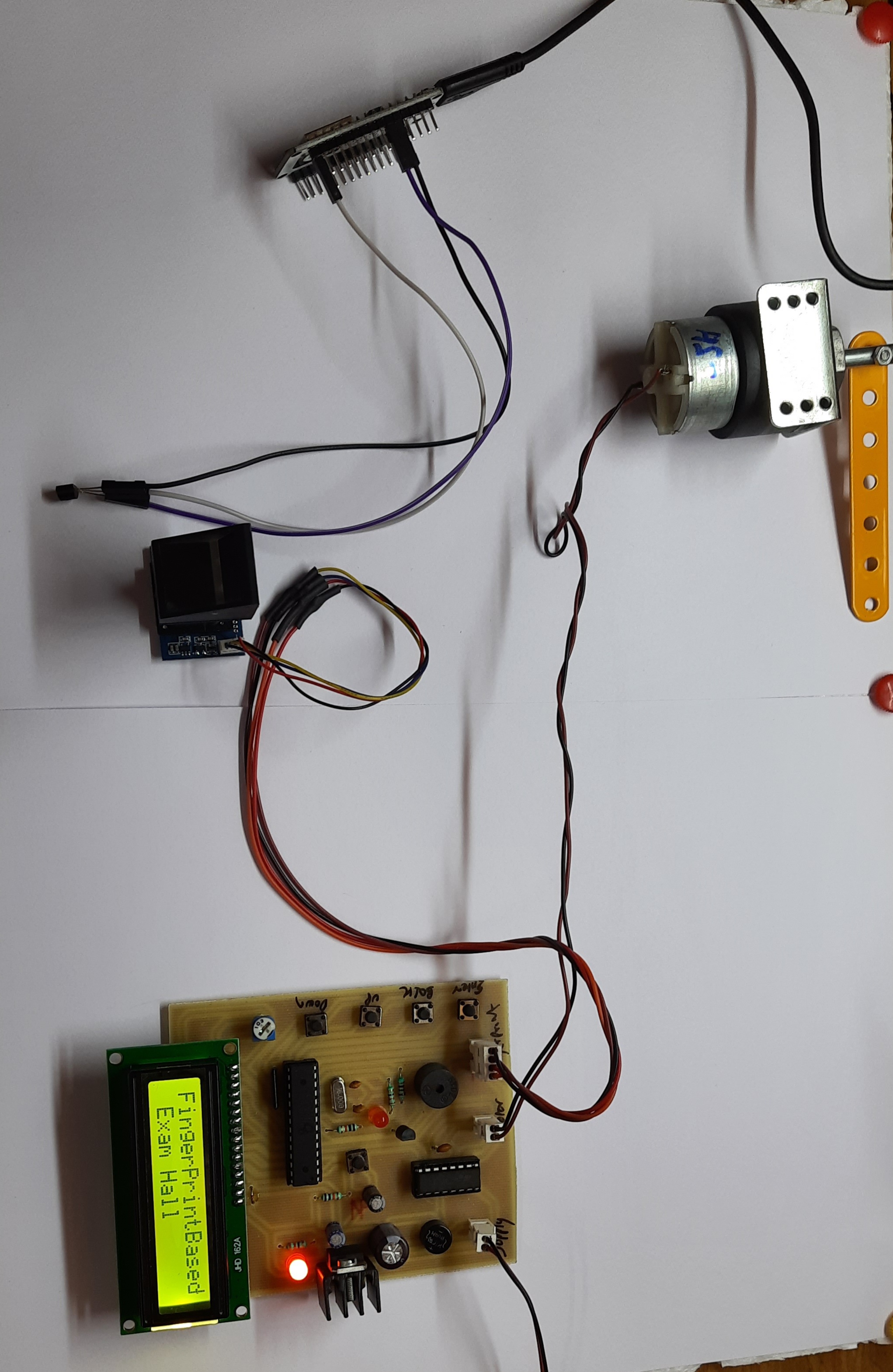
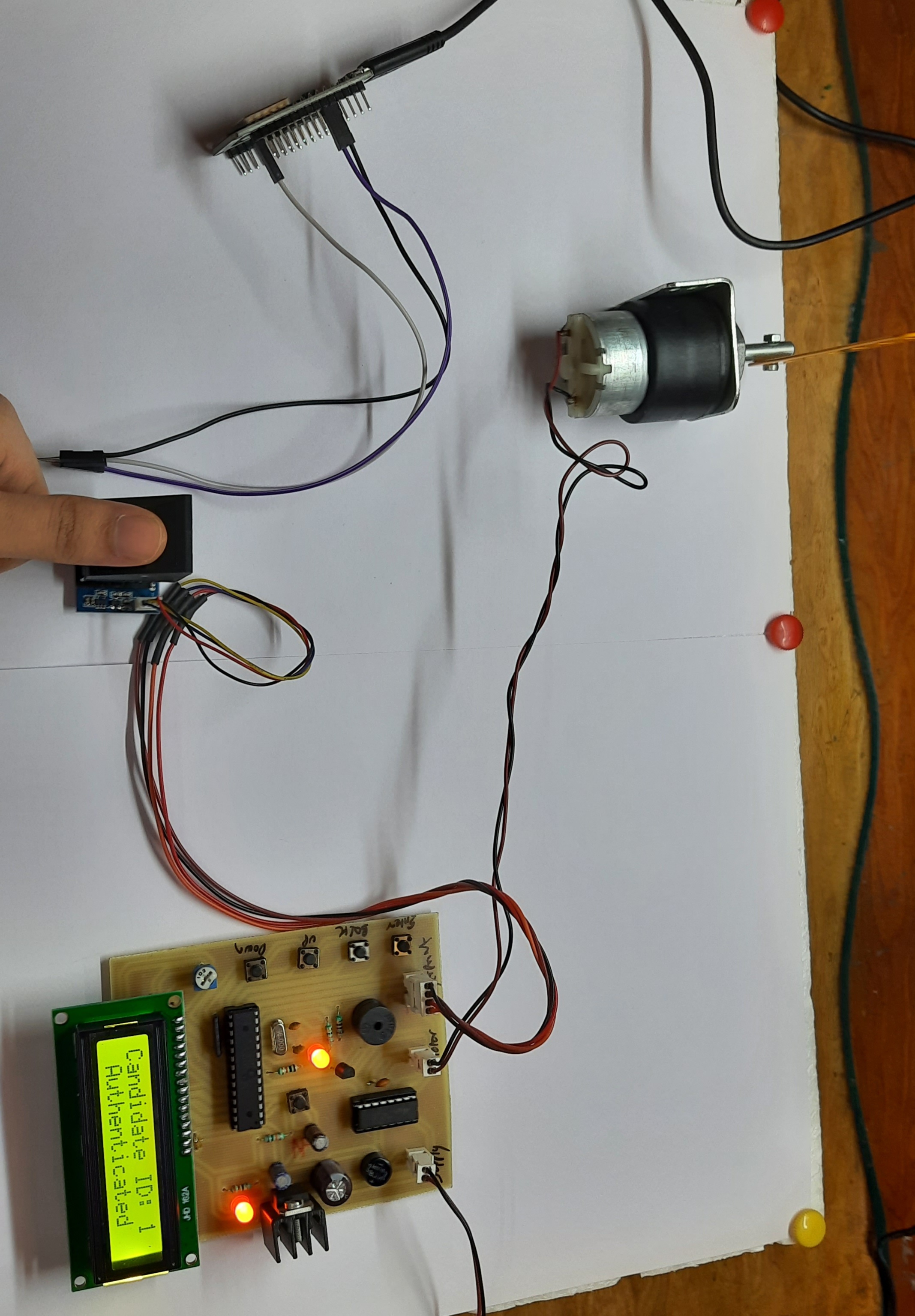
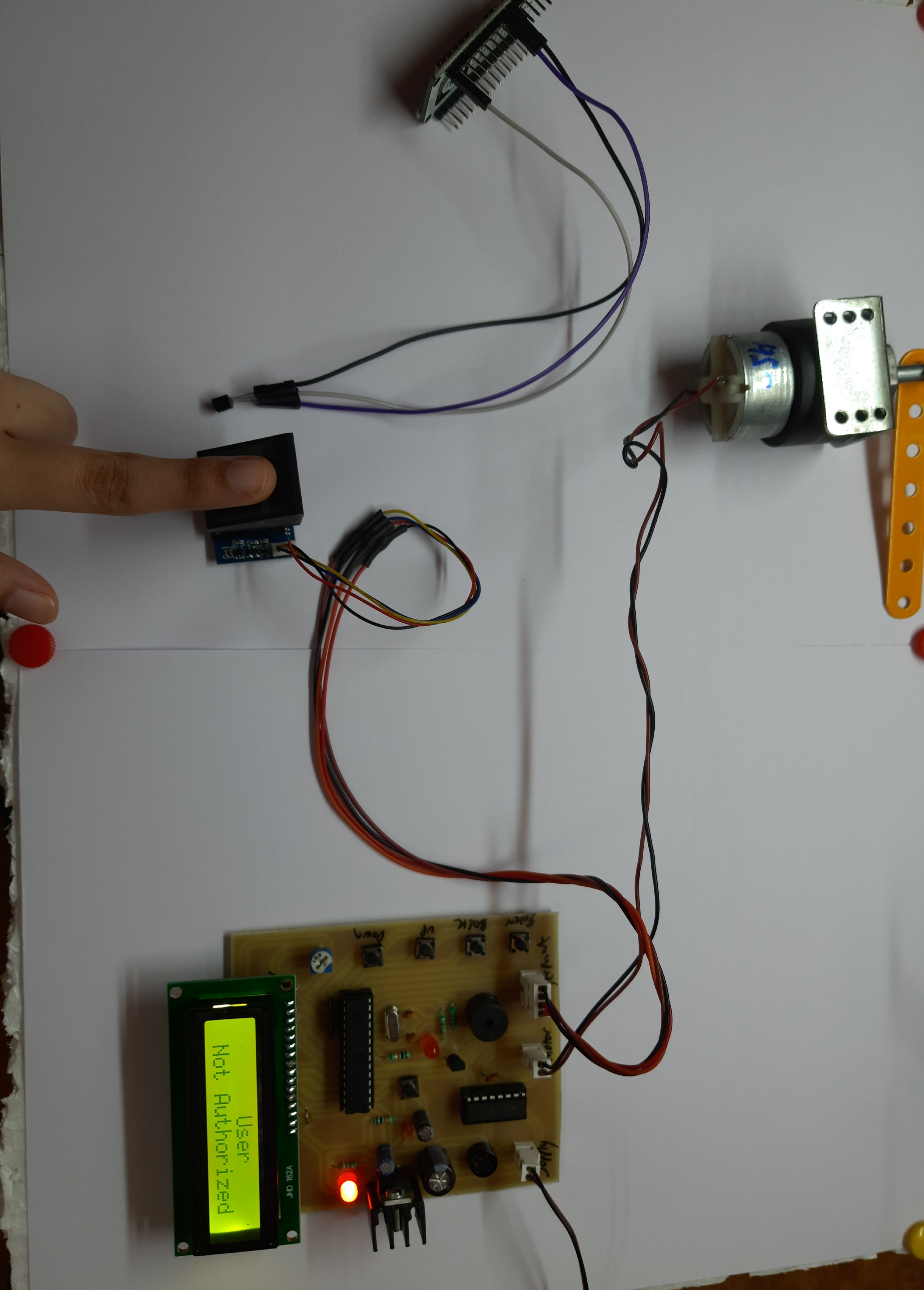
The chief purpose of our project is to uniquely identify the students permitted to sit for the exam alongside maintaining the safety of the exam center from COVID 19 by monitoring the body temperature of the students.We have presented a model in which the student’s registration and authentication happen using the fingerprint sensor and Atmega328 microcontroller in addition to recording the student’s body temperature by the LM35 temperature sensor. The data is transferred to a cloud server, Thingpeak where it can be monitored and analyzed. The cloud server shall store the time of recording and the temperature of the student. If the temperature is higher than standard body temperature, an email alert is sent to the concerned authorities. The authorities can consequently take appropriate action and this would help in curbing the spread of the virus among the students present in the exam hall which otherwise can become fast spreaders of infection.
How we built it
We built it by designing the PCB board using a free online software on EazyEDA. And we used NodeMCU to connect it with the LM35 temperature sensor. The values are passed through the code into the Thingspeak Platform and the temperature is recorded. The email applet is made using the IFTTT Webhooks Maker Platform and rest of the components are assembled and soldered on the PCB Board.
Challenges we ran into
We faced a challenge on how to implement the registration of the candidate and sense the temperature simultaneously but resolved it later after watching several youtube videos in which we found out on how to connect the the temperature sensor with the NODE MCU through wifi and record the temperature values simultaneously on the thingspeak platform. In order to make our project more based on the real world scenario, we used the REACT app of thingspeak as well as THING HTTP and connected it to the webhooks services of IFTTT platform through a single API key to make our email alert applet and send email alerts to the concerned authorities when the temperature is higher than normal. It has been a challenging task to also get the connections on the PCB board to be proper and making the wiring done correctly. But after referring to several articles and youtube videos we tried to implement it as best as we could and make it scalable on a wider platform.
Accomplishments that we're proud of
Successfully implemented a secure scalable hardware model for conducting examinations with precautions during COVID 19.
What we learned
We learned a lot about PCB, Arduino, Node MCU, Thingspeak, IOT, ESP8266, IFTTT and loved working on the project.
What's next
It can be implemented on a wider scale in government offices, and not only limited to examination centres.
Built With
- arduino
- c
- ifttt
- keilmicrovision
- nodemcu
- proteus
- thingspeak

Log in or sign up for Devpost to join the conversation.