-
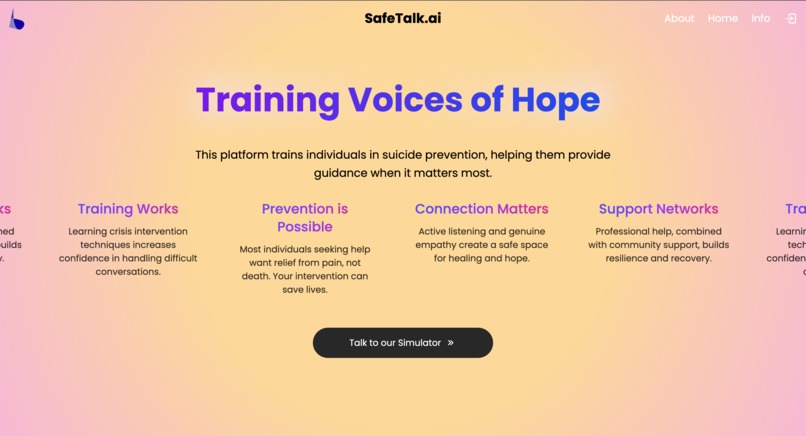
homepage
-
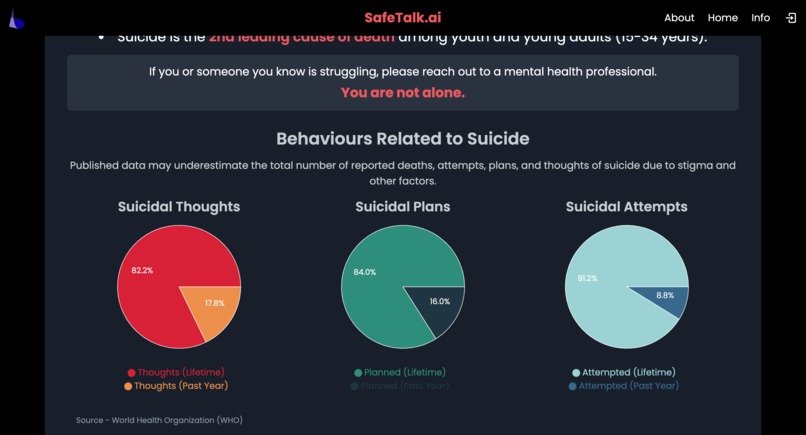
about
-
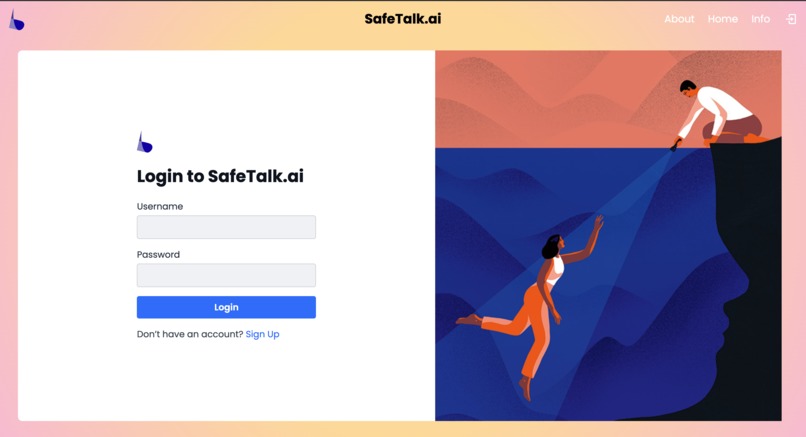
logIn
-
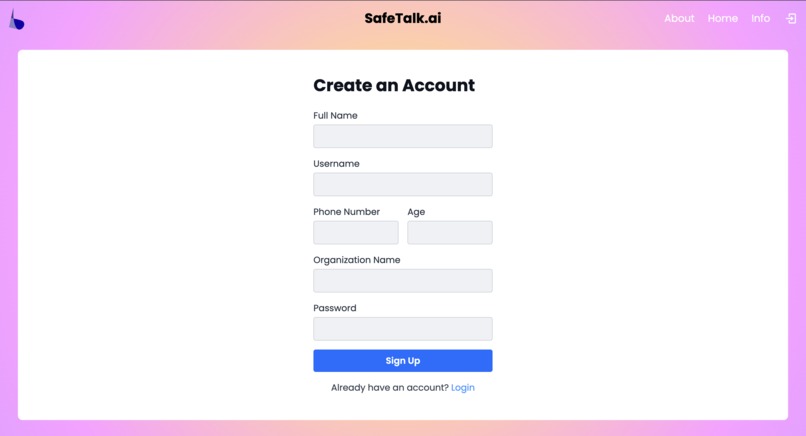
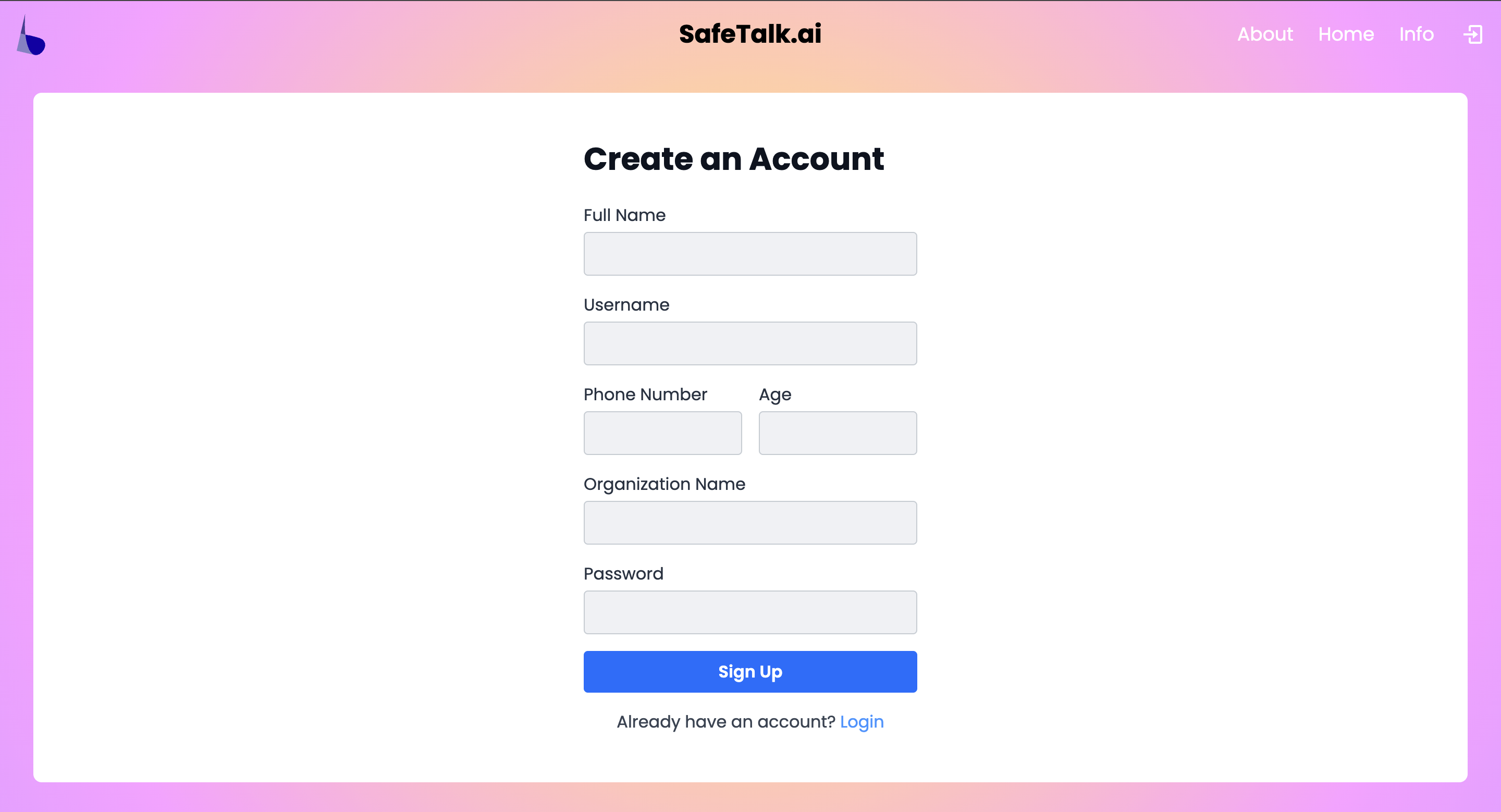
signUp
-
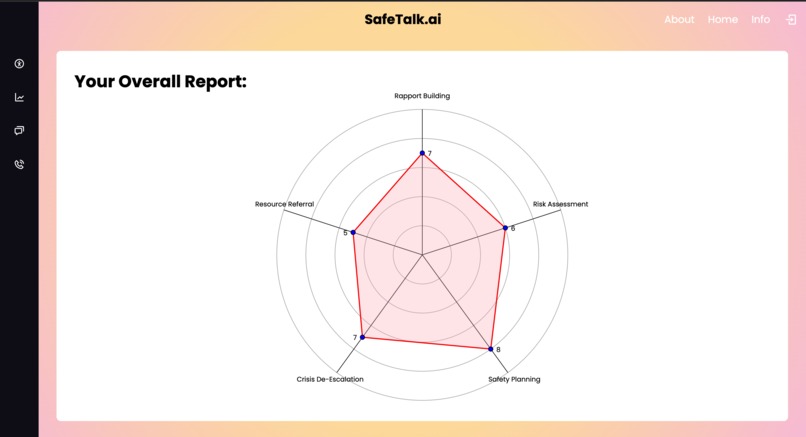
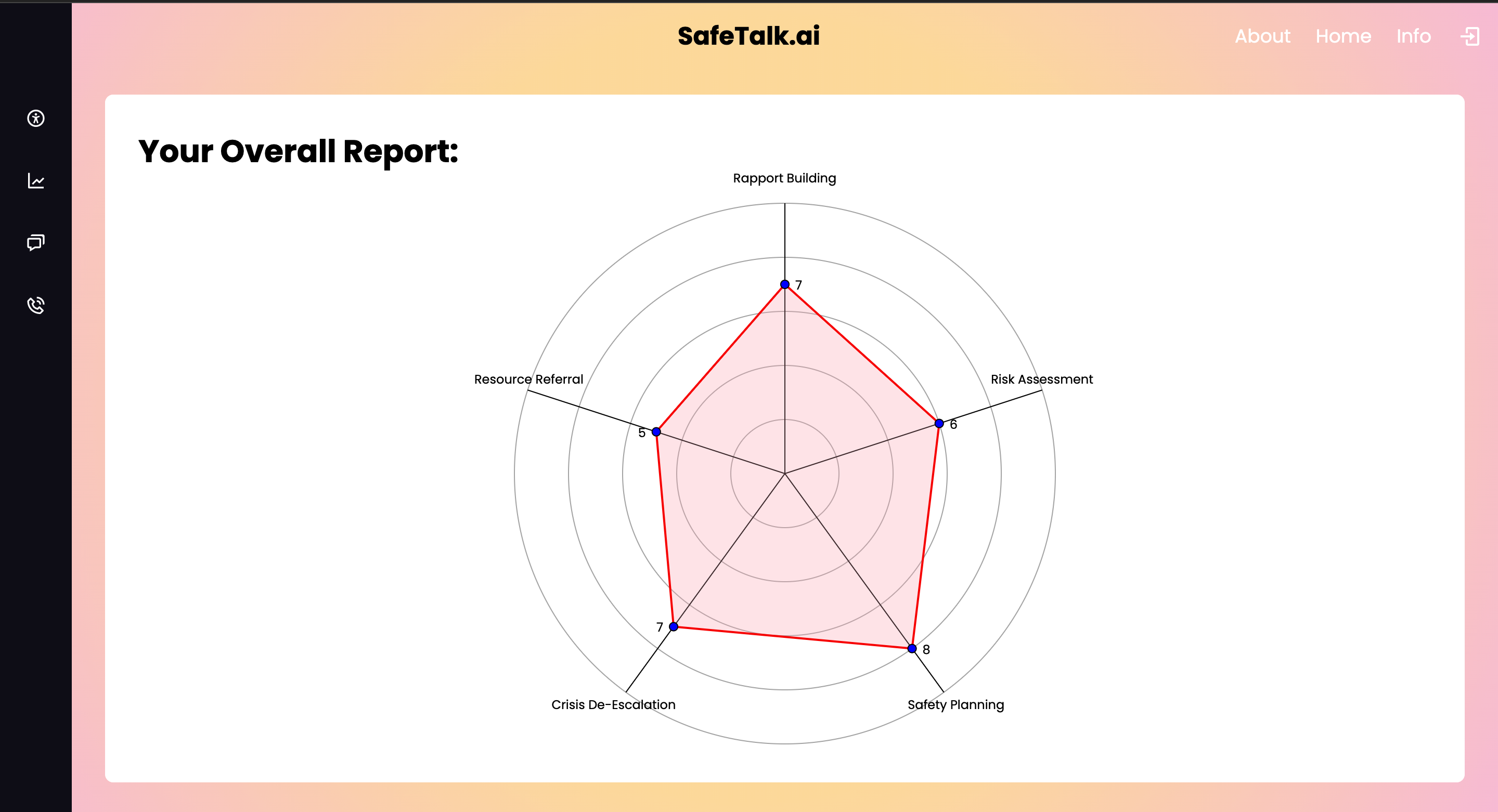
user score (in progress)
About the Project
Inspiration
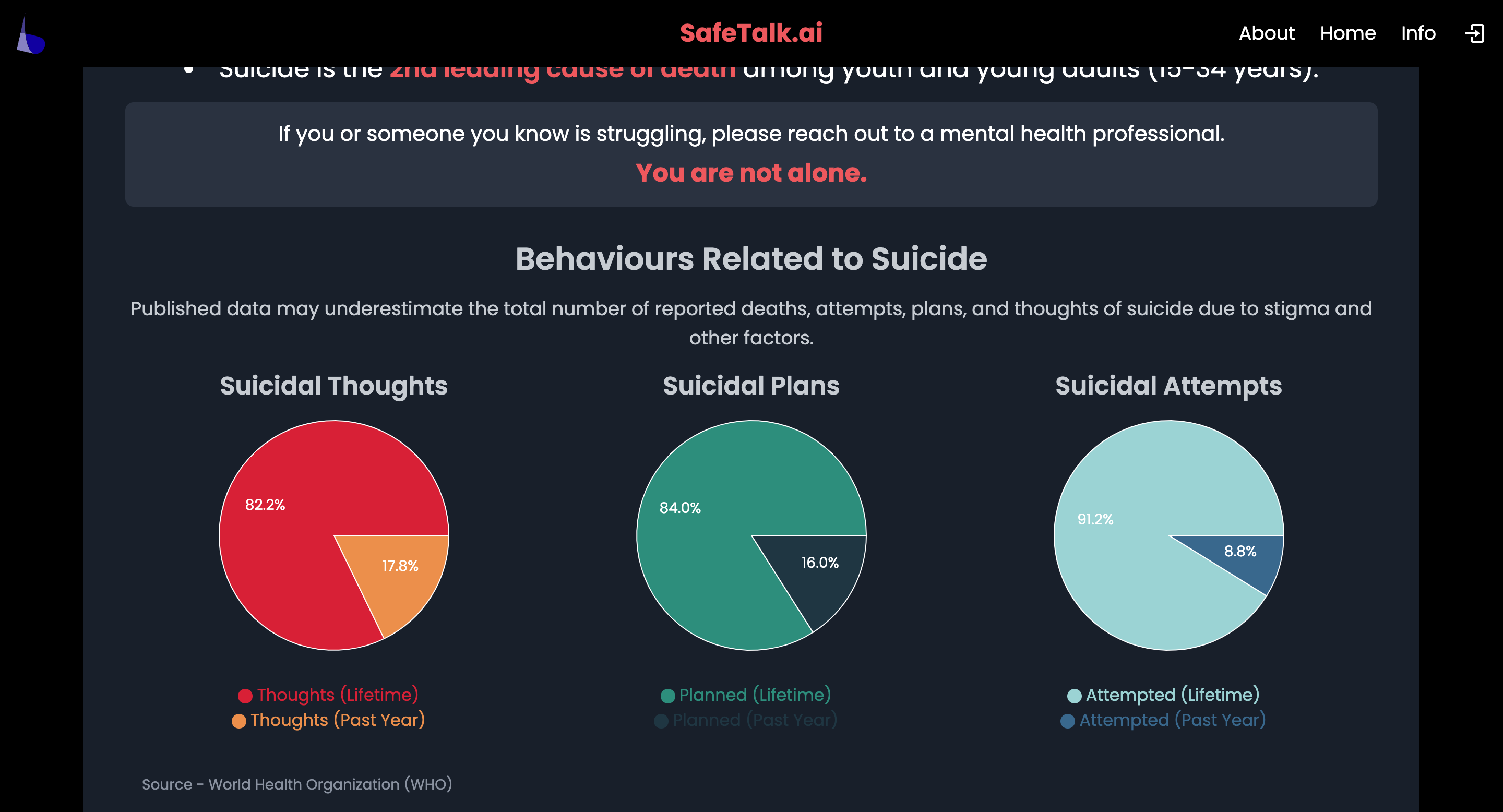
The idea for SafeTalk.ai was born out of a deeply personal experience—almost losing someone to suicide. This eye-opening moment made us realize the urgent need for better crisis intervention tools. We learned that not everyone who thinks about suicide wants to die; many are looking for relief from overwhelming pain. However, in those critical moments, the right support can be the difference between life and death.
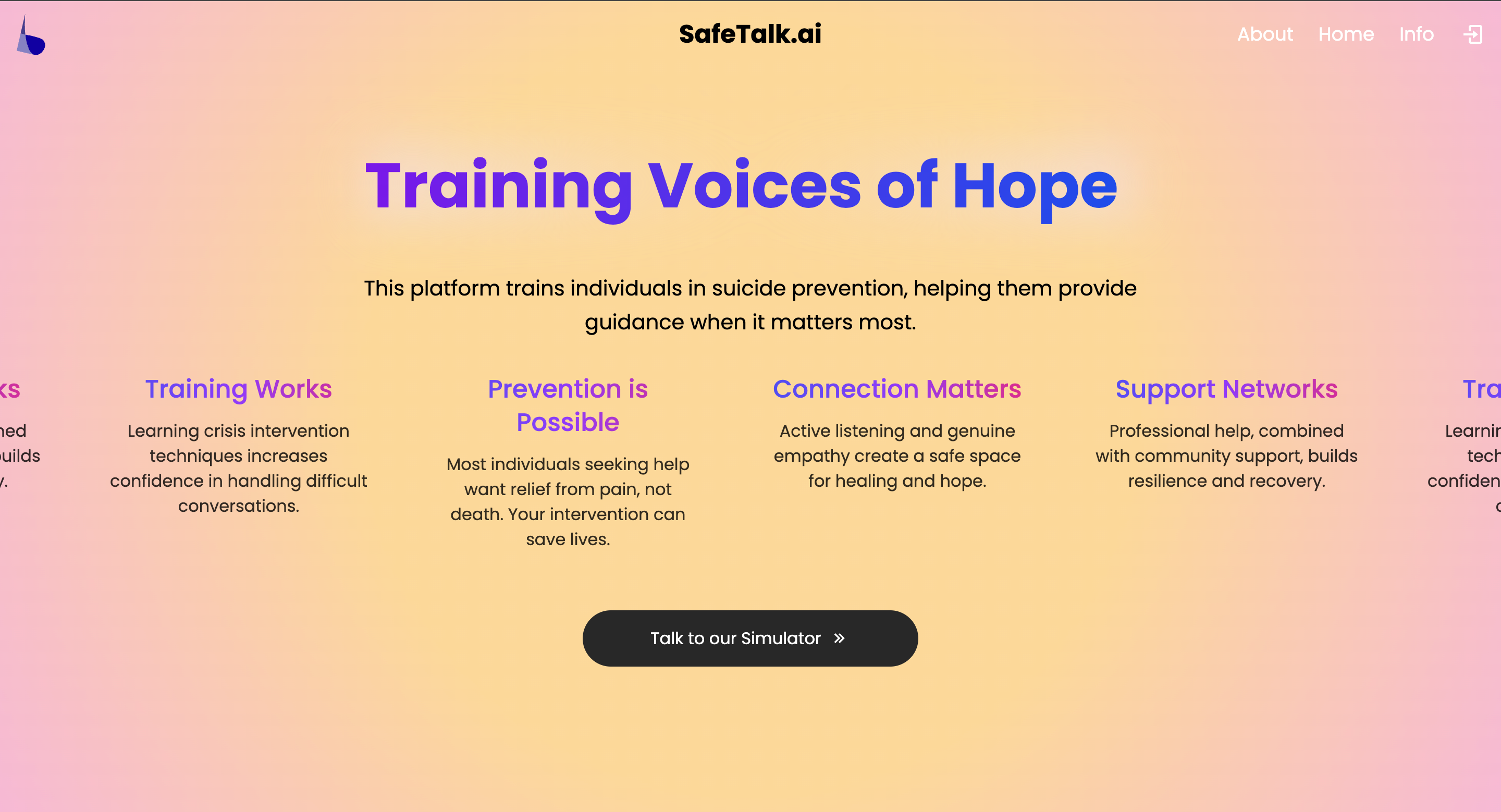
We were inspired to create SafeTalk.ai as an accessible, AI-driven training platform that equips crisis responders with the skills to recognize warning signs, provide meaningful support, and connect those in crisis to life-saving resources. Our goal is to ensure that no one facing a mental health crisis feels unheard or unsupported.
How We Built It
SafeTalk.ai was developed using a React frontend and a Django backend, ensuring a seamless and responsive user experience. Key technologies and tools include:
- Frontend: React, Tailwind CSS, Framer Motion for animations
- Backend: Django, MongoDB for storing user interactions
- AI Integration: OpenAI’s API for generating simulated crisis conversations
- Data Visualization: D3.js for analytics and insights on training progress
We focused on creating an intuitive and engaging training platform that utilizes interactive AI-driven dialogue to guide users through real-world crisis scenarios.
What We Learned
Throughout this project, we gained valuable insights into:
- The importance of intuitive UX in crisis response training to create a safe and supportive learning environment.
- Implementing real-time data visualization to help responders assess their progress and enhance their ability to handle high-pressure situations effectively.
- Integrating AI-driven crisis simulations to provide realistic training scenarios that improve decision-making skills.
- Ensuring robust data security and privacy compliance to protect sensitive user information while maintaining accessibility.
Challenges We Faced
Building SafeTalk.ai came with its own set of challenges:
- AI Accuracy & Bias – Ensuring that AI-generated responses align with best practices in mental health support.
- Realistic Crisis Scenarios – Crafting engaging and emotionally intelligent training conversations.
- Frontend & Backend Integration – Managing smooth API calls between the AI engine and the frontend.
- Optimizing Performance – Creating fluid animations and responsive UI without sacrificing speed.
- Time-Consuming Debugging – Debugging complex issues took hours, often requiring deep dives into logs and AI behavior.
- Balancing Workload – We faced the challenge of building this project while juggling multiple assignments and deadlines.
Impact & Future Goals
SafeTalk.ai is more than just a tool—it’s a mission to empower crisis responders with AI-driven training that saves lives. Moving forward, we aim to:
- Expand the AI’s understanding of crisis scenarios using real-world training data.
- Partner with mental health organizations to validate and improve our training modules.
- Introduce multilingual support for broader accessibility.
We believe technology has the power to create real change, and with SafeTalk.ai, we hope to contribute to a world where everyone has the skills to support those in crisis.


Log in or sign up for Devpost to join the conversation.