-
-
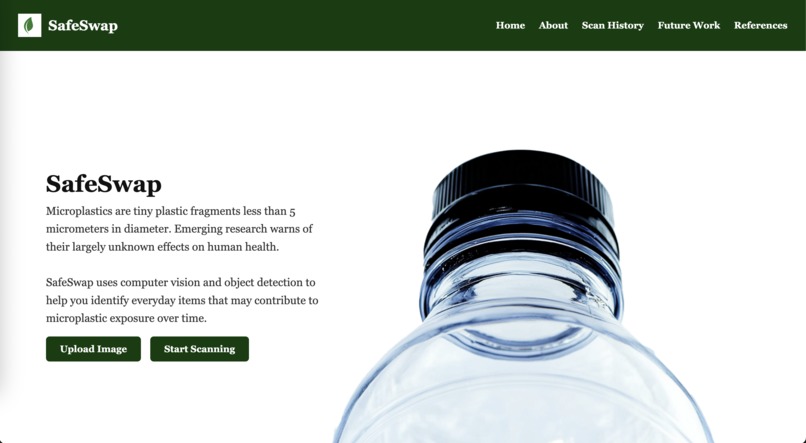
Home page of SafeSwap where you can start scanning an item or upload an image of an item.
-
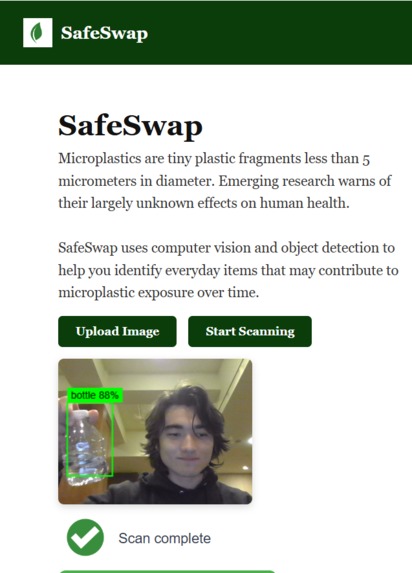
Camera feature that uses object detection to recognize and scan items.
-
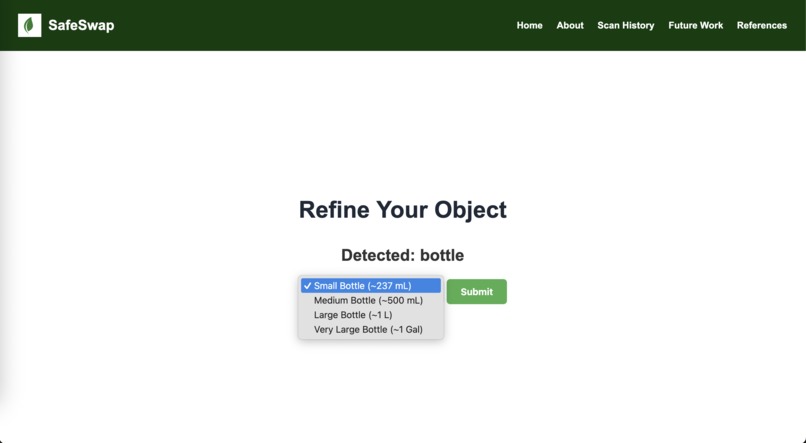
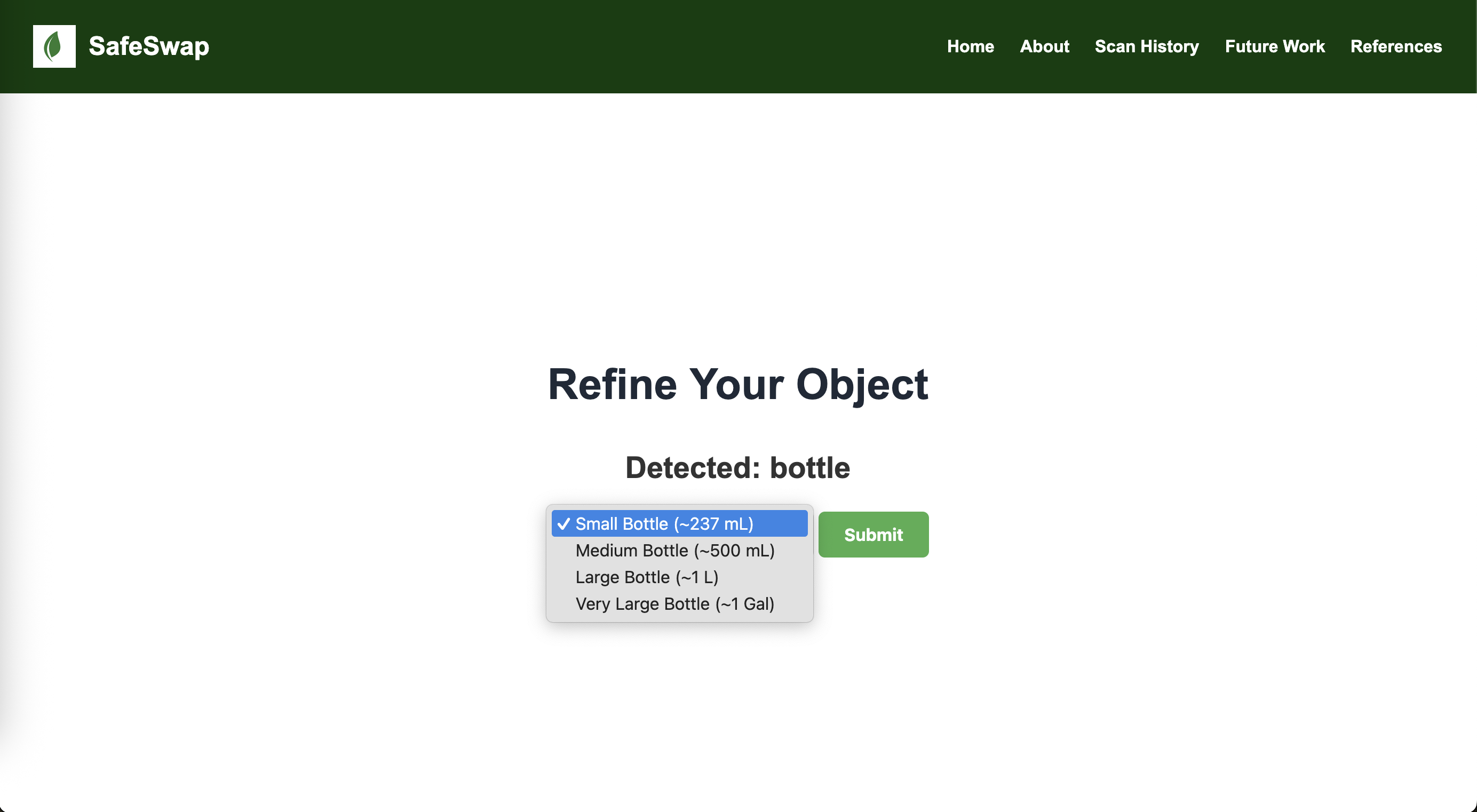
Refine Your Object page showcasing the dropdown to specify the item.
-
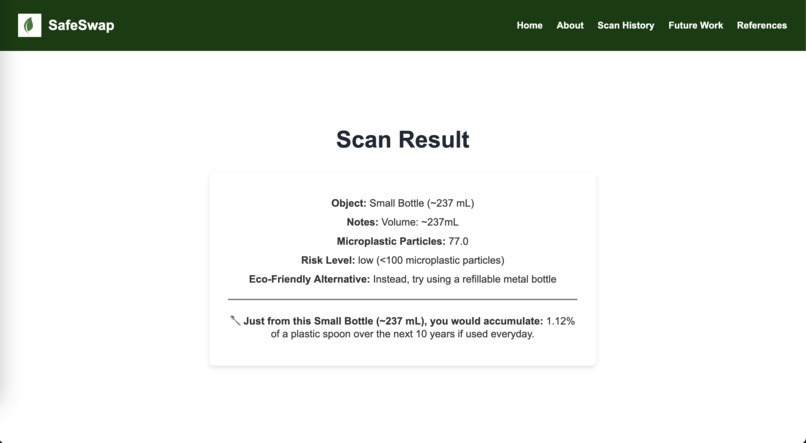
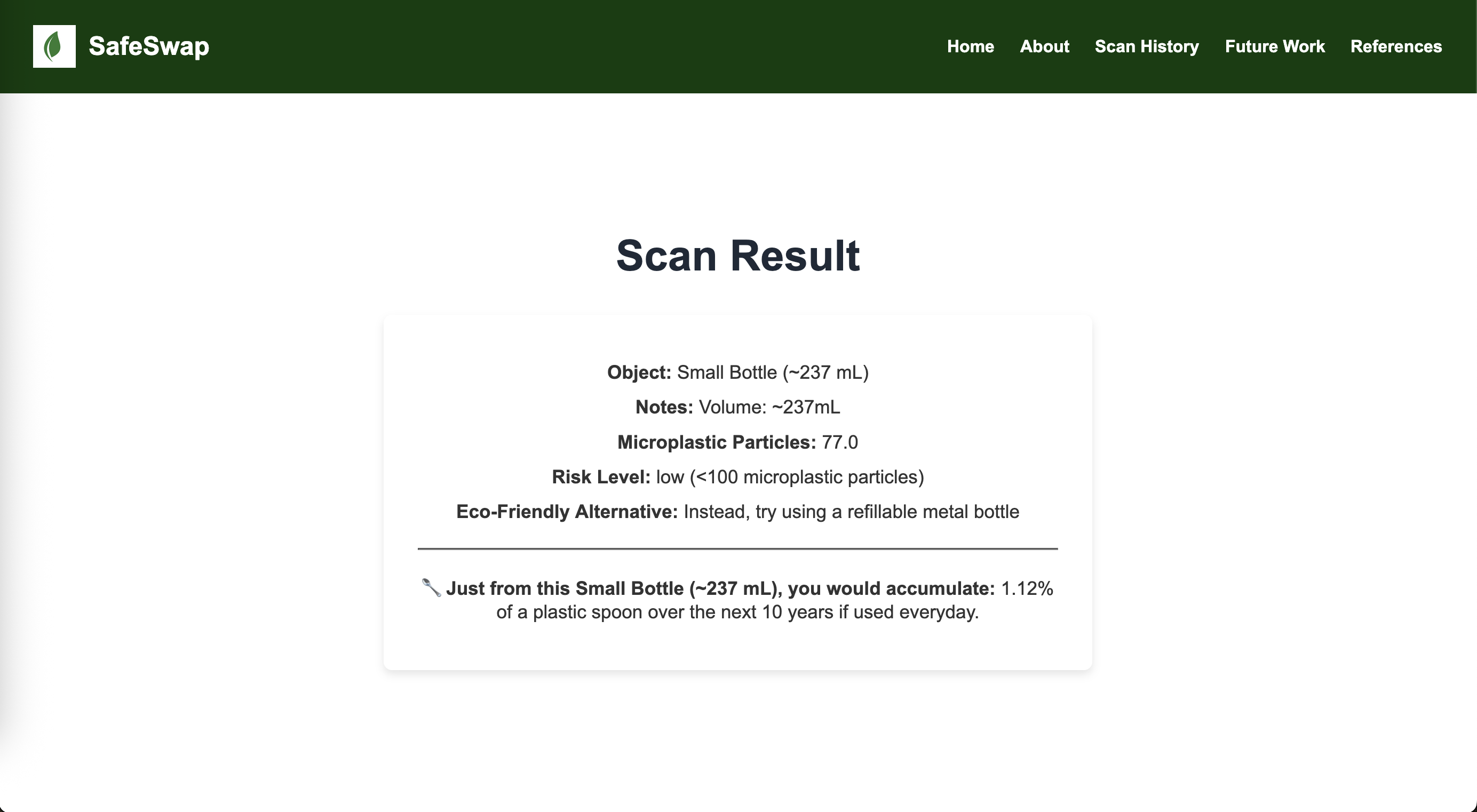
Scan Result page which shows the details of the specified item.
-
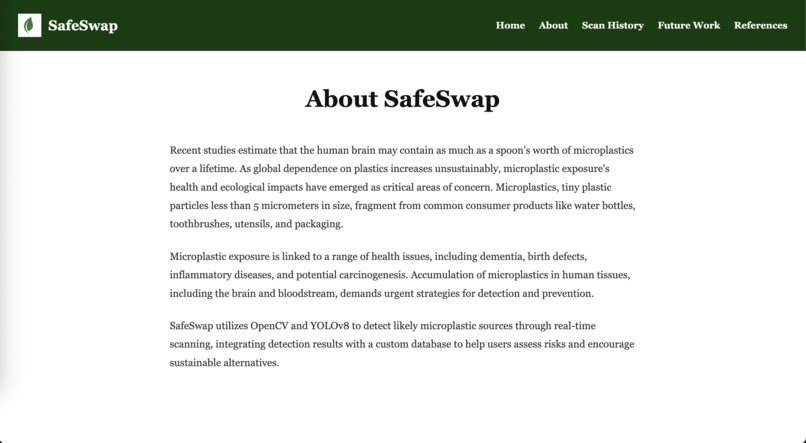
About SafeSwap page.
-
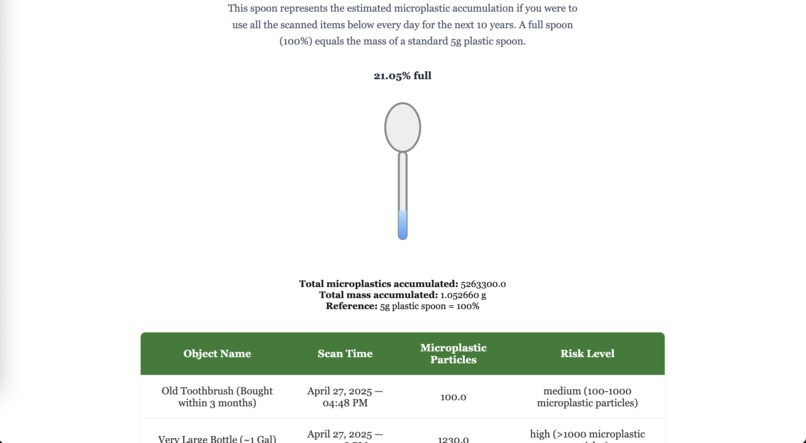
Example of our Scan History page along with spoon visualization.




Inspiration
Microplastics are everywhere. They are in our oceans, food, and even our bodies. A recent Smithsonian article revealed that the average human brain now contains the equivalent of a plastic spoon's worth of microplastics. This alarming reality made us realize how invisible yet urgent this problem is. SafeSwap was created from the belief that awareness is the first step toward change. By making microplastic information accessible, we hope to empower individuals to make healthier choices for themselves and the planet.
What it Does
SafeSwap is a full-stack web application that uses computer vision to scan and recognize everyday plastic items. Once an item is identified, the app provides users with detailed microplastic contamination data and suggests healthier and safer alternatives.
By combining real-time object detection with peer-reviewed research insights, SafeSwap empowers individuals to make informed choices, reduce their microplastic exposure, and support a more sustainable future.
How We Built It
We used a combination of advanced and interconnected technologies:
- YOLOv8 for object detection, specifically the YOLOv8s for better accuracy
- OpenCV for computer vision
- A custom SQLite database linking recognized objects to peer-reviewed microplastic research data.
- Flask as the web framework, with Python, HTML, and CSS for backend and frontend development.
Challenges We Ran Into
- Merging the computer vision outputs, database querying, and frontend display into a seamless experience.
- Synchronizing front-end and back-end development during integration required iterative testing and debugging.
- Fine tuning the threshold for detected object identification (too sensitive and low confidence objects are identified, too unresponsive and objects are almost never identified)
Accomplishments We're Proud Of
- Successfully integrating a full-stack architecture with real-time object recognition and dynamic data querying.
- Watching OpenCV recognize our first plastic fork was a significant achievement we are proud of.
- Continuously improving the UI/UX design to ensure an intuitive and accessible user experience.
- Learning and applying technologies outside our comfort zones, including YOLOv8 models and neural networks, and full-stack deployment with Flask.
Bridging the gap between our computer vision system, the peer-reviewed research database, and the user-facing frontend required careful integration across several components. It was a technically challenging task we are proud to have accomplished.
What We Learned
Through developing SafeSwap, we learned about:
- Applying computer vision to real-world sustainability challenges.
- Managing databases for scientific applications.
- Integrating frontend and backend systems into a cohesive product.
We stretched ourselves technically and creatively, developing new skills in areas with little prior experience.
What's Next for SafeSwap
- Expanding the database to recognize more plastic items.
- Extend the model to incorporate material classification through image training
- Incorporate size detection using Apple ARKit
- Adapt SafeSwap for Raspberry Pi and similar devices for portable scanning (uses in grocery stores)


Log in or sign up for Devpost to join the conversation.