Inspiration
It’s a simple web extension that continuously monitors the links the user clicks on and evaluates the safety of each link. It does this by analyzing the link's entropy, which measures its randomness, as well as referencing a database of blacklisted terms found in links. This allows the extension to instantly flag potentially harmful links.
What it does
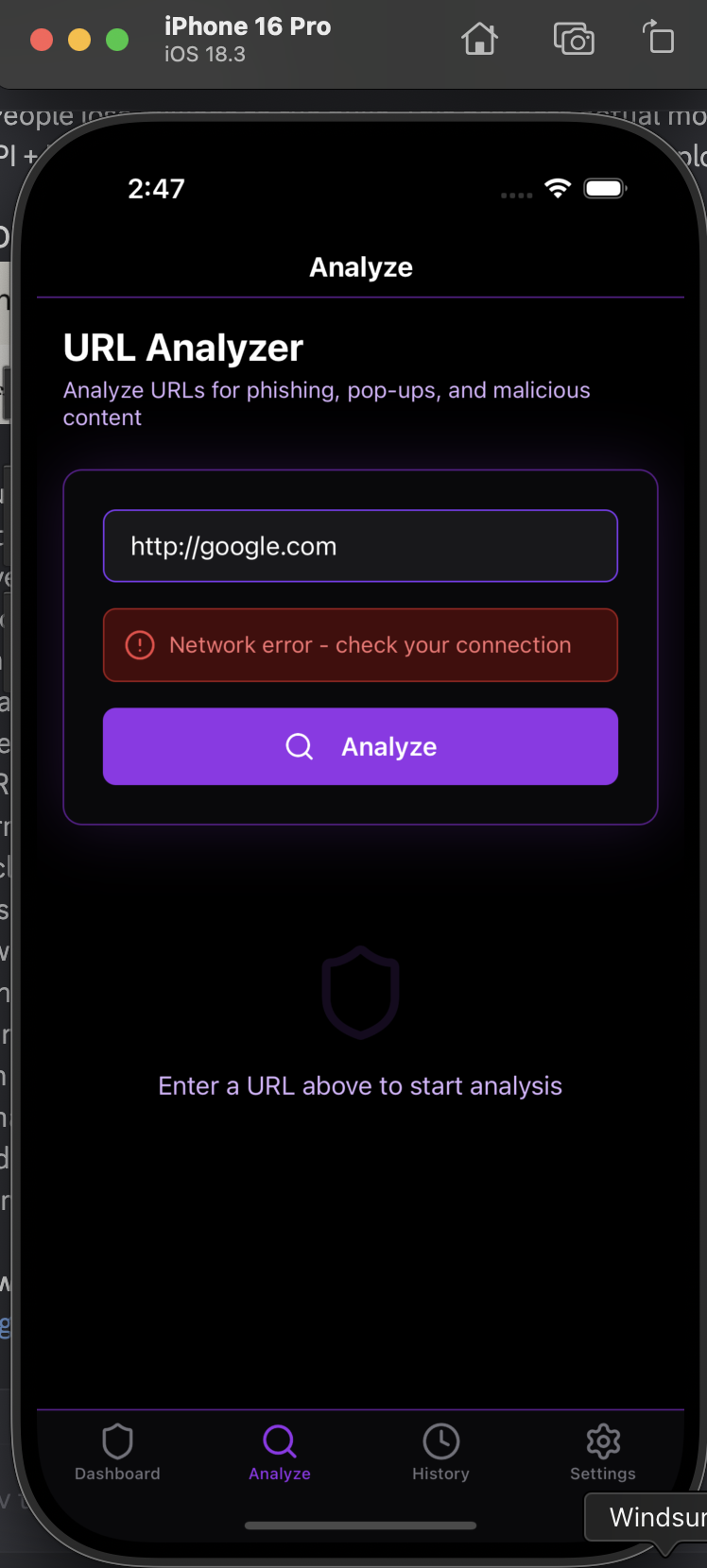
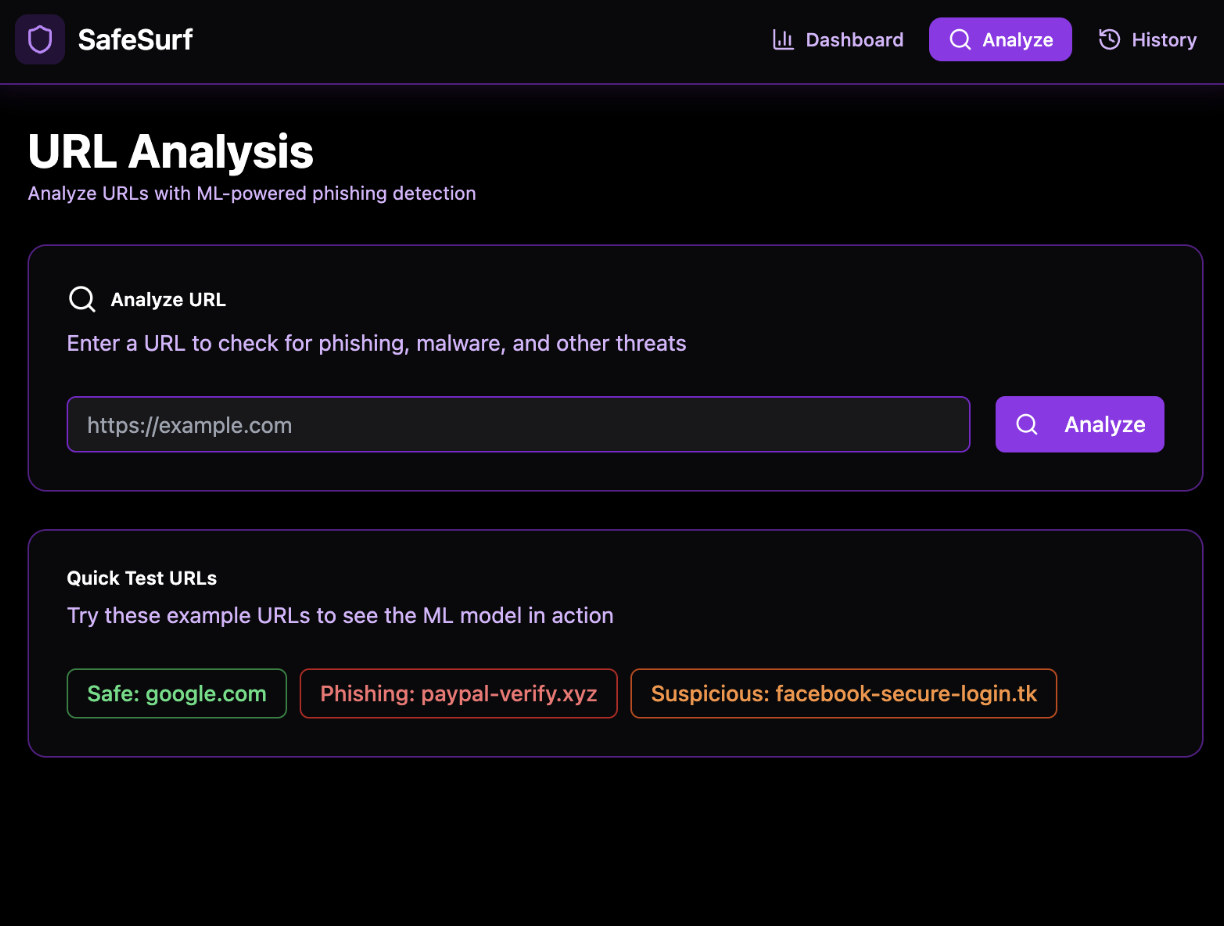
It’s a simple web extension that allows users to input a link into a text box, which the application then analyzes to evaluate its safety. It does this by calculating the link’s entropy to measure its randomness and by checking it against a database of blacklisted terms commonly found in malicious URLs. This process enables the extension to quickly flag potentially harmful links and help users determine whether a link is safe before visiting it.
How we built it
For our project, we built the application using a combination of tools and frameworks to ensure performance, scalability, and a great user experience. The mobile app was developed with React Native, while the web extension was powered by Vite for fast development and optimization. We utilized Gluestack and Shadcn to create clean, consistent, and customizable UI components across platforms. For data management, we implemented SQLite as our local database solution, providing efficient storage and offline capabilities. On the backend, we used Uvicron to run our API server, ensuring fast asynchronous performance. Finally, Axios was integrated for reliable and streamlined API communication between the frontend and backend services.
Challenges we ran into
Our journey had many hurdles. Integrating Tailwind CSS into the project required careful attention and many efforts in order to accomplish. Additionally, connecting the frontend and backend components presented its own set of challenges, as we had to ensure smooth communication and data flow between the two. Throughout the process, we spent many many hours debugging errors.
Accomplishments that we're proud of
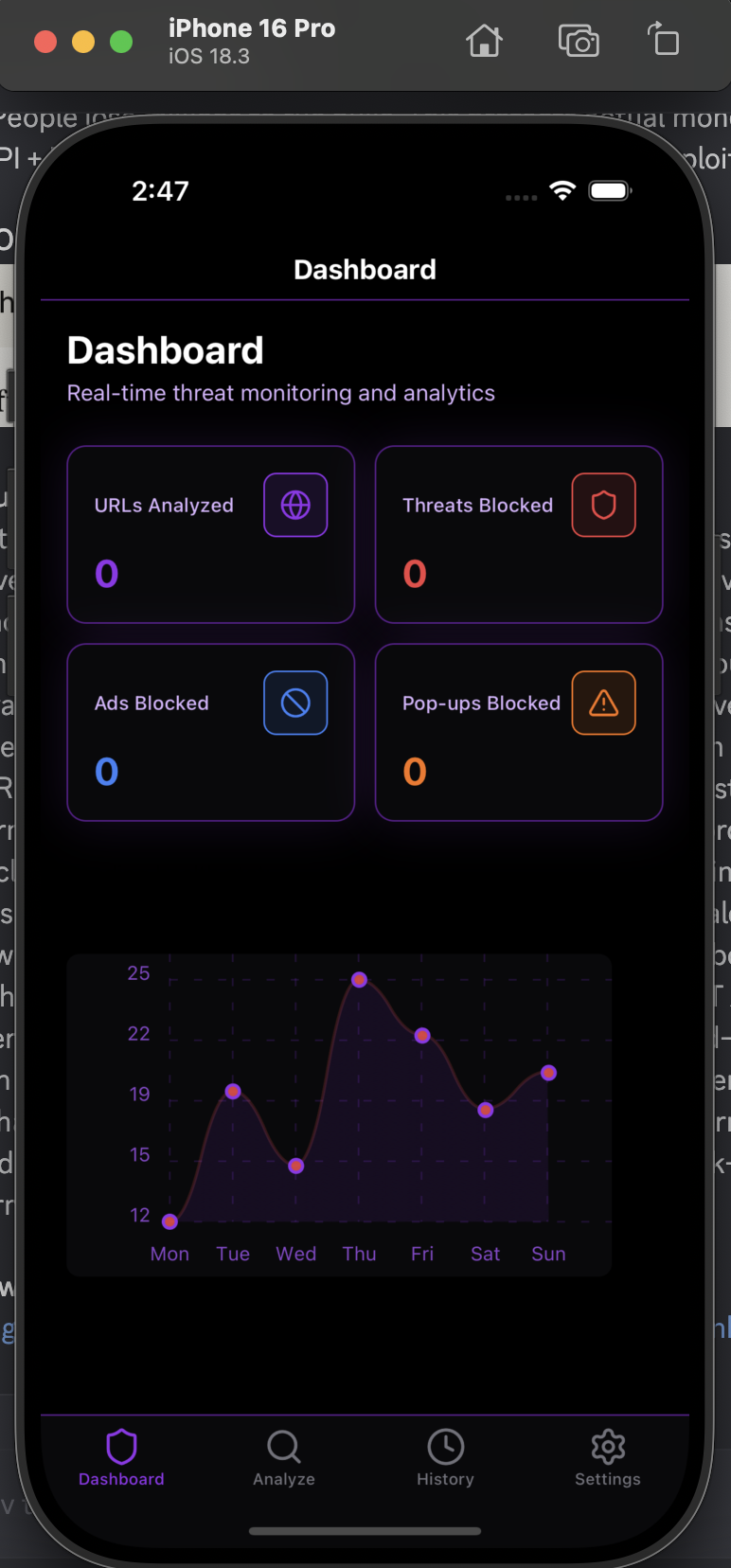
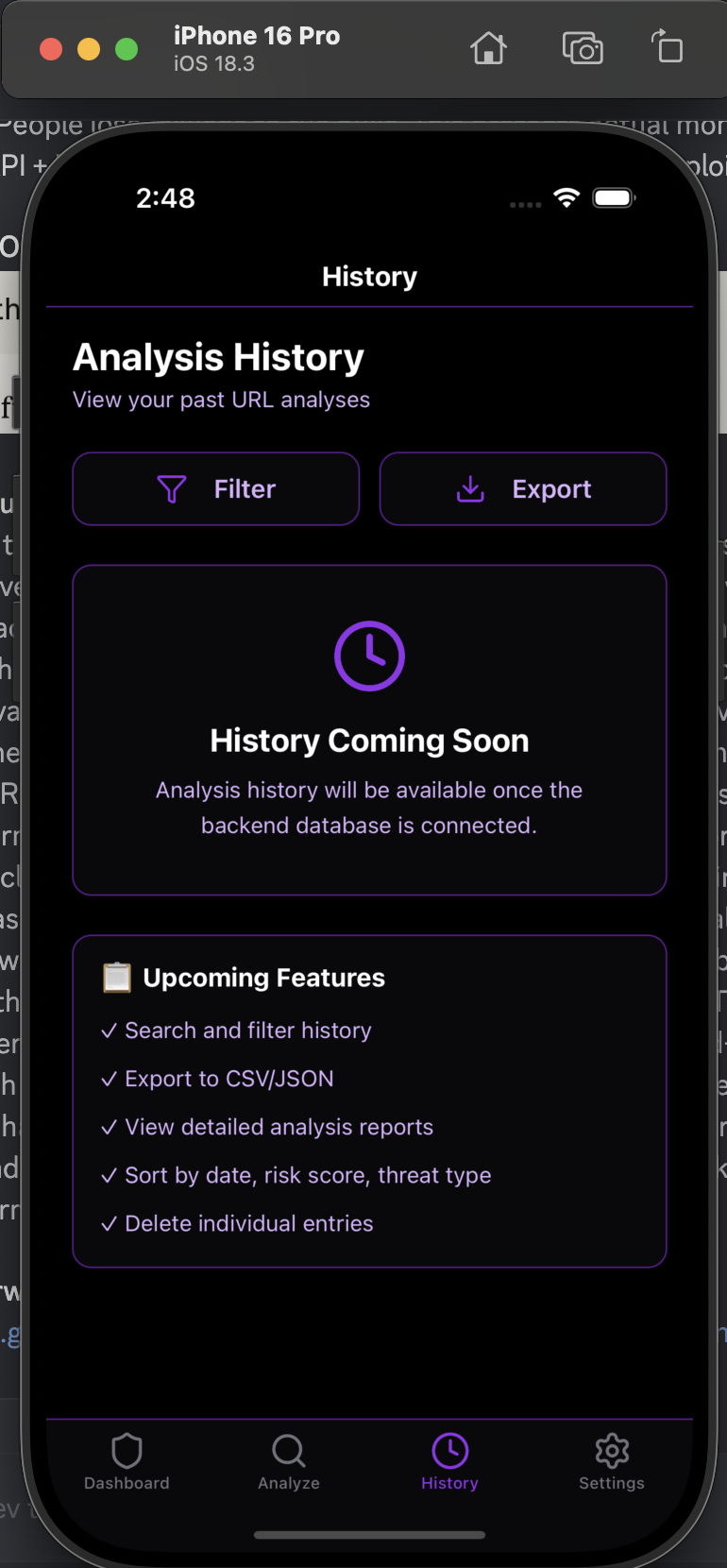
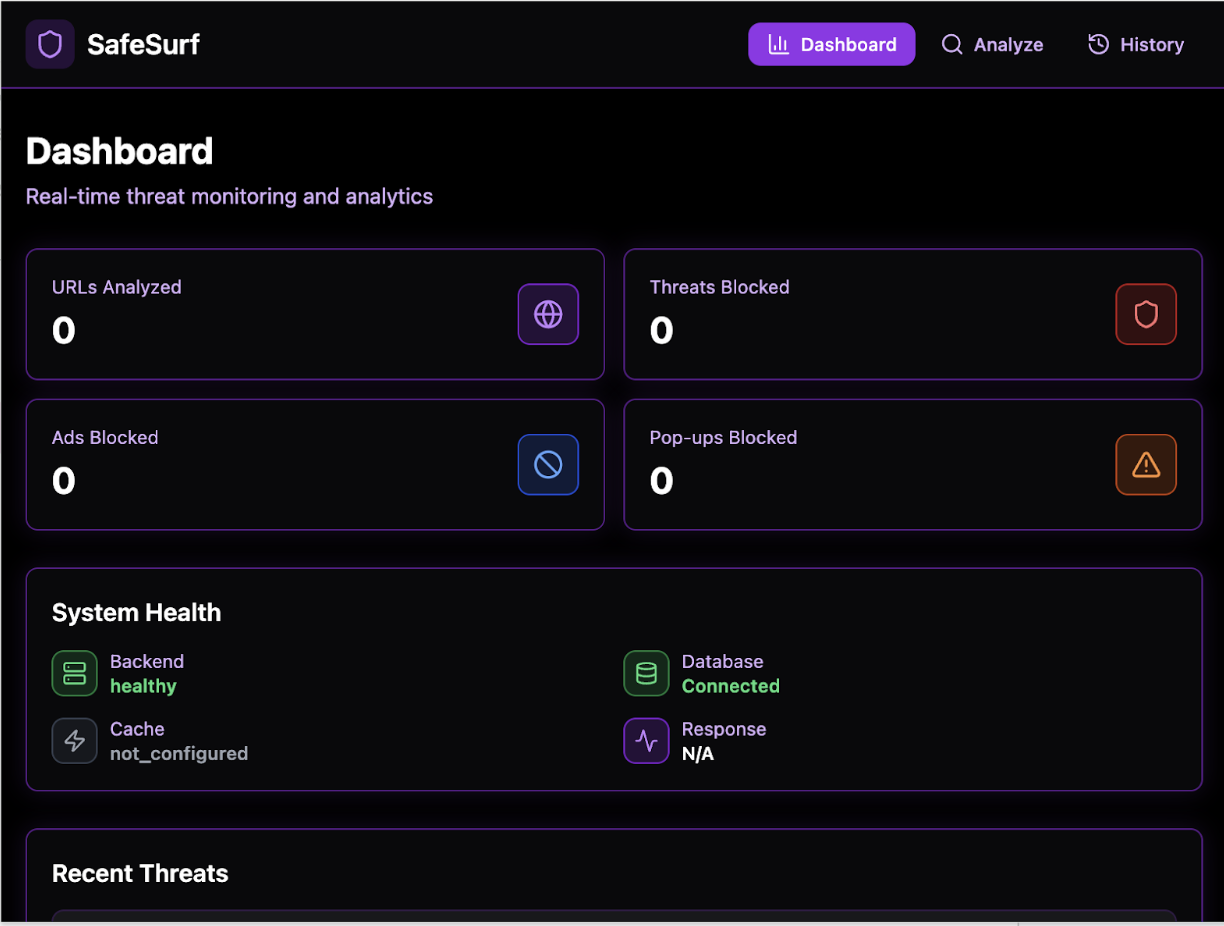
We’re particularly proud of some key milestones we’ve achieved in this project. First, the user interface (UI) is intuitive and visually appealing, designed to provide a smooth and seamless experience for our users. Second, we developed a machine learning model that effectively evaluates link safety, significantly enhancing the functionality of our extension. Lastly, the integration of the Chrome extension with its companion app ties everything together, offering users a comprehensive and powerful solution to combat phishing. The companion app also provides users with safety statistics, helping to quantify the extension's impact and demonstrate how it protects them.
What we learned
We learned how to create web extensions and connect a database to both a companion app and a Chrome extension, enabling smooth data synchronization between them. Additionally, I gained experience using modern UI libraries such as shadcn, which helped me design clean, responsive, and accessible user interfaces for the project.
What's next for SafeSurf (Neevarious)
Ad-Blocking and Pop-Up Blocking,

Log in or sign up for Devpost to join the conversation.