-
-
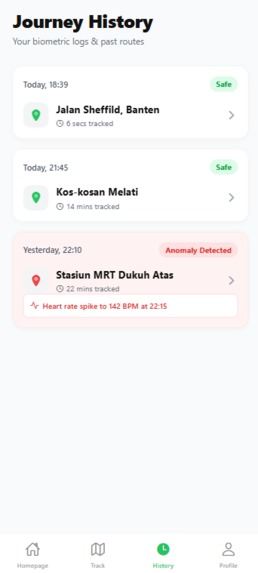
History
-
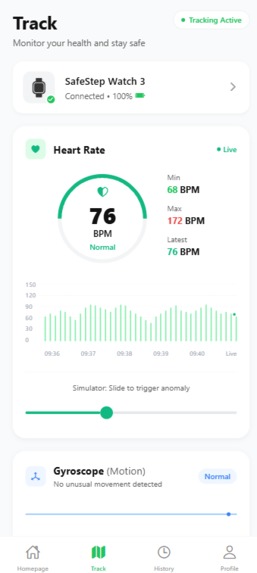
Heart Beat track
-
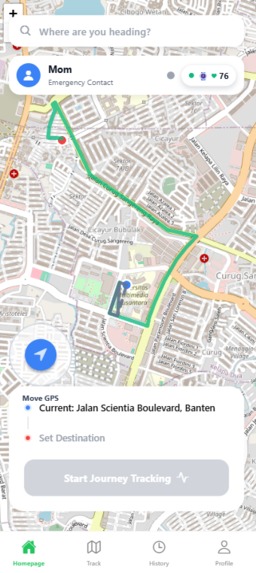
Homepage
-
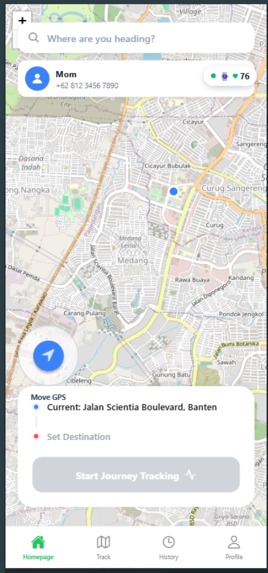
Profile
Inspiration
Walking alone can feel unsafe, especially when stress or discomfort builds unexpectedly. We wanted to explore how biometric data, such as heart rate, could make personal navigation more responsive by identifying moments of possible distress and guiding users toward safer routes.
What it does
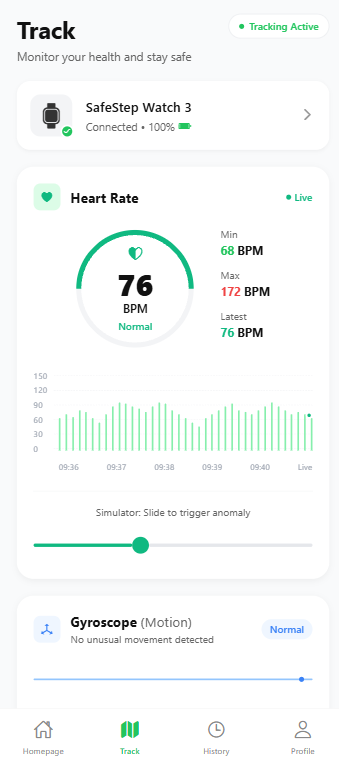
SafeStep monitors a user's heartbeat in real time and presents safety-focused navigation. When biometric signals indicate a potentially elevated stress level, the app can help users make more informed decisions about their route and journey.
How we built it
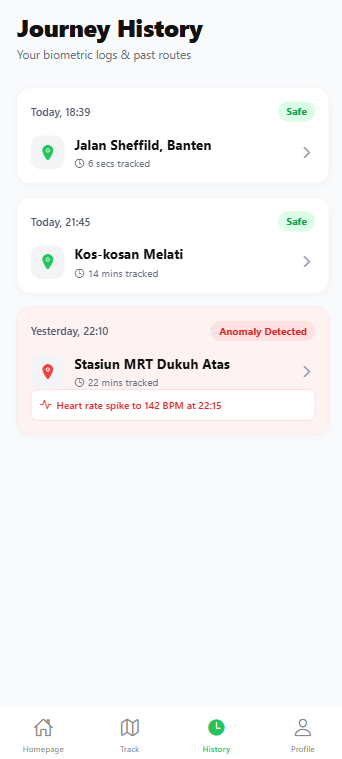
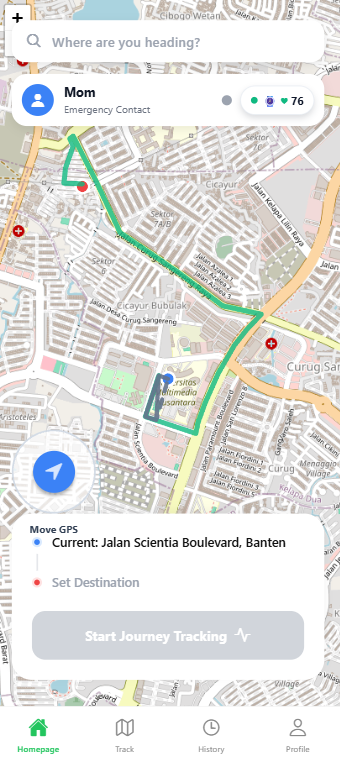
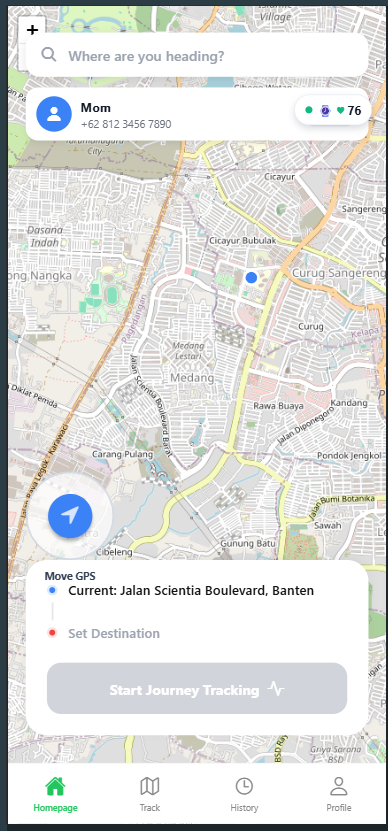
We built SafeStep with React Native and Expo for a cross-platform mobile experience. The interface includes: A home screen for selecting a destination and starting a journey Biometric state management for live BPM and safety-status feedback A tracking screen for visualizing journey and biometric information An OpenStreetMap-based map on web using Leaflet and React Leaflet Navigation between home, tracking, history, and profile views using Expo Router The core idea is to connect heart-rate data with route-safety feedback: [ \text{Safety response} = f(\text{heart rate}, \text{route context}, \text{user journey}) ]
Challenges we ran into
One challenge was integrating an interactive map within a mobile-style interface while keeping overlays, search controls, and navigation usable. Full-screen UI layers can intercept touch gestures, preventing the user from dragging or zooming the map.
We also had to design biometric feedback carefully. A higher heart rate does not always mean danger, so the app should treat it as a signal for additional awareness rather than a definitive emergency conclusion.
What we learned
We learned how to structure a cross-platform React Native application, manage shared real-time state, and integrate web mapping technology into an Expo project. We also learned that safety-focused apps must balance useful alerts with privacy, accuracy, and avoiding unnecessary alarm.
What's next for Safestep
Next steps include connecting a real wearable or Bluetooth heart-rate monitor, adding real route-safety data, enabling emergency contacts and alerts, and improving the model that distinguishes exercise-related heart-rate changes from possible distress.

Log in or sign up for Devpost to join the conversation.