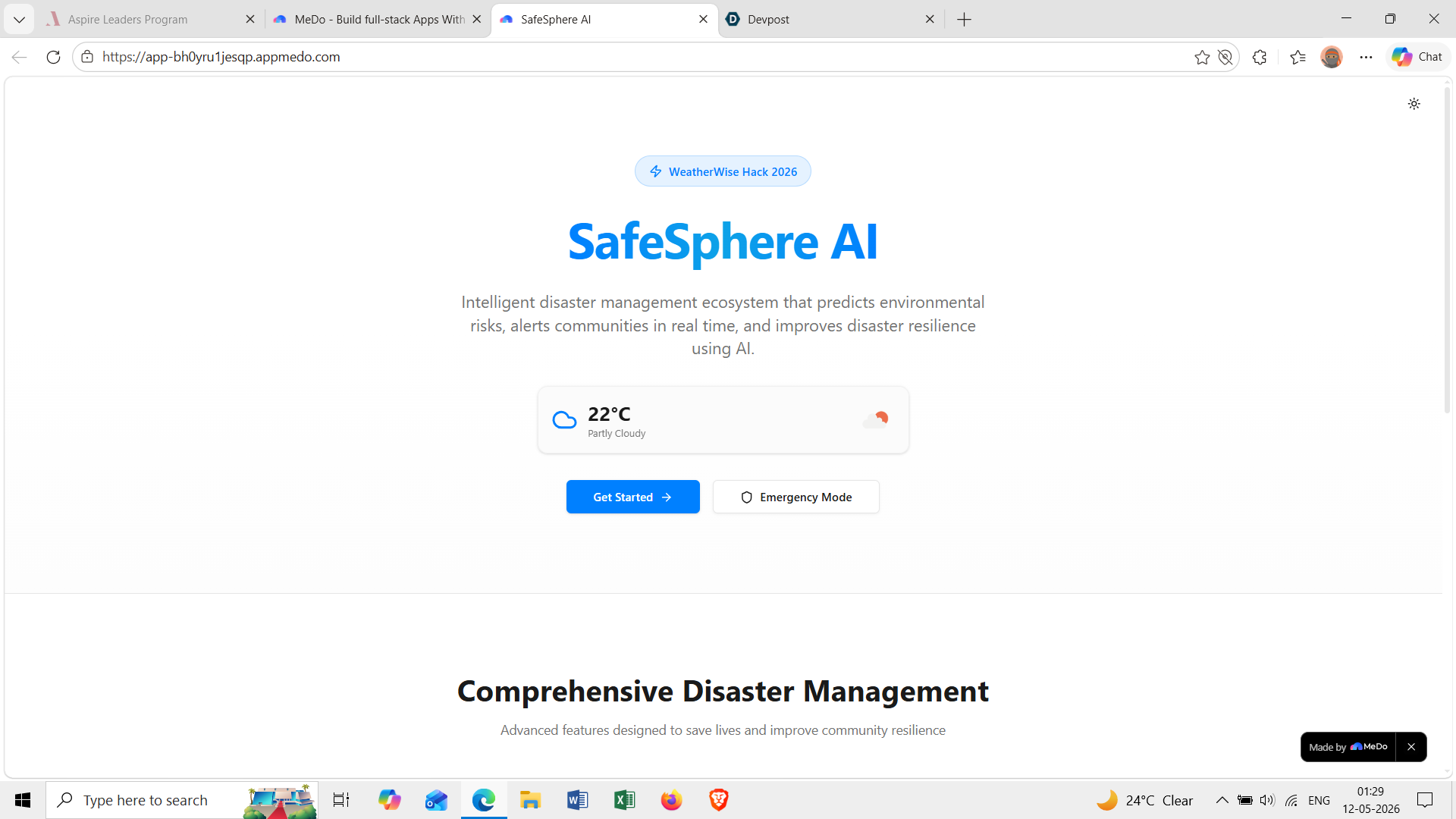
Rapid Crisis Response
Inspiration
Natural disasters, medical emergencies, and unexpected crises often create panic and confusion, especially in crowded places like hotels, public spaces, and communities. We were inspired by the idea of building a platform that could help people communicate quickly, coordinate efficiently, and receive immediate support during emergencies.
Our goal was to create a smart and reliable system that reduces response time and improves coordination between users, responders, and authorities. We wanted technology to become a bridge between danger and safety.
What It Does
Rapid Crisis Response is an intelligent emergency coordination platform designed to provide:
- Real-time SOS alerts
- Emergency notifications
- Live crisis updates
- Secure communication
- Smart coordination between responders and users
- AI-powered assistance for faster decision-making
The platform helps organizations and communities respond quickly during emergencies while keeping users informed and safe.
How We Built It
We built the project using modern web technologies to ensure speed, scalability, and accessibility.
Tech Stack
- Frontend: HTML, CSS, JavaScript
- Backend: Firebase
- Authentication: Firebase Authentication
- Database: Firebase Firestore
- Hosting: Firebase Hosting
We designed the interface to be simple and user-friendly so that people can access emergency services quickly without confusion.
The system workflow can be represented as:
[ Emergency \ Alert \rightarrow Notification \ System \rightarrow Response \ Coordination \rightarrow User \ Safety ]
Challenges We Faced
One of the biggest challenges was designing a system that remains simple while handling critical emergency workflows. We also faced difficulties in:
- Managing real-time notifications
- Ensuring fast response updates
- Building a secure authentication system
- Creating a responsive UI for all devices
- Coordinating multiple emergency scenarios efficiently
Another challenge was balancing performance with reliability because even a small delay can matter during emergencies.
What We Learned
Through this project, we learned:
- How real-time systems work
- The importance of scalable backend architecture
- Team collaboration and project management
- UI/UX design for critical applications
- Firebase integration and deployment
We also realized how technology can create meaningful social impact when focused on solving real-world problems.
Future Improvements
In the future, we plan to add:
- AI-based disaster prediction
- GPS-enabled live tracking
- Multi-language support
- Voice-command emergency activation
- Integration with hospitals and emergency services
- Offline emergency communication features
Conclusion
Rapid Crisis Response is more than just a website — it is a step toward creating safer and smarter communities. By combining technology, communication, and real-time coordination, we aim to make emergency response faster, more reliable, and accessible to everyone.
Built With
- ai-powered
- authentication
- built
- cloud-based
- css3
- firestore
- git
- html5
- javascript
- with


Log in or sign up for Devpost to join the conversation.