Inspiration It began with a story that broke my heart. A teenage boy in Sri Lanka was found living under a bridge after losing his job: isolated, invisible, and battling his demons alone. Sadly, he wasn’t an anomaly.
Teen suicide rates have doubled globally in the past five years. International students silently suffer far from home. Young adults scroll endlessly, more connected than ever, but lonelier than any generation before them.
This isn’t just a mental health crisis; it’s a loneliness epidemic. I built SafeSpace as a gentle rebellion against that silence. A promise that no one should have to hit rock bottom just to feel heard.
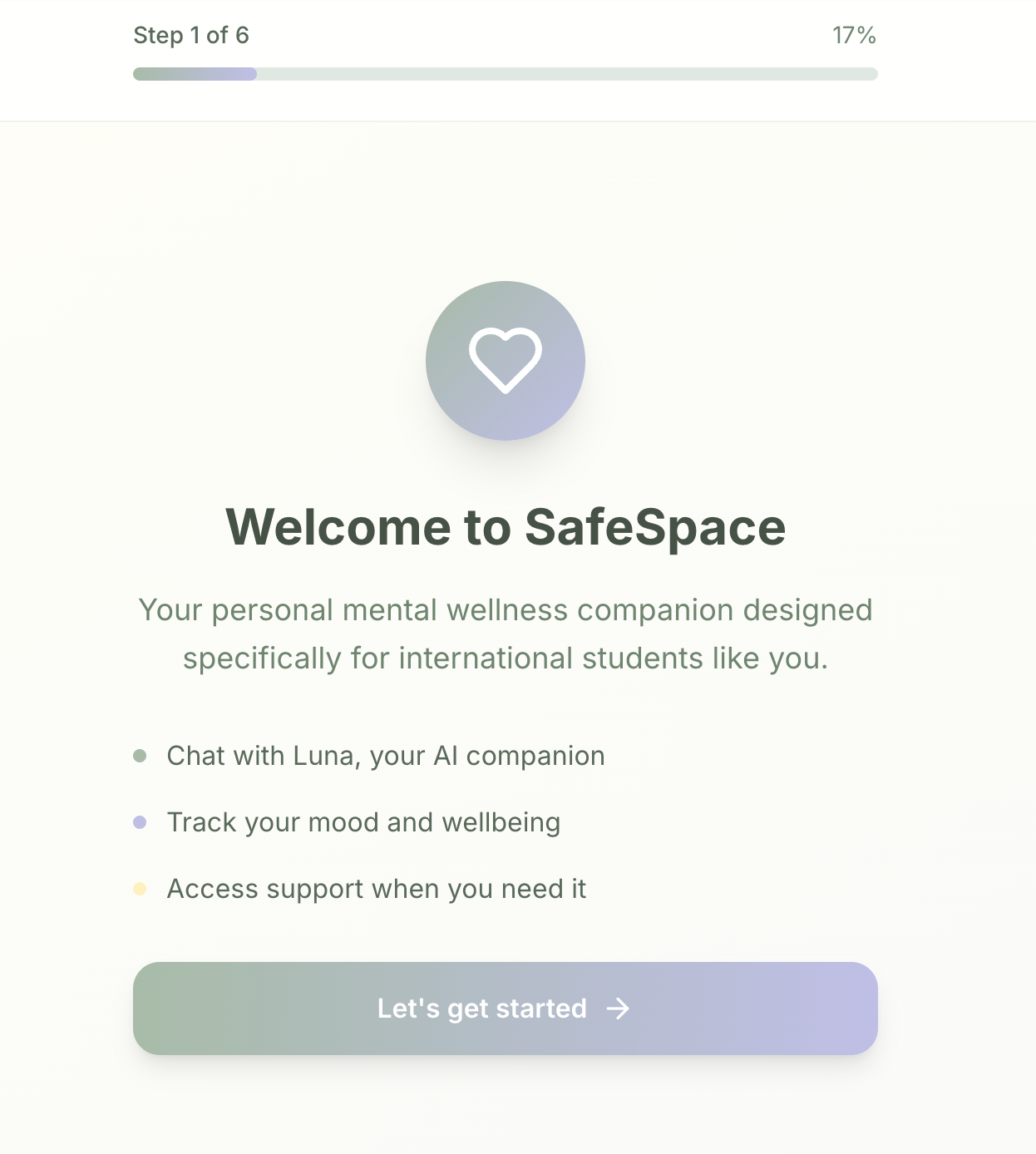
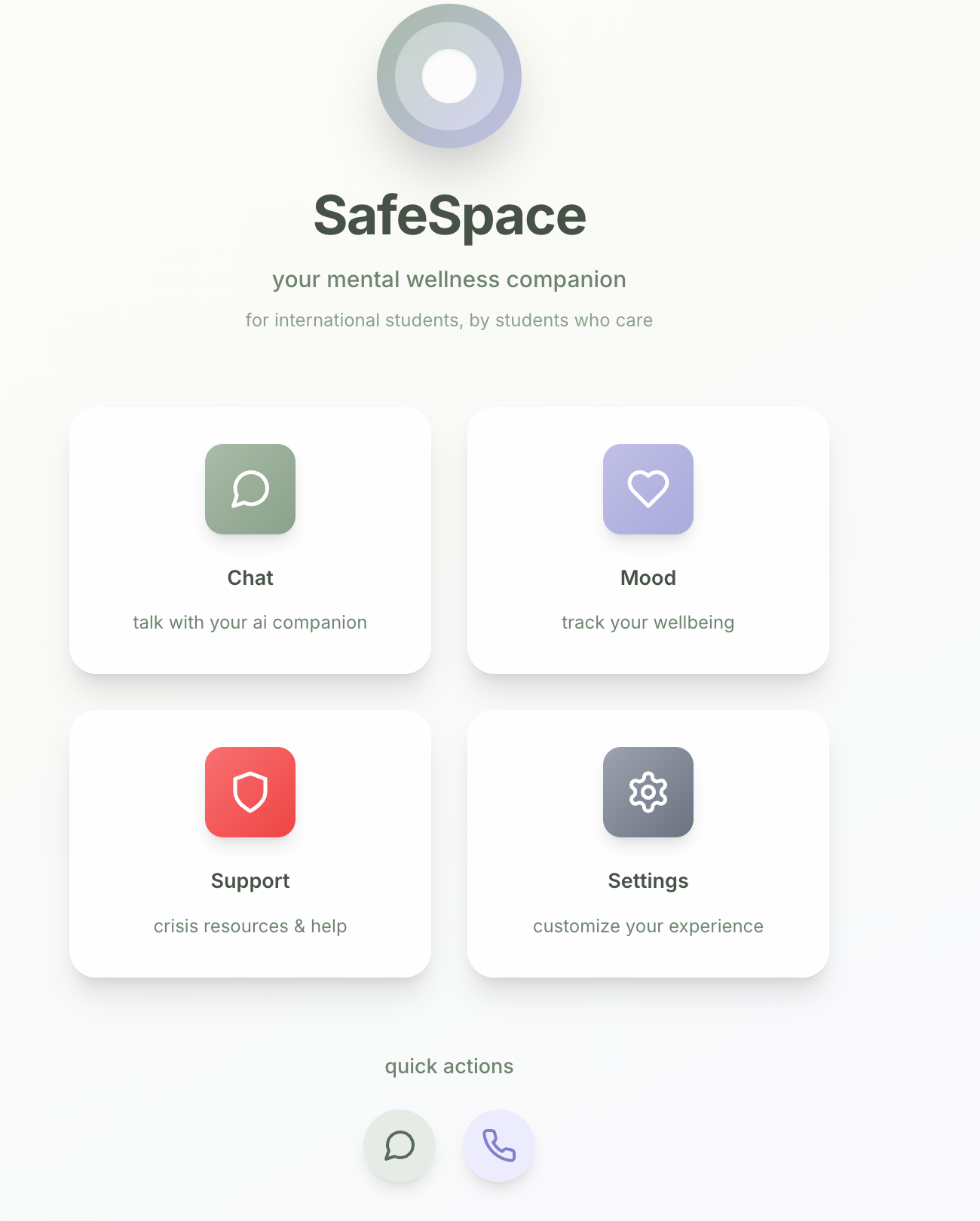
What it does SafeSpace is a soft-spoken, always-available emotional companion for teens, students, and young adults. It listens, reflects, and supports — never diagnoses or judges.
Through voice or chat, users can:
- Vent or reflect freely in a judgment-free zone
- Do gentle check-ins or grounding exercises
- Navigate moments of anxiety, overwhelm, or loneliness
- Receive thoughtful questions and therapeutic guidance based on CBT, person-centered therapy, and mindfulness principles
It’s not a therapist — it’s a presence. One who listens when no one else does.
How we built it
We combined:
- Conversational AI frameworks (OpenAI, ElevenLabs, and custom scripting)
- Therapeutic frameworks (CBT, DBT, Mindfulness, Carl Rogers’ Person-Centered Therapy)
- Emotional UX design to ensure softness, safety, and accessibility
- A branded voice assistant named Luna — calm, gentle, and emotionally attuned
The system was fine-tuned for slow-paced conversations, grounding interventions, and real emotional nuance.
Challenges we ran into
- Striking the right tone between warmth and professionalism without sounding clinical or robotic
- Ensuring emotional safety without overstepping the line into therapy or triggering sensitive users
- Building a voice that feels truly human, especially in moments of silence or distress
- Designing UX that’s inclusive, intuitive, and culturally sensitive across multiple demographics
Accomplishments that we're proud of
- Created a deeply human-like voice experience that feels emotionally present, not performative
- Built a system that adapts to a user's emotional state — from quiet companionship to gentle coaching
- Developed a scalable, AI-powered solution with ethical guardrails and real therapeutic value
- Received early validation from users who said it helped them "feel safe just being themselves again"
What we learned
- Teenagers and students don’t want to be “fixed.” They want to be seen.
- Silence can be healing. It’s okay for an AI to pause, breathe, and stay.
- Emotional tech isn’t about features — it’s about feeling. The smallest tone shift can change everything.
- The biggest barrier to mental health support isn't access. It's fear of judgment. We built against that.
What's next for SafeSpace
- Launching multilingual support to serve international students in their native language
- Integrating crisis detection and escalation systems for high-risk users
- Partnering with schools, universities, and youth organizations for proactive mental wellness access
- Expanding Luna’s voice capabilities to support trauma-sensitive response flows
- Building a journaling and mood-tracking layer to deepen long-term self-awareness
Our vision is simple: A world where no young person feels invisible again.
Built With
- anthropic
- claude
- elevenlabs
- openai
- react-native

Log in or sign up for Devpost to join the conversation.