-
-
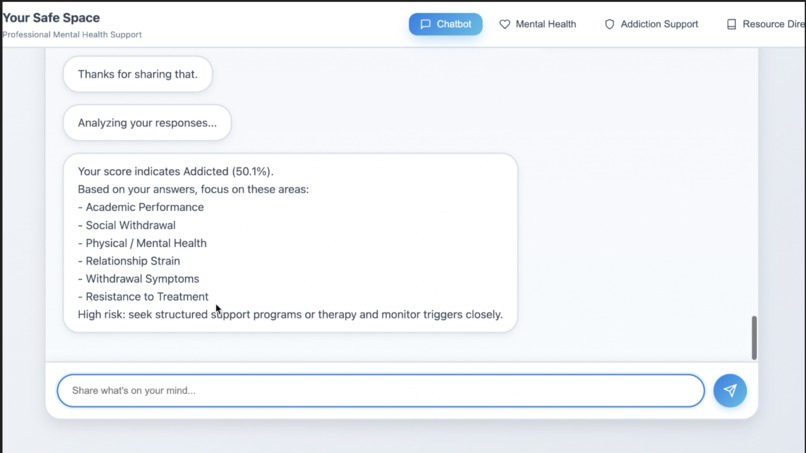
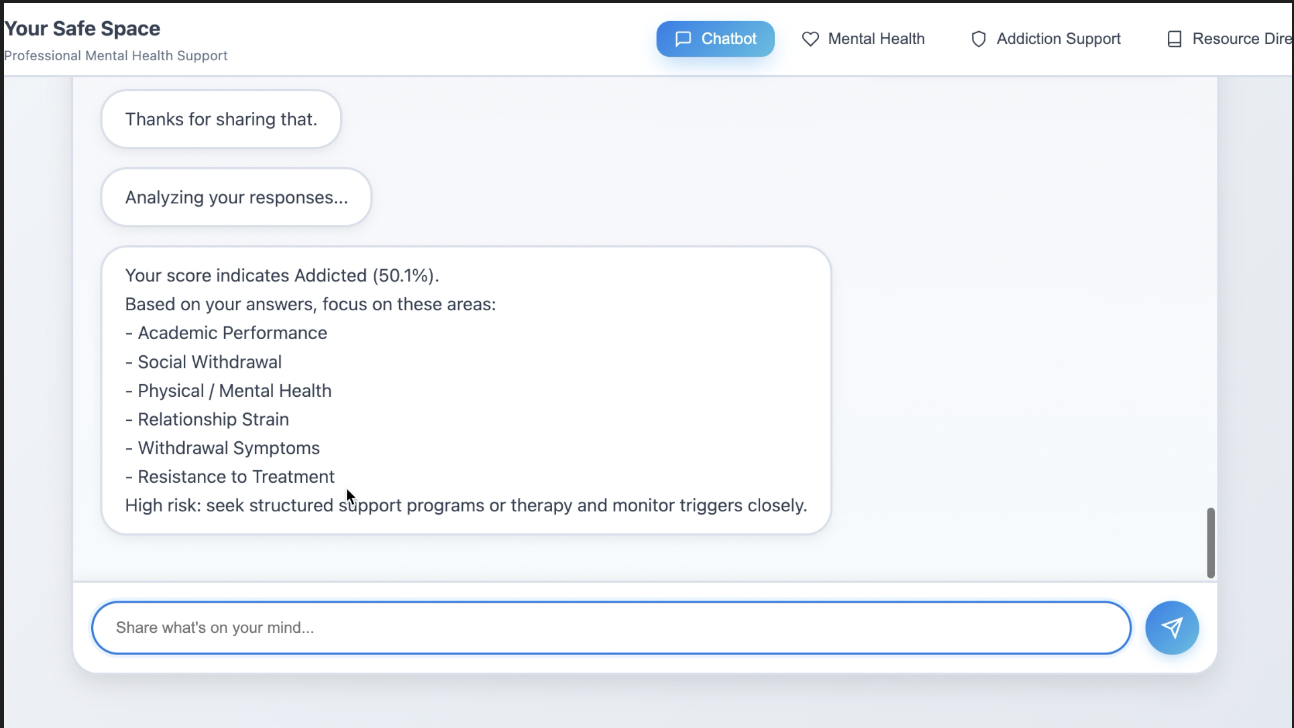
Final Analysis, this is an example of the how it would look once exported to the analyzer.
-
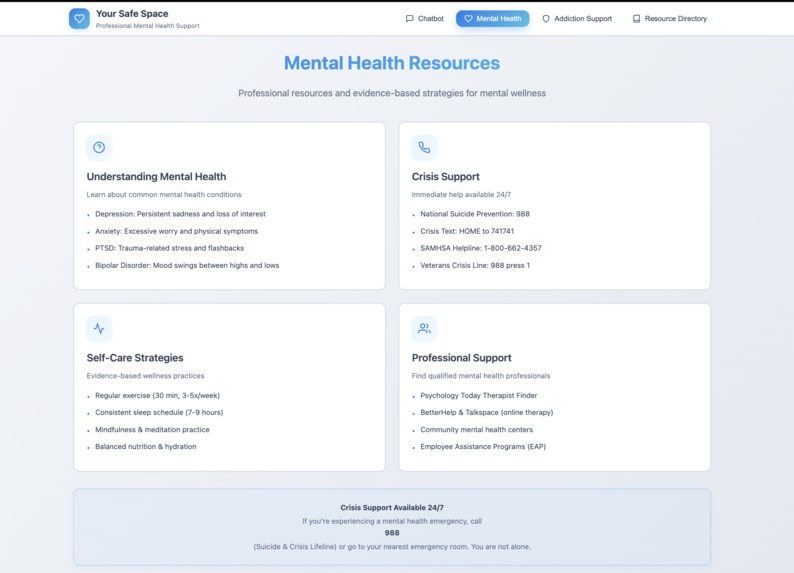
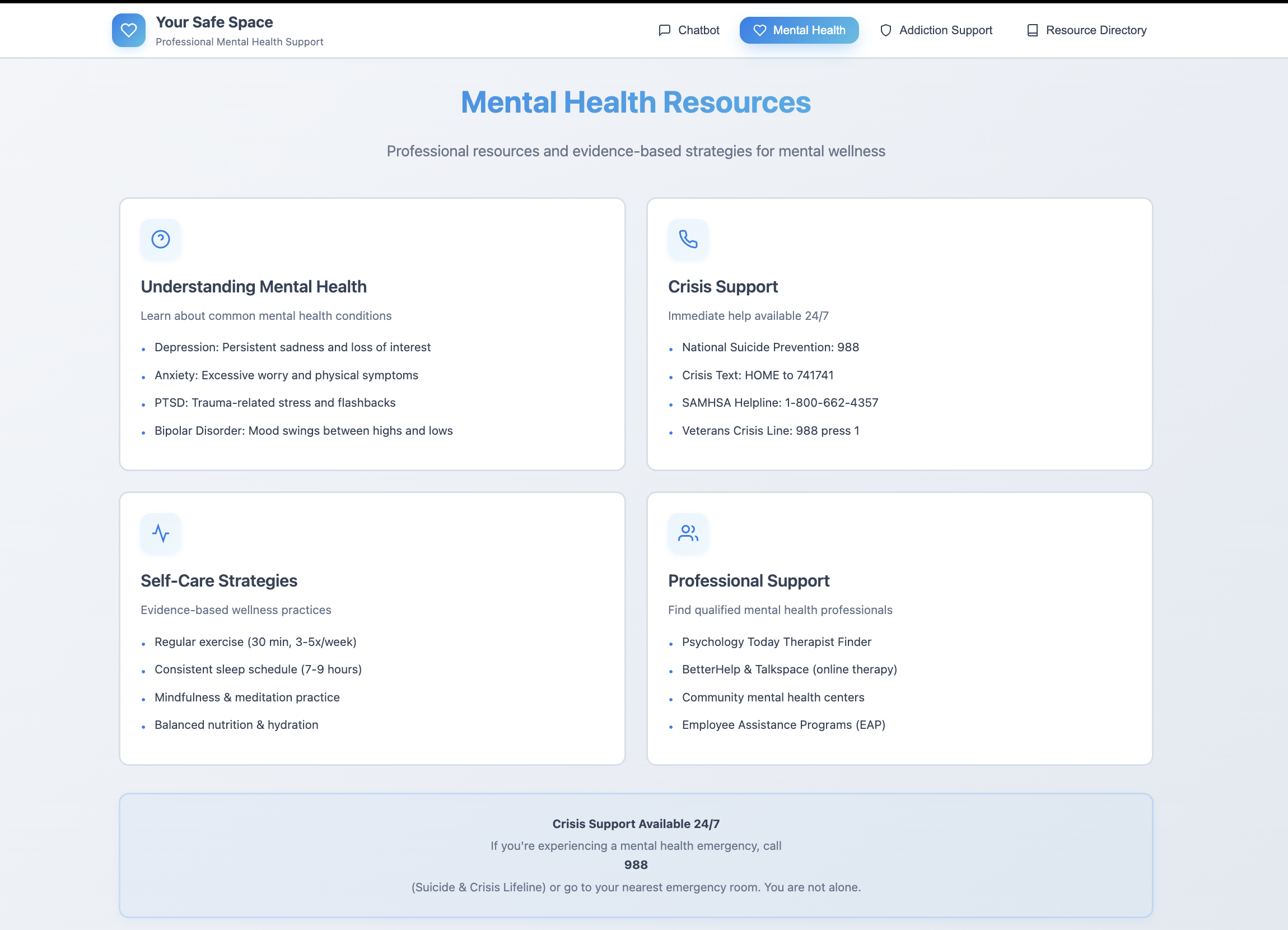
Mental Health Resources
-
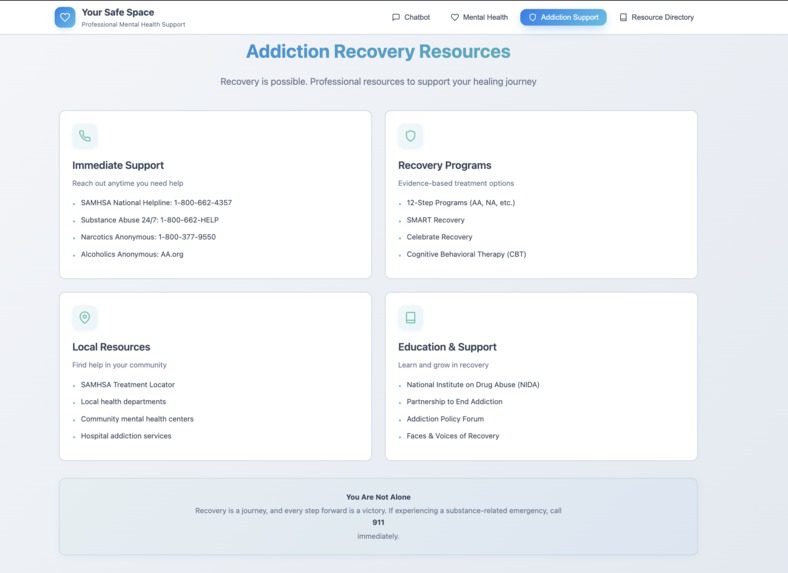
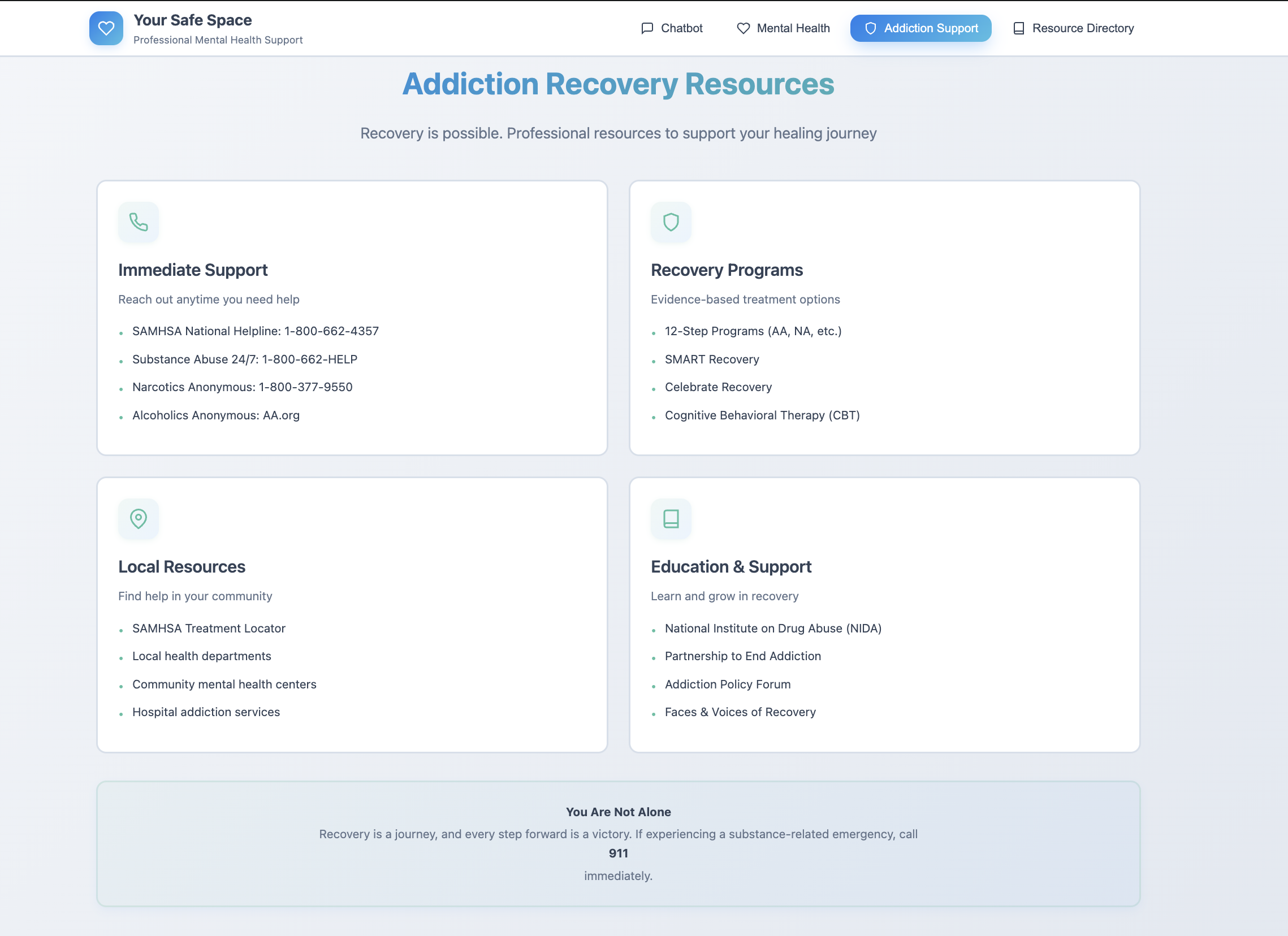
Addiction Recovery Resources
-
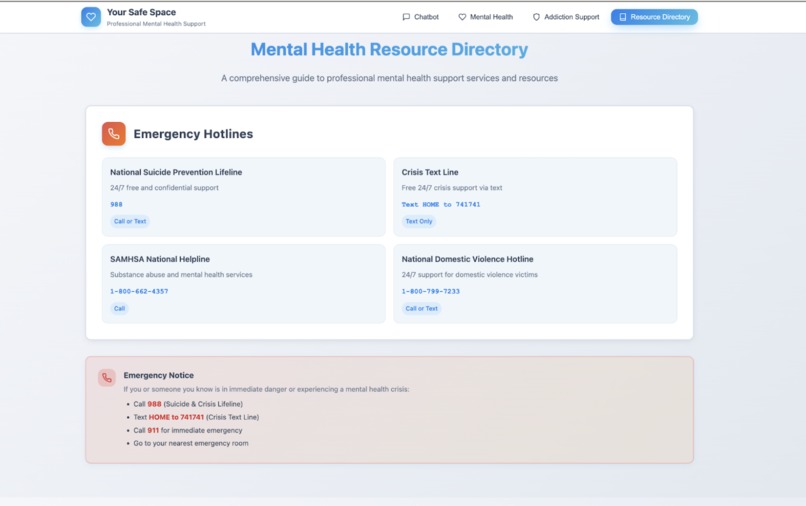
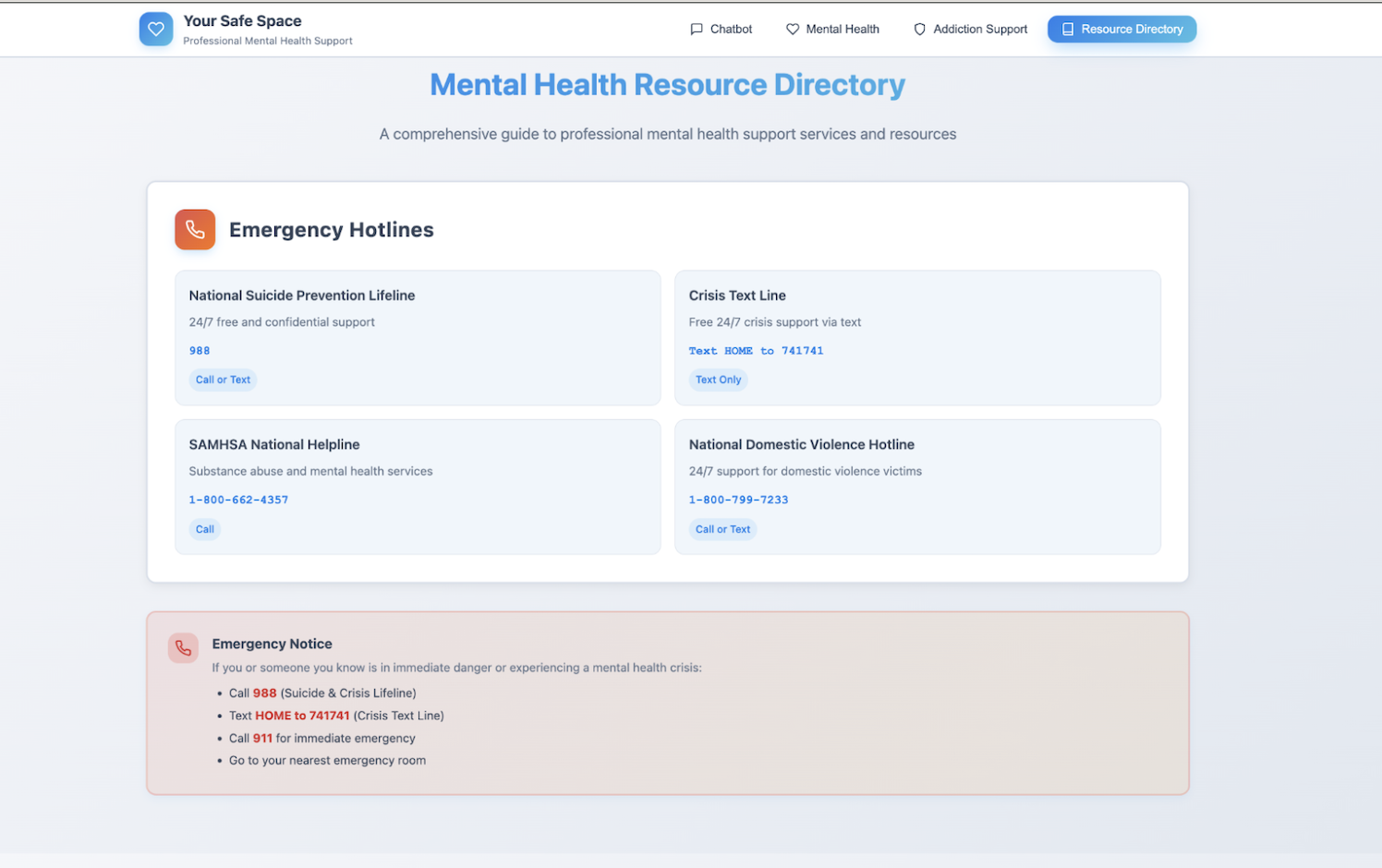
Mental Health Resource Directory
Inspiration
- We’ve seen friends struggle with drug addiction firsthand.
- Their experiences made us realize that addiction often starts subtly with stress, loneliness, or social pressure long before it becomes visible.
- If they had received help earlier, recovery could have been much easier.
- That inspired us to build a system that can gently recognize those early signs.
What It Does
- Our project is a mental health chatbot designed to help identify early indicators of drug addiction and emotional distress through natural conversation.
- Teens can chat with the AI like they would with a friend
- The AI listens, learns, and picks up on subtle cues about mental health and substance use
- If the system detects warning signs, it sends a private alert to the doctor (not shown to the user)
- Once the conversation ends it analysis the user and provideds a file with a detailed diagnosis.
- The doctor can then review potential cases and provide timely care
- The idea is to make it easier for patients, especially teens to express themselves openly, without fear of judgment.
How We Built It
- Frontend: HTML, CSS, JavaScript (chat UI + interaction flow)
- AI Backend: Python (Google Colab), using machine learning models trained on: Students Drugs Addiction Dataset 2024 (Kaggle) ##Logic:##
- Detect keywords related to substances (e.g., “weed”, “ecstasy”, “fentanyl”)
- Analyze mood and language cues
- If triggered, provide helpful resources (CVC, SAMHSA, etc.)
- Notify the doctor dashboard for review
Challenges
- Managing merge conflicts during collaboration
- Making the chatbot feel human, not robotic
- Balancing data privacy and medical responsibility
Accomplishments
- Built a chat system that actually feels supportive
- Integrated mental wellness checks
- Designed a resource response system for drug-related mentions
- Created the foundation for an AI-powered early detection tool that could save lives
What We Learned
- Addiction has many mental health indicators — social withdrawal, financial issues, sleep changes, etc.
- Teens are more honest with nonjudgmental platforms
- Early detection matters and empathy in design is just as important as the code itself
Whats next for Your Safe Space
- Expand detection to other mental health issues (e.g. depression, anxiety, eating disorders)
- Improve emotion recognition using sentiment analysis and contextual language models
- Build two chat modes: one for teens (friendly tone), one for doctors (data-focused summary)
- Partner with hospitals or school counselors to pilot real use cases

Log in or sign up for Devpost to join the conversation.