-
-

Building The Future Of Security
-
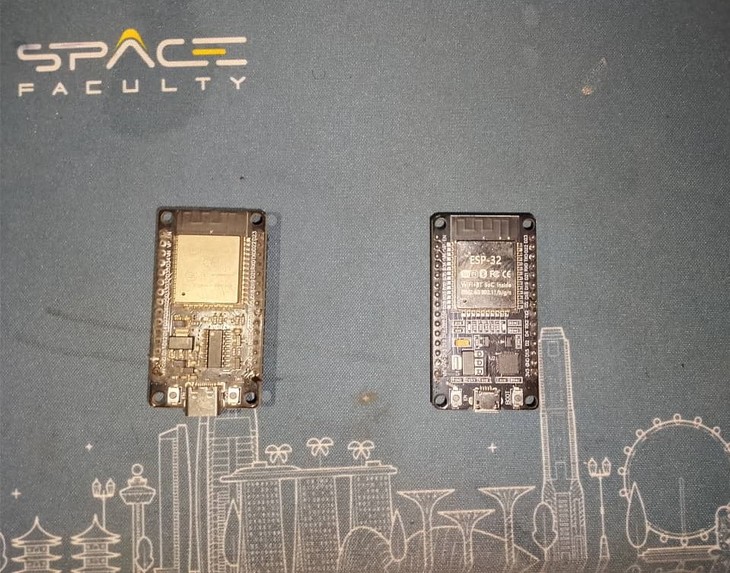
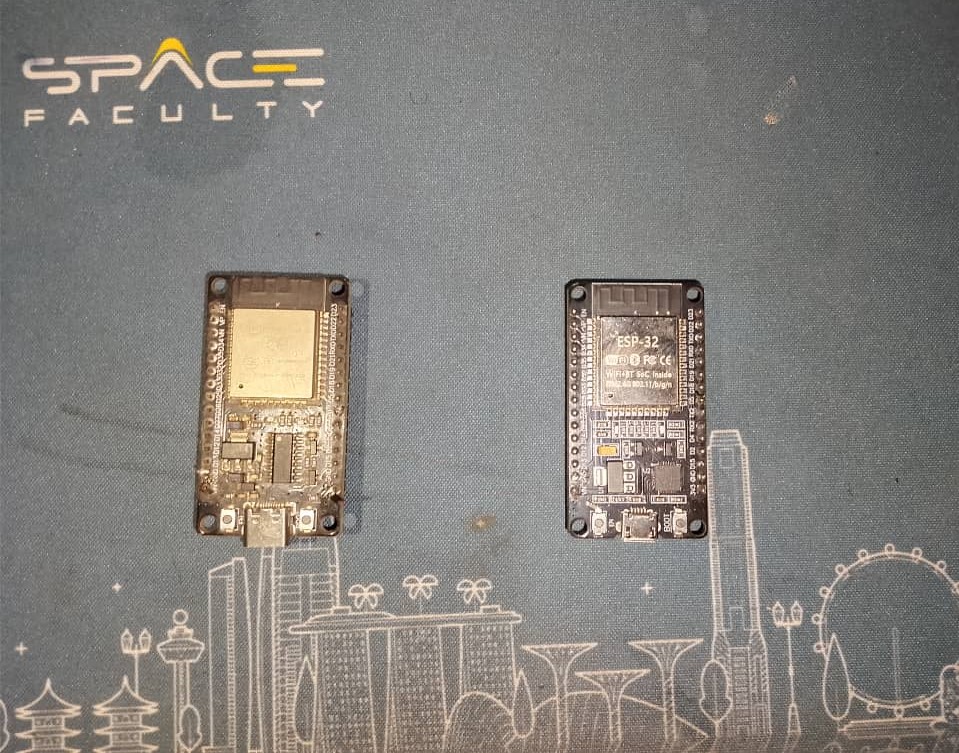
ESP32 Boards

Inspiration
What if your WiFi could sense people instead of just connecting them to the internet?
Today's presence detection systems usually force a compromise. Cameras invade privacy, PIR sensors struggle with stationary people, and advanced radar systems are too expensive for everyday use.
We believed there was a better solution hiding in something almost every building already has—WiFi.
SafeSpace CSI transforms ordinary WiFi signals into an intelligent sensing system that detects human presence without capturing images, recording videos, or relying on expensive hardware. By using only two low-cost ESP32 boards, we demonstrate that the future of smart sensing can be affordable, privacy-first, and accessible to everyone.
What it does
SafeSpace CSI detects whether a room is occupied by analysing changes in WiFi signals.
One ESP32 continuously transmits WiFi packets while another receives them and extracts Channel State Information (CSI). When a person enters the wireless path, their body naturally disturbs the radio waves. Those tiny disturbances are processed in real time to determine whether the room is occupied.
A live dashboard displays:
Occupancy status
Detection confidence
CSI amplitude
Signal variance
RSSI
Live signal graphs
The system works entirely without cameras, making it suitable for homes, offices, hospitals, classrooms, and smart buildings where privacy matters.
How we built it
We built SafeSpace CSI using two ESP32 microcontrollers running ESP-IDF.
The transmitter continuously sends WiFi packets while the receiver captures Channel State Information through the ESP32's native CSI interface. The firmware calculates signal amplitude and streams the data to a Python backend over serial.
The backend performs rolling variance analysis to distinguish human presence from normal wireless noise before broadcasting the results to a real-time web dashboard using Flask, Socket.IO, and Chart.js.
The complete system combines embedded systems, wireless communication, signal processing, and web technologies into one seamless real-time application.
Challenges we ran into
Our biggest challenge was enabling CSI on the ESP32, since it requires ESP-IDF configuration that is unavailable in standard Arduino projects.
Another challenge was separating real human presence from normal wireless interference. Simply measuring signal strength was unreliable, so we developed a rolling variance algorithm that significantly improved detection stability.
Finally, building a real-time system required synchronising embedded firmware, serial communication, Python processing, and a live web interface without introducing communication delays.
Accomplishments that we're proud of
Turning ordinary WiFi into a sensing technology instead of just a communication technology.
Building a complete real-time CSI detection system using hardware costing under ten dollars.
Creating a privacy-preserving alternative to camera-based occupancy detection.
Successfully integrating embedded firmware, signal processing, and a live dashboard into one working system.
What we learned
This project completely changed the way we view WiFi.
We learned that wireless signals carry much more than internet traffic—they also contain information about the physical environment.
We gained practical experience with Channel State Information, real-time signal processing, embedded systems, multithreaded Python applications, and live web communication.
Most importantly, we learned that innovative solutions don't always require expensive hardware. Sometimes the future is already hidden inside the devices we use every day.
What's next for SafeSpace CSI
Our next goal is to make SafeSpace CSI smarter and more scalable.
Future versions will automatically calibrate themselves to different environments, support multiple rooms using additional ESP32 nodes, and classify activities such as walking, sitting, or falls.
Ultimately, we envision SafeSpace CSI becoming an affordable sensing platform for smart homes, healthcare facilities, schools, and intelligent buildings—bringing privacy-preserving occupancy detection to environments where traditional surveillance is either too expensive or too intrusive.
Built With
- c
- css
- espidf
- html
- javascript
- platformio
- python

Log in or sign up for Devpost to join the conversation.