Inspiration
A lot of online safety tools are built around monitoring kids, but that can make people feel like they are being watched all the time.
We wanted to try something different.
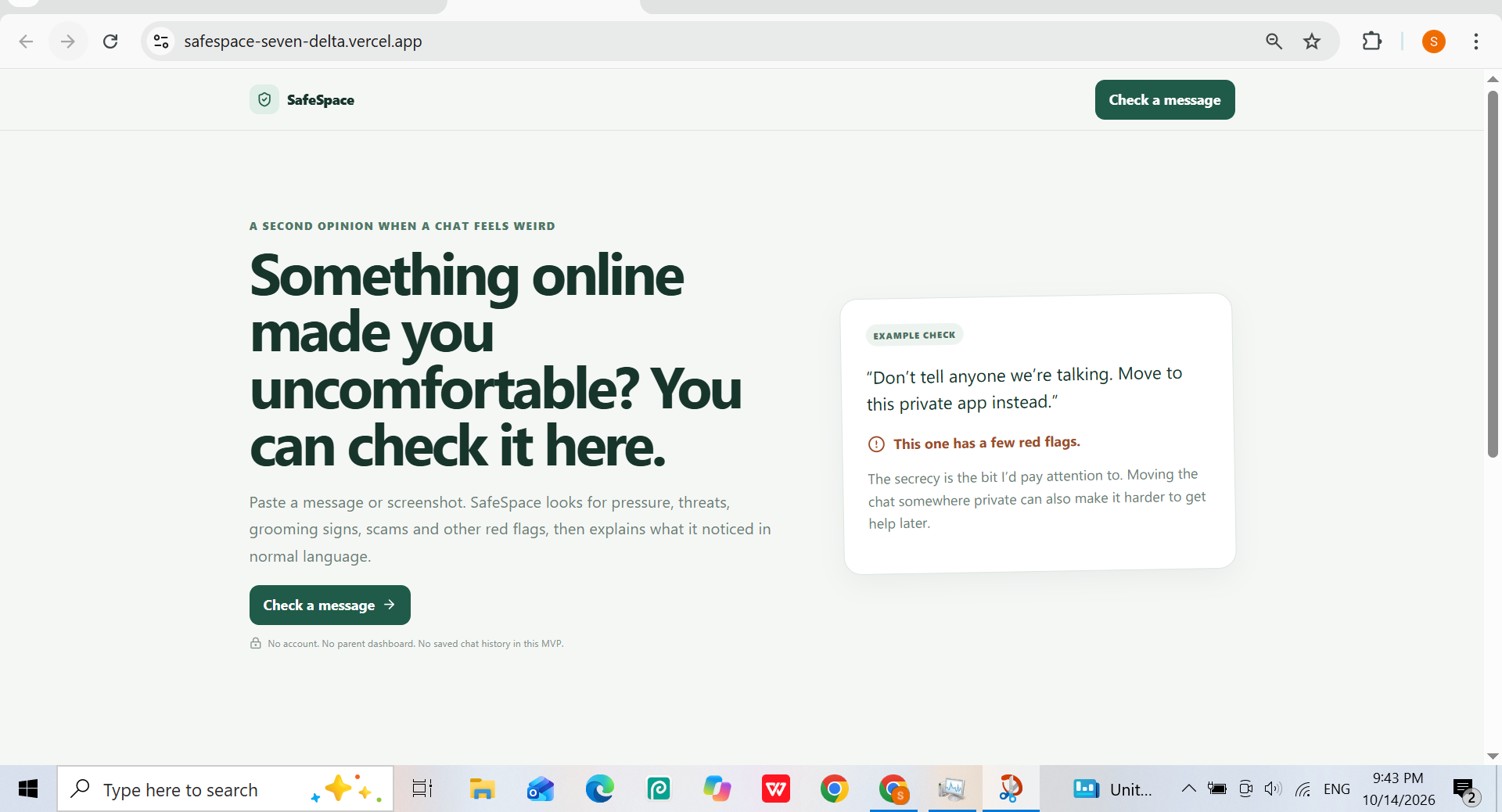
Sometimes a message is clearly dangerous. Other times, it just feels strange and you cannot really explain why. That is where the idea for SafeSpace came from: giving young people somewhere to check a message or screenshot when they are unsure, without turning it into a surveillance tool.
What it does
SafeSpace lets a user paste a message or upload a screenshot of a conversation.
It looks for warning signs such as pressure, secrecy, grooming, threats, scams, manipulation, or requests for private information.
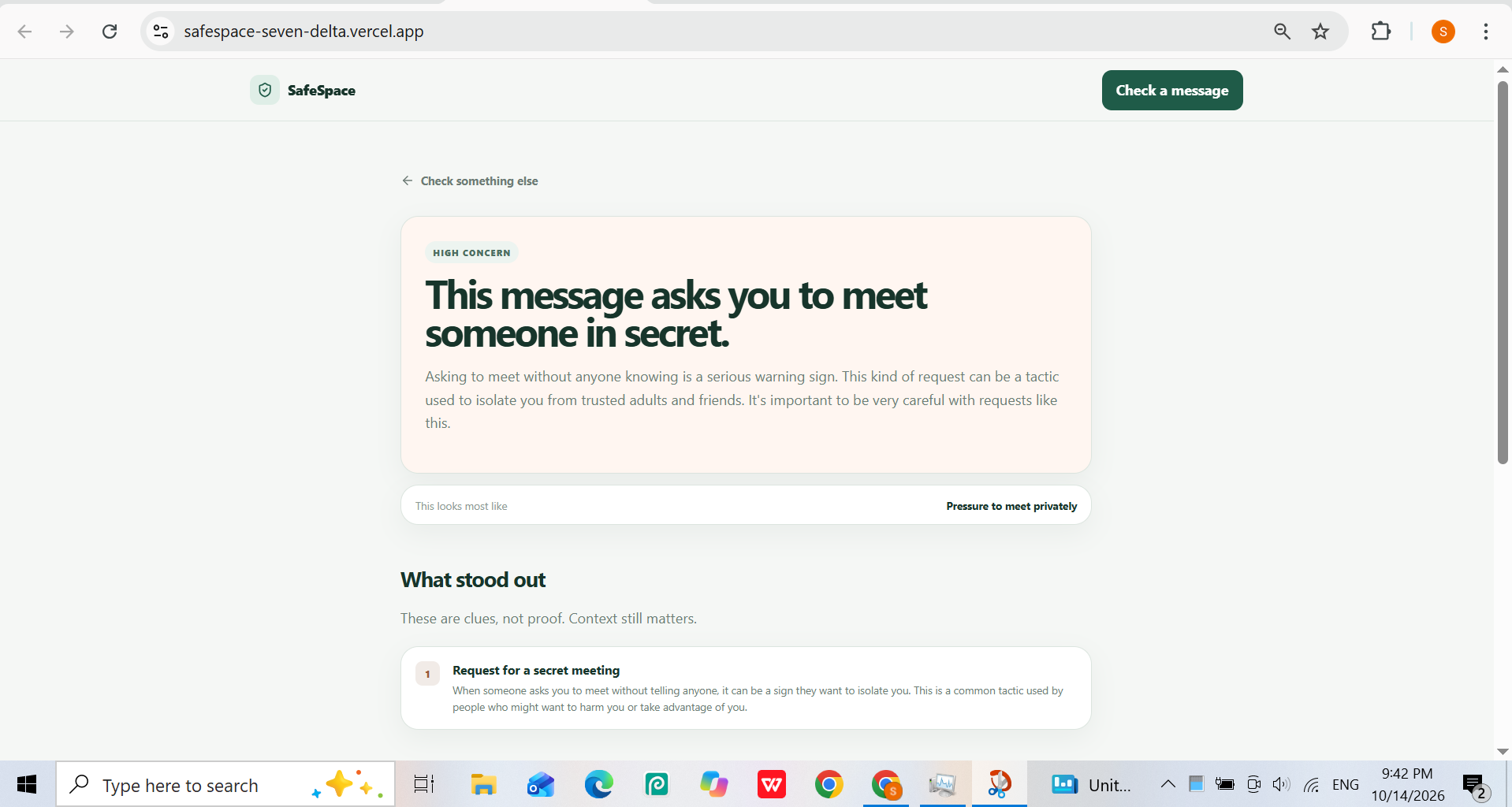
Instead of only giving a simple “safe” or “unsafe” result, SafeSpace explains what stood out in normal language and gives practical suggestions for what the user can do next.
It is meant to be a second opinion, not a replacement for a parent, teacher, counsellor, or another trusted adult.
How we built it
We built SafeSpace with React and Vite for the frontend.
The AI analysis is powered by Google Gemini, which lets us analyse both written messages and uploaded screenshots.
We used a Vercel serverless function for the AI requests so the Gemini API key is not exposed in the browser.
The interface was built with plain CSS because we wanted it to stay simple, lightweight, and easy to understand.
We also decided not to add accounts or a parent activity feed to the MVP because privacy was an important part of the idea from the beginning.
Challenges we ran into
One of the biggest challenges was deciding how much confidence the AI should show.
At first, we experimented with things like danger scores, but we realised that giving someone a number like “88% dangerous” could make the result look more certain than it really is.
We removed that and focused more on explaining what the AI noticed and why it might matter.
Another challenge was making the language feel calm and useful. We did not want SafeSpace to scare someone unnecessarily, but we also did not want it to downplay something serious.
Image uploads were another important challenge because screenshots can contain much more context than a single copied message, so we had to make the analysis work with both text and images.
Accomplishments that we're proud of
We are proud that SafeSpace does more than simply classify content.
It gives users an explanation they can actually understand and suggests realistic next steps.
We are also proud of the privacy approach. SafeSpace does not secretly monitor conversations in the background and does not create a dashboard where every message a child checks is shown to someone else.
The user chooses when they want help and what they want to share.
We also managed to build support for both text and screenshot analysis in one simple experience.
What we learned
We learned that building safety tools is not just about detecting harmful content.
The way the result is presented matters just as much.
An AI safety tool should be careful about sounding too confident, especially when it only sees a small part of a conversation.
We also learned that protecting young people does not always have to mean removing their privacy or independence.
Sometimes the better approach is giving them enough information to recognise a problem and helping them know when to involve someone they trust.
What's next for SafeSpace
The next step would be testing SafeSpace with more real-world examples and improving how it handles different types of conversations.
We would also like to add country-specific safety resources so users can quickly find the right support where they live.
Other future improvements include better scam and deepfake detection, multiple languages, accessibility improvements, stronger abuse protection, and more guidance for parents and educators.
Before SafeSpace could be used as a real child-safety product, we would also want proper safeguarding reviews, stronger privacy protections, and feedback from young people, parents, educators, and child-safety professionals.

Log in or sign up for Devpost to join the conversation.