-
-
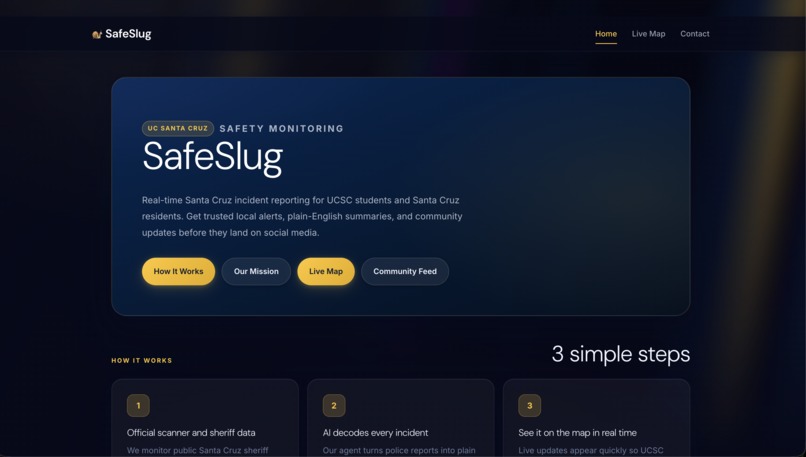
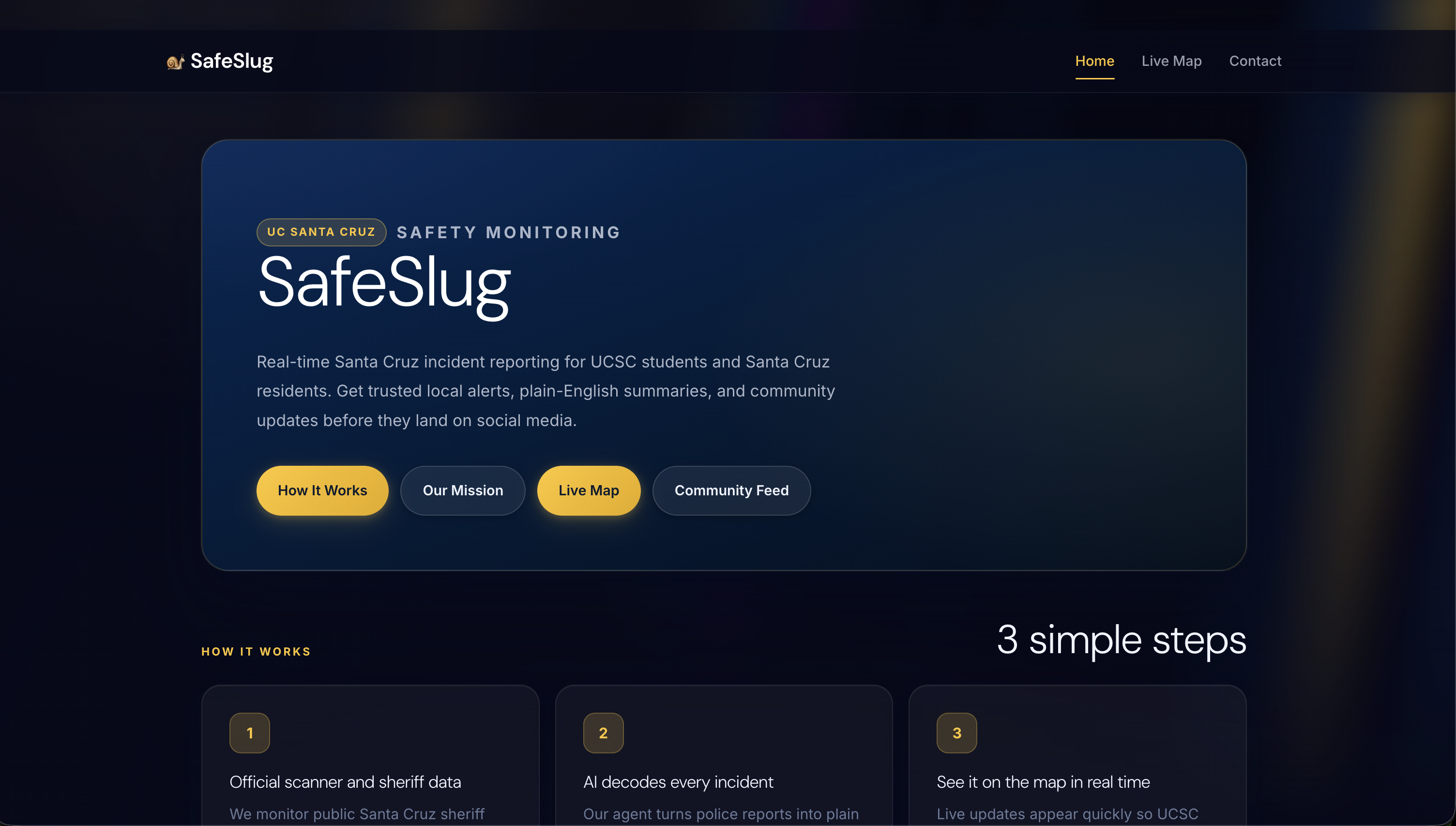
Main landing page
-
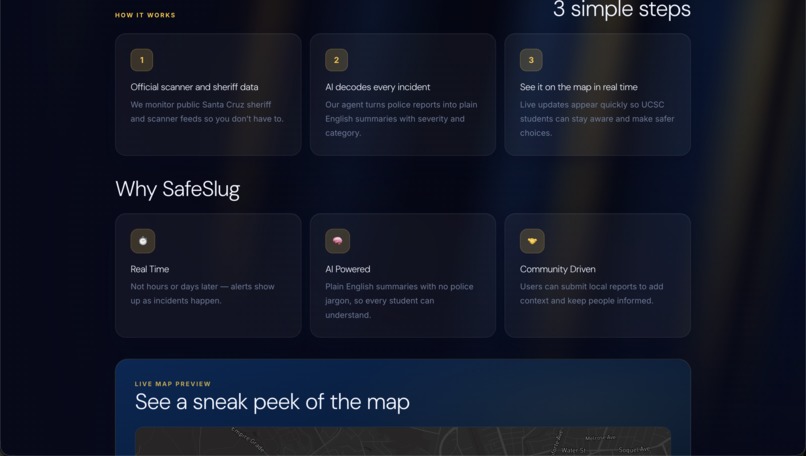
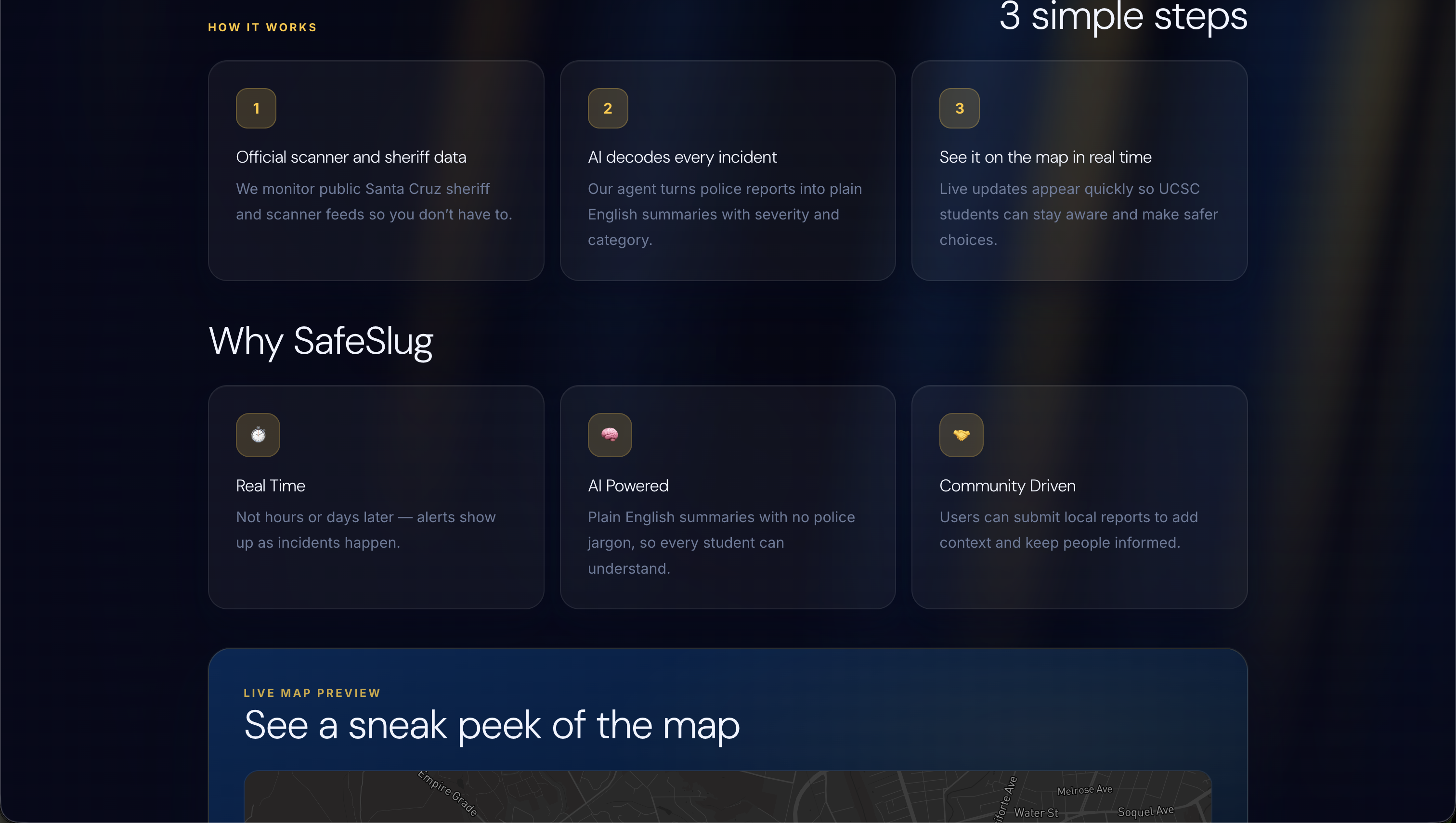
How it works
-
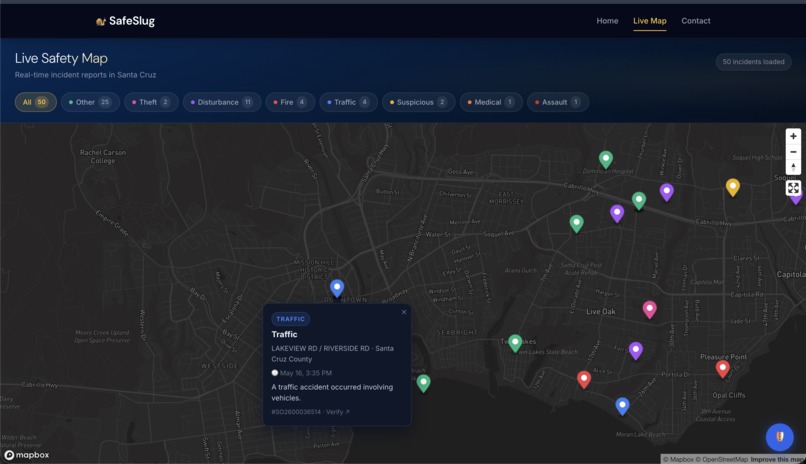
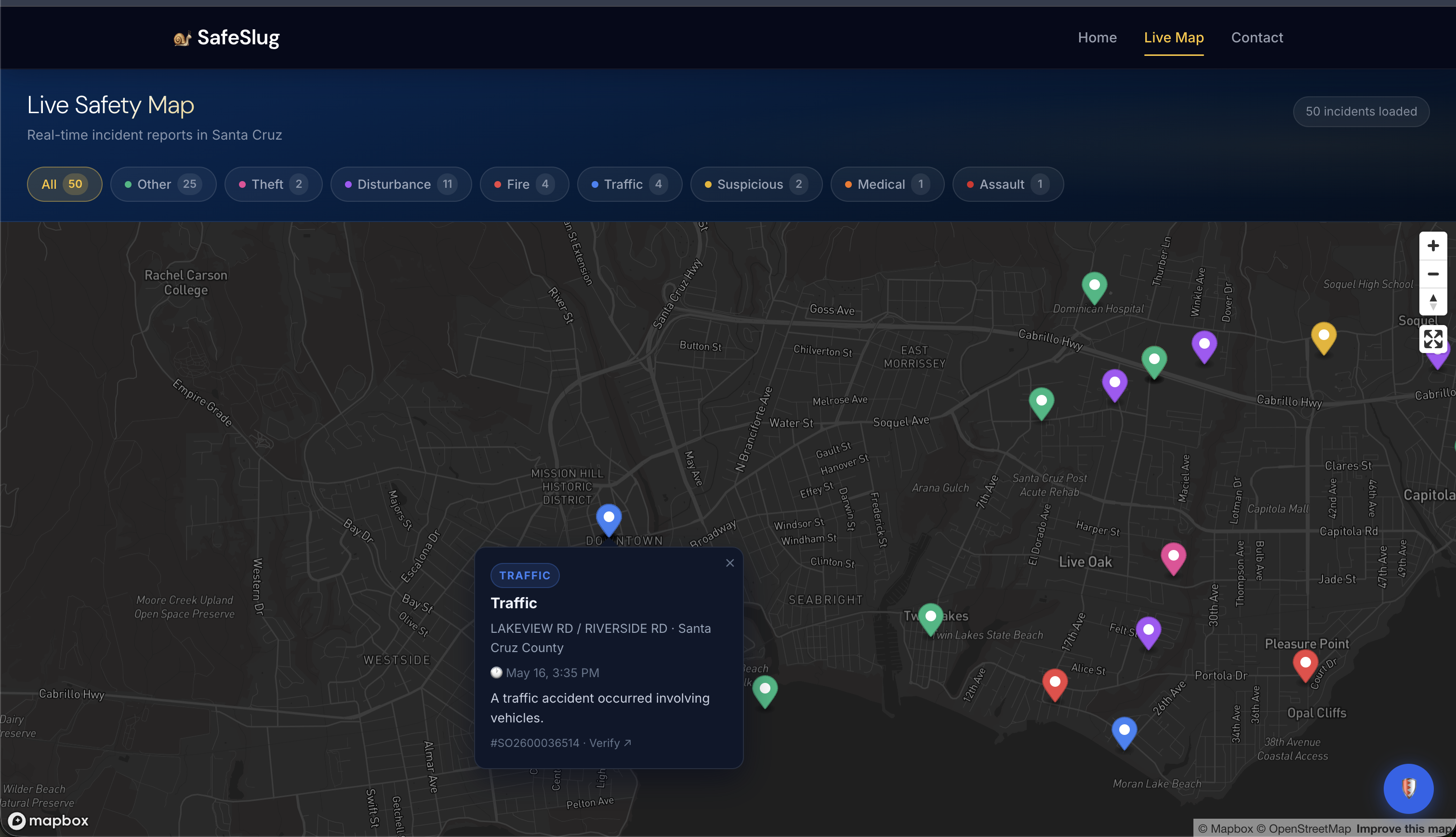
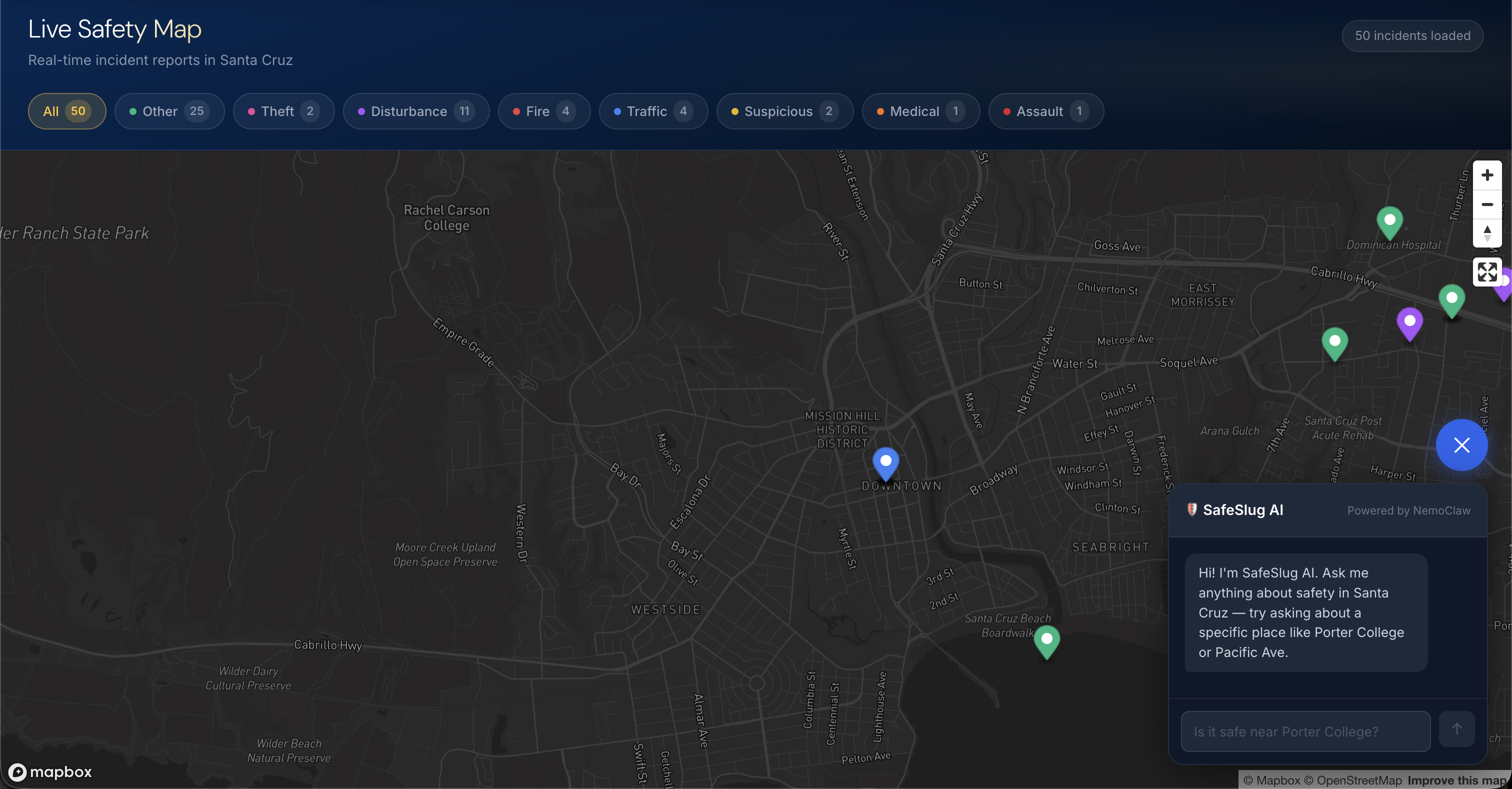
Map view with ems marker
-
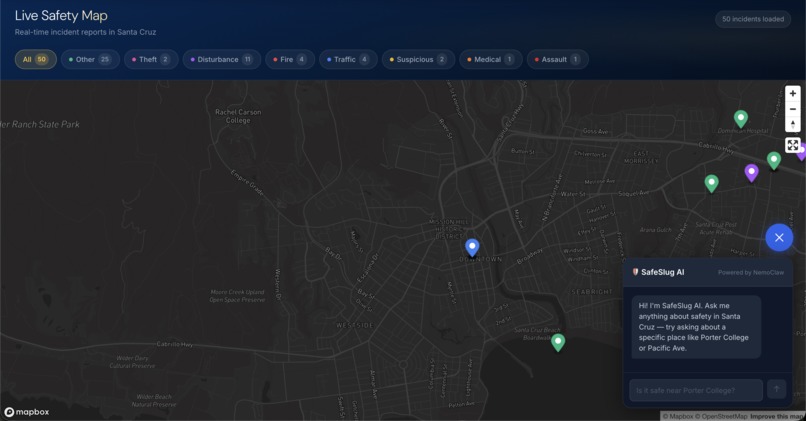
Safeslug AI as
-
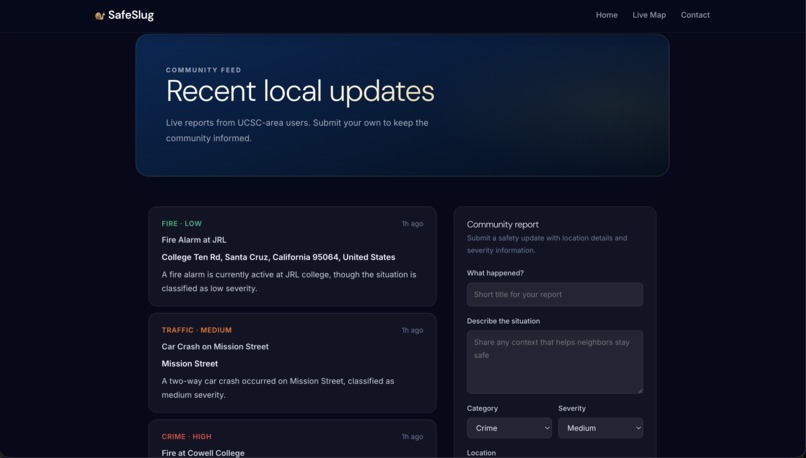
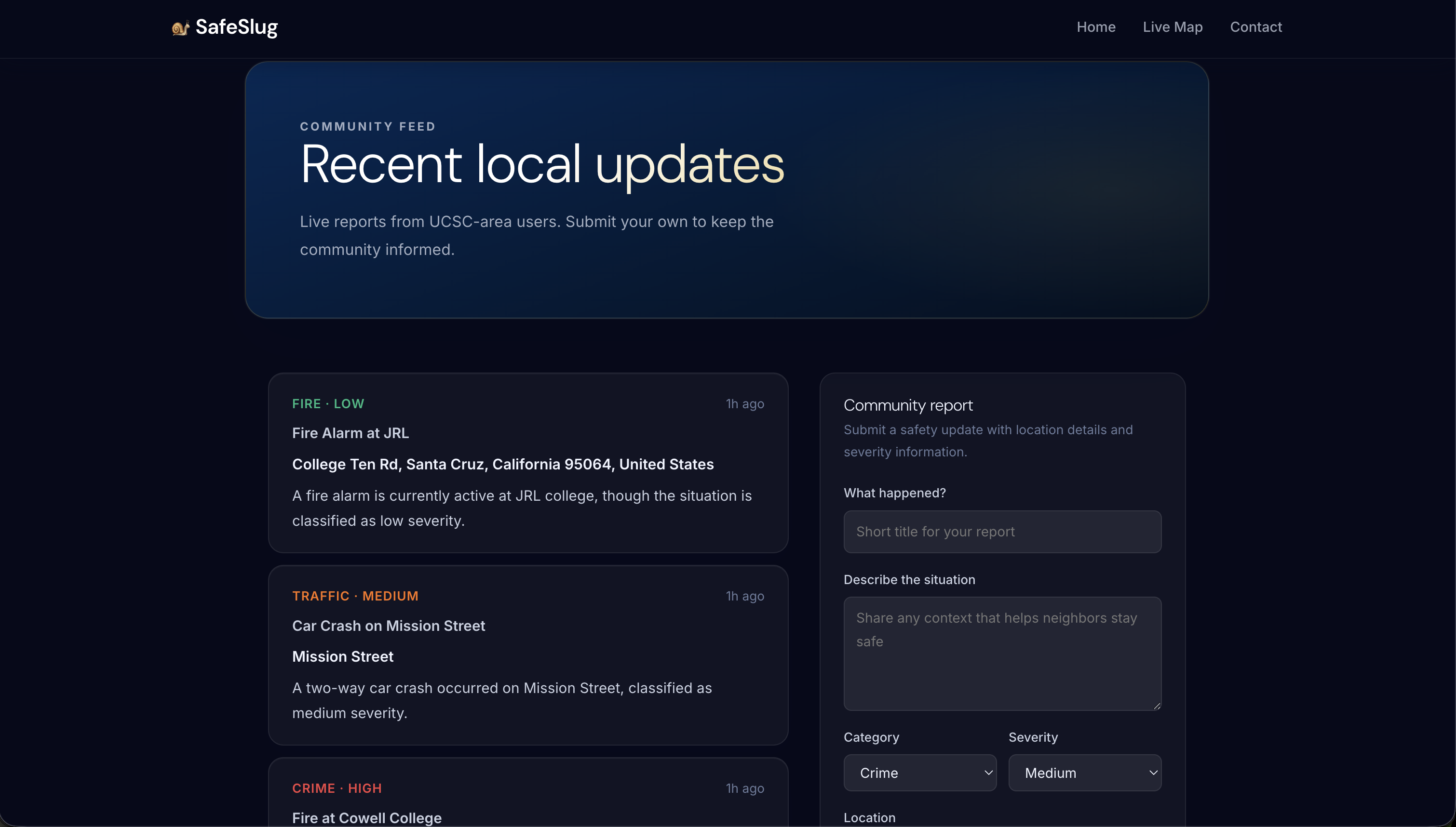
Community feed
Inspiration
SafeSlug started as a way to make local public safety information easier to understand and more accessible for the UCSC and Santa Cruz community. We wanted to reduce the gap between raw incident feeds, scanner-style updates, and the plain-English information that people actually need in an emergency or when staying informed about their neighborhood.
What it does
SafeSlug displays live Santa Cruz incident activity in a clean, community-focused web app. It shows recent calls, maps activity, and turns raw incident text into short summaries with severity, category, and an emoji indicator. It also includes a community feed and a responsive interface for browsing updates on both desktop and mobile.
How we built it
We built SafeSlug with React and Vite on the frontend, and used Supabase as the backend database and realtime layer. The app pulls incident data into Supabase, enriches it with geocoding, and uses a NemoClaw-backed summarization step to translate raw incident text into clearer language. We also built reusable components for the live map, incident cards, navigation, and report/community sections to keep the UI modular and maintainable.
Challenges we ran into
One of the biggest challenges was connecting several moving parts into one smooth data flow: scraping, enrichment, summarization, storage, and display. We also had to make sure the app stayed fast and readable while handling live data, and we spent time tuning the interface so it felt polished instead of overwhelming. Another challenge was keeping the backend configuration organized while working with external services and environment variables.
Accomplishments that we're proud of
We’re proud that SafeSlug turns messy public safety data into something much easier to use. The app combines live incident tracking, map visualization, AI summarization, and a community-friendly design into one project. We also built it in a way that can grow into a more complete local alert platform.
What we learned
We learned how much value comes from good data presentation, not just data collection. We also learned how to connect frontend components, backend syncing, and external APIs into a single workflow. Working on SafeSlug taught us more about realtime updates, geocoding, environment-based configuration, and building a product that is both useful and understandable.
What's next for SafeSlug
Next, we’d like to improve the accuracy and reliability of incident enrichment, add better filtering and search, and make the map and feed even more interactive. We’d also like to strengthen the backend pipeline, improve persistence, and expand the app into a more complete local safety dashboard with alerts, history, and better community reporting.
Built With
- nemoclaw
- openclaw
- react
- supabase

Log in or sign up for Devpost to join the conversation.