-
-
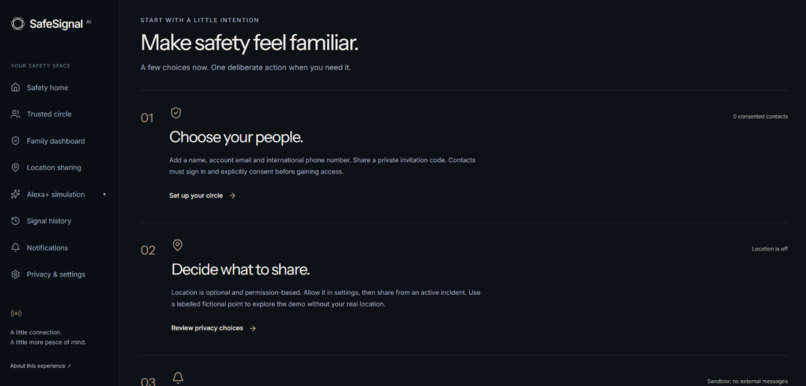
Safety dashboard
-
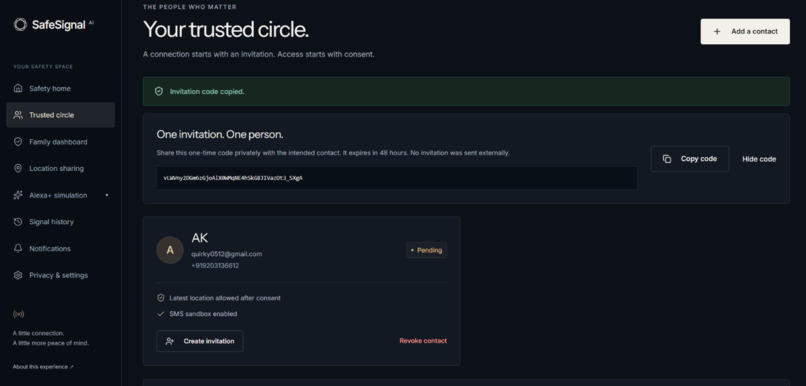
Trusted Circle - to add contacts
-
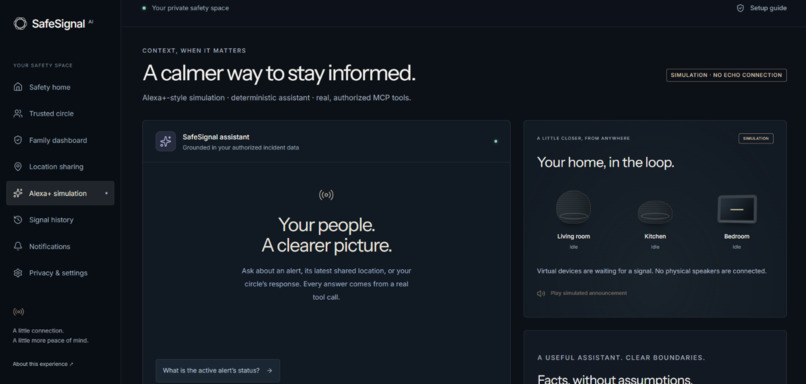
Simulation of Alexa+ devices
-
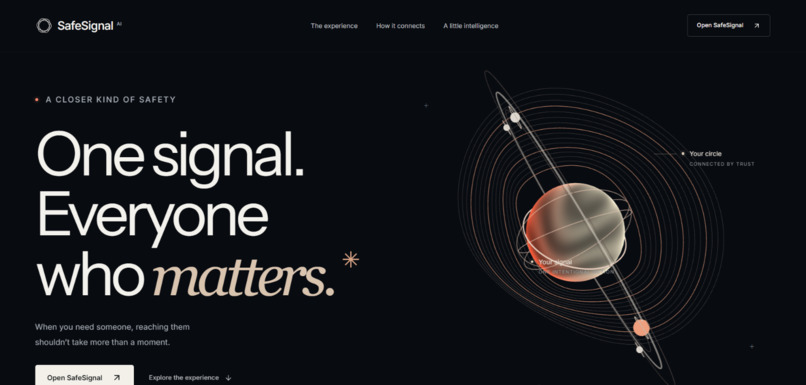
3D homepage
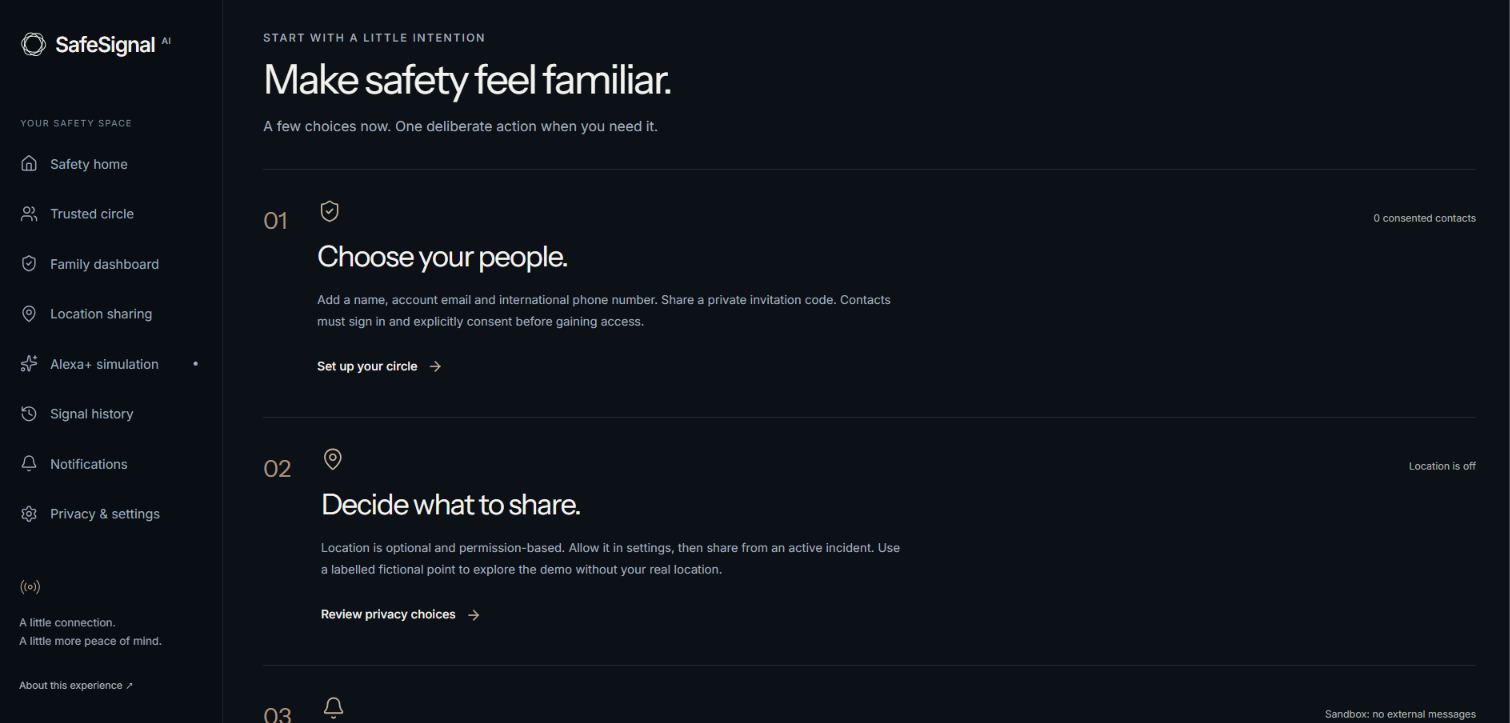
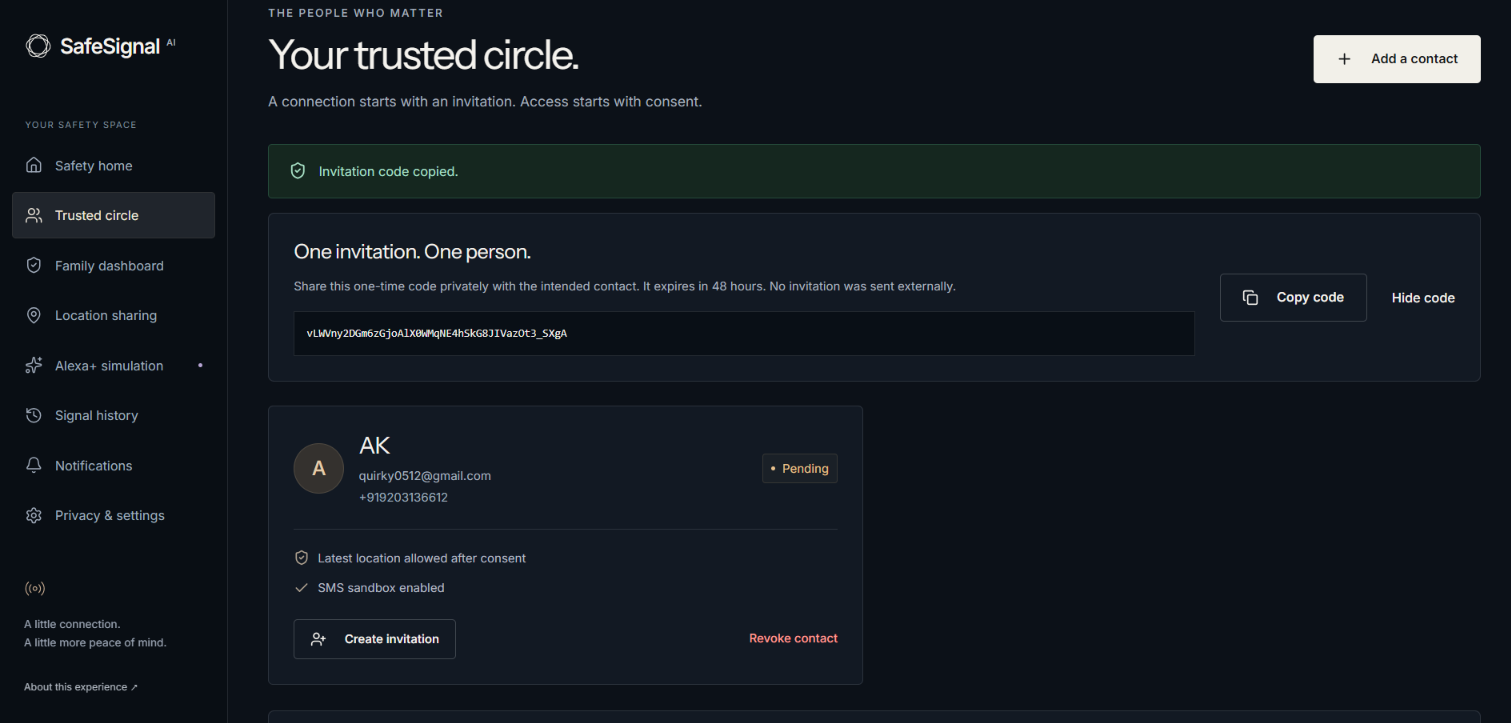
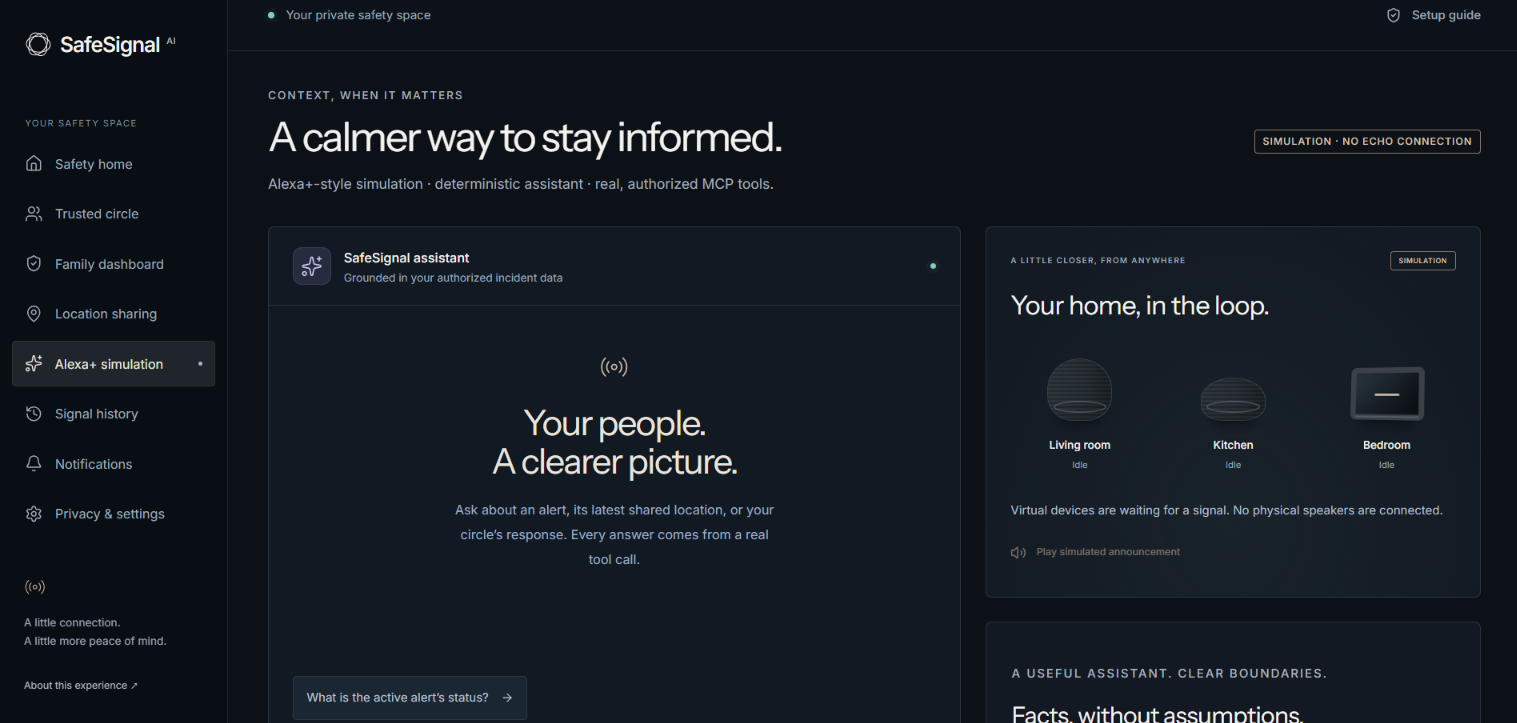
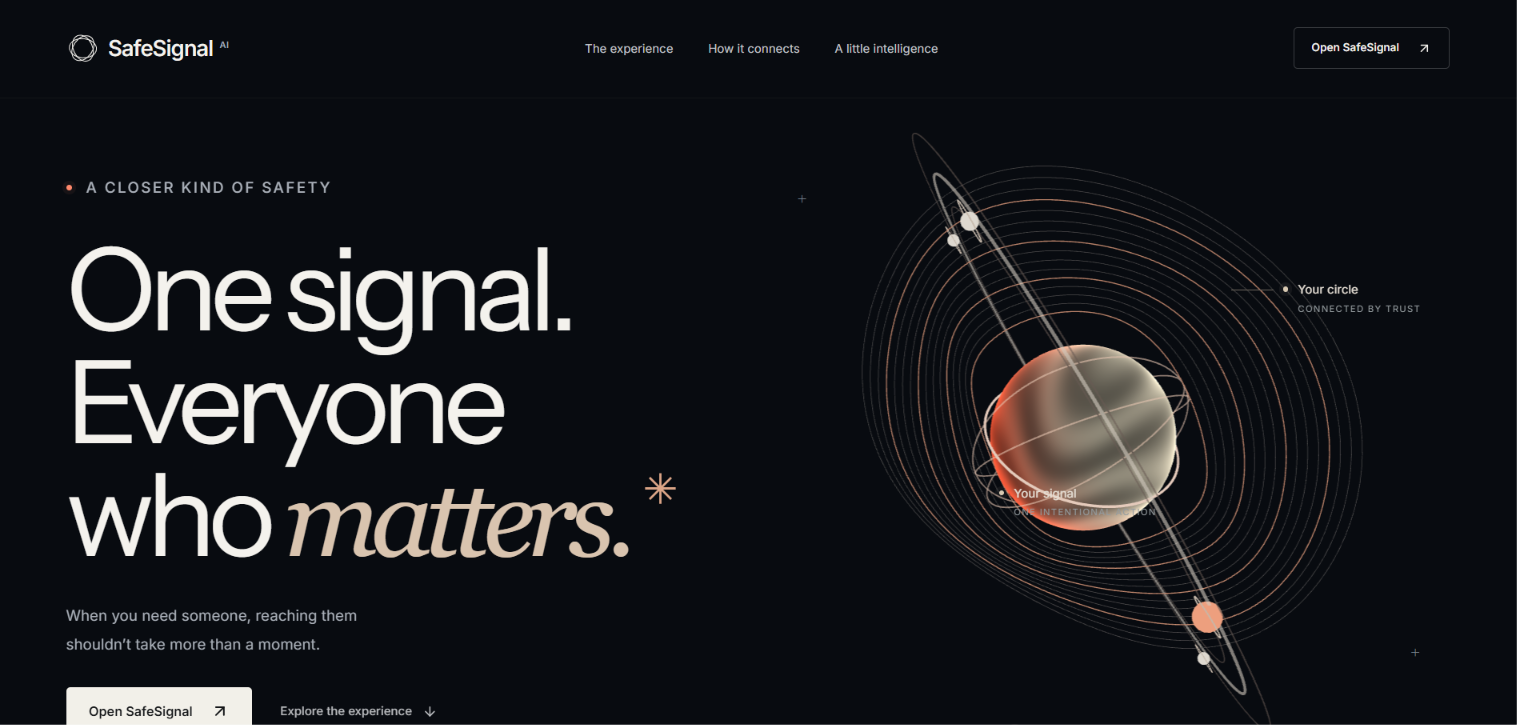
Inspiration
Imagine walking alone at night and suddenly feeling unsafe. You need to contact your family, share your location and make sure someone notices your warning. But doing all this manually takes a lot of time, attention and multiple interactions - exactly what you may not have in such a situation, or even your phone gets discharged. So, what if one signal could connect everyone who matters? This led to the idea of SafeSignal AI.
What it does
SafeSignal transforms one deliberate SOS action into a coordinated safety alert workflow. It coordinates one action SOS activation, trusted contact notifications, location continuity, and Alexa+ conversational experience. It is a personal safety communication platform designed to make reaching trusted people simpler, faster, and more coordinated.
How we built it
We built the application with React 19, TypeScript, Vite, Motion, Three.js and custom graphics. We implemented persistent incidents, transactional state changes, idempotency protection, secure sessions, contact invitations, acknowledgment workflows, location persistence, and a durable notification outbox. This architecture keeps incident creation separate from notification delivery and AI execution. Our primary hackathon integration uses the official Python MCP SDK 1.29.0 with Streamable HTTP and protocol version 2025-11-25. We implemented eight working MCP tools for retrieving incidents, checking location freshness, inspecting notifications, retrieving acknowledgments, viewing timelines, preparing factual summaries, and performing explicitly authorized acknowledgment actions. The simulated Alexa+ client performs actual: initialize -> tools/list -> tools/call These protocol exchanges were verified against server audit records. The assistant is a deterministic tool-based experience, not a claimed connection to physical Echo devices or a generative model.
Challenges we ran into
- Making the system reliable without depending on AI
- Preserving location information after disconnection
- Securing sensitive location information
- Building an authentic MCP experience
- Balancing immersive visuals with performance
Accomplishments that we're proud of
- A functional SOS-to-family-acknowledgment workflow
- Persistent last-known-location handling during simulated disconnection
- Eight real MCP tools with authorization enforcement
- An Alexa+-style assistant grounded in actual backend records
- A premium interactive 3D website
- A repeatable fictional-data demonstration
- Automated testing across backend, frontend, and browser workflows
What we learned
We learned how to build agentic experiences around verifiable tools, how to enforce shared authorization across REST and MCP, and how to balance interactive creative technology with usability and accessibility.
What's next for SafeSignal AI
Our long-term vision is to develop SafeSignal into a reliable, consent-based safety communication network spanning phones, wearables, trusted households, and compatible voice-enabled devices.
Built With
- fastapi
- http
- motion
- openapi
- pydantic
- python
- react
- typescript
- vite
