-
-
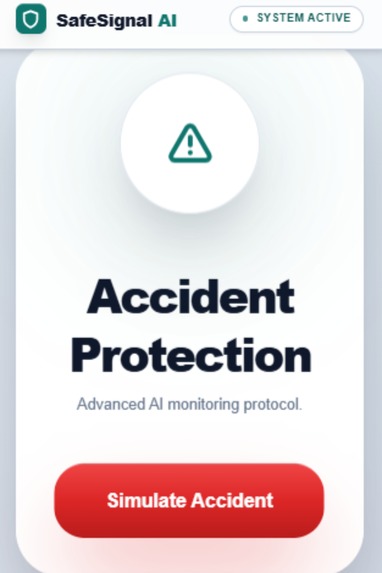
Main dashboard where SafeSignal AI monitors safety and allows users to simulate an accident to trigger the emergency workflow
-
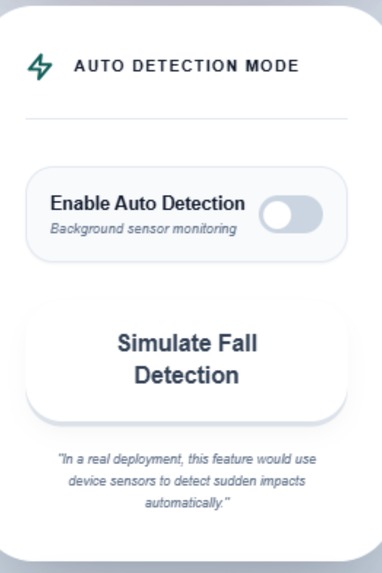
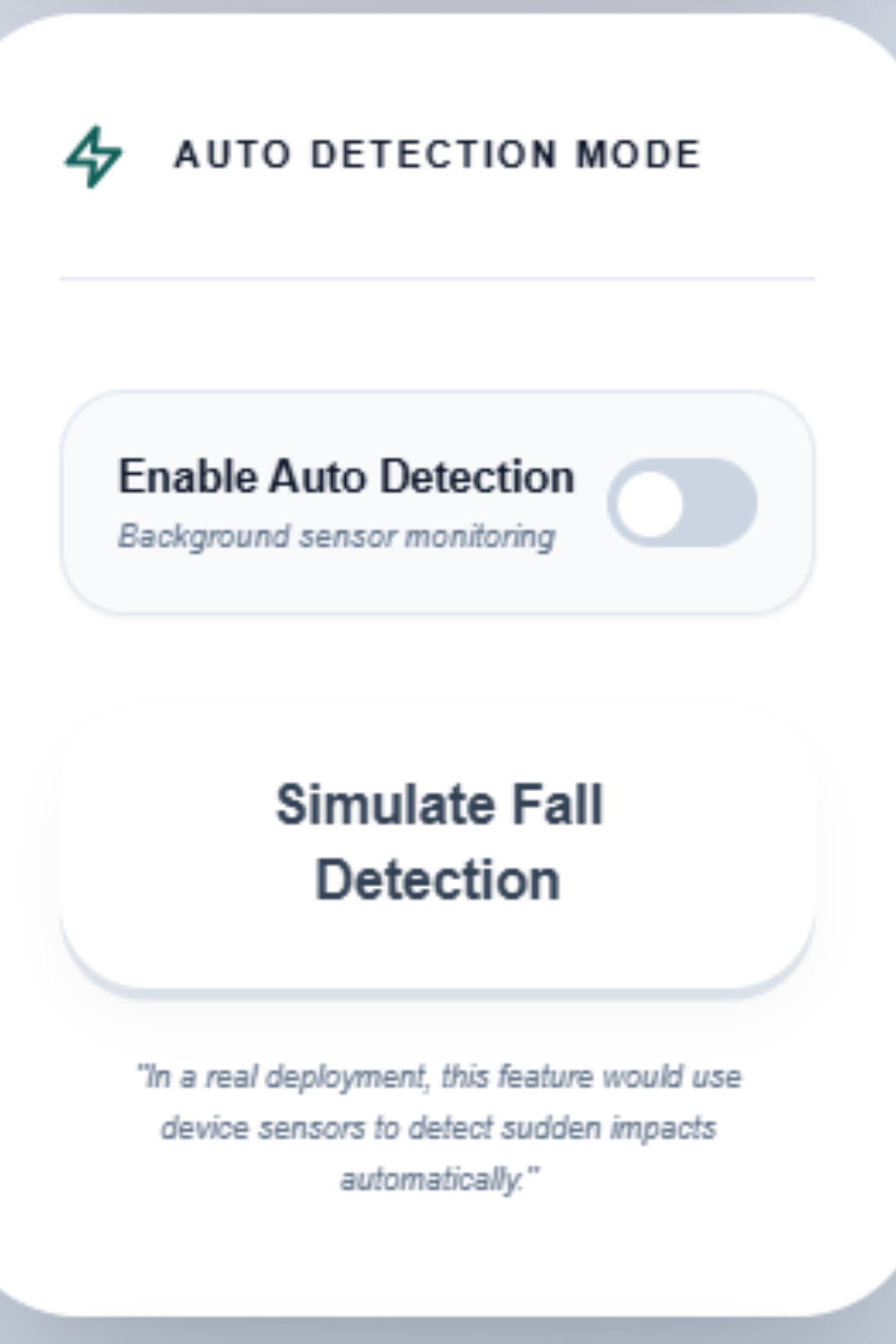
Auto Detection Mode simulates sensor-based accident detection, demonstrating how the system can trigger safety checks automatically.
-
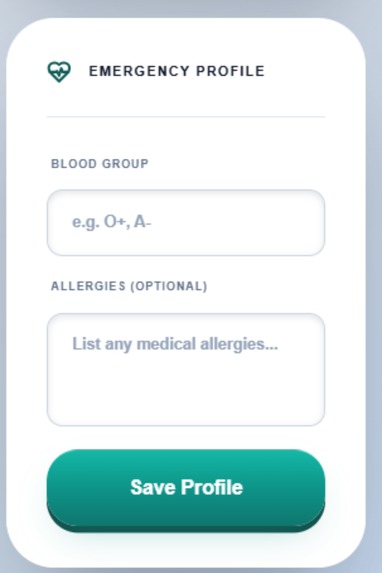
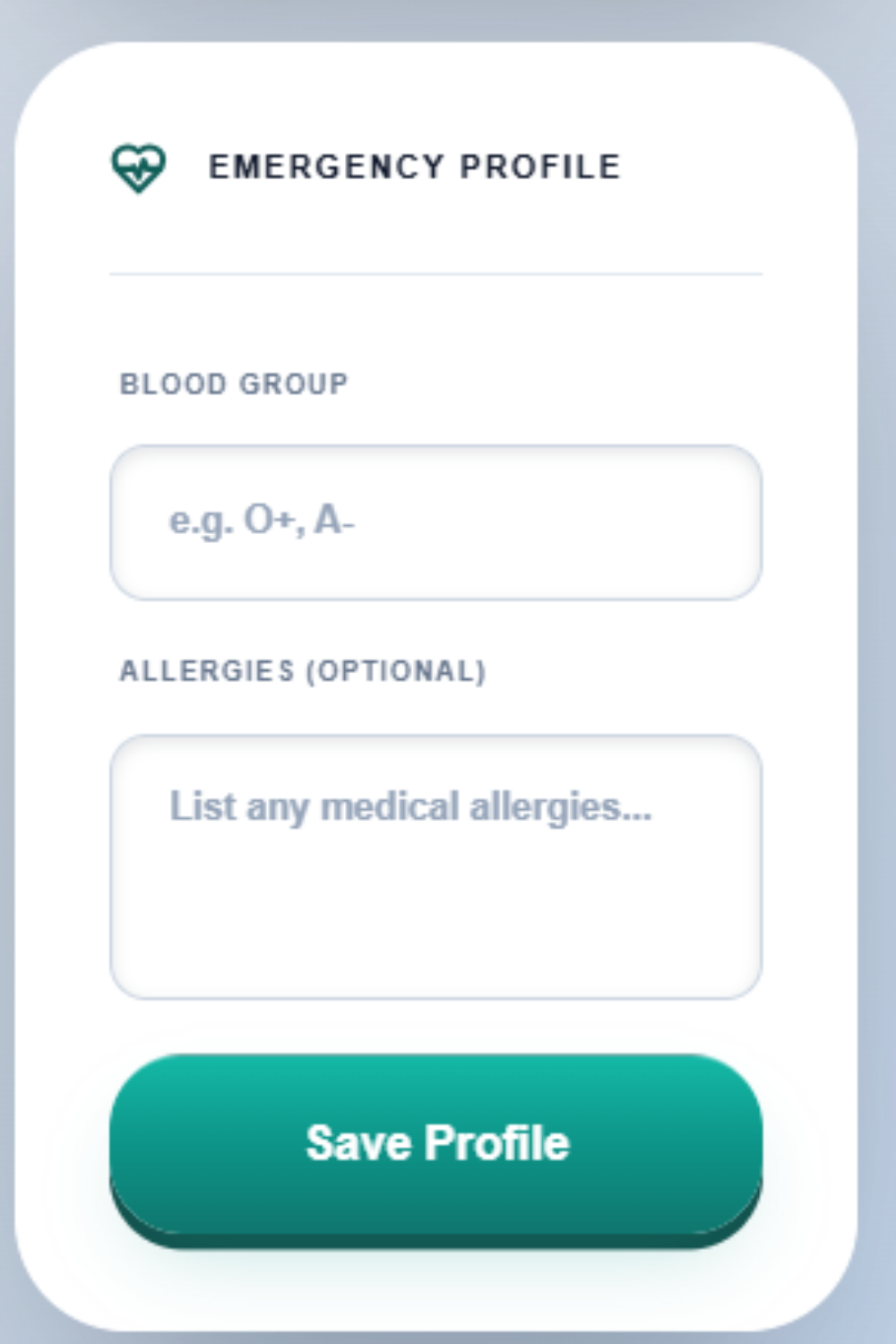
Emergency profile section where users store medical details such as blood group and allergies for faster response in critical situations.
Inspiration
In many accident situations, victims are unable to call for help or clearly communicate their condition. Delays in emergency response often worsen injuries and reduce survival chances. Traditional emergency tools depend on manual interaction and provide limited context, slowing down response and decision-making during critical moments.
This inspired us to design a system that could automatically check a user's safety, understand their condition, and send structured alerts without requiring complex interaction during stressful moments.
What it does
SafeSignal AI is an intelligent emergency response assistant that performs automatic safety checks after a potential accident. The system asks the user to confirm their safety using voice or text input. If no response is received within a defined time, the system automatically escalates the situation and generates a structured emergency alert.
The application also provides:
- Emergency contact profiles
- Medical information sharing
- Incident logs and emergency status tracking
- Rescue Mode for first-aid guidance
- Calm Mode for reassurance while help is on the way
- Countdown-based safety confirmation and escalation
This workflow helps reduce response time and improve emergency communication.
How we built it
The prototype was built using Google AI Studio and Gemini AI. The user interface was designed to simulate a real mobile emergency workflow with a focus on clarity, speed, and accessibility.
Gemini AI is used to:
- Analyze user voice and text input
- Assess emergency severity
- Generate professional alert messages
- Provide short first-aid guidance
- Create real-time incident summaries
The system combines AI-based analysis with predefined safety thresholds to ensure conservative and reliable decision-making.
Challenges we ran into
One of the main challenges was designing a user interface that remains clear and usable during stressful emergency situations. Another challenge was simulating realistic emergency workflows, including countdown timers, escalation logic, and structured alerts.
Handling voice input and creating a smooth, responsive prototype within browser-based constraints was also a technical challenge.
Accomplishments that we're proud of
We successfully built a working prototype that demonstrates a complete emergency response workflow from detection to escalation and guidance.
We are especially proud of:
- A clean and realistic emergency interface
- AI-generated alerts and guidance
- Rescue Mode and Calm Mode features
- A structured emergency workflow rather than a simple panic button
This prototype demonstrates how AI can be used responsibly in safety-critical scenarios.
What we learned
Through this project, we learned how AI can be integrated into real-world safety workflows. We also learned the importance of combining AI decisions with rule-based safeguards, designing for high-stress scenarios, and presenting technical solutions clearly for real-world impact.
What's next for SafeSignal AI – Intelligent Emergency Response Assistant
In future versions, SafeSignal AI can integrate device sensors such as accelerometers and gyroscopes to automatically detect falls or crashes and trigger the safety-check workflow without user interaction.
We also plan to explore:
- Offline emergency fallback options
- SMS-based alert systems
- Wearable device integration
- Validation with emergency responders and healthcare professionals
Our long-term goal is to develop SafeSignal AI into a reliable and scalable emergency assistance platform that helps reduce response time and improve outcomes in critical situations.
SafeSignal AI is designed to demonstrate how responsible AI and thoughtful user experience can work together to improve real-world emergency response.

Log in or sign up for Devpost to join the conversation.