-
-
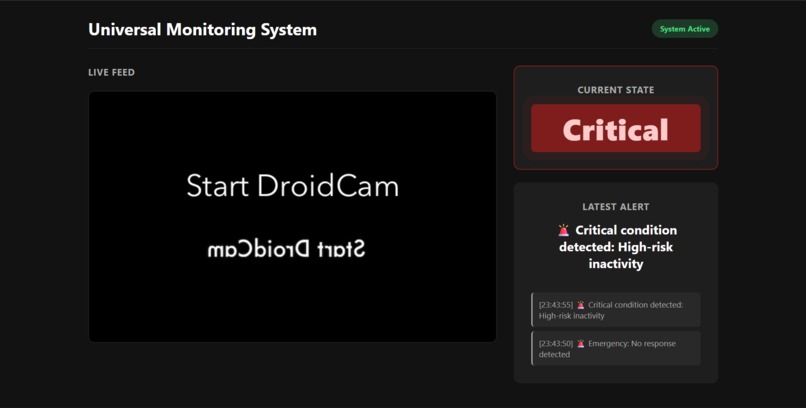
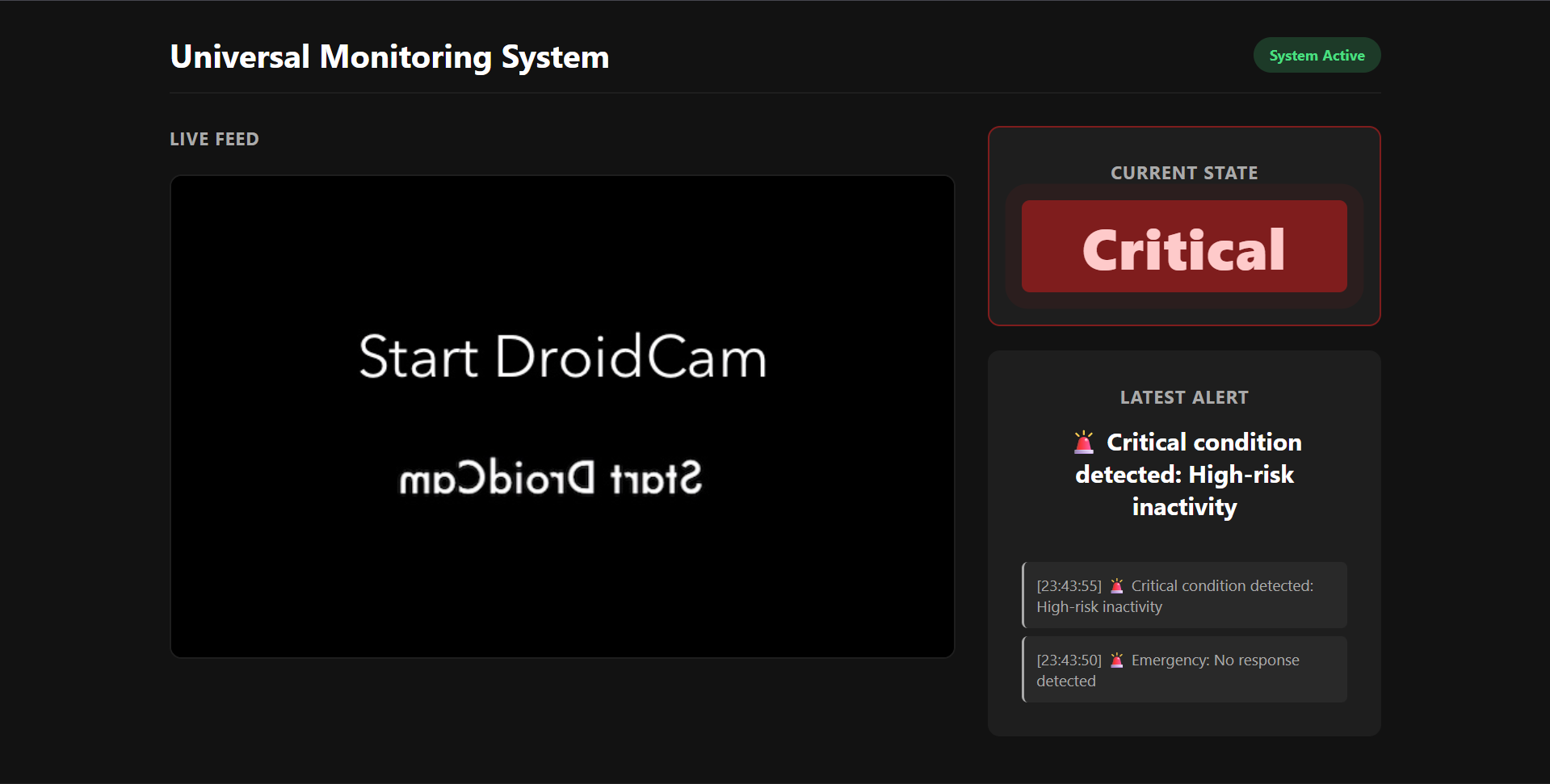
Dashboard
-
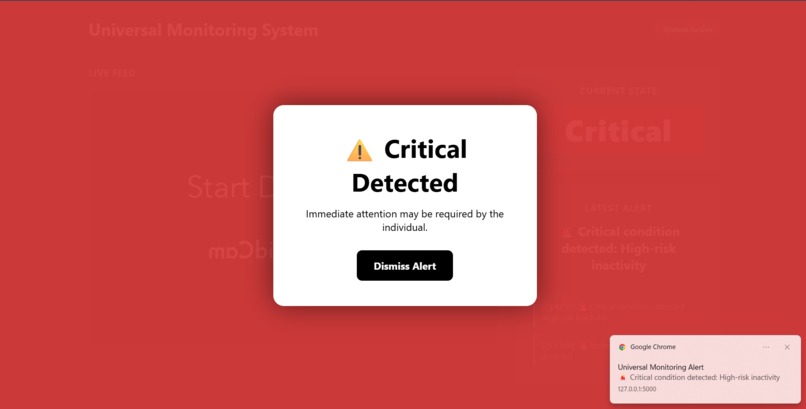
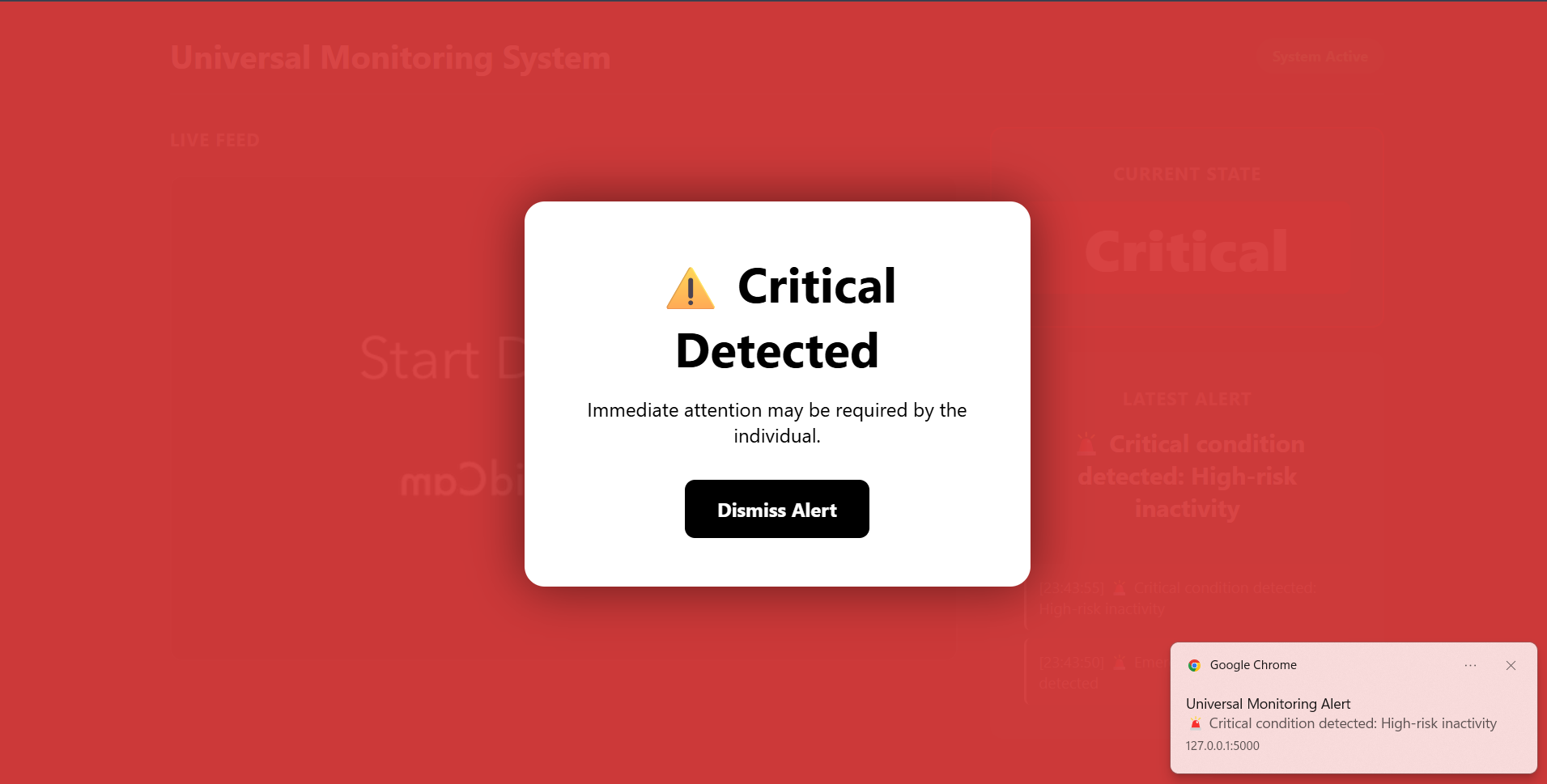
Alert
🚀 Inspiration
Initially, we built SafeSign for ICU patients who cannot communicate easily.
But we realized this problem exists everywhere — post-surgery rooms, elderly homes, and even people living alone.
So we expanded it into a universal human monitoring system.
💡 What it does
SafeSign monitors a person in real time using AI and detects:
- Distress (gesture, facial expression)
- Activity (eye blink, movement)
- Unresponsive state
- Critical conditions (fall or long inactivity)
It then sends instant alerts using:
- Browser notifications (demo)
- Telegram alerts (implemented)
- SMS (extendable via Twilio)
🌍 Real-world scenarios
- ICU: patient tries to signal but cannot speak
- Post-surgery: detecting when patient regains consciousness
- Elderly care: fall detection when no one is around
- Home: monitoring people living alone
⚙️ How we built it
- OpenCV for real-time video processing
- MediaPipe for face, hand, and movement detection
- Python backend with Flask
- Telegram Bot API for alerts
- Simple web dashboard for monitoring
⚠️ Challenges
- Handling real-time detection without lag
- Reducing false alerts
- Making system universal instead of ICU-specific
- Designing simple but effective alert system
🧠 What we learned
- AI should solve real-world problems, not just demos
- Simplicity is important in emergency systems
- End-to-end integration (AI + alerts + UI) matters
🔮 What's next
- WhatsApp alerts
- Edge deployment (CCTV / Raspberry Pi)
- Multi-person monitoring
- Improved accuracy using deep learning

Log in or sign up for Devpost to join the conversation.