-
-
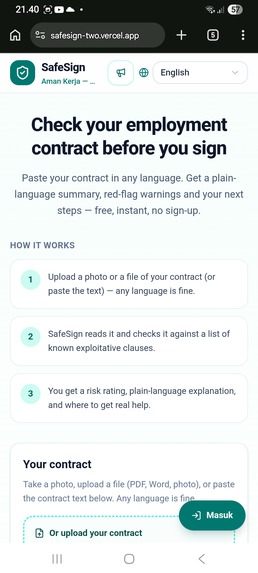
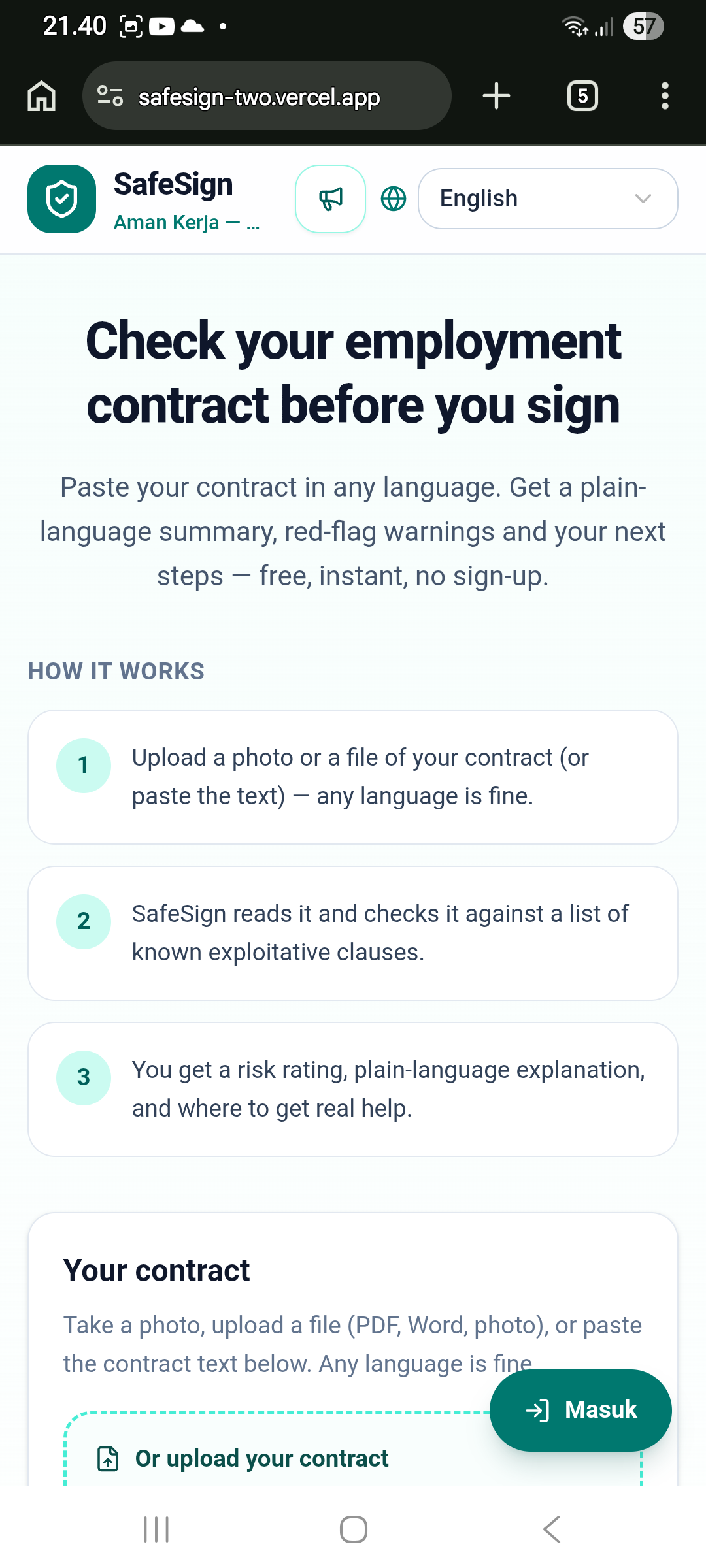
SafeSign landing page explaining core features and a simple 3-step process to analyze employment contracts instantly.
-
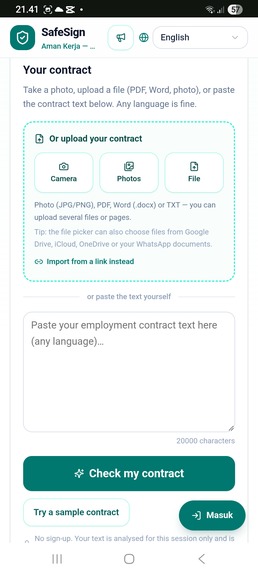
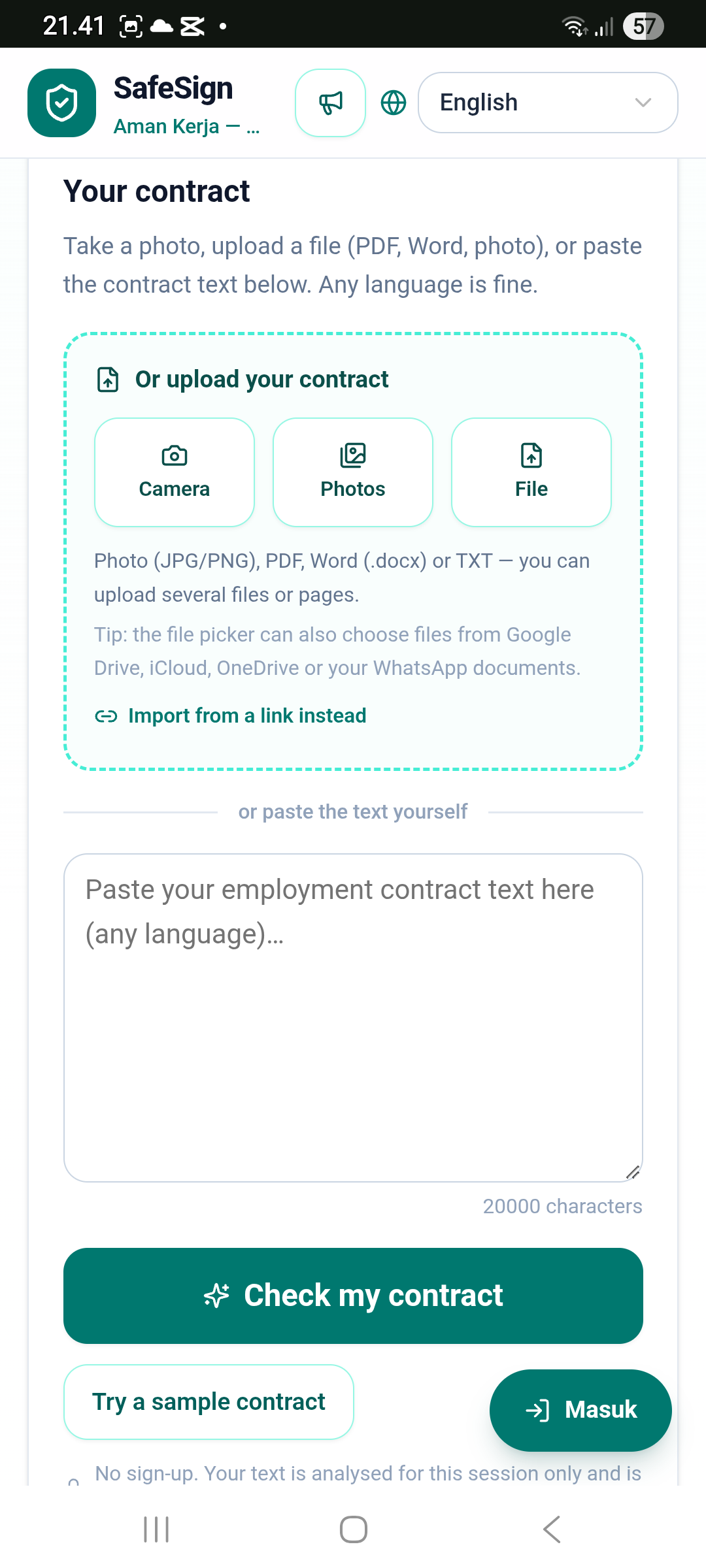
Easy contract input interface supporting PDF, image upload, or direct text paste in any language.
-
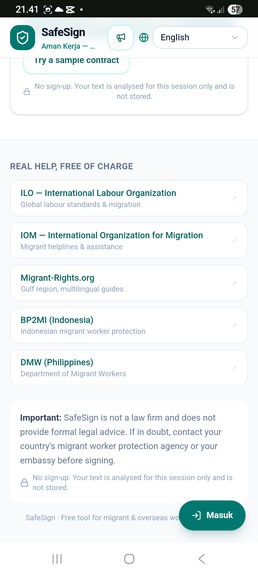
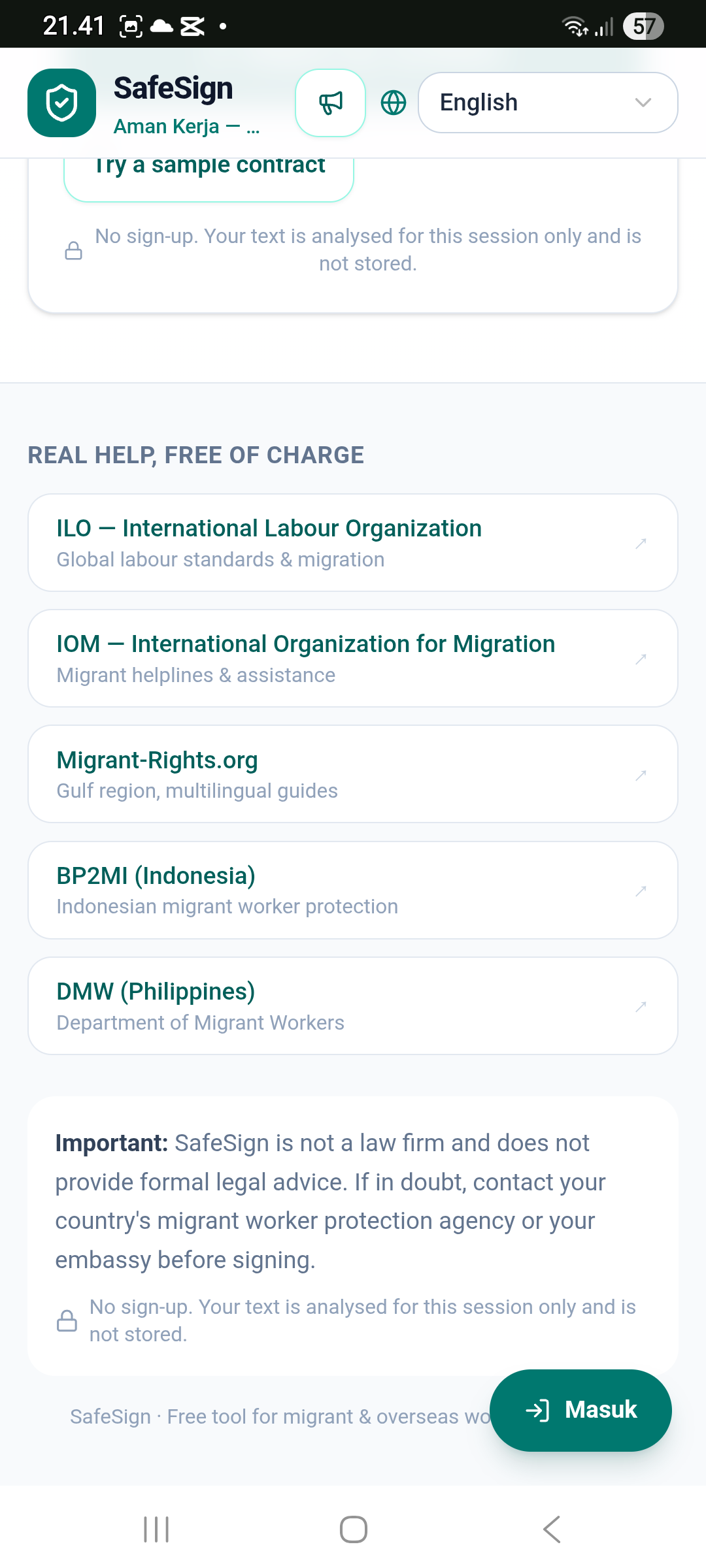
Direct access to trusted global & national migrant protection organizations (ILO, BP2MI, DMW) for real help.
-
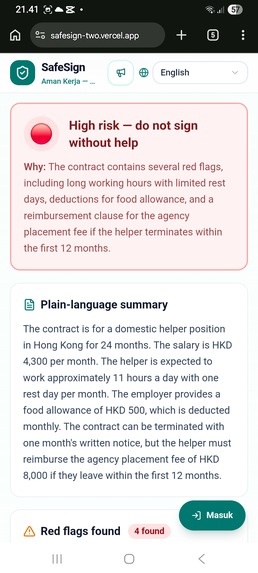
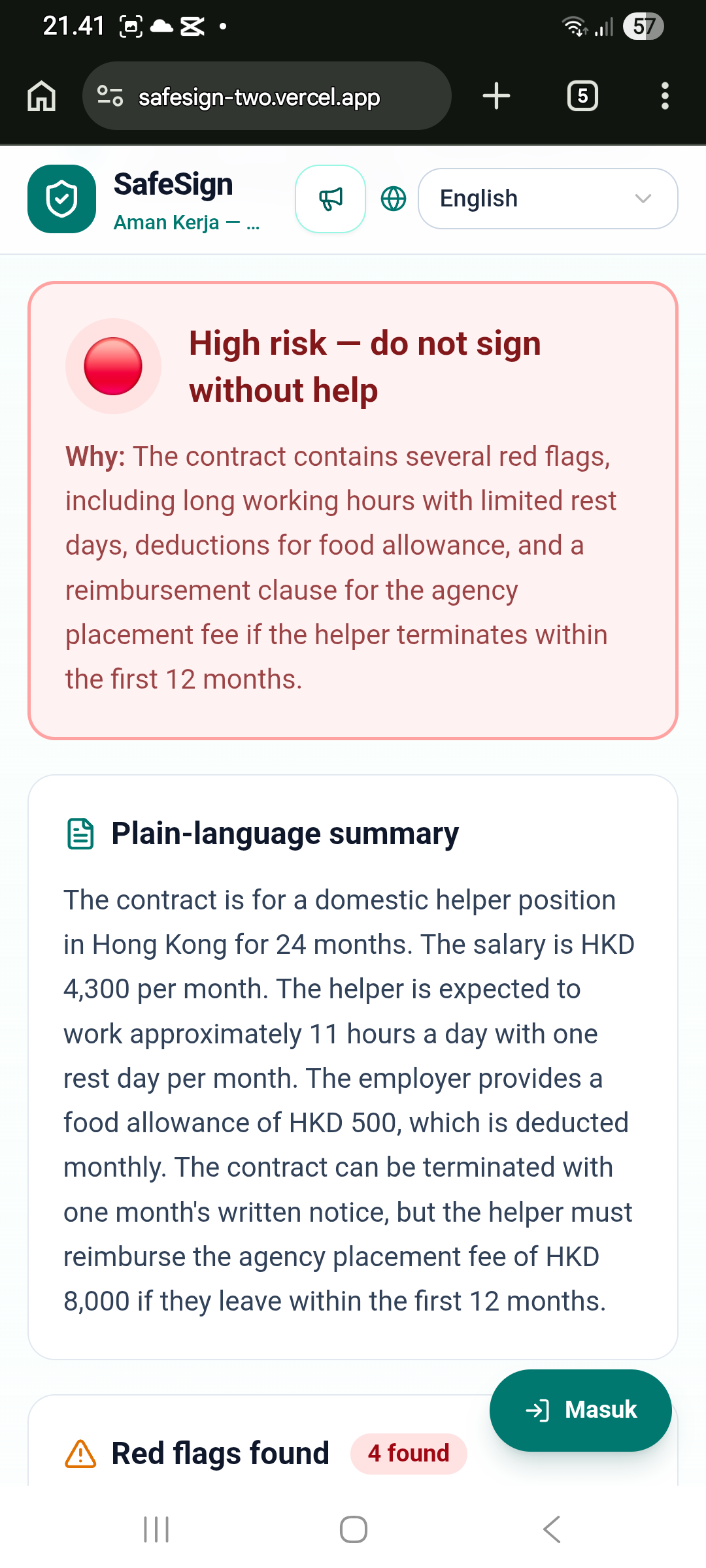
Instant risk detection, plain-language summary, and critical red flags highlight for employment contracts.
-
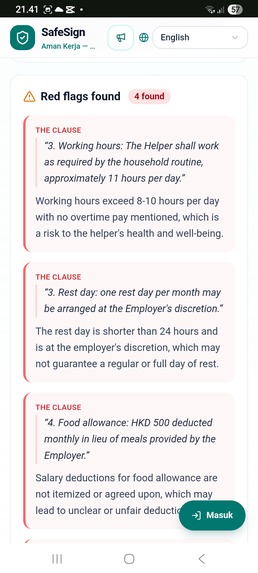
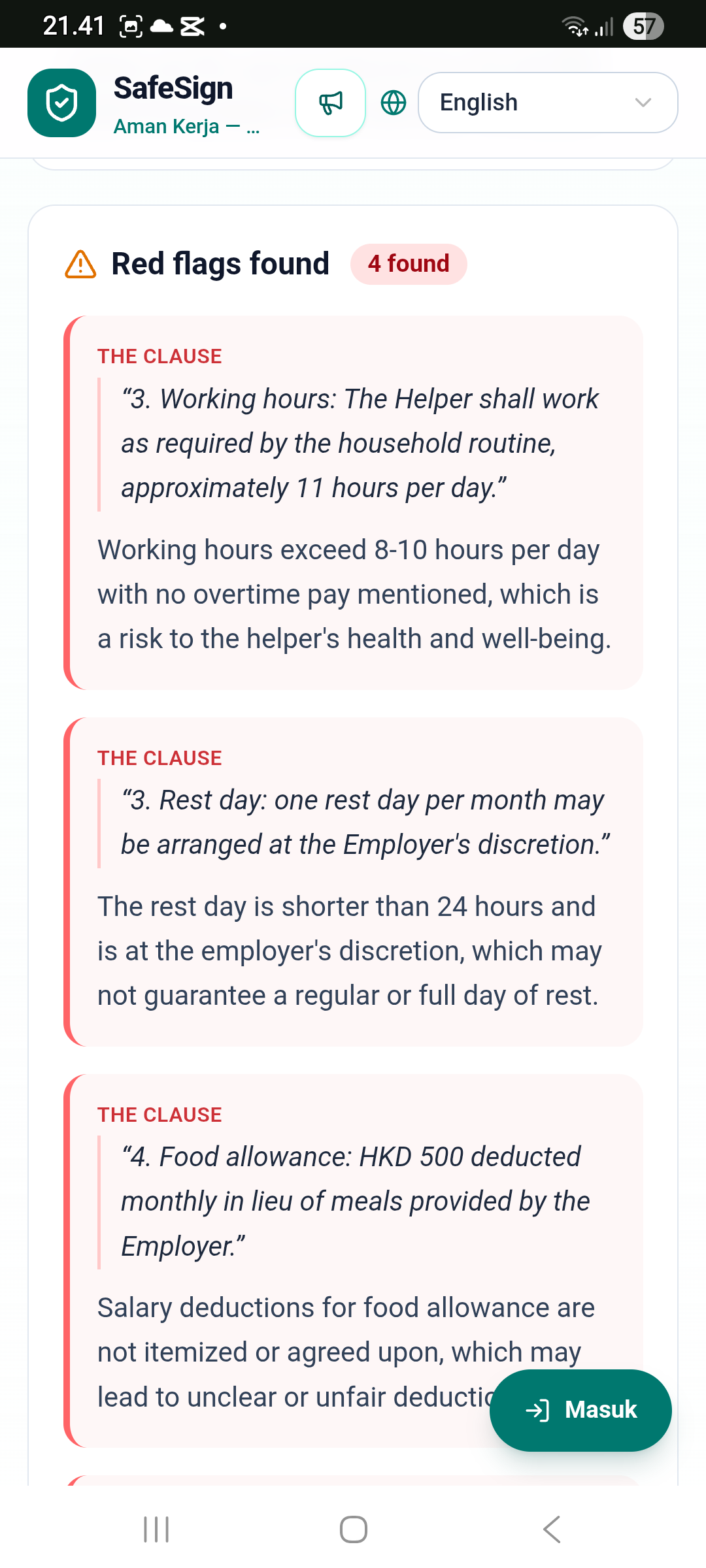
Detailed breakdown of unfair clauses (working hours, deductions) with actionable guidance for workers.
-
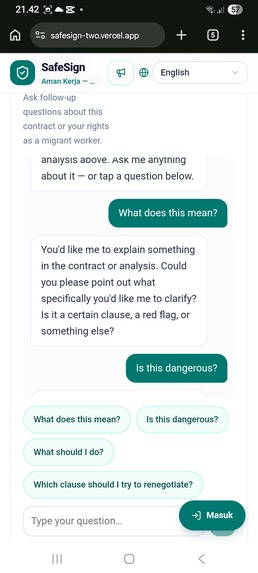
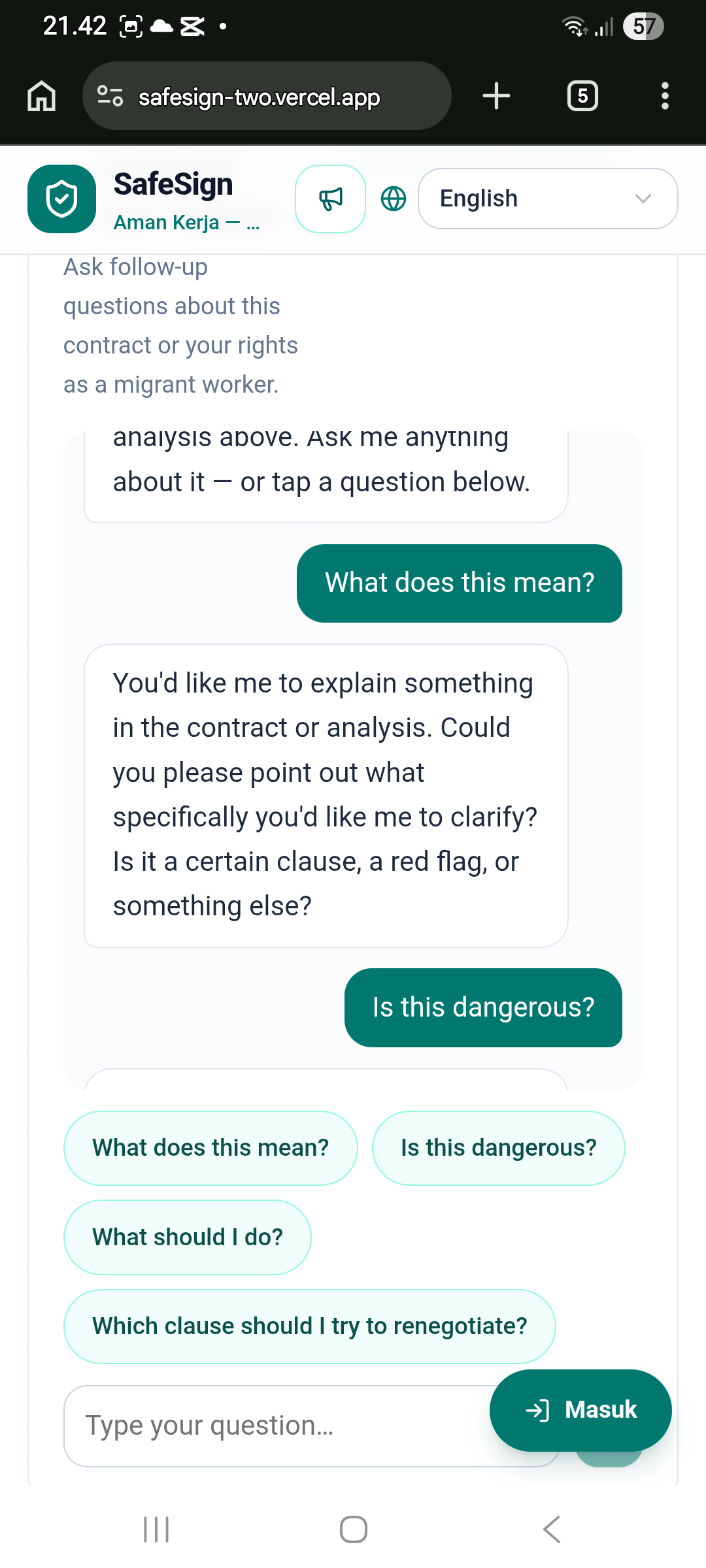
Interactive AI chat assistant for follow-up questions and instant clarification on contract rights.
Inspiration
Millions of migrant workers around the world depend on employment contracts that determine their salary, working conditions, deductions, responsibilities, and rights.
Yet these contracts can be difficult to understand, especially when they contain complex legal language or are written in an unfamiliar language.
We wanted to build something that could help workers understand what they are signing before they sign it.
That idea became SafeSign.
What it does
SafeSign is an AI-powered contract guardian for migrant and overseas workers.
Workers can upload or provide their employment contracts for AI-assisted analysis. SafeSign helps explain important clauses, identify potential risks, and make complex contract information easier to understand.
When a worker needs further assistance, SafeSign also provides an advocacy workflow to help identify relevant institutions and prepare an AI-assisted outreach draft.
SafeSign also includes contract management features for organizations supporting workers.
The core idea is simple:
Understand the contract. Identify the risks. Know what to do next.
How we built it
SafeSign was built as a full-stack web application.
The frontend uses Next.js, React, and Tailwind CSS, while Prisma and PostgreSQL handle persistent application data.
For AI-powered functionality, we use Cloudflare Workers AI.
The application is deployed through Vercel, with the source code managed through GitHub.
The project was developed iteratively, focusing first on the core contract-analysis experience and then expanding into advocacy and contract-management workflows.
Challenges we ran into
One of our biggest challenges was building a useful legal-assistance experience without overwhelming users with complicated legal terminology.
Another challenge was designing the AI workflow so that contract analysis could lead to practical next steps rather than simply producing a long AI response.
We also had to build the project under significant resource constraints.
SafeSign was developed by a single person, without a development team, using only a smartphone.
Despite these limitations, we focused on building a functional end-to-end prototype rather than just a concept.
Accomplishments that we're proud of
We are proud that SafeSign became more than a simple contract analyzer.
The project connects contract analysis with an advocacy workflow, allowing the user to move from understanding a document toward taking action.
We are also proud that we were able to build and deploy a functional full-stack application independently, from the user interface to the AI functionality and backend.
Most importantly, we built SafeSign around a real human problem: helping workers better understand the documents that can significantly affect their working lives.
What we learned
We learned that building a legal-assistance tool is not only about making AI analyze documents.
The difficult part is turning complex information into something a real person can understand and act upon.
We also learned how important UX, responsible AI design, and clear communication are when building technology for people who may not have legal or technical expertise.
Building SafeSign alone also taught us how to prioritize features, work with limited resources, and turn an idea into a functioning product.
What's next for SafeSign
SafeSign is still an early prototype, and there is much more to build.
Our next goals are to improve the accuracy and reliability of contract analysis, expand language support, strengthen the advocacy workflow, and provide better connections to verified legal and worker-support organizations.
We also want to improve the platform for organizations that help migrant workers at scale.
Ultimately, we want SafeSign to become a practical tool that helps more workers understand their contracts, recognize potential risks, and know where to seek help.
Because every worker deserves to understand what they are signing.
Built With
- ai
- cloudflare
- css
- next.js
- nodemailer
- postgresql
- prisma
- react
- tailwind
- vercel
- workers

Log in or sign up for Devpost to join the conversation.