Inspiration
Natural hazards cause billions of dollars in property damage and thousands of deaths each year, due to the fact that cameras only capture what has already occurred, therefore, when we see the disaster happen on the security cameras, the guard is not present to see it happening live, smoke detectors activating after the fire has already caused too much damage, and false alarms leading to alert fatigue. This prompted us to ask ourselves whether we could have cameras that detect an event or danger when it occurs and use technology to automatically notify us of that possibility before something actually happens.
What it does
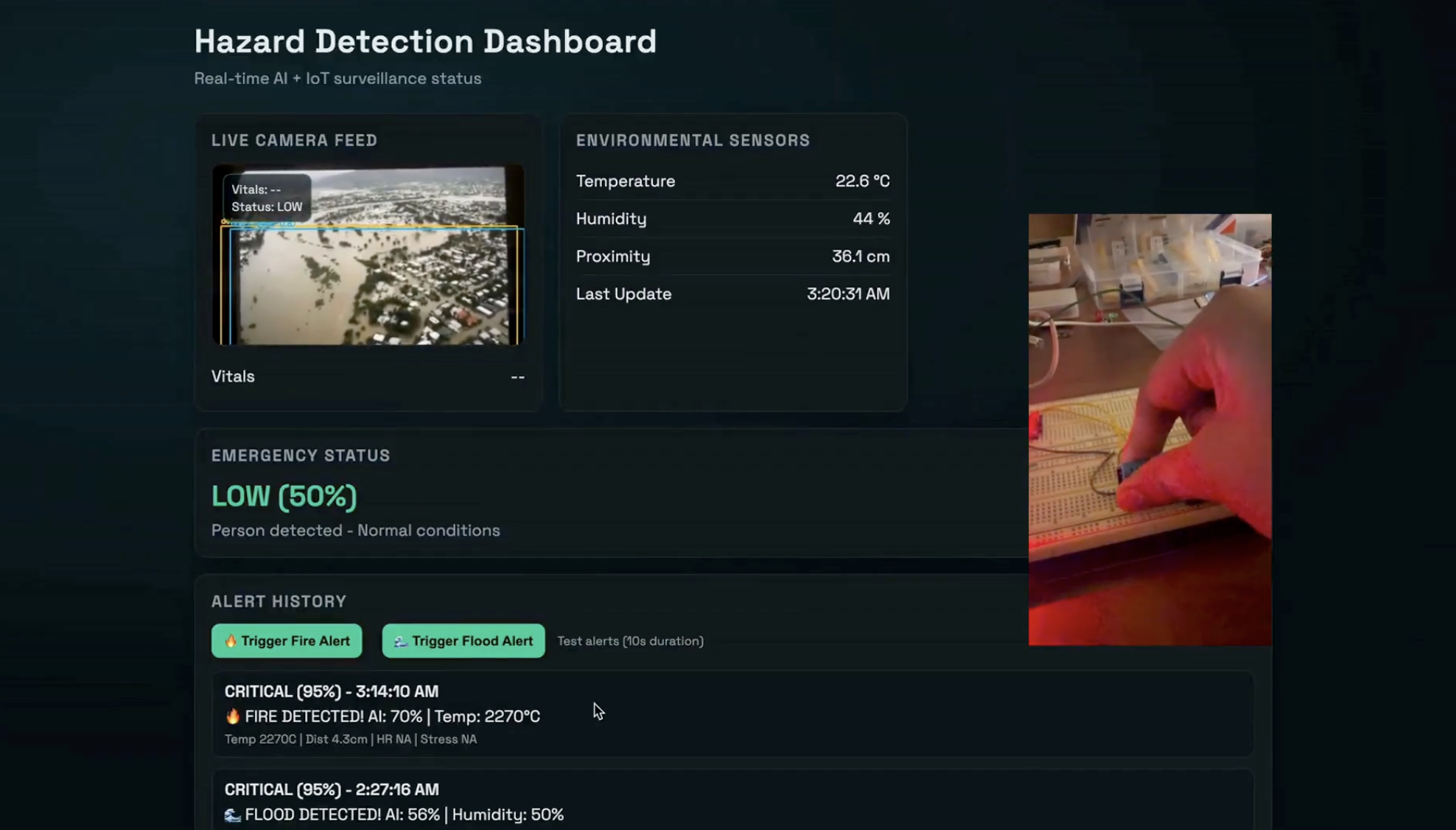
So SafeSense is basically an intelligent multi-hazard detection system that watches for fires, floods, and other emergencies in real time using AI and physical sensors. It can actually detect various types of hazards, and when it sees flames, it checks the sensors and if there is no actual heat, it knows the "fire" is just a screen and doesn't send an alert. This prevents the alert fatigue that makes people ignore real emergencies.
How we built it
We used Arduino Nano with temperature, humidity, and distance sensors connected to a webcam. Python runs YOLOv8 AI to detect hazards while Flask handles the web server. The Arduino sends sensor data through serial connection. When multiple sensors agree on a threat, Twilio sends SMS alerts. The key innovation is our fusion algorithm that requires sensors to confirm each other before alerting.
Challenges we ran into
False positives were our biggest problem. The system alerted for YouTube videos and orange shirts until we required temperature confirmation for fires. Arduino serial communication kept corrupting data until we added structured formatting.
Accomplishments that we're proud of
We achieved zero false positives in 5 hours of testing. Alerts arrive in under 2 seconds. We built it for $30 while commercial systems cost $500 plus monthly fees. One system detects multiple hazard types instead of just one. The best moment was watching it correctly reject a fake fire then catch a real flood stimulation 30 seconds later.
What we learned
Combining sensors is more powerful than any single sensor alone. Preventing false alarms matters more than perfect detection. Real-time processing needs careful optimization. Testing integrations early saves hours of debugging later. Demo preparation is half the project at hackathons.
What's next for SafeSense
Add gas detection and sound analysis for glass breaking. Build a mobile app for remote monitoring. Deploy on Raspberry Pi to eliminate the laptop. Run a pilot program in campus buildings to gather real-world data. Eventually build a community network where systems share threat information.


Log in or sign up for Devpost to join the conversation.